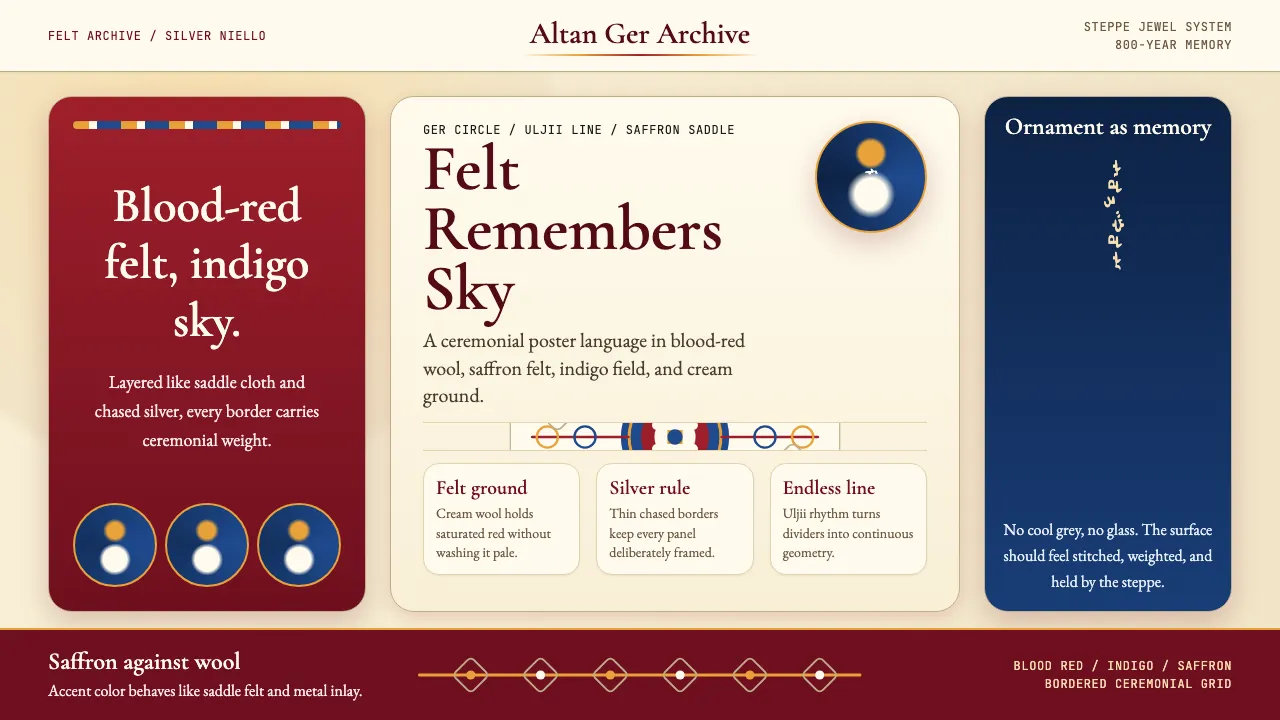
About Mongolian Nomadic Steppe
Mongolian Nomadic Steppe is the visual culture of 800 years of Genghisid pastoralism encoded in felt-and-leather ger interiors, silver-niello saddles, and the curling *uljii* endless-knot. The chord is blood-red felt, saffron saddle, indigo sky, silver hardware, and cream felt ground — saturated steppe-jewel-tones, never washed pastel.
The system speaks through codified geometry: Zanabazar's Soyombo emblem, single-line uljii ornament, ger-tent circular plans, and stylized horse, gazelle, and golden-eagle silhouettes. It is felt-applique and chased-metal in feel, not painted-on-cloth — material, ornamental, and rooted in steppe memory.
- Origin
- Mongolia (Outer + Inner Mongolia); Genghisid Eurasia
- Era
- Genghisid empire 1206+; Yuan 1271–1368; Zanabazar codification 17c; post-1990 cultural revival
- Key figures
- Genghis Khan · Kublai Khan · Zanabazar · N. Tsultem
- Movements
- Eurasian nomadic-steppe aesthetic · Yuan-era pan-Asian synthesis · Mongolian Buddhist Halh school · post-1990 national-identity revival
Mongolian Nomadic Steppe design spec
Colors
Typography
The other 11 sections — buttons, cards, spacing, motion, techniques and more — open once you unlock. Download the DESIGN.md or send it to your AI in one click. Unlock once, yours forever.
Sign up nowStyles similar to Mongolian Nomadic Steppe
Also inspired by crafts & folk art, with a close feel.
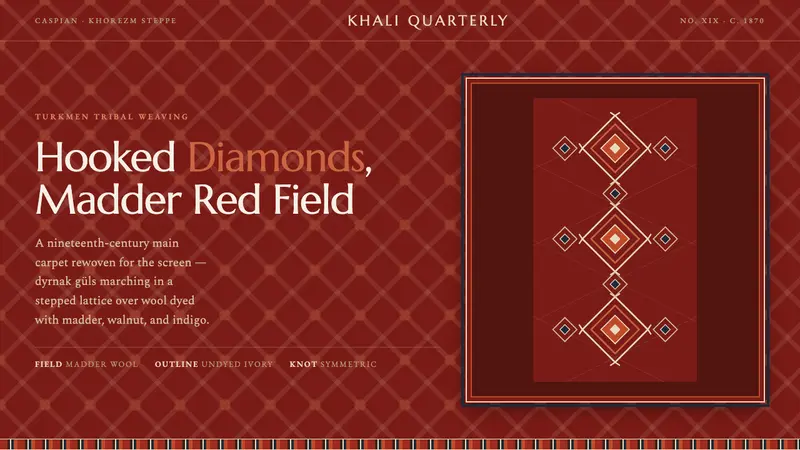 Yomut Gül CarpetHand-knotted authority on screen. Hooked dyrnak diamonds lattice a madder-red wool field in ivory.
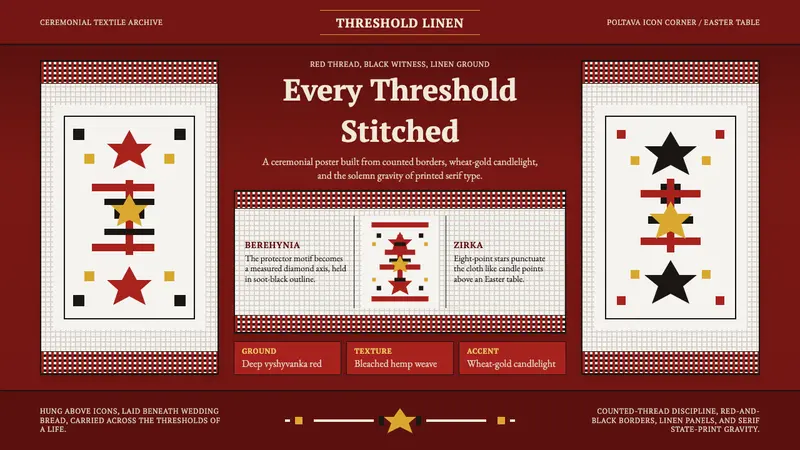 Ukrainian Rushnyk Ceremonial TowelCeremony stitched in red. Linen panels, soot-black crosses, and wheat-gold stars hold memory.
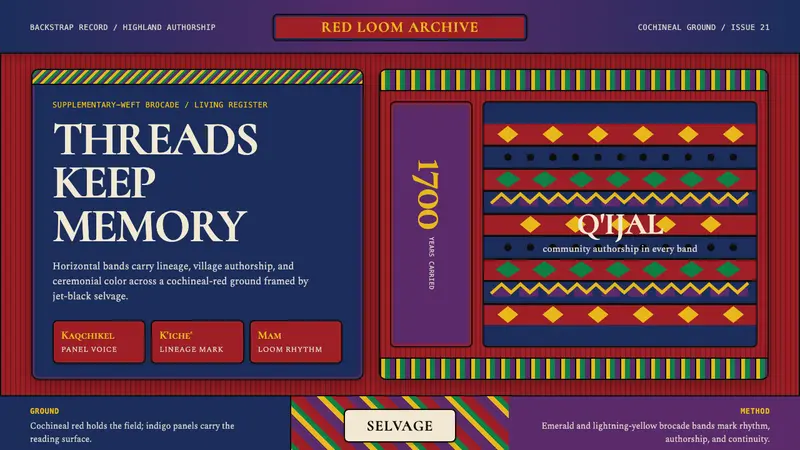 Guatemalan Huipil Maya WeaveMemory is woven dense. Cochineal red, black selvage, and brocade bands hold the page.
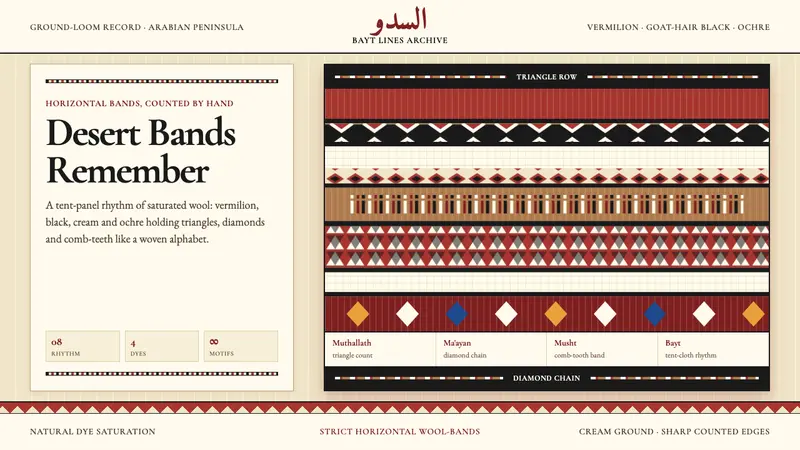 Bedouin Desert Textile (Sadu)Woven memory, not ornament. Vermilion-black bands count triangles and diamonds on cream wool.