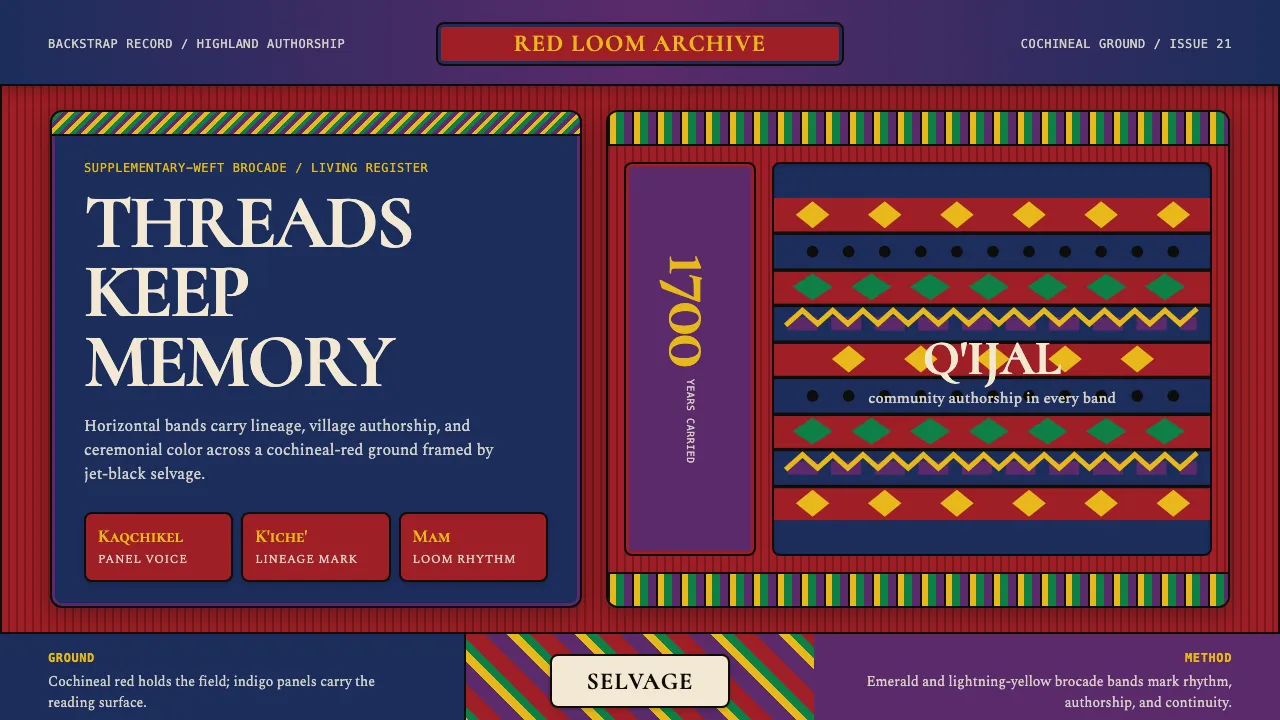
About Guatemalan Huipil Maya Weave
The huipil is the most legible regional-identity garment in the Americas — each of Guatemala's 21 Mayan-language communities encodes its cosmology, history, and authorship into supplementary-weft brocade on backstrap looms. This design system translates that dense, cochineal-red textile ground into interface: horizontal brocade bands become section dividers, quetzal-emerald and lightning-yellow brocade become interactive accents, and jet-black selvage outlines frame every surface.
From San Antonio Aguas Calientes to Nahualá, the visual language honors 1,700 years of continuous material knowledge — never flattening it into tourist pastiche, always crediting community authorship.
- Origin
- Guatemalan highlands — Sololá, Quiché, Sacatepéquez, Chimaltenango, Huehuetenango
- Era
- pre-Columbian Maya classical 250–900 CE through colonial syncretism 1524–present; post-civil-war cooperative revival 1996–current
- Key figures
- Doña Rosalina Tuyuc · María Hernández · Doña Concepción Ramírez · Rigoberta Menchú
- Movements
- continuous Maya weaving tradition · post-1996 textile cooperative movement · indigenous-rights weavers' movement
Guatemalan Huipil Maya Weave design spec
Colors
Typography
The other 11 sections — buttons, cards, spacing, motion, techniques and more — open once you unlock. Download the DESIGN.md or send it to your AI in one click. Unlock once, yours forever.
Sign up nowStyles similar to Guatemalan Huipil Maya Weave
Also inspired by crafts & folk art, with a close feel.
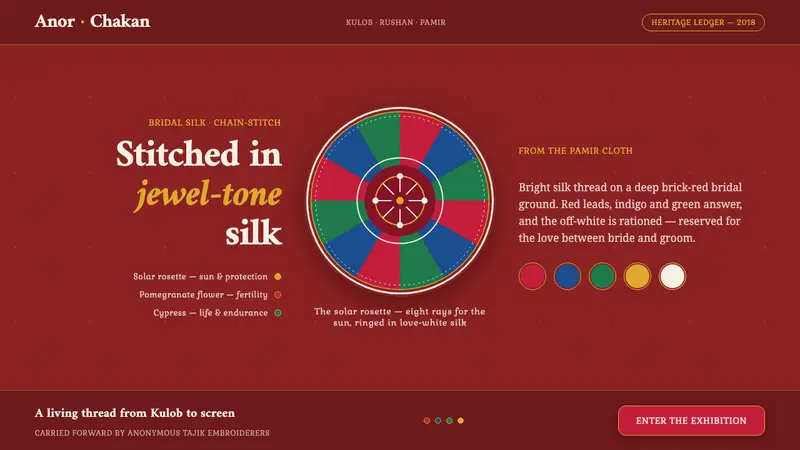 Tajik Chakan EmbroideryBridal silk that earns its white. Jewel-tone chain-stitch on deep brick-red, motif over ground.
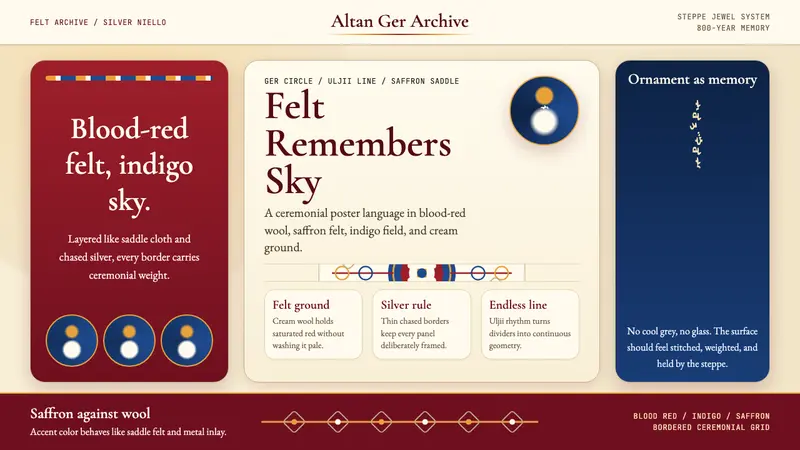 Mongolian Nomadic SteppeSteppe memory in jewel tones. Blood-red felt, saffron, indigo, and bordered uljii geometry.
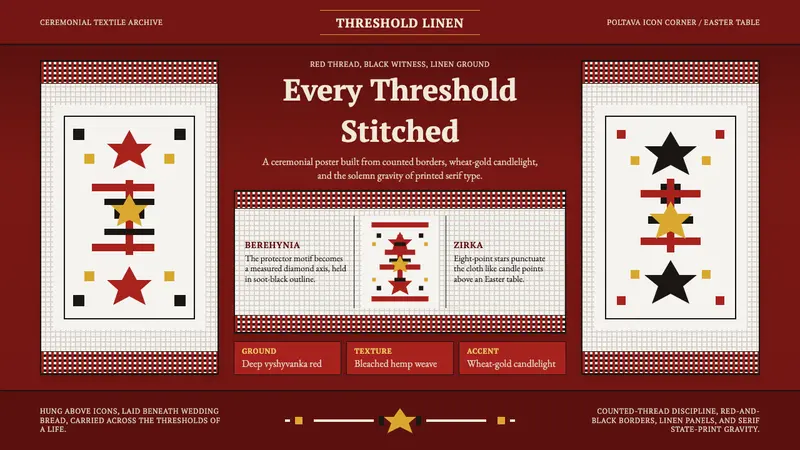 Ukrainian Rushnyk Ceremonial TowelCeremony stitched in red. Linen panels, soot-black crosses, and wheat-gold stars hold memory.
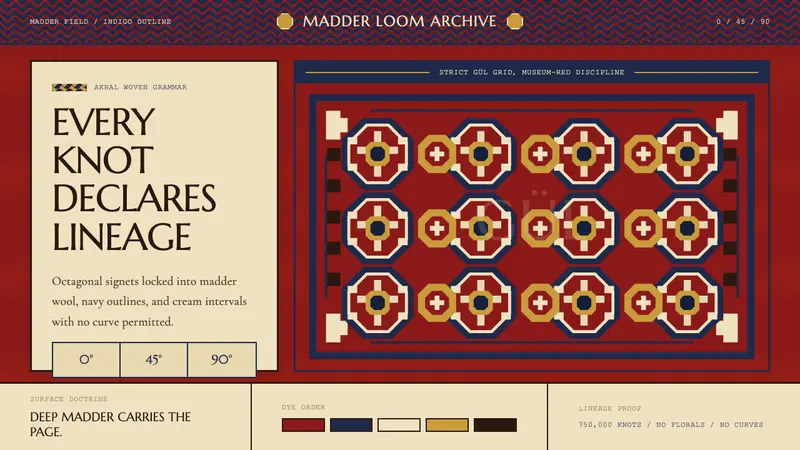 Turkmen Tekke Carpet (Gül Medallion)Disciplined red geometry. Madder field, indigo outlines, cream gül grid.