What is Issey Miyake Pleats Please?
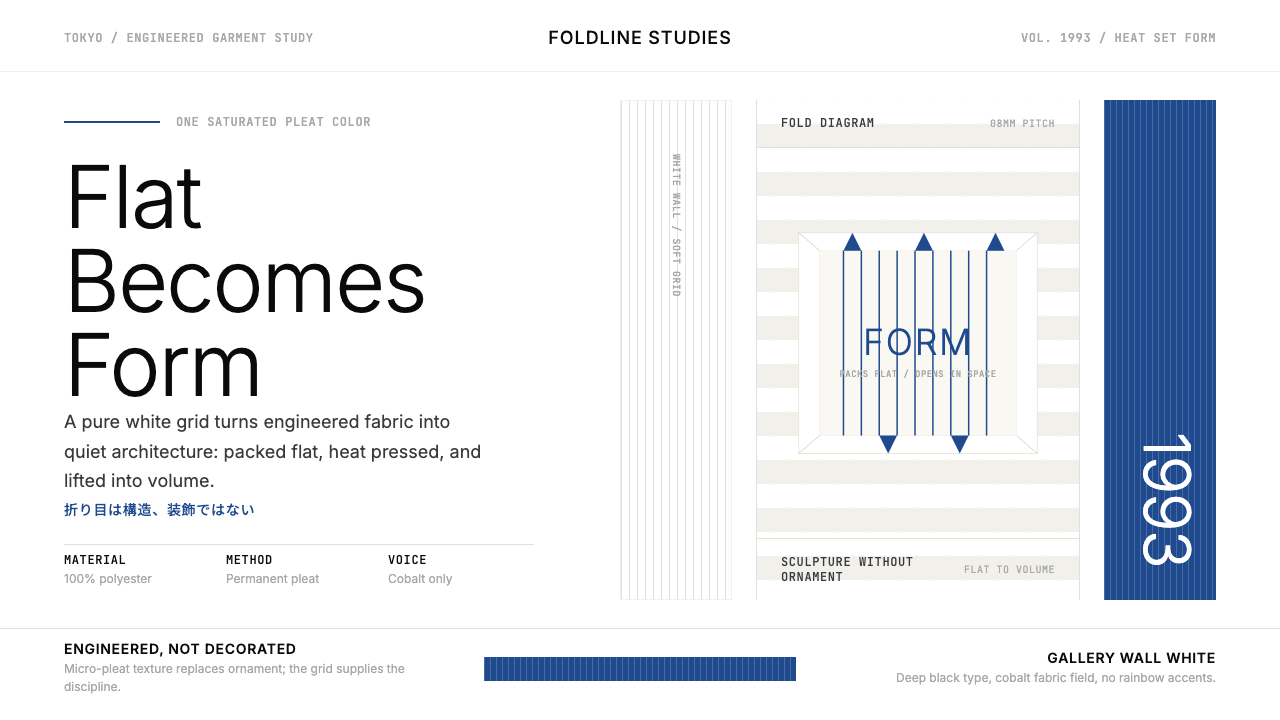
Pleats Please turned a single engineering breakthrough — heat-permanent polyester pleating — into a complete visual philosophy of sculpted lightness, restrained color, and Tokyo-modernist precision.
Issey Miyake Pleats Please in brief
Issey Miyake's Pleats Please, launched in 1993, is a fashion and visual system built around a single technical conviction: that clothing should be engineered rather than decorated, that the intelligence of a garment lives in its structure rather than its surface. The brand's heat-permanent pleating process — applied after the garment is fully sewn, stretching polyester to two to three times its final size before heat-setting compresses it into permanent accordion folds — is not merely a technique. It is the organizing metaphor for everything the visual identity does.
The aesthetic that results is immediately legible. Pure white or near-white space dominates every composition, leaving room for a single saturated pleat-color to enter as the sole chromatic voice — cobalt blue in one campaign, burnt orange in another, electric magenta in a third. The typography is clean, modernist Japanese sans-serif: unadorned, precisely spaced, never decorative. Thin parallel lines — evoking the pleat's own rhythm — serve as texture where other brands would reach for illustration or photography. The overall effect is warm-engineered: rigorous in structure, human in proportion, unmistakably rooted in Tokyo's particular brand of refined restraint.
As a design language, Pleats Please occupies a distinctive position between fashion minimalism and sculptural expressionism. It shares the white-ground discipline of Japanese modernist graphic design and the commitment to absence-as-statement, yet it permits one deliberate burst of high saturation that gives each composition emotional charge. This is not minimalism for its own sake — it is architecture that happens to be worn, a philosophy that treats fabric as form and form as the argument.

Where does Issey Miyake Pleats Please come from?
Issey Miyake (1938–2022) established his design house in Tokyo in 1970 after studying at Tama Art University and training in Paris under Hubert de Givenchy and Guy Laroche, then briefly in New York. From the outset, his practice was defined by a cross-disciplinary curiosity that ran counter to the prevailing European luxury-fashion model: he drew from Japanese textile craft, from sculptural art, from engineering, and from what he called a desire to understand the relationship between the body and cloth. This foundational openness — to material experimentation, to cross-pollination with science and art — made Pleats Please possible.
The pleating research that would become Pleats Please began in earnest in the late 1980s, conducted through Miyake Design Studio's in-house research arm, which the studio later formalized as the Reality Lab. The technical challenge was substantial: conventional pleating was applied to flat fabric before construction, which constrained the garment's shape. Miyake's team reversed the process — constructing the garment first, then pleating — which allowed the pleats to conform naturally to the body's contours. The material of choice was 100% polyester, often disparaged at the time as unglamorous, which Miyake embraced precisely because its thermoplastic properties allowed the heat-setting process to lock folds permanently. When the 1993 collection launched, the pleat was not a decorative detail but the structural principle itself.
The visual identity of Pleats Please emerged from the same engineering logic as the garment. Miyake's creative team — working in close collaboration with the brand's long-term visual collaborators and with designers shaped by Japanese modernism's graphic tradition — built a communication system around the materials and forms that the clothing itself embodied. The boutique interiors used white display stands arranged as sculpture, with garments hung by color rather than by silhouette. Campaign photography isolated single pieces against pure white, lit to reveal the pleat's three-dimensional geometry rather than to flatter the body in conventional fashion-editorial terms. The poster and print work reduced each composition to white ground, a single typographic statement, and the one chosen pleat-color for that season.
The 1993 launch coincided with a broader moment in Japanese fashion's international emergence. Rei Kawakubo of Comme des Garçons and Yohji Yamamoto had already disrupted Paris in the early 1980s with deconstructed, body-concealing silhouettes; Miyake had shown in Paris since 1973. By 1993, the appetite for a Japanese design philosophy that was neither imitation Western luxury nor folkloric traditionalism — but a genuinely engineered modernity — had an audience. Pleats Please named and embodied that space with unusual precision. The subsequent development of the A-POC (A Piece of Cloth) project in 1998, led by Miyake and Dai Fujiwara, extended the same logic: a single tube of knit fabric from which any garment could be cut, with no waste, no seams, no ornament beyond the textile's inherent structure.
What defines the Issey Miyake Pleats Please look?
White Ground and Breathing Space
The dominant visual choice in Pleats Please is the uncompromising use of pure white or very near-white as the compositional ground. This is not simply negative space — it is the canvas against which the pleat's three-dimensional form becomes legible. Generous margins and wide inter-element spacing mean that each component of a composition — a single garment, a typographic title, a pleat-color stripe — can be read in isolation before being understood in relation. The white ground is the garment's display stand, translated into two dimensions.
Single Saturated Pleat-Color
Where Bauhaus uses all three primaries in symbolic rotation, Pleats Please commits to exactly one saturated color per composition — and that color is drawn from the season's pleat palette rather than from any fixed chromatic system. Cobalt blue, signal orange, electric magenta, acid green: each appears alone, at full saturation, against the white ground. The rule is strict — introducing a second hue breaks the logic. The single color functions simultaneously as brand signal, emotional register, and architectural accent, doing the work that multiple colors would dilute.
Pleat-Line Texture
The visual vocabulary includes fine parallel lines — spaced with the same regularity as the garment's accordion folds — used as a textural element in backgrounds, borders, and compositional fields. These lines are not decorative in the conventional sense; they are the two-dimensional projection of the pleat's three-dimensional geometry. Their density and direction can be varied — tighter spacing reads as shadow within a fold, looser spacing as the open pleat at its widest — but their reference is always structural. The lines replace illustration, photography, and pattern as the brand's primary textural register.
Japanese Modernist Typography
The typographic system draws from the Japanese modernist tradition: clean, geometric sans-serif letterforms for both Latin and Japanese scripts, set with precise and often generous tracking, never condensed or decoratively manipulated. Headlines are spare — sometimes a single word or phrase — and body text, where it appears, is set at a measured scale that does not compete with the spatial silence around it. The type functions as a structural anchor, not as an expression of personality. It speaks once, clearly, and then cedes the stage to space and color.
Architectural Restraint in Layout
Compositions are built on a strict modernist grid, but the organizing logic is closer to exhibition design than to editorial layout. Objects — garments, type blocks, color fields — are placed as sculptures in space, with clear sightlines between them. Asymmetry is preferred over centering: a garment might occupy one third of the frame while the remaining two thirds hold only white and a single typographic element. This creates the visual equivalent of the brand's boutique interiors, where a single piece on a white stand is the entire statement.
Engineering Over Ornament
The deepest principle organizing the visual language is the same one that organizes the garment: intelligence expressed through structure, not surface. There are no flourishes, no decorative borders, no gradient fills, no ambient texture applied for visual richness. Where an element exists, it exists because it serves a compositional or communicative function. The pleat-line textures are not decoration — they are a literal reference to the making process. The white space is not emptiness — it is the room the form needs to be itself. Every apparent absence is a considered choice.
Monochromatic Color Discipline
Within any single composition or campaign, color is strictly monochromatic in its application: one pleat-color, deployed at full saturation as the accent, against a white-dominant field with black used only for typography and structural lines. Tonal variation within the chosen color — lighter tints, darker shades — is permitted and used to suggest the pleat's folded depth, but the hue itself does not shift. This monochromatic discipline means that the brand can shift its emotional register entirely by changing the single chosen color from season to season, without altering any other element of the system.

Who shaped Issey Miyake Pleats Please?
Miyake founded his design house in Tokyo in 1970 and spent the following five decades pursuing a single question: what happens when fashion is treated as engineering problem rather than decorative art? His training in Paris and New York gave him literacy in both Western couture construction and avant-garde art; his Japanese formation gave him a material philosopher's patience with process. The Pleats Please project, launched in 1993, represented his most complete synthesis of these influences — a system in which the making process and the final form are inseparable, and in which the visual identity and the garment share the same organizing logic. Miyake received the Praemium Imperiale sculpture prize in 1999, and the brand has continued operating under successive creative directors following his death in 2022.
Fujiwara joined Miyake Design Studio in 1994 and became Miyake's closest creative collaborator on the technical research projects that defined the brand's later identity. He co-developed the A-POC (A Piece of Cloth) concept launched in 1998 — a system for producing complete garments from a single tube of knit fabric, with no cuts, no waste, and no construction beyond what the knitting machine itself inscribed. After Miyake stepped back from day-to-day design leadership, Fujiwara served as creative director, maintaining the studio's commitment to process-as-design. His work represents the most direct continuation of the founding engineering philosophy.
Miyamae joined the studio in 1994 and eventually became creative director of the Issey Miyake womenswear line, overseeing collections that continued the studio's tradition of using technology as a creative collaborator rather than a production tool. He championed the use of digital knitting and weaving processes to produce textiles with inherent three-dimensional structure — extending the Pleats Please logic from pressed fold to engineered surface. His tenure exemplified the studio's model: individual creative directors who advance the founding principles rather than replacing them with personal authorship.
Fukasawa, the industrial designer best known for his work with Muji and his development of the concept he called 'without thought' — design that integrates so completely into daily behavior it disappears — contributed to Miyake's wider creative circle and shares a deep philosophical alignment with the Pleats Please project. His thinking about objects that earn their presence through performance rather than appearance, and about the dignity of materials used according to their true properties, mirrors the Pleats Please argument from the territory of product design. The dialogue between Fukasawa's practice and the Miyake studio reflects Tokyo's particular cross-disciplinary design culture at its most productive.
How do you use Issey Miyake Pleats Please today?
The Pleats Please visual system translates into contemporary design work with unusual directness, because its logic is structural rather than nostalgic. Applying it correctly requires internalizing the garment's own operating principle: intelligence through structure, not surface. The question to ask before adding any element is not 'does this look like Pleats Please?' but 'does this element do structural work, or is it decoration in disguise?'
For presentation slides, the system works powerfully at both cover and content levels. A cover slide should commit to the full white-ground logic: the title in clean sans-serif type, a single pleat-color stripe or geometric field as the sole accent, and nothing else. Content slides should be treated as exhibition display rather than editorial layout — one primary idea per slide, positioned with wide margins, the supporting detail scaled noticeably smaller, and any data visualization rendered in the single chosen accent color against white. Data charts become sculptural objects: bar charts stripped of grid lines and background fills, with bars in the accent color and labels in black, the white ground doing the organizational work that gridlines would otherwise perform.
For web interfaces, the style is particularly well-suited to dashboards, pricing pages, and product-feature pages where clarity of hierarchy is the primary design goal. Establish a generous and strict column grid, keep the background pure or near-white, and use black for all body text. The single accent color — chosen with the same seasonal conviction as the original pleat-color — should appear only at interactive focus points: active navigation states, primary call-to-action buttons, data highlights, and tier differentiators on pricing tables. Card components, where needed, should use a crisp visible border rather than a drop shadow; if shadow is used at all, it should be a hard-edged offset in the pleat-line style, not a soft ambient glow.
For editorial and marketing design, the Pleats Please approach supports strong information hierarchy through spatial composition rather than decorative hierarchy. An editorial spread works with a wide margin on one side for pull quotes or metadata, body text set in a measured column, and section breaks marked by a ruled line in the accent color rather than by ornamental dividers. Marketing pages can achieve striking impact through full-width alternating blocks: white ground with accent-color type, then white type on an accent-color field, the rhythm of alternation evoking the pleat's own accordion logic. Photography, when used, should be treated as a sculptural object: isolated on white, cropped to emphasize three-dimensional form, never used as a full-bleed atmospheric backdrop.
The most common mistake when working with this system is treating the single-color rule as optional — introducing a secondary accent, a gradient to add depth, or a warm-toned background to add approachability. Each of these additions breaks the logic. The white ground's coldness is not a problem to be solved; it is the medium through which the single color acquires its full intensity. A second hue halves the visual authority of the first. Similarly, the pleat-line texture is frequently misapplied as a purely decorative pattern: it should appear only where it can read as a literal reference to the pleat structure — as a field suggesting fold depth, or as a directional line suggesting the garment's drape. Applied randomly as wallpaper, it becomes ornament, which is precisely what the system refuses.

Issey Miyake Pleats Please — FAQ
Is Pleats Please minimalism, or something else?
It is related to minimalism but should not be collapsed into it. Contemporary minimalism tends to be defined by reduction — less color, less type, less visual incident — as an end in itself, often producing work that reads as restrained luxury or calm authority. Pleats Please is organized by a different principle: engineering honesty. Elements are absent not because absence is a value, but because each absent element would have been superfluous to the structural argument. The single saturated color is emphatically not minimalist — it is a deliberate burst of maximum intensity within a field of restraint. A closer analogy might be Japanese spatial philosophy (ma — the meaningful pause, the interval that gives sound and form their definition) applied to graphic communication.
How do I choose the single accent color for a given project?
The original brand chooses its pleat-color seasonally, as a product decision — the color of the physical garment and the color of the visual campaign are literally the same color. When applying the system to a design project, the equivalent question is: what is the one color that names this product's or season's character most precisely? The color should be fully saturated, cleanly hued (not muddied or muted), and selected with conviction rather than compromise. It should work as a single voice — tested in isolation against a white ground before any other context is introduced. Common successful choices include primary and secondary hues at full saturation: a pure cobalt, a clear signal orange, an unambiguous magenta. Colors that are too desaturated, too warm-neutral, or too complex to name in one word tend to underperform in this system.
Can the system work with photography, or does it require avoiding images?
Photography can work in the Pleats Please system, but only when treated as a sculptural object rather than an atmospheric backdrop. The brand's own campaign photography demonstrates the principle: garments are isolated on white grounds, lit to reveal three-dimensional pleat geometry, and cropped to eliminate environmental context. The same logic applies in other design contexts — a photograph used in a Pleats Please-informed layout should be isolated, cropped to its essential form, and placed with the same margin logic as any other compositional element. Full-bleed atmospheric photography — wide lifestyle shots, textured backgrounds, heavily graded landscapes — is incompatible with the system. The photograph should be readable as a designed object, not as a window.
What kinds of products or brands is this style least suited to?
The Pleats Please visual logic performs poorly when the product's value proposition is built on warmth, abundance, sensory richness, or cultural belonging. Food brands — particularly those that sell pleasure and indulgence — need visual systems that invoke appetite and abundance; the Pleats Please palette and spatial logic reads as cool and architectural in contexts where warmth is the point. Children's products require visual systems that communicate play, color variety, and approachable energy — the single-color discipline is too austere. Wellness and self-care brands often need the softness of desaturated pastels and organic textures to signal comfort, which the system's engineered precision actively resists. The underlying test: if the brand's core promise is about feeling rather than thinking, structure rather than softness will be a misalignment.
How does Pleats Please differ visually from other Japanese design aesthetics like wabi-sabi or muji?
All three emerge from a Japanese modernist tradition that values restraint, absence, and the intelligence of materials, but they operate through very different visual vocabularies. Wabi-sabi finds beauty in imperfection, asymmetry, and the marks of time — its palette is earthy, organic, and desaturated; its forms are irregular and worn. Muji (and the broader muji aesthetic) is a systematized reduction to function: warm neutral grounds, natural material textures, carefully standardized proportion — it is restraint in service of democratic accessibility. Pleats Please is neither earthy nor neutral. It is precision-engineered, its forms are perfect and repeating, and its one concession to exuberance — the single saturated pleat-color — is neither organic nor muted. It has more in common with Kengo Kuma's architectural practice or the design culture of Tokyo's science museums than with the handcraft-adjacent philosophy of wabi-sabi.
Related design styles
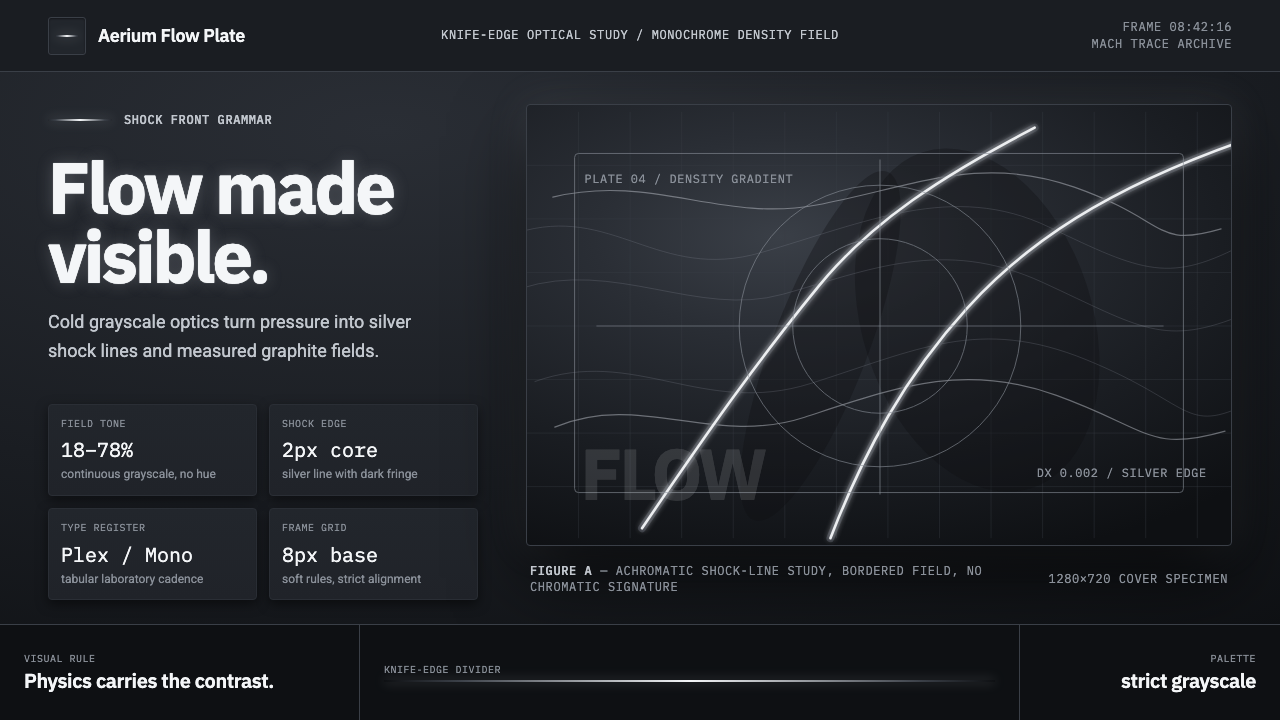 Schlieren ShadowgraphInvisible air becomes silver. Cool grayscale fields cut by precise shock line…
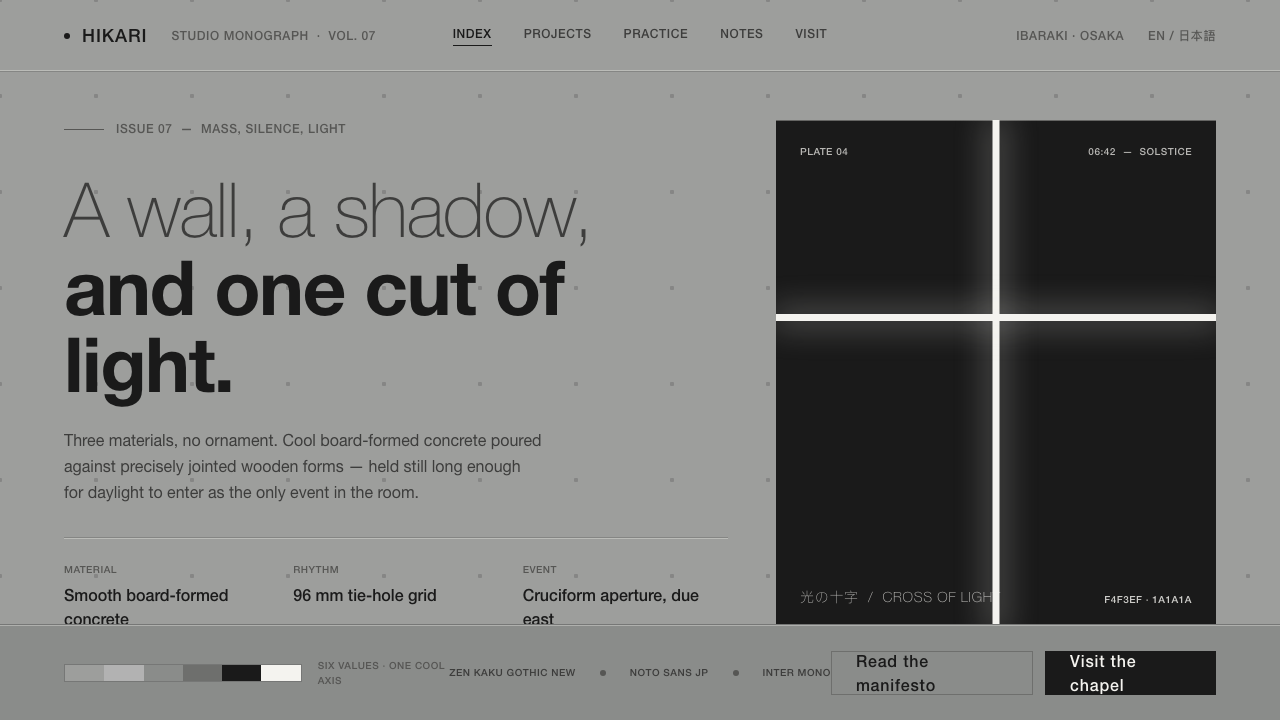 Tadao Ando ConcreteSilence as material. Cool board-formed grey, tie-hole grid, one sliver of lig…
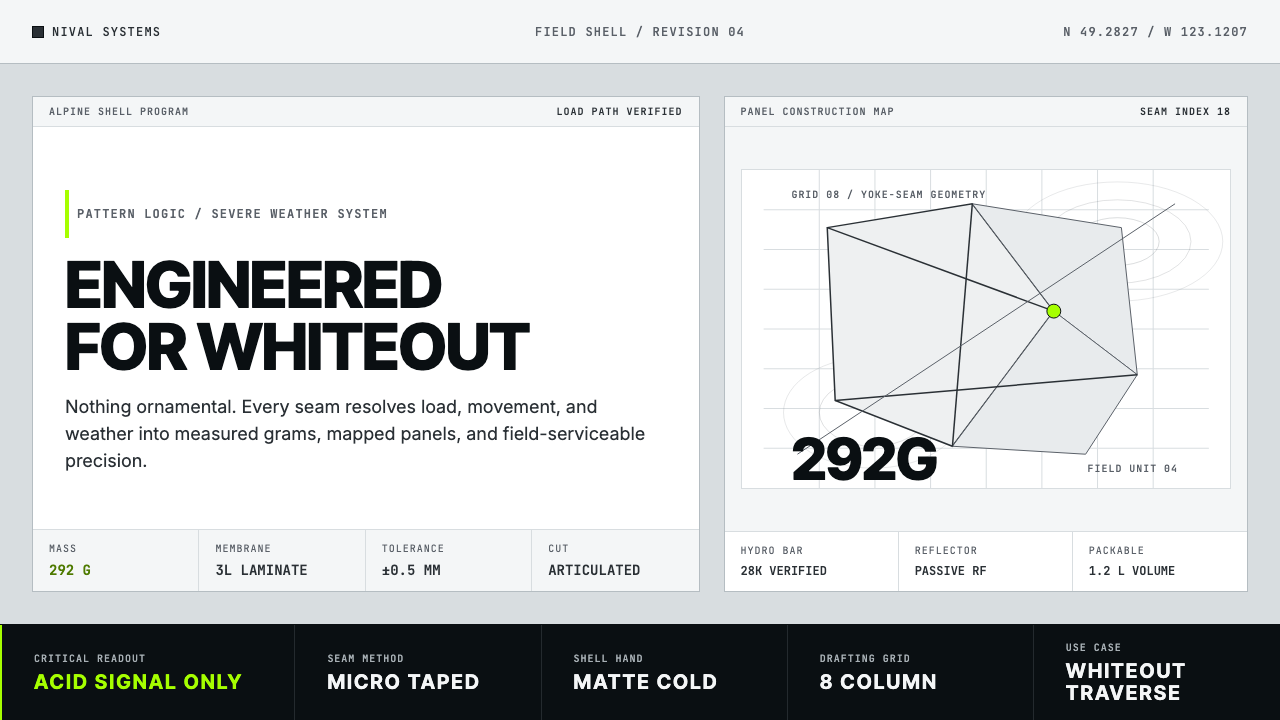 Arc'teryx Technical OutdoorEngineered, never ornamental. Glacier silver grid, mono specs, one acid-green…
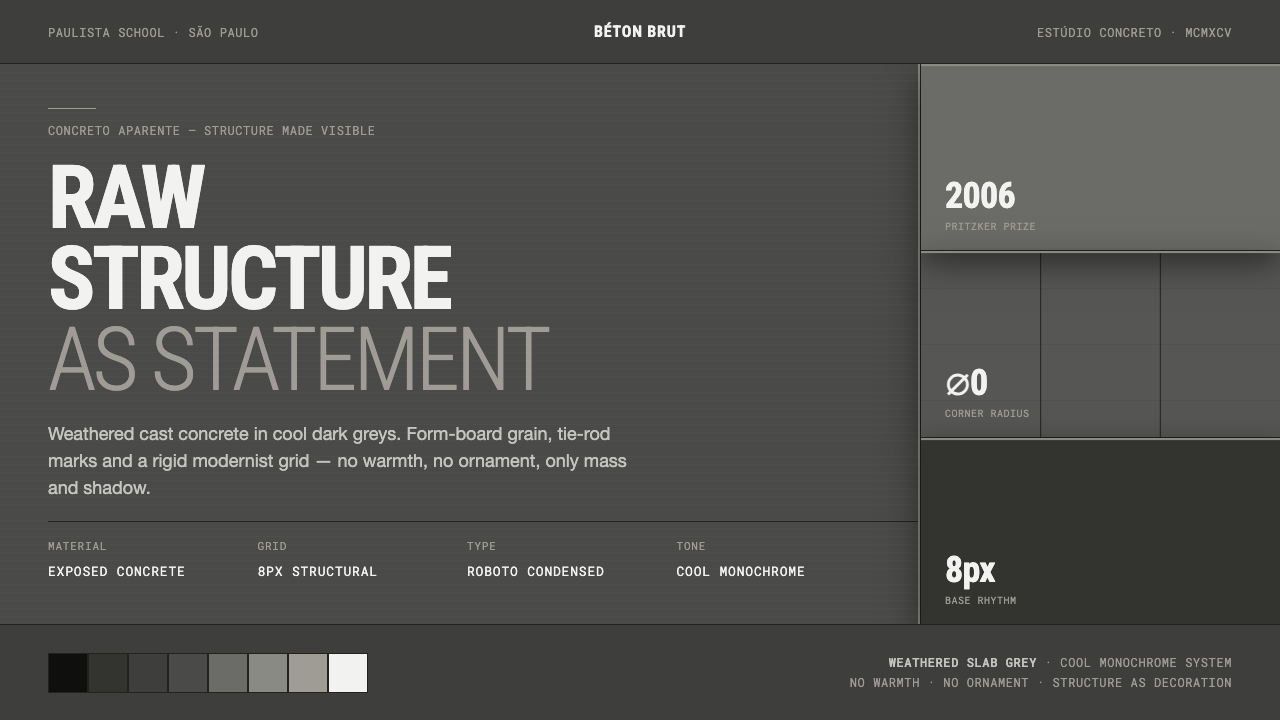 Brazilian Paulista ConcreteStructure made visible. Weathered béton-brut greys, hard cast shadows, conden…
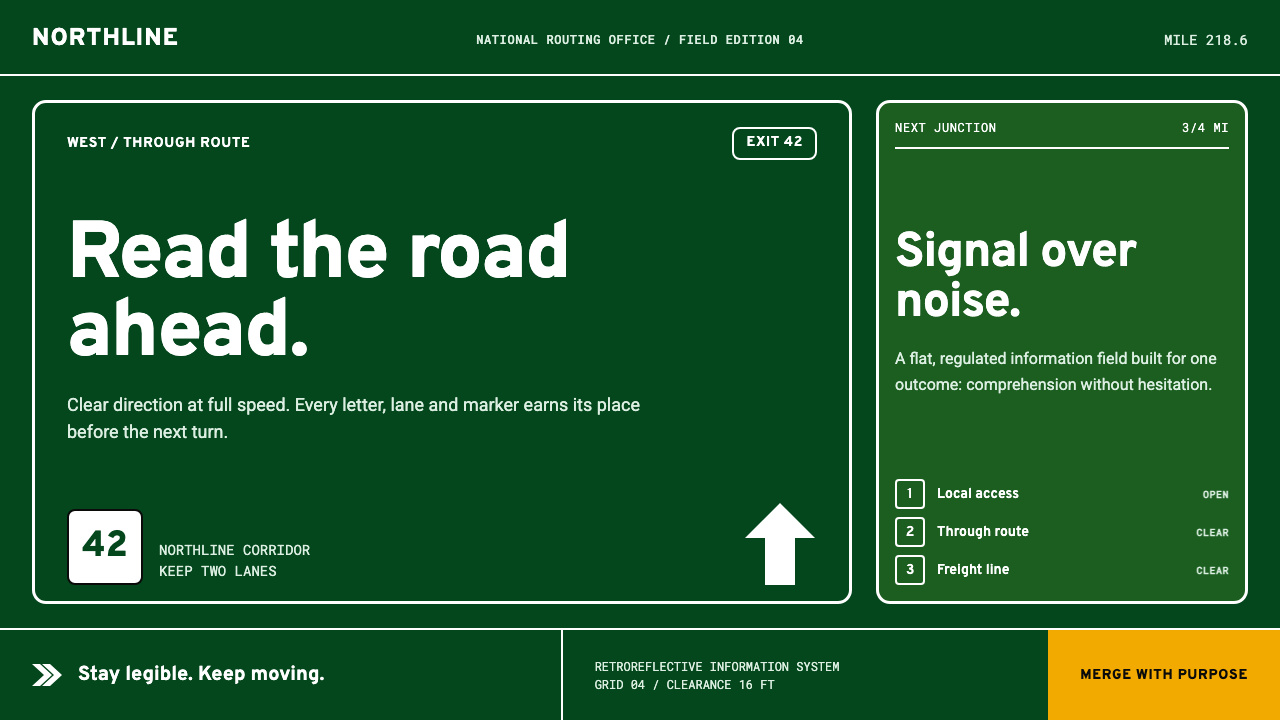 Interstate by Frere-JonesBuilt to be read at speed. Highway green, crisp white legends and strict sign…
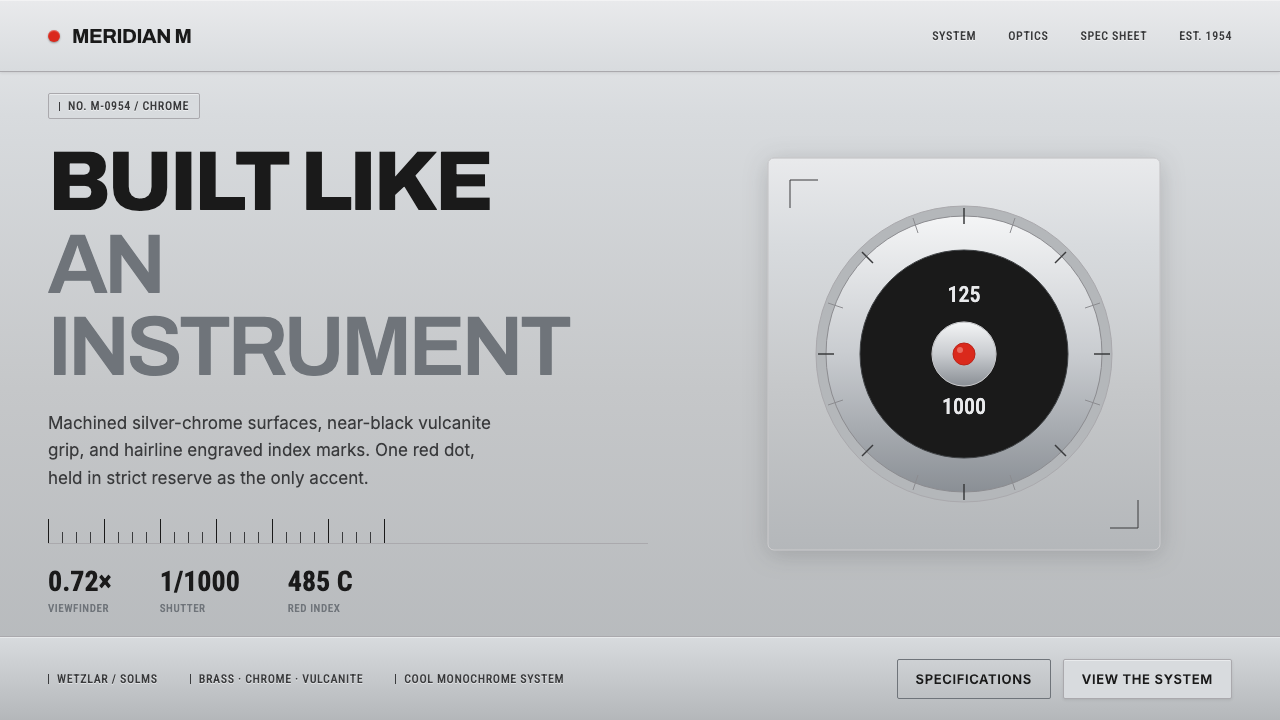 Leica M Silver ChromeBuilt like an instrument. Brushed silver-chrome on near-black vulcanite, one…