What is Tehran Cafe Modernism?
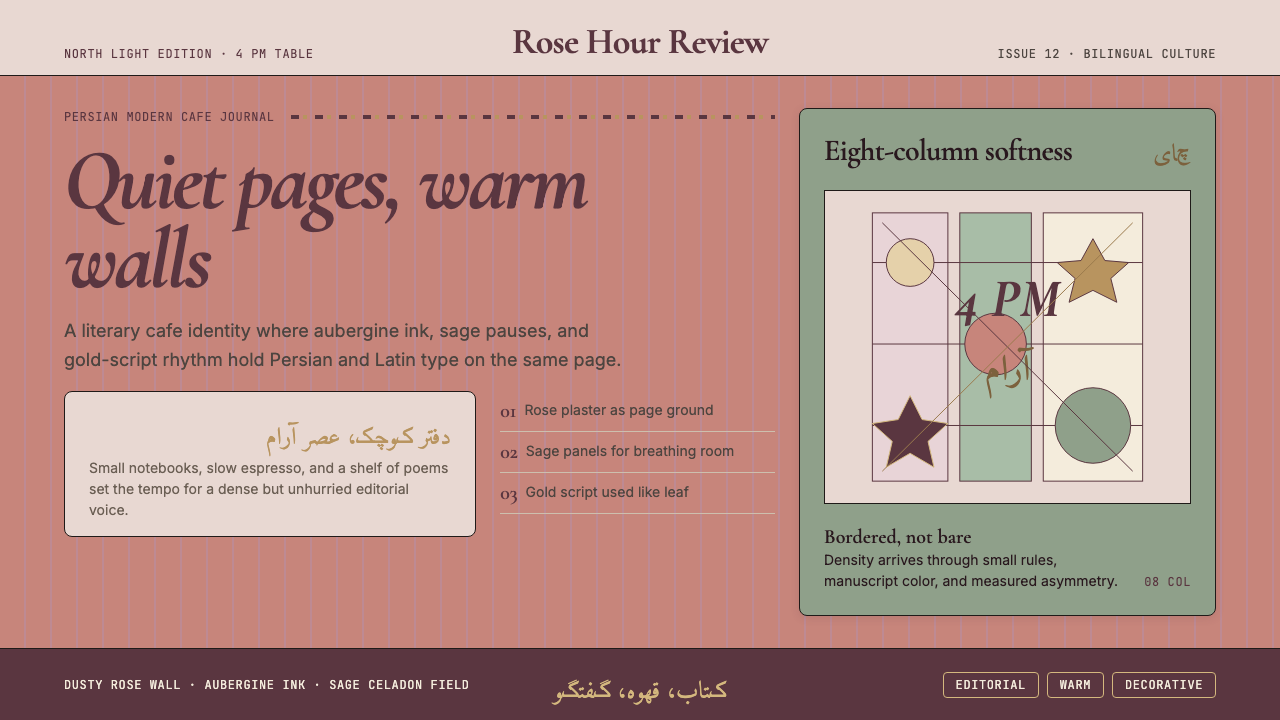
Tehran Cafe Modernism brews Qajar miniature sensibility, mid-century Iranian poster art, and contemporary European design into a quietly dense, bookish aesthetic that feels like a north-Tehran cafe at four in the afternoon.
Tehran Cafe Modernism in brief
Tehran Cafe Modernism is a contemporary Iranian graphic design aesthetic that emerged from the third-wave cafe culture of Tehran in the 2010s. Its visual language is built around a palette of dusty rose, sage celadon, and aubergine — warm, slightly desaturated tones that reference both the faded grandeur of Qajar-era interiors and the muted palettes of mid-century European modernist printing. The result is a style that is simultaneously literary and cosmopolitan, intimate and composed.
What distinguishes this aesthetic from generic international cafe design is its insistence on bilingualism as a structural principle rather than an afterthought. Persian calligraphic tradition and contemporary Latin typography coexist on the same surface, each informing the rhythm and density of the other. The grid breathes differently when Nastaliq script flows alongside italic serif Latin — the vertical axis opens, the horizontal relationships become more textured, and the page acquires a layered density that purely Latin or purely Persian layouts rarely achieve.
The style is self-consciously literary: it gravitates toward serif type, italic cuts, generous leading, and the visual grammar of the literary journal and the art-book cover. It resists both the austerity of Western minimalism and the orientalist theatricality that international brands sometimes impose on Middle Eastern aesthetics. The goal is not to perform Persianness for an outside gaze but to represent a genuine contemporary Iranian creative culture — one that reads Pessoa and Hafez in the same afternoon.

Where does Tehran Cafe Modernism come from?
The roots of Tehran Cafe Modernism reach back to the post-revolution typographic experimentation that transformed Iranian graphic design from the 1980s onward. After 1979, Iranian designers worked under conditions that severed many direct connections to Western commercial culture while simultaneously intensifying engagement with the country's own classical visual heritage — Persian manuscript illumination, Safavid tile patterns, Qajar portraiture, and the rich tradition of Persian calligraphy in its many scripts. This enforced inwardness, paradoxically, produced a generation of designers deeply fluent in both international modernism and indigenous visual language.
The cafe wave that catalyzed the aesthetic into a recognizable style began around 2012, concentrated in Tehran's Tajrish and Vali-Asr districts — neighborhoods where a young, educated, cosmopolitan population gathered in independent cafes that doubled as gallery spaces, reading rooms, and informal publishing venues. These establishments needed visual identities that could speak to an audience simultaneously steeped in Persian literary culture and conversant with contemporary European design. The menus, posters, tote bags, and zines produced for these spaces constitute the founding archive of the aesthetic.
The movement's intellectual debts are multiple and layered. From contemporary Iranian graphic design it inherits a commitment to calligraphic experimentation and typographic density. From post-revolution neo-Qajar revivalism it takes its color warmth and its taste for intricate surface pattern held in tension with clean structure. From mid-century Iranian poster art — itself a synthesis of Socialist Realist influence and Persian miniature tradition — it borrows compositional boldness and a willingness to place text and image in genuine dialogue rather than hierarchy. European influences, particularly from Italian and Swiss editorial design of the 1960s and 1970s, provide the grid logic and the serif-italic sensibility.
Key figures in the broader contemporary Iranian graphic design field, including Reza Abedini, Saed Meshki, Iman Raad, and Kourosh Beigpour, provided both direct examples and a cultural permission structure that made this kind of synthesis legible as serious design rather than eclectic pastiche. Abedini's work in particular demonstrated that Persian calligraphic forms could be treated with the same structural rigor as Latin typography — not as exotic ornament but as a fully functional visual architecture. This precedent is the conceptual foundation on which Tehran Cafe Modernism builds.
What defines the Tehran Cafe Modernism look?
Color Palette
The palette centers on dusty rose, sage celadon, and aubergine — all at reduced saturation, as if slightly sun-faded or seen through translucent paper. These anchor tones are supported by warm off-white or parchment grounds and, occasionally, deep indigo or charcoal for typographic contrast. The overall temperature is warm and slightly amber-shifted, evoking both the light quality of north-Tehran afternoons and the aged pigments of Qajar manuscript decoration. There is no pure, cold white and no neon — everything has been warmed and quieted.
Bilingual Typography
The defining structural feature is the coexistence of Persian script — typically Nastaliq or a contemporary calligraphic variant — and Latin type on the same surface. Rather than segregating the two systems into separate zones, Tehran Cafe Modernism allows them to interpenetrate: a Persian headline might anchor the top of a composition while an italic Latin caption runs across its baseline. The tension between the right-to-left rhythm of Persian and the left-to-right logic of Latin is treated as a compositional resource, producing visual complexity that neither language alone could generate.
Serif and Italic Sensibility
Where many contemporary cafe aesthetics default to geometric sans-serif, Tehran Cafe Modernism privileges serif typefaces and their italic cuts. The preference reflects the aesthetic's literary orientation — serifs carry associations with the printed book, the journal, the carefully typeset page. Italics in particular are used structurally rather than merely for emphasis: a full passage set in italic becomes a textural element, a visual field that contrasts with upright roman text the way a shadow contrasts with a lit surface.
Grid Density
The layouts are notably dense by contemporary standards — multiple text elements, decorative rule lines, column dividers, and marginal notations coexist on a single page without the generous white space that international minimalism prescribes. This density is controlled rather than chaotic: an underlying grid organizes the composition, and the layering follows a clear hierarchy. The effect is closer to the designed page of a literary magazine than to a social media card, which is precisely the cultural register the aesthetic inhabits.
Soft Pattern and Miniature Ornament
Unlike styles that prohibit decoration on principle, Tehran Cafe Modernism admits ornamental elements — but keeps them subordinate and texturally integrated. Qajar-derived floral borders, geometric tile-pattern fills used as background texture, and small medallion motifs appear as structural accents rather than primary visual statements. They occupy the same visual register as a drop cap or a rule line — elements that enrich the surface without disrupting the compositional logic.
Warm Literary Mood
The overall mood is intimate and unhurried — a quality achieved through the combination of warm color temperature, serif type, and measured density. There is a deliberate evocation of the atmosphere of reading: the feeling of sitting with a book and a coffee in a room with afternoon light. This mood differentiates the aesthetic sharply from both the clinical efficiency of Scandinavian minimalism and the high-energy visual noise of trend-driven social media design. It asks the viewer to slow down.
Cultural Specificity Without Exoticism
Tehran Cafe Modernism is culturally rooted but not culturally exclusive. Its Persian references — calligraphic forms, Qajar color and pattern, Iranian literary iconography — are deployed with the ease of a designer working from inside a tradition, not performing that tradition for an outside audience. This distinction is perceptible: the ornamental elements feel like structural decisions rather than identity signaling, and the overall composition feels authored rather than assembled from a toolkit of cultural markers.

Who shaped Tehran Cafe Modernism?
Reza Abedini is the most internationally recognized figure in contemporary Iranian graphic design and a pivotal precursor to the Tehran cafe aesthetic. His work demonstrated that Persian calligraphic forms — Nastaliq, Naskh, and experimental hybrids — could be treated with the same structural discipline as Latin typography, functioning as architectural rather than decorative elements. His poster work for Iranian theater and cinema through the 1990s and 2000s established a visual vocabulary in which script, image, and color interpenetrate as equals. Abedini's international recognition (he has exhibited and lectured widely in Europe and North America) also helped establish the cultural legitimacy of the broader tradition he represents.
Saed Meshki is a Tehran-based graphic designer and typographer whose work on Persian typeface design has been central to expanding the expressive range available to designers working in the Tehran cafe idiom. His typefaces bridge the historical forms of Persian calligraphy and the technical requirements of contemporary digital typography, making it possible to work with Persian script at small sizes and in complex grid contexts without sacrificing calligraphic character. His influence is felt particularly in the bookish, literary quality of Tehran cafe materials — the sense that Persian text has been set with the same care and intentionality as a well-produced European literary journal.
Iman Raad's work represents the younger generation of Iranian designers who came of age after the cafe wave had already begun to consolidate the aesthetic. His practice is notable for pushing the bilingual compositional principle into more formally experimental territory — questioning where the boundary between script as letterform and script as image actually lies, and exploiting the visual ambiguity that results. His work has been particularly influential on the editorial and zine culture that runs parallel to the cafe design scene, and his approach to color demonstrates how the Tehran cafe palette can be used with greater restraint and philosophical intention.
Kourosh Beigpour's contribution lies primarily in demonstrating the viability of the Tehran cafe aesthetic in commercial and institutional contexts beyond the independent cafe milieu that gave rise to it. His work for cultural institutions, publishing houses, and events has shown that the style's literary density and bilingual sophistication can sustain the weight of serious institutional identity without losing the warmth and intimacy that makes it distinctive. His practice is a useful model for designers who want to apply the aesthetic outside its original cafe and zine context — proving that it scales up without becoming generic.
How do you use Tehran Cafe Modernism today?
Tehran Cafe Modernism is a style with strong cultural specificity, which means it applies best when its particular mood — warm, literary, bilingual, quietly dense — aligns with the product's identity. It is especially well-suited to creative agencies, independent publishers, cultural institutions, literary platforms, specialty food and beverage brands, boutique travel and hospitality, and any product positioning itself within an educated, cosmopolitan audience that values depth over efficiency. It is a poor fit for products that depend on clinical clarity, aggressive speed, or the visual vocabulary of pure technology.
For presentation slides, the style works beautifully on both cover and content pages. A cover benefits from a warm, off-white or parchment ground with a headline in a large italic serif, anchored by a single tonal ornamental element — a thin rule, a small medallion, a subtle tile-pattern band — in dusty rose or sage. Content slides should maintain the sense of a carefully typeset page: narrow body-text columns, generous leading, and hierarchy established through type size and weight rather than color. Data slides can adopt a restrained palette drawn from the anchor tones, treating chart elements as compositional objects rather than data-visualization widgets.
For web interfaces, the style suits editorial landing pages, portfolio sites, cultural institution pages, and boutique product pages more naturally than dashboards or analytical tools. The approach involves warm backgrounds rather than pure white, serif or bracketed body type, and a restrained use of the palette's warm tones for interactive accents. Navigation benefits from a typographic rather than iconic treatment. Card components should have visible structure — thin borders in a muted tone rather than shadow — maintaining the style's flat, page-like quality. If a dashboard must be built in this aesthetic, treat each data module as a framed composition rather than a floating card.
For editorial and marketing work, the style's natural home, the approach is to lean into its literary density. A feature article layout works well with a narrow measure for body text, wide outer margins for pull quotes or annotations, and section breaks marked by ornamental rule combinations rather than whitespace alone. Marketing pages can use the aesthetic's poster-like sensibility: full-width sections that alternate between the warm ground palette and a deeper aubergine or indigo tone, with italic serif headlines and body text in careful proportion. Bilingual treatment — even a single line of Persian or another language used as design texture — enriches the surface without requiring full translation.
A common mistake when applying this style is mistaking warmth for looseness. Tehran Cafe Modernism is warm but not casual — its density is controlled, its ornamental elements are structurally placed, and its typography is careful. Designers who borrow only the palette without attending to the grid, the type hierarchy, and the quality of typographic spacing will produce work that feels merely nostalgic or vaguely ethnic rather than genuinely compositional. A second common mistake is using too many ornamental elements simultaneously, which dissolves the contrast between structured type and decorative accent that gives the style its tension. One or two well-chosen ornamental gestures per composition is almost always enough.

Tehran Cafe Modernism — FAQ
Is this style appropriate for brands outside Iran or the Middle East?
Yes, with intentionality. Tehran Cafe Modernism is a design system, not a cultural costume — its structural principles (bilingual grid logic, warm serif palette, controlled density, literary mood) are transferable to any context where those aesthetic values align with the brand's identity. What matters is whether the brand genuinely occupies the aesthetic's cultural register: educated, cosmopolitan, literary, unhurried. Applying it mechanically for its decorative surface without that underlying alignment tends to produce work that reads as cultural borrowing without cultural understanding. When the alignment is genuine, the style brings warmth and specificity that purely international aesthetics rarely achieve.
Does this style require actual Persian or Farsi text, or can it be applied with only Latin type?
The bilingual dimension is central to the style's identity, but there are degrees of engagement. A full application uses both Persian script and Latin type as structural coequals, which requires working with a designer fluent in Persian typographic conventions. A lighter application can evoke the style's mood — warm palette, serif italic type, controlled density, literary register — without Persian script, producing work that feels adjacent to Tehran Cafe Modernism rather than fully within it. Using Persian text decoratively, as texture rather than communication, is a middle path that works visually but should be approached with care and, ideally, with the involvement of someone who can verify the text's appropriateness.
How does this style differ from other warm, literary design aesthetics like Italian editorial or French cafe design?
The surface similarities — serif type, warm palette, literary density — are real, and Tehran Cafe Modernism is partly indebted to both Italian and Swiss editorial traditions. The key differences lie in color temperature, script complexity, and ornamental philosophy. Italian editorial design tends toward higher contrast and cooler blacks; French cafe design tends toward more neutral grounds and cleaner minimalism. Tehran Cafe Modernism is warmer in tone, more amber-shifted in its whites, and admits ornamental pattern in a way that European editorial traditions rarely do. The bilingual structure is the most distinctive difference: no European editorial tradition has to negotiate the visual coexistence of two scripts with opposed directionality, and that negotiation is what gives the Tehran version its particular density and compositional character.
Can this style work in dark mode or on dark backgrounds?
A dark-ground version is possible and can be evocative — think of the atmosphere of a Tehran cafe late in the evening, candles on tables, dark walls hung with framed prints. The approach inverts the palette: aubergine or deep indigo as ground, dusty rose and sage as accent and type tones, off-white or warm cream for body text. What to avoid is true black grounds, which strip away the warmth that is central to the aesthetic. The ornamental elements — thin rules, small medallions, tile-pattern textures — survive the inversion well if handled at reduced opacity rather than full contrast. The bilingual typography holds up in dark versions; if anything, the contrast between script systems becomes more legible against a consistent dark ground.
What is the biggest risk when applying this aesthetic, and how do you avoid it?
The biggest risk is orientalism — reducing a living, complex creative culture to a set of decorative surface markers (geometric tiles, calligraphic script used as texture, warm earth tones) without engaging the structural logic and cultural intelligence that make the style coherent. The result is a kind of design tourism: work that looks vaguely Middle Eastern without saying anything specific. The way to avoid it is to engage with the style at the level of its principles — the bilingual grid, the literary density, the precise color relationships — rather than its symptoms. Working with designers who have genuine knowledge of the tradition, using Persian text only when it communicates real content, and understanding the historical sources of the aesthetic's visual choices are the practical safeguards.
Related design styles
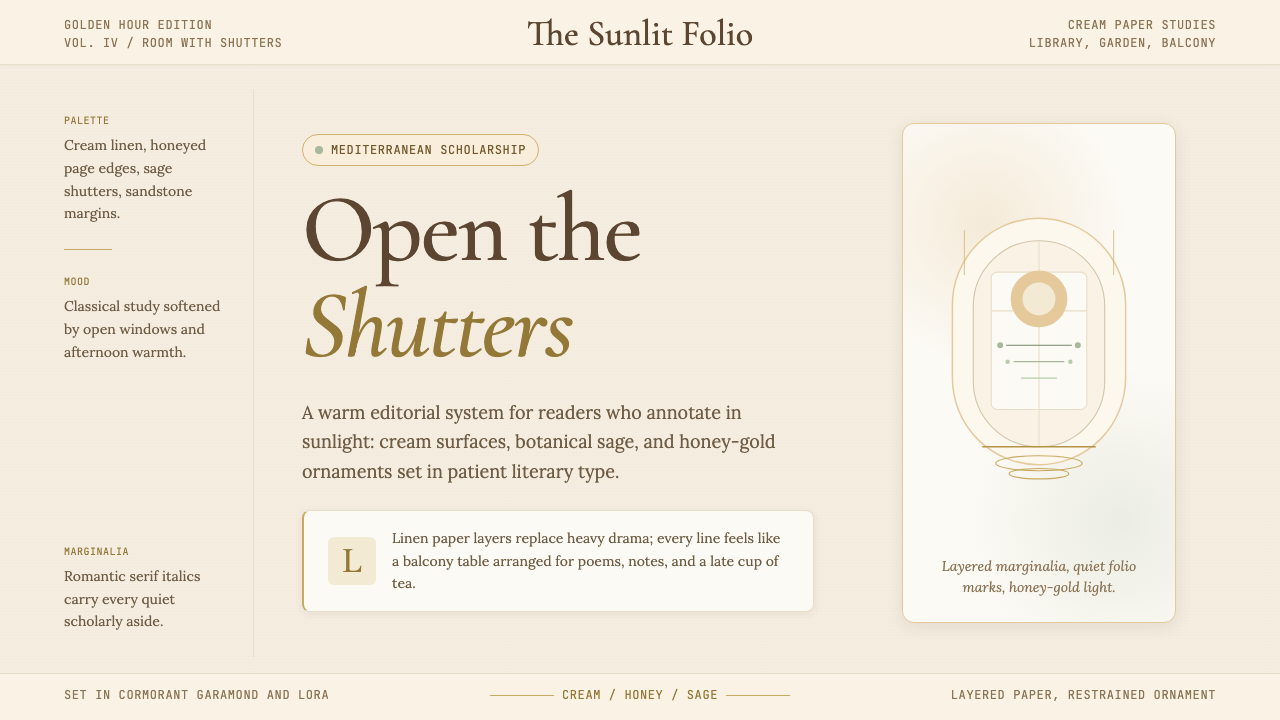 Light AcademiaScholarship turns sunlit. Cream linen, honey gold, sage botanicals, and roman…
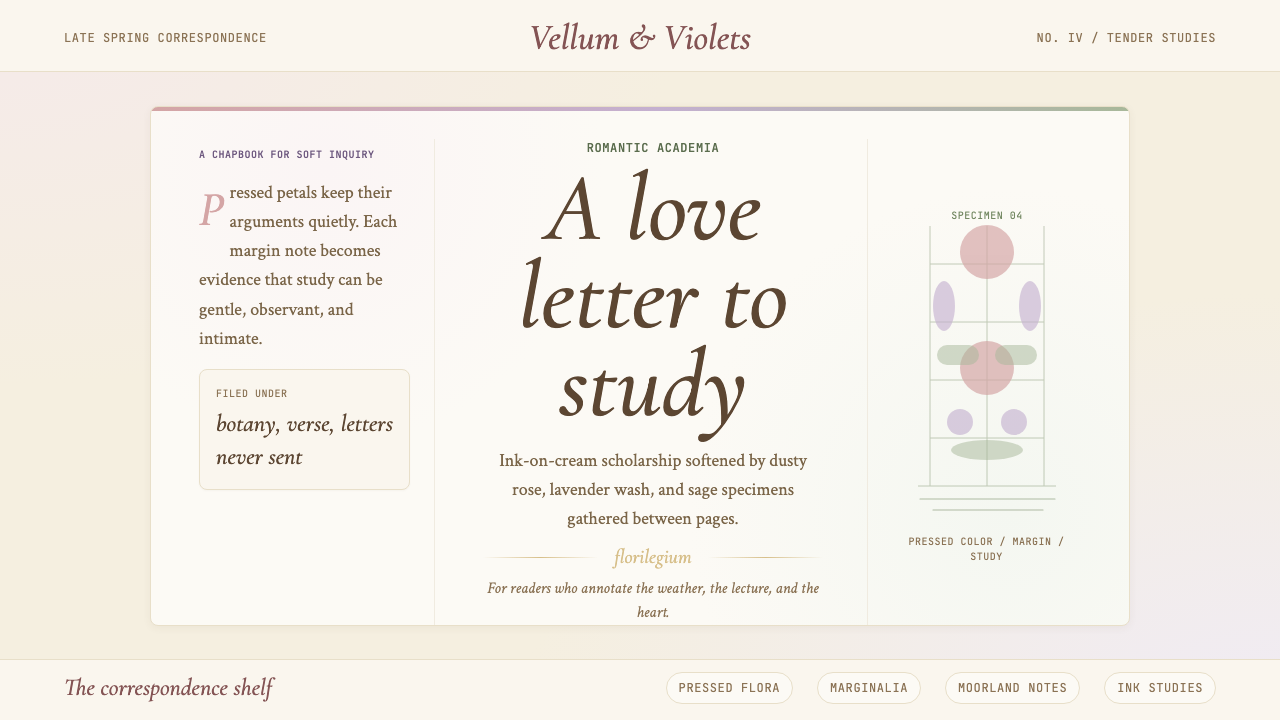 Romantic AcademiaScholarship turns tender. Dusty rose and lavender frame ink-on-cream poetry w…
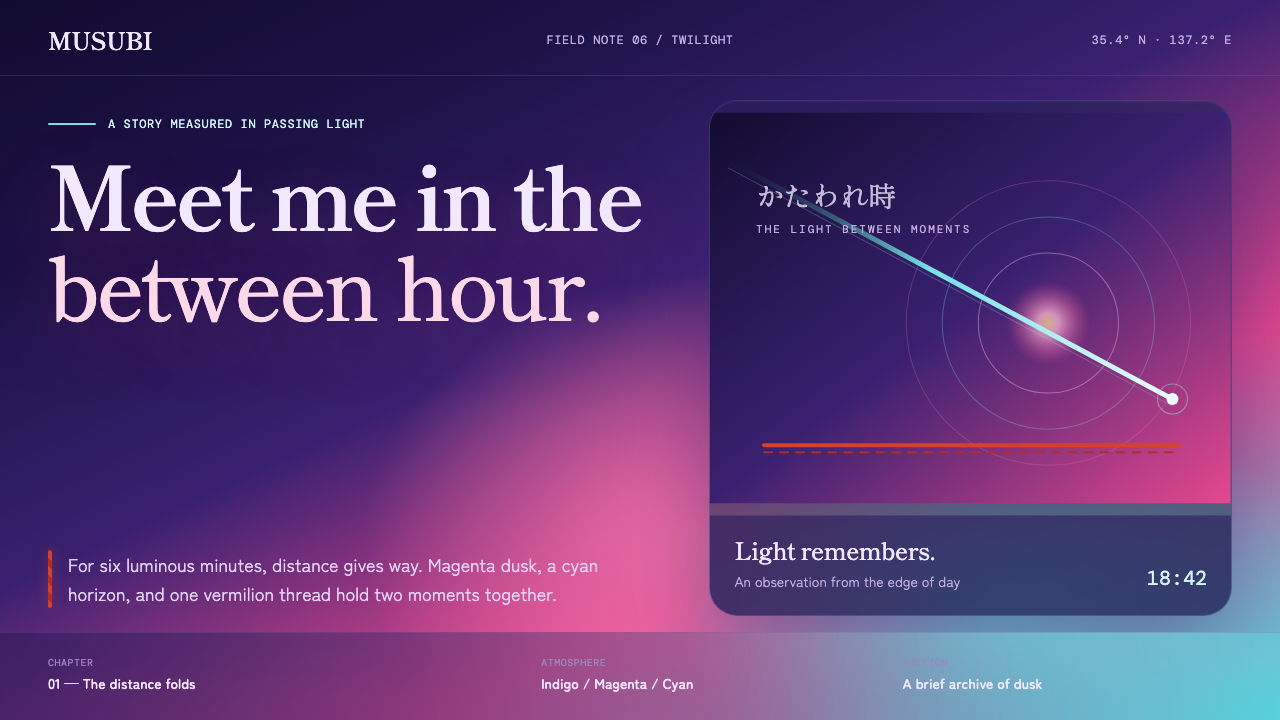 Your Name (Shinkai, 2016)Twilight makes time tangible. Magenta melts into cyan, held by one vermilion…
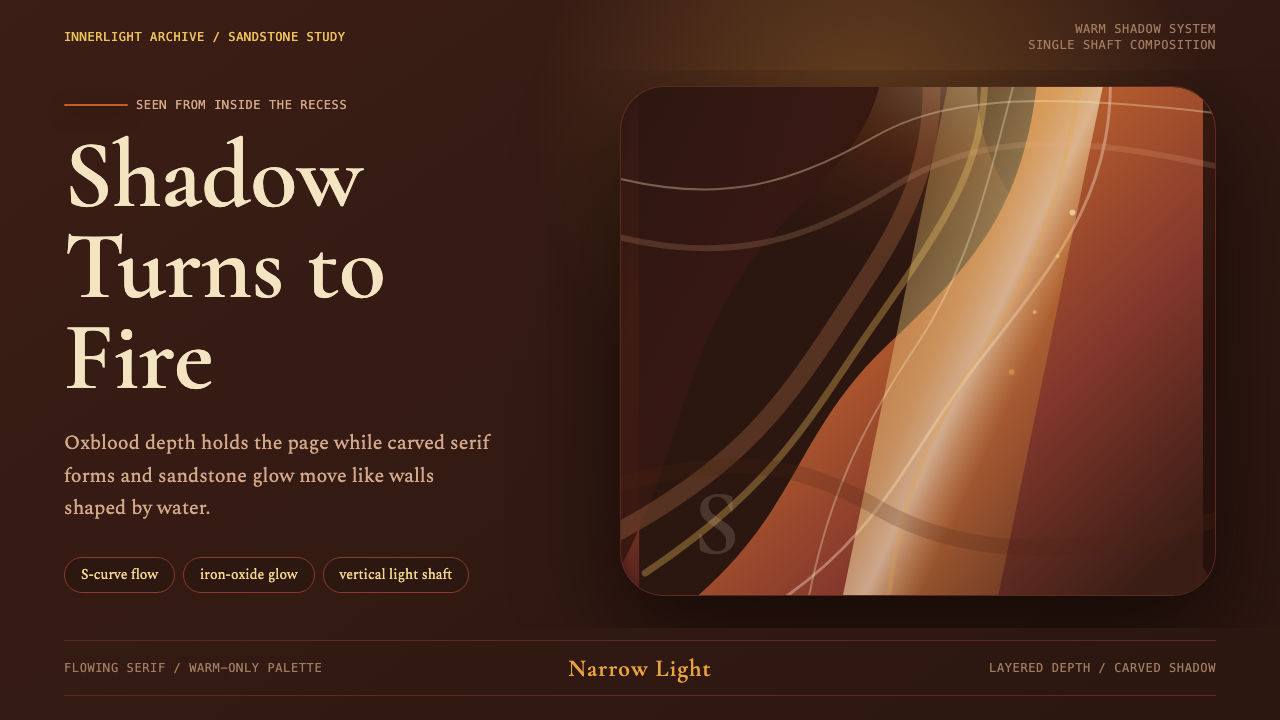 Antelope Slot CanyonGlows from shadow. Oxblood ground, sandstone S-curves, and one warm gold shaf…
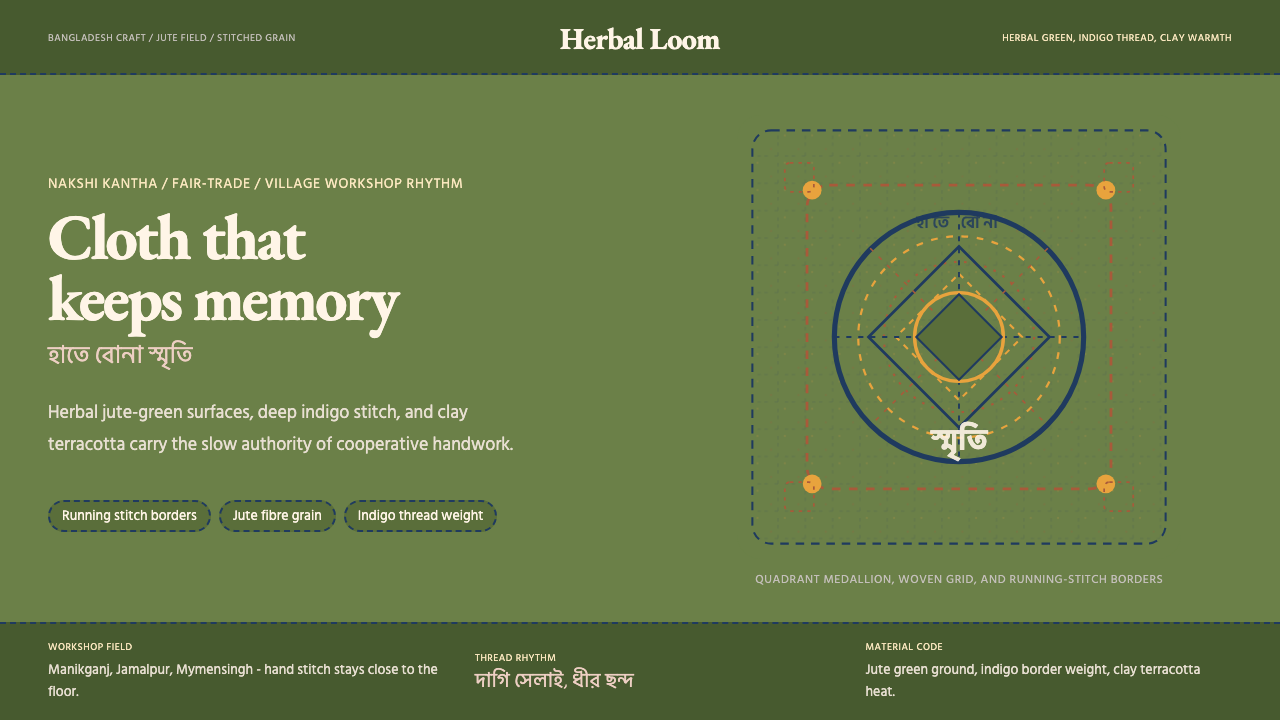 Bangladeshi Jute CraftMemory stays stitched. Jute green, indigo borders, terracotta warmth.
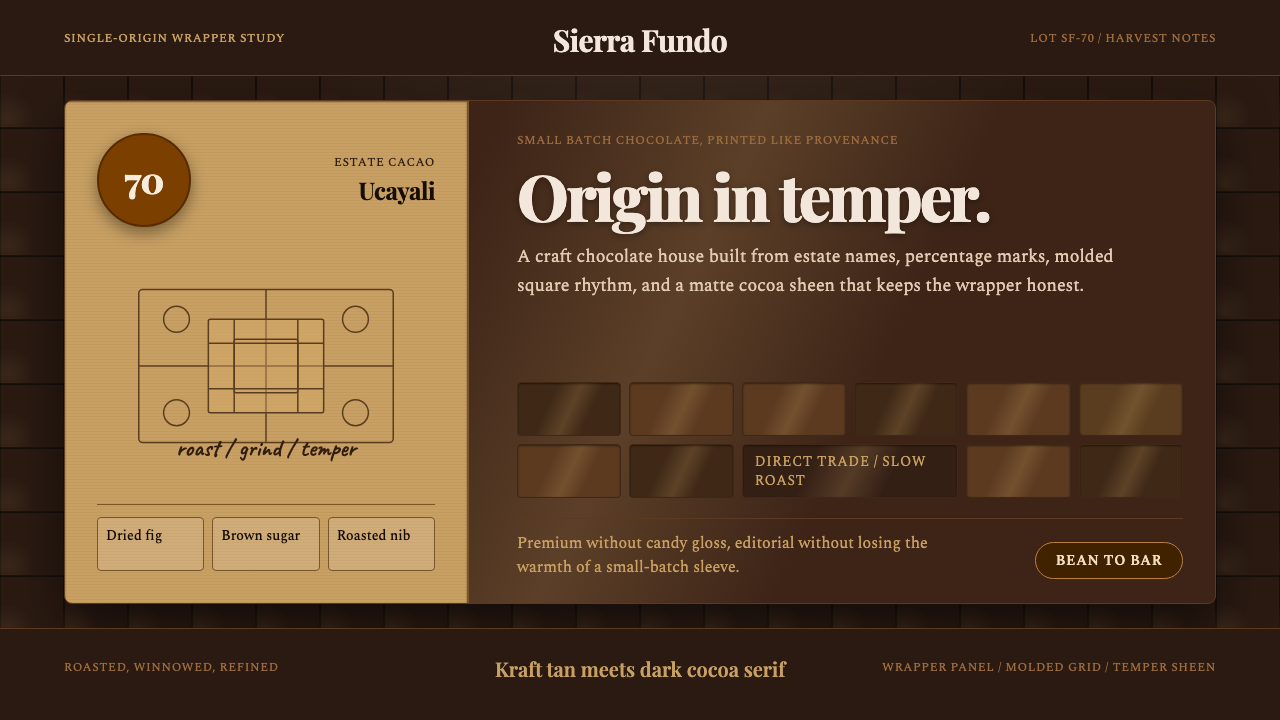 Bean-to-Bar ChocolateOrigin tastes tactile. Cocoa serif, kraft panel, and molded squares carry the…