What is Antelope Slot Canyon?
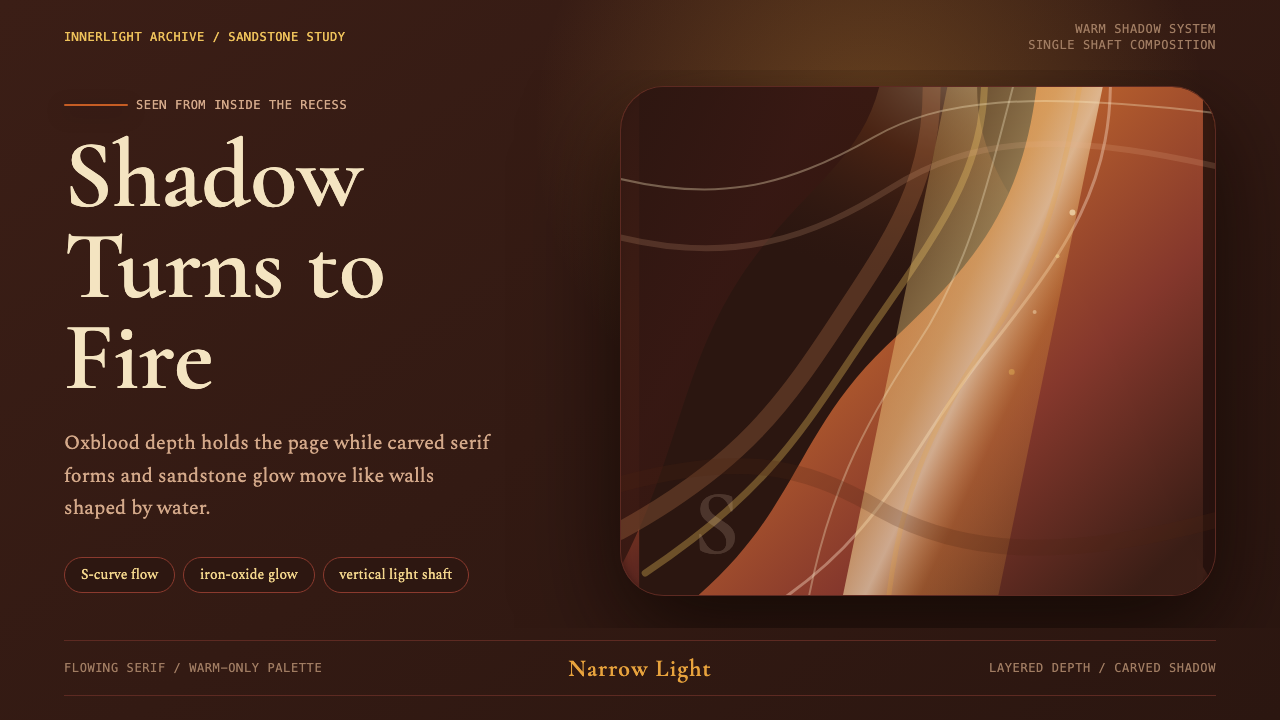
Deep in Antelope Canyon, light falls as a single warm shaft through sculpted sandstone — and everything in the frame seems to glow from inside its own shadow.
Antelope Slot Canyon in brief
Antelope Slot Canyon is a design language drawn from the flowing Navajo Sandstone chasms near Page, Arizona, where wind erosion and flash-flood water have carved narrow, undulating passages over millennia. The canyon walls glow a warm iron-oxide orange where sunlight reaches them, and in the narrowest, deepest sections, split shafts of light fall through the slot from openings far above, illuminating suspended dust and creating dramatic, focused beams against the surrounding darkness.
The system reads the scene from within the shadow rather than from outside it — a deep oxblood-brown field functions as the visual ground, with the glowing sandstone treated as the figure that emerges from and is defined against that darkness. This inverts the more common design habit of treating a light field as ground and dark elements as figure; here, darkness is the given condition and light is the event that punctuates it.
Formally, the style is a warm, sculpted-stone abstraction built from undulating S-curve flow lines that echo the canyon wall's water-carved contours, vertical light-shaft beams that cut across those curves, and layered depth gradients suggesting the recession of one canyon wall behind another. Serif typefaces with warm, classical proportions carry the sense of geological weight and carved permanence the style depends on, and the palette commits entirely to warm tones — no cool blue, no hard geometric grid is ever introduced, since both would contradict the organic, sun-warmed character of the source.

Where does Antelope Slot Canyon come from?
Antelope Canyon is a slot canyon system carved into Navajo Sandstone near Page, Arizona, on land belonging to the Navajo Nation. Slot canyons of this type form over geological time as flash floods — sudden, powerful surges of water following desert rainstorms — race through narrow cracks in the sandstone, eroding and smoothing the rock into the flowing, sculptural curves that define the canyon's interior. The Navajo name for the canyon's most photographed section, Tsé bighánílíní, translates roughly as 'the place where water runs through rocks,' a name that describes the erosional process directly responsible for the canyon's shape.
The canyon's sandstone glows a distinctive warm orange-red where sunlight reaches the walls, an effect caused by the rock's iron oxide content interacting with reflected and refracted light bouncing between the narrow walls. In the canyon's most famous sections, narrow openings at the surface allow direct shafts of sunlight to penetrate down into the otherwise shadowed slot, particularly around midday during specific seasons, creating the dramatic light-beam effect that has made the canyon one of the most photographed natural formations in the American Southwest.
Access to the canyon is managed by the Navajo Nation Parks and Recreation Department, which requires visitors to enter with authorized Navajo guides — a structure that reflects both the practical danger of flash flooding in narrow slot canyons and the canyon's status as land belonging to and managed by the Navajo Nation rather than a federally administered park. Local Navajo guides carry deep practical and cultural knowledge of the canyon's seasonal light conditions, flood risks, and significance.
The canyon rose to international visual prominence significantly through photography, with photographers including Peter Lik producing widely circulated images of its light-shaft phenomenon starting in the 1990s and 2000s. This photographic visibility, combined with the canyon's genuine geological rarity, established the visual vocabulary — warm glowing stone, dramatic light shafts, sculptural flowing curves — that now defines the broader visual culture surrounding slot canyons as a subject.
What defines the Antelope Slot Canyon look?
Color
A deep oxblood-brown functions as the dominant ground, with warm iron-oxide orange and gold carrying all illuminated surfaces as the figure emerging from that darkness. The palette is entirely warm — no cool blue, gray, or neutral tone is introduced, since the source scene contains none: every surface, lit or shadowed, sits somewhere on a single warm spectrum.
S-Curve Flow Lines
Undulating, flowing curves — echoing the water-carved contours of the canyon wall — define structural lines and dividers rather than straight edges or hard geometric grids. These curves should feel continuous and organic, as though shaped by movement over time rather than drafted with a ruler.
Vertical Light Shafts
A single warm gold light beam, rendered as a vertical shaft cutting down through the darker field, serves as the style's primary focal device — analogous to the sunlight penetrating a slot canyon's narrow opening. This beam should remain singular and dramatic rather than multiplied into several competing light sources.
Layered Depth Gradients
Multiple layers of gradient, each slightly darker or lighter than the one behind it, suggest the recession of successive canyon walls into shadowed depth. This layering communicates three-dimensional depth without relying on hard perspective lines or a geometric vanishing point.
Sculptural Stone Abstraction
Forms should read as carved and weighty rather than flat or graphic — even in a purely two-dimensional application, shapes should carry a sense of sculptural mass, as if pressed and smoothed by long erosion rather than drawn as flat vector shapes.
Warm Serif Typography
Serif typefaces with classical, warm proportions — evoking carved stone lettering rather than digital display type — carry the sense of geological permanence and weight the style depends on. Cold, geometric sans-serif type works against the organic, sun-warmed character the style is built on.
No Cool Tones, No Hard Grids
The style enforces two absolute exclusions: no cool blue or cold neutral tones, since the source scene is entirely warm-lit, and no hard geometric grid structure, since the canyon's forms are exclusively organic and flowing. Introducing either immediately breaks the illusion of standing inside sun-warmed sandstone.

Who shaped Antelope Slot Canyon?
The department responsible for managing access to Antelope Canyon on Navajo Nation land, requiring all visitors to enter with authorized guides. This management structure reflects the canyon's status as Navajo-owned and managed land rather than a federal park, and underlies the deep local guide knowledge that shapes how the canyon is understood and photographed.
A photographer widely known for large-format fine-art landscape photography, Lik produced some of the most widely circulated images of Antelope Canyon's light-shaft phenomenon beginning in the 1990s and 2000s, contributing significantly to the canyon's rise to international visual prominence and to the visual vocabulary of dramatic light beams against warm sandstone now associated with the location.
Guides drawn from the local Navajo community carry the practical and cultural knowledge required to navigate the canyon safely and to understand its seasonal light conditions — including the specific times of day and year when the canyon's famous light-shaft effect is visible. Their expertise shapes both visitor safety and the timing behind the canyon's most iconic photographs.
How do you use Antelope Slot Canyon today?
Antelope Slot Canyon transfers well to any digital product wanting to signal warmth, natural grandeur, and quiet dramatic focus rather than cool corporate minimalism — travel and outdoor brands, wellness and retreat platforms, luxury natural-goods brands, or photography and nature storytelling sites. Applying it correctly means preserving the shadow-as-ground, light-as-figure inversion rather than defaulting to a conventional light background with dark accents.
For presentation slides, a cover works well built on the deep oxblood-brown field with a single vertical gold light-shaft motif positioned off-center, echoing the canyon's own asymmetric light penetration, and a warm serif title sitting within or beside the beam rather than centered rigidly. Content slides should use the layered depth-gradient technique to separate sections — each content block sitting on a slightly different depth layer — rather than flat, undifferentiated panels. Data visualization is a poor fit for this style's core mood, since numeric precision sits uneasily with organic, sculptural abstraction; where data must appear, it should be minimal and secondary to the overall atmospheric composition.
For web interfaces, the style suits landing pages, hero sections, and about pages for travel, wellness, and luxury nature brands far better than data-dense or highly functional interfaces, where its dark, atmospheric ground would reduce legibility and scanability. A hero section might use the oxblood-brown ground with a vertical gold light-beam animation or static motif as the focal element, with warm serif headline type sitting just within the beam's warm glow.
For editorial and marketing work, the style rewards long-form, atmospheric storytelling: travel writing about the American Southwest, nature photography features, or brand narratives built around natural grandeur and quiet awe. Imagery should favor genuine photography of warm, sculptural natural forms — canyon walls, dunes, weathered stone — over crisp studio photography, and pull quotes read well set in warm serif type against the dark ground.
A common mistake is introducing cool blue tones for contrast or 'balance,' which directly contradicts the entirely warm-lit source scene and breaks the style's core visual logic. A second common mistake is imposing a hard geometric grid or straight-edged layout structure onto the composition, which fights against the organic, flowing S-curve quality that defines the canyon's carved forms.

Antelope Slot Canyon — FAQ
Why does this style forbid cool tones like blue?
Because the entire source scene — sunlight refracting through warm sandstone — is lit exclusively in the warm range, from deep oxblood shadow to glowing orange and gold highlight. Introducing blue or any cool neutral would contradict the physical reality of the scene and immediately signal a different, colder environment than the one the style is meant to evoke.
How should the single light shaft be positioned in a composition?
Off-center and vertical, echoing the way sunlight enters a slot canyon through a narrow, irregularly shaped opening rather than a symmetrical skylight. A perfectly centered, symmetrical light beam reads as artificial and undermines the organic, naturally occurring quality the style depends on.
Can this style incorporate straight lines or geometric grids?
It should generally avoid them. The canyon's defining formal quality is its water-carved, undulating S-curve contour — a hard geometric grid contradicts that organic logic and reads as a different, more industrial visual system entirely. Where structural division is needed, it is better achieved through the layered depth-gradient technique than through straight ruled lines.
Is this style respectful to use given the canyon's location on Navajo Nation land?
The style draws on the canyon's natural geological formation and its widely circulated photographic visual culture rather than on any specific Navajo sacred iconography or ceremonial imagery, but it remains good practice to be mindful that the land is Navajo-managed and to avoid pairing the style with unrelated, appropriative cultural symbols beyond the geological and photographic subject itself.
Does this style suit fast-paced, data-driven products?
Generally not. The style's core value is atmospheric, contemplative grandeur, and its dark ground combined with organic, non-geometric forms works against the crisp legibility and scannability data-driven interfaces require. It is much better suited to travel, wellness, and brand-storytelling contexts where a slow, awe-inspiring mood is the actual goal.
Related design styles
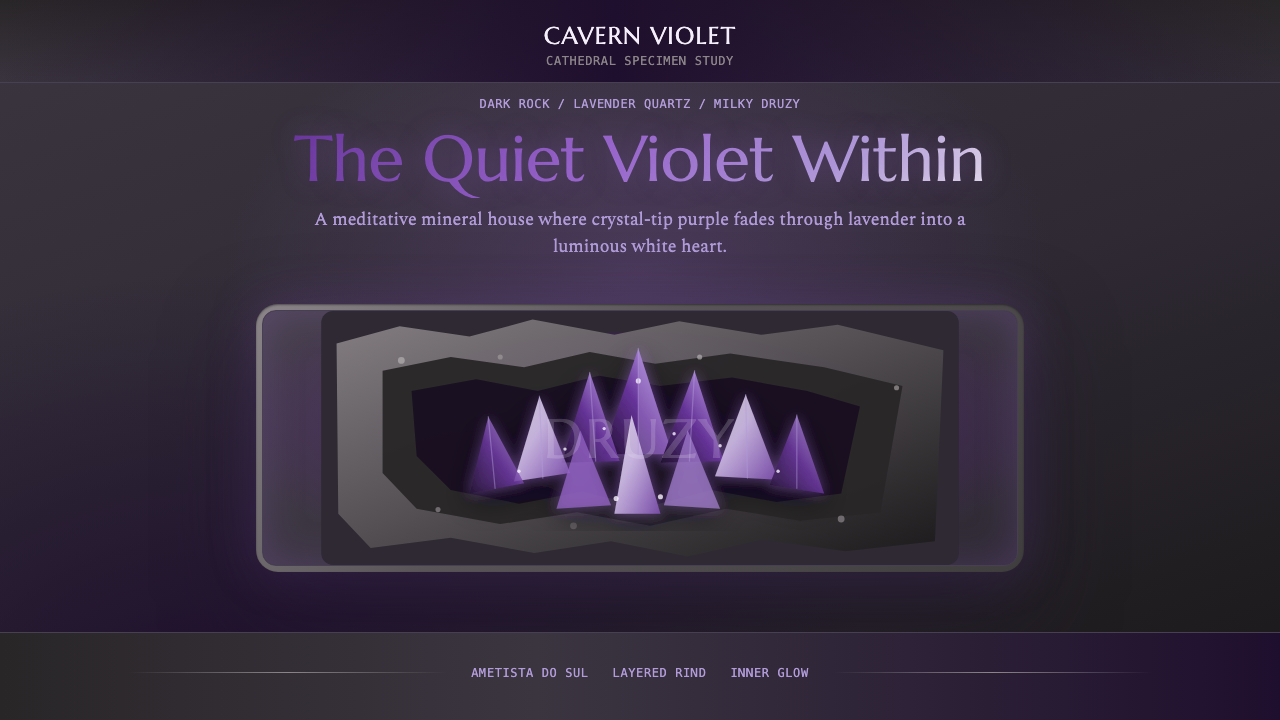 Amethyst GeodeMeditative gem luxury. Amethyst gradients glow in dark stone, framed by rough…
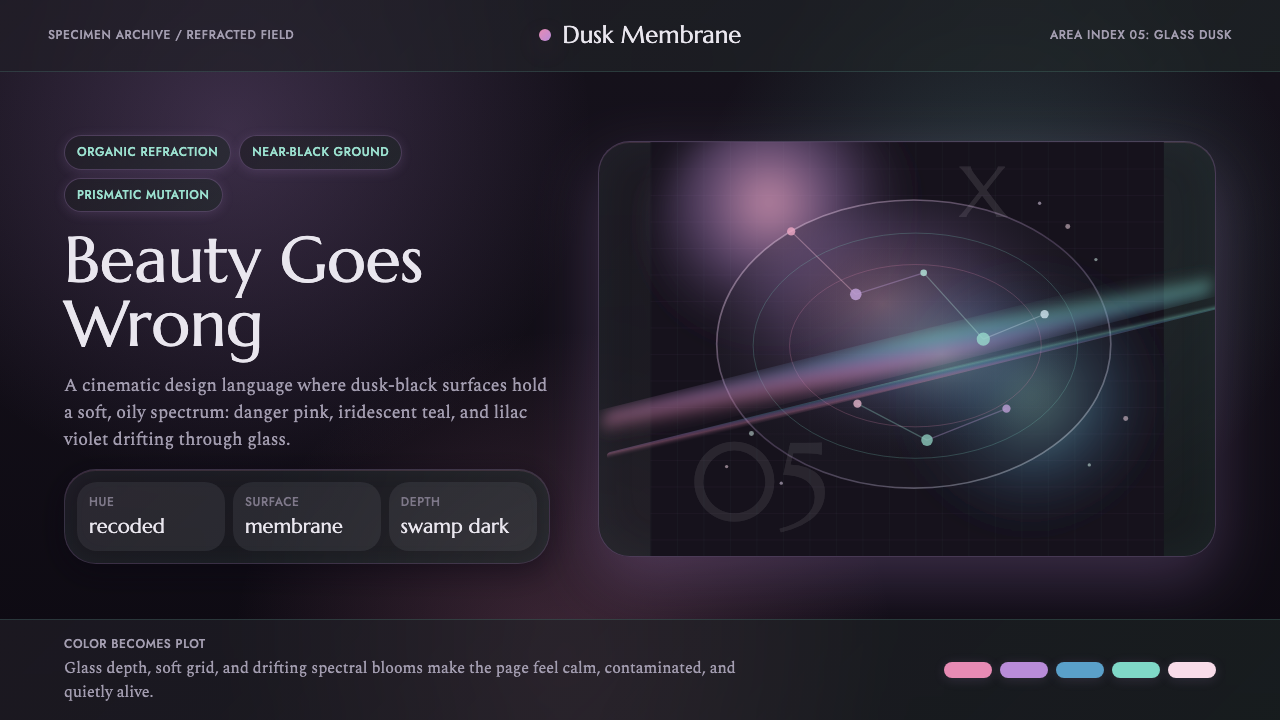 Annihilation (The Shimmer)Beautifully wrong. Dusk black carries pink, teal, and lilac refraction throug…
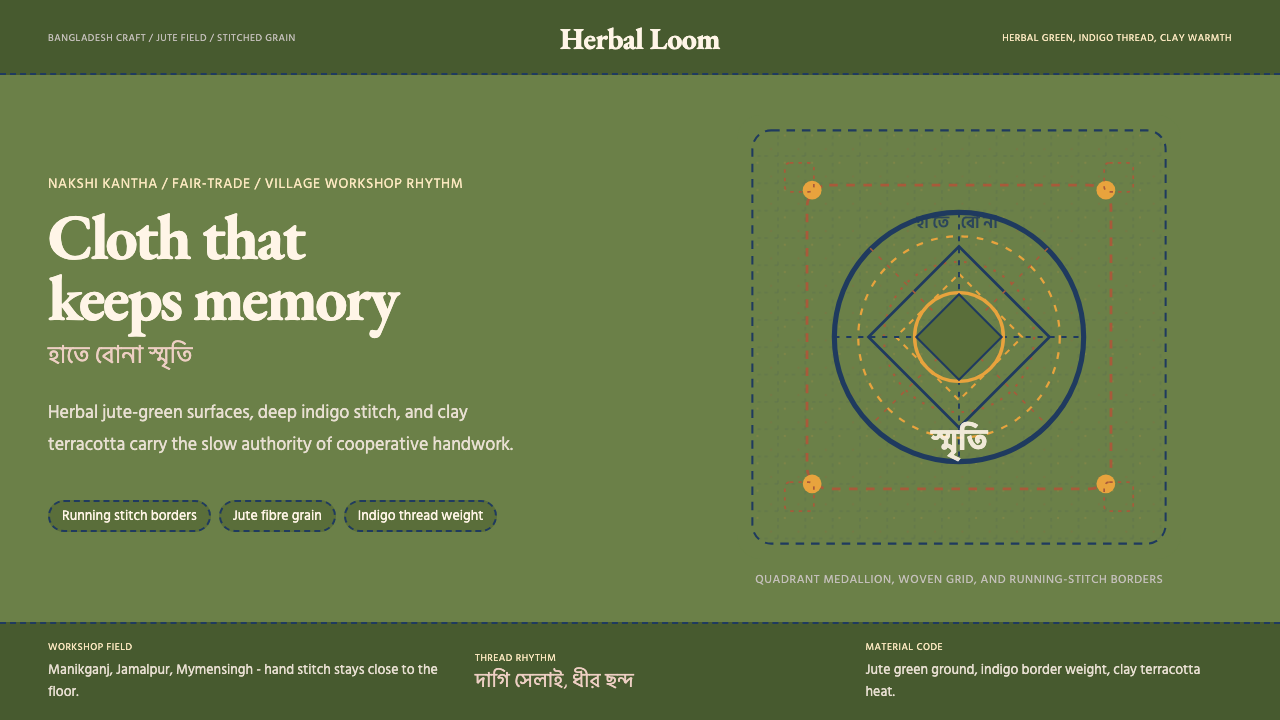 Bangladeshi Jute CraftMemory stays stitched. Jute green, indigo borders, terracotta warmth.
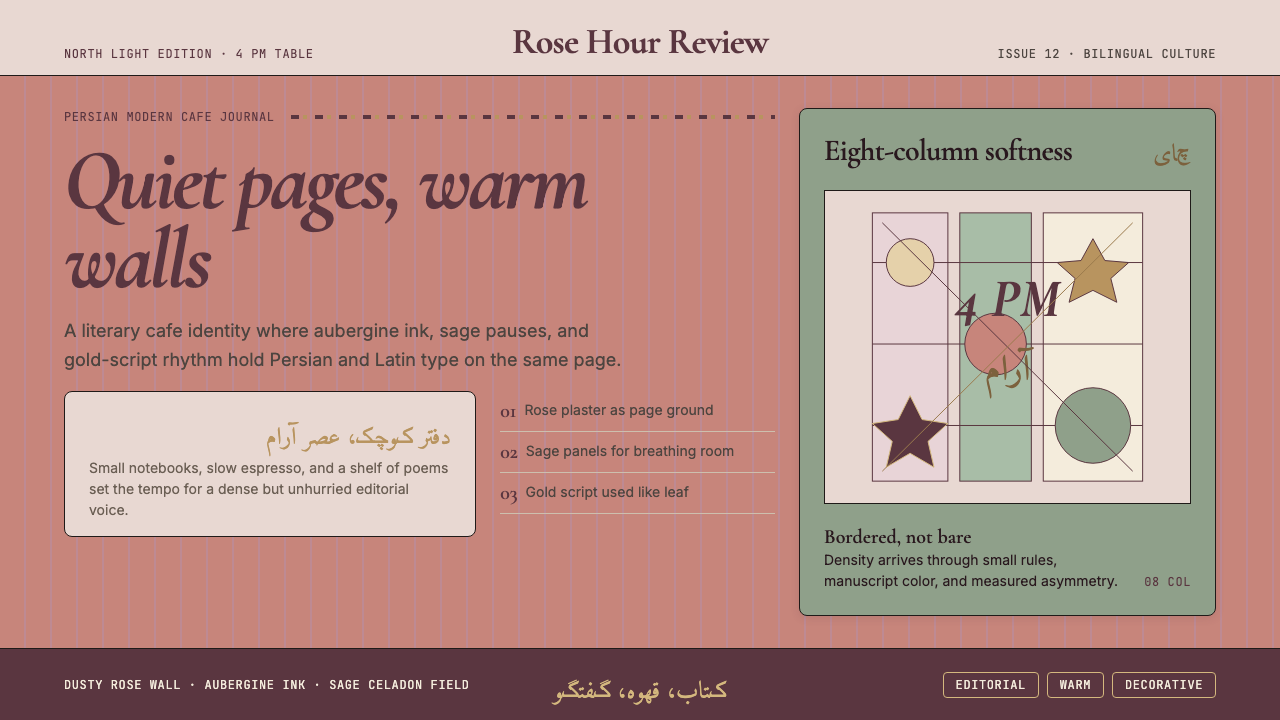 Tehran Cafe ModernismQuietly dense, warmly literary. Dusty rose, sage panels, and italic serif gri…
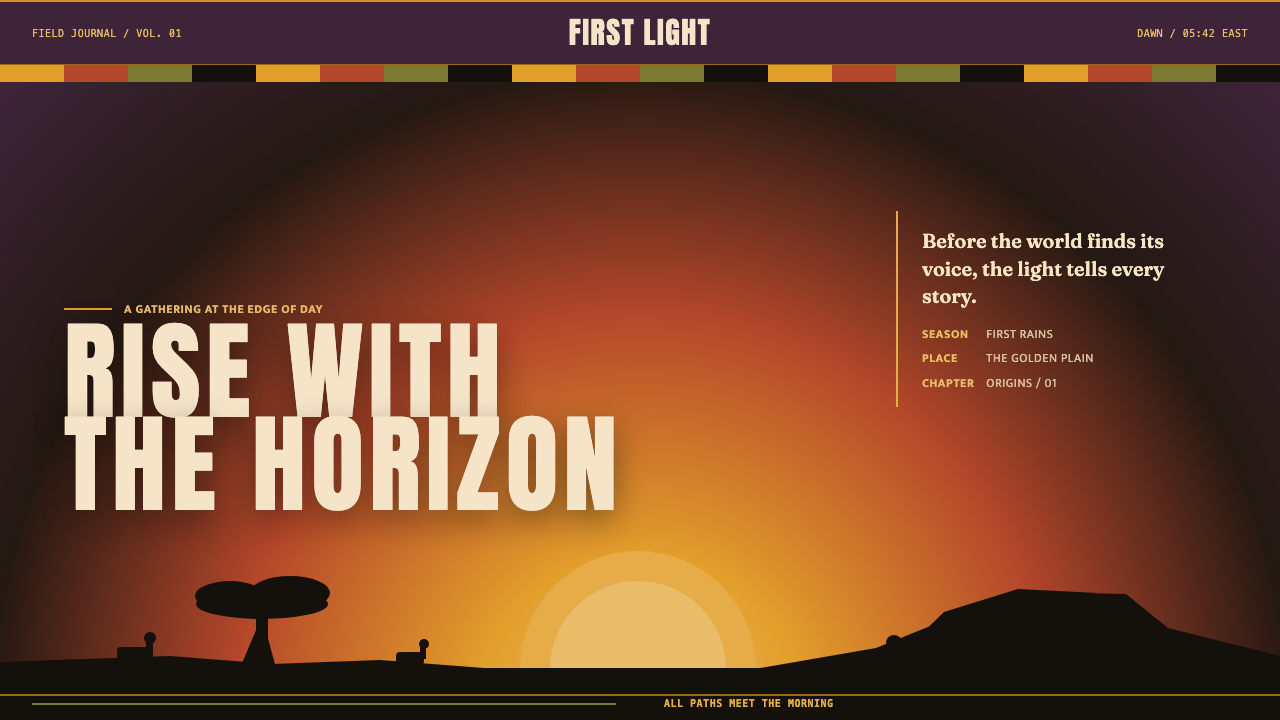 The Lion King (Pride Rock, 1994)Dawn becomes destiny. Monumental silhouettes rise through plum, terracotta, a…
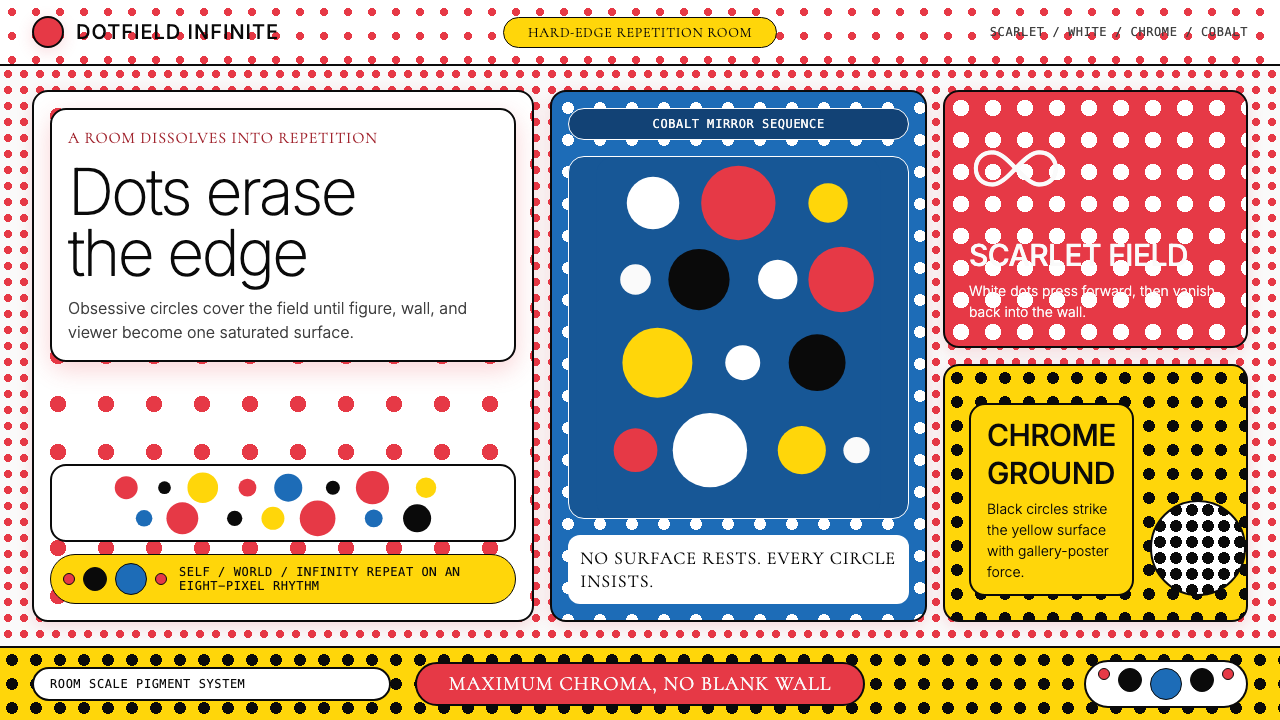 Yayoi Kusama Polka DotInfinity eats the wall. Scarlet-white dots and chrome-yellow panels repeat wi…