What is Iranian Modernist Cinema Poster?
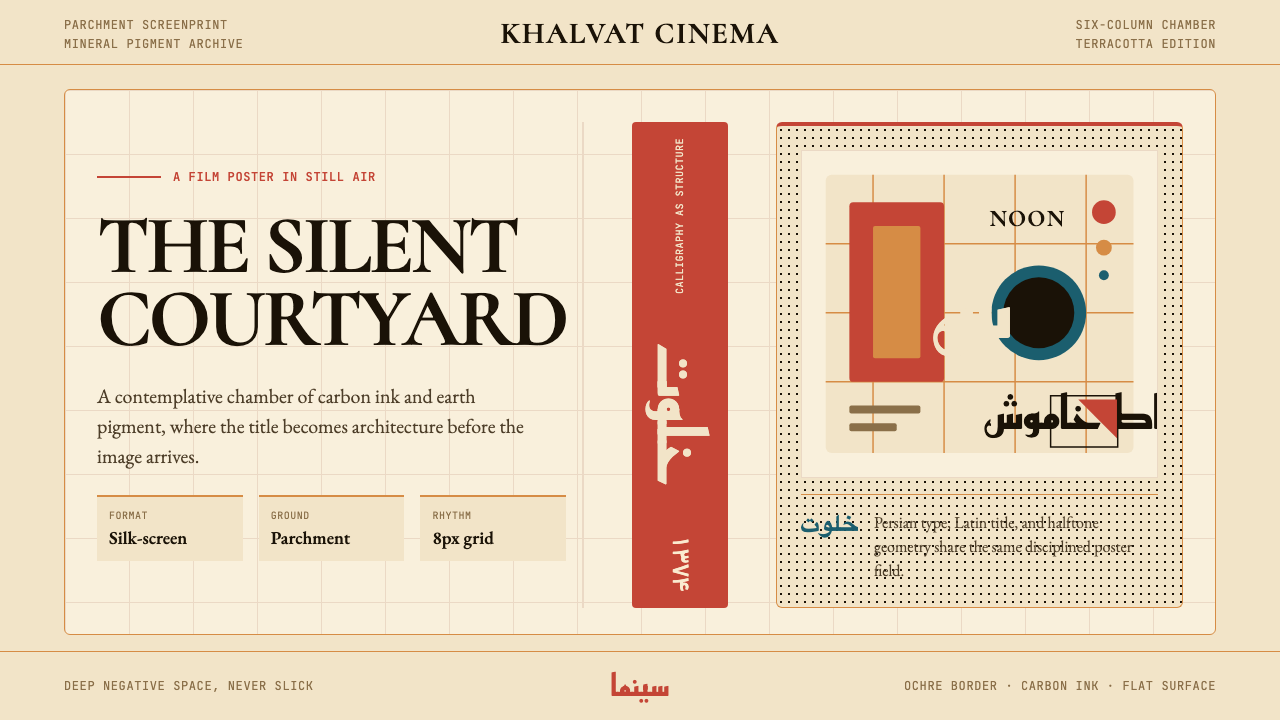
Persian calligraphy meets Swiss grid discipline on sun-baked parchment — Iranian modernist cinema posters turned stillness into a monumental art form.
Iranian Modernist Cinema Poster in brief
Iranian modernist cinema poster is a graphic tradition that fused the architectural logic of Persian calligraphy — particularly the Nastaliq and Kufi scripts — with the structural discipline of Swiss grid-based modernism. The resulting visual language is distinctive: warm earth-tone grounds, slow and deliberate negative space, hand-drawn letterforms that function as both image and text, and a compositional calm that invites sustained looking rather than instant legibility.
The style arose in the context of Iran's own New Wave cinema, where directors such as Abbas Kiarostami, Bahram Beyzaie, and Dariush Mehrjui were making films of exceptional formal intelligence. Poster designers understood that the work being advertised demanded equivalent seriousness. Rather than adopting the garish photomontage dominant in commercial cinema elsewhere, they chose reduction: fewer elements, deeper silence, letterforms as primary image-making tools.
Materially, the tradition was rooted in silk-screen printing on coarse, parchment-toned paper. Terracotta, ochre, carbon black, and warm cream were the colors of the pigments available and the surfaces they stained — a palette born of material reality that later became an aesthetic signature. Contemporary applications translate this sensibility into digital form while preserving its essential qualities: the sense of something hand-made and deliberate, the earth-toned restraint, and the willingness to let a single strong letterform carry an entire composition.

Where does Iranian Modernist Cinema Poster come from?
The conditions that produced Iranian modernist cinema posters were both cultural and political. In the 1950s and 1960s, Iran's urban intellectual class was deeply engaged with global modernism — European cinema, Russian constructivism, American abstract expressionism — while simultaneously seeking to reconnect with pre-Islamic and classical Persian visual heritage. This tension between internationalism and cultural rootedness gave the emerging design movement its particular character: not a straightforward adoption of Western modernism, but a negotiation between imported structural methods and indigenous visual resources.
The institutional center of this movement was Tehran, particularly the Tehran Graphic Design Society, founded in the early 1960s. The society brought together designers, typographers, illustrators, and film industry professionals who shared a conviction that Iranian graphic design should develop a voice distinct from both Western commercial design and Soviet-influenced political graphics. Morteza Momayez, who studied in France before returning to Iran, became the movement's pivotal figure — advocating for a design practice that drew on Safavid miniature painting, Persian tile geometry, and classical calligraphy while remaining formally rigorous.
The golden period of the tradition runs from roughly the mid-1960s through 1979, the year of the Islamic Revolution. During this period, cinema was one of the few cultural fields where experimental formal work received public distribution and institutional support. The New Wave directors — whose films were winning international awards and being screened at European festivals — created demand for poster design of comparable ambition. Designers such as Iraj Anvari, Saed Meshki, and Reza Abedini developed poster solutions in which calligraphic forms were not decorative additions but structural elements: a single Nastaliq word-form might occupy half the poster surface, its flowing strokes implying narrative without depicting it.
After the 1979 revolution, the tradition underwent significant disruption. Many designers emigrated, cinema underwent politically mandated transformations, and the visual culture of public life changed dramatically. The revival of the aesthetic — and its recognition as a distinct historical style — came primarily in the 1990s, when designers like Reza Abedini, working both inside Iran and internationally, began explicitly referencing the pre-revolution visual tradition while extending it with new typographic and compositional ideas. Abedini's work in particular brought the Iranian modernist poster tradition to international attention through exhibitions in Europe and the United States, where it was recognized not as a regional curiosity but as one of the significant bodies of twentieth-century graphic design.
What defines the Iranian Modernist Cinema Poster look?
Earth-Tone Palette
The color vocabulary is drawn from mineral pigments and the physical conditions of silk-screen printing on uncoated paper: terracotta reds, ochre yellows, carbon blacks, and parchment creams. These tones are warm, slightly muted, and carry the suggestion of age and materiality. Saturated cool colors — blues, greens, violets — are largely absent from the canonical tradition, making even a single cool accent feel significant. The palette is not used decoratively but structurally, with each tone assigned a role in the compositional hierarchy.
Calligraphic Architecture
Persian calligraphy — primarily the Nastaliq and Kufi scripts — functions as both text and primary image in this tradition. A Nastaliq letterform carries inherent gestural rhythm: its thick-to-thin strokes, oblique baseline, and flowing connections between characters create visual movement that pure geometric forms cannot. Kufi, by contrast, is angular and architectural — its squared geometry sits comfortably alongside Swiss grid structures. Designers in this tradition were typically calligraphers themselves, and the distinction between writing and drawing was deliberately collapsed.
Monumental Negative Space
Perhaps the most immediately recognizable quality of the Iranian modernist poster is its willingness to leave vast areas of the picture surface empty — or rather, to treat emptiness as an active compositional force. This is not minimalism in the contemporary sense but a practice rooted in classical Persian poetry and painting, where silence and restraint are expressive rather than merely absent. A single calligraphic form placed in the lower third of a parchment ground generates tremendous visual pressure through the weight of what surrounds it.
Grid Discipline with Organic Relief
The Swiss grid — strict horizontal and vertical alignment, consistent margins, hierarchical text sizing — provides the invisible structure on which the compositions are built. But unlike pure Swiss International Style, the Iranian modernist tradition introduces organic relief through calligraphic forms that deliberately violate the grid's straight edges. The result is a productive tension: the rigorous structure makes the flowing strokes more powerful by contrast, while the calligraphic elements prevent the composition from feeling mechanical.
Halftone and Tactile Texture
The silk-screen printing process introduced visible texture into the color fields: halftone dot patterns in areas of intermediate tone, slight ink bleeding at edges, the tooth of the paper showing through transparent ink layers. This tactile quality — the sense that the poster was made by hand and exists as a physical object — is integral to the aesthetic. In digital applications, a light halftone grain or subtle paper texture applied to flat color areas preserves this quality without simulating it too literally.
Figuration through Silhouette
When human figures or objects appear in the Iranian modernist poster tradition, they are rarely rendered with photographic detail. More typically, figures are reduced to high-contrast silhouettes — a technique that is simultaneously influenced by Persian shadow puppet theater (Kheimeh Shab Bazi), European modernist woodcut, and the practical constraints of silk-screen printing. The silhouette approach integrates figurative imagery into the poster's flat compositional logic without introducing naturalistic depth that would conflict with the calligraphic and geometric elements.
Typography as Primary Imagery
In the Iranian modernist poster, the distinction between typography and illustration is frequently dissolved. A single oversized Kufi letterform becomes a geometric shape to be read as composition before it is read as character. Nastaliq ligatures are cropped, rotated, or isolated so that their calligraphic energy reads as abstract mark-making. Size contrast between typographic elements is extreme — a large display character might coexist with very small auxiliary text, using scale as the primary organizing device and making the letterform itself the poster's central visual event.

Who shaped Iranian Modernist Cinema Poster?
Momayez is widely considered the father of modern Iranian graphic design. After studying in France and returning to Tehran, he became both a practitioner and a theorist — arguing consistently that Iranian graphic design must develop from its own cultural roots rather than imitating Western models. His poster work for theater and cinema demonstrated that calligraphic forms could function as structural design elements rather than decorative additions. He was a founding force behind the Tehran Graphic Design Society and trained several generations of designers who carried his formal principles forward.
Abedini is the figure most responsible for bringing the Iranian modernist poster tradition to international recognition. Working across graphic design, typography, and exhibition design, he developed a personal language that extended the pre-revolution tradition while incorporating influences from conceptual art and postmodernist typography. His poster work — characterized by extreme scale contrast, fragmented calligraphy, and layers of cultural reference — won major international awards and was exhibited widely in Europe and North America in the 1990s and 2000s, establishing the tradition as a significant contribution to world design history.
Meshki worked extensively in cinema poster design during the New Wave period, developing a practice in which hand-drawn type and silk-screened earth tones were the primary compositional materials. His approach was notable for its restraint: where other designers might resolve a composition with figurative imagery, Meshki trusted calligraphic form and negative space to carry the visual and emotional weight of the work. His posters for films from this period remain among the most celebrated examples of the tradition.
Anvari represented the more experimental wing of the Iranian modernist poster tradition, pushing the geometric possibilities of Kufi script into territory that bordered on pure abstraction. His work demonstrated that the tradition's engagement with calligraphy was not conservative or nostalgic but formally radical — capable of producing visual compositions that could sit alongside European constructivism or American conceptual graphic design without apology. His influence on younger Iranian designers who came of age in the 1980s and 1990s was substantial.
How do you use Iranian Modernist Cinema Poster today?
Iranian modernist cinema poster is among the more demanding historical styles to apply well, because its power depends on what is withheld rather than what is shown. The temptation when working with this vocabulary is to fill space — with more calligraphic elements, more texture layers, more color. Authentic application requires the opposite discipline: decide on the one or two elements that will carry the composition, then build the surrounding emptiness to give them force. Every element added should be tested against the question of whether it strengthens or dilutes the central visual event.
For presentation slides, the style is particularly effective for covers and section dividers rather than dense content pages. A cover built in this tradition might feature a single large calligraphic or geometric form — not necessarily an Arabic or Persian character, but any letterform treated with similar weight and isolation — positioned in the lower half of a parchment or warm cream ground, with the title in a serif face at a much smaller scale in the upper portion. Section dividers benefit from the same logic: one strong element, vast surrounding space, and a muted earth-tone field. Data and content slides should be simplified rather than fully styled — a clean grid with earth-tone accent lines and a warm background will complement cover material without competing with it.
For web interfaces, the tradition translates most naturally into contexts where deliberate pacing and cultural seriousness are valued: cultural institution websites, art house cinema platforms, independent publisher pages, premium editorial products. Dashboard and pricing page applications are possible but require restraint — the style does not accommodate dense information architecture gracefully. When used for data-heavy screens, adopt the grid discipline without the deep negative space: warm background tones, serif or calligraphic-adjacent display type for headings, earth-tone accent colors for interactive states, and a light halftone texture applied sparingly to header areas.
For editorial and marketing work, the style is most powerful when given room to breathe. A full-page feature spread in this tradition might carry one dominant typographic element — a single word or phrase in a display face that occupies half the page — with body text set at a small scale in a generous margin. Marketing pages that need to convert should use the style's poster-like boldness selectively: a hero section built on these principles followed by more conventional content sections will make a strong first impression while remaining functionally accessible. Social cards and cover images are ideal applications — the constraint of a single fixed frame plays directly to the tradition's compositional strengths.
The most common mistake when applying this style is conflating earth tones with dullness and compensating by increasing saturation or adding more elements. The terracotta and ochre palette reads as richly warm rather than flat precisely because it is used against deep negative space and complemented by very dark type. Adding saturated accent colors, gradient overlays, or dense decorative patterning breaks the spell entirely. A second frequent error is using calligraphic forms purely decoratively — as background texture or ornamental frame — rather than as primary compositional structure. When calligraphy is decoration, the style loses its formal logic and becomes pastiche.

Iranian Modernist Cinema Poster — FAQ
How does this style differ from other Middle Eastern or Islamic design traditions?
The Iranian modernist cinema poster tradition is distinct in its explicit dialogue with Western modernism — particularly Swiss International Style and European constructivism — rather than developing from traditional Islamic decorative arts in isolation. Where traditional Islamic geometric ornament fills space densely and symmetrically, this tradition uses negative space aggressively and composes asymmetrically. The calligraphic forms are deployed with modernist structural logic — as primary compositional elements — rather than as surface decoration. The tradition also has a specifically secular, cinematic origin that distinguishes it from design produced in explicitly religious contexts.
Can this style be used without actual Persian or Arabic calligraphy?
Yes, and for many applications it is the appropriate choice. The core formal principles — earth-tone palette, monumental negative space, one or two primary visual elements given extreme scale prominence, tactile texture, grid structure with organic relief — can be applied using Latin, Chinese, or any other script. The key is treating the letterforms with the same architectural seriousness that Persian calligraphers brought to Nastaliq and Kufi: isolating them, giving them scale, and building the composition around their visual weight rather than treating them as labels to be accommodated. Using actual Persian calligraphy without genuine cultural knowledge risks inauthenticity; the structural principles transfer more reliably.
Why does this tradition favor parchment and warm grounds over white?
The warm ground has both a material and a perceptual rationale. Materially, the uncoated papers commonly used for silk-screen printing in Tehran in the 1960s and 1970s were naturally warm-toned rather than optically brightened, so parchment cream became the natural baseline. Perceptually, a warm ground softens the contrast between ink and paper, creating a relationship that feels contemplative rather than confrontational — appropriate for cinema promoting work of formal seriousness. A pure white ground, by contrast, makes dark type and graphic elements feel more aggressive and immediate, which suits commercial advertising but conflicts with the tradition's meditative quality.
How do I avoid making this style feel dated or nostalgic rather than contemporary?
The distinction lies in whether the historical references are being used structurally or decoratively. When the earth-tone palette, negative space discipline, and calligraphic scale are applied as genuine compositional principles — because they solve the specific design problem at hand — the result reads as contemporary design informed by a historical tradition. When the same elements are applied as a costume — adding halftone grain for atmosphere, using a calligraphic font as texture — the result reads as nostalgic pastiche. The functional test: does every element in the composition have a structural reason to be there? If calligraphic forms are present, they should be primary, not atmospheric. If texture is present, it should be integral, not applied.
Is this style appropriate for digital products beyond visual design, such as UX writing or product voice?
The values embedded in this visual tradition do suggest a corresponding approach to language and tone. A product that adopts this aesthetic sincerely is likely communicating authority, cultural seriousness, and an expectation that the audience will engage slowly and thoughtfully — rather than seeking instant gratification. UX writing in this register tends toward brevity and weight: fewer words, each chosen deliberately; no filler phrases or exclamation points; a preference for declarative statements over conversational hedging. The tradition's origins in cinema promotion also suggest a voice that is invitational rather than transactional — describing rather than selling, trusting the audience to draw their own conclusions.
Related design styles
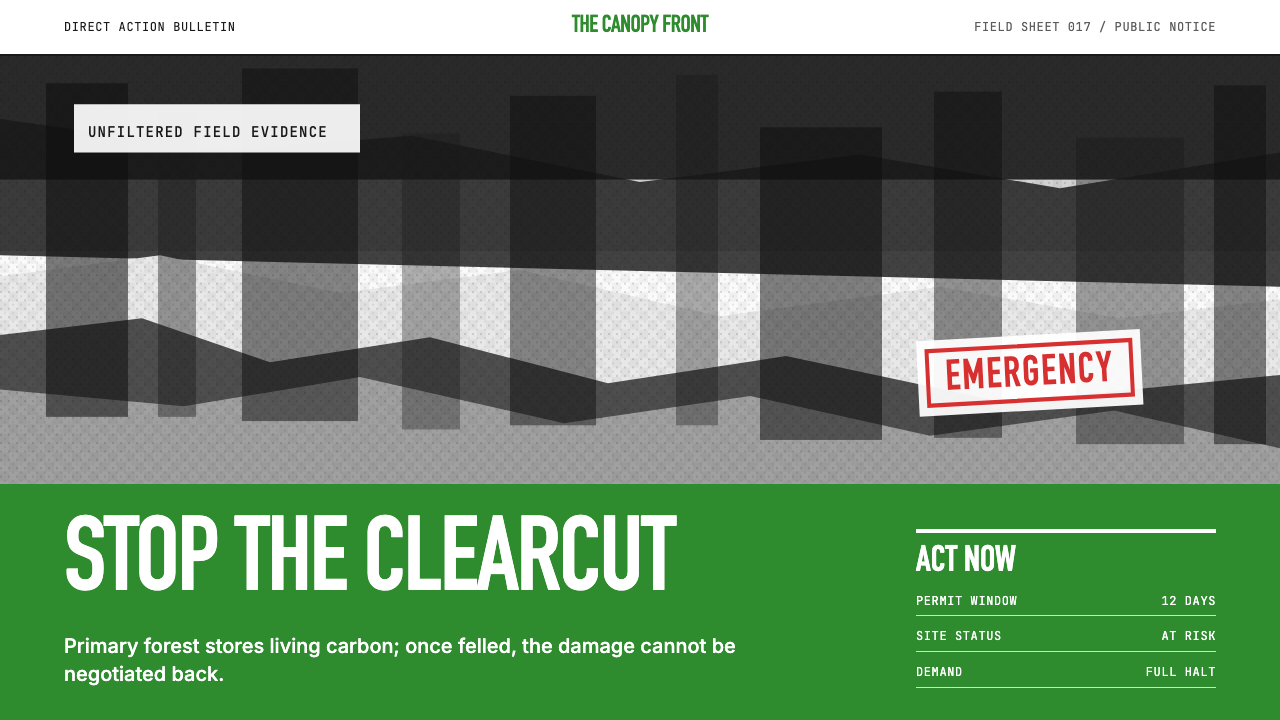 Greenpeace (Activist Poster)Protest without softness. Forest-green caps over monochrome newsprint, one de…
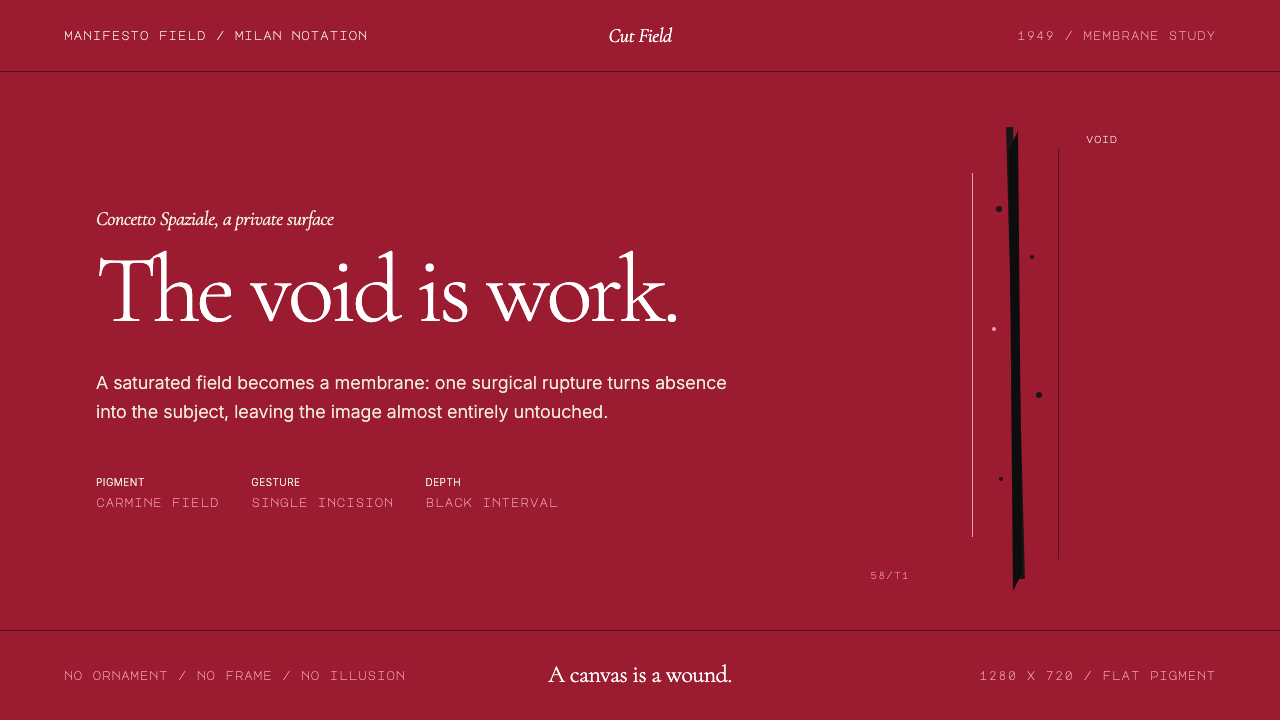 Spatialism (Fontana Cut, 1949)Absence becomes medium. Carmine field, Garamond restraint, one black incision.
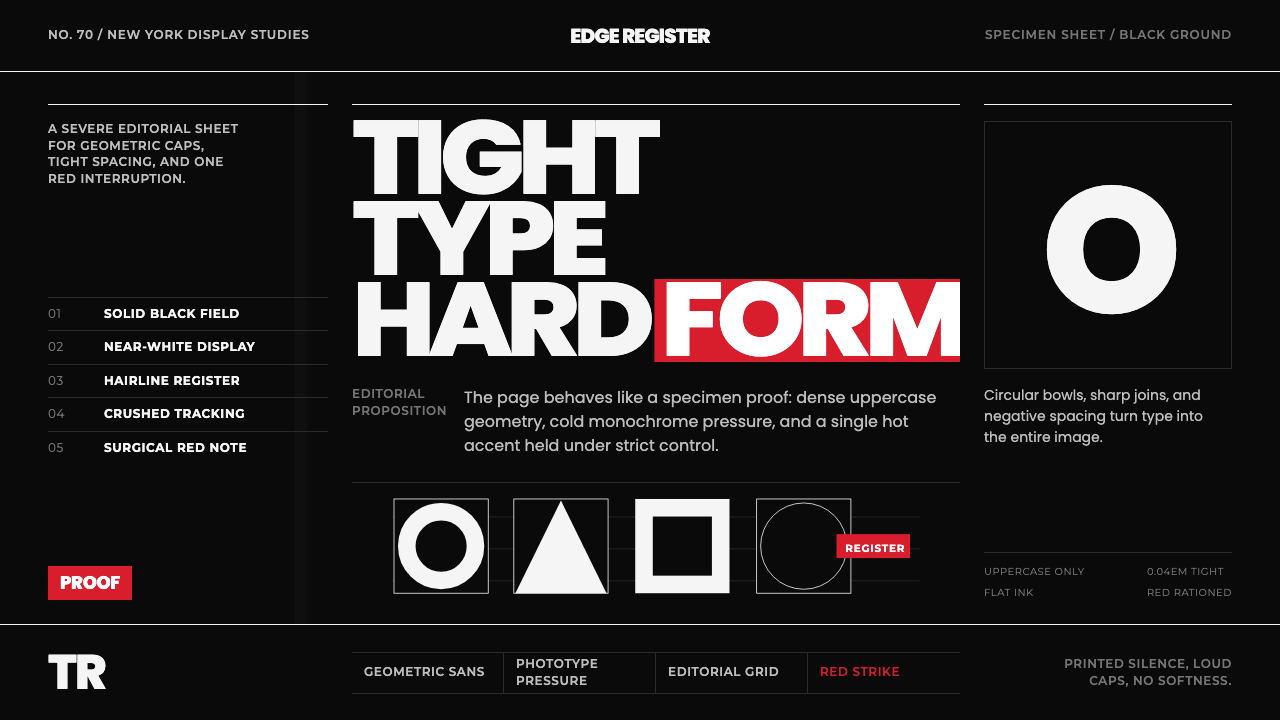 Avant Garde GothicType is the image. Tight white caps on black, ruled grids, one hot red strike.
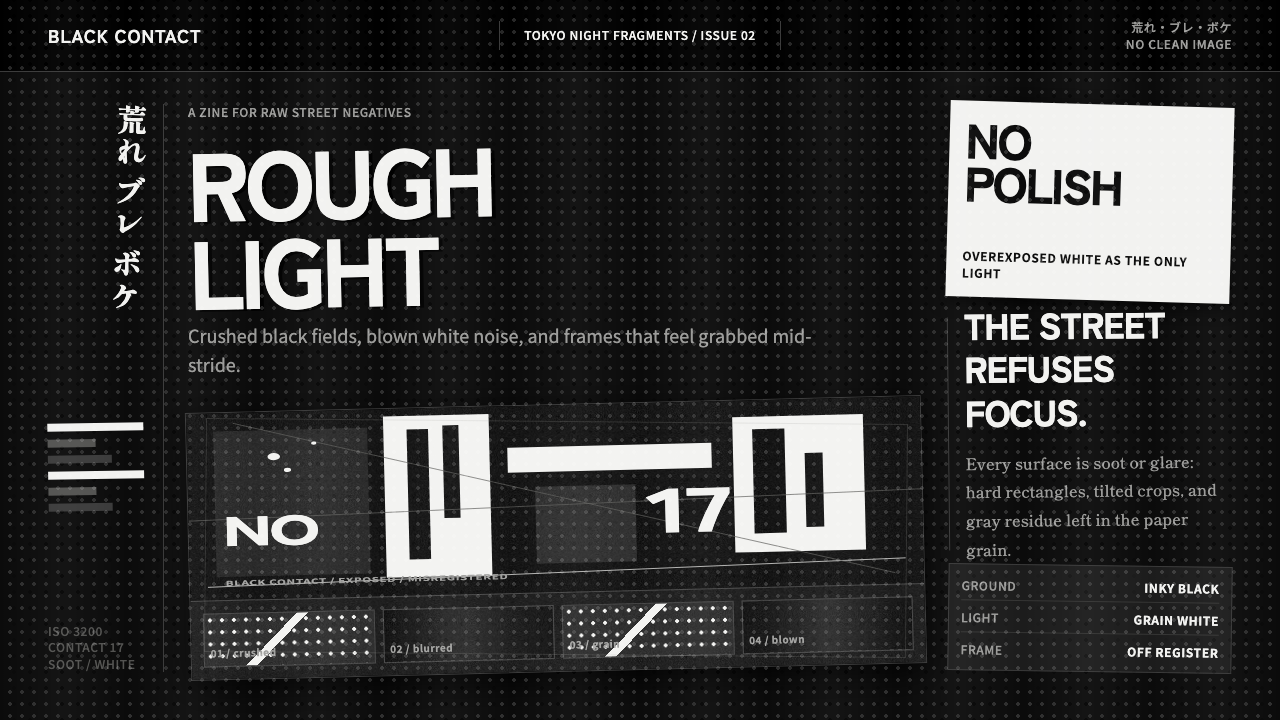 Daido Moriyama Are-Bure-BokeNothing is clean. Inky black, blown white grain, and tilted frames make the i…
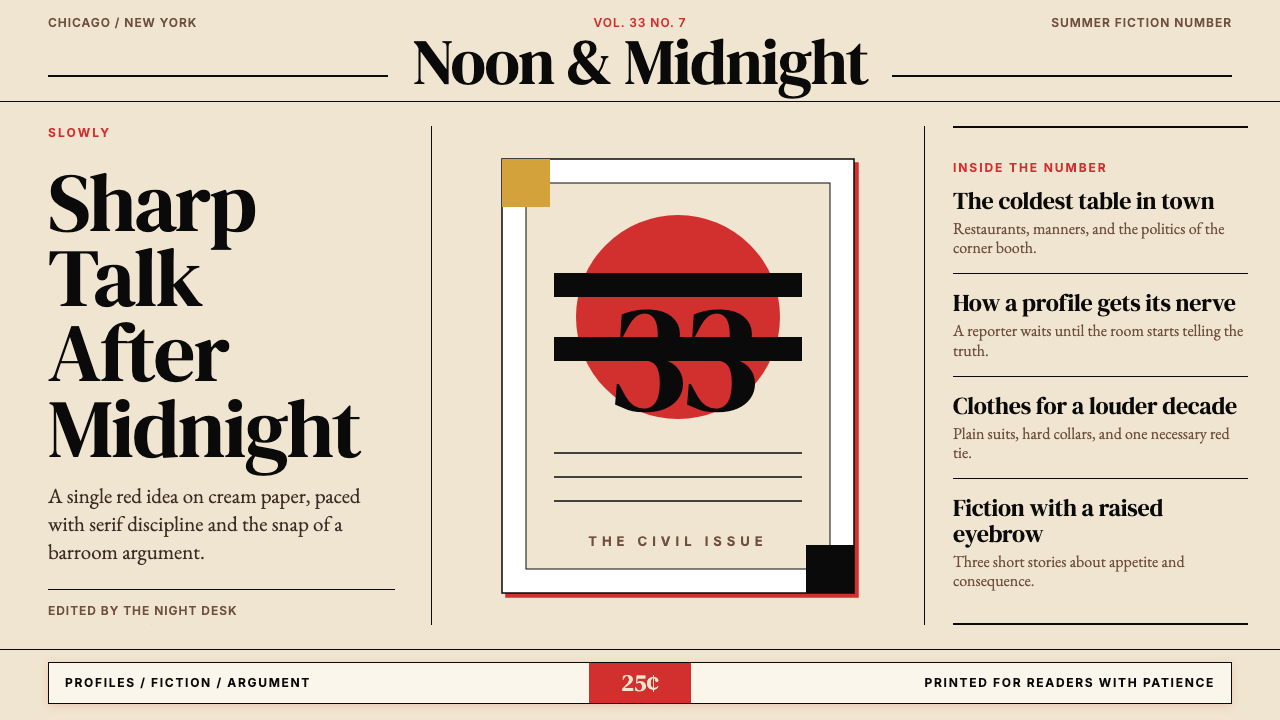 Esquire MagazineConceptual punch on paper. Cream stock, black hairlines, and one saturated re…
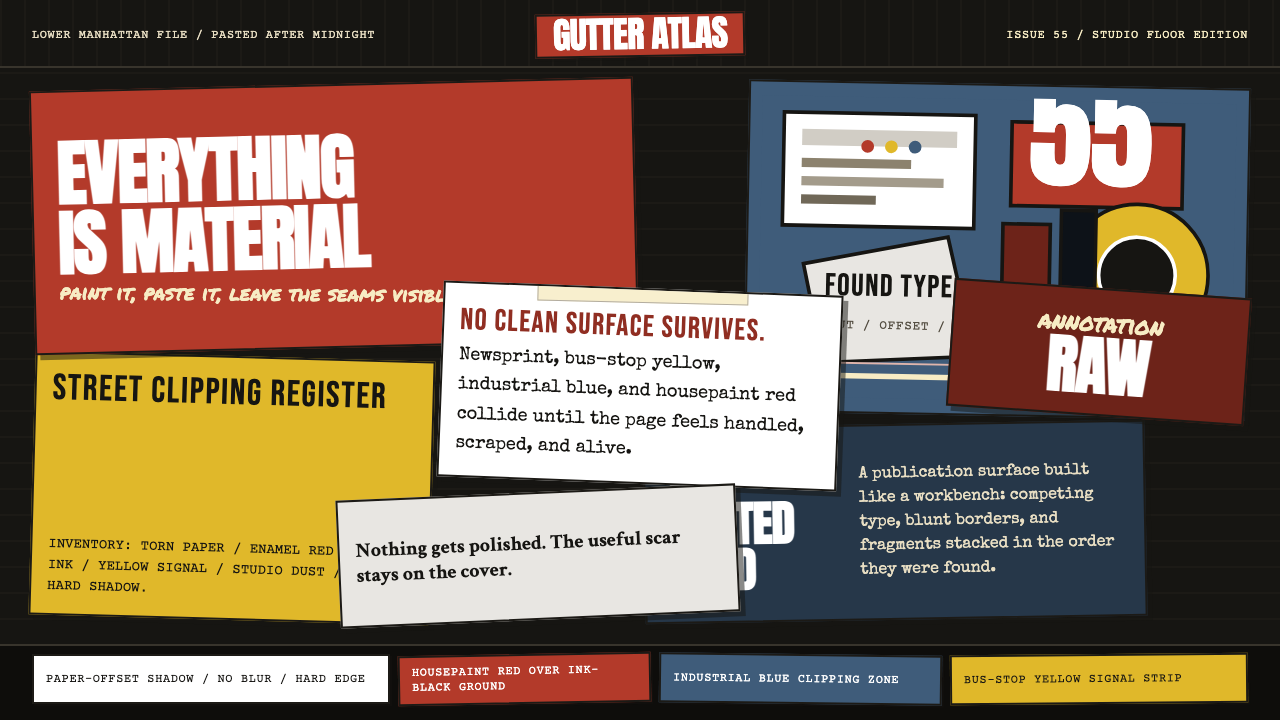 Rauschenberg Combine (1955)Street debris becomes syntax. Ink black, torn type, red-blue-yellow scraps co…