What is Hindu Widow White Sari?
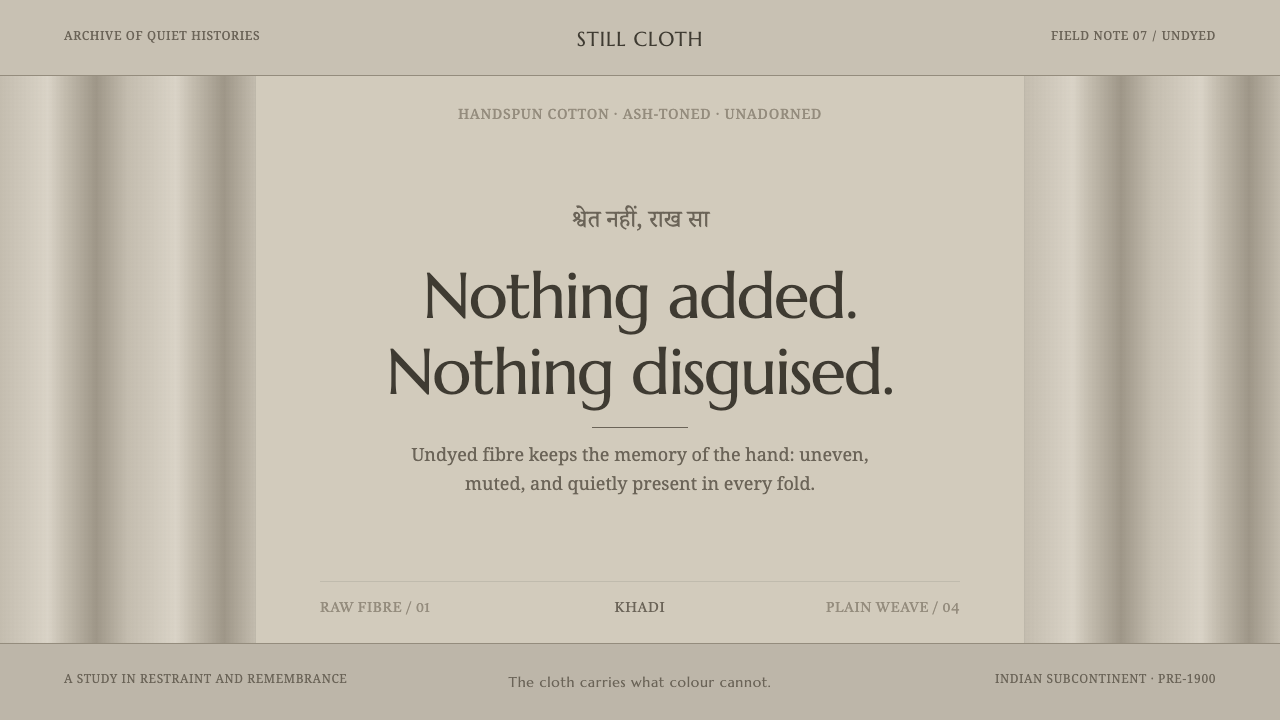
Restraint carries the weight: ash-toned khadi, quiet serif type, and vertical folds turn mourning and renunciation into a composed visual language.
Hindu Widow White Sari in brief
The Hindu widow white sari is not bright white. It is undyed handspun cotton, khadi, whose raw and inexpensive material carries an ash-toned grey cast. Worn without ornament, the sari communicates mourning and renunciation through absence: no vivid dye, no decorative surface, no attempt to turn hardship into glamour.
In muted ashram light, the fabric is read through its folds rather than its color. The drape creates a vertical rhythm of quiet grey bands, while the cloth remains visibly plain and unadorned. Its visual force comes from restraint, repetition, and gravity rather than contrast, shine, or embellishment.
As an interface language, the system translates that presence into muted off-white grounds, wide plain borders, quiet serif type, and a deliberately reduced visual vocabulary. Elements should feel placed and held rather than displayed. The composition leaves room around information, allowing silence and structure to carry as much meaning as the content itself.

Where does Hindu Widow White Sari come from?
The custom belongs to traditional Hindu widowhood practice on the Indian subcontinent and predates 1900, while continuing into the twentieth century. Its visual identity is defined by the widow sari itself: undyed, handspun, plain, and worn without ornament. The garment is therefore not merely a neutral base but a visible convention of mourning and renunciation.
Khadi gives the convention its particular material character. Because it is handspun cotton left undyed, it does not present the brilliant whiteness suggested by the phrase white sari. Its surface retains a raw, ash-toned quality, and its plainness makes the cloth feel close to everyday material rather than ceremonial luxury. The cheapest cloth becomes the carrier of a serious social and spiritual meaning.
Ashram communities shaped the atmosphere in which this visual language is most legible. Muted light, quiet surroundings, and unadorned dress allow the sari to appear as a field of restrained grey folds. Pilgrimage communities belong to the same cultural setting, where the garment's lack of display reinforces a movement away from glamour and toward renunciation.
The design system draws from two connected traditions: the mourning-dress convention and the handspun khadi cotton tradition. It does not reproduce the sari as costume or decoration. Instead, it abstracts the qualities named by the source material—rawness, desaturation, vertical drape, plain borders, and gravity—into a visual discipline for contemporary layouts and interfaces.
What defines the Hindu Widow White Sari look?
Ash-Toned Ground
The ground is an off-white that has been quieted toward ash rather than pushed toward brightness. It should feel like undyed cloth under muted light: pale, breathable, and slightly weathered. The background carries atmosphere without becoming a spectacle, giving text and structure a calm field in which to settle.
Raw Material
Khadi is represented through visual restraint rather than simulated texture. The system favors plain surfaces, modest contrast, and a sense that the material has not been polished for display. Any tactile suggestion should remain quiet and subordinate to the composition, preserving the dignity of an undyed handspun cloth.
Quiet Serif Type
Serif type introduces a measured, literary presence without becoming ornamental. Letterforms should sit firmly in the page, with clear spacing and an unhurried rhythm. The type is not theatrical; it carries information with patience, allowing the gravity of the subject to emerge through tone and proportion rather than display.
Vertical Folds
Verticality is the system's primary rhythm. Columns, rules, stacked text, and narrow tonal shifts should suggest the long fall of draped cloth. The direction creates dignity and continuity, guiding the eye downward without demanding speed. Every vertical element should feel like a fold held in place.
Plain Borders
Borders are broad, quiet, and functional. They frame a section without becoming a decorative device, holding the content in the same way a plain edge contains a fold of cloth. Avoid intricate frames, ornamental corners, or visual flourishes. The border should establish dignity through steadiness.
Renunciatory Restraint
The defining quality is refusal: no ornament added merely to make the page richer, no glamour introduced to lighten the subject, and no decorative contrast that competes with the material story. Restraint is not emptiness. It is a deliberate decision to let absence, silence, and repeated form carry the composition.

Who shaped Hindu Widow White Sari?
Hindu widows are the central human presence in this visual tradition. Their unadorned white sari carries mourning and renunciation through material and dress rather than display. In the design system, this presence is treated with gravity: the sari is understood as a lived convention, not as a decorative motif detached from its meaning.
Ashram communities provide the quiet setting in which the sari's ash-toned folds become especially legible. Muted light and unadorned surroundings reinforce the garment's refusal of glamour. Their role in the visual language is atmospheric as much as social: they establish the stillness, plainness, and inward gravity that the interface should preserve.
Pilgrimage communities belong to the wider setting from which the system draws its sense of renunciation. Their presence connects plain dress with movement away from display and toward spiritual seriousness. In application, this becomes a preference for continuity, modesty, and composure over novelty or visual spectacle.
The handspun khadi tradition is the material foundation of the visual language. Undyed cotton, inexpensive cloth, and a raw surface give the sari its ash-toned restraint. In the interface, this foundation argues for surfaces that feel honest and unembellished, where material character comes from quiet variation rather than manufactured richness.
How do you use Hindu Widow White Sari today?
For presentation covers, use a broad off-white field with a single vertical organizing gesture: a quiet rule, a tall text block, or a restrained fold-like division. The title should sit in serif type with enough surrounding silence to feel held rather than announced. Content slides should preserve the same discipline through plain borders, stacked sections, and generous breathing room. Let hierarchy come from placement and scale contrast, not decorative color.
Data slides should feel like carefully arranged cloth rather than a dashboard full of competing signals. Use tonal differences within the muted ground to separate categories, and rely on vertical alignment to guide reading. Charts, tables, and annotations should remain plain and legible, with borders used to contain information rather than ornament it. The data should appear serious because it is clear, not because it is visually aggressive.
For web interfaces, the style suits dashboards, pricing pages, and other products that need calm authority. Keep the main field muted and reserve stronger contrast for essential states, headings, and actions. Panels should be separated by broad plain edges or quiet tonal shifts instead of glossy surfaces. Navigation benefits from restrained serif labels and a steady vertical rhythm, while interaction should feel deliberate and unhurried.
Editorial and marketing work can use the style to create an atmosphere of seriousness, reflection, and material honesty. Articles benefit from narrow reading columns, long vertical pacing, and section boundaries that feel like folds or cloth edges. Marketing pages should resist the impulse to brighten every message; a restrained product story, surrounded by quiet space and unadorned framing, can make the subject feel considered rather than promotional.
The common mistake is treating the white sari as a generic luxury minimalism or as an exotic decorative theme. Bright white grounds, polished surfaces, ornate borders, dramatic contrast, and fashionable display type all move away from the source. The essential distinction is between emptiness and restraint: the page should not look unfinished, but every visible decision should support raw material, mourning, renunciation, vertical continuity, or quiet gravity.

Hindu Widow White Sari — FAQ
Is the Hindu widow white sari literally white?
Not in the visual sense suggested by bright white fabric. The source describes it as undyed handspun cotton, or khadi, with an ash-toned grey cast. In muted light it reads as quiet grey folds. The design system should therefore favor a softened off-white atmosphere rather than brilliant whiteness.
Why is khadi important to the style?
Khadi supplies the material logic of the style. It is handspun, undyed cotton associated in the source with the cheapest cloth, and its raw surface keeps the sari close to plain everyday material. Without that material restraint, the visual language can become a polished imitation that keeps the pale palette but loses the sense of mourning and renunciation.
Can this style use ornament or decorative texture?
Only with great restraint, and usually not as ornament for its own sake. The approved material emphasizes unadorned dress, plain borders, and an absence of glamour. A quiet suggestion of cloth may support the idea of khadi, but intricate patterns, glossy surfaces, ornamental frames, and decorative flourishes contradict the system's central refusal.
What makes the interface feel solemn rather than merely empty?
Solemnity comes from coordinated restraint. The muted ground, quiet serif type, vertical rhythm, broad plain borders, and controlled spacing must work together. If the page only removes content and decoration, it feels unfinished. If every remaining element is placed with steadiness and purpose, absence becomes structure and the composition gains gravity.
Where does this style work best?
It works best where quiet authority, reflection, and material honesty are valuable: editorial pages, restrained marketing, dashboards, pricing interfaces, and presentations that need seriousness without spectacle. It is less suited to products whose identity depends on glamour, vivid celebration, or ornamental richness. The style asks the product to accept stillness as part of its communication.
Related design styles
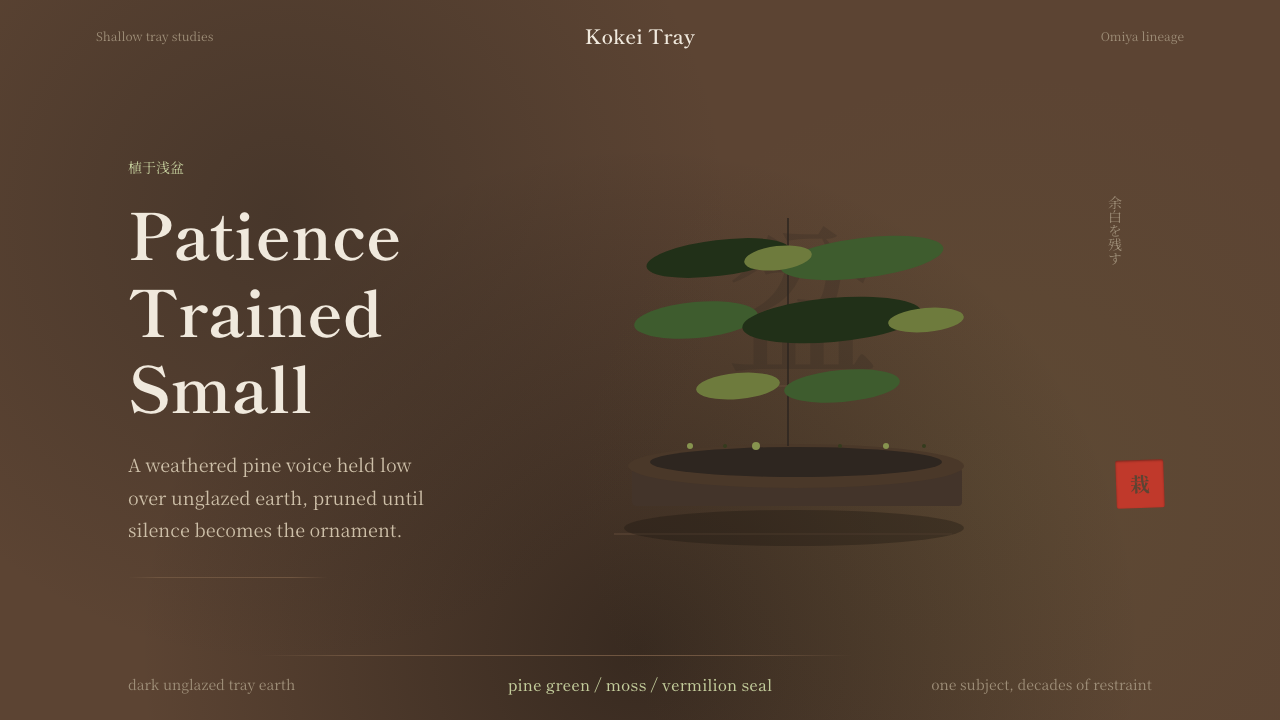 Bonsai CultivationQuiet asymmetry. Pine green rests on dark tray earth, sealed by one vermilion…
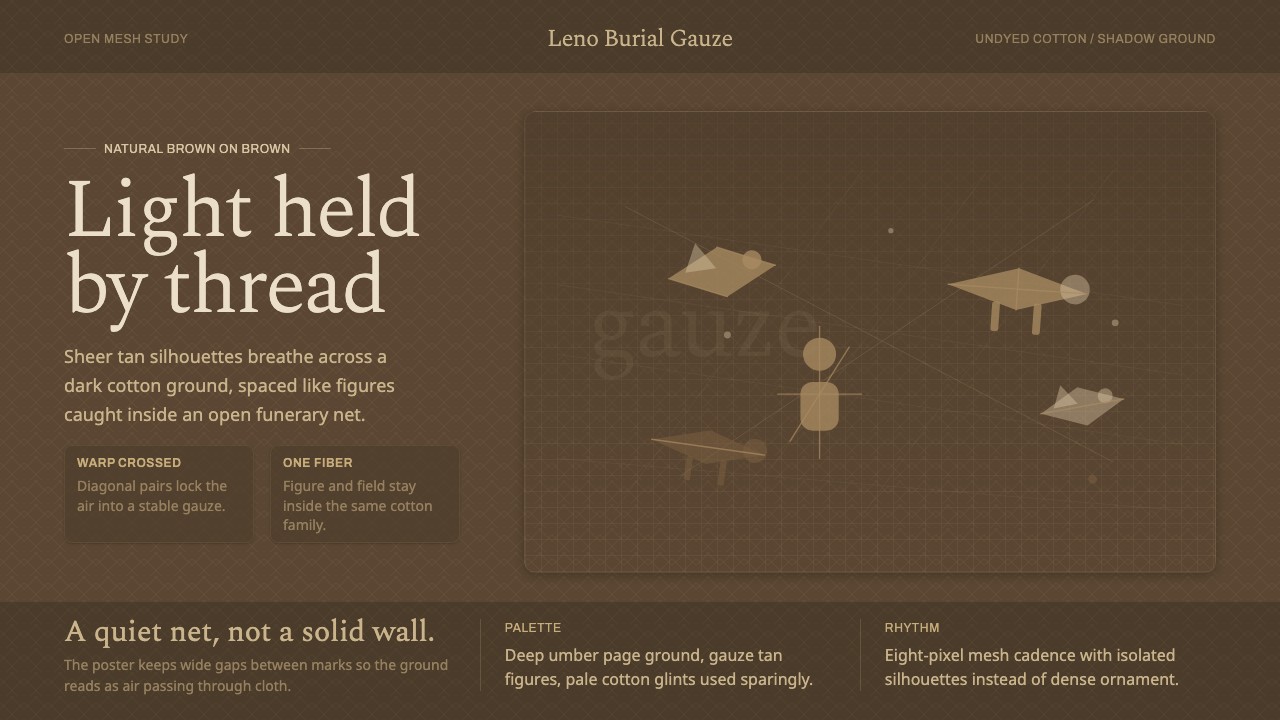 Chancay Gauze TextileQuiet woven dignity. Tan silhouettes float through a dark open cotton mesh.
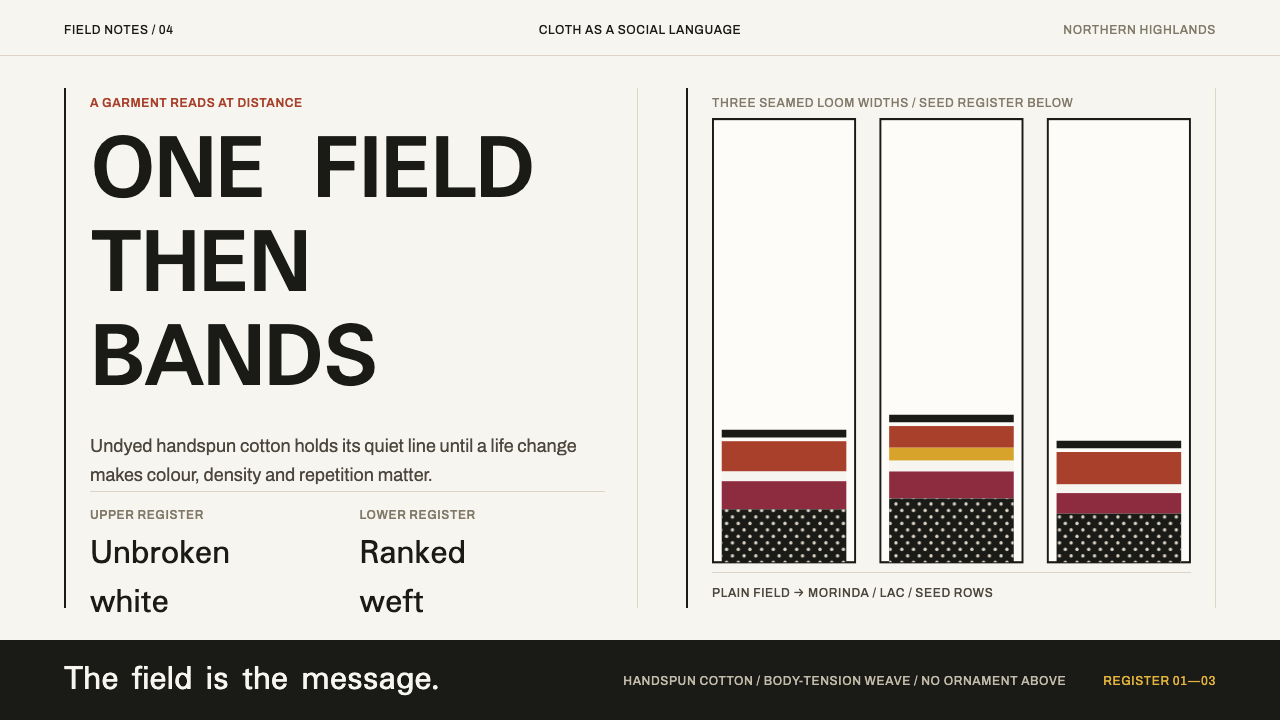 Karen Woven TunicOne field, then bands. Warm cotton white gives way to morinda registers and r…
 Konso WagaWeather makes the monument. Silver-grey timber, hard planes, and ochre held i…
 Moriori Rakau MomoriPressure, not incision. Literata shadows sink softly into pale, lichened bark.
 Warli Tribal PaintingTwo triangles make a human. Rice-paste cream on red-clay ochre, dancers proce…