What is Chancay Gauze Textile?
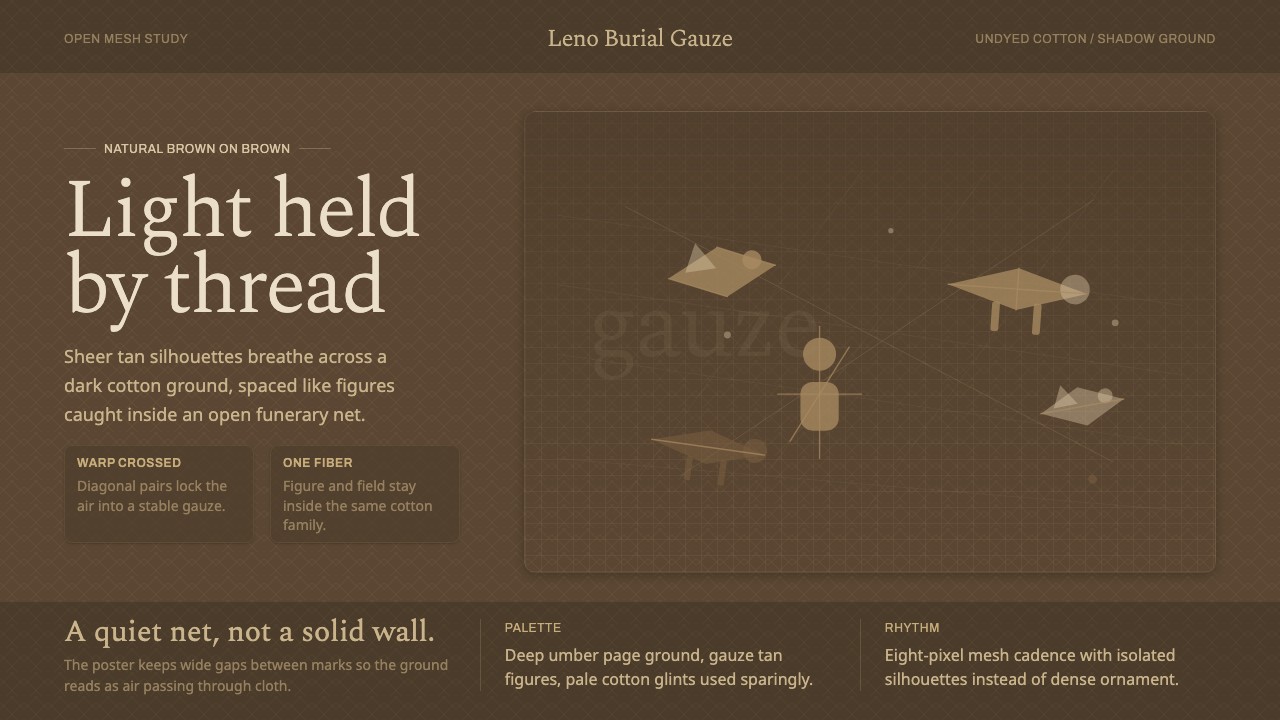
Chancay gauze turns shadow, undyed cotton, and open space into a quiet woven dignity.
Chancay Gauze Textile in brief
Chancay Gauze Textile refers to the sheer open-mesh cloths made along Peru’s central coast during the Late Intermediate Period, from roughly 1000 to 1470 CE. Their defining structure is leno, or gauze weaving: warp threads cross and lock around the weft, creating a stable net without filling the cloth with a solid woven ground. The result is light, permeable, and technically daring.
Into this net, Chancay weavers placed repeated silhouettes of birds, felines, and human figures. The motifs were worked in the same undyed tan-brown cotton as the surrounding textile, so they do not behave like separate colored patches. They emerge as forms of light against shadow, appearing and receding according to the openness of the mesh.
The design language distilled from these textiles is monochromatic, dark, and deliberately spacious. A natural brown ground carries warm gauze-tan figures in a sparse rhythm, while generous open areas preserve the feeling of a net. The effect is neither rustic decoration nor empty minimalism. It is a study in how restraint, repetition, and permeability can create presence.

Where does Chancay Gauze Textile come from?
The Chancay tradition developed along Peru’s central coast, especially around the Chancay and Chillón valleys, during the Late Intermediate Period. The source material identifies the era as roughly 1000 to 1470 CE. Within this setting, anonymous Chancay weavers produced textiles whose technical ambition rested not on dense ornament, but on the controlled stability of an open structure.
Leno weaving is the essential construction principle. Instead of arranging warp and weft into a continuous opaque field, the warp threads cross around the weft and hold it in place. This crossing creates a gauze-like mesh that can carry repeated figures while remaining visibly open. The structure itself is therefore part of the image: empty space is not missing material but an active component of the textile.
The motifs belong to a compact visual vocabulary. Birds, felines, and human figures recur as silhouettes rather than as modeled or multicolored illustrations. Because the same undyed tan-brown cotton runs through both ground and motif, the figures are defined by placement, density, and the contrast between thread and darkness. Repetition gives the cloth rhythm without making it loud.
These textiles also carried a funerary association. The source describes them as cloth built to accompany the dead into the afterlife, which gives their visual restraint a particular gravity. The darkness is not theatrical, and the figures are not ornamental spectacle. Together, the open net, natural cotton, and floating silhouettes create a sense of quiet passage and handwoven dignity.
What defines the Chancay Gauze Textile look?
Open Mesh
The ground is defined by permeability rather than fullness. Visible openings separate threads and motifs, allowing the dark field beneath to participate in the composition. In a digital interpretation, this means preserving breathing room and resisting any urge to fill every surface.
Natural Monochrome
The palette stays within the undyed cotton family: dark natural brown for the ground and warm tan-brown for the figures. Contrast comes from value and placement, not saturation or a collection of competing hues. The atmosphere is close-toned, grounded, and restrained.
Silhouette Figures
Birds, felines, and human figures are reduced to recognizable silhouettes. They are not shaded portraits or elaborate scenes. Their power comes from the tension between simple contour and the open textile around it, allowing each form to read as a presence briefly caught in shadow.
Sparse Rhythm
Repetition is present, but it is never crowded. Motifs appear with enough distance for the mesh to remain legible and for the eye to move from one figure to the next. The rhythm feels measured and ceremonial rather than busy or decorative.
Floating Contrast
The figures appear to float because the textile never gives them a heavy, continuous ground. Their visibility depends on the meeting of warm thread, dark surrounding space, and open intervals. Depth is suggested through absence rather than through modeling, gradients, or simulated lighting.
Funerary Dignity
The association with cloth accompanying the dead into the afterlife gives the system a quiet gravity. It should feel intimate, patient, and handworked. Dramatic effects, bright accents, and playful clutter weaken the sense of passage that makes the style distinctive.

Who shaped Chancay Gauze Textile?
The central makers of the tradition are unnamed Chancay weavers from Peru’s central coast. Their achievement lies in joining technical precision with visual restraint: they stabilized an open gauze structure, repeated recognizable silhouettes, and maintained a unified undyed cotton language. The anonymity of the makers reinforces the collective, inherited character of the textile tradition.
Leno is the structural intelligence of the cloth. By crossing warp threads around the weft, it creates a stable net without a solid woven ground. It is not merely a production method hidden behind the image; it determines the image’s openness, rhythm, and relationship to shadow.
Chancay funerary textiles provide the emotional frame for the design system. Made to accompany the dead into the afterlife, they connect the open mesh and floating figures with quiet dignity rather than display. Their darkness is contemplative, while their repeated silhouettes suggest continuity across a passage.
How do you use Chancay Gauze Textile today?
For presentation slides, use the Chancay system most strongly on the cover: a deep natural-brown field, a quiet tan silhouette placed with generous surrounding darkness, and a restrained title that feels woven into the space rather than stamped over it. Content slides should keep the same open rhythm, with short text blocks and clear intervals between sections. Data slides should let charts behave like woven figures: simple, legible forms separated by enough ground to preserve the feeling of mesh.
For web interfaces, the style suits dashboards and pricing pages that need seriousness without the coldness of industrial technology. Keep the page ground dark and natural, reserve warm tan for active states and key figures, and use open spacing to separate information groups. Cards should feel like framed areas of cloth rather than bright floating panels. Pricing tiers can be differentiated through silhouette density, label placement, or subtle changes in tonal contrast rather than saturated color coding.
For editorial and marketing work, the system supports stories about craft, heritage, memory, material, and quiet luxury. Long-form pages can place text beside sparse silhouette motifs, allowing the dark field to continue between sections. Marketing compositions should favor one memorable figure, one restrained message, and a large area of uninterrupted ground. The result should feel discovered, not aggressively announced.
For slides, web pages, and editorial layouts alike, typography should remain a supporting structure. Use clear, composed letterforms with strong hierarchy, but avoid making type the loudest element on the page. Headings may be firm and spacious, while body copy should remain calm and easy to read. The type should preserve the textile’s dignity by leaving room around itself.
The common mistake is to treat the style as a generic dark theme with brown decoration. Filling the background with texture, increasing motif density, introducing bright colors, or adding glossy lighting turns the open textile into a closed surface. Another mistake is to reproduce the silhouettes as isolated icons without preserving the net around them. The empty intervals are not decoration-free leftovers; they are the structure that makes the figures float.

Chancay Gauze Textile — FAQ
What makes Chancay gauze different from ordinary woven cloth?
Its defining difference is the open leno structure. Crossed warp threads lock around the weft and create a stable gauze-like net instead of a continuous solid ground. The openness is both a technical achievement and a visual principle: it lets darkness, air, and absence participate in the appearance of the figures.
Why are the figures all kept within one undyed cotton family?
The close-toned palette makes the figures depend on contour, spacing, and their relationship to shadow rather than on color contrast. Birds, felines, and human figures therefore feel woven into the same world as the ground. Their presence is quiet and atmospheric, not separated into competing patches.
Can this aesthetic be used on a modern dark website?
Yes, provided the interface preserves the principles of open space, close natural tones, and sparse rhythm. A dark ground should support the content rather than become a dramatic effect. Warm tan can identify important figures or active states, while the rest of the interface remains quiet. Dense panels, glossy surfaces, and bright accents would move the result away from the textile’s character.
What should never be added to a Chancay-inspired design?
Avoid anything that closes the net or makes the cotton feel synthetic: saturated color systems, decorative gradients, glossy lighting, dense background texture, and excessive motif repetition. The style depends on restraint. Its strongest visual event is often the moment when a simple tan figure becomes visible against the dark open ground.
Related design styles
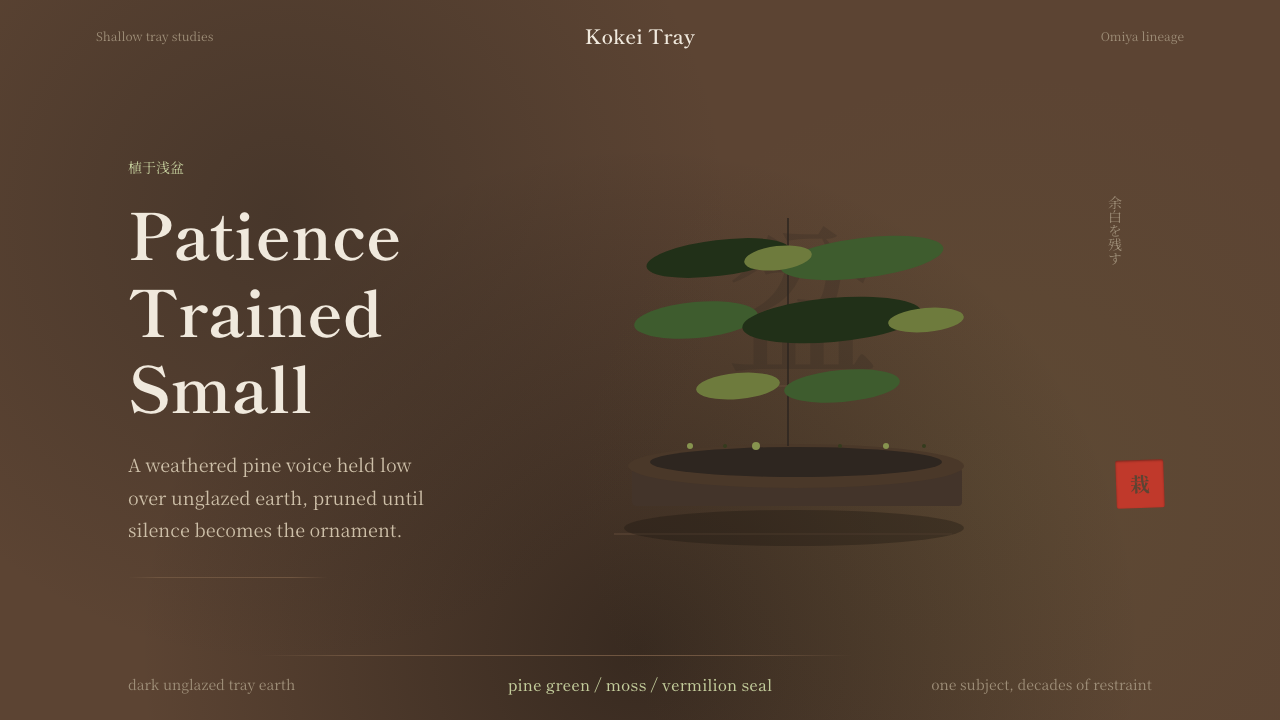 Bonsai CultivationQuiet asymmetry. Pine green rests on dark tray earth, sealed by one vermilion…
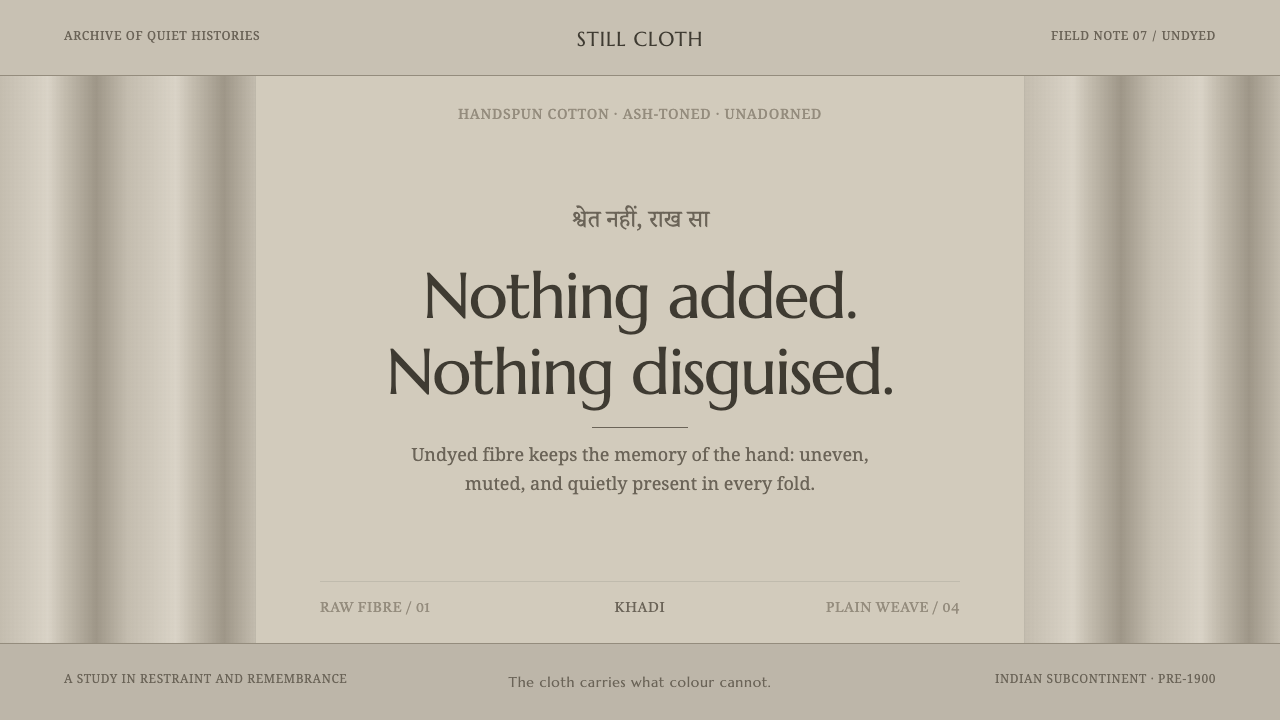 Hindu Widow White SariRestraint carries the weight. Ash-toned khadi, quiet serif type, and vertical…
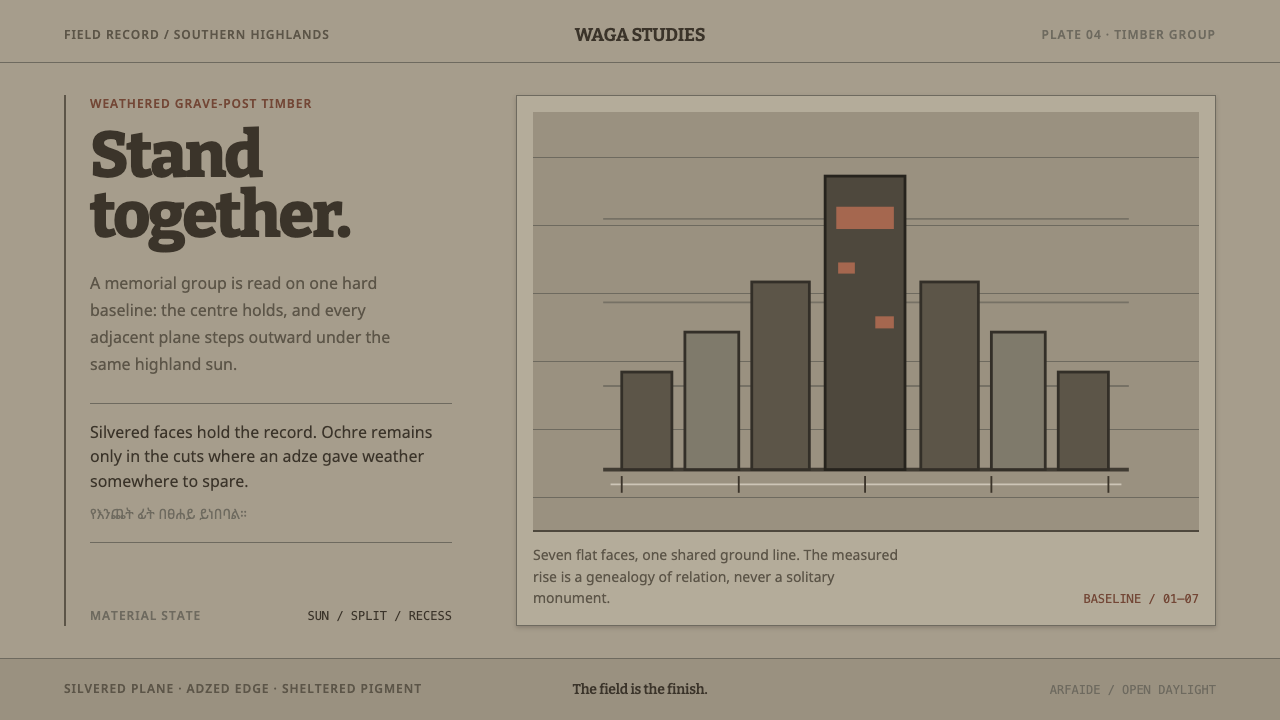 Konso WagaWeather makes the monument. Silver-grey timber, hard planes, and ochre held i…
 Moriori Rakau MomoriPressure, not incision. Literata shadows sink softly into pale, lichened bark.
 Karen Woven TunicOne field, then bands. Warm cotton white gives way to morinda registers and r…
 Rapa Nui Moai PetroglyphMonumental sparseness. Basalt black, scoria red, and pecked-dot borders hold…