About Chancay Gauze Textile
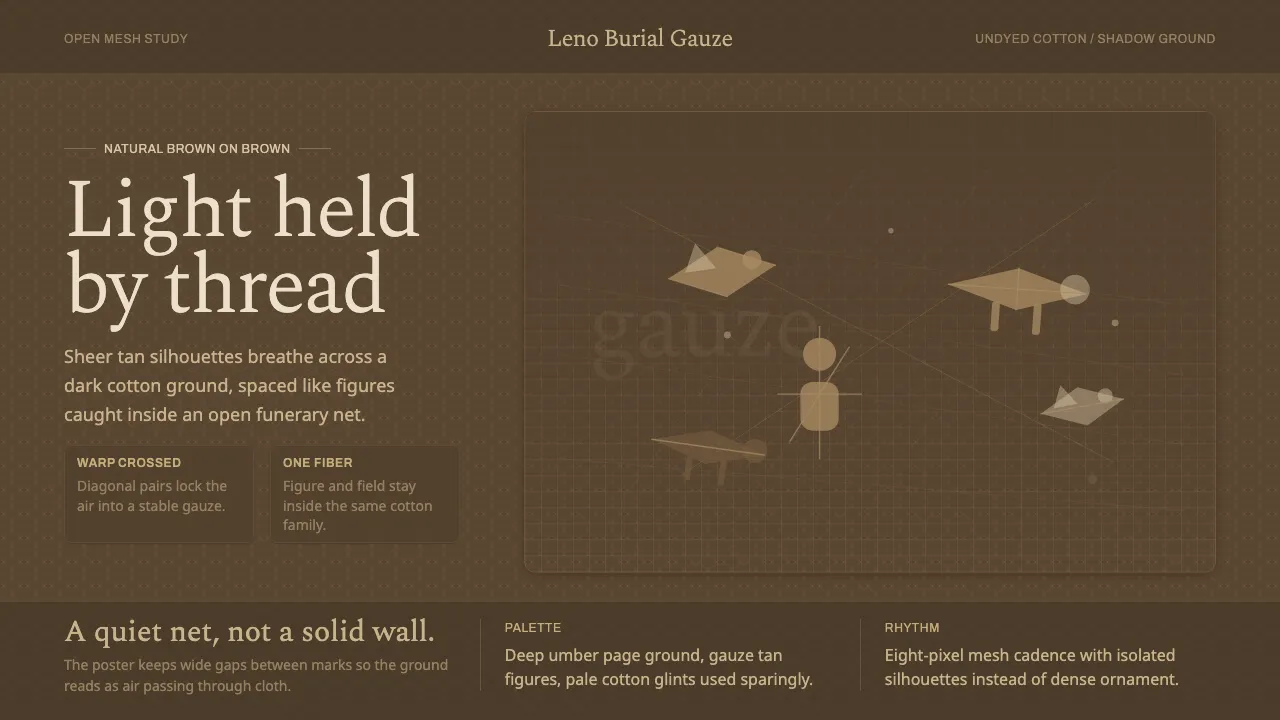
Along Peru's central coast between roughly 1000 and 1470 CE, Chancay weavers produced some of the ancient Andes' most technically daring textiles: sheer, open-mesh cloths built in the leno (gauze) technique, where warp threads are crossed and locked around the weft to hold an airy net stable without any weaving of solid ground. Into that net they worked repeated silhouettes — birds, felines, human figures — using the same undyed, tan-brown cotton throughout, so the figures read as light against shadow rather than as separate colors.
This design system distills that monochromatic, close-toned aesthetic: a dark natural-brown page ground, warm gauze-tan figures floating in sparse rhythm, and generous open "net" between motifs. Nothing here is bleached or saturated — every value stays inside the undyed cotton family, evoking cloth built to accompany the dead into the afterlife with quiet, handwoven dignity.
- Origin
- Central coast of Peru (Chancay and Chillón valleys)
- Era
- c.1000–1470 CE, Late Intermediate Period
- Key figures
- anonymous Chancay weavers
- Movements
- Andean gauze / leno weaving · Chancay funerary textiles · silhouette-figure open-net cloth
Chancay Gauze Textile design spec
Colors
Typography
The other 11 sections — buttons, cards, spacing, motion, techniques and more — open once you unlock. Download the DESIGN.md or send it to your AI in one click. Unlock once, yours forever.
Sign up nowStyles similar to Chancay Gauze Textile
Also inspired by crafts & folk art, with a close feel.
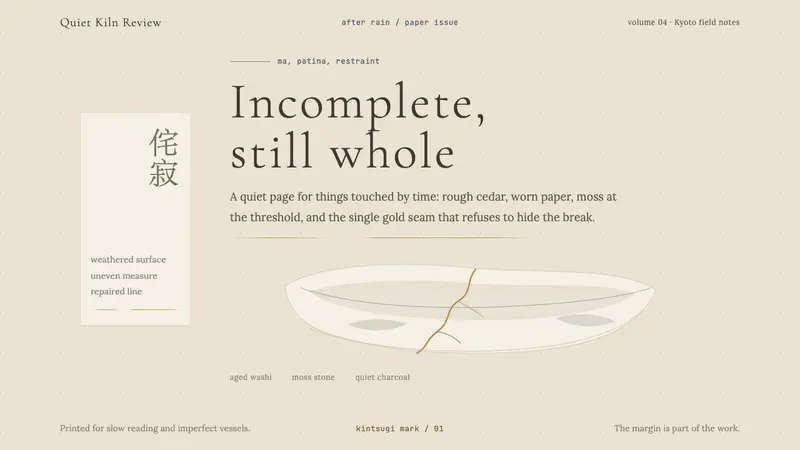 Wabi-SabiStillness makes imperfection whole. Washi beige, moss sage, and a spare gold seam hold the page.
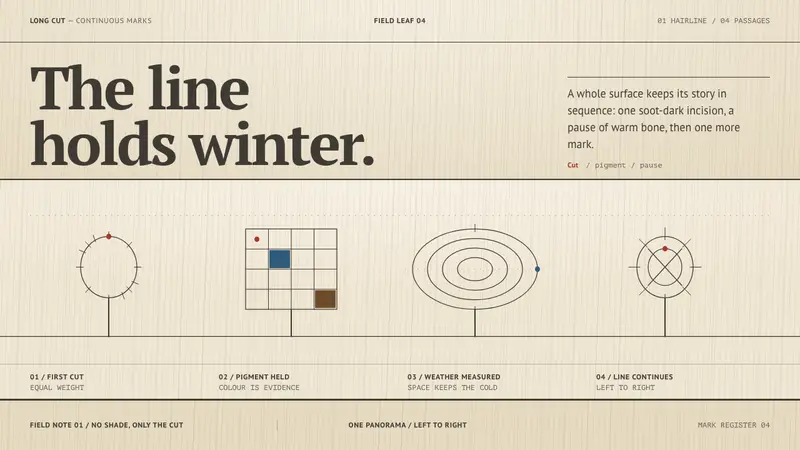 Uelen Walrus IvoryOne line carries the story. Soot-dark PT Serif crosses warm bone with rare red-blue marks.
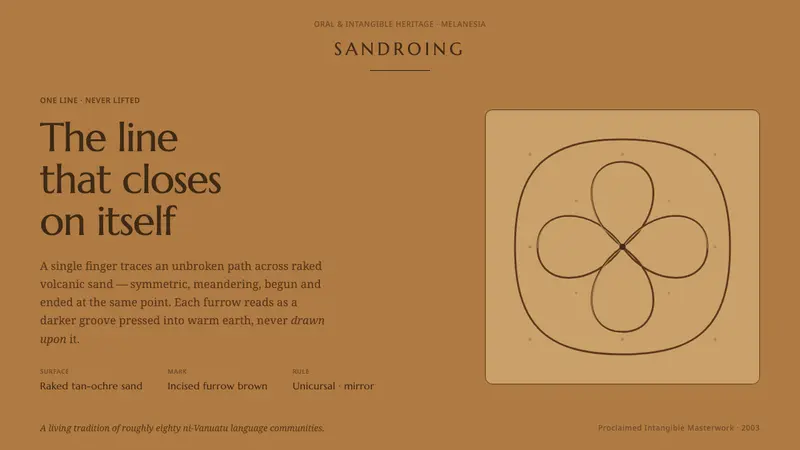 Vanuatu Sand DrawingOne finger-line, never lifted. Furrow-brown grooves a symmetric lattice into raked tan-ochre sand.
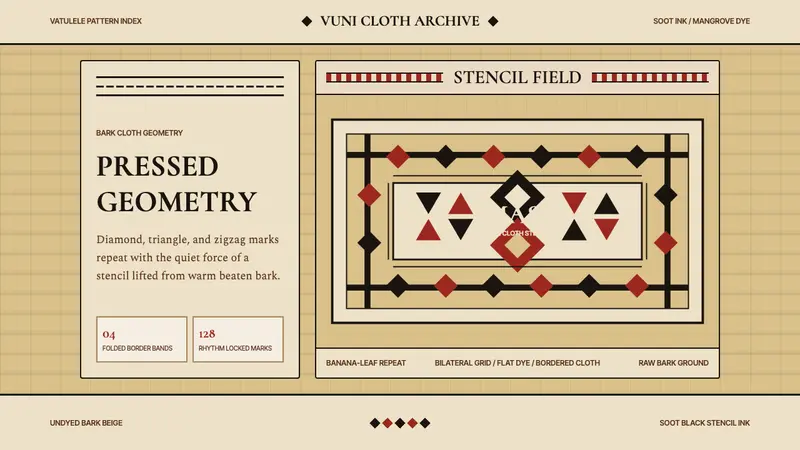 Fijian Masi Tapa StencilGeometry keeps ceremony. Soot-black diamonds repeat on bark beige with rust-red bands.