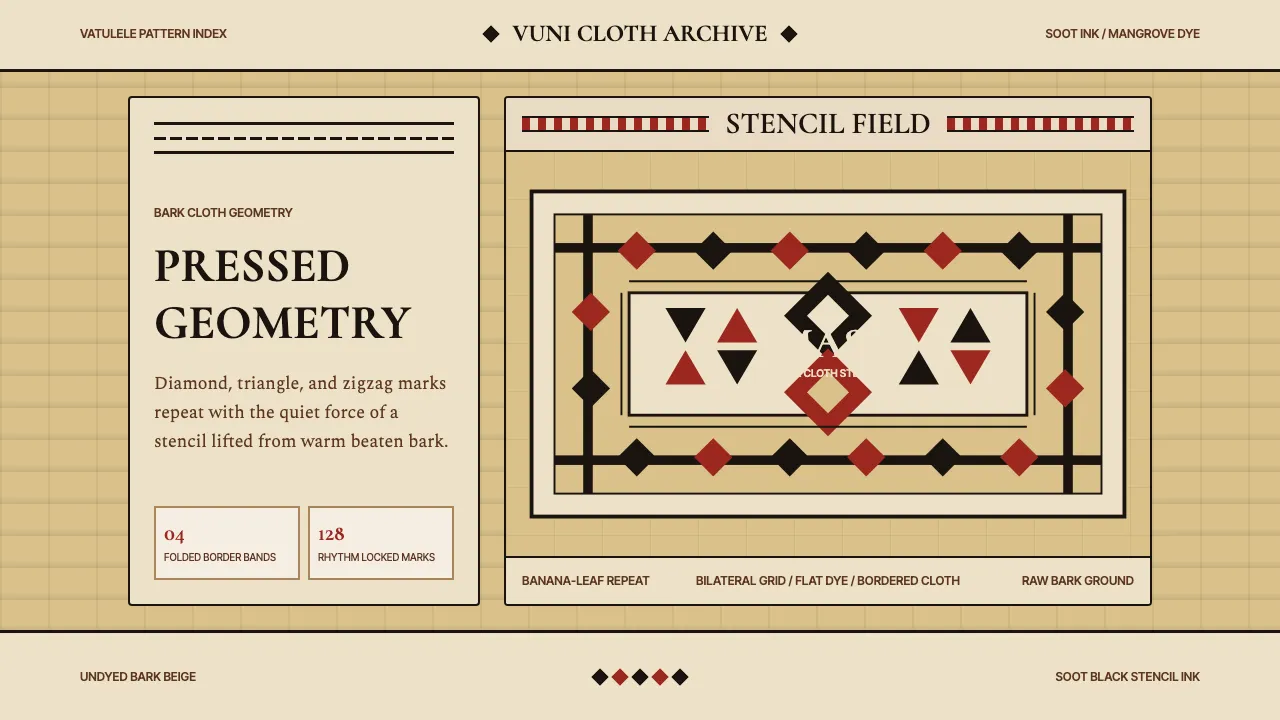
About Fijian Masi Tapa Stencil
Fijian masi is bark cloth beaten from paper-mulberry and printed with bold geometric patterns using banana-leaf stencils and natural dyes. This design system channels the disciplined repetition of diamond, triangle, and zigzag motifs onto warm raw-bark surfaces. The palette draws directly from the materials: undyed bark beige, soot-black stencil ink, and rust-red mangrove dye. Typography pairs the small-caps formality of Cormorant SC with the warm readability of Spectral, echoing the contrast between precise stencil geometry and organic fiber texture.
- Origin
- Fiji (Vatulele, Cakaudrove, Lau group)
- Era
- pre-contact Polynesian tapa tradition; ~1800s Fijian masi flourishing; modern revival
- Key figures
- Vatulele women weavers · Rod Ewins · Sagale Buadromo · Phyllis Herda
- Movements
- Polynesian tapa-cloth tradition · Fijian women's textile craft
Fijian Masi Tapa Stencil design spec
Colors
Typography
The other 11 sections — buttons, cards, spacing, motion, techniques and more — open once you unlock. Download the DESIGN.md or send it to your AI in one click. Unlock once, yours forever.
Sign up nowStyles similar to Fijian Masi Tapa Stencil
Also inspired by crafts & folk art, with a close feel.
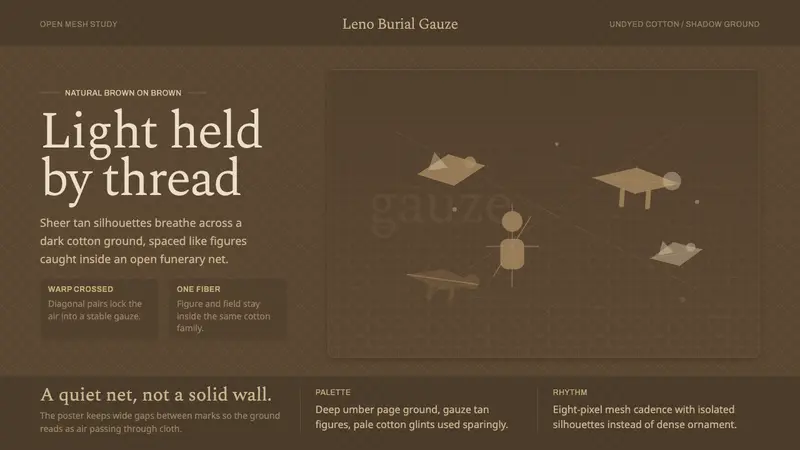 Chancay Gauze TextileQuiet woven dignity. Tan silhouettes float through a dark open cotton mesh.
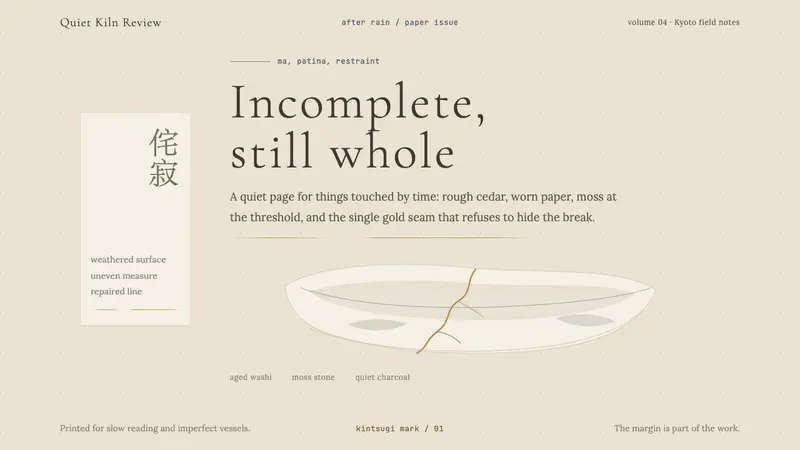 Wabi-SabiStillness makes imperfection whole. Washi beige, moss sage, and a spare gold seam hold the page.
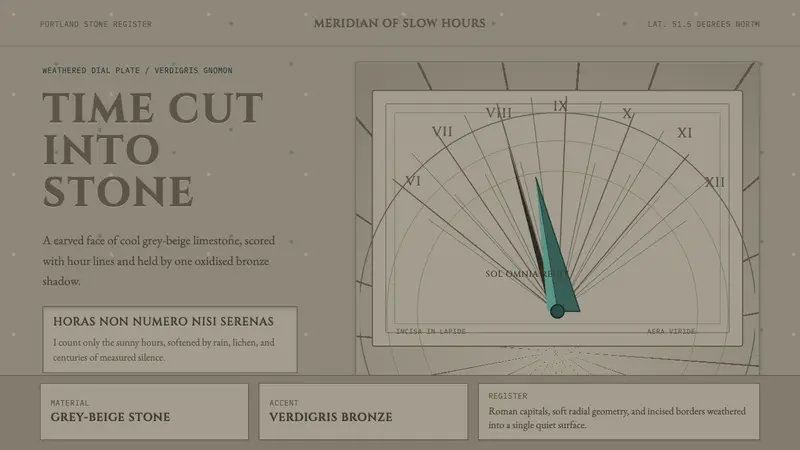 Engraved SundialStone refuses haste. Grey-beige hour lines and verdigris gnomon carve silence.
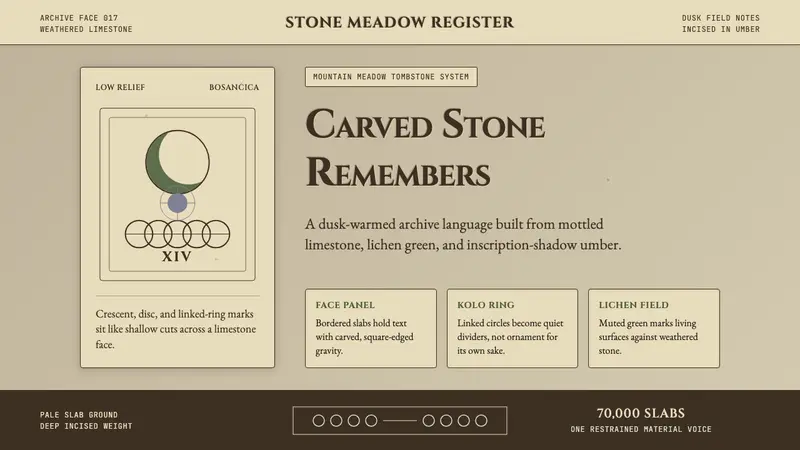 Bosnian Stećak Medieval TombstoneStone remembers quietly. Lichen green and Cinzel cuts sit on weathered limestone.