What is Glossier?
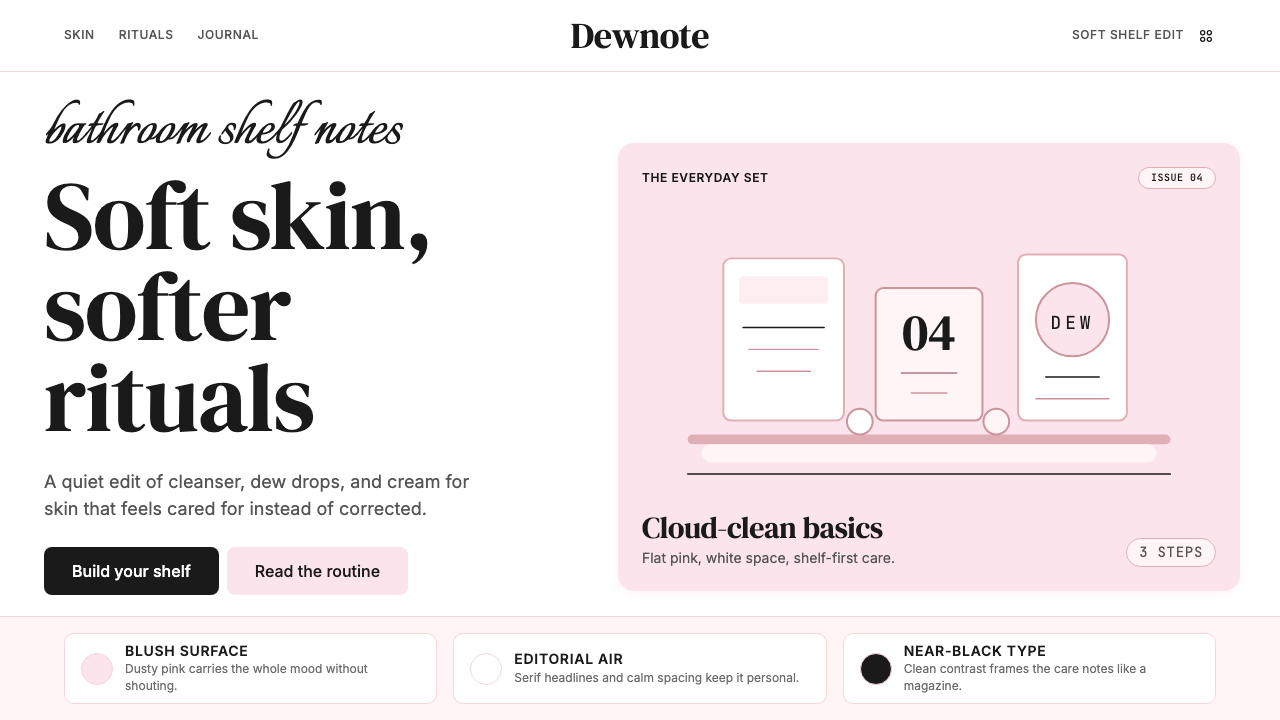
Glossier turned skincare into a conversation between friends — dusty blush, editorial serif, and whitespace so generous it breathes.
Glossier in brief
Glossier is a direct-to-consumer beauty brand whose visual identity became one of the most recognized aesthetic signatures of the mid-2010s. At its core, the system is built around a single, carefully calibrated shade of dusty pink — not the saturated bubblegum pink of earlier beauty marketing, but a quieter, more grown-up blush that sits closer to skin than to candy. That tonal restraint is the whole argument: beauty as something you already have, not something sold to you.
The design language pairs that signature pink with generous white space, editorial serif headlines, and photography that feels unstaged — bathroom-counter flat lays, close crops of real skin, product shots with no retouching artifice. The overall effect is deliberately casual, as if the brand's art direction happened to catch something beautiful rather than constructing it. Nothing shouts; everything suggests.
Glossier's visual system sits at the intersection of two traditions: the clean minimalism of Scandinavian editorial design and the approachable, conversational tone of early beauty blogging. The result is a style that feels simultaneously high-end and accessible — polished enough to belong in a fashion magazine, warm enough to belong in a group chat.

Where does Glossier come from?
Glossier grew directly out of Into The Gloss, a beauty blog launched by Emily Weiss in 2010 while she was working as a fashion assistant at Vogue. The blog's format was conversational and confessional — profiles of interesting women photographed in their bathrooms, at their vanity tables, discussing their actual routines rather than performing idealized ones. The visual language of Into The Gloss — bright natural light, honest close-ups, an absence of studio artifice — became the prototype for what Glossier's brand identity would later formalize.
When Weiss founded Glossier in 2014, the challenge was to translate the authenticity of a blog into a commercial brand without losing what made the blog feel different from conventional beauty marketing. The solution was to treat the brand's visual system as an extension of that editorial voice. The dusty pink that became Glossier's signature was chosen not to evoke luxury or aspiration but to evoke the warmth and intimacy of a bathroom conversation — the color of blush already applied, not blush in its packaging.
The brand launched into a specific cultural moment: the Millennial Pink era, roughly 2016 to 2019, when a palette of muted, dusty pinks saturated fashion, interiors, and technology branding. Glossier both contributed to and benefited from that moment, though its pink predates the broader trend. The company's direct-to-consumer model — no department store counters, no traditional beauty-editor gatekeeping — meant that its visual identity had to work entirely online, on social platforms, and in its own sparse retail spaces. That constraint shaped the aesthetic: flat photography works on Instagram; generous whitespace reads well on mobile screens; the editorial serif headline communicates quality in a single glance.
Glossier's retail environments, when they opened — the flagship Showroom in New York's SoHo neighborhood in 2016, and subsequent pop-ups in Los Angeles, London, and elsewhere — extended the visual system into three dimensions. Spaces were uniformly pink, with minimalist shelving, full-length mirrors, and the same quality of natural or natural-adjacent light that characterized the photography. Customers were encouraged to touch, test, and photograph products. The stores functioned as content studios as much as retail spaces, generating social media imagery that reinforced the brand's visual identity without requiring the brand to produce it directly.
What defines the Glossier look?
Signature Blush Palette
Glossier's palette is built around a single dusty blush that reads as warm without being sweet, feminine without being girlish. It sits far from pure pink — the tone is greyed, muted, almost powdery — which gives it a quality closer to skin than to confection. This primary blush is supported by warm whites, soft off-white creams, and occasional clean blacks for typographic contrast. Saturated or jewel-toned colors appear only as product packaging accents, never as structural elements of the brand system.
Editorial Serif Headlines
Glossier's typographic hierarchy is headed by tall, elegant serif letterforms that carry the authority of a fashion magazine masthead while remaining approachable in scale and spacing. The serifs are neither classical nor contemporary slab — they lean high-waisted and refined, evoking editorial heritage without academic stiffness. Below the serif headline, body text and interface labels drop to clean, unadorned letterforms that recede without competing. The contrast between the expressive headline and the understated supporting text is the engine of the typographic system.
Flat, Light-Saturated Photography
Glossier photography is shot in conditions that approximate natural daylight — even, diffuse light that eliminates harsh shadows and renders skin tones warmly. The preferred formats are flat lays (products arranged from above on a pale surface) and close-up skin portraits that show texture honestly. Retouching is minimal by the standards of beauty advertising; the visual goal is something that looks like it could have been taken by the subject themselves. This photography-forward approach means the brand can generate imagery continuously through community and user-generated content without visual inconsistency.
Whitespace as a Design Element
Whitespace in the Glossier system is not empty — it is the visual equivalent of the pause in a good conversation. Layouts give every element room to exist independently before the eye connects them. Product pages, editorial headers, and packaging all use margins and breathing room that would read as excessive in a more information-dense brand context, but here signal unhurried confidence. The whitespace also makes the blush palette work: surrounded by pale emptiness, even a muted pink carries weight.
Conversational, First-Person Voice
Glossier's copy tone is inseparable from its visual identity. Text reads as direct address — the brand writes the way a knowledgeable friend talks, not the way a dermatologist prescribes. Product names are lowercase or gently abbreviated. Calls to action avoid imperative commands in favor of invitations. Descriptions foreground how products feel, smell, and sit on skin rather than listing clinical ingredients. This verbal texture reinforces the visual warmth: together they produce an experience that feels one-to-one rather than broadcast.
Minimalist Product Packaging
Glossier products are packaged in forms that mirror the brand's visual restraint — rounded forms, muted surfaces, tactile materials like soft-touch coating and flexible plastic pouches. The famous pink bubble wrap pouch used for product shipping became an iconic brand object not because it was designed to be iconic but because it was designed to be pleasant: soft, reusable, the right size for a bathroom shelf. Packaging avoids busy graphics; product names appear in a single quiet typeface, and the signature blush color unifies the line.
Community-Sourced Imagery
Uniquely among major beauty brands, Glossier built its image library substantially from community and user-generated content. Customer photographs taken in bathrooms, at mirrors, on phones appear in campaigns alongside professional brand photography, and the two are nearly indistinguishable — because the brand photography was designed to look like the customer photography. This circularity is not accidental: it is the system's most sophisticated feature, a visual style that can reproduce itself indefinitely through the behavior of its users.

Who shaped Glossier?
Weiss founded Glossier in 2014 after building Into The Gloss into one of the most influential beauty blogs in the English-speaking world. Her editorial instincts — cultivated during her years at Vogue and through the blog's collaborative, interview-driven format — directly shaped the brand's visual and verbal identity. Weiss's central conviction, that beauty should be a conversation rather than an authority, is the thesis around which every design decision in the Glossier system is organized. She stepped down as CEO in 2022 but remains central to the brand's founding mythology.
Davis joined Glossier as President and COO in 2016 and played a key role in scaling the brand's direct-to-consumer infrastructure during its period of fastest growth. His operational work — expanding the product line, managing the retail experience, overseeing digital channels — created the conditions under which the visual identity could be applied consistently at scale. The discipline of the Glossier system owes as much to operational rigor as to design vision.
The brand's in-house creative team, working across art direction, copywriting, social strategy, and retail design, translated Emily Weiss's editorial sensibility into a repeatable visual system. Without attribution to a single named designer, the Glossier aesthetic emerged from a collaborative creative process grounded in the brand's community — a fitting origin for a brand whose stated philosophy is that its customers are co-creators. The team's approach to photography direction, typography selection, and spatial design in retail environments set standards that influenced an entire generation of direct-to-consumer brand identities.
The community of readers and commenters who built Into The Gloss into a media property before Glossier existed are not designers, but they are the aesthetic's true origin. Their preferences — for honesty over aspiration, for routine over ritual, for real skin over retouched skin — were the brief from which Weiss worked. The visual language of Glossier is, at its root, a formalization of what that community found beautiful and trustworthy. No beauty brand of comparable scale has been as directly shaped by its audience's aesthetic values before launch.
How do you use Glossier today?
Glossier's visual language is one of the most directly applicable historical brand systems for contemporary digital product work, because it was built natively for digital surfaces — mobile photography, social feeds, e-commerce product pages — rather than adapted from print or broadcast. Applying it correctly requires understanding its underlying logic: warmth without excess, restraint without coldness, and a consistent commitment to making every touchpoint feel like it belongs in the same conversation.
For presentation slides, the Glossier system works best on covers that lead with the blush palette — a dusty pink field, headline in a refined serif at generous scale, and no more than a single supporting line in a lighter weight. The cover should feel like a magazine's opening spread: unhurried, confident, and slightly luxurious in its use of space. Content slides should maintain the whitespace discipline; resist the impulse to fill every margin. Data slides benefit from the palette's restraint: use the signature blush for primary data series, near-white or light backgrounds throughout, and let the typography carry hierarchy rather than color-coding every category.
For web UI and dashboards, the system's strength lies in its ability to make functional information feel warm. Navigation bars, card backgrounds, and sidebar panels can adopt the soft blush as a tinting wash over white, while interactive elements — buttons, active states, hover effects — use the more saturated version of the same hue to signal affordance without aggression. Pricing pages work especially well: the combination of generous vertical space, serif product names, and honest product photography in the Glossier manner communicates premium positioning without premium detachment. Avoid dense data tables in this system; if data density is required, default to a cleaner neutral palette and bring the blush in as an accent only.
For editorial and marketing work — landing pages, email campaigns, social cards — the Glossier system rewards a photography-first approach. Lead with a well-lit, close-cropped image that occupies the majority of the surface, then layer the serif headline over whitespace rather than directly over the image. Marketing headers should resist the temptation to stack multiple messages; one clear claim, stated in the editorial serif, with supporting detail in lighter type below, is more consistent with the aesthetic's confidence. For email specifically, the system's mobile-native origin means it translates cleanly: single-column layouts, large images, generous padding, and a single typographic call to action.
A common mistake when applying the Glossier aesthetic is misreading its apparent simplicity as low effort. The whitespace is not empty — it is precisely measured. The blush color is not generic pink — it is a specific, desaturated tone that shifts meaning entirely if it tips too warm or too purple. And the photography cannot be substituted with stock imagery without breaking the system: the naturalness of Glossier photography is a craft achievement, not a happy accident. Designers who treat the style as a color palette and a font choice will produce something that looks vaguely pink and vaguely editorial; those who internalize its commitment to warmth, honesty, and conversational confidence will produce work that earns the same trust the original brand built.

Glossier — FAQ
Is the Glossier aesthetic the same as Millennial Pink?
They overlap but are not identical. Millennial Pink was a broad cultural trend, roughly 2016 to 2019, that encompassed a wide range of dusty, muted pinks across fashion, interiors, technology branding, and food. Glossier's signature blush predates and outlasts the trend and is more specifically defined: it is a particular dusty tone with warm undertones, used within a disciplined system of whitespace, editorial typography, and honest photography. Many brands adopted Millennial Pink as a palette choice; Glossier built an entire visual system around a pink that happened to coincide with that cultural moment. The distinction matters for application: borrowing a generic muted pink is not the same as applying the Glossier system.
Can the Glossier visual system work for a brand that is not in beauty or personal care?
Yes, with deliberate adaptation. The underlying values the Glossier system communicates — approachability, honesty, gentle confidence, quality without intimidation — are transferable to any category where those values are genuine brand attributes. It works well for wellness, food, lifestyle, and certain categories of professional services where the goal is to feel trusted rather than authoritative. Where it struggles is in contexts that require urgency, technical authority, or visual density — financial products, enterprise software, medical devices. The blush palette and generous whitespace signal a pace and a sensibility that can undermine credibility in high-stakes rational contexts.
How does Glossier handle dark mode or dark-background layouts?
The Glossier system is fundamentally a light-background aesthetic; its pale blush and abundant white space depend on the contrast and warmth that a light ground provides. A genuine dark inversion is difficult because the signature dusty pink loses much of its identity when placed on dark backgrounds — it can read as muted or muddy rather than warm and refined. Contemporary applications that need a dark variant typically shift to a near-black with very warm undertones, use the blush sparingly as a typographic accent or thin decorative line, and rely heavily on the editorial serif to carry the brand character. A fully dark Glossier layout is possible but should be treated as a deliberate departure rather than a default option.
What is the biggest mistake designers make when trying to apply the Glossier aesthetic?
The most common mistake is treating it as a styling choice rather than a values system. Designers add a muted pink and some whitespace, switch to a serif headline, and consider the work done. The result looks adjacent to Glossier without achieving what the system actually does, because the missing ingredient is commitment to the underlying attitude — that everything on screen or on page is part of a conversation, not a broadcast. Concretely, this means: the photography must feel genuinely unstaged, not studio-shot made to look casual; the whitespace must be generous enough to feel slightly risky; the copy must read as if a real person wrote it. Styling without attitude produces imitation. Attitude expressed through consistent styling produces the real thing.
How does the Glossier system relate to other minimalist beauty brand aesthetics?
Glossier shares surface-level attributes with other minimalist beauty brands — sparse layouts, quality photography, restrained color palettes — but its emotional register is distinct. Brands like Aesop or Le Labo achieve minimalism through an austere, almost archaeological seriousness; their quietness communicates rarity and expertise. Glossier's minimalism is warmer and more social; its quietness communicates ease rather than exclusivity. The practical design difference is in how each handles the human element: Aesop removes human presence almost entirely, letting product and material surface carry meaning; Glossier foregrounds real skin, real faces, and real bathrooms as the primary subject matter. Same structural principle — restraint — very different emotional destination.
Related design styles
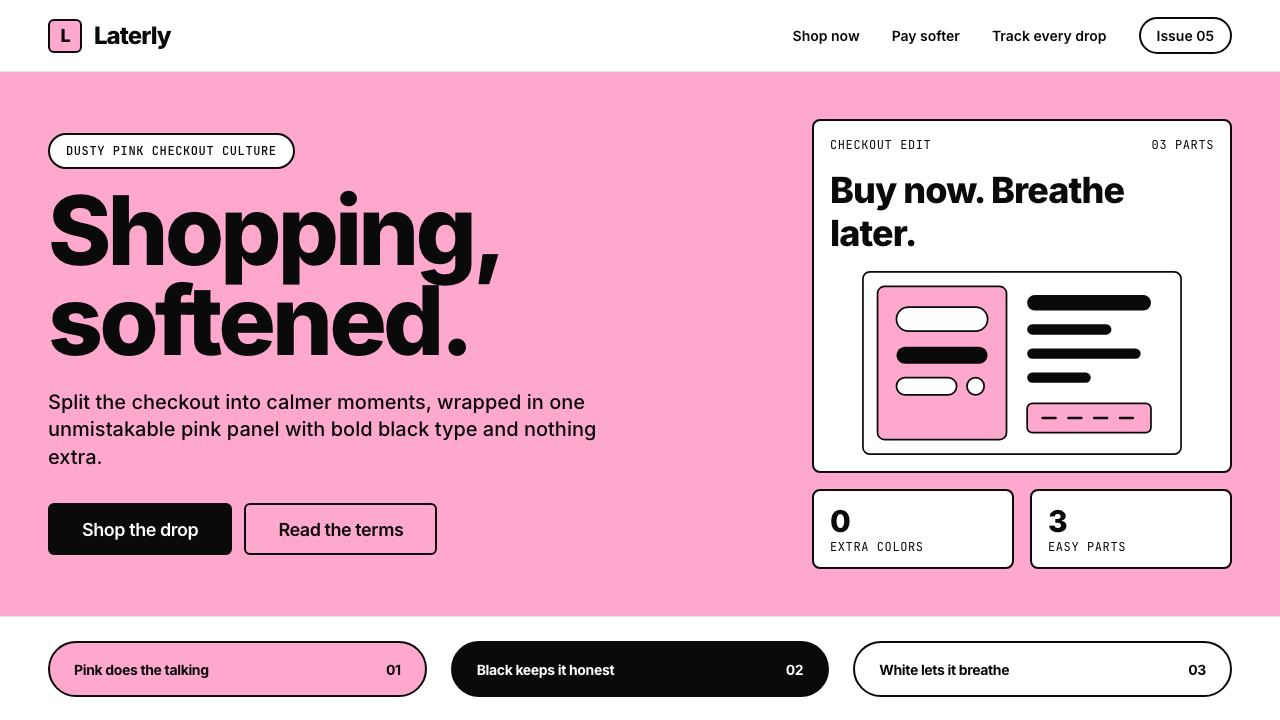 KlarnaFintech turns fashion-editorial. Dusty bubblegum pink, black Inter, and white…
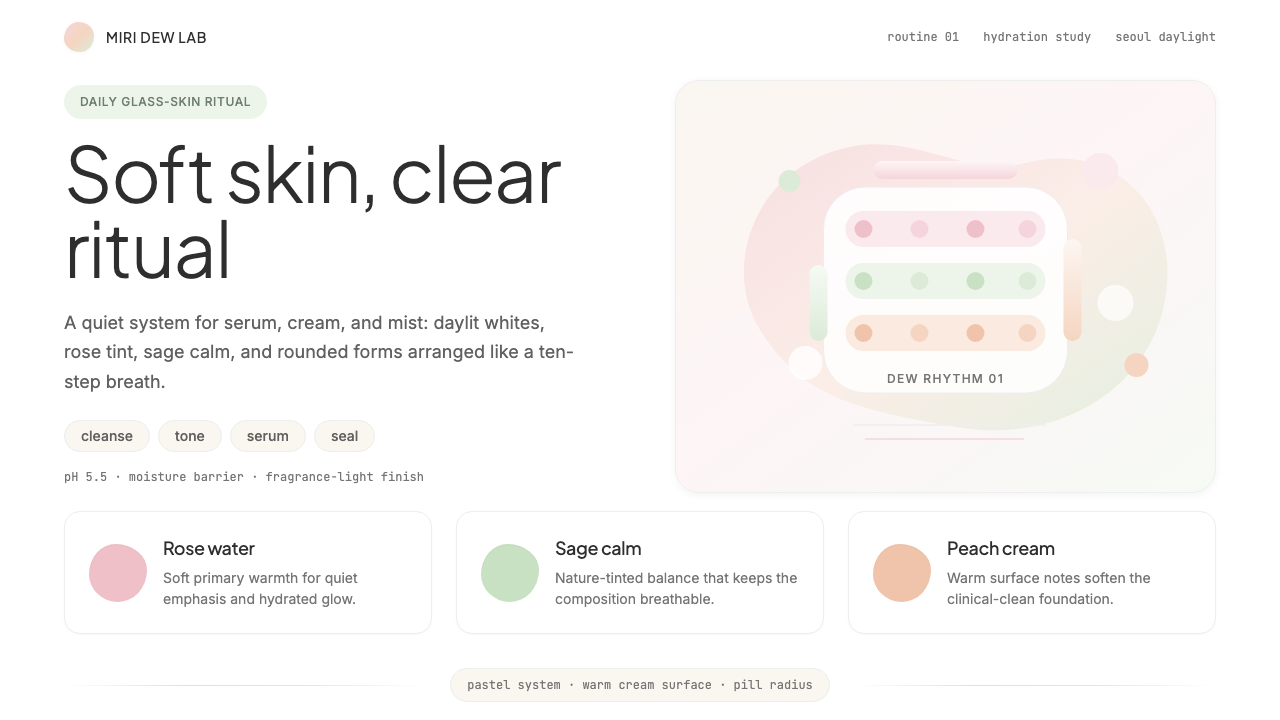 K-Beauty CleanCalm arrives dewy. Rose, sage, and peach pastels float through airy rounded f…
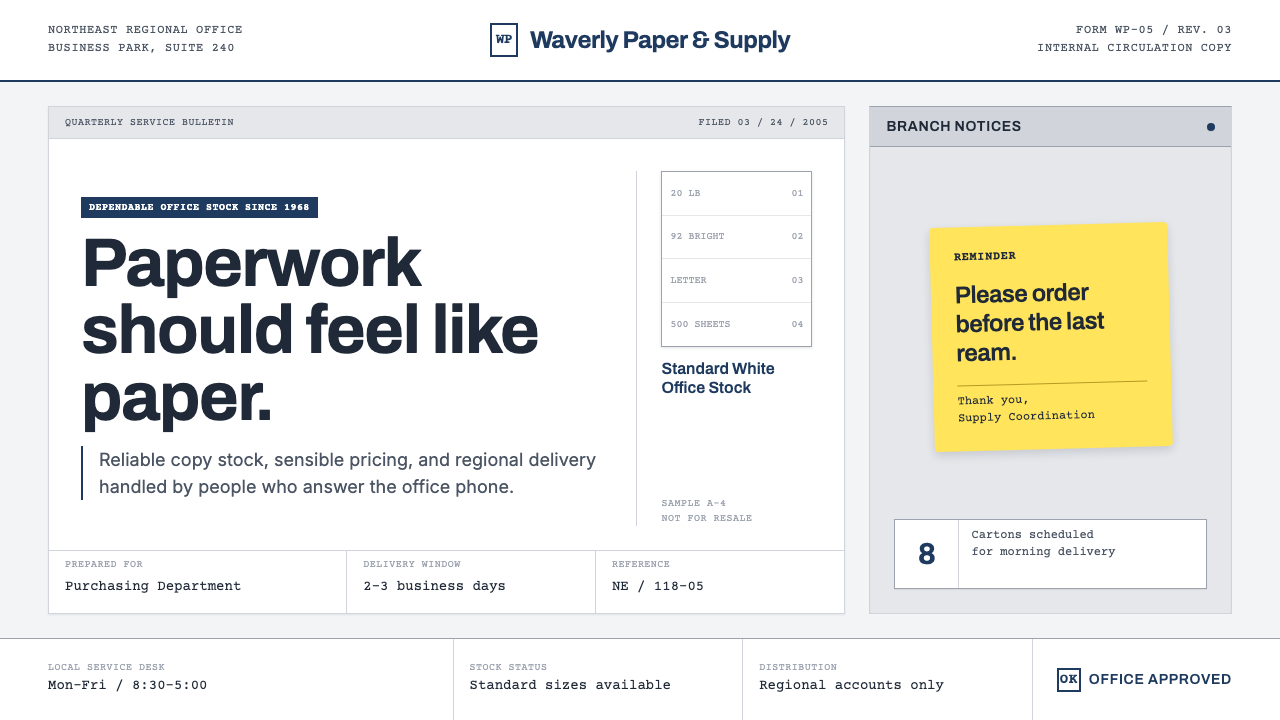 The Office (Dunder Mifflin, 2005)Mundanity is the punchline. Copier white, cubicle gray, memo grids, and one y…
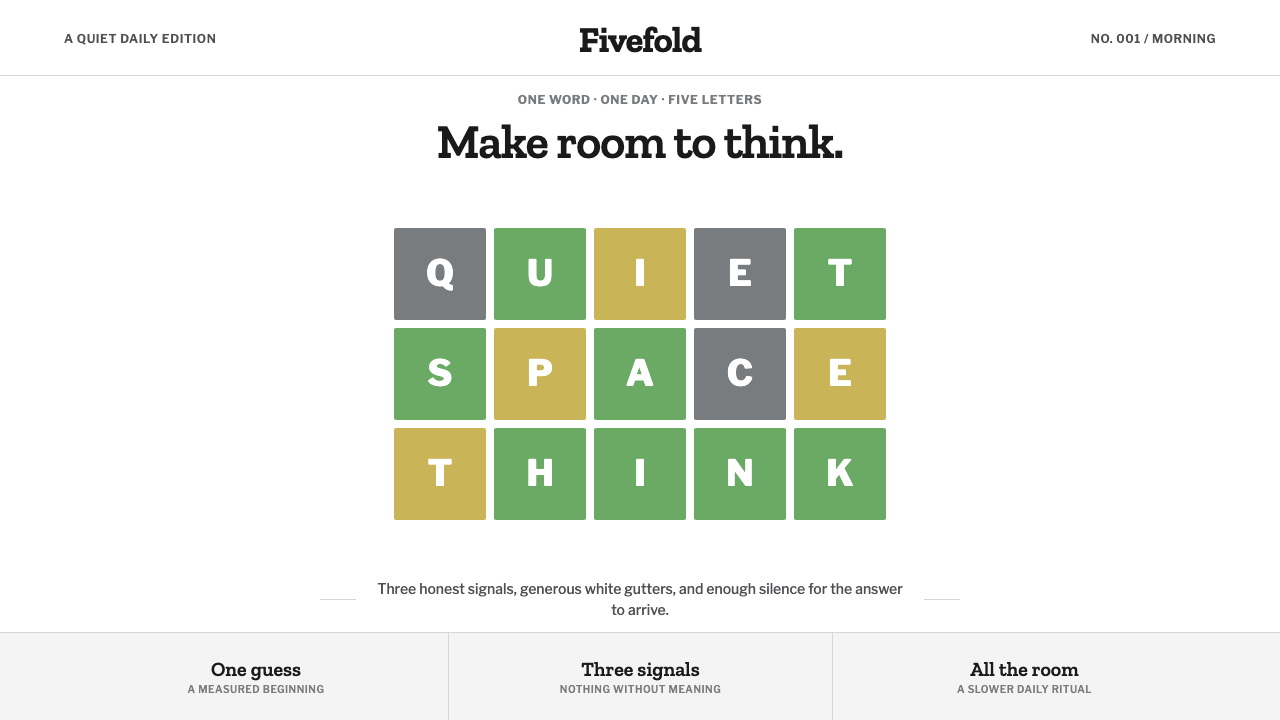 Wordle (2021)Quiet becomes addictive. Olive green, dusty gold, and gray score a strict gri…
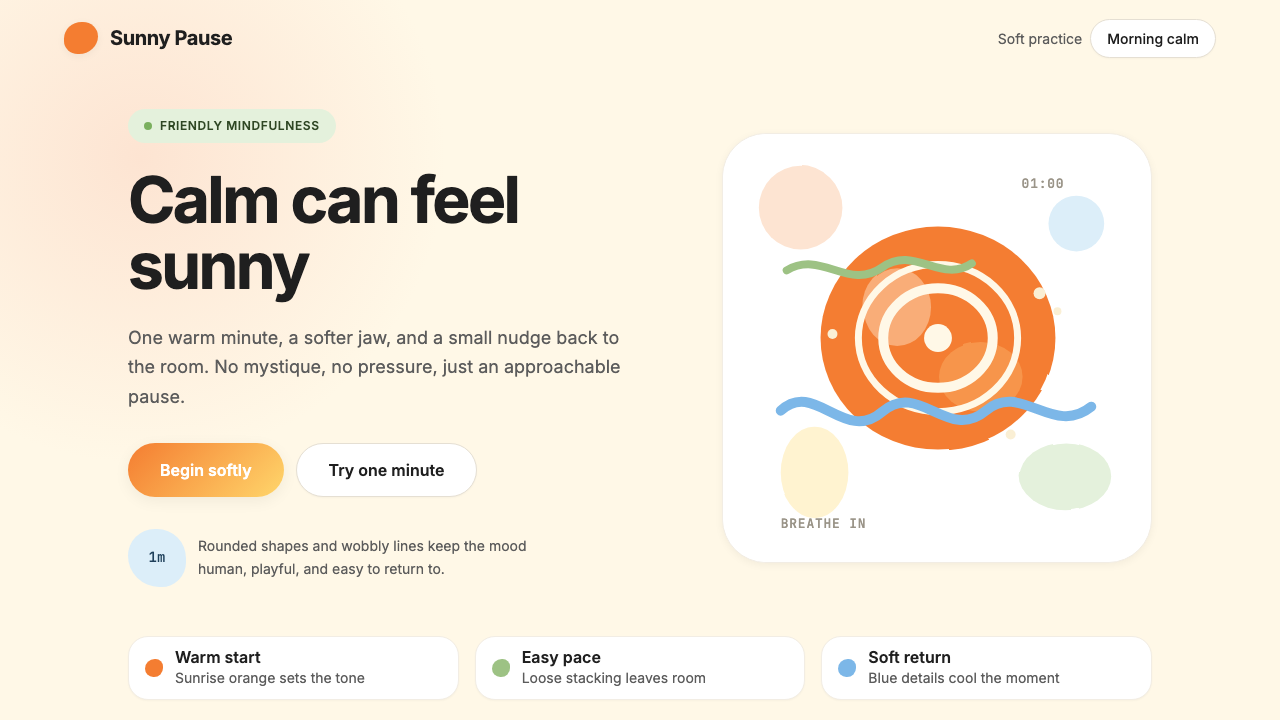 HeadspaceOptimism makes calm approachable. Sunrise orange and wobbly rounded forms bre…
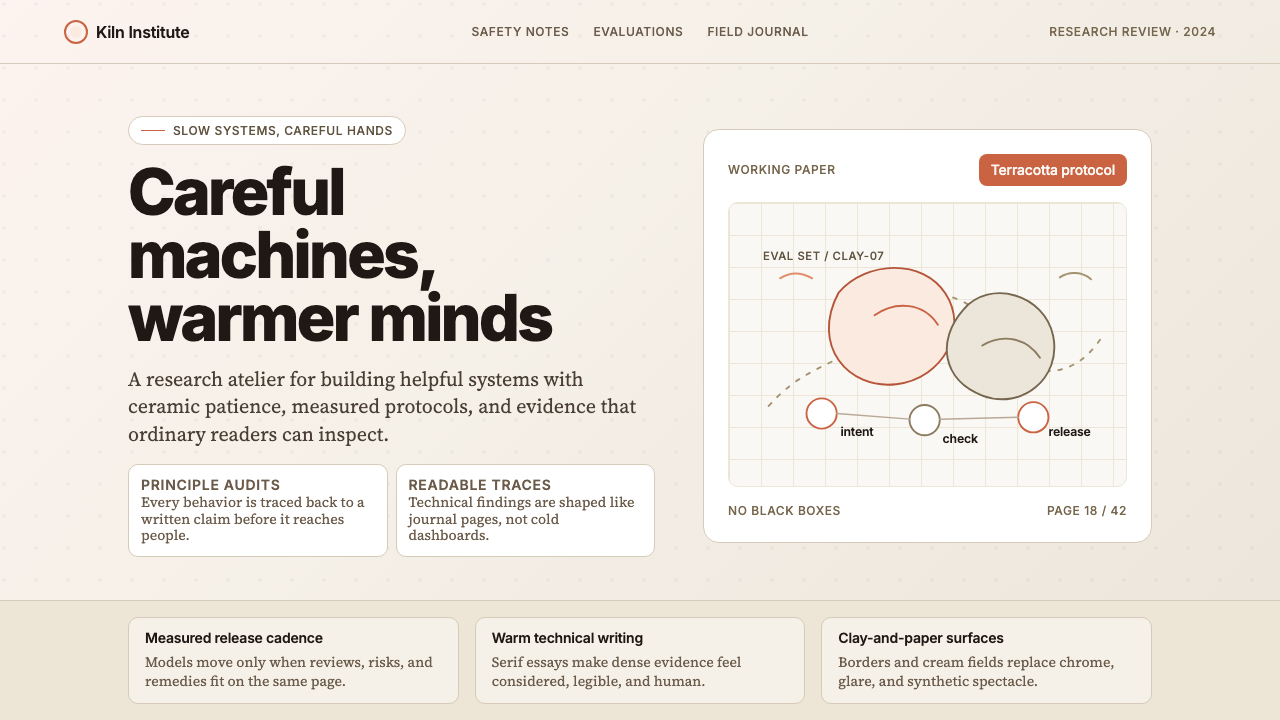 Anthropic ClayAI safety in handmade clay. Sand backgrounds, terracotta accents, serif body…