What is Clay 2024?
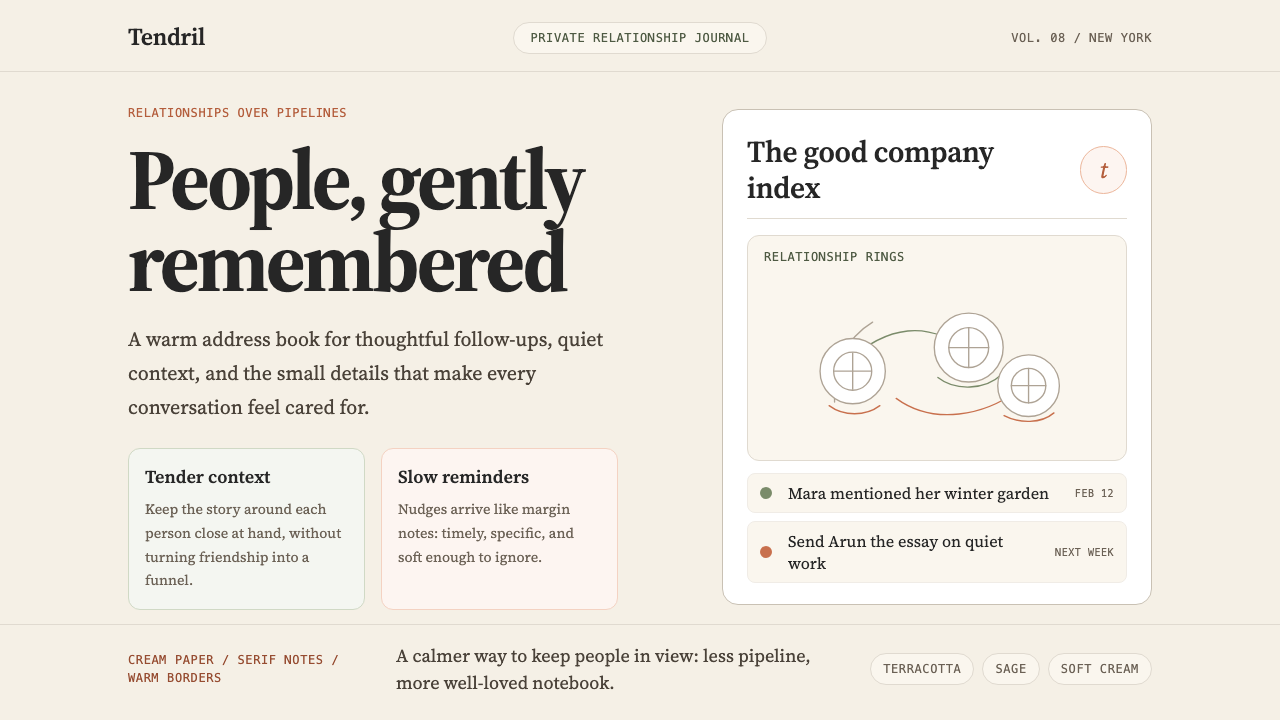
Clay turns the CRM into a sketchbook — warm cream pages, hand-drawn portraits, and terracotta accents that make every contact feel like a person worth remembering.
Clay 2024 in brief
Clay is a personal CRM product and the visual design system that grew around it, originating in New York and reaching its mature form between 2022 and 2024. Its aesthetic makes a deliberate argument: that software for managing human relationships should look and feel like an analog artifact — a well-worn journal, an editorial magazine spread, a sketchbook kept by someone who notices people. The result is a visual language built on warm, cream-toned backgrounds, generous serif typography, hand-drawn portrait illustrations, and a carefully limited palette anchored by terracotta and muted earth tones.
Where most productivity and CRM software reaches for cool grays, tight sans-serif type, and the clinical efficiency of enterprise dashboards, Clay moves in the opposite direction. Every design decision reinforces the idea that relationships deserve warmth. Generous whitespace lets content breathe. Serif letterforms carry the same unhurried authority as a printed broadsheet. Illustrations render people as sketched outlines rather than geometric avatars or stock photographs — a choice that signals individuality over data-point legibility.
The style sits at an interesting intersection: it is technically sophisticated (the underlying product handles complex contact enrichment and automation) while the surface reads as intimate and handmade. This tension is intentional. Clay belongs to a broader moment in digital product design — post-Notion warm minimalism — where tools for knowledge and relationship work began rejecting the visual vocabulary of enterprise software in favor of something closer to paper.

Where does Clay 2024 come from?
Clay was founded in 2018 by Matthew Achariam and Zachary Hamed in New York City. The founding premise was a personal one: the two founders had accumulated hundreds of professional and personal contacts in disparate systems — email, LinkedIn, phone — with no coherent way to maintain genuine relationships across them. The product they built was designed to serve as a kind of second memory for relationships, surfacing context at the right moment and reducing the friction of staying connected to people who matter.
The visual identity that would come to define Clay emerged more gradually. The earliest versions of the product were functional but relatively conventional in their interface design. Between 2022 and 2024, the Clay brand team undertook a significant visual rethinking, asking a foundational question: if a CRM is supposed to make relationships feel more human, why does every CRM look like a spreadsheet? The answer they arrived at drew inspiration from two traditions that had nothing to do with software — editorial magazine design, with its confident use of serif type and white space, and the analog journal, with its association with personal record-keeping and the handmade.
The hand-drawn portrait illustration style became the visual centerpiece of this redesign. Rather than using photographs of real people (which raise privacy questions) or generic geometric avatars (which feel impersonal), the team commissioned a distinctive illustration language: loose, expressive line drawings of faces and figures that suggest individuality without claiming documentary accuracy. This choice gave Clay an immediately recognizable visual signature and aligned the product's surface with its core proposition — that each contact is a full person, not a data record.
The warm color palette — cream backgrounds, terracotta accents, and a deliberate avoidance of the blue-gray spectrum that dominates enterprise software — was chosen to communicate approachability and personal scale. Terracotta in particular carries associations with handmade ceramics, earth, and warmth; it had become a widely used accent color in interior design and lifestyle branding in the years preceding Clay's visual evolution, and the design team's adoption of it positioned the product alongside consumer lifestyle tools rather than business infrastructure. The result was a CRM that looked, at first glance, like it might belong on a design studio's inspiration board — and that was precisely the intention.
What defines the Clay 2024 look?
Color Palette
The Clay palette is built around a warm cream or off-white ground that functions as a neutral field without the clinical coolness of pure white. Against this ground, terracotta — a muted, reddish-brown tone reminiscent of unglazed pottery and sun-warmed earth — serves as the primary accent, used sparingly on calls to action, highlights, and illustration details. The system deliberately avoids the blue-gray spectrum that dominates enterprise software, and cool or saturated tones appear rarely if at all. The overall effect is warm, calm, and personal — a palette that reads as handmade rather than generated.
Typography
Serif typefaces carry the typographic weight of the Clay visual system, a choice that connects it to editorial print culture — newspapers, literary magazines, quality books — rather than to digital-native interfaces. The serifs used tend toward the classical and legible: generous letter spacing, open apertures, and a reading rhythm suited to longer texts. Headlines are set with authority but not aggression; the type feels considered rather than declarative. Body text sits in a comfortable measure that encourages reading rather than scanning, reinforcing the sketchbook-and-journal register of the overall design.
Hand-Drawn Illustration
The most distinctive element of the Clay visual system is its portrait and figure illustration style: loose, expressive line drawings that render people with personality rather than precision. Lines are slightly imperfect in the way a careful pencil drawing is imperfect — varied in weight, occasionally searching — suggesting a human hand rather than a geometric algorithm. Faces have expression; figures have posture. This illustration language makes a philosophical argument: the people in your CRM are individuals with character, not interchangeable data points. The style also sidesteps the privacy and representational issues of using real photographs.
Whitespace and Breathing Room
Clay layouts are generous with space. Margins are wide, line heights are relaxed, and individual elements are given room to exist as discrete objects rather than packed into a dense information grid. This spatial generosity is not arbitrary — it communicates that each piece of content, each contact entry, each notification has value and deserves attention. The whitespace also softens the boundary between designed interface and printed page, making interactions feel less like form-filling and more like turning the pages of a well-designed book.
Surface Texture and Material Feel
While Clay is a digital product, its visual language consistently references physical materials — the cream of uncoated paper stock, the roughness of a sketchbook page, the warmth of natural linen or cork. Backgrounds may carry a subtle paper-like quality rather than being mechanically flat. This material warmth is achieved through color temperature and illustration choice rather than literal texture overlays, which would feel gratuitous. The goal is that surfaces feel touched rather than generated — a quality that digital tools rarely achieve and that Clay treats as a core differentiator.
Restrained Decoration
Clay does not achieve its warmth through decorative excess. Borders, when present, are thin and understated. Dividers are light and used sparingly. Interface elements — cards, inputs, toggles — are simple and clean, with enough visual interest to feel designed without ever feeling ornate. The warmth comes from the palette and illustration, not from layered embellishments. This restraint keeps the system scalable: because no single component carries heavy decorative load, additional screens and features can be added without the design feeling cluttered.
Editorial Hierarchy
Information hierarchy in Clay is organized editorially rather than bureaucratically. Rather than strict grids of equal-weight cards, layouts use varying text sizes, visual weights, and spatial relationships to guide the eye naturally — the way a magazine page leads you through a feature article, pulling you from headline to standfirst to body to pull-quote. Names and faces are prioritized; metadata and dates are secondary. This hierarchy reflects the product's values: the person is the primary entity, not the deal stage or the last-contacted timestamp.

Who shaped Clay 2024?
Co-founder of Clay, Achariam brought a background in community and network-building to the product's founding vision. His perspective that relationships should be treated as living, contextual connections rather than static database records shaped the core product philosophy. The decision to build something that felt genuinely personal rather than merely efficient traces back to this founding orientation, which ultimately drove the design direction toward warmth and the analog aesthetic.
Co-founder and technical lead of Clay, Hamed's engineering background anchors the product's ability to perform complex contact enrichment, data aggregation, and automation beneath a deliberately unhurried surface. The juxtaposition of technical depth with visual warmth — automation hiding behind hand-drawn portraits — is one of Clay's most unusual product decisions, and it reflects a design philosophy in which surface and substance are treated as equally important.
The design and brand team responsible for the 2022–2024 visual evolution gave Clay its current aesthetic identity. The specific choices — serif typography over sans-serif, hand-drawn illustration over photography or geometric avatars, terracotta over the enterprise blue-gray default — represent a coherent series of decisions that run against the grain of prevailing SaaS visual conventions. These choices established Clay as one of the more visually distinctive productivity tools of its generation, cited widely in design discussions about warm minimalism and post-Notion aesthetics.
Clay's design belongs to a broader movement among productivity and knowledge tools that emerged in the early 2020s as a reaction against the prevailing visual language of enterprise SaaS. Tools including Notion, Craft, and Bear established that users of knowledge-work software were willing to care about how their tools looked and felt — not just what they did. Clay extended this sensibility into the CRM category, demonstrating that the relationship between design warmth and user trust is not limited to notes or documents but applies equally to professional network management.
How do you use Clay 2024 today?
Clay's visual language is most naturally at home in contexts where human connection, personal relationships, and trust are the primary subject matter. The style transfers well across slides, digital interfaces, and editorial materials, but its power comes from coherence — any application that cherry-picks isolated elements (terracotta alone, or serif type alone) without adopting the overall warmth and spatial generosity will feel like a style reference rather than a considered design system.
For presentation slides, the Clay aesthetic works particularly well on covers and narrative-driven content pages. A cover benefits from a centered or gently asymmetric composition: an illustration or hand-drawn figure as the focal point, a serif headline set at a generous scale, and warm cream as the page ground. Content slides should resist the impulse to densify — the style's power depends on breathing room, so each slide should carry fewer points than a standard business template would. Data slides are the most challenging context; when using Clay for charts and graphs, choose earth-toned bar fills over saturated palette colors, keep grid lines light and airy, and let the surrounding whitespace do the work of separating data from annotation.
For web and product interfaces, Clay's style is well suited to dashboards, profile pages, onboarding flows, and any surface where the user is dealing with individual records or relationships. The approach: use a warm off-white or cream background as the page ground, structure content with generous padding and vertical rhythm, and use terracotta or warm amber tones only for primary interactive elements — links, active states, key call-to-action buttons. Card components should feel paper-like: a light, warm border or a very subtle warm shadow is more in character than the flat cards or cool-gray elevation shadows common in material-design systems. Avoid cool blues and greens entirely; these pull the palette back toward the enterprise register the style is actively rejecting.
For editorial and marketing materials — landing pages, newsletters, printed collateral — the Clay aesthetic supports a magazine-quality reading experience. Body text should sit in a comfortable narrow-to-medium column measure with generous line height. Section breaks are best marked by spatial generosity (extra vertical spacing) rather than ruled lines or decorative dividers. Pull quotes and callouts work well when set in a larger serif size against a warm accent background. Marketing headlines benefit from the confident, unhurried quality of well-set serif display type rather than bold sans-serif constructions. Use illustration as the primary visual element rather than photography; where photography is necessary, warm-toned images with soft natural light align better with the overall palette than high-contrast or studio-lit shots.
A common mistake when applying the Clay aesthetic is reaching for warmth through color saturation — adding more terracotta, more orange, more richness — when the style's warmth actually comes from restraint and spatial intelligence. Saturating the palette produces something closer to boho or artisanal branding than to the quiet editorial confidence Clay projects. Similarly, the hand-drawn illustration style is frequently imitated badly by applying a rough-texture filter to otherwise conventional vector illustrations; authentic character comes from the line quality and compositional looseness of genuine drawing, not from a post-process effect. Another frequent error is combining the warm palette with cool-toned or geometric sans-serif type — the resulting visual tension undermines the system's coherence and produces something that reads as merely eclectic rather than considered.

Clay 2024 — FAQ
Is Clay style the same as warm minimalism?
Clay belongs to the warm minimalism family but is more specific than the general category. Warm minimalism describes a broad sensibility — cream grounds, restrained palettes, organic forms, generous whitespace — that spans interior design, graphic design, and digital product design. Clay's contribution to this category is the hand-drawn portrait illustration system and the particular terracotta accent that gives it its identity. Remove those two elements and you have generic warm minimalism; include them and you have something distinctly Clay. The distinction matters when applying the style: you can borrow the warmth without borrowing the specific illustration vocabulary, or you can lean fully into both and claim the full visual identity.
Can Clay's visual language work for a B2B SaaS product that is not a CRM?
Yes, with careful consideration of fit. Clay's visual language is appropriate for any B2B product where the end user is a person managing relationships with other people — recruitment tools, investor relations platforms, advisory or consulting dashboards, community management tools. It is less appropriate for products where the primary content is quantitative data, technical infrastructure, or highly procedural workflows; in those contexts, the warmth can feel like a mismatch between the visual promise and the actual product experience. The most important question is whether the product's core value proposition is about human connection — if yes, the style can reinforce that; if not, it risks creating a tone mismatch.
How do I handle dark mode with the Clay palette?
Clay's visual identity is built for a light ground; dark mode is a genuine challenge for this style. A direct inversion — swapping cream for dark brown or near-black — loses most of the warmth because the palette's warmth is largely carried by the background tone itself. A more successful approach is to use a very dark warm brown (leaning toward chocolate or espresso rather than cool charcoal) as the dark ground, maintain terracotta and warm amber as accent colors, and keep the illustration style present but adjust line weights so they remain legible at low contrast. The risk is that dark Clay can slide toward a generic dark-warm look unless the illustration language is preserved intact.
What separates Clay from other editorial-inspired product design styles?
Several editorial-influenced product styles exist — Notion's clean sans-serif document feel, Linear's dense typographic precision, Craft's paper-like layering. Clay's specific differentiators are the portrait illustration vocabulary and the terracotta-anchored earth palette. Editorial styles tend to prioritize content density and reading efficiency; Clay prioritizes the representation of individual people. The illustrations are the most distinctive marker: other editorial-influenced tools use photography, geometric icons, or simple monochrome illustration, while Clay's loose-line portrait style is tied specifically to its product premise — that each contact is a person worth depicting. This makes the style difficult to decontextualize from its origin without losing the feature that makes it memorable.
Does Clay's aesthetic require custom illustration, or can it be approximated with stock assets?
The authentic Clay aesthetic depends heavily on the specific character of its illustration style — the looseness of line, the particular way faces are suggested rather than fully rendered, the variety of posture and expression across the contact portraits. Stock illustration libraries occasionally offer similar loose-line portrait styles, but they tend toward either greater polish (more finished, uniform line quality) or lesser personality (generic faces without the sketchbook quality). If custom illustration is not an option, the closest approximation is to select a single stock illustration family with consistent loose-line style and commit to it throughout — mixing styles, or alternating between illustration and photography, undermines the coherence that makes the system work. The palette and typography can carry significant warmth even without illustration, but the distinctive Clay identity depends on the portraits.
Related design styles
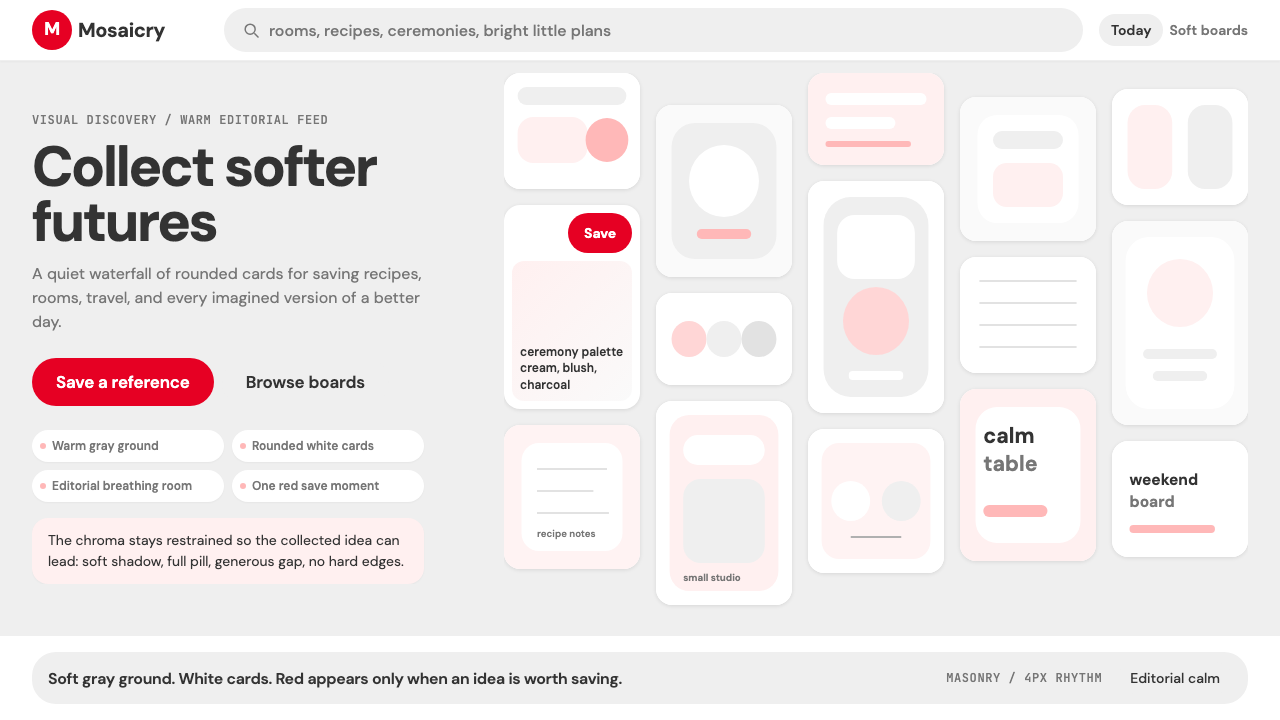 Pinterest 2024Aspirational calm. Warm gray masonry, rounded white pins, one surgical red sa…
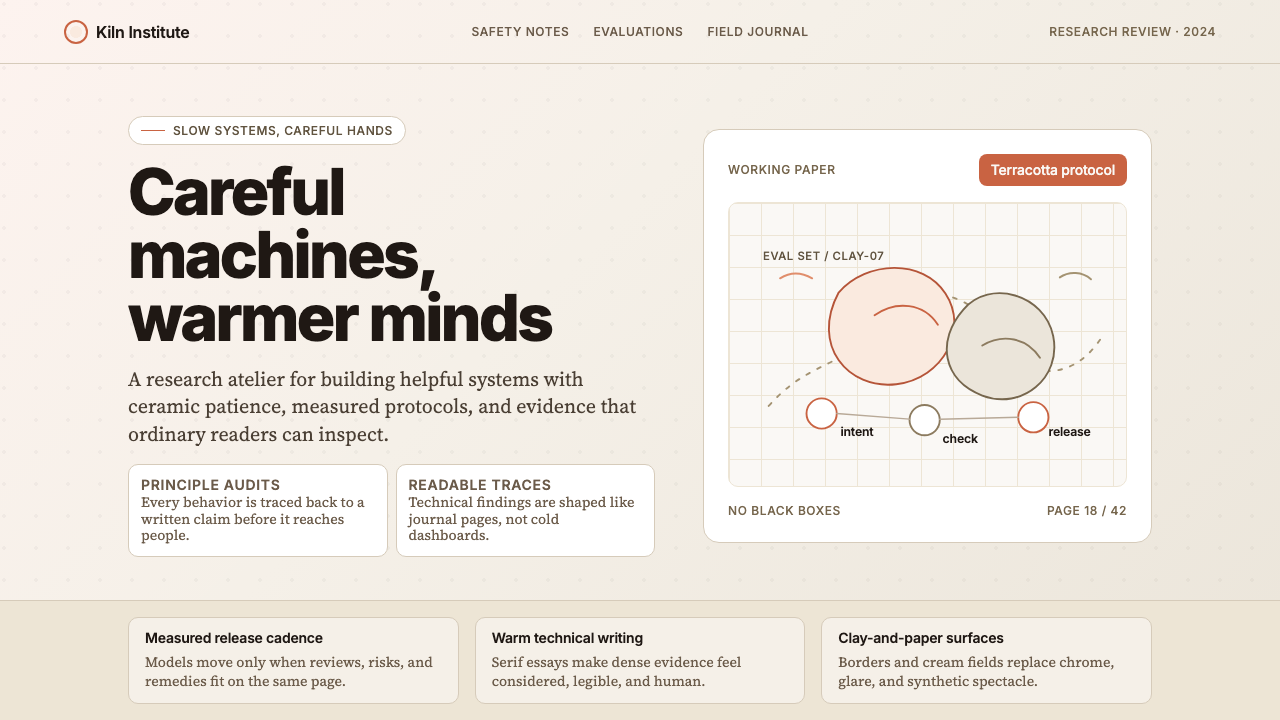 Anthropic ClayAI safety in handmade clay. Sand backgrounds, terracotta accents, serif body…
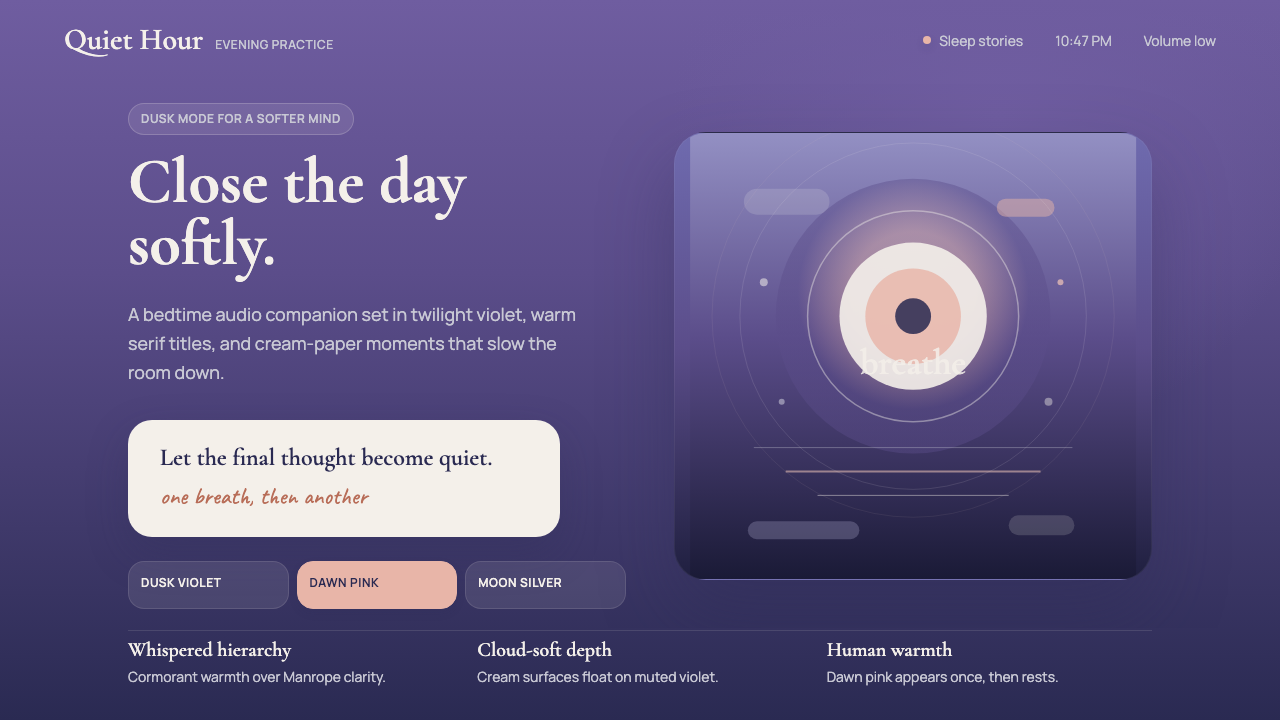 Calm App Purple MeditationWhispers at bedtime. Dusk-purple gradients, cream serif type, and dawn-pink w…
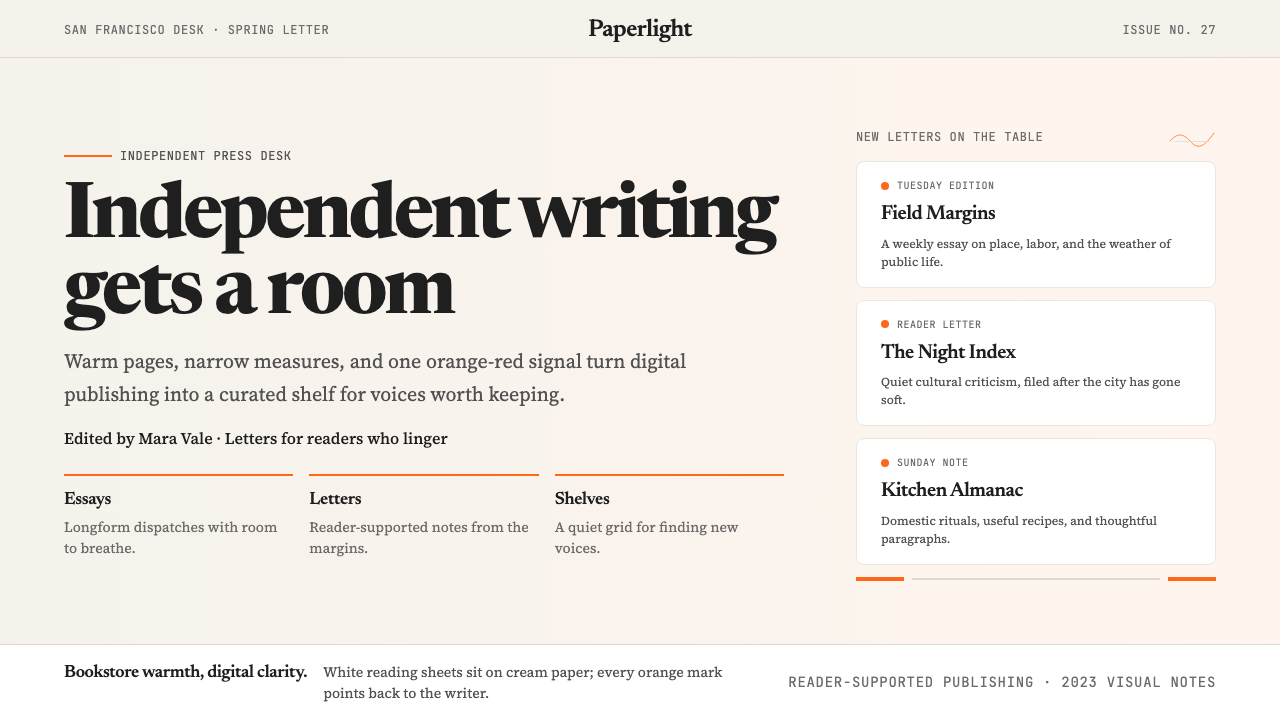 Substack 2023Writing feels shelved, not streamed. Cream paper, Newsreader serif, and one o…
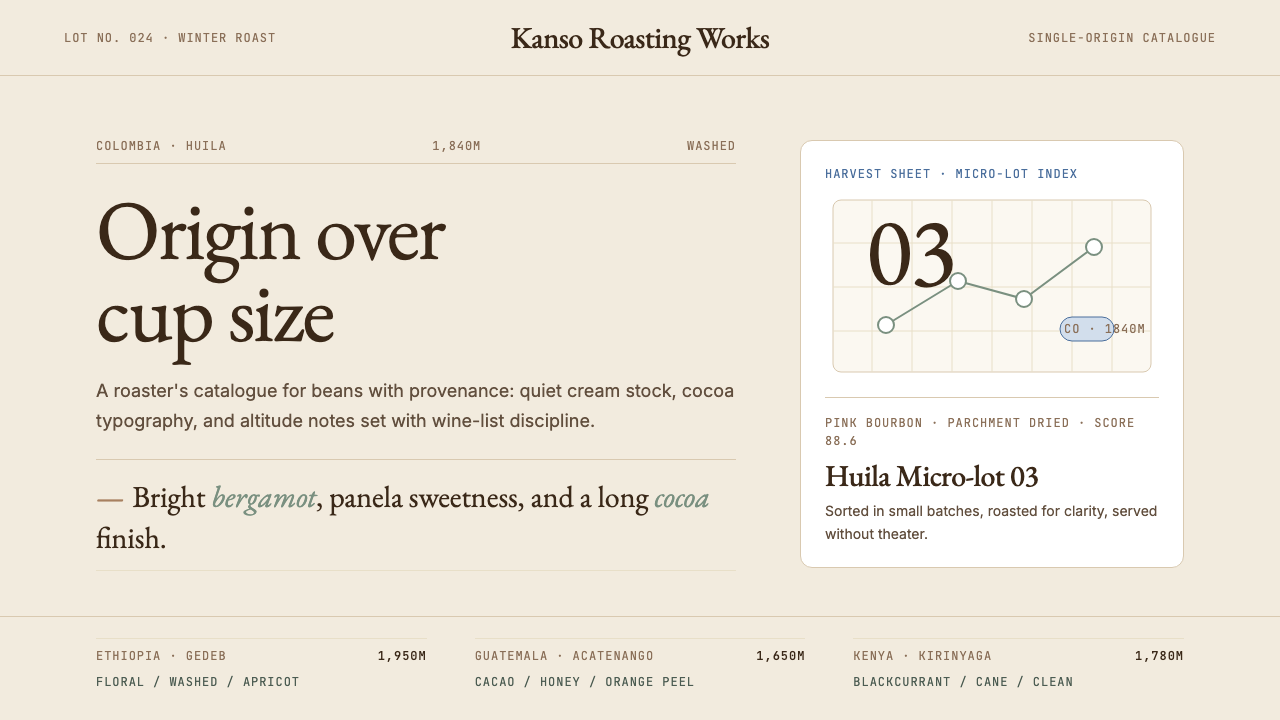 Third Wave CoffeeCoffee as catalogue. Cream paper, cocoa serif, mono origin specs, one sage no…
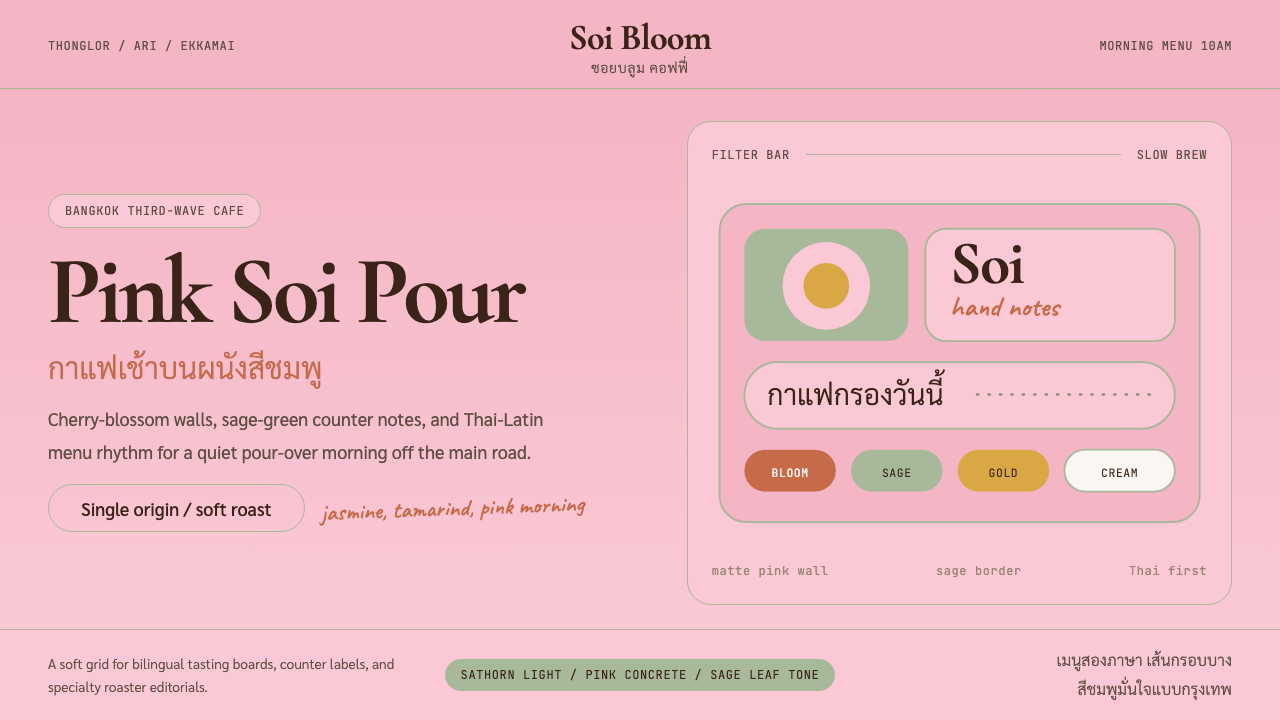 Bangkok Third-Wave CafeBangkok feels soft but sure. Cherry pink, sage borders, and Thai-Latin menu r…