What is Substack 2023?
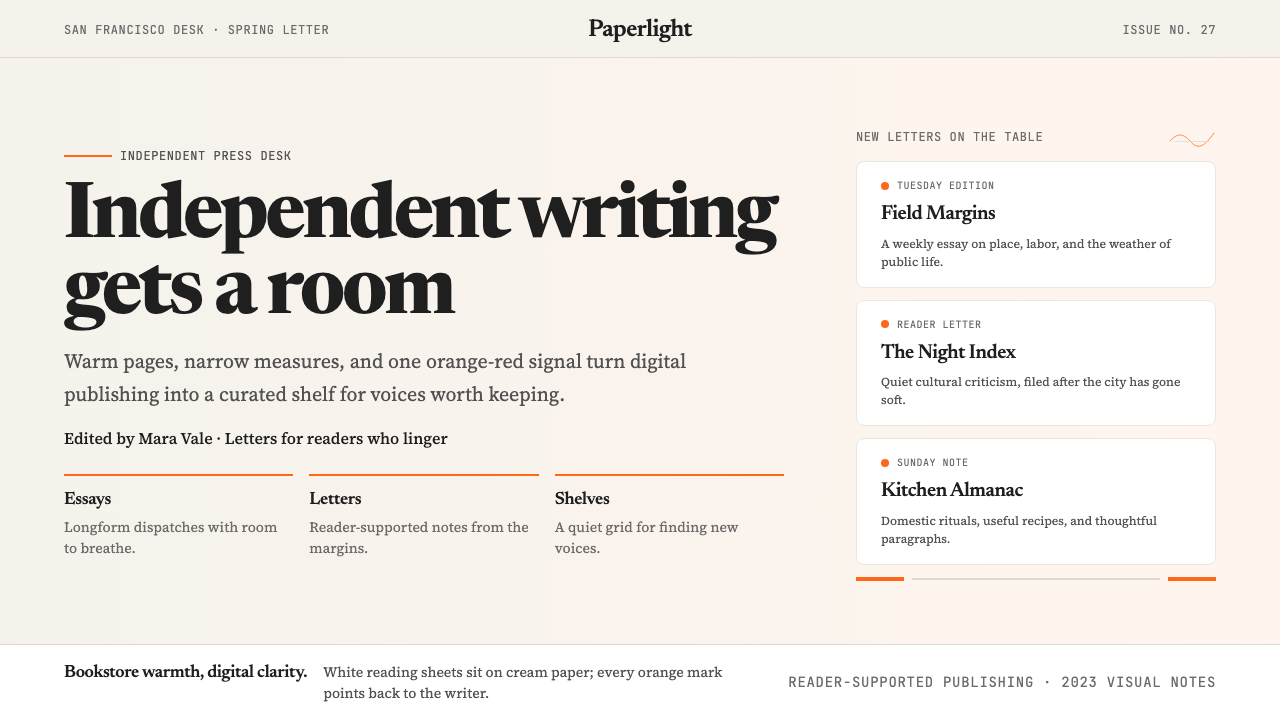
Substack turned independent writing into a visual identity — warm cream, a single orange-red accent, and editorial serif type that says library, not app.
Substack 2023 in brief
Substack 2023 is the visual design language of the Substack publishing platform as it matured through its mid-2020s growth period. It is characterized by a warm cream ground, a restrained charcoal-to-black type scale, and a single signature orange-red used exclusively for calls to action and brand accents. The aesthetic reads as editorial rather than transactional — closer in spirit to an independent bookshop or a literary journal than to a SaaS dashboard.
The system's central commitment is to reading comfort. Column widths are deliberately narrow, line-heights are generous, and the page is never crowded with competing visual elements. Hierarchy is established through typographic weight and size alone, relying on a classic serif typeface that carries the authority of print tradition while remaining highly legible on screen. The result is a design language that flatters the writing it contains.
What makes the system coherent is its radical restraint. The palette uses just three values — cream, near-black, and one warm accent — and nearly every interface element, from newsletter subscription cards to profile pages, is built from the same small vocabulary. This consistency makes the platform feel unified across thousands of different writer voices and subjects, a neutral but dignified stage on which any content can perform.

Where does Substack 2023 come from?
Substack was founded in San Francisco in 2017 by Chris Best, Hamish McKenzie, and Jairaj Sethi with a straightforward premise: give writers a direct relationship with their readers and a simple way to charge for their work. The platform launched against the backdrop of declining advertising revenue for digital media, the beginning of what observers were calling the creator economy, and growing frustration among journalists and essayists with the algorithmic feed logic of mainstream social platforms.
The early Substack interface was functional rather than distinctive — a clean white canvas that stayed out of the way of the writing. As the platform scaled through 2020 and 2021, attracting high-profile writers departing from major newspapers and magazines, it became clear that the visual environment needed to signal something more deliberate. The platform was positioning itself not as a social network or a content management system, but as a home for serious writing — and the design needed to reflect that ambition.
The visual identity that coalesced around 2022 and carried through 2023 drew on several converging influences. The editorial serif typeface, Newsreader, was custom-designed for screen reading at comfortable measures, directly evoking the texture of quality print journalism. The cream-toned backgrounds departed from the clinical white that dominated most web interfaces, borrowing warmth from the tradition of laid paper and printed books. The orange-red accent, close in hue to a well-aged red ink or a stop-press stamp, became the single vivid gesture in an otherwise deliberately quiet system.
The broader cultural context was equally significant. Substack rose during what many described as a post-Twitter media moment — a period when writers and readers were searching for alternatives to engagement-maximizing platforms and their chaotic information environments. The design language communicated stability, seriousness, and longevity in deliberate contrast to the velocity and visual noise of social feeds. By 2023, the look had become recognizable enough to function as a brand signal: that warm cream page with its orange subscribe button was, for a specific audience, a mark of editorial credibility.
What defines the Substack 2023 look?
Cream Ground
The base of the Substack visual system is not white but a warm off-white tending toward cream. This choice is the single most important departure from standard web conventions and from the clinical white backgrounds of most publishing platforms. The warmth of the cream immediately signals print tradition — the laid paper of literary journals, the ivory pages of a well-made hardcover. It lowers visual fatigue for long reading sessions and gives the orange-red accent its full emotional register: against cream, the accent reads as warm and inviting rather than urgent or alarming.
Editorial Serif Typography
Substack's type system centers on a serif typeface purpose-built for screen reading at comfortable column widths. The serifs carry cultural connotations of literary authority and careful editing — associations built over centuries of print journalism and book publishing. Headlines sit at a generous scale relative to body text, establishing a clear hierarchy without relying on color or decorative elements. Body text is set with ample line-height and a column width calibrated for reading flow rather than information density. The contrast between large, authoritative headlines and comfortable running text is the primary compositional move of the system.
Single Accent Color
The entire platform operates on a one-accent-color discipline: a warm orange-red that appears almost exclusively on primary calls to action — the Subscribe button, key navigation states, and brand-level moments. It appears nowhere else. This extreme restraint means that every instance of the accent is load-bearing: the eye is reliably directed to the most important interactive element on any page. The hue itself — closer to a deep terracotta or a vintage red ink than to a fire-engine red — avoids the aggression of pure red while retaining full urgency against the cream background.
Narrow Content Column
Substack layouts constrain the reading column to a width derived from classical typography's ideal measure for body text — a range that most typographers agree produces the most comfortable reading rhythm. On wide screens, this means substantial white space flanking the content, which itself becomes a visual statement: the writing is precious enough to deserve this much breathing room. This structural choice also creates a consistent reading experience regardless of screen size, as the measure barely changes between desktop and mobile. Side margins may carry metadata — author name, publication date, read time — but never compete with the main text.
Card-Based Navigation
Outside the reading experience itself, Substack uses a grid of newsletter cards to present publications, authors, and issues. Each card is minimal: a publication logotype or portrait image, a name, a short description, and a subscriber count or category tag. The cards share the cream background and rely on subtle border or shadow cues — never heavy graphic treatment — to establish their boundaries. The grid layout borrows from editorial traditions of magazine tables of contents and bookshop display tables rather than from app store conventions. Browsing feels like leafing through a publication directory, not like scrolling a social feed.
Typographic Restraint in UI
Interface elements — buttons, labels, navigation items, form fields — are set in type with minimal decorative support. Buttons are filled with the orange-red accent or left as outlined; they do not use gradients, shadows, or icon decoration. Input fields are simple bordered rectangles. Section headings throughout the platform use the same serif system as editorial content, blurring the line between interface chrome and content, which reinforces the sense that the platform itself is a reading environment first. No interface element competes visually with the text being read.
Warmth Without Decoration
Perhaps the most subtle achievement of the Substack visual system is that it feels warm and human without using any of the conventional signals of warmth — no rounded corners pushed to extremes, no illustration characters, no gradient brand colors, no whimsical iconography. The warmth comes entirely from the cream palette, the serif tradition, and the generous spacing. This is warmth through restraint rather than warmth through addition. The system trusts that readers associate the textures of serious print culture with comfort and welcome, and builds on that association rather than trying to manufacture friendliness through graphic decoration.

Who shaped Substack 2023?
Chris Best is a co-founder of Substack and served as its CEO through the platform's foundational growth years. A former engineer who helped build the messaging infrastructure at Kik, Best brought a product-first perspective to Substack's design decisions. His philosophy — that the platform should be invisible, foregrounding the writer and the writing rather than the container — directly shaped the editorial restraint that defines the Substack visual system. Under his leadership, the platform resisted the feature-accumulation and visual complexity that characterized competing platforms, maintaining the dignified reading-first aesthetic that became Substack's most distinctive quality.
Hamish McKenzie, a journalist and author before co-founding Substack, brought a writer's sensibility to the platform's positioning and identity. His public writing about the independent writer economy — including a book on the subject — helped articulate the cultural ambition behind Substack's visual choices. The platform's aesthetic is inseparable from its editorial mission: McKenzie consistently argued that writers deserve tools that respect their work, and the cream-and-serif design language is the visual expression of that conviction. His communication of Substack's purpose attracted many of the high-profile writers whose presence, in turn, validated the platform's claim to editorial seriousness.
The internal brand team that shaped Substack's visual identity through 2022 and 2023 made a series of decisions that are easy to underestimate in retrospect: choosing Newsreader as the platform's defining typeface, settling on the specific register of orange-red that became the brand's signature, and establishing the cream ground as the platform's default state. These choices involved navigating between the conventions of SaaS design — which lean toward clean white, sans-serif pragmatism, and vibrant brand colors — and the traditions of editorial design, which Substack's brand team drew from more explicitly than nearly any other technology platform of the era.
Newsreader is the custom serif typeface that anchors the Substack reading experience. Designed specifically for comfortable on-screen reading at the measures common to newsletter and long-form editorial layouts, it draws on the tradition of newspaper text faces — compact, durable, highly legible at small sizes — while being optimized for retina displays and the reading habits of people consuming long-form writing in bursts. The typeface choice is central to why Substack feels like reading rather than browsing: it carries enough typographic authority to confer editorial seriousness, and enough screen-native refinement to feel contemporary rather than nostalgic.
Jairaj Sethi, the third co-founder of Substack, served as CTO and shaped the technical architecture that made the platform's visual simplicity possible. A clean visual system is only maintainable when the underlying infrastructure prevents the accumulation of inconsistent UI states, conflicting component styles, and platform-by-platform fragmentation. Sethi's technical decisions about how the platform renders content — prioritizing consistent, author-controlled presentation over algorithmic reformatting — supported the visual coherence that the brand system depended on. His engineering philosophy aligned with the design philosophy: constrain the variables, maximize quality within those constraints.
How do you use Substack 2023 today?
The Substack 2023 aesthetic is highly transferable to presentation design when the goal is editorial authority rather than visual spectacle. A slide deck built in this language communicates seriousness and care — appropriate for thought leadership presentations, research summaries, investor materials from content businesses, and any context where the ideas themselves are the product. Cover slides work best with the same structure that Substack uses for its publication hero: publication name or deck title in large serif type on a cream field, with the orange-red accent appearing only on a single sub-element such as a category label, volume number, or speaker name. The restraint of the single accent makes the cover feel considered rather than decorated.
For content slides, the discipline is the same as Substack's reading pages: one clear typographic hierarchy, generous white space, and no decorative elements that do not carry information. Data slides should treat charts and graphs as typographic objects — labeled in the same serif type, with bars or line accents in the orange-red color — rather than as colorful visual interruptions. The cream background unifies data visualization with prose content, maintaining the sense that the data is an argument being made rather than a display being shown.
In web UI design, the Substack visual language is well suited to applications that need to feel trustworthy and content-forward: editorial platforms, newsletter tools, knowledge bases, writing environments, and any product where users spend significant time reading rather than navigating. The key structural principles are the narrow reading column for primary content, the cream or very warm near-white background, and the orange-red accent reserved strictly for the one primary action per screen. Dashboard layouts can use this system by treating metric cards the same way Substack treats newsletter cards — minimal, bordered, content-labeled — while keeping the typographic hierarchy simple and serif-forward.
For editorial and marketing applications, the Substack aesthetic supports a poster-like confidence that is unusual for a reading-first design language. Full-width hero sections with large serif headlines over cream fields can carry substantial visual impact without any graphic decoration. Marketing pages built in this system should alternate between cream-background sections and very dark near-black sections — the same move Substack uses for its own promotional pages — with the orange-red appearing at each section's primary call to action. Pull quotes, testimonials, and feature descriptions benefit from the same narrow-column discipline as editorial content: wide margins signal that the information is considered and edited, not poured in.
A common mistake when applying this aesthetic is reaching for decorative supplements to compensate for its quietness — adding subtle background textures, layering multiple type styles, introducing a second accent color, or using oversized illustrative elements to create visual interest. Each of these moves undermines the system. The Substack visual language is deliberately minimal; its warmth comes from the palette and typeface, not from graphic activity. Treating the cream ground as a canvas to be filled rather than a space to be honored produces results that look like a failed Substack imitation rather than a coherent application of the system. The correct response to the aesthetic's quietness is to trust it, not to override it.

Substack 2023 — FAQ
Is Substack 2023 the same as general editorial web design?
They share common ancestors but are distinct. General editorial web design draws on a broad tradition that includes magazine layouts, newspaper web editions, and long-form journalism sites. It can accommodate very wide color ranges, bold photography, and highly variable typographic systems. Substack 2023 is a specific, more constrained version of that tradition: it commits to a single warm ground color, a single accent, and a serif reading experience calibrated for newsletter-length content delivered to paying subscribers. The key distinction is intentionality: Substack's system is designed to communicate that writing is the product, and every element of the visual system reinforces that claim with unusual consistency.
Can this aesthetic work for non-writing products?
Yes, but with important caveats. The Substack visual language communicates literary seriousness and reading comfort as its primary signal. Applied to a non-writing product, those signals still land — they communicate thoughtfulness, editorial care, and a certain kind of cultural positioning — but they can also create an expectation mismatch if the product itself is transactional, fast-paced, or primarily visual. It works well for products adjacent to writing and knowledge: research tools, document editors, note-taking applications, publishing infrastructure, and education platforms. It works less well for e-commerce, action-oriented apps, entertainment products, and any context where users need to feel excited rather than settled.
How does the Substack aesthetic differ from Medium's design?
Both platforms prioritize reading comfort, but they arrive at very different visual results. Medium has historically used a pure white ground, a bolder sans-serif headline typeface, and a more social-platform-influenced layout with claps, highlights, and recommendation logic built visually into the reading page. Substack's approach is warmer, less social, and more closely aligned with independent publishing traditions: the cream ground, the serif type throughout, and the near-total absence of social interaction mechanisms from the reading surface signal a different relationship between reader and writer — one mediated by subscription and editorial commitment rather than public engagement metrics. Medium looks like a publishing startup; Substack looks like a literary journal that has learned to exist on the internet.
Why does Substack use a serif typeface when most tech platforms use sans-serif?
The choice is deliberate and communicative. Sans-serif type on technology platforms carries a set of associations: modernity, efficiency, neutrality, and a kind of ambient rationalism inherited from the Swiss International Style. These associations serve a software product well. Substack is not positioning itself as a software product — it is positioning itself as a publishing platform, and the serif typeface activates a different set of associations: literary tradition, editorial care, the physical texture of books and journals, and the implicit suggestion that what you are about to read has been written and edited with deliberate attention. The typeface does cultural positioning work that no amount of marketing copy could achieve as efficiently.
What is the biggest risk when adopting this aesthetic?
The biggest risk is passive execution — applying the surface elements of the system without understanding the discipline that makes it work. The Substack aesthetic is held together by restraint: one accent color, one type tradition, one warm ground. The moment a second accent color enters, or a sans-serif display typeface is introduced for contrast, or the background shifts to pure white for cleanliness, the system loses its coherence and begins to look like a generic editorial style rather than a considered visual identity. A related risk is under-investing in the typographic scale: the system's warmth depends significantly on generous type sizing, ample line-height, and the confidence to let a headline be genuinely large. Timid typographic choices collapse the editorial authority that the rest of the system is working to establish.
Related design styles
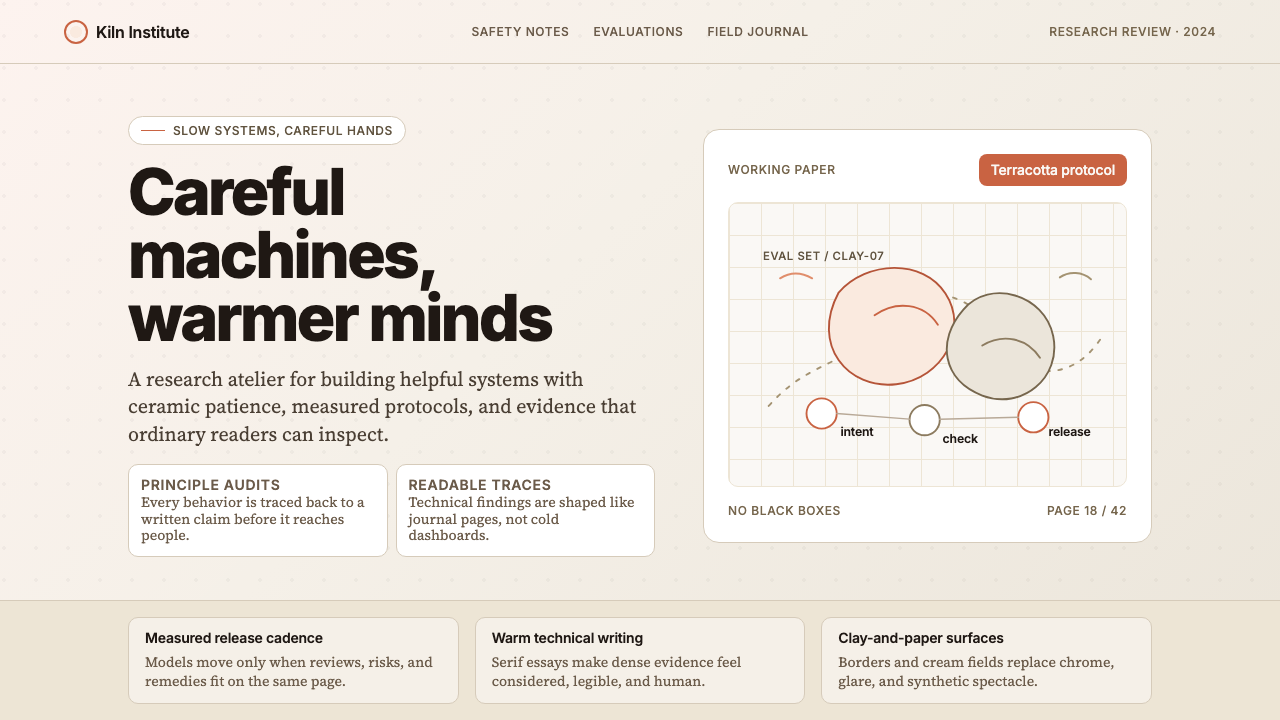 Anthropic ClayAI safety in handmade clay. Sand backgrounds, terracotta accents, serif body…
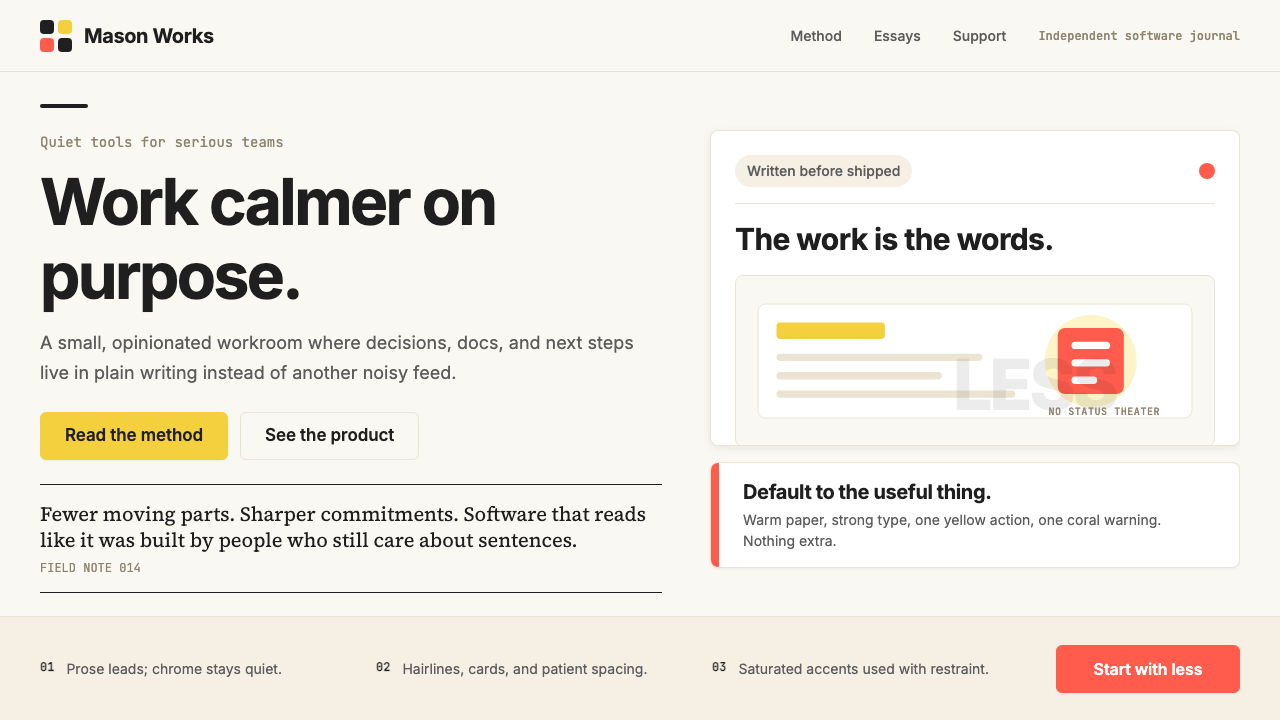 Basecamp / 37signalsQuiet craft, strong opinions. Cream paper, tight sans type, yellow and coral…
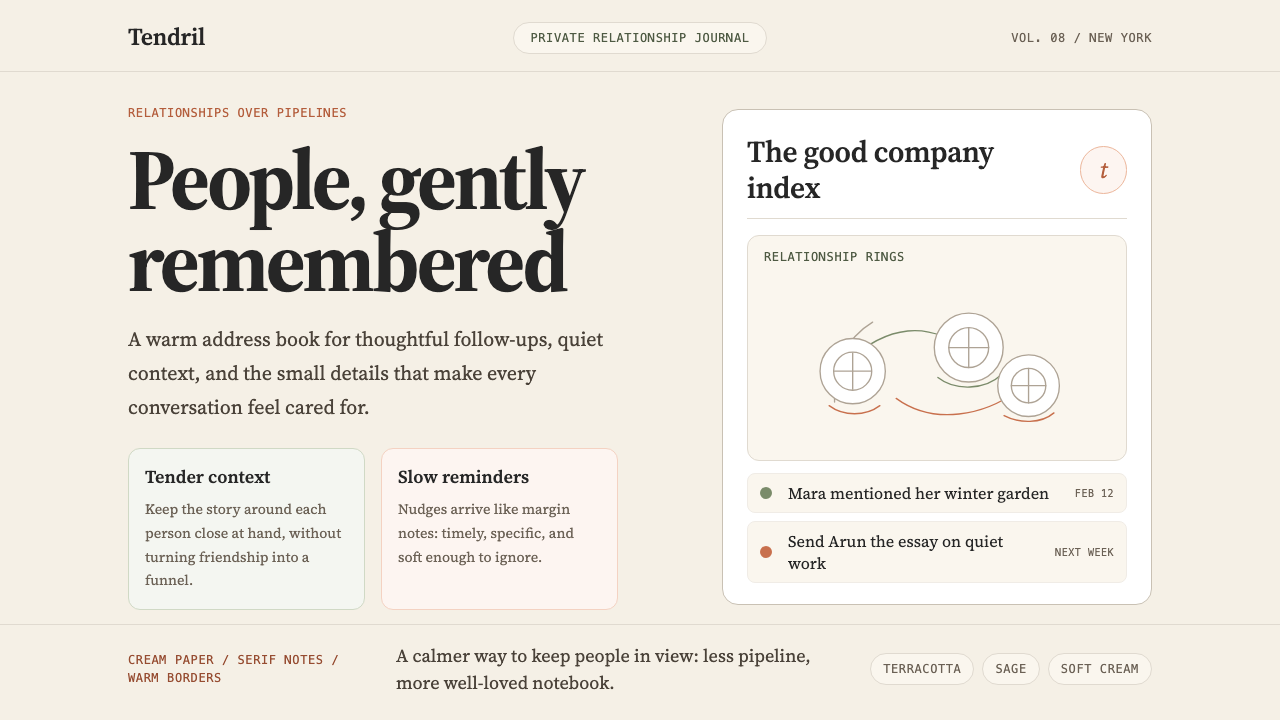 Clay 2024CRM as a sketchbook, not a sales pipeline. Cream backgrounds, terracotta, han…
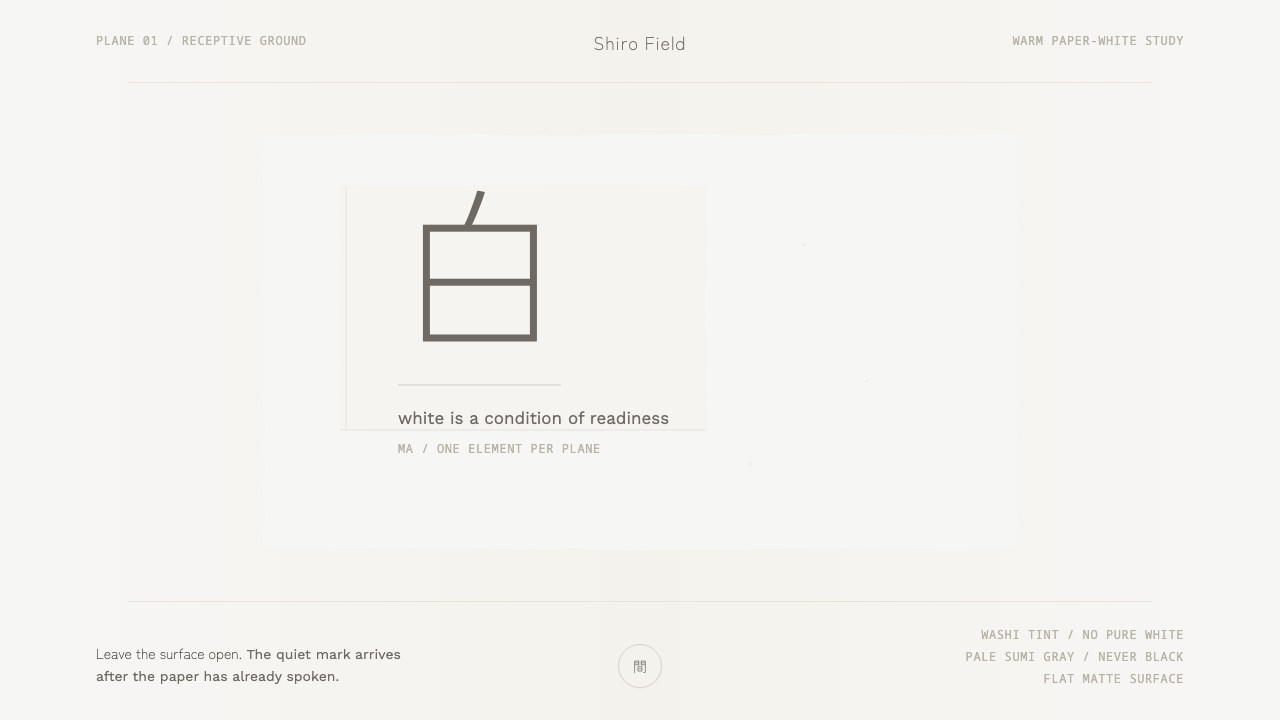 Kenya Hara «White»Emptiness is the subject. Warm washi white holds one pale sumi-gray mark.
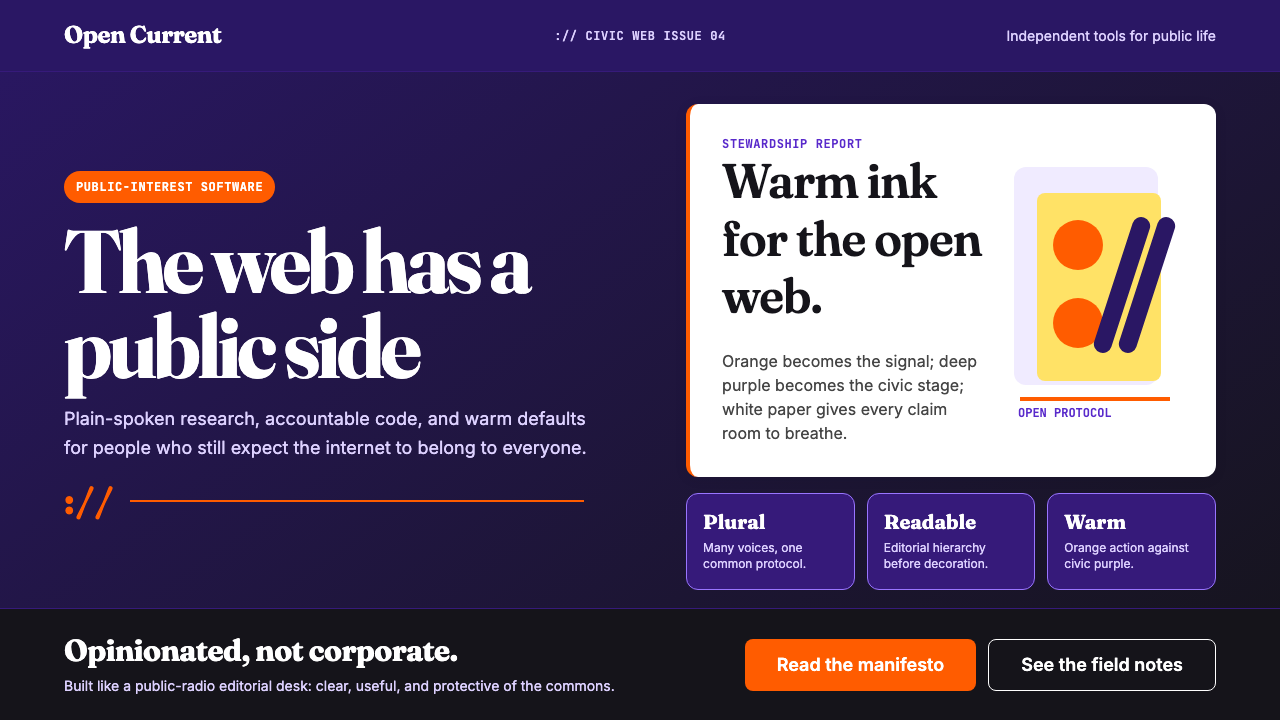 Mozilla Firefox 2024 RefreshPublic-interest warmth. Flame orange cuts through deep purple with Fraunces h…
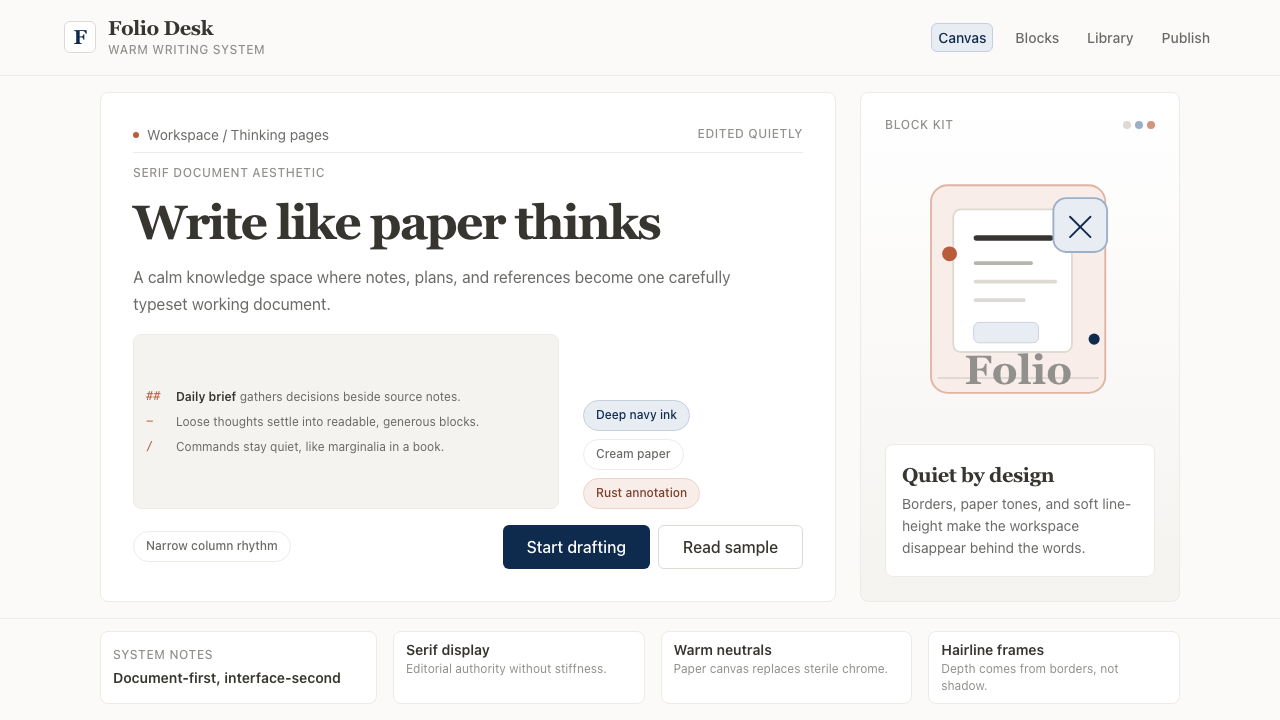 Notion ModernWriting feels papery. Source Serif on warm cream, navy ink, and hairline bord…