What is Mozilla Firefox 2024 Refresh?
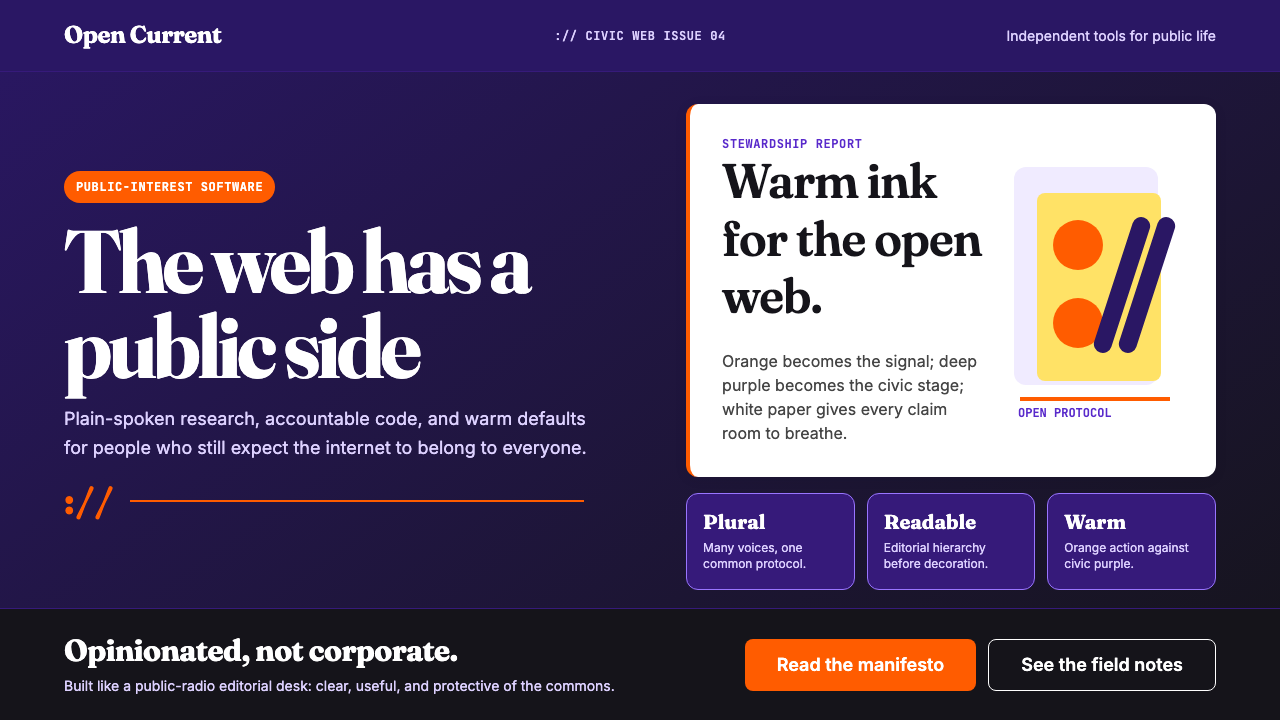
Mozilla's 2024 brand refresh turns Firefox-flame orange and deep purple into a civic-editorial statement: warm enough to trust, bold enough to mean something.
Mozilla Firefox 2024 Refresh in brief
Mozilla Firefox 2024 Refresh is the visual identity system Mozilla adopted in its most significant rebrand in over a decade. Led by CMO Lindsey O'Brien, the redesign abandoned the sleek-but-anonymous aesthetic common to tech startups in favor of something warmer and more opinionated: a palette anchored in deep purple backgrounds and Firefox-flame orange calls to action, with cream-white cards providing breathing room. The result reads less like a software company and more like a public broadcaster with a genuine editorial point of view.
The system is built around a few disciplined choices. Fraunces, a high-contrast display serif originally designed for editorial contexts, carries the headlines — an unusual move in a product space dominated by geometric sans-serifs, and a deliberate signal that Mozilla has things worth reading, not just features worth clicking. The iconic colon-slash-slash motif from internet URLs appears as ornamental punctuation throughout the system, threading browser heritage into every composition without leaning on literal logo placement.
What distinguishes this system from other nonprofit rebrands is its refusal to split the difference. The palette is genuinely warm — the orange is vivid and unapologetic, the purple is rich rather than corporate navy — and the typography is generous in size and weight. The visual message is civic confidence rather than institutional hedging: here is an organization that believes in something and wants you to know it.
Where does Mozilla Firefox 2024 Refresh come from?
Mozilla's story begins in 1998, when Netscape Communications released the source code of its Navigator browser under a public license — an act of defiance against Microsoft's mounting dominance of the web through Internet Explorer. The Mozilla project emerged from that release as a community-driven effort to build an open, standards-compliant browser. By 2003, the Mozilla Foundation was formally established as a nonprofit to steward this work, and in 2004 Firefox launched to widespread public enthusiasm, reaching one hundred million downloads in less than a year. For a brief window, it genuinely reversed Internet Explorer's stranglehold on the browser market.
The organization's visual identity through these years was serviceable but unremarkable — the fox-wrapped-around-a-globe mark was distinctive, but the surrounding design language was largely indistinguishable from the broader tech industry aesthetic of the time. Mozilla went through a more formal identity exercise around 2017, introducing a system that used the colon-slash-slash URL motif as a structural device, but the overall palette remained cool and digital-neutral. The brand communicated competence without conviction.
The 2024 refresh reflects a genuinely changed competitive and cultural moment. By the mid-2020s, Mozilla was operating in a browser market almost entirely dominated by Chromium-based products, with Firefox maintaining a loyal but modest share. Simultaneously, the organization had expanded its advocacy work into AI ethics, data privacy policy, and open-internet governance — concerns that resonated far beyond the technical audience. The rebrand was an acknowledgment that Firefox's audience is not developers managing configurations but ordinary people who care about how the internet is governed.
CMO Lindsey O'Brien framed the project explicitly around public-interest positioning: Mozilla is not a vendor competing on features but a civic institution competing on values. The choice of a display serif for headlines, the warmth of the orange-and-purple palette, the generosity of the whitespace — each was a deliberate distancing from the cool rationalism of the browser market and an embrace of the editorial tradition of journalism and public broadcasting. The colon-slash-slash motif, retained from the 2017 system, now reads less as a technical reference and more as a symbol of the open internet itself.
What defines the Mozilla Firefox 2024 Refresh look?
Palette
The color system is built around three anchors: a rich, saturated purple that functions as the dominant background in dark contexts, a vivid flame orange that serves exclusively as an action and emphasis color, and a warm cream-white that provides contrast without the clinical harshness of pure white. The purple is closer to aubergine than corporate navy — it has warmth baked into its undertones. The orange reads as heat and urgency rather than warning or hazard. Together they produce a palette that is simultaneously bold and approachable, neither cold-tech nor overly casual.
Typography
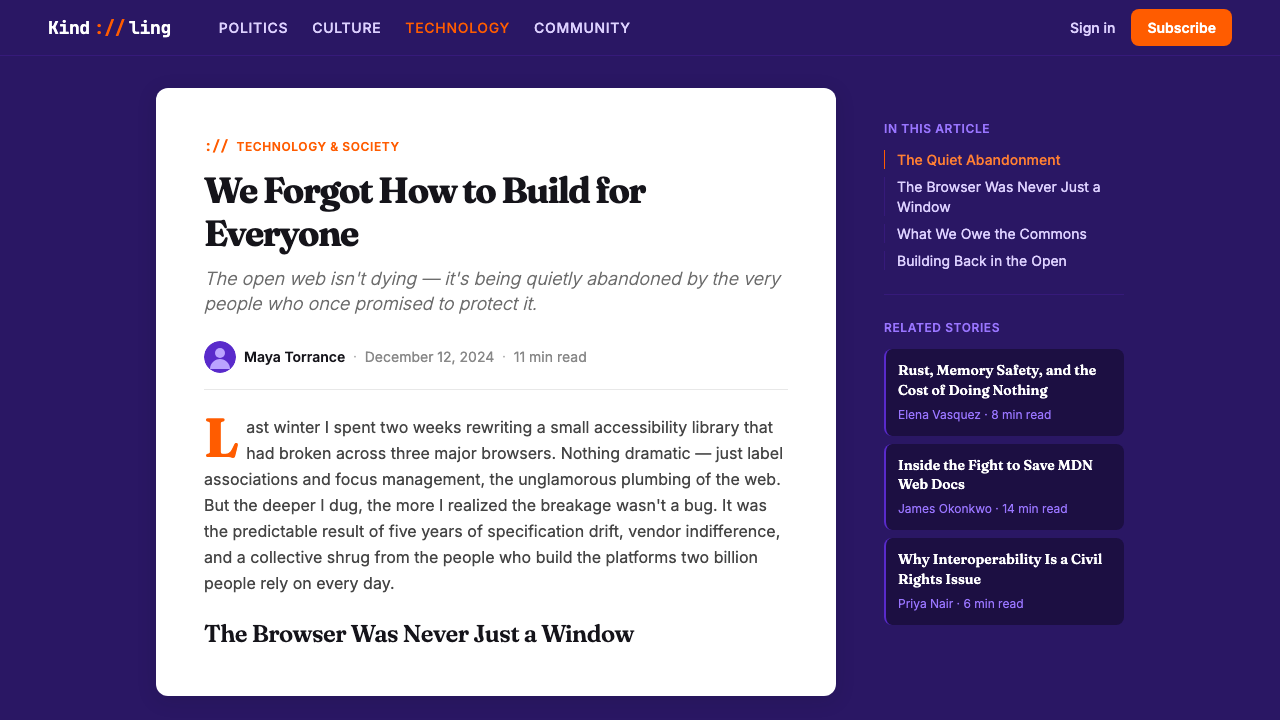
Fraunces, a variable display serif with high contrast between thick and thin strokes, anchors the headline voice. It was designed for editorial work — long-form reading, magazine covers, institutional publishing — and its presence in a browser brand signals that Mozilla is treating design as editorial rather than transactional. Headlines are set large and with deliberate weight, letting the letterforms carry emotional register without needing color support. Supporting text uses geometric sans-serifs that provide clean contrast without competing for attention.
URL Motif
The colon-slash-slash sequence — borrowed from the structural syntax of every web address — appears throughout the system as ornamental punctuation, section dividers, and compositional anchors. It functions as a brand-owned graphic element that grounds the visual identity in browser heritage without being literal about it. In large display use, the three characters have enough geometric presence to work as pure form; in smaller contexts, they read as knowing cultural shorthand for the web itself.
Editorial Confidence
The system uses generous whitespace and large type not as minimalist restraint but as editorial authority — the visual grammar of an institution that knows it has something worth saying. Section introductions breathe; captions are given actual typographic hierarchy; headlines are sized to stop the eye rather than guide it politely. This editorial register is unusual in the browser space, where interface density and feature-demonstration tend to dominate marketing materials.
Warmth as Stance
Unlike most tech brands, which pursue neutrality or authority as their primary emotional register, the Firefox 2024 system leans into warmth as a deliberate ideological signal. The cream tones, the orange's association with fire and heat, the editorial serif — these are not concessions to approachability but assertions about what Mozilla values: human presence over algorithmic polish, civic mission over corporate efficiency. The warmth is political in the sense that every design decision has a position.
Dark-First Composition
The deep purple background is treated as the canonical context — most hero and feature sections lead with it. This is unusual for a public-facing product brand, where light backgrounds are the default, and it reinforces the sense of editorial drama. Against the dark ground, cream cards and orange accents pop with intensity; the hierarchy of information is immediately legible without needing subtle shadow or border work. Light surfaces appear as respite or contrast, not as the default state.
Nonprofit Sincerity
The visual system deliberately avoids the aspirational lifestyle imagery and slick gradient surfaces associated with commercial browser and platform marketing. There are no abstract data-stream visuals, no photorealistic device mockups dissolving into light, no glossy brand photography of idealized users. The design stays close to language — words, headlines, the URL motif — because Mozilla's actual product is an argument about how the internet should work, not a physical object to be desired.
Who shaped Mozilla Firefox 2024 Refresh?
Baker co-founded the Mozilla project and served as its longtime chair and CEO, making her one of the most consequential figures in the history of the open web. Her leadership framed Mozilla not as a software company but as a mission-driven institution — a framing that the 2024 visual rebrand finally makes legible at first glance. Her persistent advocacy for browser diversity and internet openness shaped the cultural position that the new brand identity now communicates.
As CMO, O'Brien led the 2024 brand refresh and articulated the public-interest positioning that drives its visual language. Her framing — Mozilla as a civic institution competing on values rather than features — was the conceptual foundation that justified the choice of editorial typography, warm palette, and generous whitespace over the default tech-brand playbook. The rebrand represents one of the clearer examples in recent years of a CMO's strategic brief becoming legible as specific visual decisions.
Surman served as Mozilla Foundation's executive director for over a decade and was a central voice in expanding Mozilla's identity from a browser maker to an internet health and AI ethics advocate. His framing of the organization's work as 'internet health' — a term he helped popularize through Mozilla's annual Internet Health Report — contributed significantly to the ideological foundation that the 2024 brand now expresses visually: the internet as a civic resource to be tended, not merely a marketplace to be monetized.
Chambers took on the CEO role at Mozilla during the period in which the 2024 rebrand was finalized and launched. Her tenure coincided with the organization's sharpened focus on AI accountability and its repositioning as a public-interest counterweight to the concentrated power of large technology platforms. The brand identity launched under her leadership is the clearest visual articulation of that positioning Mozilla has yet produced.
How do you use Mozilla Firefox 2024 Refresh today?
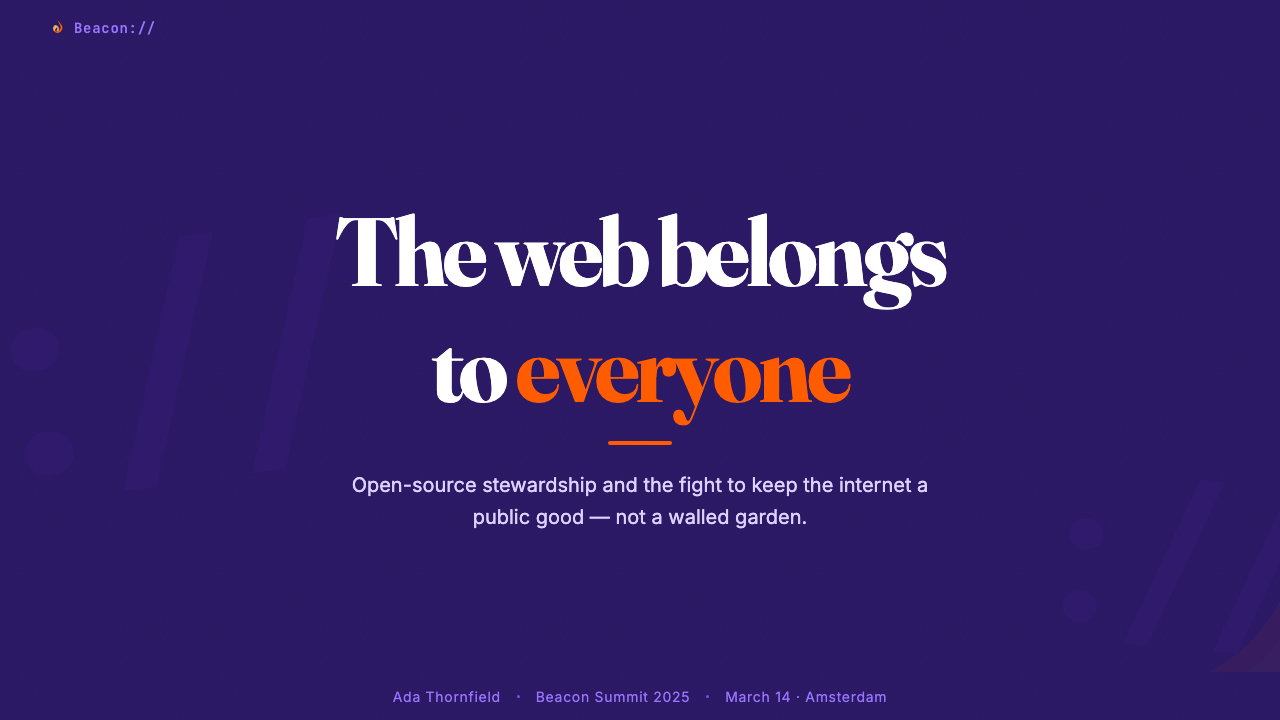
The Firefox 2024 system translates well into presentation contexts because its hierarchy is legible at a glance. For cover slides, the deep-purple-background treatment with a large Fraunces-style display serif headline and flame-orange accents produces immediate authority — the composition communicates that the presenter has something to say, not just information to convey. The cream-on-dark treatment is especially effective for conference presentations and keynotes, where light-on-dark reads better from a distance than dark-on-light. For content slides, the key discipline is restraint: one accent color per slide, generous margins, and body text sized generously rather than compressed to fit more points. Data slides should treat charts as editorial objects — clear axis labels, orange used only for the single most important data series, cream background for chart areas within a purple slide field.
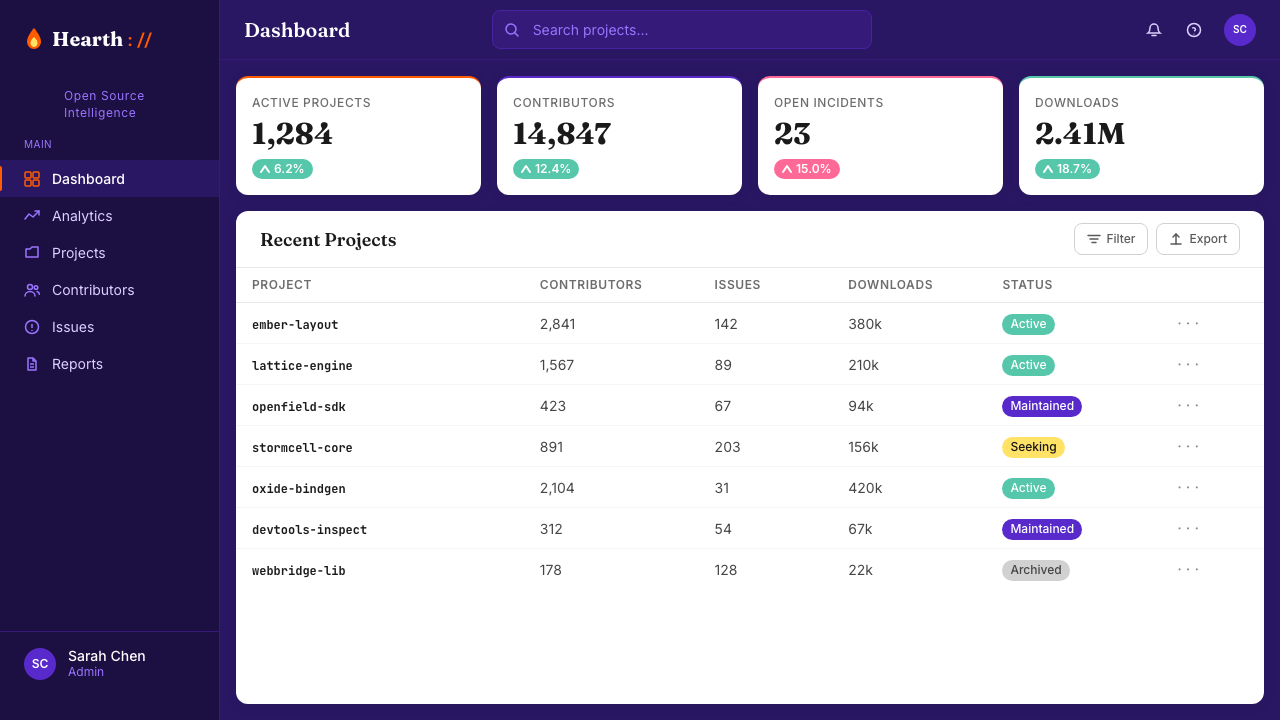
For web UI, the system's dark-first orientation makes it well-suited to dashboards, monitoring tools, and any interface where information density is high and the user needs to orient quickly. The deep purple background with cream card components produces a visual hierarchy that works without heavy shadow or border reliance — the contrast between background and card is sufficient. Navigation should be minimal and typographic; the URL motif can be adapted as a subtle structural divider. For pricing pages, the orange color reserved for the primary call-to-action tier communicates urgency and value without requiring any additional visual treatment.
Editorial and marketing applications benefit most from the system's confidence in language. Long-form landing pages should lead with large Fraunces-style headlines — single ideas stated plainly and at scale — before descending into supporting detail. Pull quotes and callouts work well in orange or cream against the dark field, treated as typographic objects rather than boxed or bordered elements. The URL motif functions as a section break that carries semantic weight: it signals 'we are going somewhere' rather than merely dividing content. For social and short-form content, the flame-orange-on-purple combination is immediately distinctive and crops well at small sizes; the colon-slash-slash can function as a micro-brand signature in contexts where the full wordmark does not fit.
The system adapts to cause-marketing and advocacy contexts with particular naturalness, because its emotional register — civic warmth, editorial confidence, principled clarity — aligns with the communication needs of organizations arguing for a position rather than selling a product. Reports, annual reviews, and policy documents benefit from the Fraunces headline treatment and the careful whitespace discipline; the palette signals seriousness without institutional coldness.
A common mistake when applying this system is using the orange too liberally. In the Firefox 2024 identity, orange is reserved: it appears on calls to action, key data points, and moments of editorial emphasis. When it appears everywhere, it loses its function as a signal and the system collapses into visual noise. Similarly, the serif-and-sans pairing requires deliberate hierarchy — mixing Fraunces-weight headlines with an unrelated decorative serif in supporting roles undermines the editorial coherence the system depends on. Stay within the typographic register: display serif for headlines, geometric sans for everything else.
Mozilla Firefox 2024 Refresh — FAQ
Is this style specific to Mozilla, or can it be adapted for other organizations?
The aesthetic principles — display serif headlines, warm editorial palette, generous whitespace, dark-first composition — are not proprietary to Mozilla. They represent a coherent design language with a specific emotional register: civic warmth, editorial confidence, principled stance. Any organization that communicates from a values-based rather than features-based position can draw on the same vocabulary — advocacy organizations, public broadcasters, mission-driven foundations, educational institutions. The key is ensuring that the warmth is earned by the organization's actual content and mission rather than applied as surface styling.
How does this style differ from other editorial or media brand identities?
Most editorial brands work with restrained, neutral palettes — black ink on cream or white, with a single accent color used sparingly. The Firefox 2024 system is more assertive: the deep purple is rich and saturated rather than neutral, and the orange is vivid rather than a subtle warmth. The combination reads as editorial in structure but activist in temperature. It sits somewhere between a magazine identity and a protest poster — which is appropriate for an organization whose editorial mission is advocacy rather than objectivity.
Can this palette work in a light-background version without losing its character?
Yes, but with care. A light-background inversion — cream or off-white ground, deep purple for headlines and structural elements, orange for calls to action — preserves the palette's emotional register while reversing its compositional drama. What changes is the sense of weight: dark-background compositions feel dense and urgent; light-background equivalents feel lighter and more approachable. For long-form reading contexts, the light version typically performs better; for hero moments and feature marketing, the dark version is more effective. The key constraint is that the purple must remain rich enough on the light ground to maintain contrast and character — a desaturated lavender reads as entirely different and loses the civic warmth entirely.
Why does the system use a serif for headlines when most browser brands use sans-serif?
Because the choice communicates something specific about what Mozilla is. Sans-serif type in tech contexts reads as precision, efficiency, and modernity — the values of a product company optimizing for performance. Fraunces, a display serif with editorial associations, reads as authority, depth, and considered opinion — the values of a publisher or institution with a point of view. The typeface choice is not a stylistic preference but a positional statement. Mozilla is not trying to look like a software product; it is trying to look like the kind of organization whose arguments about the internet deserve to be taken seriously.
How should the colon-slash-slash motif be used without becoming gimmicky?
The motif works when it carries structural function — as a section break, a heading prefix, an ornamental pause before a quote or a key statement. It becomes gimmicky when it is used decoratively without purpose, or when it appears so frequently that it stops registering as meaningful. The discipline is to treat it like punctuation: used where it aids comprehension or emphasis, absent where it does not. In practice, one or two appearances per page or screen is usually the right register. The motif also works best at scale — large enough that its geometric character is legible — rather than as a small repeated texture.
Related design styles
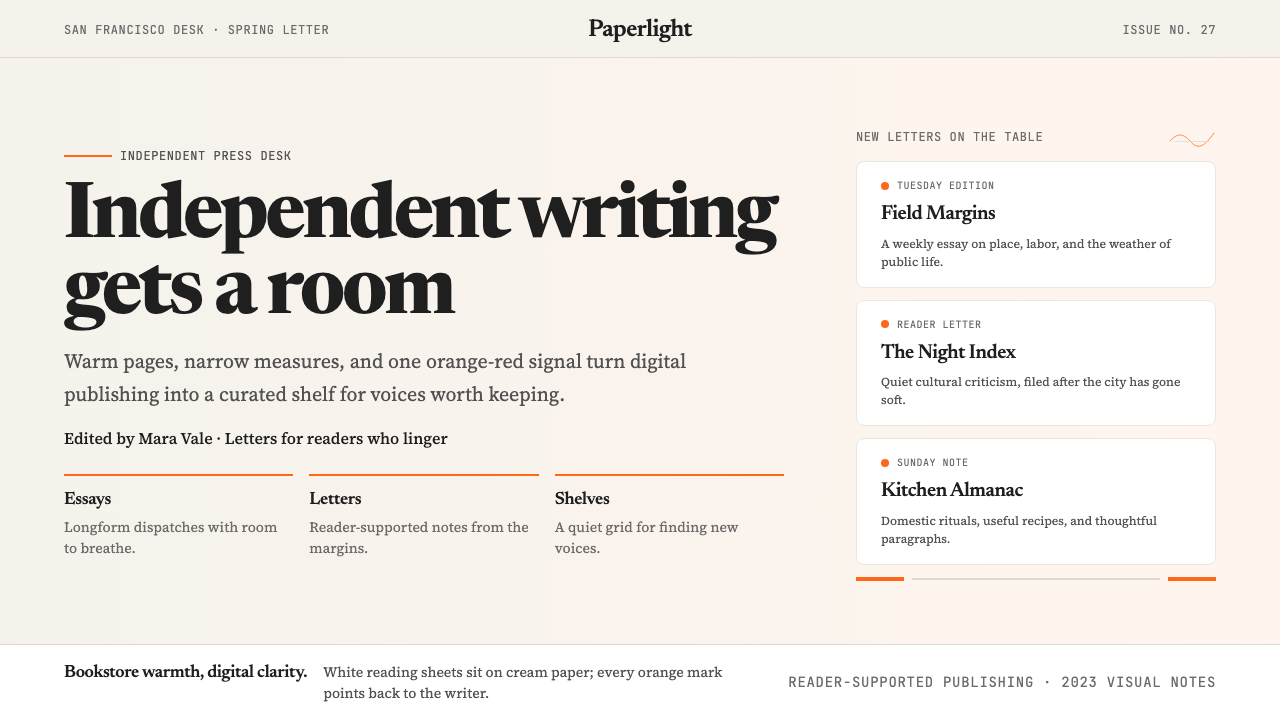 Substack 2023Writing feels shelved, not streamed. Cream paper, Newsreader serif, and one o…
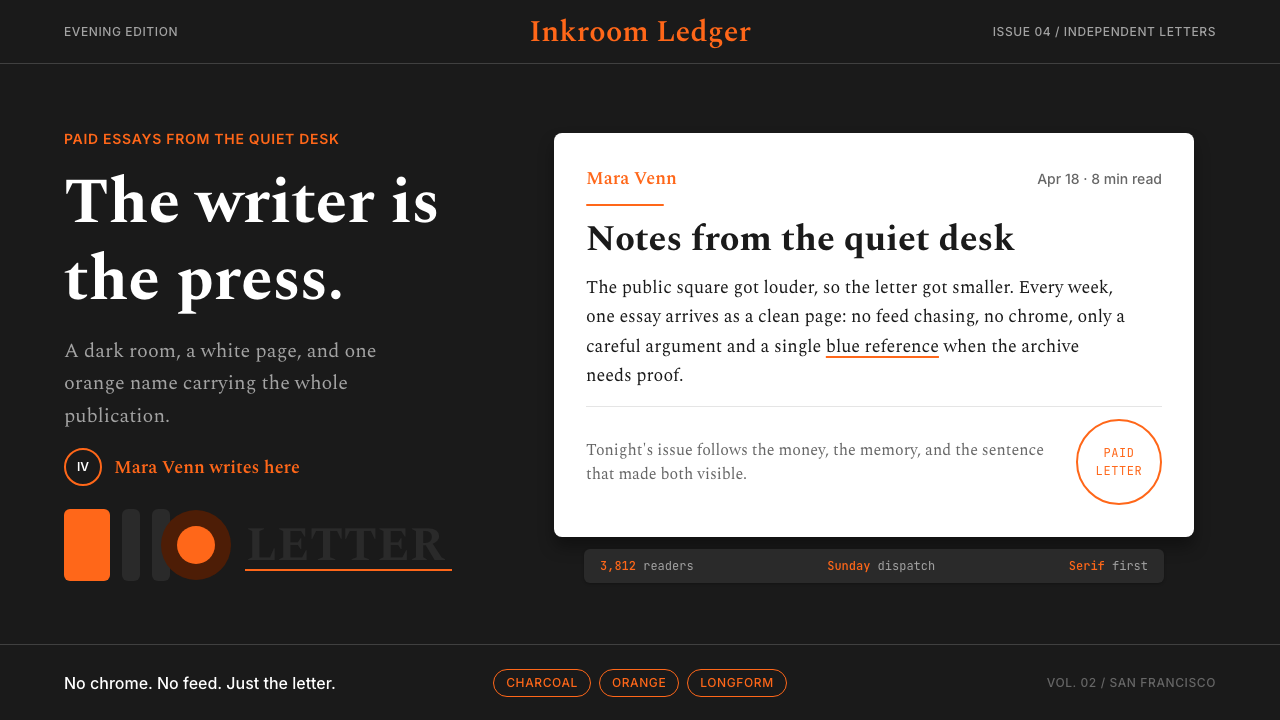 Substack Orange NewsletterLit page, dark room. Orange serif bylines ignite white cards on charcoal.
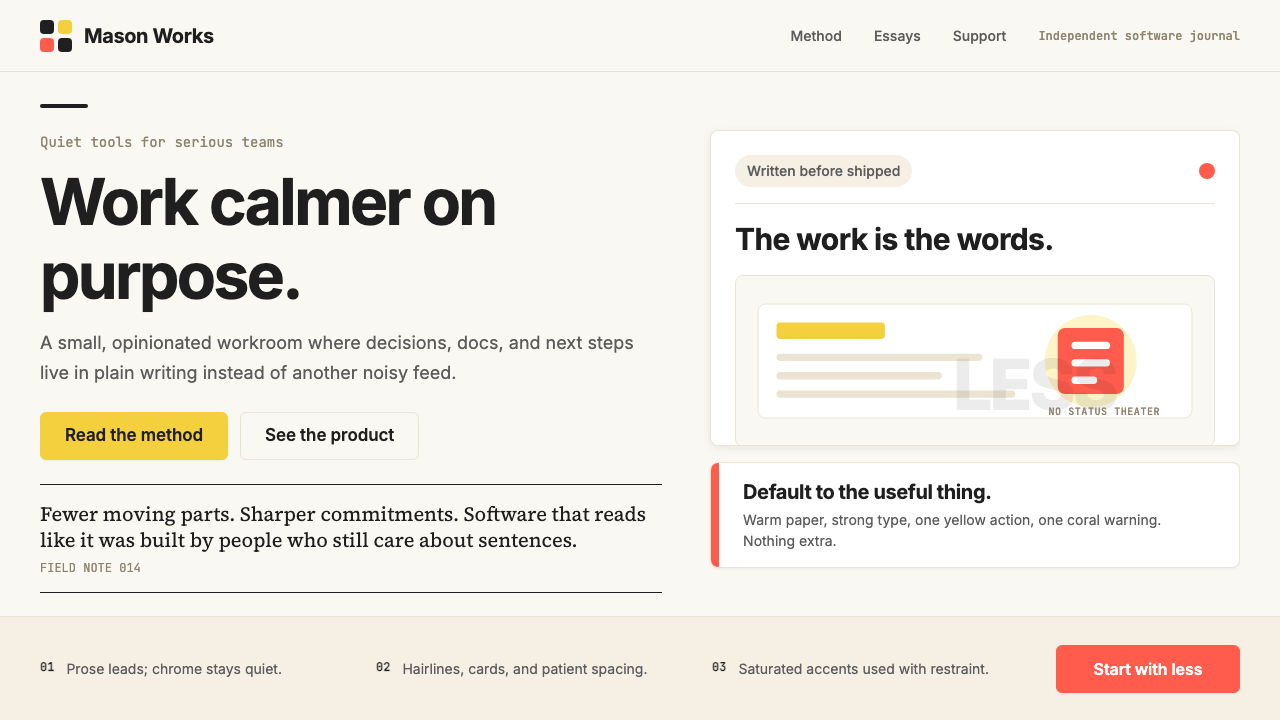 Basecamp / 37signalsQuiet craft, strong opinions. Cream paper, tight sans type, yellow and coral…
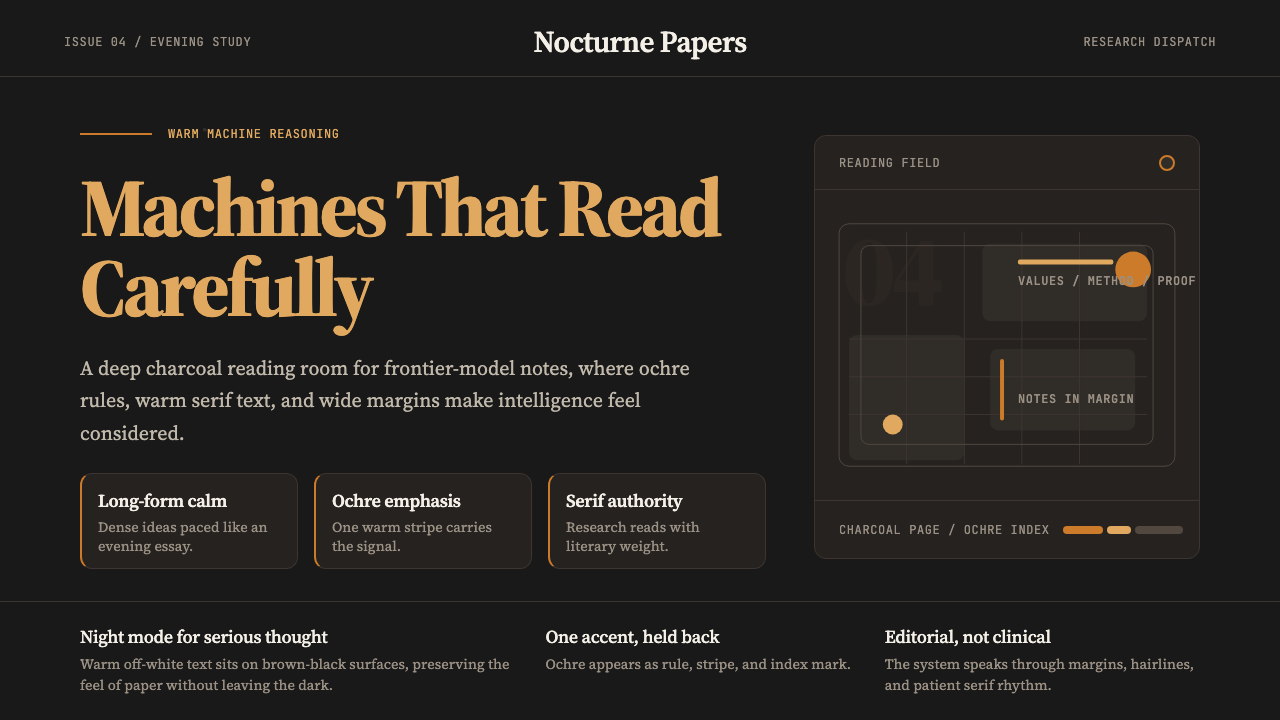 Claude / Anthropic Warm 2024Warm intelligence at night. Ochre rules and Source Serif glow on deep charcoa…
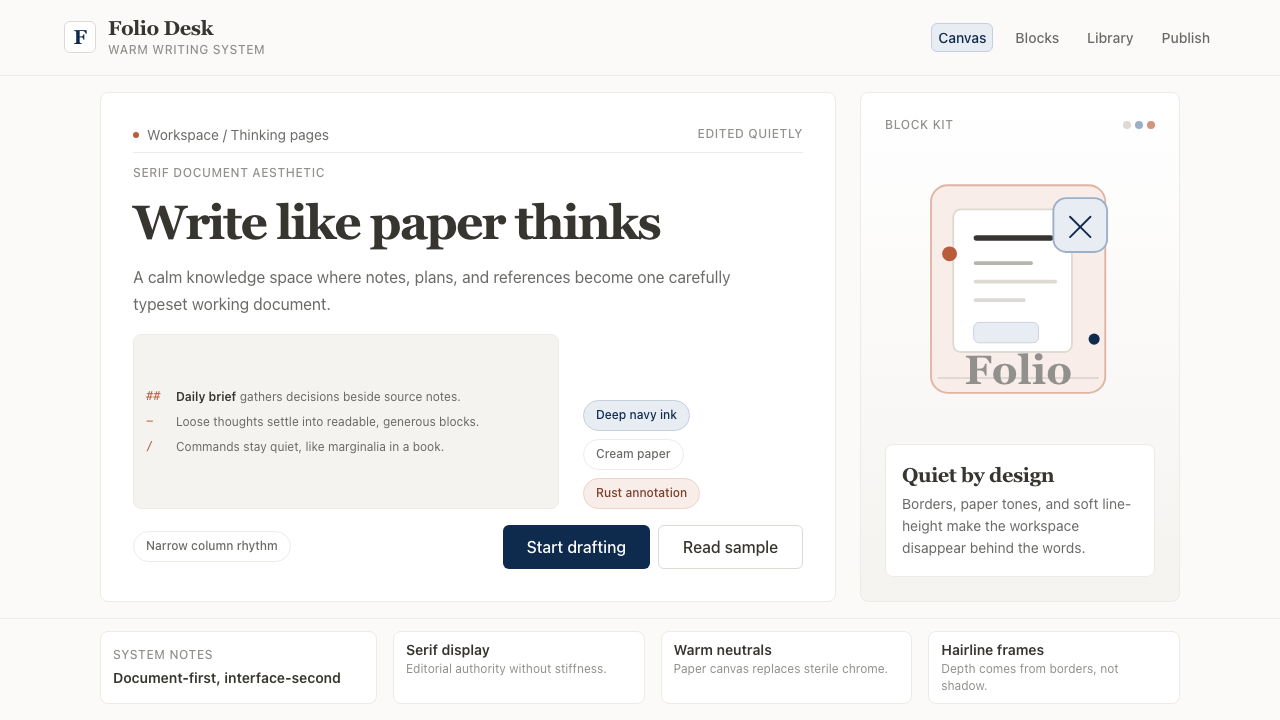 Notion ModernWriting feels papery. Source Serif on warm cream, navy ink, and hairline bord…
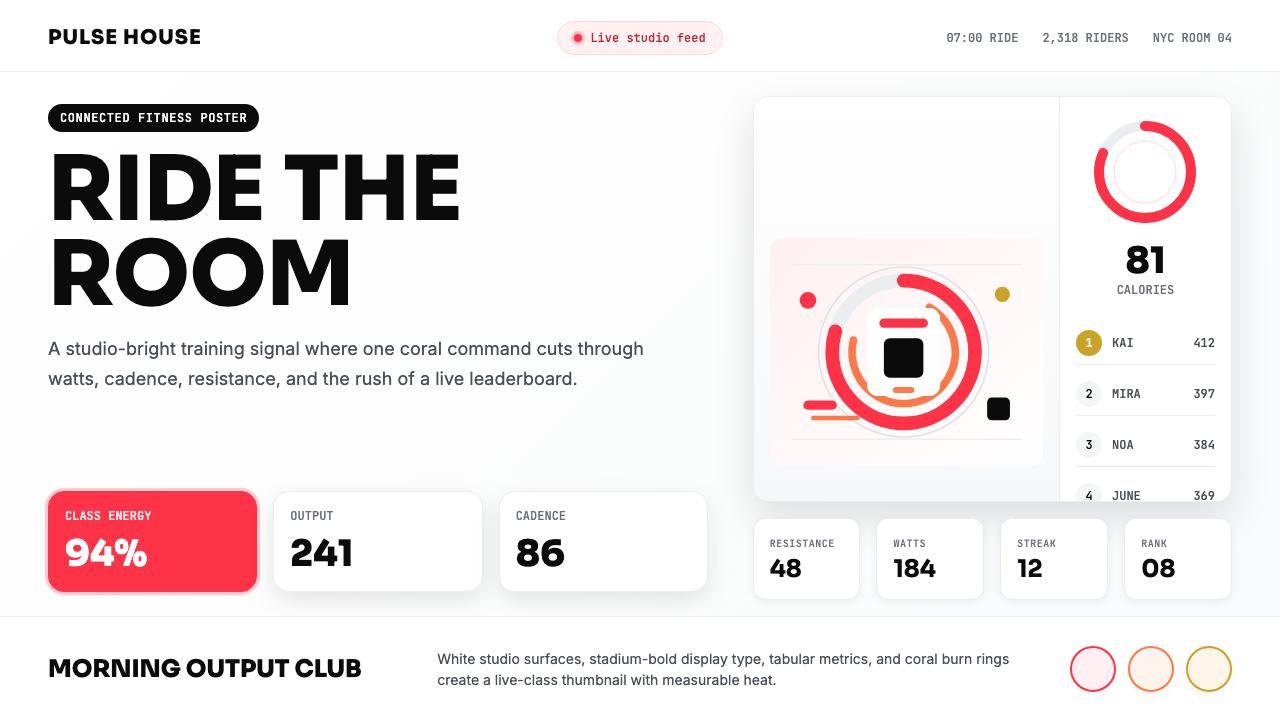 Peloton Fitness Coral (2020)Studio-bright urgency. Coral rings, Sora caps, and leaderboard grids drive th…