What is Peloton Fitness Coral (2020)?
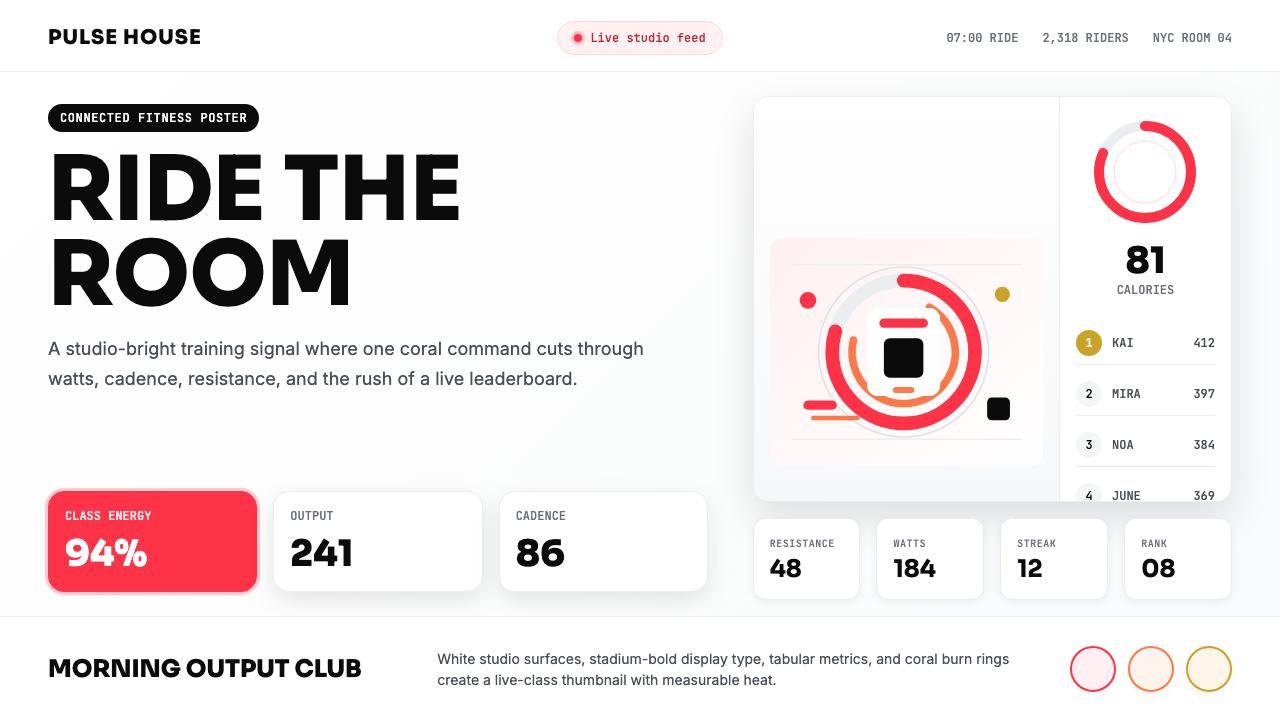
Peloton turned the anxiety of a live leaderboard into a visual language — coral urgency, studio-bright white, and data rings that made every home ride feel like a Chelsea broadcast.
Peloton Fitness Coral (2020) in brief
Peloton Fitness Coral is the visual design system that defined connected-fitness branding at the peak of the at-home workout boom. Built around a single highly saturated warm accent — the coral that came to function almost as a proprietary signal color — laid against a studio-light-bright white field, the system communicates urgency, achievement, and community in a format optimized equally for a tablet screen mounted on a stationary bike and a mobile phone carried to the couch.
The aesthetic is not subtle. It is engineered to replicate the physiological conditions of a live fitness class: the heat of the room, the pulsing energy of a crowd, the instructor's voice cutting through noise. Every visual decision — the near-neon warmth of the coral, the caps-locked stadium-bold display type, the ring-shaped data visualizations modeled on calorie-burn meters — is calibrated to raise the viewer's heart rate a fraction before the workout even begins.
What makes the system coherent is its discipline. Despite the emotional intensity of the color and imagery, the underlying layout logic is methodical: a clean grid, clear typographic hierarchy, and consistent spatial relationships between data elements and photographic content. The instructor portrait sits at the emotional center, but the leaderboard and metric displays are the structural spine. The coral operates as a single controlled accent rather than a diffuse wash, which is why the brand feels energetic without becoming chaotic.
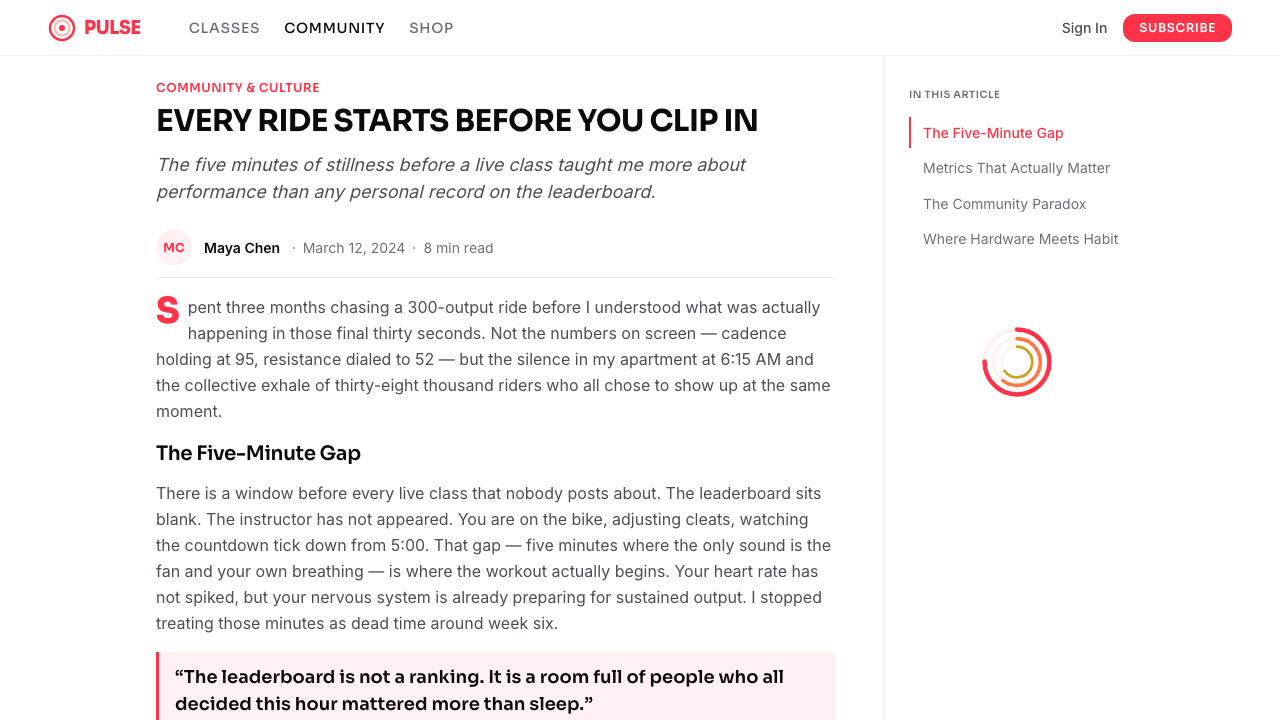
Where does Peloton Fitness Coral (2020) come from?
Peloton was founded in New York City in 2012 by John Foley, who wanted to bring the energy of Manhattan boutique fitness studios — SoulCycle, Barry's Bootcamp, Flywheel — into the home for people who could not schedule around a class time or afford the per-session cost. The company started as a hardware startup: the bike came first, the brand identity was secondary. Early visual materials leaned on generic fitness-industry imagery — muscular bodies, high-contrast black and white, the usual catalogue of aspirational sweat.
The coral identity solidified around 2018 as Peloton shifted from a niche hardware startup into a media company with a library of on-demand classes and live broadcasts from its Chelsea production studio. The decision to anchor the entire brand on a single warm saturated accent color was both practical and strategic. Practically, it made the Peloton interface instantly distinguishable on a screen in a room full of other screens. Strategically, it aligned the brand with a tradition of media companies using signature colors to claim territory — the specific coral was warmer and more optimistic than standard fitness-industry reds, closer in spirit to entertainment brands than to pharmaceutical or athletic equipment brands.
The visual peak came in 2020 and 2021, when the COVID-19 pandemic closed gyms worldwide and Peloton became one of the most discussed consumer products in American culture. Subscriber numbers grew from roughly half a million to nearly six million in two years. The design system had to scale across a dramatically expanded surface area: bike screens, mobile apps, web interfaces, promotional campaigns, broadcast graphics for the live class studio, apparel, and packaging. The coral held its identity anchor through all of it, becoming one of the more recognized brand color choices of the pandemic era.
The key figures who shaped the brand's visual presence included John Foley, whose founding vision of replicating the boutique fitness experience determined the emotional register; Hisao Kushi, whose product and technology leadership drove the integration of real-time data visualization into the core experience; and instructors Cody Rigsby and Robin Arzón, whose personas — warm and comedic for Rigsby, driven and athlete-focused for Arzón — set the human tone that the visual system had to support. The instructors were not just talent; they were design constraints. The portrait photography, the leaderboard legibility requirements, the way the interface had to simultaneously show a live human face and a dense data readout — all of these flowed from the centrality of the instructor relationship.
What defines the Peloton Fitness Coral (2020) look?
The Coral Signal
The defining visual element of the system is a warm, highly saturated coral — not the aggressive red of danger signage, not the pale pink of softness, but a midpoint that reads simultaneously as energetic and welcoming. It functions as a proprietary color in the same way that a major technology company might own a particular shade of blue: trained viewers recognize it as Peloton before reading any text. It appears sparingly but consistently — on primary call-to-action buttons, on the active ring in calorie-burn visualizations, on instructor-name treatments, and on metric highlights in the leaderboard. Its restraint is precisely what gives it power.
Studio-Light White and Photographic Ground
The background register of the system is a near-pure white that reads like studio lighting rather than a paper page. This creates an aspirational cleanliness — the interface feels hygienically bright, like a well-run gym with good HVAC. Against this white ground, instructor portrait photography operates at full saturation and sharp contrast. The photographs are shot and processed to maximize the emotional presence of the subject: strong key lighting, compressed depth of field, subjects looking directly into the lens or caught mid-effort with genuine exertion visible. The photography is not lifestyle — it is almost theatrical.
Ring Data Visualization
The recurring structural motif of the Peloton visual system is the incomplete circle — the progress ring or completion arc that indicates calorie burn, output, or effort as a proportion of a goal. This form carries both functional and symbolic weight. Functionally, it communicates a quantitative metric at a glance without requiring the user to parse a number in context. Symbolically, the incomplete ring creates perpetual tension — the circle is not closed, and the implicit invitation is always to complete it. The coral arc against a neutral ring track became one of the most imitated data visualization conventions in the wellness and health technology sector.
Stadium-Bold Display Typography
Display type in the Peloton system is set in heavy, caps-locked letterforms at large scale — the kind of typographic weight associated with arena scoreboards and sports broadcast chyrons rather than editorial design. This choice connects the interface to the cultural vocabulary of competitive athletics rather than wellness or consumer technology. For metric-dense content — the leaderboard with its scrolling ranks and real-time wattage and cadence readouts — a more compact, tabular sans-serif takes over, optimized for rapid scanning of changing numbers. The contrast between the muscular display type and the information-dense data type creates a visual rhythm that maps onto the rhythm of a workout: big effort, then data check, then big effort again.
Mirror-Bright Surface and Card Shadows
Cards and UI containers in the Peloton visual system carry a signature shadow treatment that reads like a gym-floor reflection — soft and directional, suggesting a polished surface beneath each component rather than a light source above it. This shadow style reinforces the studio-space metaphor: the interface is not a piece of paper but a lit room with a reflective floor. The effect is used consistently across class cards, instructor cards, and promotional modules, creating a depth system that sits between the stark flatness of earlier material design conventions and the more theatrical shadow work of entertainment and streaming platforms.
Leaderboard Grid Logic
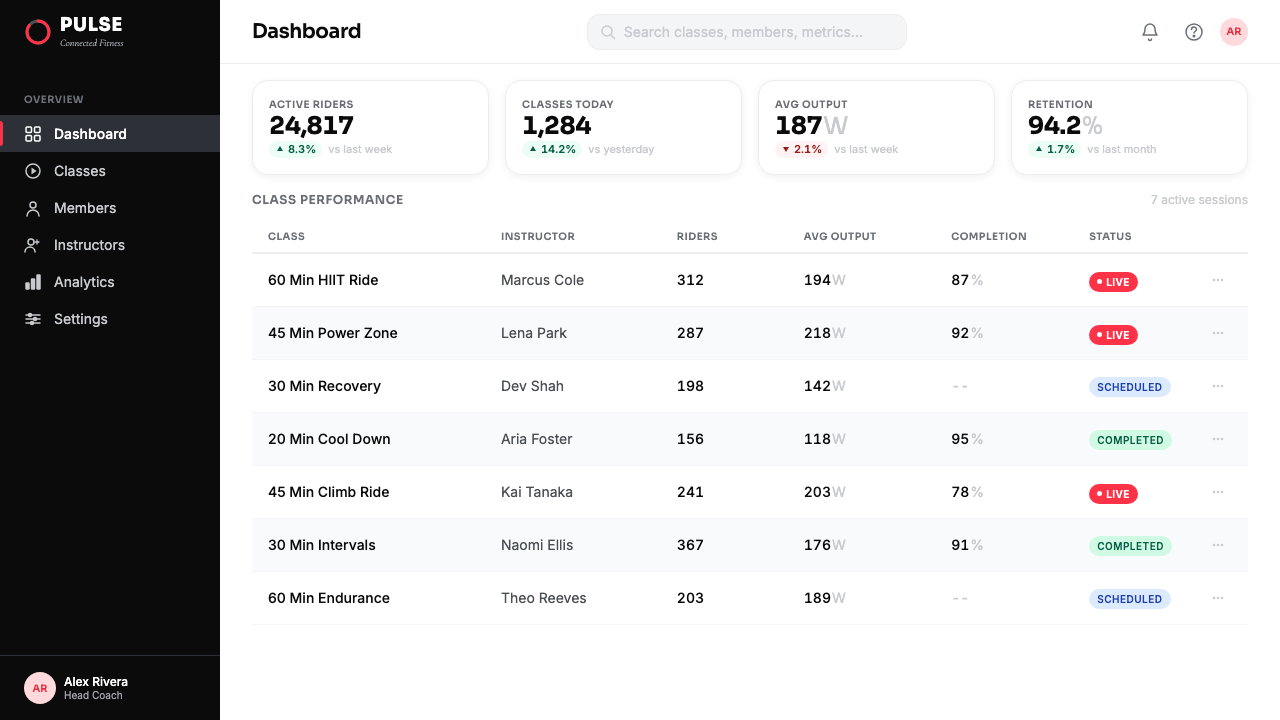
The leaderboard — the central social and competitive mechanism of the Peloton platform — imposes a strict tabular grid that runs at a faster pace than the rest of the interface. Ranks, output numbers, names, and effort indicators must coexist in a narrow horizontal band that updates in real time. The design solution is ruthlessly hierarchical: rank as the primary identifier, name in a secondary weight, metrics in the most compact form that remains legible. Color in the leaderboard is reserved entirely for the user's own row — highlighted in coral against the monochrome list — reinforcing both the competitive structure and the personal stake. This grid logic bleeds into marketing materials, where structured data displays become aesthetic elements in their own right.
Community and Social Warmth
Unlike fitness brands that foreground the solitary athlete, Peloton's visual system consistently encodes communal presence. Multiple riders shown simultaneously in a class still, the accumulating high-five count, the instructor addressing the camera as though speaking to a packed room — these choices embed a social warmth into what is technically a solo workout product. The coral color itself participates in this: its warmth and approachability are distinct from competitive reds or clinical blues. The system positions the user not as a lone striving individual but as a member of a large, energized, mutually encouraging community — and the visual language is doing that work continuously.
Who shaped Peloton Fitness Coral (2020)?
Foley co-founded Peloton and served as its chief executive through the critical growth years that established the brand's visual and cultural identity. His founding vision — that boutique fitness energy could be bottled and delivered to a home rider through technology and content — determined the emotional register that the entire design system was built to communicate. The insistence on a studio broadcast quality for what was, technically, a workout recording session set the photographic and production standards that made the coral system feel like television rather than software.
Arzón joined Peloton as an instructor and became one of its most recognized faces, eventually rising to vice president of fitness programming. Her persona — driven, athletic, intellectually serious — shaped the aspirational register of the brand's human imagery. The photography conventions around Arzón, particularly the direct address to camera and the visible effort in mid-workout shots, became templates that informed how the entire instructor roster was presented. Her presence also pushed the brand toward an inclusive definition of athletic identity that broadened its photographic and copy vocabulary significantly.
Rigsby became one of the platform's most followed instructors through a persona that combined genuine athletic coaching with humor and warmth that cut against the severity of traditional fitness culture. His presence in the visual system — often bright-eyed, mid-comment, in clear mid-exchange with the camera — contributed a human levity that balanced the more intense instructor imagery and made the overall brand feel approachable rather than intimidating. The design system had to accommodate both Arzón's competitive drive and Rigsby's communal warmth, which is part of why the coral choice — energetic but not aggressive — worked across both.
Kushi's leadership over the technology and product organization shaped the data layer that sits beneath the visual surface of the Peloton experience. The integration of real-time metrics — cadence, output, heart rate, rank — into an interface that remained emotionally engaging rather than clinically overwhelming required both engineering precision and design judgment. The ring visualization and the leaderboard logic that became hallmarks of the brand's aesthetic identity both emerged from the product decisions made under Kushi's leadership, making the data display not a compromise but a central visual feature.
How do you use Peloton Fitness Coral (2020) today?
Applying the Peloton Fitness Coral aesthetic requires understanding that the system is built around a three-part hierarchy: the human element at the emotional center, data at the structural spine, and the coral accent as the signal that links them. Any application that inverts this hierarchy — leading with color and treating the human or data layer as secondary — will produce an energetic but incoherent result. The coral must earn its appearance by marking something that matters: an achievement, a call to action, a live moment, a personal record.
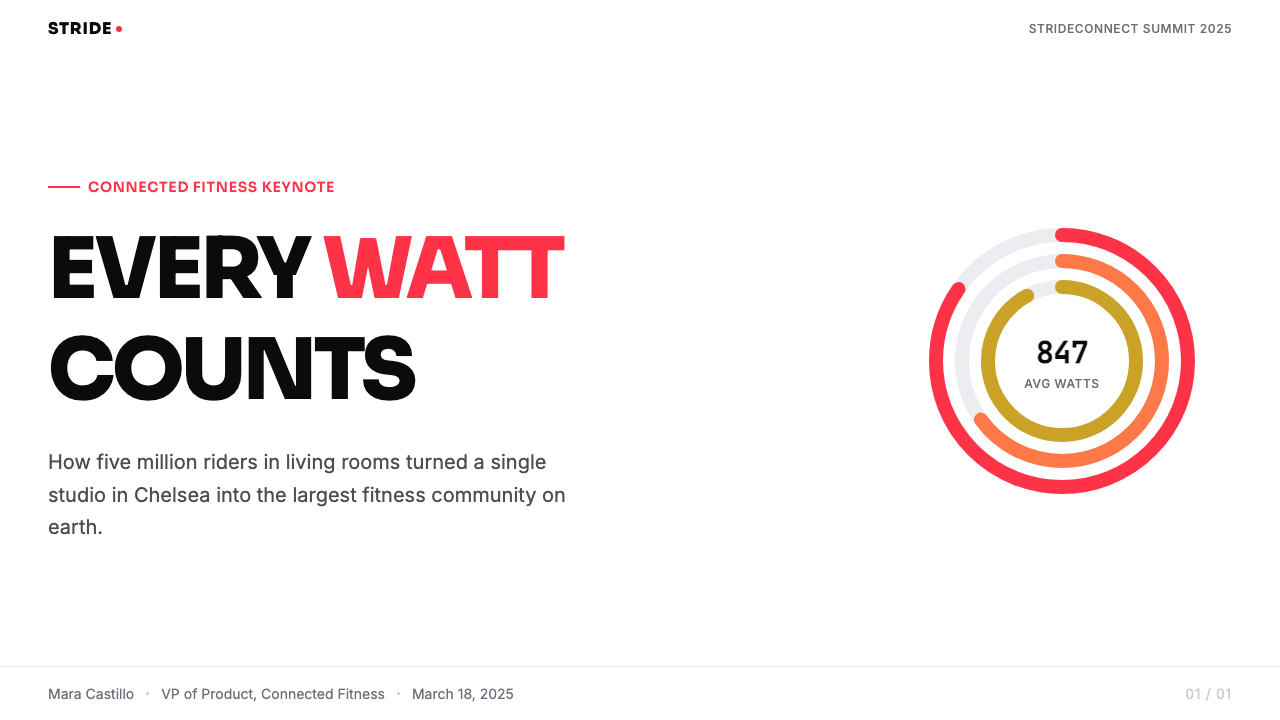
For presentation slides, the system adapts well to cover slides that need to communicate momentum and group energy. A strong instructor-style portrait occupying the majority of the slide area, a coral accent on a key metric or achievement stat, and a dark lower band with white type for the presenter's name and context produces an opening that reads as broadcast-quality and high-effort. Content slides should resist the temptation to use the coral liberally — reserve it for one key data point or one call-to-action per slide, and let the rest work in black, white, and neutral gray. Data slides benefit from ring or arc visualizations where a coral segment indicates current performance against a neutral baseline ring.
For web and product interfaces, the aesthetic is particularly well suited to any product that combines a social leaderboard or competitive ranking with personal progress tracking. Health apps, challenge platforms, e-learning tools with completion metrics, and team productivity dashboards all share the structural logic that Peloton refined. The implementation principle is identical: white or very light field, coral reserved for the user's own position and primary actions, tabular data in a compact neutral typeface, portrait photography for the human element where appropriate. The shadow treatment on cards should be directional and medium-weight — not flat, not heavily three-dimensional.
For marketing and editorial applications, the system supports the kind of bold, campaign-style layouts associated with sports media and entertainment. Full-bleed photography of people in active, visible effort states anchored by a large coral typographic element — a score, a percentage, a challenge metric — works as a promotional module with high visual authority. The Peloton visual vocabulary translates naturally into event promotion, product launch campaigns, and brand awareness advertising where the goal is to make the viewer feel the energy of the product before reading a word.
A common mistake when referencing this aesthetic is turning the coral from a signal into a field. When coral covers a background or fills a large area, it stops functioning as an alert and starts feeling like a brand color applied indiscriminately — the visual equivalent of shouting every word rather than emphasizing the important ones. The original system uses coral as a line, an arc, a button border, a name highlight: it is always a small, hot mark in a cool white field. A second common error is using instructor-style portrait photography without the production values that make it work — a bright, high-key photograph with visible effort and direct engagement communicates authority; a casual or low-contrast image undermines the entire energy system the style depends on.
Peloton Fitness Coral (2020) — FAQ
How does Peloton Fitness Coral differ from standard sports-brand red?
Standard sports-brand reds tend toward cool, aggressive tonalities — they signal danger, competition, and physical dominance. The Peloton coral is warmer and more optimistic in character, sitting closer to the boundary between energizing and welcoming. This was a deliberate positioning decision: Peloton needed to recruit people who found traditional gym culture intimidating, so the accent color had to be exciting without being threatening. The coral also works differently from a pure red in data visualizations — on the ring and leaderboard, a warm arc reads as achievement and progress rather than warning, which aligns with the motivational context.
Can this visual system work for products outside the fitness category?
Yes, but the transfer works best for products that share the same emotional and functional structure: a social or competitive ranking layer, real-time personal performance data, and a human expert or coach as a central relationship. E-learning platforms, productivity tools with team leaderboards, financial performance dashboards, and any subscription product where retention depends on habit formation and community engagement are natural fits. The system struggles in categories where the primary emotional register is calm, unambitious, or private — personal journaling apps, meditation tools, or conservative financial services would all fight against the broadcast energy the visual language encodes.
What is the right way to handle the data layer without it feeling clinical or cold?
The Peloton solution to this tension was structural: data lives alongside the human element, never above it in the visual hierarchy. The instructor face is always the largest and most emotionally present element on the class screen; the metrics and leaderboard sit in a secondary zone. Within the data zone itself, the coral ring and the user's highlighted rank line introduce warmth and personalization — the data is not an abstract measurement, it is your measurement, your position, your progress. When applying this approach, keep the data typography compact and neutral, introduce color only for the user's own data, and ensure a human or aspirational photographic element is always present in the same layout.
How does the system handle dark-mode or dark-background variants?
The canonical Peloton visual system is a light-ground system — the studio-bright white is core to its identity. A dark variant exists in the actual product for certain viewing contexts, particularly during active workouts where a bright screen can be distracting. In those dark contexts, the coral shifts from being a warm-accent-on-white to a luminous signal against near-black — the ring arc glows rather than pops, and the overall mood moves from broadcast to cinematic. The key constraint in dark variants is that the coral must become more restrained in use, not more liberal: against a dark field, it carries even more visual weight and will dominate if overused. The leaderboard in dark mode works best with a dark gray table background and the user's row highlighted in a muted coral rather than full saturation.
How did the pandemic affect the visual language, and does it feel dated now?
The pandemic amplified the Peloton visual system by dramatically expanding the number of people who experienced it daily — and by associating it, for many users, with one of the most physically and emotionally challenging periods of their lives. This created both brand equity and a specific cultural timestamp. The coral identity is strongly associated with the 2020 to 2021 moment: the home studio setup, the workout as coping mechanism, the leaderboard as social lifeline. For some applications, this timestamp is an asset — it evokes a period of discipline, community, and shared effort that has positive emotional resonance. For others, particularly products that need to feel current and forward-looking, the heaviest elements of the system — the stadium bold caps, the aggressive ring visualization, the broadcast-quality production standard — may need to be lightened or reinterpreted rather than reproduced wholesale.
Related design styles
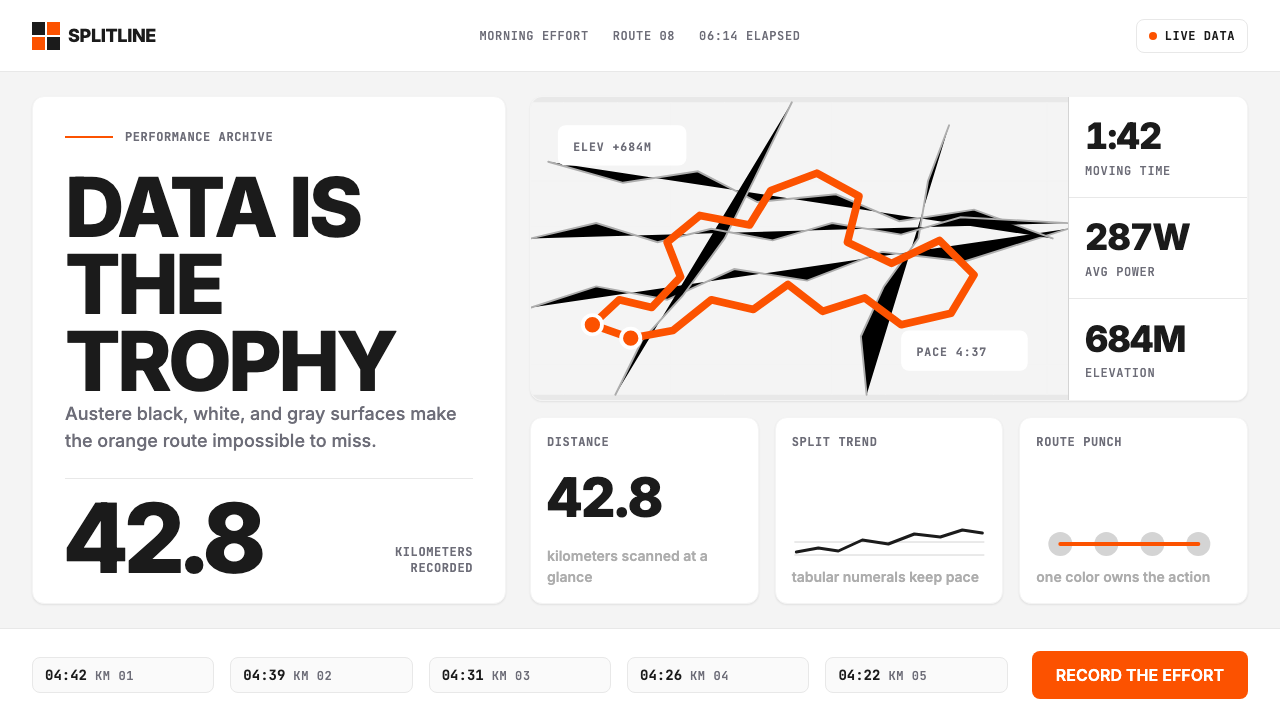 Strava Orange FitnessData becomes trophy. Inter numerals, gray metric grids, and one orange route…
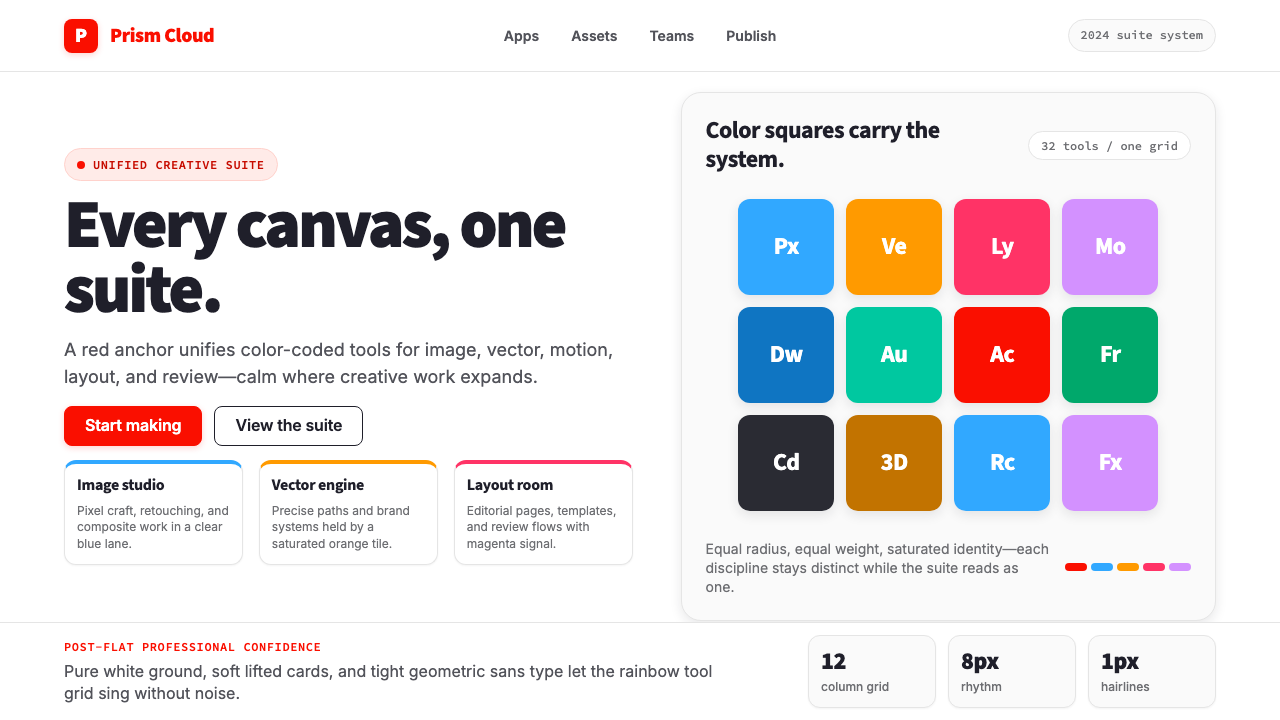 Adobe Creative CloudUnified, not uniform. Red anchor, white space, and saturated app tiles organi…
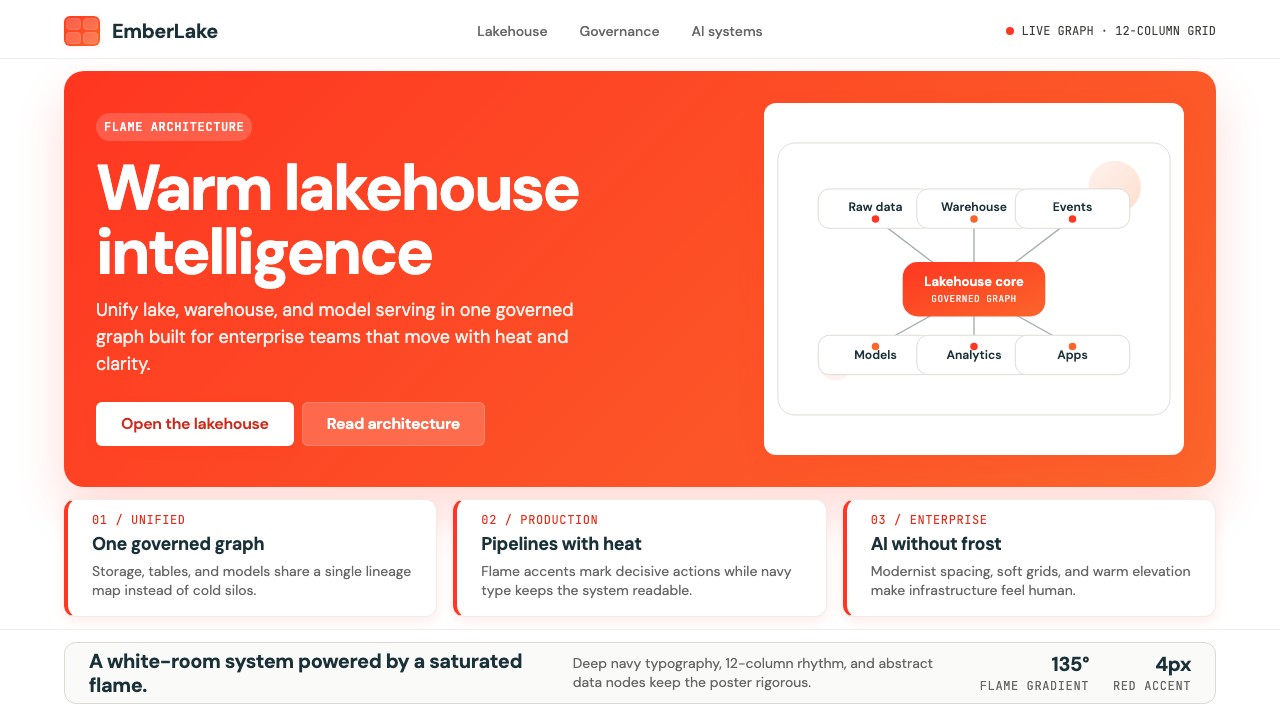 Databricks LakehouseWarm enterprise confidence. Flame red-orange gradients meet DM Sans and clean…
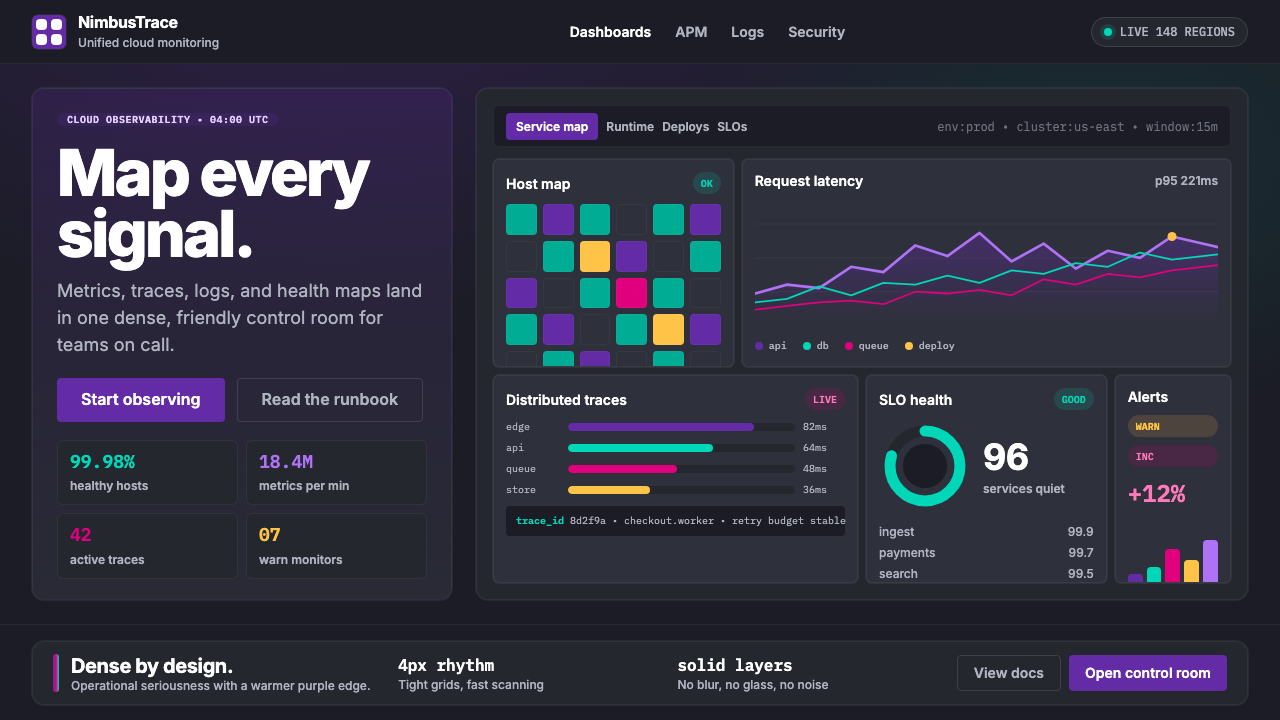 DatadogSerious telemetry, friendly pulse. Purple dark grids pack charts, badges, and…
 Atlassian Jira BlueWarm enterprise teamwork. Saturated blue cards on cream make status feel huma…
 Coupang Rocket DeliveryUrgency made trustworthy. Rocket red, flash yellow, mono prices and packed gr…