What is Fiji Bula Floral Shirt?
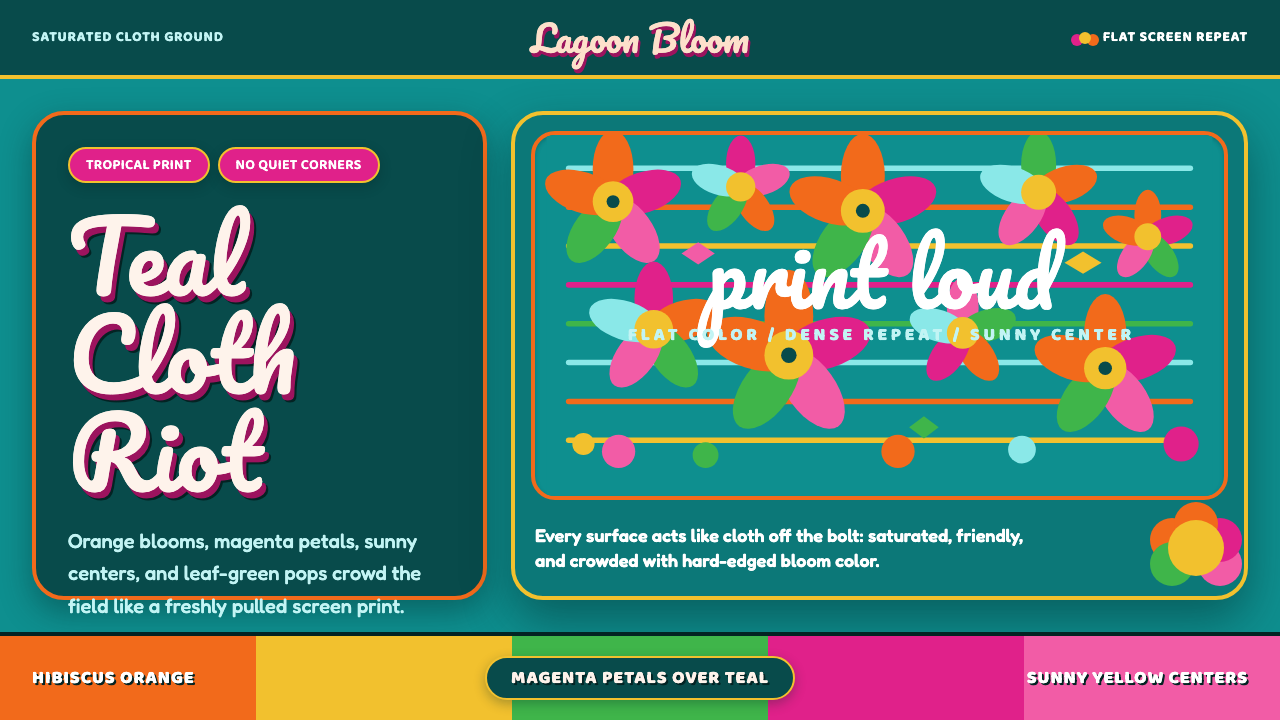
The Fiji Bula floral shirt turns tropical abundance into a complete visual field — saturated ground, oversized blossoms, and not a quiet corner in sight.
Fiji Bula Floral Shirt in brief
The Fiji Bula floral shirt is a tradition of screen-printed leisurewear associated with Fiji and especially prominent during the 1970s heyday of the Bula shirt. Cotton and rayon become carriers for large hibiscus and frangipani repeats, arranged in forceful tropical contrasts rather than naturalistic garden colors. The underlying cloth is itself saturated, commonly reading as a deep teal or turquoise field rather than a neutral background.
Its defining principle is continuous abundance. Flowers do not sit politely inside isolated illustrations; they spread, repeat, overlap, and move beyond the visible edge. Orange blooms establish the largest visual events, while magenta and hot-pink petals sustain a quicker secondary rhythm. The result is maximalist without feeling formal: dense, sociable, and relaxed.
Translated into a digital design system, the style treats the screen like printed cloth. Rounded display lettering supplies a friendly voice, while floral forms act as both imagery and structure. Empty areas remain active through color, cropped petals, or continuing pattern, so the interface feels immersed in the print rather than decorated by it.
Where does Fiji Bula Floral Shirt come from?
The style belongs to Fiji within the wider world of Pacific tropical print. Its documented era extends from 1950 to 1990, with the 1970s identified as the Bula shirt heyday. Across that period, vividly patterned leisure shirts became the setting in which saturated cloth, tropical flowers, and an easy island mood could operate as one coherent visual language.
The tradition sits within an Aloha-shirt lineage while retaining a specifically Fijian identity. What connects the lineages is the use of the shirt as a broad, mobile picture plane: a wearable surface capable of carrying repeated botanical imagery across the body. The Fijian version is distinguished in the supplied material by its emphatic hibiscus and frangipani blooms, saturated grounds, and contrasting tropical hues.
Production is inseparable from appearance. Fijian screen-print garment makers established the repeating floral fields by transferring bold areas of color onto cotton and rayon. The process favors decisive silhouettes, strong separations between hues, and forms that remain legible inside a busy repeat. The print does not imitate delicate botanical painting; it announces flowers through scale, rhythm, and contrast.
Fijian tailors completed the transformation from printed field to leisurewear. Cutting and assembling patterned cloth changes where flowers meet, disappear, or continue across seams, giving every garment a slightly different composition. The contemporary screen-based interpretation preserves that relationship between repeat and crop: components behave like pieces cut from a larger pattern whose energy continues beyond the frame.
What defines the Fiji Bula Floral Shirt look?
Saturated Ground
The background is never passive white space. Deep teal or turquoise behaves like dyed cloth, surrounding every word, panel, and flower with tropical intensity. Because the ground already carries strong color, lighter elements appear vivid without needing polished effects. Darker teal variations may create separation, but the composition should continue to feel like one printed field.
Big-Bloom Repetition
Hibiscus and frangipani provide the central vocabulary. Blooms are enlarged until petals become compositional masses rather than delicate details, then repeated with enough variation in placement and crop to keep the surface lively. Partial flowers at the edge are essential: they imply that the pattern continues beyond the visible screen.
Tropical Color Contrast
Orange establishes the dominant floral accents, while magenta and hot pink create sharper petal rhythms against the cool teal field. These hues should meet confidently rather than dissolve into subtle transitions. Contrast separates the layers of the repeat and preserves the exuberance of screen-printed cloth.
Rounded Display Type
Display lettering is broad, rounded, and approachable, translating the relaxed social mood of the shirt into language. Headlines should feel buoyant enough to coexist with large flowers, while supporting text remains straightforward and highly readable. Severe geometric type or delicate editorial lettering can make the floral field feel disconnected from the voice.
All-Over Composition
The style resists quiet corners. Visual interest is distributed across the entire field through flowers, leaves, colored panels, and cropped motifs. This does not require identical density everywhere; calmer pockets can support reading, but they remain part of the saturated cloth rather than becoming neutral voids.
Printed Flatness
Forms read as layers of ink on cloth: crisp enough to distinguish, yet simple enough to repeat. Depth comes from overlap, cropping, and differences in scale rather than realistic lighting. The flat treatment keeps flowers graphic and maintains the direct, handmade energy associated with screen-printed leisurewear.
Who shaped Fiji Bula Floral Shirt?
These makers are the principal authors of the Bula shirt surface. Through screen printing on cotton and rayon, they organize hibiscus, frangipani, and contrasting tropical colors into repeating fields. Their contribution is not merely technical: the scale of the blooms, the clarity of each color area, and the refusal of a plain ground define the tradition's visual force.
Fijian tailors turn the printed repeat into a finished shirt, deciding through cutting and assembly how the floral field meets the body. Seams, collars, fronts, and sleeves interrupt and reconnect the pattern, producing compositions that remain energetic from multiple viewpoints. Their work gives the print its relaxed, wearable character.
The wider Pacific tropical-print movement provides the cultural and visual lineage around the Bula shirt. Its shared language treats leisurewear as a vivid field for botanical repetition and island color. Within that lineage, the Fijian Bula tradition stands out through its saturated cloth, emphatic flowers, and especially loud relationship between cool grounds and warm blooms.
How do you use Fiji Bula Floral Shirt today?
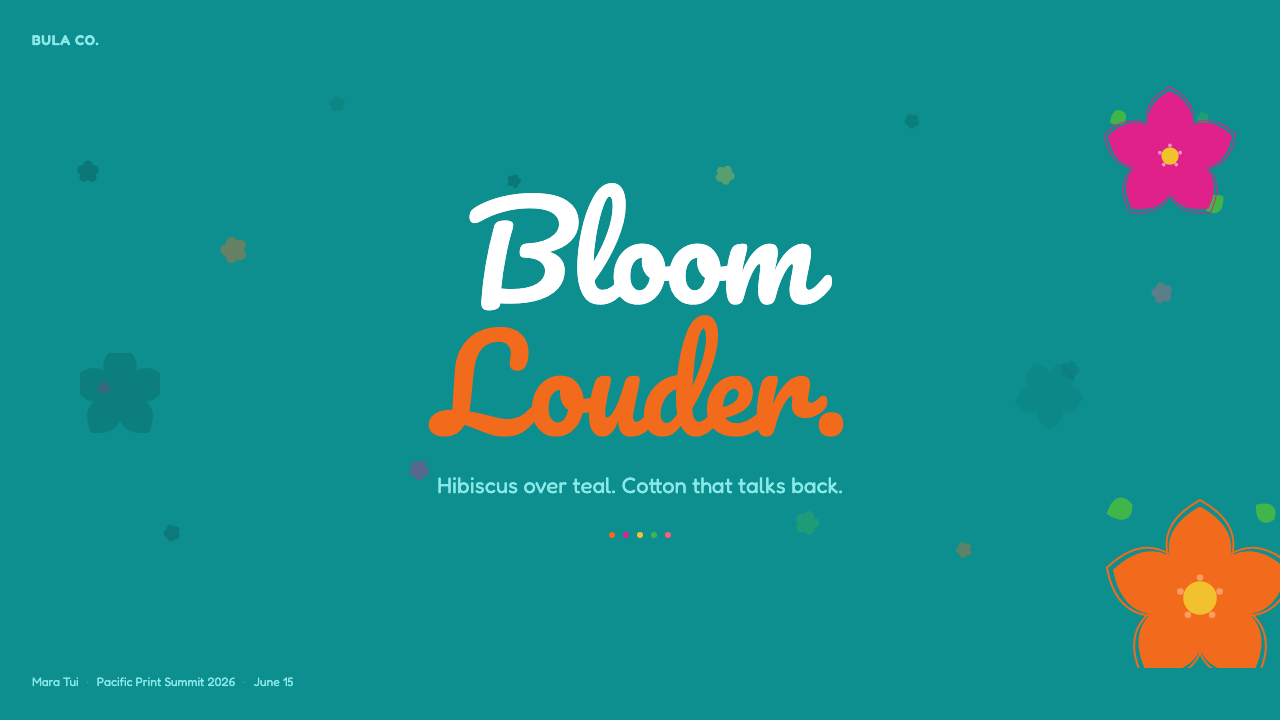
On presentation covers, use the teal field as the complete atmosphere rather than a decorative band. Let an oversized orange bloom enter from an edge while a rounded title occupies a calmer pocket of the pattern. Content slides can reduce floral density behind longer reading passages, but should retain cropped petals or colored forms at the margins so the deck never loses its textile continuity.
Data slides require stronger discipline. Keep charts direct and flat, using the cool ground as context and reserving orange, magenta, and pink for meaningful comparison or emphasis. Floral forms can frame a chart or mark a transition, but should not compete with values. The goal is a Bula atmosphere supporting information, not data disguised as decoration.
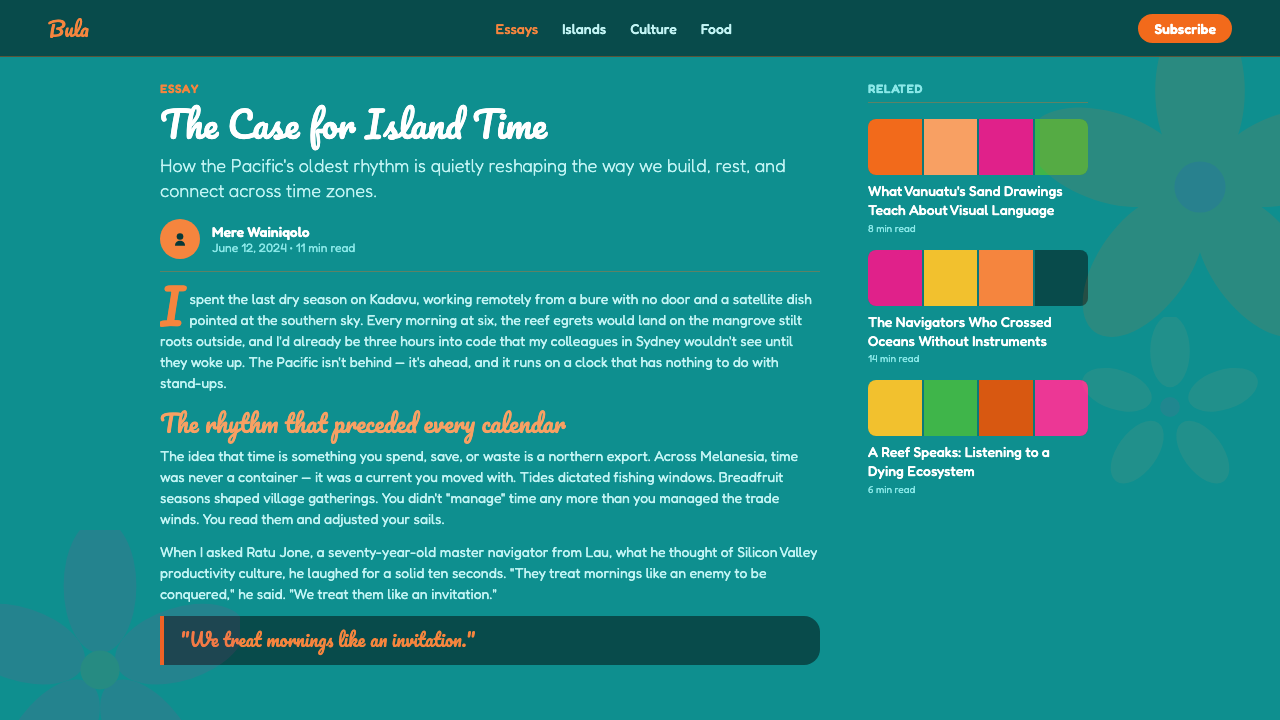
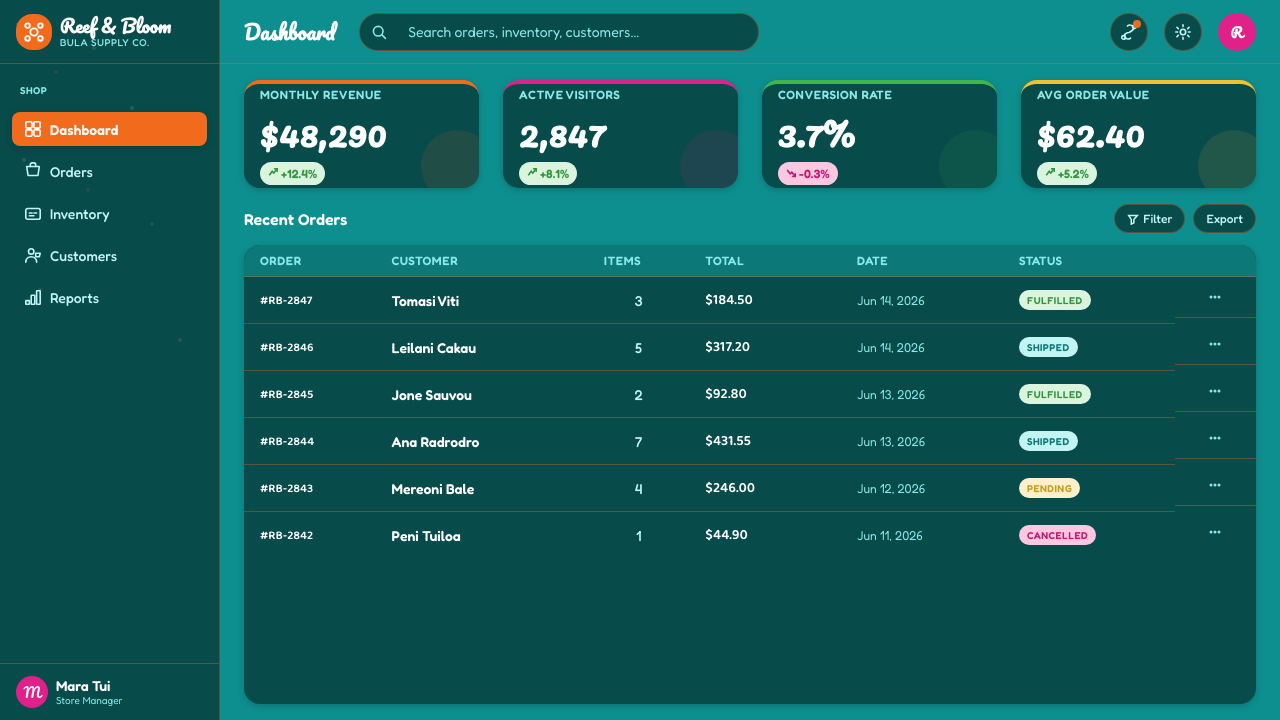
For web interfaces, the style is best suited to expressive dashboards, travel or leisure experiences, and pricing pages that benefit from warmth and memorable differentiation. Use saturated panels as related pieces of cloth, rounded type for major labels, and bold floral crops around navigation or calls to action. Dense controls need calmer local zones while remaining visibly embedded in the larger print.
Editorial and marketing layouts can embrace the style's all-over energy. Article openings may pair a broad headline with a flower crossing the frame, while section changes are signaled through shifts in bloom scale or color emphasis. Campaign pages can alternate dense floral passages with simpler teal fields, allowing product messages to breathe without abandoning the tropical identity.
The common mistake is to scatter small flowers over a generic interface and call the result Bula. The tradition depends on saturated cloth, large repeated blooms, and confident color relationships working as a system. Excessive effects, timid pastel substitutes, isolated floral stickers, or broad white gaps weaken the printed-field logic and turn a forceful Pacific leisurewear language into superficial tropical decoration.
Fiji Bula Floral Shirt — FAQ
Is the Fiji Bula shirt simply another name for an Aloha shirt?
No. The supplied history places it within an Aloha-shirt lineage, which means the traditions share a broader approach to tropical printed leisurewear. The Bula shirt remains specifically associated with Fiji, Fijian garment makers, and Fijian tailors. Its described identity centers on saturated cloth, large hibiscus and frangipani repeats, and strongly contrasting tropical hues.
Why should the background remain saturated?
Because the cloth is not a neutral support for separate illustrations; it is part of the print's identity. A deep teal or turquoise ground creates the cool field against which orange, magenta, and pink flowers become forceful. Replacing it with broad white space changes the logic from continuous printed fabric to individual floral decorations placed on a page.
Can the style support readable interfaces despite its maximalism?
Yes, if density is controlled locally rather than erased globally. Longer text and complex controls can occupy calmer areas of the saturated field, while cropped blooms remain around their edges. Clear rounded headings, straightforward supporting type, and purposeful color emphasis preserve hierarchy. Readability fails when every flower, label, and action competes at equal intensity.
Should Bula floral patterns look botanically realistic?
Not necessarily. The source tradition emphasizes large screen-printed repeats, contrasting tropical hues, and recognizable hibiscus and frangipani forms. Graphic clarity matters more than delicate naturalism. Simplified petals, decisive silhouettes, overlap, and strong color areas reproduce the energy of printed cloth more effectively than elaborate shading or illusionistic depth.
What distinguishes an authentic digital interpretation from generic tropical styling?
A convincing interpretation preserves the system behind the garment: a saturated continuous ground, oversized repeating flowers, forceful cool-to-warm contrast, rounded friendly type, and compositions that continue beyond the frame. Generic tropical styling usually isolates leaves or flowers as stickers on neutral layouts. Bula design makes the entire surface behave like cloth.
Related design styles
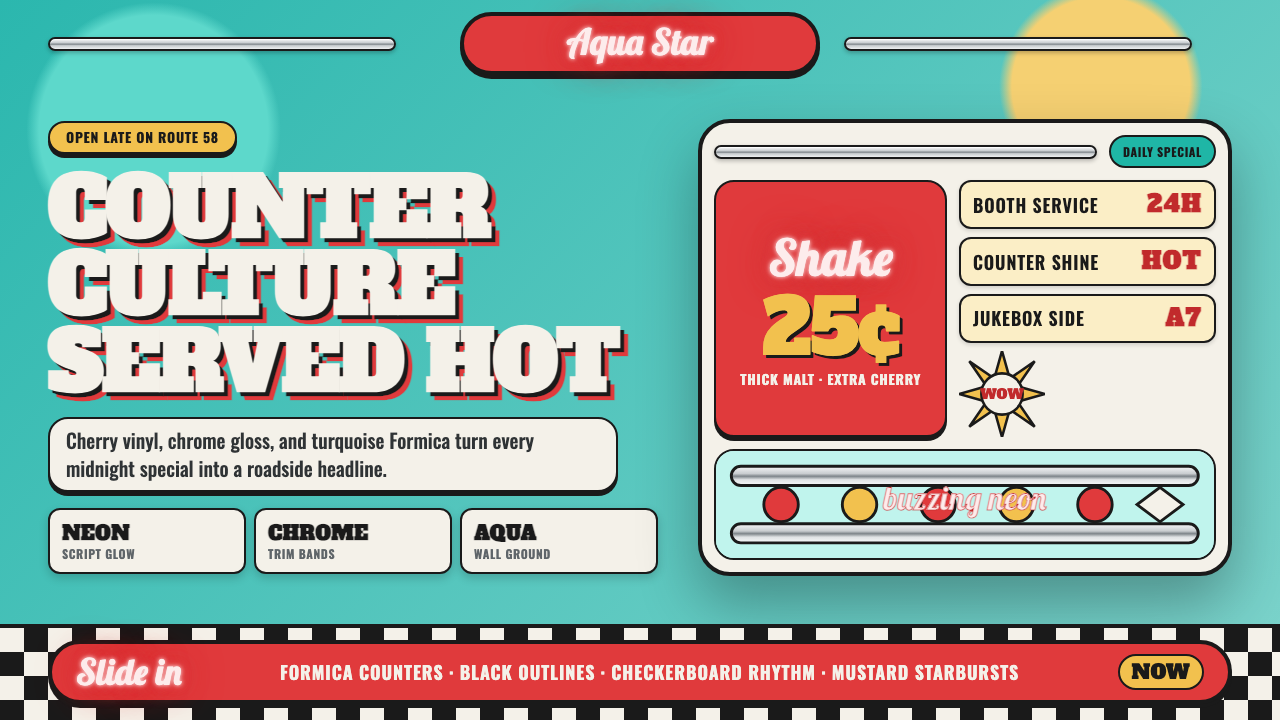 1950s Diner AquaRoadside optimism shouts. Aqua walls, cherry vinyl, chrome bands, and neon sc…
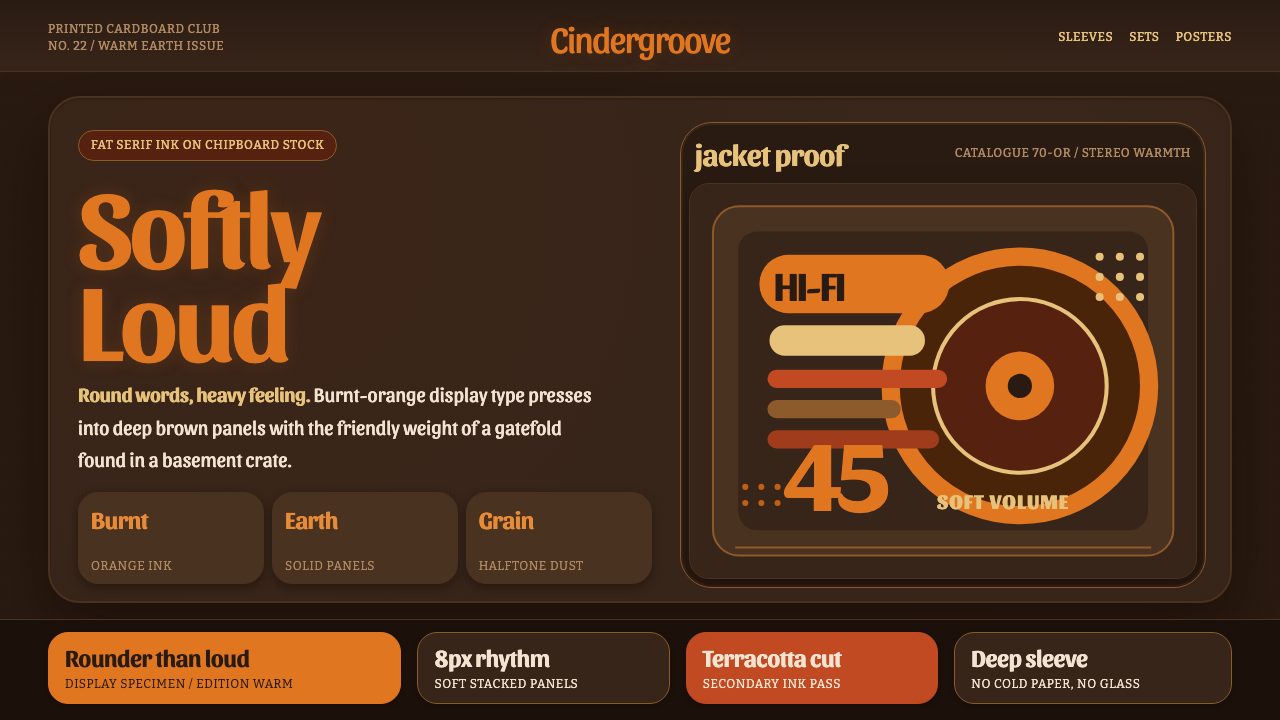 Cooper Black DisplayShouts softly. Burnt-orange Cooper type sinks into deep chipboard brown with…
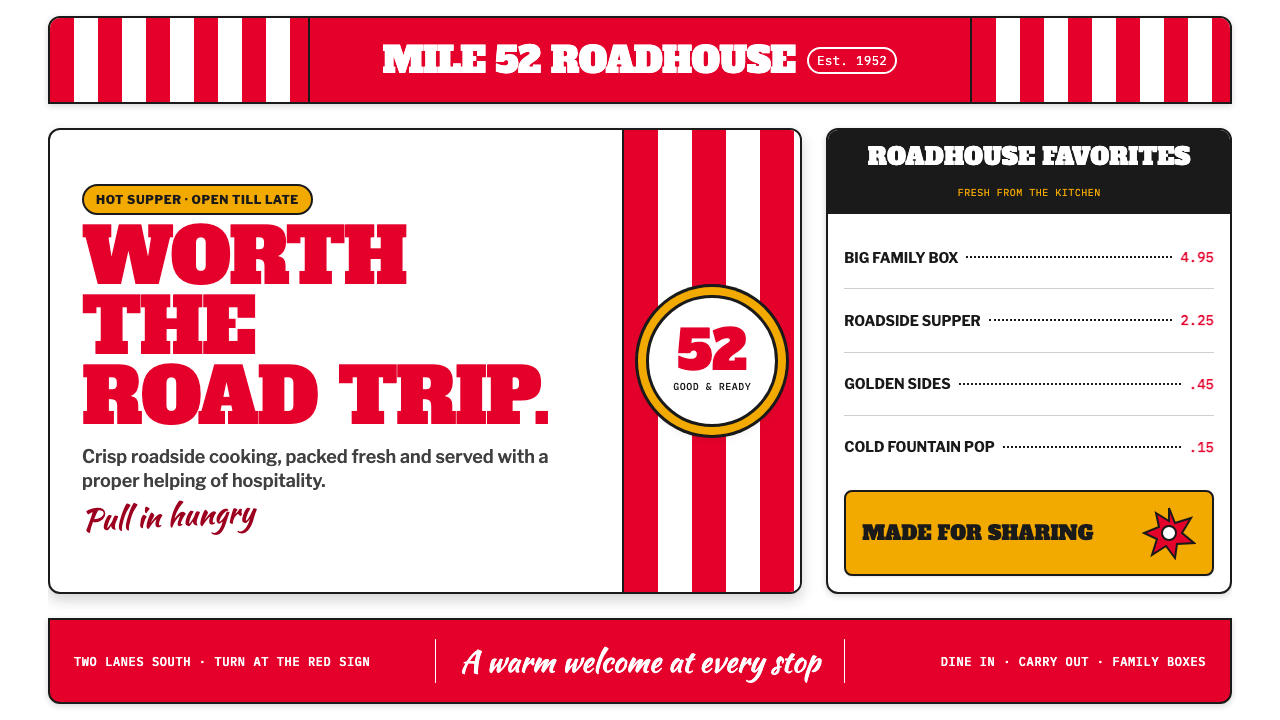 KFC Colonel (1952)Roadside appetite, turned up loud. Enamel red stripes and slab-serif shouts f…
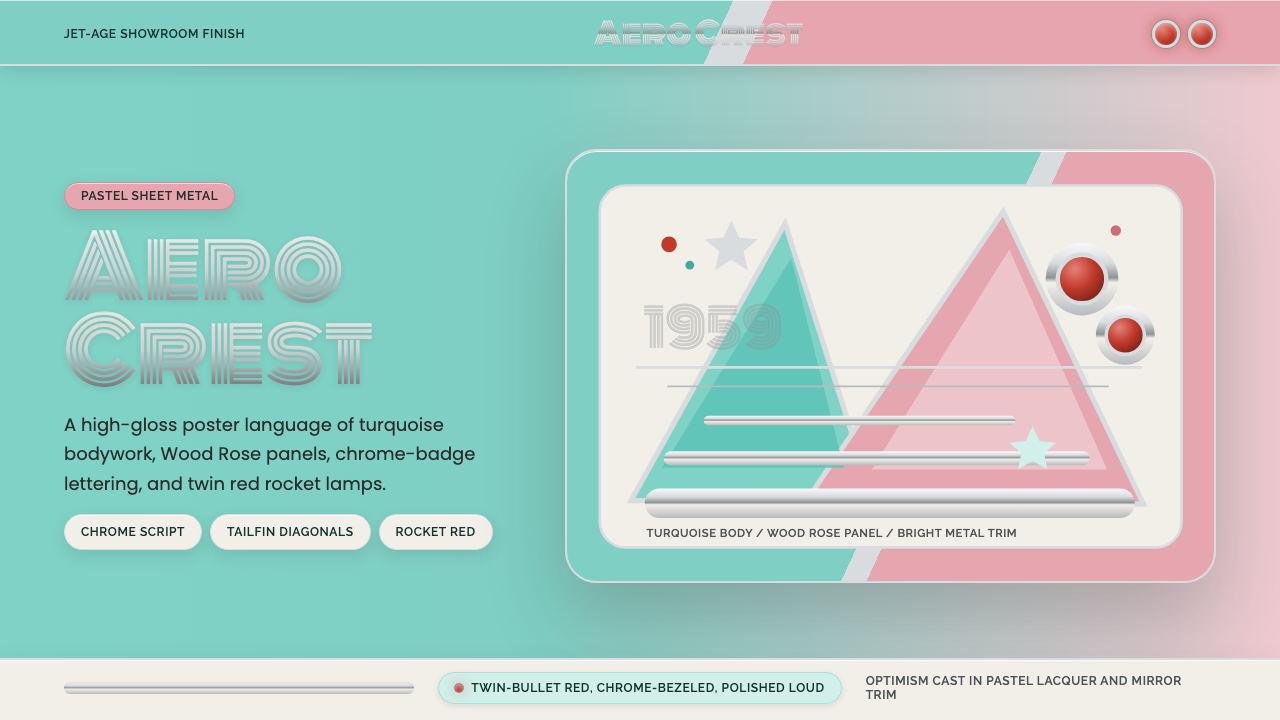 Cadillac TailfinShowroom optimism. Pastel aqua, Wood Rose panels, chrome Monoton, and rocket…
 Miami Art Deco PastelSunlit Deco, not noir. Mint stucco, aqua bands and flamingo trim make it brea…
 Populuxe Atomic AgeThe future grins. Mint Formica, tomato-red pills, Cooper Black, and atomic st…