What is FedEx?
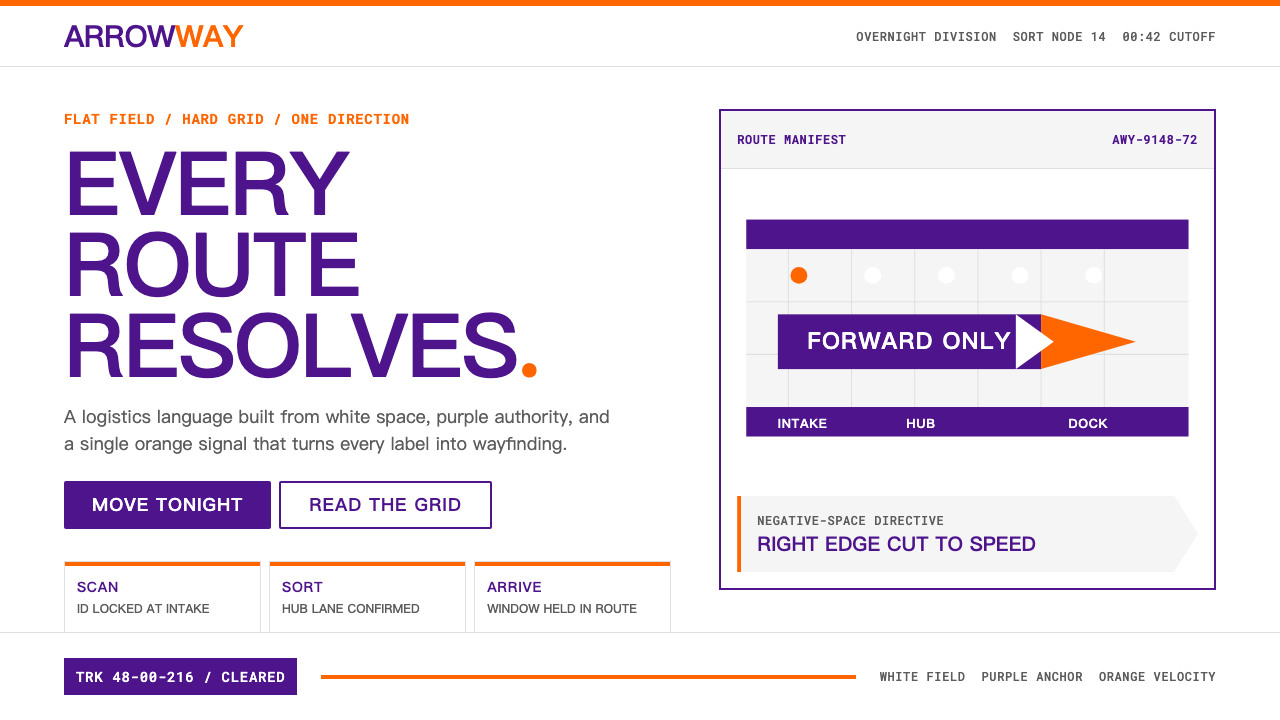
Two colors, one hidden arrow, and a flat white grid built the most recognized logistics identity on the planet.
FedEx in brief
FedEx's visual identity is a study in purposeful restraint. Purple signals institutional authority and global reach; orange signals speed and urgency. Together they work not as decoration but as a wayfinding system — the visual equivalent of an airport terminal sign that tells you exactly where to go without asking you to admire it first.
The most celebrated feature of the identity is the negative-space arrow hidden between the capital E and the lowercase x in the wordmark. Invisible until noticed, impossible to unsee thereafter, it became the most-discussed piece of negative-space design in twentieth-century corporate identity. But the arrow is not a trick — it is the philosophy made visible: the system is always pointing forward, always in motion, always delivering.
What unifies the FedEx visual system beyond the wordmark is a disciplined set of structural rules. Flat white fields provide a neutral stage. Hard-edged rectangular containers organize content with the clarity of a label on a package. A single divisional accent color — drawn from a family of hues, one per service brand — appears at a time, never competing with the purple foundation. Everything directs; nothing decorates.

Where does FedEx come from?
The company began as Federal Express, founded by Frederick W. Smith in Memphis, Tennessee in 1971. Smith had outlined the hub-and-spoke overnight delivery concept in a Yale undergraduate paper that, depending on the telling, received either a mediocre grade or a moderate one — a mythologized origin story the company has never entirely discouraged. What is certain is that Smith raised the capital, built the network, and launched operations in 1973 with a fleet of small aircraft radiating out from Memphis International Airport.
For its first two decades, the company operated under a logotype that was workmanlike but unremarkable — the kind of corporate type treatment common to American freight companies of the era. By the early 1990s, Federal Express had grown into a global logistics giant and was preparing to shorten its operating name to FedEx, the nickname customers had already adopted. The rename prompted a wholesale identity redesign, commissioned through Landor Associates, one of the most respected identity consultancies in the world.
The design was led by Lindon Leader, a senior designer at Landor's San Francisco office. Leader's process was exhaustive — reportedly more than two hundred wordmark iterations were developed and discarded before the final solution emerged. The choice of a single unified wordmark rather than separate logotype and symbol was deliberate: it concentrated all visual equity into one mark, made reproduction simpler across every surface from an aircraft fuselage to a shipping label, and created the conditions for the hidden arrow to function as an internal reward for attentive observers.
The 1994 identity launched to immediate professional acclaim. The hidden arrow was not publicized at launch — it circulated quietly among designers before becoming general public knowledge years later, by which point it had already been written into design school curricula as a canonical example of negative-space thinking. The divisional color system, which assigns a distinct secondary color to each service brand (orange for Express, green for Ground, red for Freight, and others), allowed the corporation to expand its service portfolio while keeping every touchpoint instantly recognizable as FedEx.
What defines the FedEx look?
Two-Color Foundation
The identity rests on deep purple and vivid orange as its irreducible foundation. Purple occupies the dominant role — it reads as institutional permanence, reliability, and scale, the color of a company that will still be there when your package needs to arrive. Orange is the accent and counterweight — kinetic, urgent, directional. Neither color is soft or ambiguous; both are saturated to the edge of their useful range without tipping into garishness. The pairing works because purple and orange sit at opposite poles of the visible spectrum, creating a contrast that is immediately legible across every medium.
Divisional Color Architecture
Beyond the core purple-and-orange pairing, the FedEx system deploys a family of secondary colors — one per service division — that replace orange as the accent while keeping purple as the constant spine. This architecture allows a single parent identity to parent dozens of sub-brands without diluting recognition. Each divisional mark is immediately legible as FedEx and simultaneously as a specific service tier. The discipline is strict: only one secondary color appears per touchpoint, and the background remains flat white or the purple-and-accent pair.
Negative Space as Meaning
The arrow embedded in the letterspace between E and x is not a gimmick appended to the wordmark — it is native to the letterform proportions Lindon Leader selected. The arrow points forward and to the right, the direction of reading in Latin script and the conventional visual metaphor for progress and delivery. Once perceived, it is not possible to look at the wordmark and not see it. This is the mechanism that elevates a competent logotype into a cultural artifact: the mark rewards attention with a second layer of meaning that advertising alone cannot supply.
Flat White Ground
Every application of the FedEx system operates on a clean white field. There are no textured backgrounds, no gradient fills, no atmospheric washes. The white is not neutral by accident — it functions like the white of a shipping label or an airport sign, a surface whose sole purpose is to make the information on it maximally legible. Against this ground, the purple wordmark and the accent color perform with the precision of ink on paper. Any deviation from flat white — a tinted background, a photographic ground — immediately softens the system's directional authority.
Rectangular Containment
The FedEx visual language favors hard rectangular containers over any other compositional device. Type sits in defined zones. Color blocks have clean, unornamented edges. The divisional color typically appears as a solid bar, band, or rectangular field rather than as a free-floating shape. This container logic mirrors the physical reality of the company's core product: a package has edges, dimensions, and defined contents. The visual language translates that physical precision into every designed surface.
Functional Typography
The wordmark's letterforms are custom — slightly compressed, with generous spacing and a geometry that was calibrated to produce the negative-space arrow as a structural byproduct rather than an addition. In supporting typography, the system favors clean, upright sans-serif forms with no decorative variation. Text is sized for legibility at the distances relevant to each touchpoint — large and bold on vehicles and buildings, precise and tight on label copy. There are no calligraphic flourishes, no decorative display faces, no ornamented numerals. Information is the content.
Motion and Direction
Every element of the FedEx system implies movement rather than static presence. The arrow in the wordmark points forward. The divisional color bars terminate cleanly, suggesting a trajectory. Vehicles and aircraft are treated as moving billboards: the identity is designed to read at speed, from a distance, in poor light, and in motion. This is not a system designed for lingering contemplation. It is designed for instant recognition — the way a signal on a runway or a marker on a highway must communicate without demanding the viewer slow down.

Who shaped FedEx?
Smith founded Federal Express in 1971 after writing the hub-and-spoke delivery concept as an undergraduate thesis at Yale. He raised the capital, assembled the aircraft fleet, and launched overnight operations from Memphis in 1973. His conviction that reliable speed was itself a competitive product — not merely a service feature — shaped the company's identity requirements from the start. The visual system that Landor eventually created is a direct translation of his operational philosophy: no ambiguity, no delay, no wasted motion.
A senior designer at Landor Associates' San Francisco office, Leader led the team that created the 1994 FedEx wordmark. The design process reportedly involved more than two hundred iterations before the solution with the embedded arrow was identified and refined. Leader's insight was that the arrow should not be applied to the letters but should emerge from the negative space that correctly proportioned letters naturally produce — making it structural rather than decorative. The mark earned numerous awards, including recognition by Rolling Stone as one of the eight best logos in the preceding thirty-five years.
Founded by Walter Landor in San Francisco in 1941, Landor Associates was one of the most influential identity consultancies of the twentieth century. The firm developed corporate identities for major brands across aviation, finance, and consumer goods before taking on the FedEx project. Their approach emphasized that an identity system must function across every touchpoint in a brand's environment — not just printed collateral but aircraft, vehicles, uniforms, and architectural signage. The FedEx identity remains one of the studio's most-studied case studies in identity systems design.
The founder of Landor Associates, Walter Landor was a German-born designer who emigrated to the United States and established his practice aboard a converted ferryboat in San Francisco Bay — a piece of studio mythology that became inseparable from the firm's identity. His broader contribution was to professionalize the discipline of corporate identity as a strategic business function rather than a purely aesthetic one. The rigor and systems-thinking that Landor Associates brought to the FedEx project reflected principles Landor himself had articulated decades earlier: that identity must be coherent across every scale and every surface.
Not a person but a place: Memphis, Tennessee, where FedEx established its global SuperHub in 1973. The choice of Memphis — centrally located within the continental United States, with a major airport capable of handling large aircraft in the early hours of the morning — was a structural decision that shaped what the brand needed to communicate. A company whose entire value proposition depends on overnight delivery to any point on the map must have a visual identity that reads as reliable, systematic, and universal. The FedEx identity is, in this sense, a portrait of its own logistics infrastructure.
How do you use FedEx today?
The FedEx visual system is one of the few corporate identities whose structural logic transfers cleanly to presentation design, interface work, and editorial contexts. Its power comes not from surface color — applying purple and orange to a slide deck without adopting the underlying discipline produces something garish rather than authoritative — but from its commitment to flat grounds, hard containment, single-accent logic, and directional composition. Understanding these structural principles is what separates an authentic FedEx-influenced design from a costume.
For presentation slides, the FedEx approach produces exceptionally clear cover and content pages. A cover built in this system uses deep purple as a full-bleed background or as a dominant rectangular block, with the title in clean white type and a single orange or divisional-color bar as the only accent. No gradients, no decorative textures, no secondary illustration. Content slides treat each slide as a label: information in defined zones, with hierarchy established purely through typographic scale and weight. Data slides work particularly well — bar charts become pure rectangular forms, colored according to the accent logic (one color per data series, no decorative fills), plotted against a flat white ground that makes every value instantly readable.
For web interfaces and dashboards, the system's container logic and single-accent-color discipline translate directly into clean component design. Navigation bars in deep purple with white type, content areas on white with orange accent states, status indicators using the divisional color logic — these produce interfaces with the immediacy of a logistics tracking screen. Pricing pages benefit from the system's tier-differentiation logic: each plan gets one accent color from a family, the neutral container remains white, and hierarchy is established through color rather than decoration. Avoid softening the system with rounded corners, soft shadows, or background tints — each of these undermines the directional clarity that makes the original identity work.
For editorial and marketing applications, the FedEx visual logic supports strong full-bleed layouts with a poster-like quality. Feature spreads alternate between purple-ground-white-type and white-ground-purple-type, with orange or the relevant accent used exclusively for callouts, pull quotes, or calls to action. Marketing pages built in this system should resist the temptation to add photographic backgrounds — a flat white or purple field with high-contrast type performs with more authority than any atmospheric image. When photography is necessary, treat it as a flat element: crop to a hard rectangle, silhouette against white, or convert to a high-contrast duotone using purple and white rather than full-color naturalistic imagery.
The most common mistake when applying the FedEx visual language is treating its two core colors as equally available simultaneously. In the original system, purple is always the ground or structural element; orange (or the relevant divisional accent) appears once, as a signal. Reversing this — an orange ground with purple accents, or both colors competing at equal weight — collapses the hierarchy and loses the wayfinding clarity that is the system's entire purpose. A second common error is softening the hard containment logic with rounded shapes, feathered edges, or gradient fills. The system's authority comes precisely from its unwillingness to soften. Treat every container edge as a decision, not a default.

FedEx — FAQ
Is the hidden arrow in the FedEx wordmark intentional or accidental?
Intentional, and the result of an extensive design process. Lindon Leader and his team at Landor Associates reportedly tested more than two hundred wordmark variations before identifying the letterform proportions that produced the negative-space arrow between the E and the x as a structural byproduct of correct spacing and form. The decision to keep it subtle — not to publicize it, not to outline it, not to color it differently — was equally deliberate. The arrow is not announced; it is discovered. That mechanism of discovery is what gives it lasting cultural weight.
Can the FedEx color system work for a brand that is not in logistics?
The purple-and-orange pairing is strongly associated with FedEx at this point — using both simultaneously in a logotype context risks immediate brand confusion. However, the structural principles of the FedEx system — single-accent logic, flat white grounds, hard containment, directional composition — are transferable to any context where institutional authority, speed, and clarity are desired values. Financial services, healthcare systems, transportation platforms, and enterprise software all benefit from these structural principles applied thoughtfully. The lesson to take is not the colors themselves but the discipline with which they are deployed.
Why does the FedEx system use flat white rather than off-white or cream?
The choice of flat white rather than tinted white is a functional one rooted in the company's operational context. FedEx identity must perform on aircraft fuselages, vehicle panels, shipping labels, cardboard boxes, and digital screens — all of which have different base whites. Using a specific off-white tone would create inconsistency across substrates; pure white is the common denominator that reads as intentional on any surface. There is also a wayfinding logic: the clinical white of an airport sign or a customs form is a deliberate signal of seriousness and authority, distinct from the warmer whites of consumer goods packaging.
How does the FedEx system handle the tension between a single parent identity and many sub-brands?
The divisional color architecture resolves the tension elegantly. Every sub-brand — Express, Ground, Freight, Office, and others — shares the purple wordmark and the white ground. What changes is only the secondary accent color beside or beneath the wordmark. This means a customer looking at any FedEx vehicle, envelope, or digital touchpoint can identify the parent brand in under a second and the service tier in the second second. The system is additive: new service lines can receive new accent colors without requiring any redesign of the core mark. The parent identity gains sub-brands; it does not fragment.
Is the FedEx visual system appropriate for warm or consumer-facing contexts?
The FedEx system was built for institutional authority and operational clarity, not warmth. Deep purple reads as serious, reliable, and scaled — virtues in logistics but potentially distancing in contexts where emotional connection, playfulness, or sensory pleasure are primary values. Applied directly to a food brand, a children's product, or a wellness application, the system's severity would work against the user experience. The better framing is to ask what values the visual system communicates and whether those values match the product's promise. Where reliability, speed, and systematic clarity are genuinely what the user needs — enterprise tools, financial dashboards, medical record systems — the structural discipline of the FedEx approach is a powerful asset rather than a liability.
Related design styles
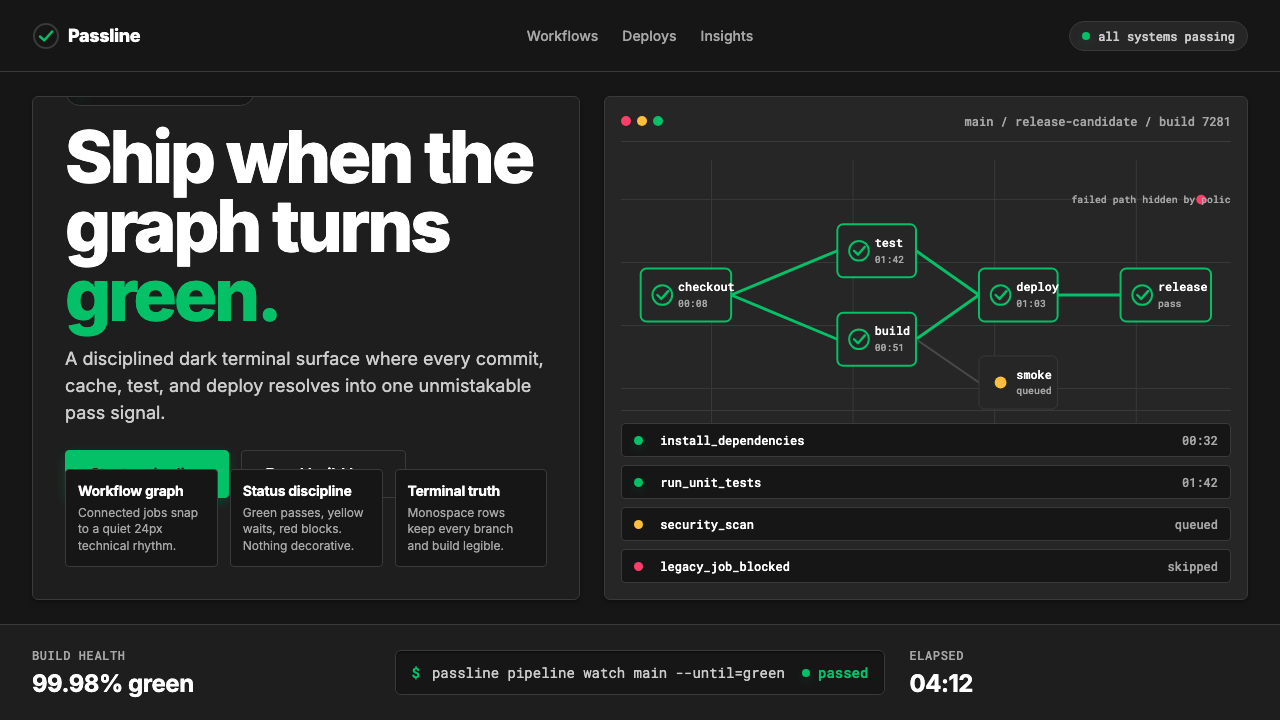 CircleCI Pipeline-GreenConfidence goes green. Emerald status lines cut through terminal-black pipeli…
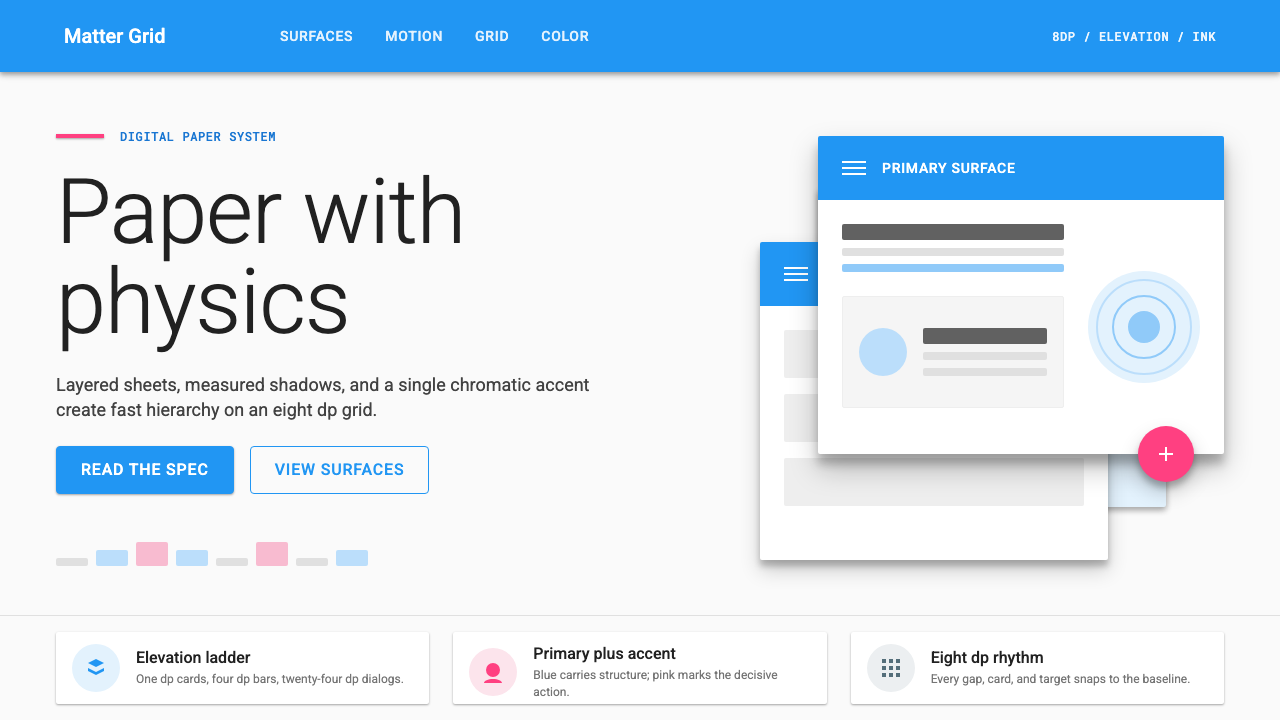 Material Design 1.0Depth made flat usable. Blue app bars, pink FABs, 8dp grids, and crisp paper…
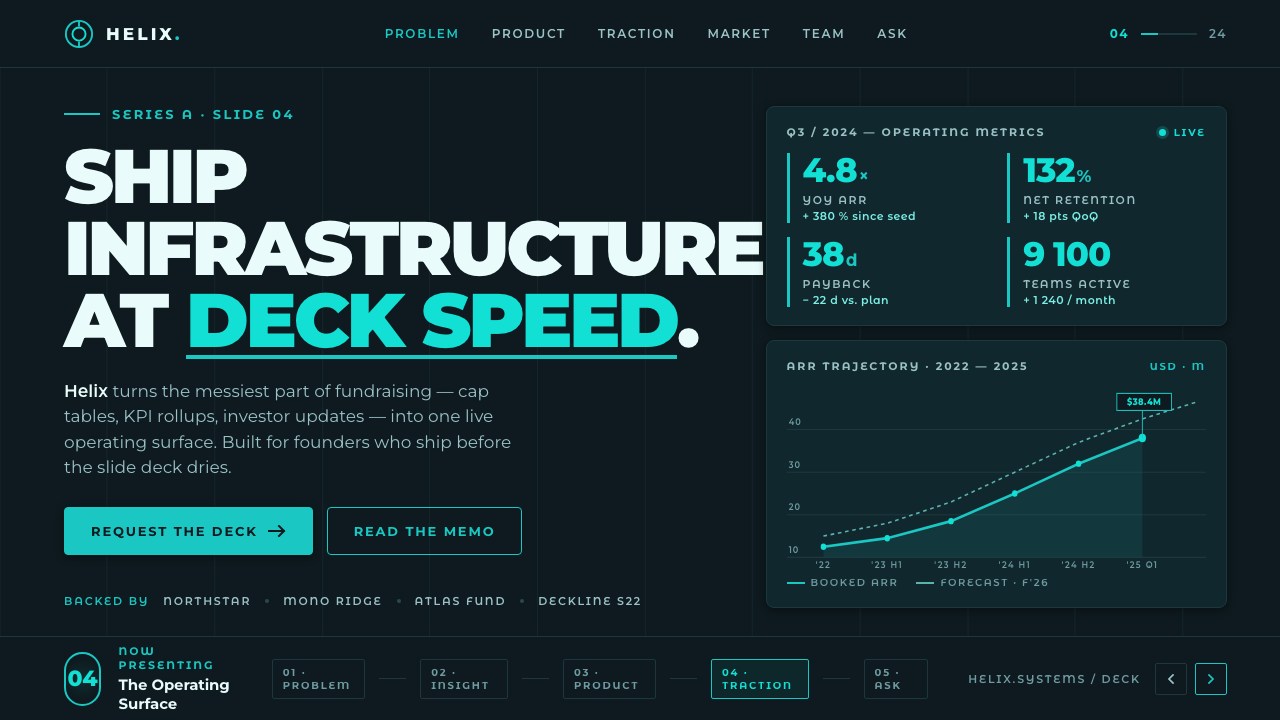 Montserrat StartupSeries-A on a projector. Black Montserrat on charcoal-teal, lit by one bright…
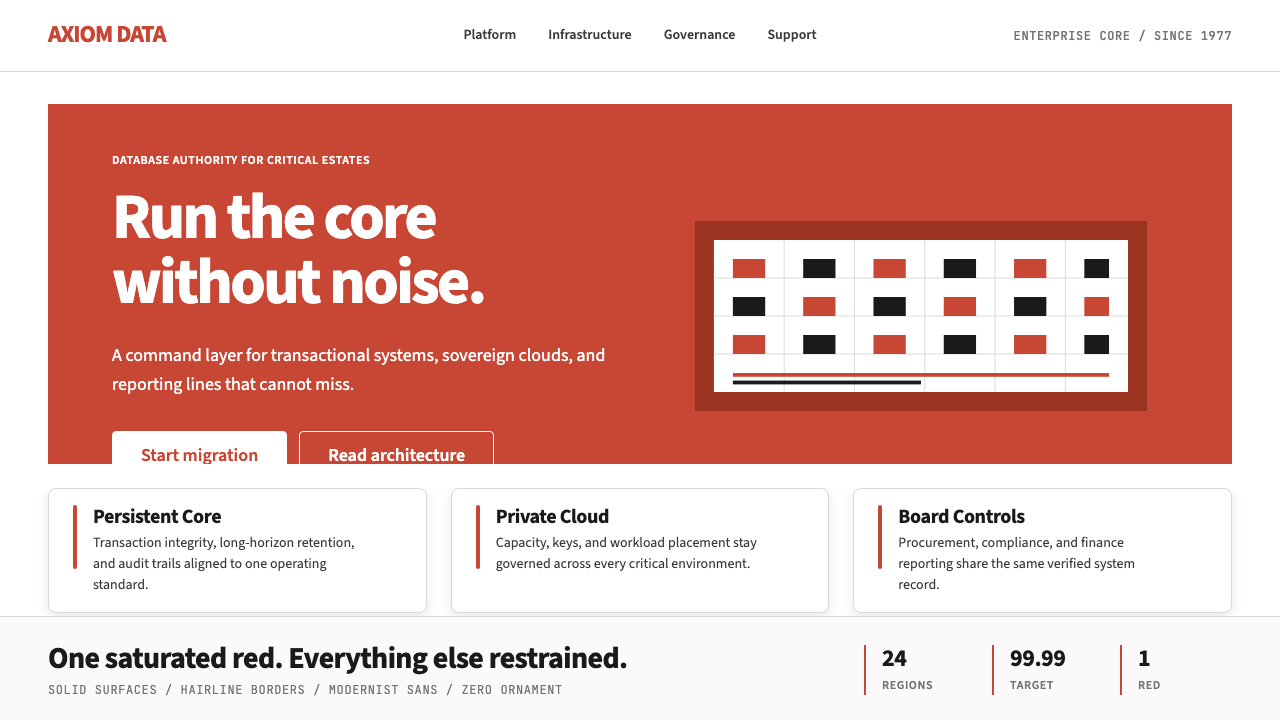 Oracle Corporate RedEnterprise certainty. Saturated red, tight sans, and white space do all the w…
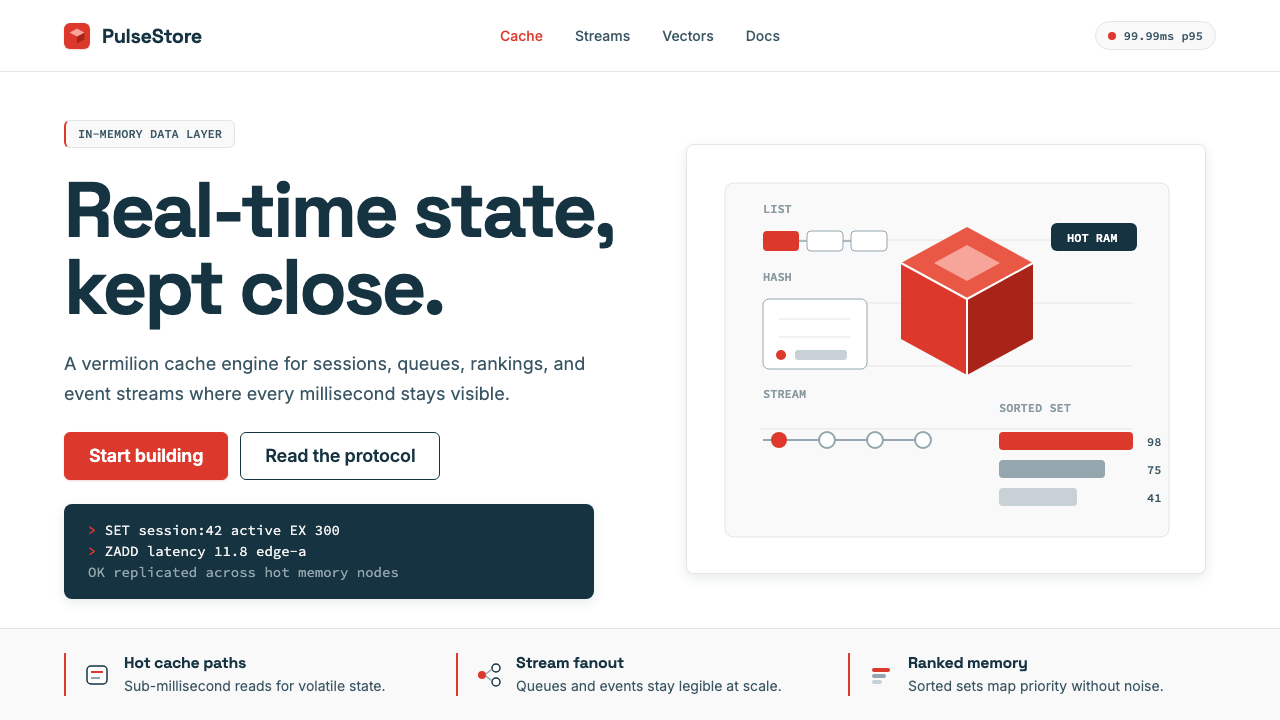 Redis Cache RedWarm database rigor. Vermilion cube, slate type, and white-space grids make s…
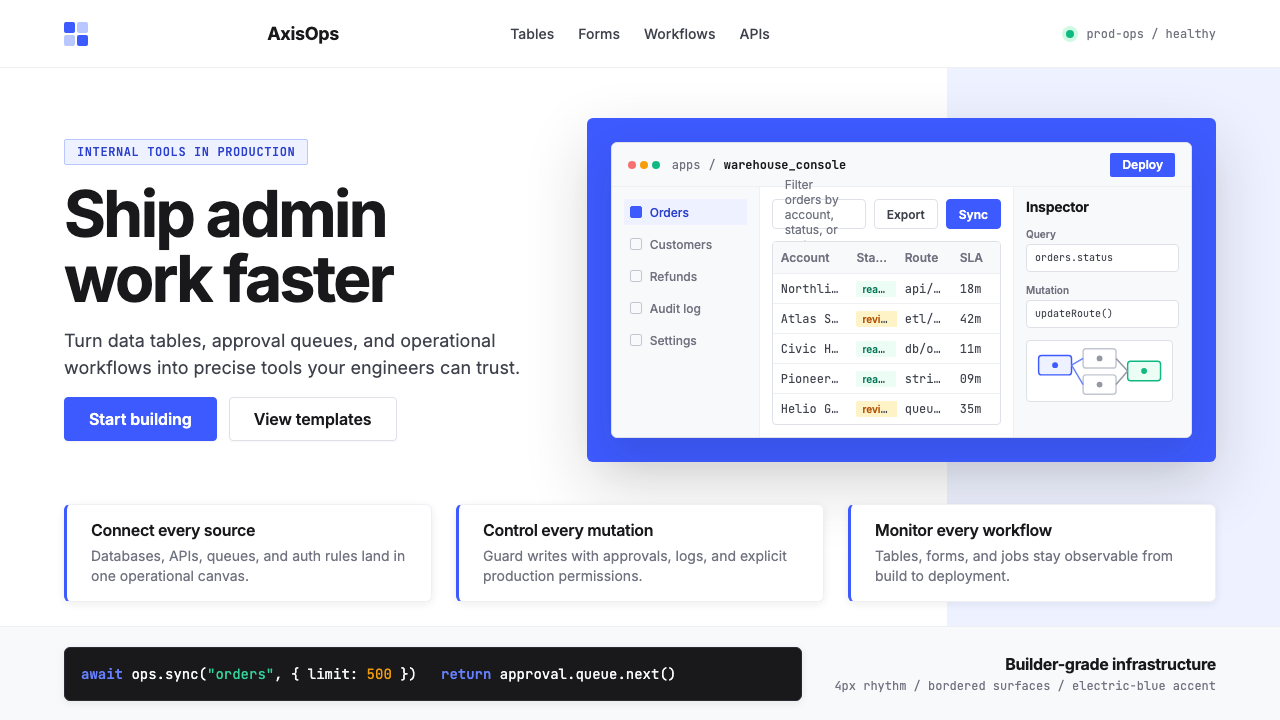 Retool Internal-Tools RedPrecision ships fast. Electric blue panels, Inter type, and bordered UI mocku…