What is Ethiopian Injera & Mesob Spread?
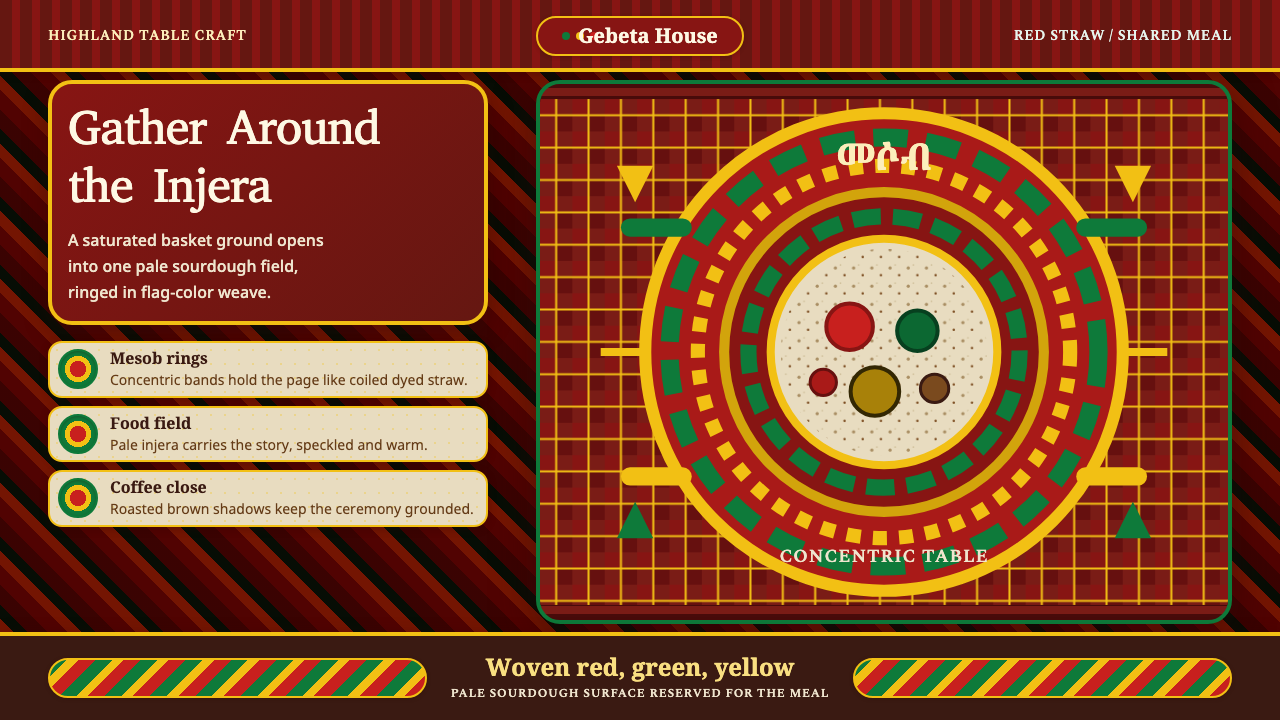
Hospitality is woven into the Ethiopian mesob spread — flag-colored basketry encircles a generous field of injera, wat, and shared attention.
Ethiopian Injera & Mesob Spread in brief
Ethiopian Injera & Mesob Spread is a food-centered visual system derived from the highland mesob: the woven straw basket-table around which a communal meal is shared. Its defining composition joins the mesob’s dyed red, green, and yellow geometric bands with the pale, porous field of sourdough injera and the concentrated berbere red of wat stews. The result is saturated and ceremonial, yet grounded in an everyday act of eating together.
The system is organized as a table rather than a sheet of paper. A deep dyed-straw red establishes the surrounding ground; concentric or repeated bands evoke the basket’s woven structure; and a broad, light injera field holds the principal content. Information therefore appears to be served, gathered, and shared within a containing form. The central field is never generic cream or blank paper: it should retain the visual suggestion of food, warmth, softness, and sourdough.
Its emotional character comes from hospitality. The mesob provides enclosure, pattern, and collective orientation; injera provides an edible common surface; wat supplies dense points of color and appetite; and the clay jebena extends the gathering into the coffee ceremony that follows. Used together, these references create an interface language that feels generous and social rather than merely decorative or folkloric.
Where does Ethiopian Injera & Mesob Spread come from?
The source of the style is the mid-to-late twentieth-century dining and craft culture of the Ethiopian and Eritrean highlands. Between 1950 and 1990, the mesob functioned as both a practical basket-table and a visible expression of skilled straw weaving. Its hourglass body and fitted lid transformed flexible plant material into a stable communal center, while dyed geometric bands made the vessel legible from across a room as an object prepared for gathering.
Highland mesob basket weavers established the visual grammar on which the system depends. Red, green, and yellow were not scattered as isolated accents but woven into concentric bands that followed the basket’s body. Repetition made the structure feel continuous, while changes in color and geometry distinguished one ring from another. The pattern belonged to the object’s construction and surface at once: hospitality was not applied afterward as decoration but built into the vessel that organized the meal.
When the lid was lifted, the composition changed from closed basket to open spread. Pale sourdough injera became the shared field, with berbere-red wat stews placed upon it. The communal gebeta table was defined by this relationship between encompassing form and edible center. Diners did not encounter separate ornamental framing and content zones; basket, bread, stew, and gathering formed a single visual and social arrangement.
The coffee-ceremony hostess extended the meal’s hospitality through the clay jebena, giving the table a sequence beyond the food itself. Together with mesob weaving, agelgil making, communal injera and wat dining, and coffee-ceremony practice, this created the source system’s full vocabulary: woven containment, saturated color, an open food field, and attentive hosting. The contemporary design style translates those relationships into layouts without pretending that the interface is literally a historical artifact.
What defines the Ethiopian Injera & Mesob Spread look?
Dyed-Straw Ground
The surrounding ground is a deep, warm red associated with dyed straw and berbere rather than lacquer, velvet, or digital black. It gives the composition density and appetite while establishing the mesob as the containing body. Dark areas should feel fibrous and crafted even when rendered without literal texture; their role is to hold and warm the lighter food field.
Flag-Color Weave Bands
Red, green, and yellow appear as woven bands, not as interchangeable decorative confetti. Their order, repetition, and enclosure matter more than isolated flashes of brightness. Bands may circle a composition, divide major regions, or mark a ceremonial threshold, but they should retain the rhythm of strands accumulated into pattern. The palette feels bold because it is concentrated and structured.
Injera Content Field
The principal content sits on a pale sourdough-injera field. This area is light but never pristine, papery, or cool. It should suggest softness, porosity, and an edible surface capable of receiving many dishes without losing its identity. Spacious layouts work well here, provided that the emptiness reads as a prepared table awaiting food rather than an abstract minimalist void.
Concentric Geometry
The mesob’s hourglass body and ringed pattern favor circular, radial, and nested organization. Content can gather around a center, while borders echo the lid and basket walls through repeated geometric courses. This geometry should guide attention inward and then outward again, reproducing the social orientation of people gathered around a shared table. Arbitrary zigzags or detached motifs weaken that sense of collective focus.
Stew-Like Focal Clusters
Berbere-red wat provides a model for concentrated focal areas placed upon the broader injera field. Calls to action, key figures, or highlighted stories can behave like dishes: distinct in shape and intensity, yet clearly part of one spread. Several accents may coexist if they remain clustered and legible. Smearing the same intensity across every component destroys the contrast between table, field, and serving.
Woven Repetition
Repetition should feel cumulative, as though many small decisions have formed a durable whole. Lines, labels, cards, or data marks can recur in measured sequences that recall basket strands without imitating them literally. Slight visual richness is welcome, but disorder is not: the craft reference depends on patient continuity, clear joins, and the sense that every repeated unit contributes to the strength of the larger form.
Who shaped Ethiopian Injera & Mesob Spread?
The basket weavers are the principal makers behind the style’s structural vocabulary. Through the mesob’s hourglass silhouette, fitted lid, dyed straw, and concentric geometric bands, they joined utility and visible craft in one communal object. Their contribution is not a single authored motif but a method: color follows woven construction, repetition strengthens form, and the completed vessel prepares a social center before any food is served.
Agelgil makers belong to the wider highland craft context named in the source system. Their presence broadens the design language beyond a single basket-table and situates it within a culture of making objects for carrying, containing, and supporting food. For contemporary application, they reinforce the importance of enclosure and use: a patterned form should protect or organize content, not float as an unrelated ethnic ornament.
The communal gebeta table is a social figure as much as a physical setting. It establishes the shared center on which injera and wat become one spread rather than separate individual servings. In the design system, it supplies the governing layout principle: important material belongs in a common field, hierarchy emerges through placement and concentration, and the composition should continually acknowledge the people gathered around it.
The coffee-ceremony hostess carries hospitality beyond the shared meal. With the clay jebena as the ceremony’s defining vessel, she introduces sequence, attention, and continuation after dining. Her role gives the style a temporal and relational dimension: a generous interface should not only present information attractively but also guide arrival, serving, pause, and return with the composure of a carefully hosted gathering.
How do you use Ethiopian Injera & Mesob Spread today?
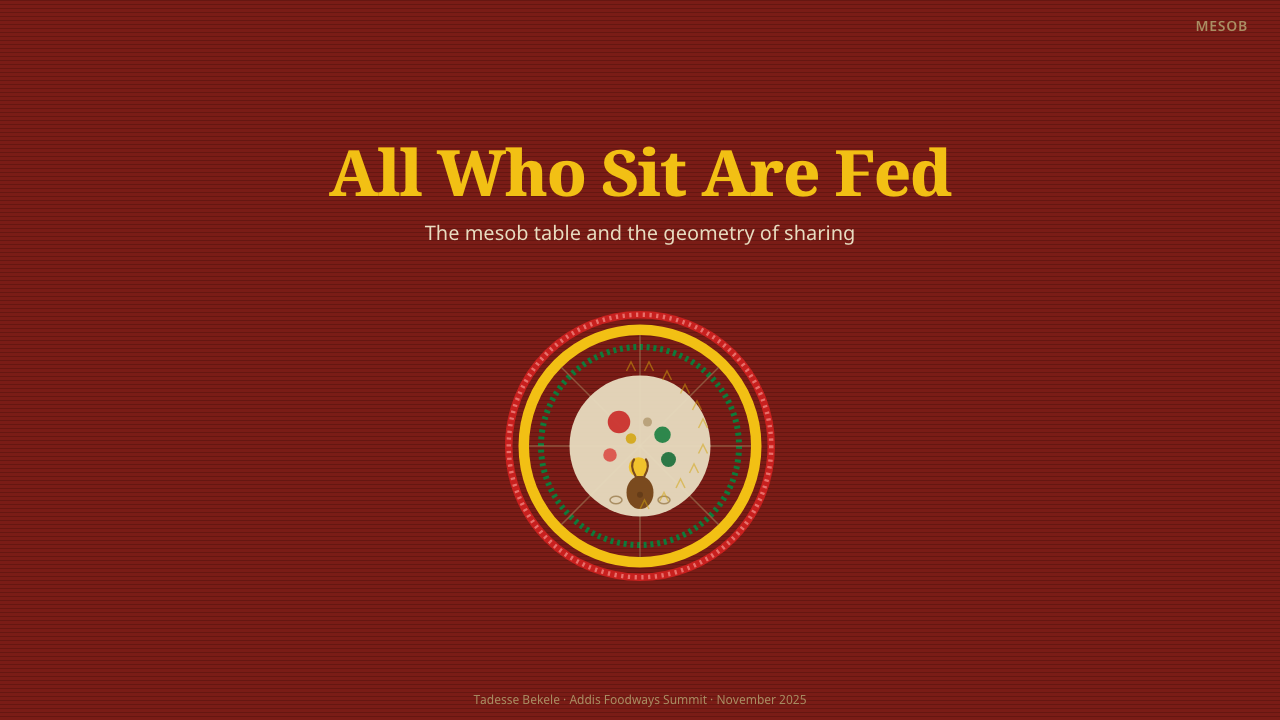
For presentation covers, treat the slide as a closed mesob about to be opened. A deep dyed-straw red field can carry a strong title, while a concentrated ring or band of red, green, and yellow establishes the woven identity. Content slides should then open onto the injera field: broad, warm, and pale, with headings and supporting points arranged as shared servings rather than isolated boxes. Keep the surrounding bands consistent so the deck retains the sense of one continuous table.
Data slides benefit from the contrast between woven order and stew-like concentration. Repeating bands, radial groupings, or measured rows can organize categories, while berbere-red clusters identify the most consequential values. Charts should feel placed on the injera field, not pasted onto neutral office stationery. Use flag colors to distinguish meaningful groups and sequences; if every mark receives the same saturation, the data loses both hierarchy and the visual logic of serving.
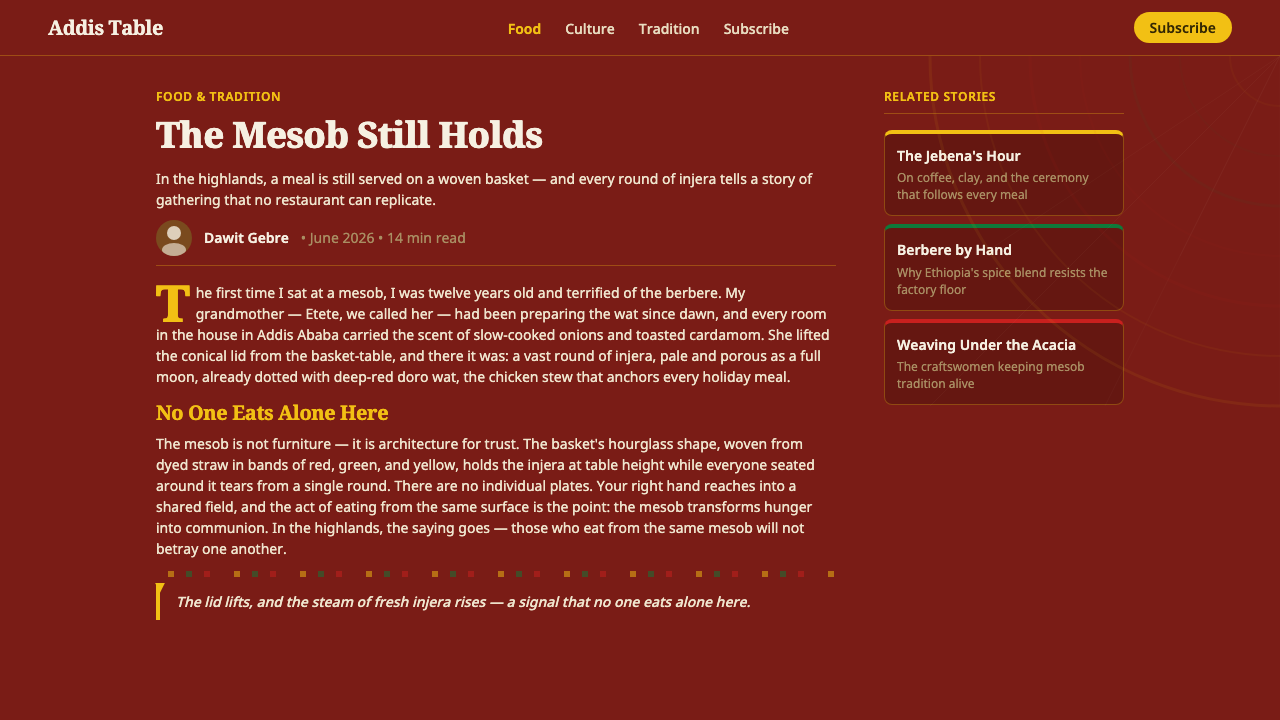
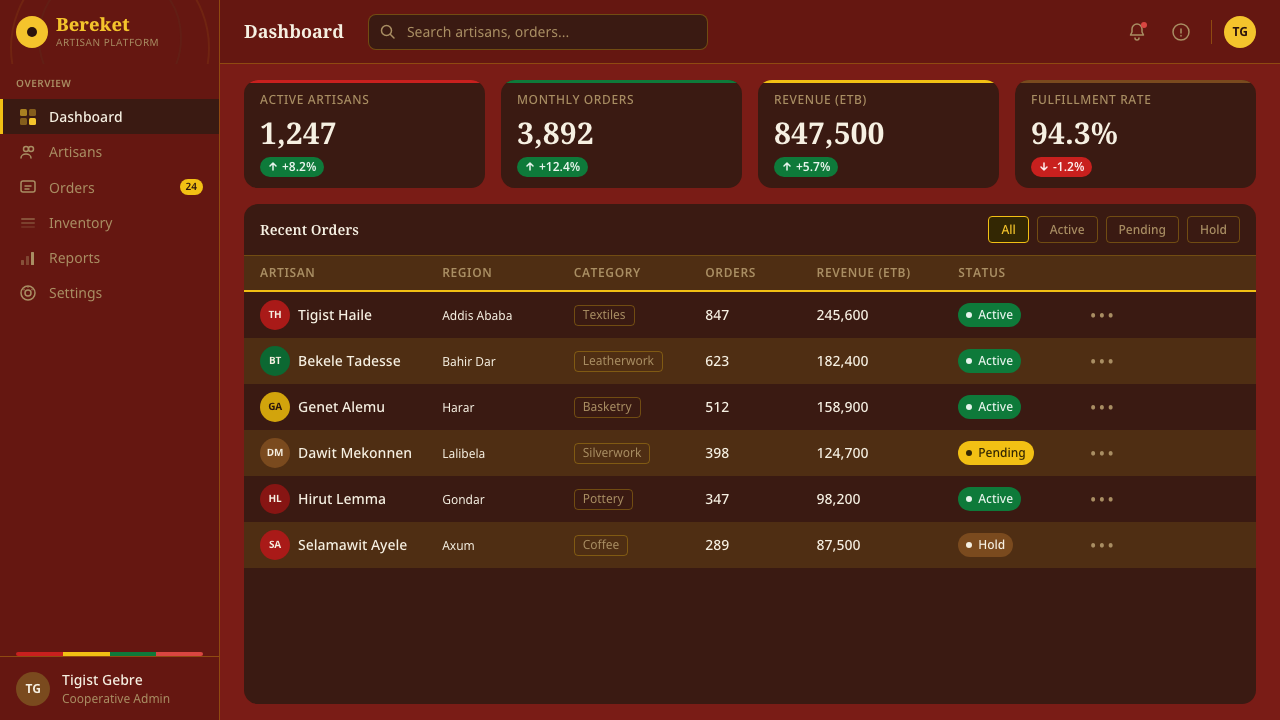
For web interfaces, the system is especially effective for hospitality dashboards, menus, cultural archives, event pages, and pricing layouts built around gathering or selection. A dark dyed-straw shell can contain navigation, while the central working region becomes the lighter injera field. Pricing tiers may be presented as dishes within one spread rather than competing sales cards. Repeated weave bands can indicate progress, categories, or boundaries, provided they remain subordinate to readable content and clear actions.
Editorial and marketing layouts should build a narrative of opening, serving, and continuation. A campaign can begin with the saturated exterior of the mesob, reveal stories or offerings across the pale food field, and conclude with a coffee-ceremony reference that invites lingering or return. Photography and illustration, when used, should support food, basketry, craft, and communal orientation. Pattern is most convincing at transitions and edges, where it can perform the containing work of the basket.
The most common mistake is reducing the style to red, green, and yellow stripes laid over a generic cream page. That removes the source relationships that make the palette meaningful. The ground must feel like deeply dyed straw, the light area like injera rather than paper, the bands like woven construction, and the focal accents like dishes arranged for sharing. Overloading every surface with pattern is equally harmful: hospitality needs an abundant table, but it also needs room for guests to see what has been served.
Ethiopian Injera & Mesob Spread — FAQ
Is this style simply an Ethiopian flag-color palette?
No. Red, green, and yellow are important, but their woven arrangement is more significant than their presence alone. The colors belong to concentric basket bands that contain and organize a pale injera field. Without the relationship among dyed straw, geometric enclosure, shared bread, berbere-red wat, and communal hospitality, the palette becomes a generic tricolor treatment rather than an Injera & Mesob system.
Why must the light content area resemble injera rather than paper?
Because injera is not a neutral backdrop. It is the shared edible field that receives the meal and connects its separate dishes. Its pale warmth, softness, and porous character give content a hospitable base. A paper-like surface shifts the reference toward publishing or administrative design and breaks the food-centered logic. The goal is not literal bread texture, but the unmistakable feeling of content being served on something warm and sustaining.
Can the style support information-heavy dashboards?
Yes, if the mesob logic governs hierarchy. The dark outer ground should contain navigation and global context, while the injera field carries the working information. Repeated bands can classify sections, and concentrated stew-like accents can identify urgent or important values. Dense information becomes difficult only when every panel receives its own loud pattern. A shared field and a limited number of focal clusters preserve both richness and scanability.
How should coffee-ceremony imagery be used?
The clay jebena and the role of the coffee-ceremony hostess are best used to express continuation, attentive hosting, and the closing phase of a journey. They can shape a final section, invitation, or return action without becoming a random icon repeated everywhere. The reference is strongest when it follows the shared meal structurally: first the mesob contains, then the injera field serves, and finally coffee creates time to remain.
What separates respectful translation from superficial decoration?
Respectful translation preserves relationships and functions. Woven bands should contain or organize; the injera field should support shared content; berbere intensity should create meaningful focal servings; and the overall composition should encourage gathering. Superficial decoration extracts a stripe, basket motif, or vessel silhouette and applies it without purpose. The style succeeds when hospitality shapes the information architecture, not merely when Ethiopian craft references are visible on the surface.
Related design styles
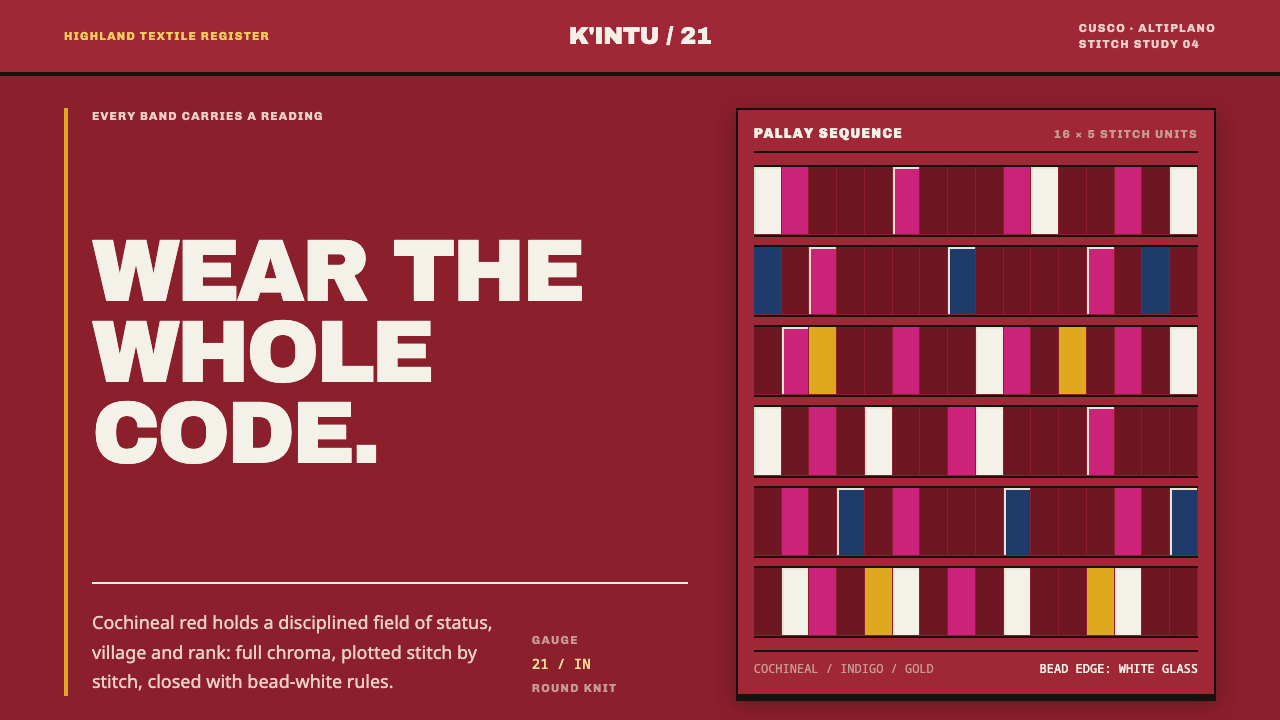 Andean ChulloOrnament carries a code. Cochineal red stacks strict stitch bands with bead-w…
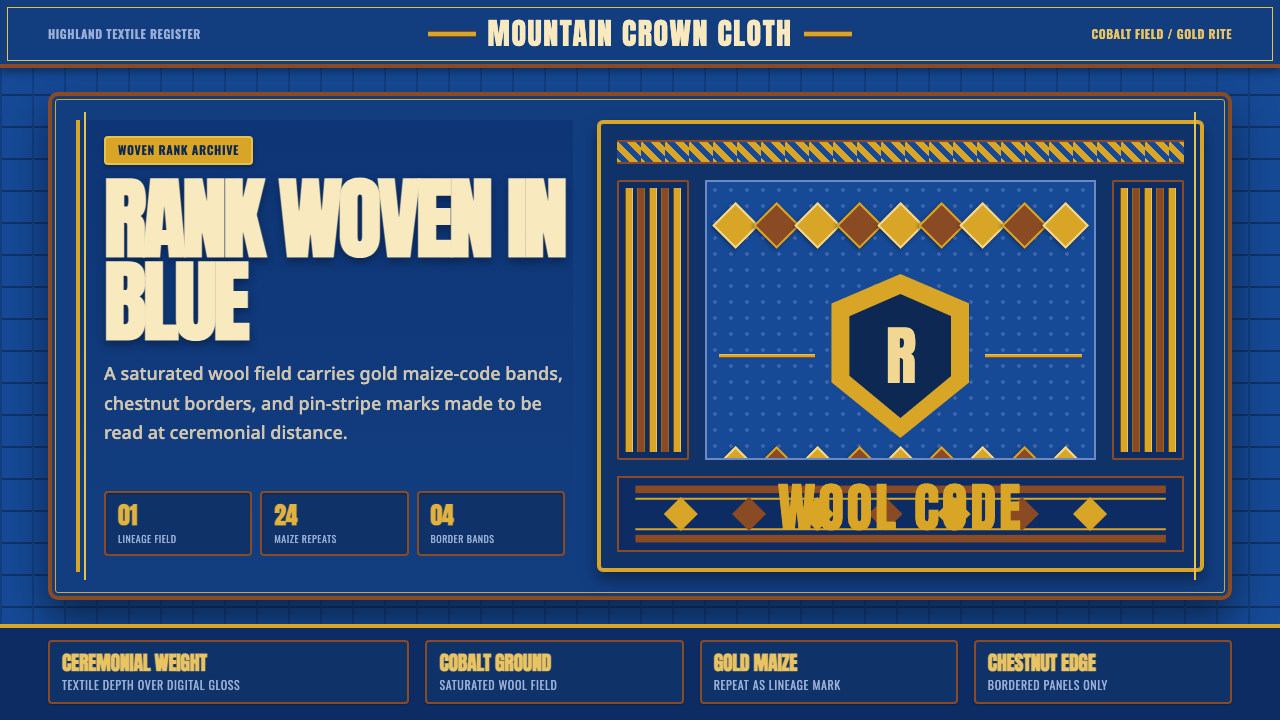 Basotho Seanamarena BlanketRank made visible. Cobalt wool, gold maize diamonds, and chestnut borders rea…
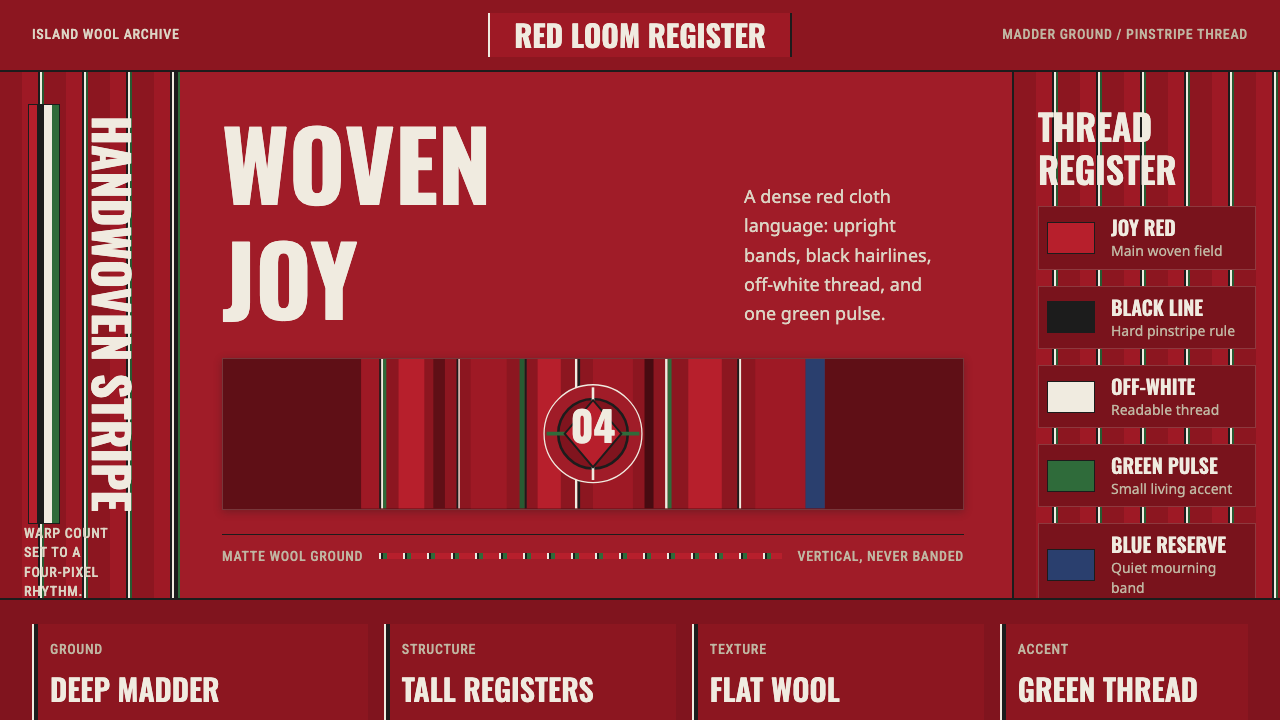 Estonian Kihnu Island SkirtJoy is woven vertical. Madder red ground, Oswald stripes, black and green pin…
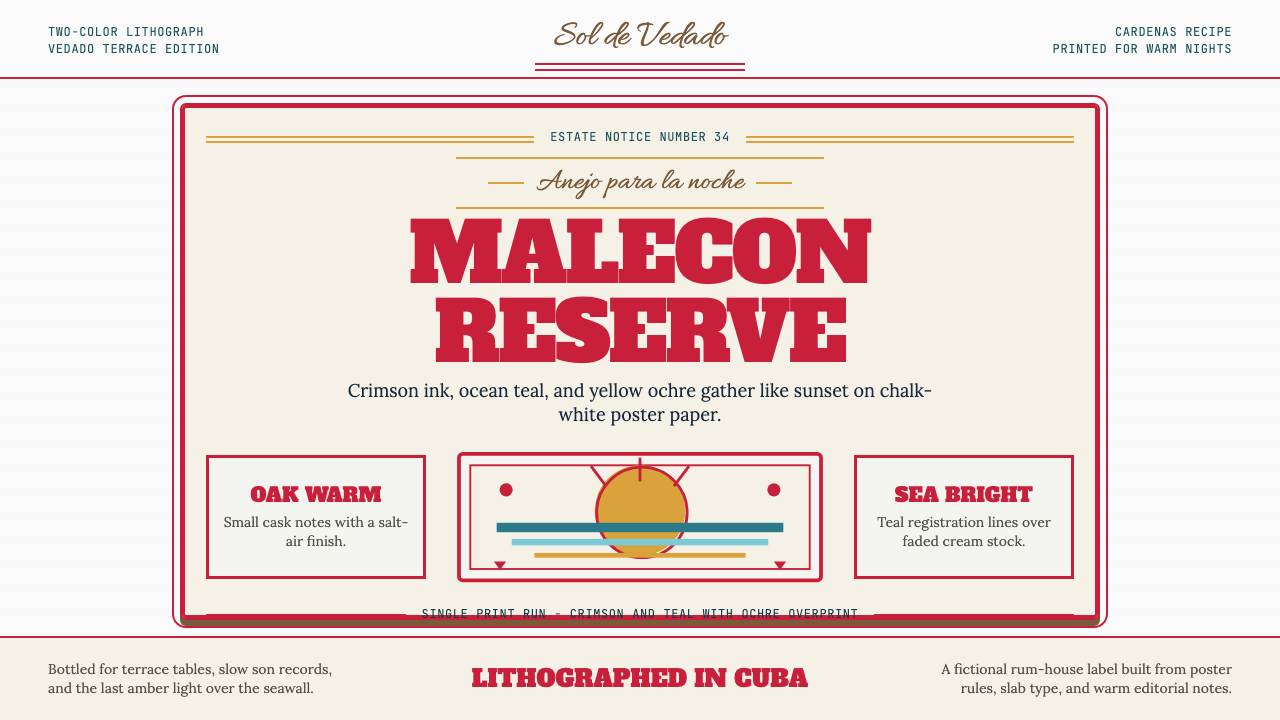 Havana Club Cuban RumSunset in print. Crimson slab type and ocean teal rules age on chalk-white pa…
 Mossi Burkina Plank MaskCarved, not rendered. Charcoal fields, dust-red cuts, and kaolin bands stack…
 Sindhi Ralli QuiltSings in squares. Vermilion, gold, green, and indigo lock into piped tile rhy…