What is Diablos de Yare?
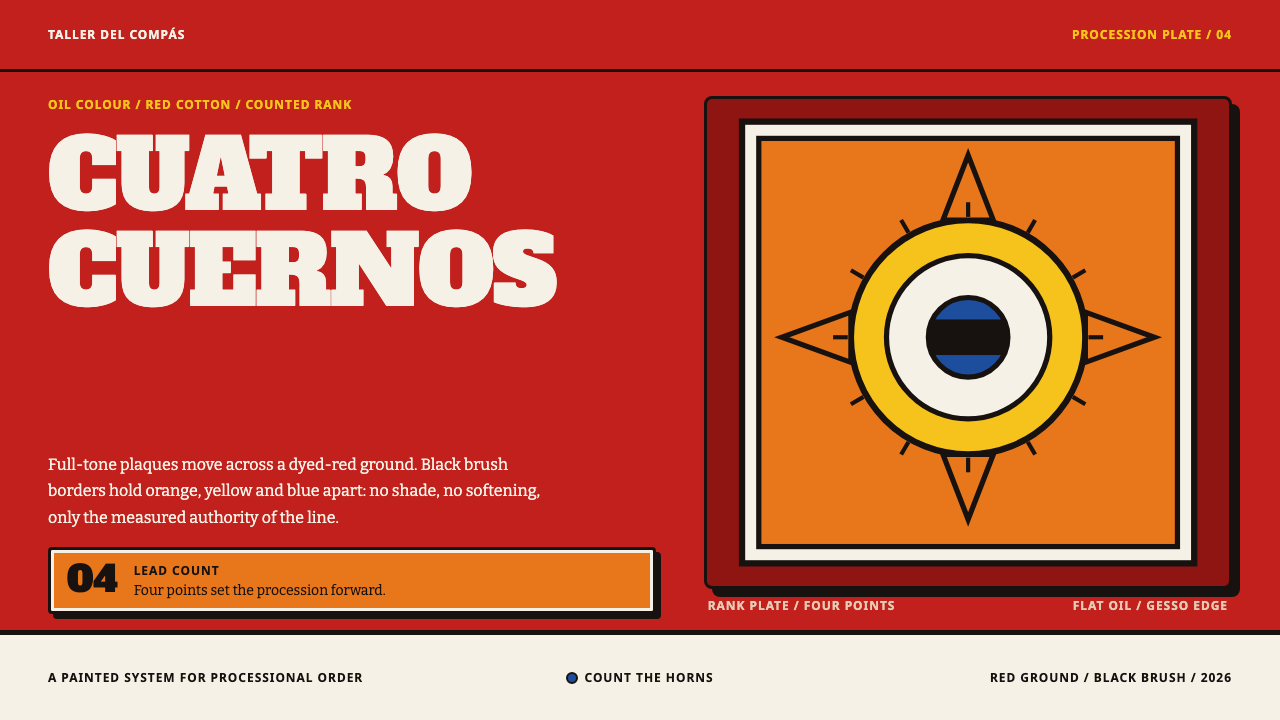
Every Corpus Christi the red-clad dancers of Yare put on horned masks and dance backwards to the church door, and rank is counted in horns, never merely implied.
Diablos de Yare in brief
Diablos de Yare is a design style drawn from the Dancing Devils of San Francisco de Yare, in Miranda State, Venezuela. Every Corpus Christi the dancers dress from head to toe in red cotton, put on horned papier-mâché masks built over real bull's horn, and dance backwards through the plaza until they kneel at the church door. The style takes that scene as its system: the costume is the page and the mask is the interface.
The visual language is flat, saturated and hand-painted. The ground is a single field of dyed red cloth. On it sit plaques with a thick black brush outline, a rough chalky edge where white gesso shows through, and full-tone fills in orange, yellow and blue. There are no gradients, no shading and no fine lines. Nothing is blended; each colour sits in its own field and stops where the brush stopped.
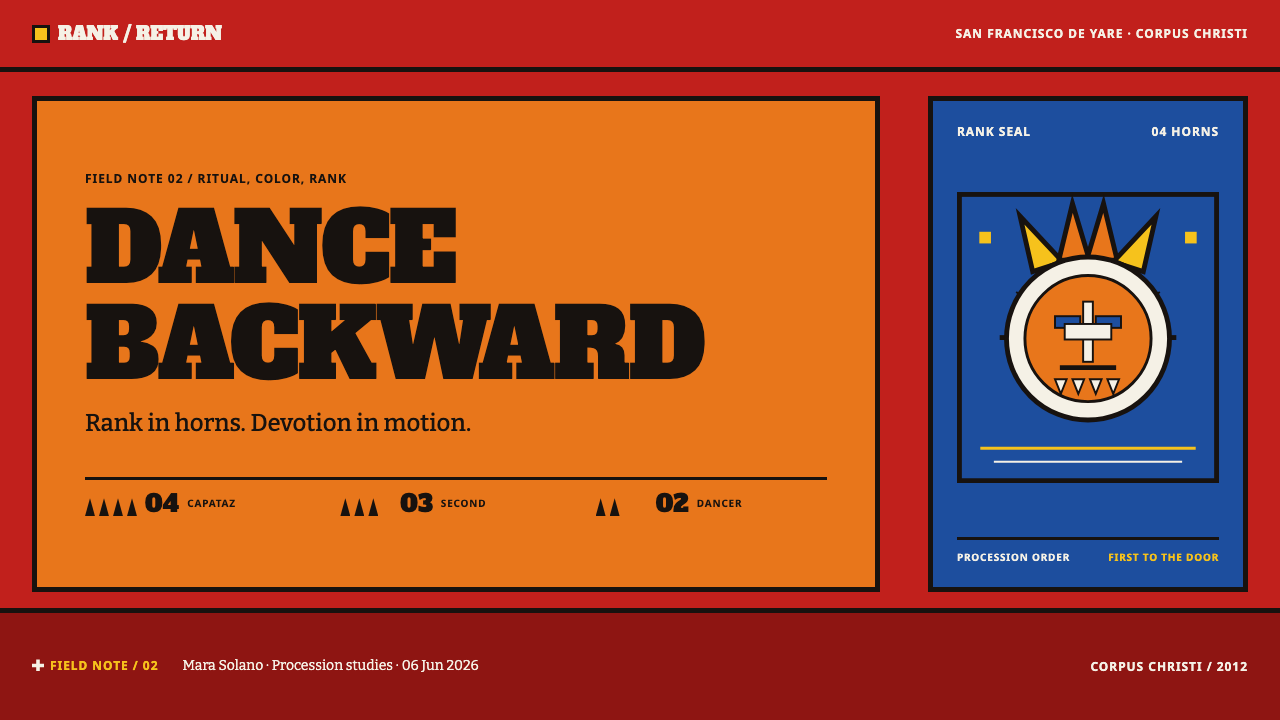
Hierarchy works the same blunt way. In Yare, rank is carried by the number of horns: four for the primer capataz, the lead foreman, three for the second and third in command, two for an ordinary dancer. The style translates that into interface logic. Importance is counted, not implied, so level and status are shown by visible, countable marks instead of subtle changes in type size or tone.
Where does Diablos de Yare come from?
The dance belongs to the town of San Francisco de Yare in Miranda State. It is carried by a confraternity, a cofradía, the Society of the Blessed Sacrament, whose foremen, the capataces, organise and lead the dancers. Cofradía practice is documented from the eighteenth century, and the tradition was inscribed by UNESCO on its intangible cultural heritage list in 2012.
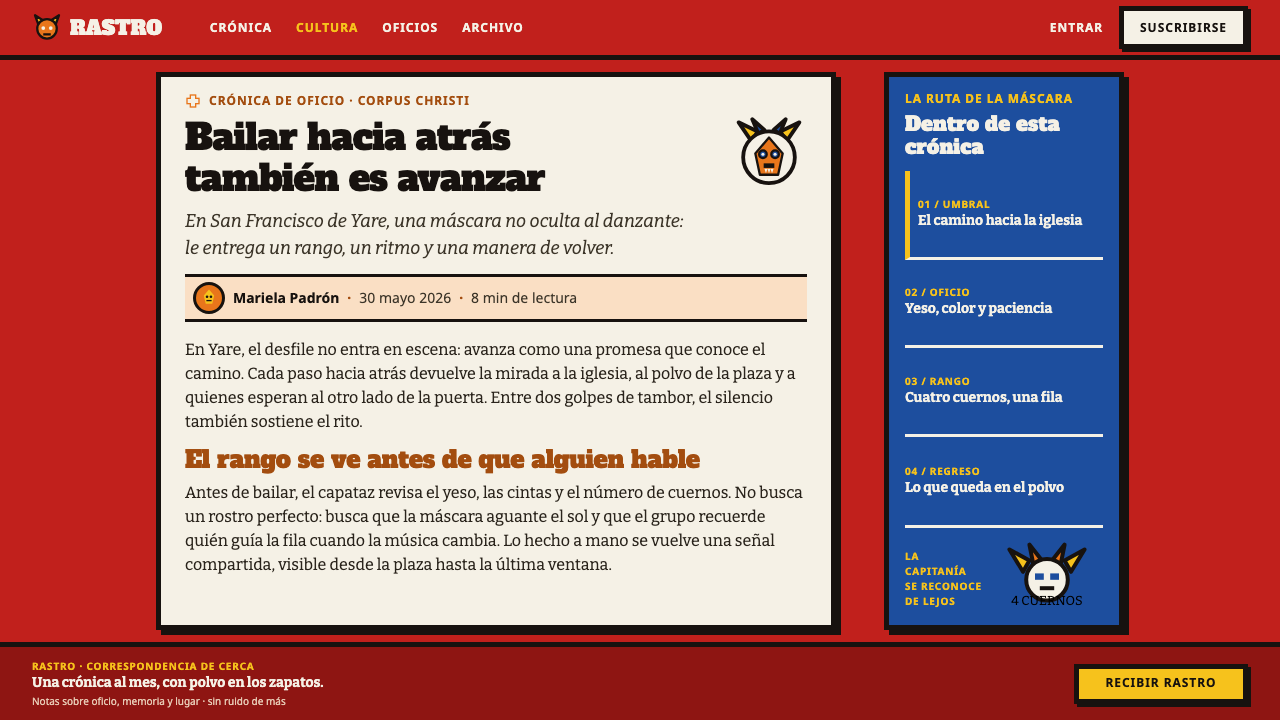
The festival is a Corpus Christi devotional masquerade, a Catholic feast whose observance in Yare takes the form of a ritual drama of devils who submit to the church. The dancers move backwards through the dusty plaza and kneel at the church door, giving themselves up at the threshold. The scene joins devotion and spectacle in the same gesture: the performers look wild and then kneel, and the whole meaning lies in the contrast.
Afro-Venezuelan cofradía practice is the second thread in the record, and it frames the tradition as communal and handmade. The masks are built over real bull's horn, formed from papier-mâché, primed with white gesso and painted in oil, so each is a product of paste, chalk and brush. The reference era this style uses is 1900 to 1950, within a practice documented much further back.
The record lists three key figures: the capataces of the Society of the Blessed Sacrament, and two individuals, Juan Morgado and Pablo Antonio Sanoja. It is more concerned with the confraternity than with famous individual authors, and that fits: the masks and the dance are inherited, repeated and adjusted by a community. A design in this style should carry the same trait. It should look made by many hands to a shared pattern, not authored by a single stylist.
What defines the Diablos de Yare look?
Saturated Red Ground
The page is a whole field of dyed red cotton: saturated, uniform and cloth-like rather than glossy. There is no gradient, no vignette and no lighting effect on it. Everything else is laid on this field the way a plaque is hung on a costume, so the red works as the structural base of the system rather than as an accent.
Painted Plaques
Every element is a plaque: a flat panel with a black outline and a rough, chalky edge where the white gesso shows. Plaques behave like signs hung on cloth, each complete in itself and sitting directly on the red. Cards, buttons and labels all take this form, which makes the interface feel hand-made and a little uneven in a deliberate way.
Flat Primaries and Secondaries
Colours are full-tone primaries and secondaries, orange, yellow and blue, applied in oil without blending. Each field is a complete block, and where two meet they simply stop at a line. There is no tinting toward lighter or darker versions of the same hue. The palette is loud but honest, and it reads at a glance from across a plaza.
Thick Black Brush Outlines
A heavy, hand-brushed black outline surrounds every colour field and locks it in place. The line is thick, slightly irregular and consistent in character from one plaque to the next. Fine hairlines would disappear against the cloth and betray the hand-painted logic, so rules, borders and icon strokes should all be bold.
Gesso Edge
Beneath the paint the masks are primed in white gesso, and at the edges of each plaque a chalky margin shows through. This rough pale edge is the style's only texture and its substitute for a shadow. It separates a plaque from the red without any simulated light, and it should look like a brush stopped short, not like a drawn effect.
Horn-Count Hierarchy
Rank is counted: four horns for the primer capataz, three for the second and third in command, two for an ordinary dancer. In interface terms, levels and tiers are shown with visible, countable marks, such as two, three or four horn-like points, instead of larger type or subtler tone. The viewer should be able to read importance by counting, not guessing.
No Gradients, Shadows or Fine Lines
The style refuses three things outright: gradients, drop shadows and fine lines. Everything on the plaza is brushed by hand, so edges are as hard as a brush leaves them and nothing pretends to be lit. These refusals are not decoration to add or remove; they are what keep the system recognisable as a painted, cloth-and-gesso world.

Who shaped Diablos de Yare?
The capataces are the foremen of the Society of the Blessed Sacrament, the confraternity that organises and leads the dancers. Their authority is displayed in horns: the primer capataz wears four, the next in command three, and ordinary dancers two. They are the human source of the style's hierarchy, and the reason the system counts rank openly instead of hinting at it.
Juan Morgado is one of the individuals listed among the key figures of the Yare tradition. The written record says little about individual craftsmen, since the masks and dance are carried by a community and handed on, so he is best understood as one name among the many hands that sustain the practice. For a designer, he stands for the idea that this style should feel collective and hand-made.
Pablo Antonio Sanoja is the second individual named among the key figures of the tradition. As with Juan Morgado, the record names him without detailing a single signature work, which fits a practice that values inheritance over authorship. His place in the record is a prompt to design with the same modesty: shared patterns, repeated with care, rather than a personal brand.
The makers of the masks are not named individually in the record, but their method is: real bull's horn as the frame, papier-mâché over it, a coat of white gesso, then oil paint in flat full-tone fields outlined in black. Every surface of the style comes from this sequence. Understanding it is the fastest way to design faithfully, because each rule of the system is a trace of a step in the making.
How do you use Diablos de Yare today?
Diablos de Yare suits subjects that value festival energy, community and handmade character: cultural events and programmes, folk and music brands, food and drink with a story, community and non-profit sites, and playful products that want boldness without gloss. It is a dark, saturated style, and it works best when it commits to flat colour and honest edges.
On slides, a cover can be a full red field with one large painted plaque as the title, black-outlined and edged in chalky white. Content slides use a small number of plaques on the red, each a single idea. Rank or priority is shown with counted horn marks, such as two, three or four points, and data slides use flat, thickly outlined bars in orange, yellow and blue.
For web interfaces, treat the page as red cloth and every component as a plaque. Pricing tiers or membership levels can be marked with counted horns instead of badges. Buttons are bold, outlined and flat; nothing has a shadow or a soft transition between colours. Keep type heavy and legible against the plaques, since fine weights vanish against saturated fields.
In editorial and marketing work, festival programmes, posters, community newsletters and event pages carry the style well. Use large flat plaques as headline blocks, thick black rules to divide sections, and a restrained ration of colours per page. Because the source is a religious devotion, present it with respect and name the tradition and its place plainly, instead of using devil imagery as a joke.
A common mistake is to refine it. Thin outlines, pastel tints, soft shadows and gradient fills turn a loud hand-painted system into a polished one and lose its identity. Another is to use every colour on every element, which removes the counting logic. Keep the red ground, the heavy black line and the chalky edge, and let the horns, not the type size, carry the hierarchy.
Diablos de Yare — FAQ
What are the Diablos Danzantes of Yare?
They are the masked dancers of San Francisco de Yare, in Miranda State, Venezuela. Every Corpus Christi they dress in red cotton, wear horned papier-mâché masks and dance backwards through the plaza until they kneel at the church door. The tradition is carried by a confraternity, is documented from the eighteenth century and was inscribed by UNESCO in 2012.
How does the style handle hierarchy?
By counting. In Yare, four horns mark the primer capataz, three the second and third in command, and two an ordinary dancer. The style carries that over as countable marks for levels and tiers, rather than relying on larger type or subtler tone. If importance has to be guessed, the system is not being followed.
How does the way the masks are made shape the look?
Almost every rule comes from the process. The masks are built over real bull's horn, formed in papier-mâché, primed with white gesso and painted in oil in flat primaries and secondaries with thick black brush outlines. That gives the chalky edges, the lack of blending and the heavy lines. The system's constraints are traces of how the object is made.
Can I replace the red ground?
The red is the page, the cloth of the costume, so replacing it changes the identity of the style. If you need a lighter variant, the closest honest alternative is the chalk white of the gesso, used as a ground with the same heavy black outlines and flat plaques. Avoid pastel tints and gradients, which are foreign to the system.
Is it appropriate to use a religious masquerade as a design reference?
Yes, with care. The Yare dance is a Corpus Christi devotion carried by a confraternity, not a costume party. Name the tradition and its place in your copy, keep the references to its visual logic, and avoid using the devil imagery as a joke or a gimmick. Respect for the source is part of using the style well.
Related design styles
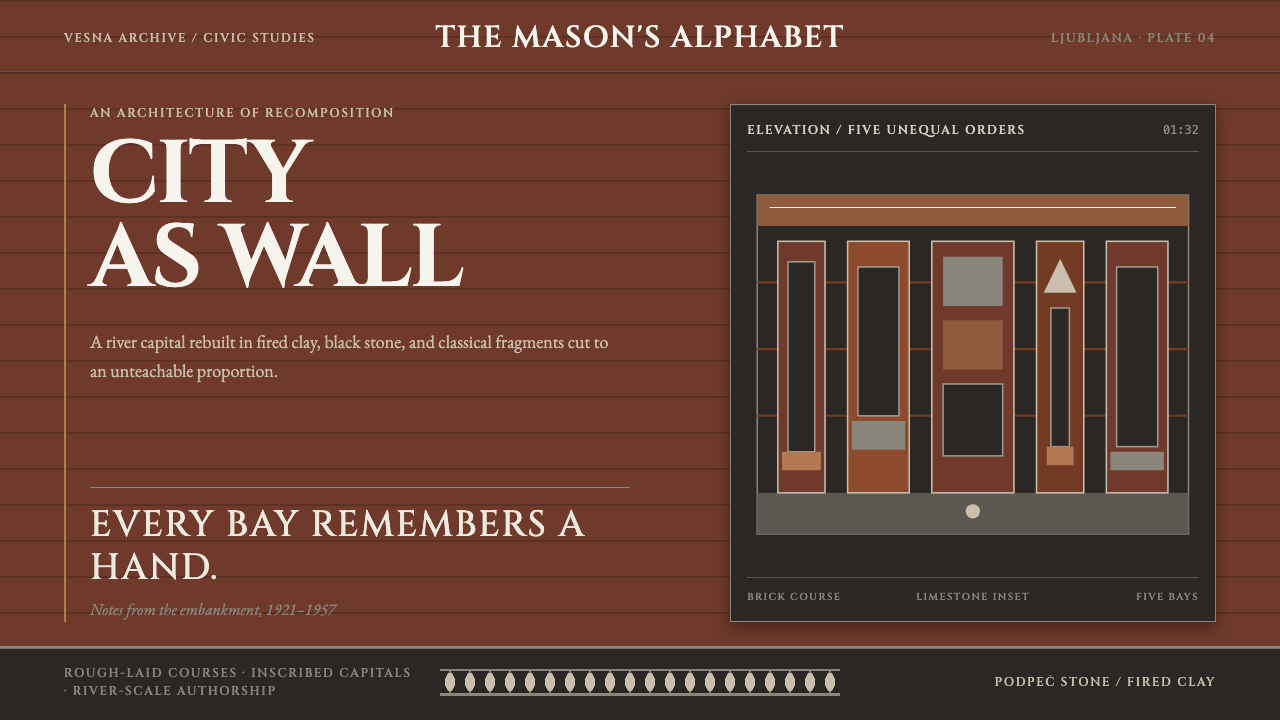 Plečnik's LjubljanaA city made monumental by hand. Fired-clay courses and carved Roman capitals…
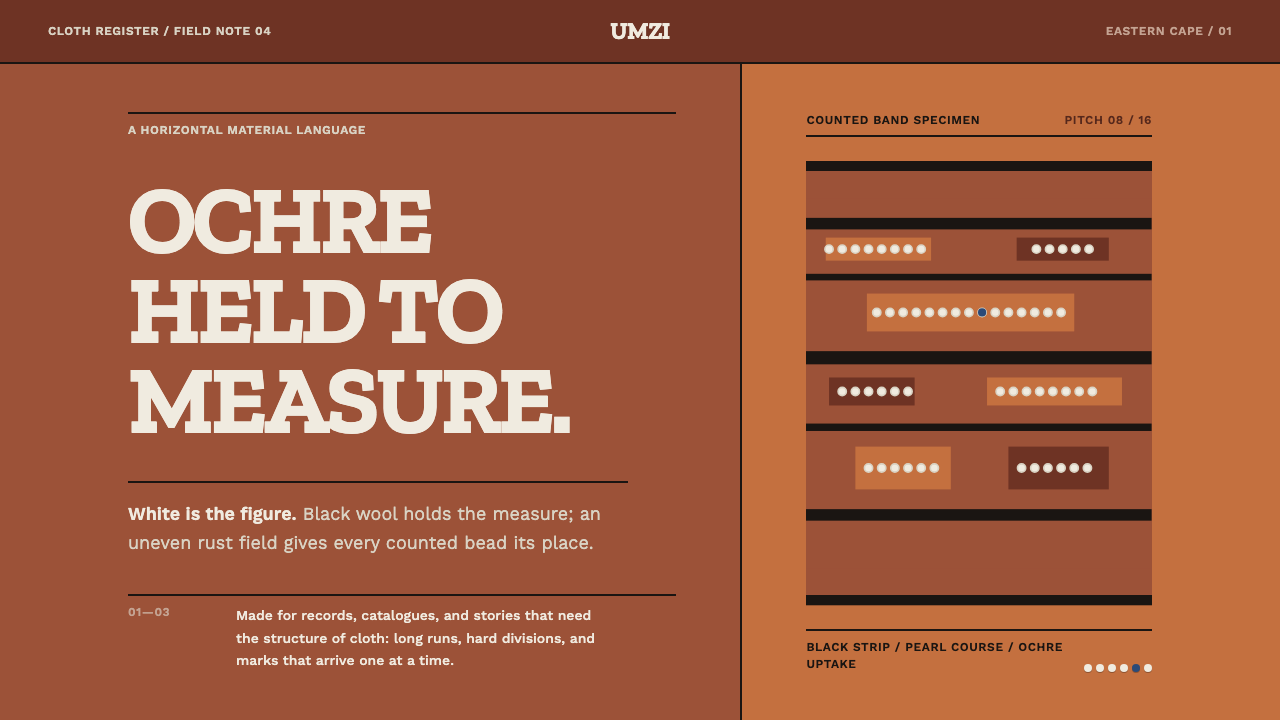 Xhosa UmbhacoCloth becomes a reading system. Ochre fields, black bands, and counted pearl-…
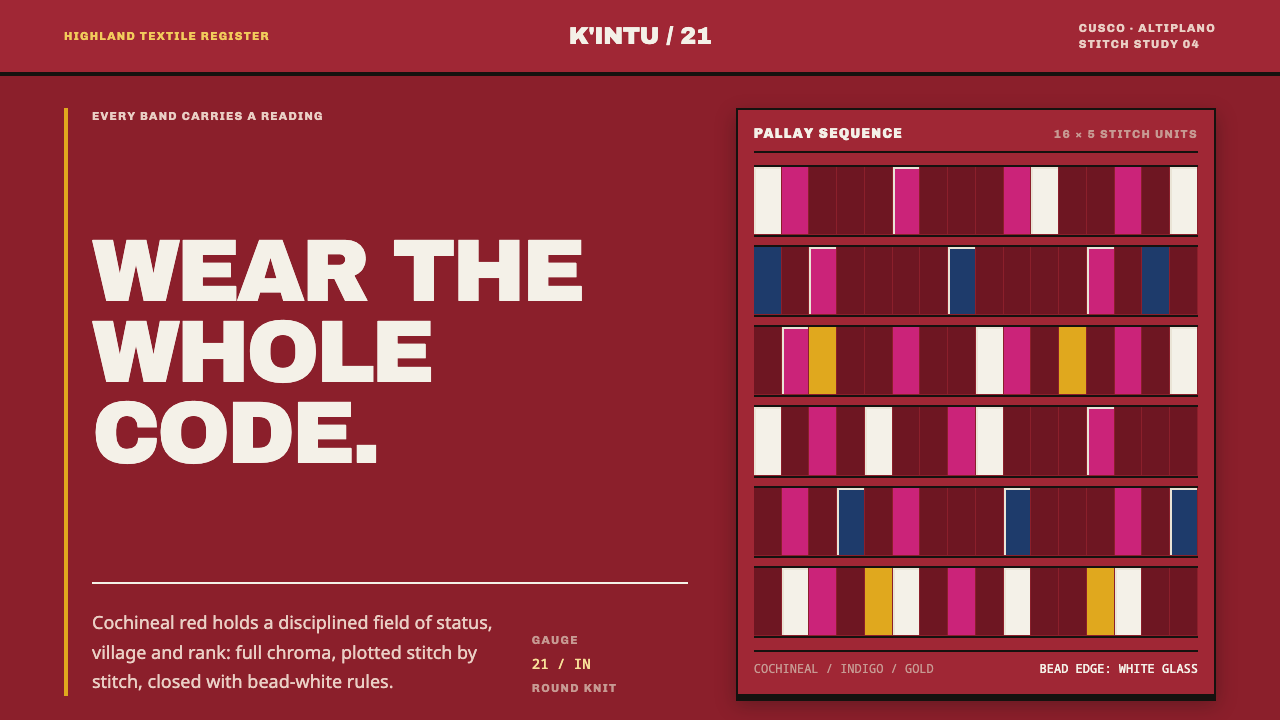 Andean ChulloOrnament carries a code. Cochineal red stacks strict stitch bands with bead-w…
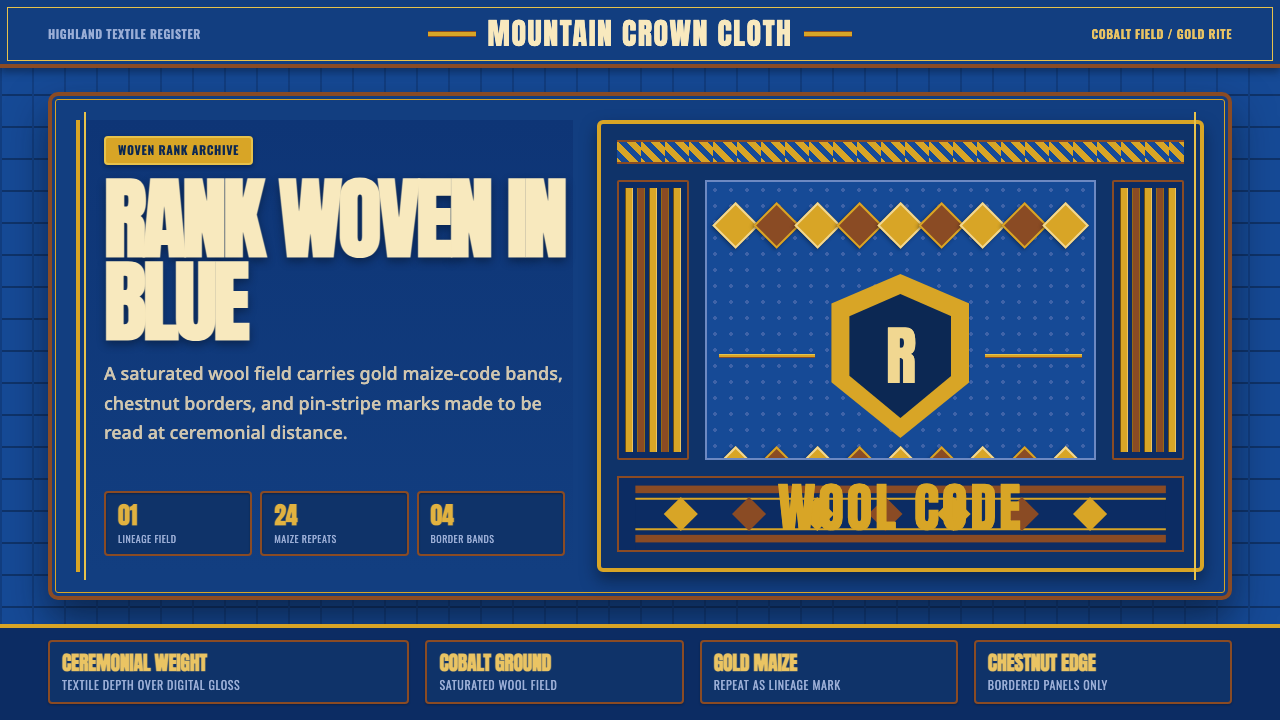 Basotho Seanamarena BlanketRank made visible. Cobalt wool, gold maize diamonds, and chestnut borders rea…
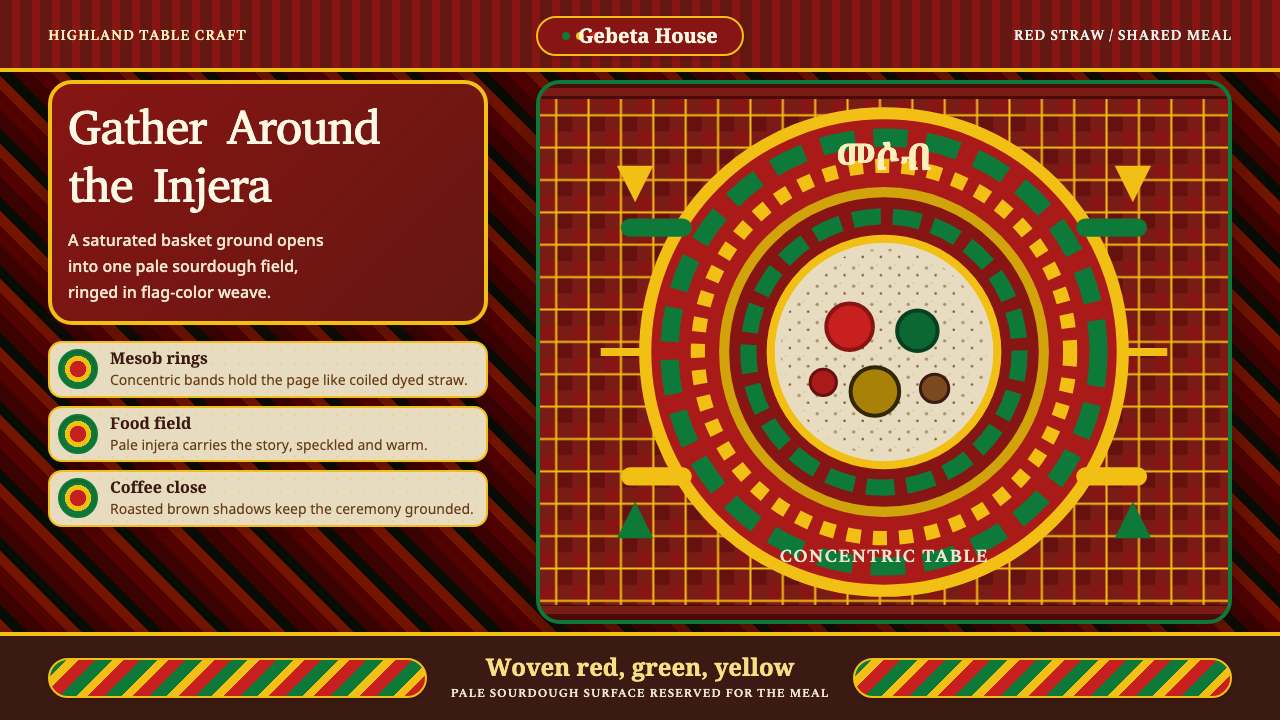 Ethiopian Injera Mesob SpreadHospitality is woven in. Berbere red, flag bands, and an injera field hold th…
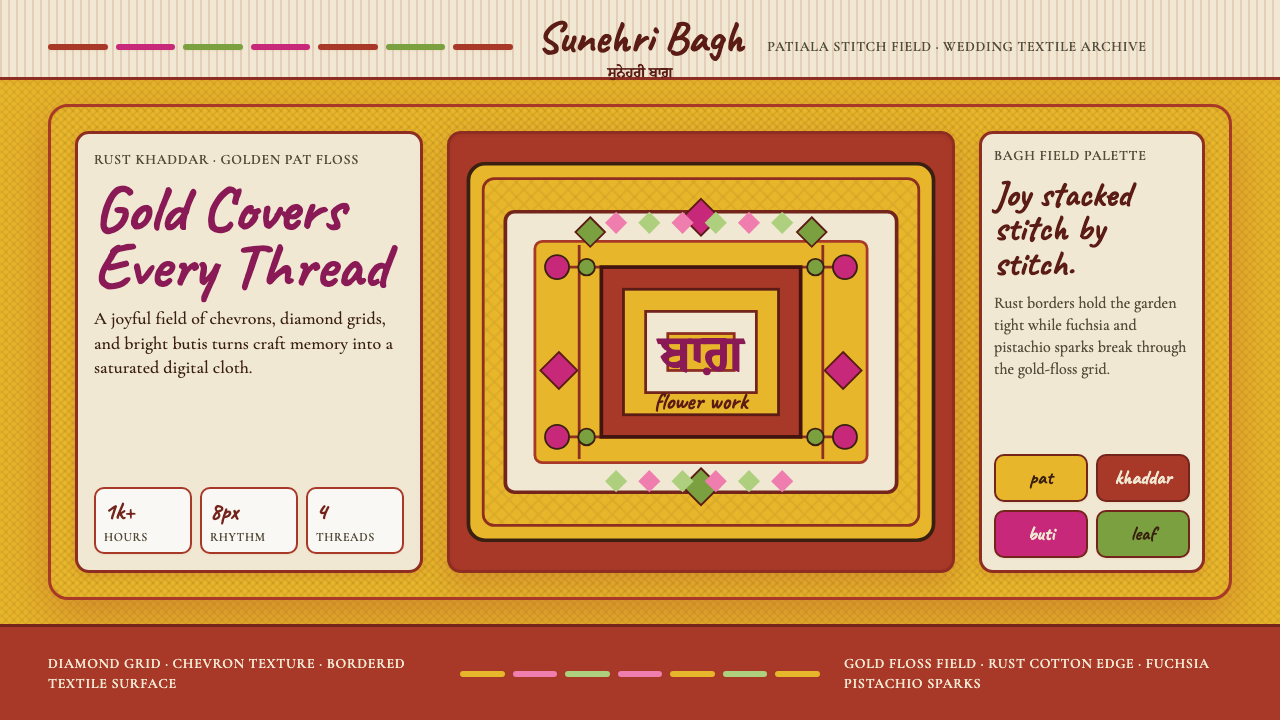 Punjabi Phulkari (Floral Bagh)Joyful density wins. Gold chevrons, rust borders, fuchsia-pistachio butis fil…