What is Basotho Seanamarena Blanket?
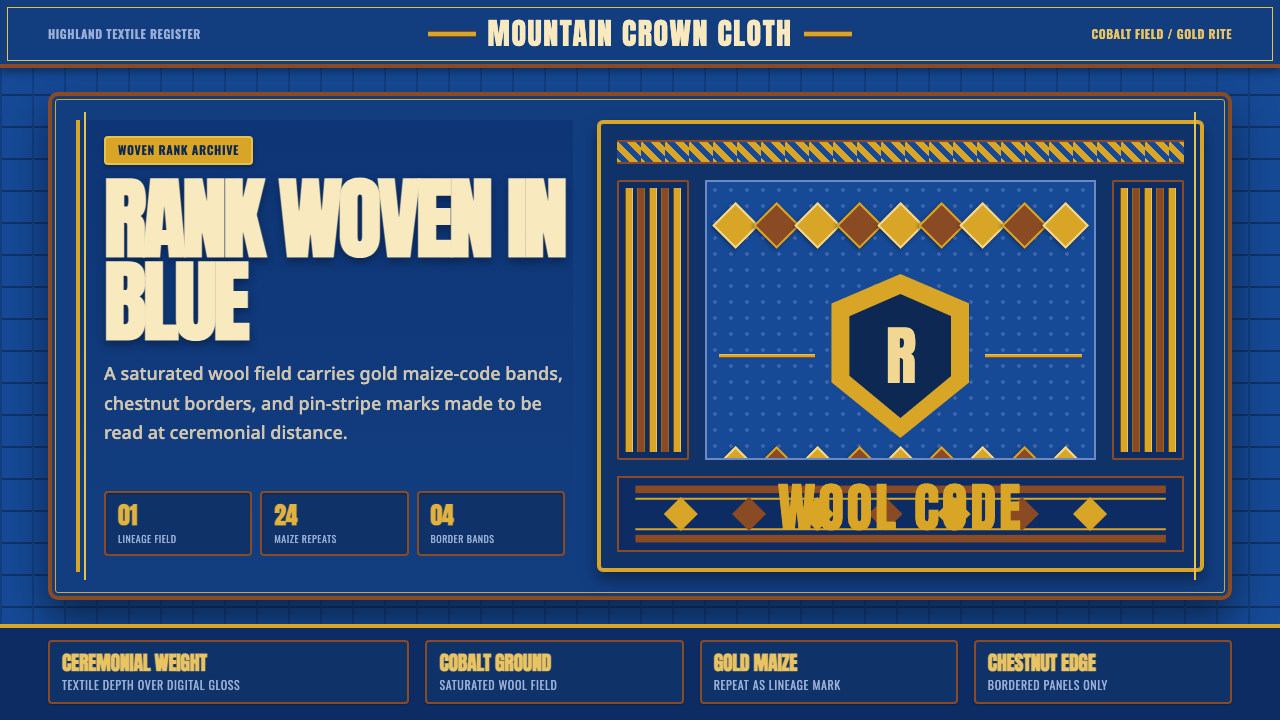
The Basotho Seanamarena Blanket makes rank legible in wool: cobalt ground, gold maize, and a bordered language of ceremony.
Basotho Seanamarena Blanket in brief
The Seanamarena is a Basotho heritage blanket from Lesotho in Southern Africa, known as the Royal Crown Jewel of Basotho blankets. Since the early twentieth century, it has been worn across the mountain highlands not as an occasional decorative textile, but as a visible part of ceremonial and everyday dress.
Its defining Poone pattern places maize-cob motifs in gold across a saturated cobalt-blue wool field. For Basotho wearers, the motif is not merely graphic ornament. It is a recognizable sign through which standing, lineage, and rite can be read in public.
Chestnut-brown and gold border stripes frame the central field, while a fine pin-stripe hallmark gives the blanket an additional identifying rhythm. The Seanamarena therefore works like a woven document: its color, motif, border, and hallmark carry social meaning together rather than operating as separate decorative choices.
Where does Basotho Seanamarena Blanket come from?
The Seanamarena belongs to the Basotho heritage-blanket tradition of Lesotho. Between 1900 and 1950, blankets became established as both ceremonial and everyday Basotho dress. In the highland setting, wrapping the shoulders with wool was practical, but the garment also developed a public vocabulary of belonging and standing.
Basotho wearers were central to that vocabulary. Through use at initiation, marriage, mourning, and ordinary life, they codified the blanket as a medium of rank and rite. Meaning did not sit outside the textile as commentary; it was carried by the textile itself, in forms that could be recognized by the community.
Within this tradition, the Poone design gave the Seanamarena its maize-cob identity. Gold maize motifs spread across cobalt wool establish a strong visual contrast, but their importance lies in recognizability: the pattern is read as a mark of standing by those familiar with Basotho blanket culture.
Trading houses that wove the Seanamarena range helped give this language a durable material form. Their weaving brought together the Poone motif, chestnut and gold borders, and the shield and pin-stripe hallmark tradition. The result is a blanket whose authority comes from repeated cultural use, not from novelty or surface decoration.
What defines the Basotho Seanamarena Blanket look?
Cobalt Field
A saturated cobalt-blue wool ground gives the Seanamarena its immediate visual authority. The field is broad, calm, and continuous, allowing the gold motif and warm borders to read clearly rather than competing with a busy background.
Poone Maize Motif
Gold maize-cob forms define the Poone design. Repeated across the blue field, they create a pattern with both decorative rhythm and social legibility. The motif is understood as a mark of standing, making repetition an act of recognition rather than visual filler.
Ceremonial Meaning
The blanket appears at initiation, marriage, and mourning, so its visual language is inseparable from life passages. Its authority comes from being worn at moments when identity, relation, and rite are made visible to others.
Chestnut and Gold Borders
Chestnut-brown and gold stripes border the blanket and establish a formal enclosure around the cobalt field. Their warmer tones give the composition a crest-like finish, turning the edge into a declaration rather than a passive boundary.
Pin-stripe Hallmark
The signature pin-stripe hallmark introduces a finer scale of recognition within the bolder color and motif system. It rewards close reading and signals that the Seanamarena's identity depends on woven detail as much as on its large central pattern.
Woven Record
The Seanamarena is less an accessory than a record in wool. Its motifs are understood to record lineage, rank, and rite, so the blanket communicates through a shared visual system rather than through written text.

Who shaped Basotho Seanamarena Blanket?
Basotho wearers made the blanket socially legible through ceremonial and everyday use. Their sustained practice established the Seanamarena as a garment through which rank, lineage, and rite could be recognized in public.
The trading houses that wove the Seanamarena range gave the design its repeatable material form. Their work joined the Poone motif with border stripes and hallmark weaving into a coherent blanket identity.
The Poone maize-cob design is the Seanamarena's central visual figure. Its gold forms across cobalt wool make standing visible through a motif that is culturally recognizable rather than merely ornamental.
Shield and pin-stripe hallmark weaving supplies the identifying detail around the blanket's larger pattern. It shows how Basotho blanket meaning can be carried through both broad composition and closely observed textile marks.
How do you use Basotho Seanamarena Blanket today?
For presentation covers, draw on the Seanamarena through a cobalt field, a concentrated gold maize-inspired motif, and a warm border treatment. Keep the composition ceremonial and frontal: the visual system should feel like an emblem being presented, not a pattern being scattered for atmosphere.
For content and data slides, use the motif as an organizing device rather than a background texture. A single border or restrained motif band can frame titles, sections, and data groups, while the cobalt, gold, and chestnut relationship gives categories a coherent family resemblance.
For dashboards and pricing interfaces, the strongest adaptation is structural. Let cobalt establish the main field, reserve gold for status or emphasis, and use chestnut-toned framing to separate levels of information. The result should preserve legibility and hierarchy instead of turning ceremonial symbolism into interface noise.
For editorial or marketing work, treat the blanket as a cultural document. Product stories, exhibition pages, and heritage features can use broad color fields, repeated maize forms, and border-led section breaks to communicate dignity, continuity, and public meaning without imitating a garment literally.
The common mistake is to extract the cobalt and gold palette while discarding the blanket's social logic. Seanamarena-derived work should not reduce a rank-and-rite textile to generic luxury decoration. Use motifs sparingly, preserve their emblematic clarity, and avoid filling every surface with repeated maize forms.
Basotho Seanamarena Blanket — FAQ
Is the Seanamarena only ceremonial?
No. It is associated with initiation, marriage, and mourning, but the source tradition also places it within everyday Basotho dress. That dual role is important: the blanket carries ceremonial meaning because it remains embedded in lived, public wear.
What does the Poone pattern communicate?
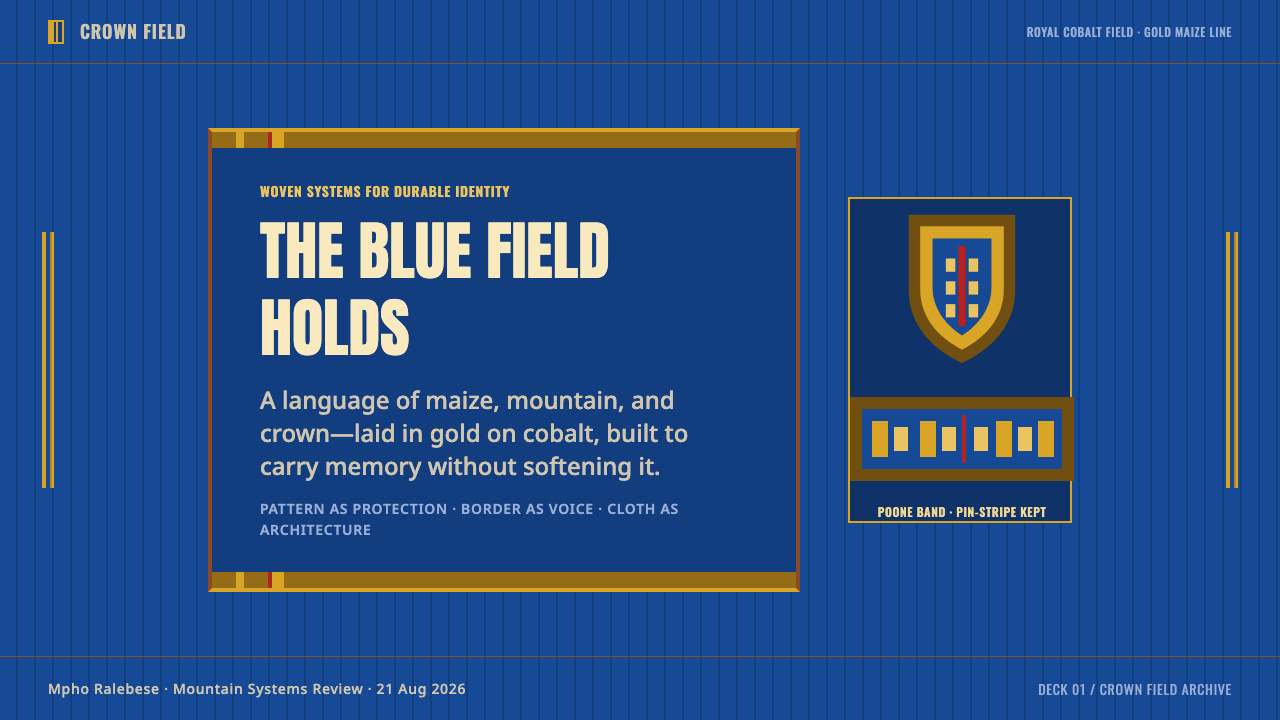
The Poone pattern uses gold maize-cob motifs across cobalt wool and is read as a mark of standing. Its significance comes from shared recognition within Basotho blanket culture, where the motif participates in a larger language of lineage, rank, and rite.
Why are the borders so important?
The chestnut-brown and gold border stripes do more than finish the edge. They frame the central Poone field, reinforce the blanket's crest-like presence, and help distinguish a composed ceremonial textile from an unstructured patterned surface.
Can the design be used as a generic African pattern?
It should not be treated that way. The Seanamarena is specific to Basotho heritage in Lesotho and carries meanings of standing, lineage, and rite. Any contemporary reference should retain that specificity instead of flattening it into an interchangeable decorative motif.
What makes a Seanamarena-inspired layout feel credible?
Credible work preserves the relationship between broad cobalt field, gold Poone emphasis, warm framing, and fine hallmark detail. More importantly, it uses that relationship to create visible hierarchy and public significance, not simply a striking color combination.
Related design styles
 Plečnik's LjubljanaA city made monumental by hand. Fired-clay courses and carved Roman capitals…
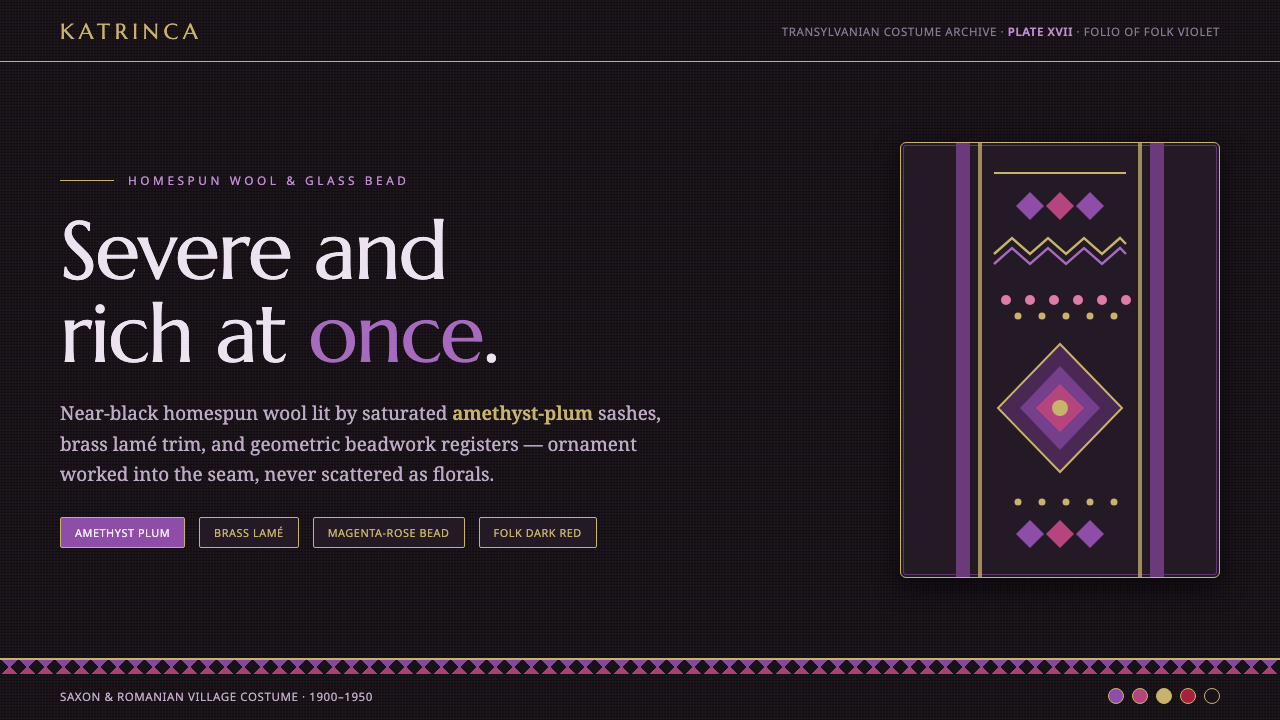 Romanian Folk VioletSevere and rich at once. Near-black homespun wool lit by amethyst-plum and br…
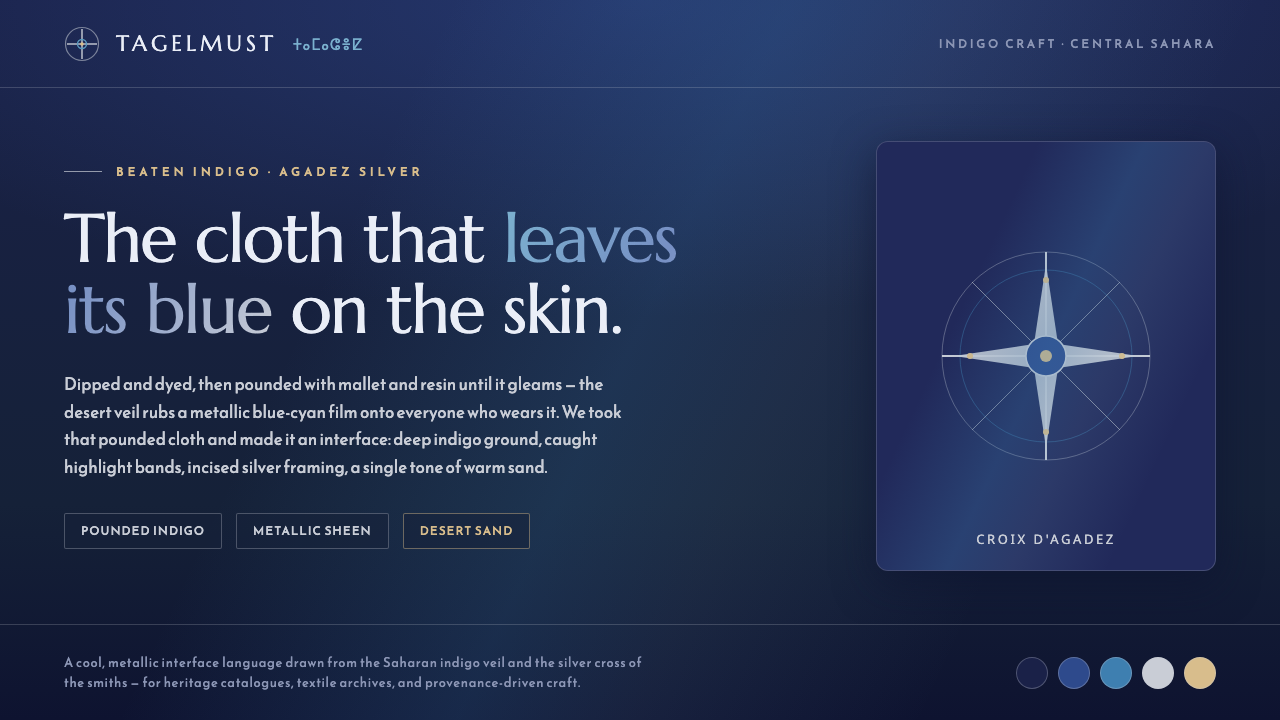 Tuareg Indigo VeilThe cloth that leaves its blue on skin. Pounded-indigo ground, metallic blue-…
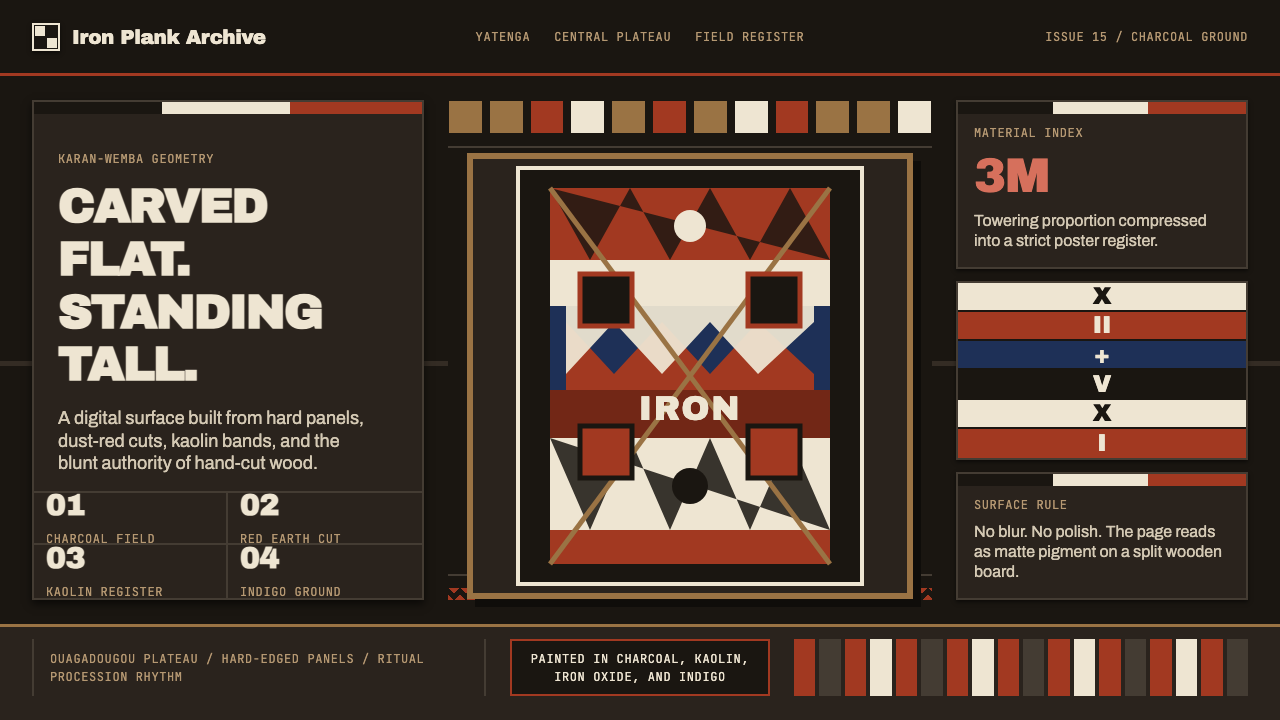 Mossi Burkina Plank MaskCarved, not rendered. Charcoal fields, dust-red cuts, and kaolin bands stack…
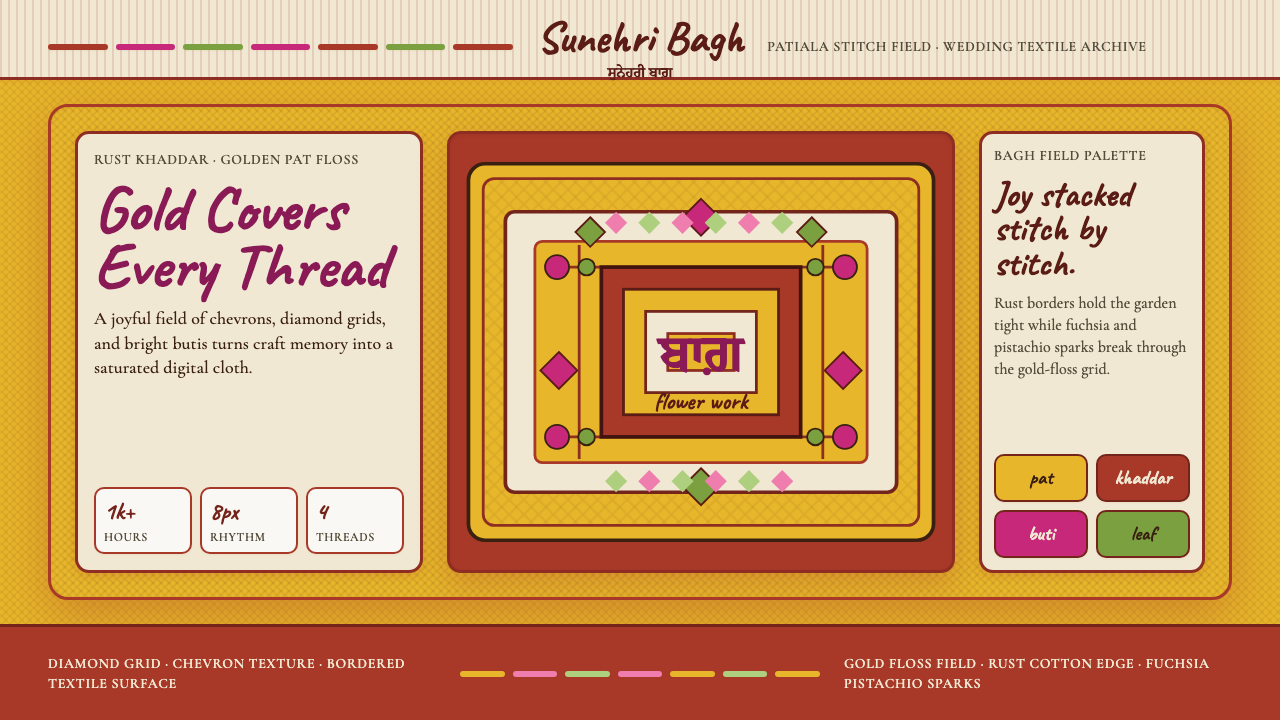 Punjabi Phulkari (Floral Bagh)Joyful density wins. Gold chevrons, rust borders, fuchsia-pistachio butis fil…
 Andean ChulloOrnament carries a code. Cochineal red stacks strict stitch bands with bead-w…