What is Cook Islands Tangaroa Carving?
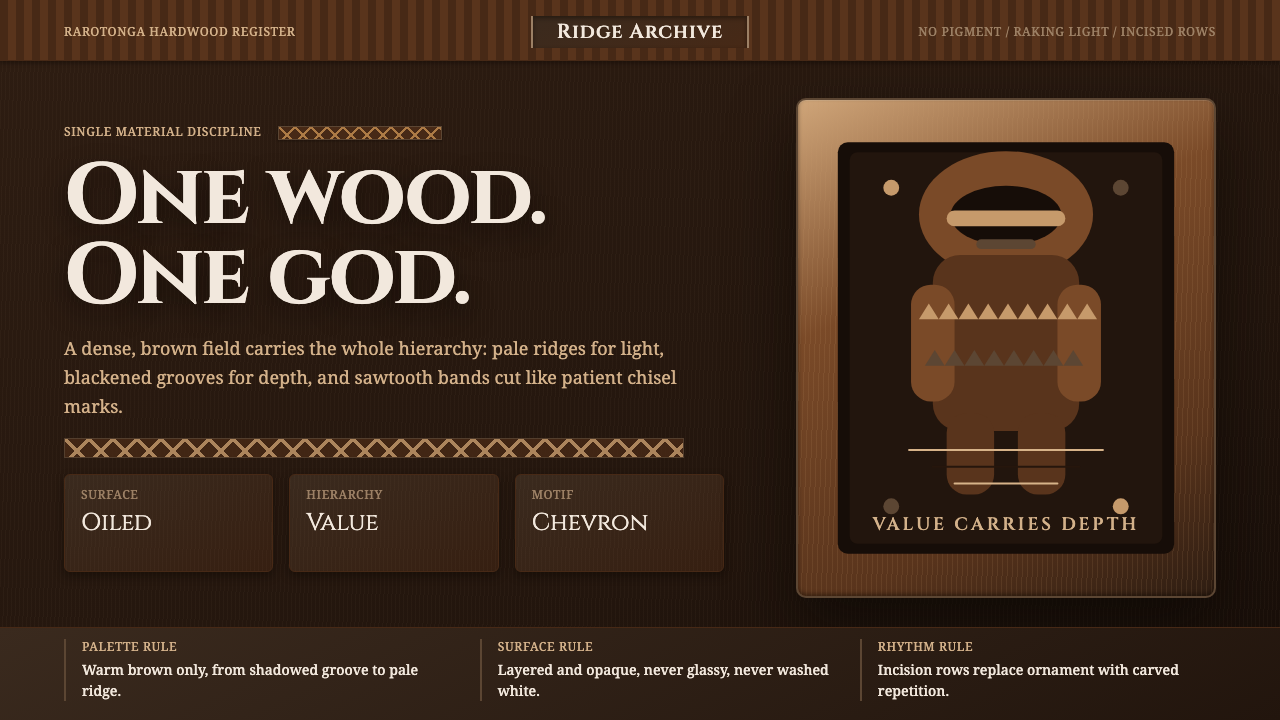
Cook Islands Tangaroa Carving turns a single warm wood tone into a language of gravity, where sawtooth cuts and raking light make hierarchy feel carved rather than painted.
Cook Islands Tangaroa Carving in brief
Cook Islands Tangaroa Carving draws from traditional Polynesian ritual carving before 1900 on Rarotonga and Aitutaki. Ta'unga master carvers shaped dense island hardwoods—tamanu, hibiscus, and ironwood—into squatting, broad-headed atua figures. The result is not a painted icon but a compact wooden presence: lineage and ritual power held in mass, incision, and the natural tone of the material.
Its defining discipline is single-material gravity. The whole interface stays within a warm brown hue family, while hierarchy comes from value: deeper browns carry the ground and recesses, clearer wood tones bring forward important planes, and restrained highlights trace the places where light catches an incision. There is no pigment logic and no whitewash logic; the wood remains visually responsible for the system.
The surface is organized by sawtooth rows and herringbone-like cuts running across the body from shoulder toward hip. These marks are structural, not wallpaper. They establish rhythm, separate zones, and give the eye a path through dense information. A dark foundation, broad forms, visible grain, and side-lit relief create an atmosphere that is warm, solemn, tactile, and unmistakably grounded.

Where does Cook Islands Tangaroa Carving come from?
The source places the style in the Cook Islands of the central Pacific, specifically Rarotonga and Aitutaki. Its historical frame is traditional Polynesian ritual carving before 1900, while its visual language is understood as continuous with present-day Cook Islands carving practice. The continuity matters: this is not an invented woodland fantasy, but an interface interpretation of a named island carving tradition.
The makers were ta'unga, specialist carver-priests whose work joined technical mastery to ritual responsibility. Their role explains why the visual language feels deliberate rather than casually rustic. Dense hardwood, controlled incisions, and the refusal of surface paint all support an object whose authority comes from what it is made of and how it is handled.
The central subject is Tangaroa, god of the sea and fishing. The figure uses the atua form: squatting, broad-headed, and powerfully compact, with an oversized head and a strong arched brow. Carved rows run across the body, turning the surface into an active field rather than a blank shell. The form becomes a vessel for lineage and ritual power.
In translation, the historical lesson is material discipline. Keep the dark mood, retain a single warm brown family, let value establish order, and use raking light to imply elevation. The result should feel carved from one substance. Texture, contrast, and spacing may organize an interface, but they must remain subordinate to the sense that every layer belongs to the same piece of wood.
What defines the Cook Islands Tangaroa Carving look?
Warm Brown Value
Color behaves as one continuous wood tone rather than a collection of decorative accents. Darker browns establish the ground and recesses, while lighter values reserve attention for primary information and carved edges. Hierarchy is created by lightness and depth within the brown family, not by introducing unrelated hues.
Material Honesty
The visual system treats every layer as if it belongs to the same dense hardwood. No pigment, whitewash, or competing surface story interrupts the material narrative. Grain, incision, and tonal variation should feel like different conditions of one substance rather than separate skins placed on top of one another.
Atua Form
The defining silhouette is squatting, broad-headed, and compact, with the head carrying unusual visual authority and the brow forming a strong arch. Interface containers can echo this logic through grounded proportions, broad upper forms, and a sense of weight at the base. The aim is presence, not literal illustration.
Raking Light
Raking light is the system's model for elevation. Highlights appear where light skims across raised grain and incised rows, while recesses remain quiet and dark. Depth therefore comes from the relationship between surface, cut, and illumination, allowing important interface elements to rise without changing the material language.
Sawtooth Rhythm
Sawtooth rows and herringbone cuts provide a repeatable structural rhythm. They can mark transitions, guide scanning, or give a dense panel a carved cadence. Their placement should remain purposeful and directional. When the pattern becomes a uniform background, it stops behaving like carving and starts behaving like ornament.
Grounded Type and Space
In the interface translation, typography should feel sturdy, plain, and cut from the same visual substance. Strong differences between headings, supporting text, and metadata should come through scale, placement, and value. Spacious pauses around dense information preserve gravity and keep the surface from becoming visually noisy.

Who shaped Cook Islands Tangaroa Carving?
Ta'unga were the specialist carver-priests named in the source. Their work connects the visual language to technical control, ritual responsibility, and the disciplined treatment of dense island hardwoods. In the design translation, they represent the principle that every mark should carry material and ceremonial weight.
Tangaroa is the god of the sea and fishing, and the subject of the carved atua figure. The figure serves as a vessel for lineage and ritual power, giving the system its sense of solemn presence. Tangaroa is therefore not merely an icon to place on a page, but the reason the visual language feels charged and grounded.
Rarotonga and Aitutaki are the two named island settings for the carving tradition in the source. Their presence keeps the style tied to the Cook Islands and to a central Pacific context, rather than reducing it to a generic earthy aesthetic. They anchor the material story in place as well as form.
How do you use Cook Islands Tangaroa Carving today?
For presentation slides, use the dark brown field as the atmospheric ground for the cover, with a broad, grounded figure or carved form carrying the visual weight. Content slides should separate sections through changes in brown value, carved rows, and deliberate open space rather than decorative dividers. Data slides can let the most important figures occupy the clearest tonal plane, with raking-light highlights marking active values and sawtooth rhythm organizing dense comparisons.
For web interfaces, the style suits dashboards and pricing pages that need authority, warmth, and a tactile sense of hierarchy. Keep the page within the warm brown family, use darker surfaces for navigation and background structure, and reserve lighter planes for active panels, totals, or selected tiers. Borders, texture rows, and side-lit edges should explain grouping and elevation. A pricing page should feel carved into a coherent material, with value doing the work that a broad accent palette would normally perform.
For editorial and marketing work, the system supports stories about craft, place, ritual, material, and durable making. Articles can pair dense text with generous dark breathing room, using sawtooth or herringbone rows to mark transitions and side-lit details to draw attention to quotations or key passages. Marketing pages can present products as objects with weight: quiet brown fields, visible grain, strong silhouettes, and carefully placed highlights make the material story more persuasive than decorative richness.
The common mistake is to treat the style as a generic brown theme. Adding many unrelated browns, scattering sawtooth texture across every surface, or introducing polished materials breaks the single-material discipline. Another mistake is using light only as a glow. Here, light should reveal grain, cuts, and elevation. If a mark does not clarify structure, surface, or reading order, it probably does not belong.

Cook Islands Tangaroa Carving — FAQ
Is this a literal reconstruction of Cook Islands carving?
No. It is an interface translation of the source tradition, not a museum reconstruction or a claim to reproduce a ritual object. The translation preserves the named material logic—dense hardwood, natural tone, incised rows, dark atmosphere, and raking light—while applying it to hierarchy, grouping, and reading order in a contemporary interface.
Why is the palette limited to warm brown?
Because the source describes surfaces left in the wood's own tone, without pigment or whitewash. A restricted brown family carries that single-material discipline into the interface. Variation should come from value, grain, incision, and light, so the system feels like one substance changing under illumination rather than a collection of colored layers.
How should sawtooth rows be used without becoming decoration?
Give the rows a structural job. They can separate zones, guide the eye, signal a transition, or create a rhythm across a dense panel. Their direction and density should respond to the content around them. When the pattern is applied everywhere with no relationship to hierarchy, it loses its carved character and becomes surface noise.
How does the style create depth without adding more colors?
Depth comes from value and raking light. Darker passages can recede, clearer planes can advance, and highlights can catch the edges of grain or incisions. This approach follows the source material's oiled wood catching light along carved rows. Elevation is communicated through the relationship between surface and illumination, not through a separate decorative palette.
Related design styles
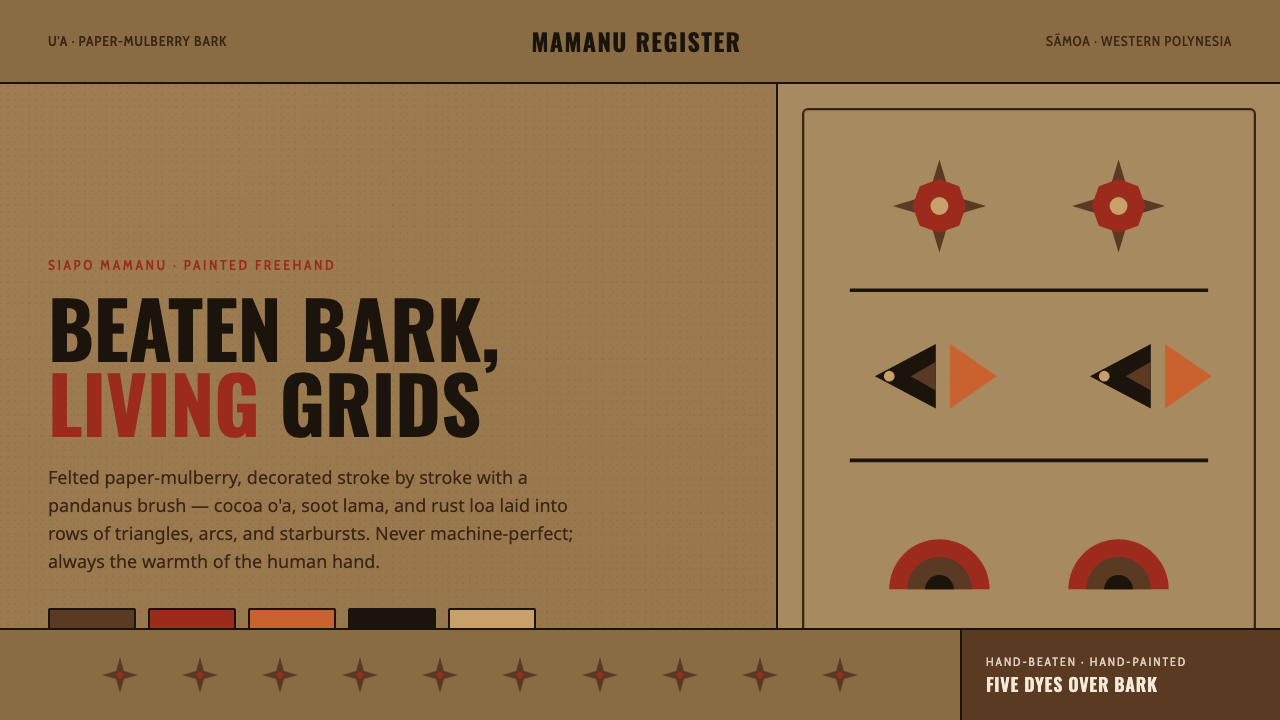 Samoan Siapo MamanuBeaten bark, never white. Five natural dyes paint freehand grids of fish, she…
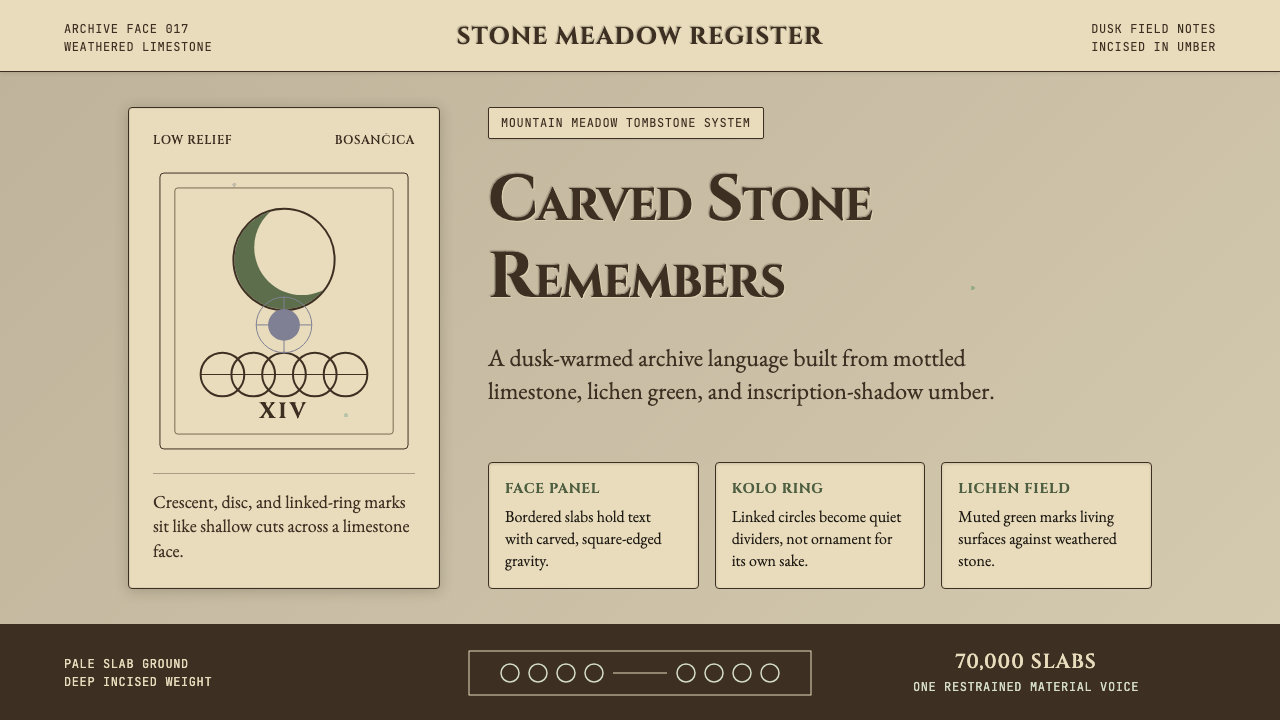 Bosnian Stećak Medieval TombstoneStone remembers quietly. Lichen green and Cinzel cuts sit on weathered limest…
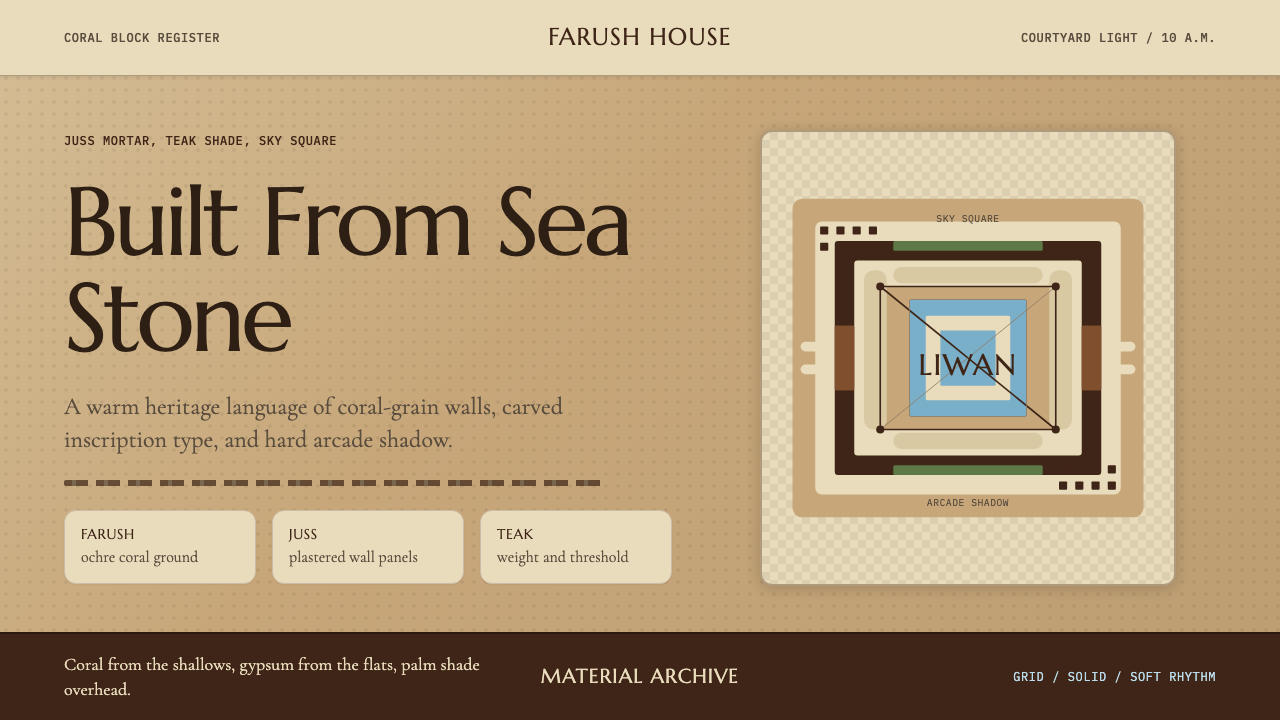 Emirati Bait Al Naboodah Coral HouseFeels built, not styled. Coral ochre, teak brown, and a sky-square courtyard…
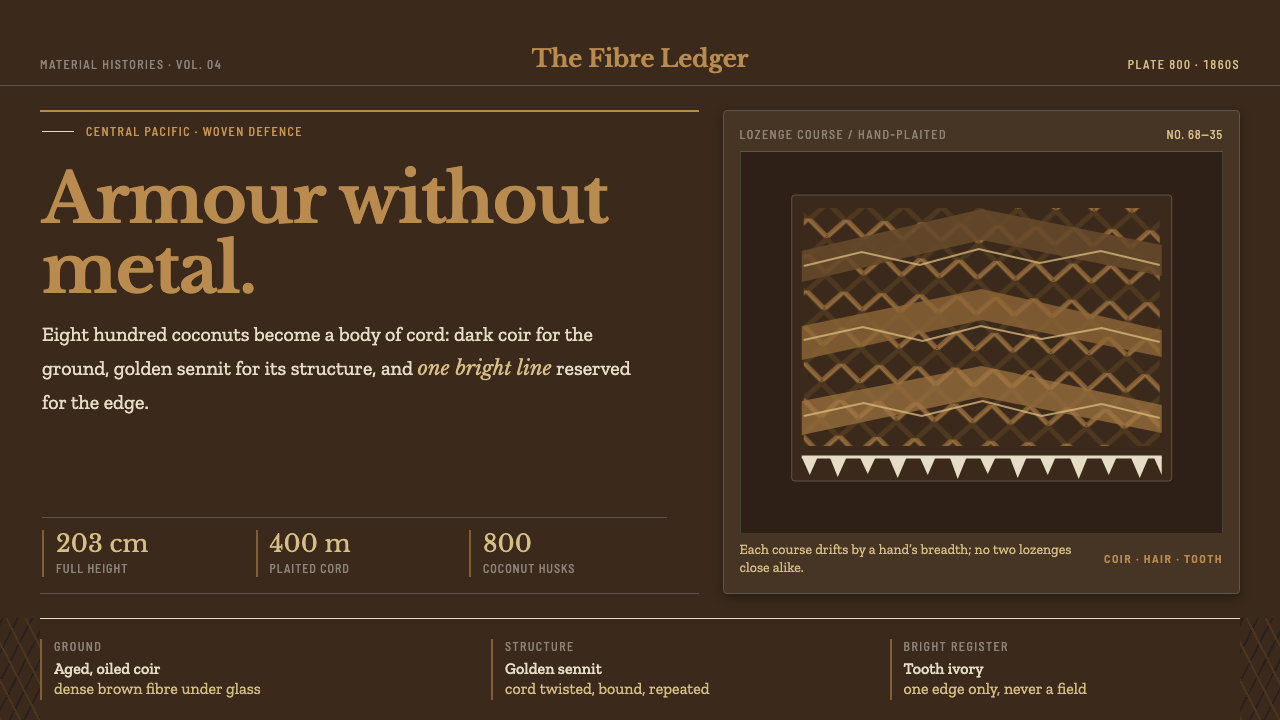 Kiribati Coconut ArmorArmour without metal. Dark coir, golden sennit and one disciplined tooth-ivor…
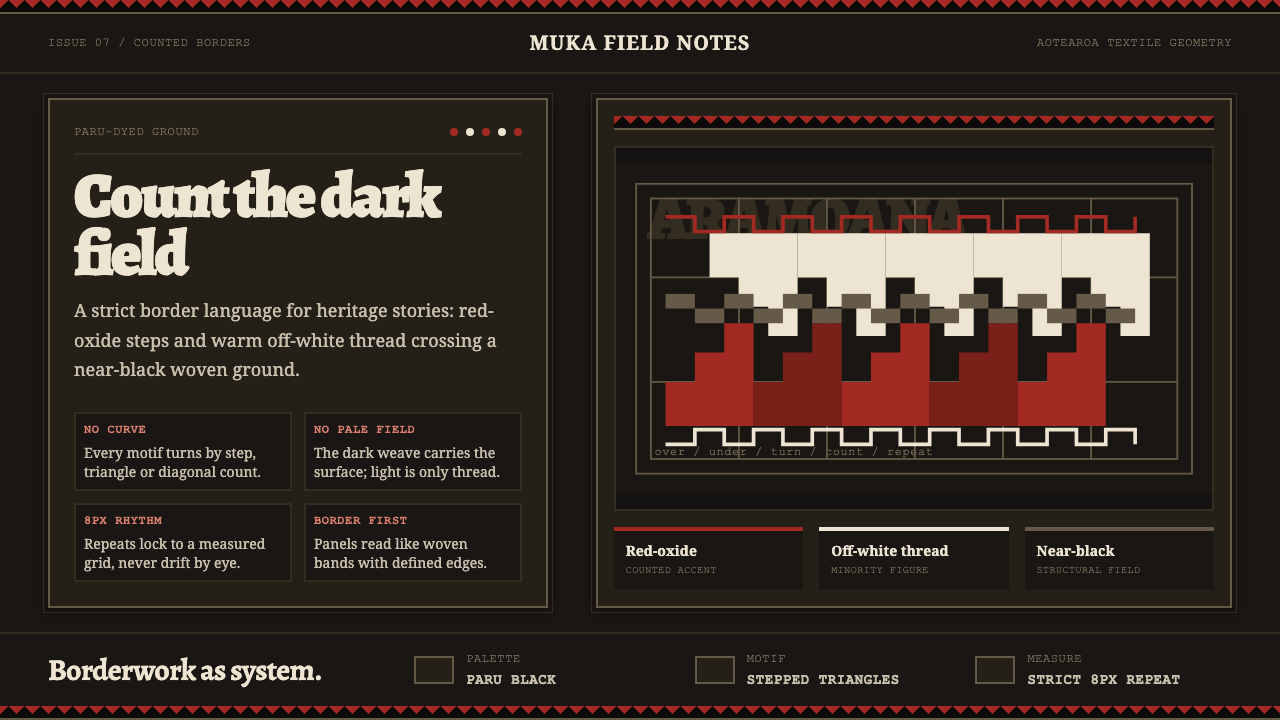 Māori Tāniko Border WeaveCounted darkness. Red-oxide steps and off-white thread cross a paru-black gri…
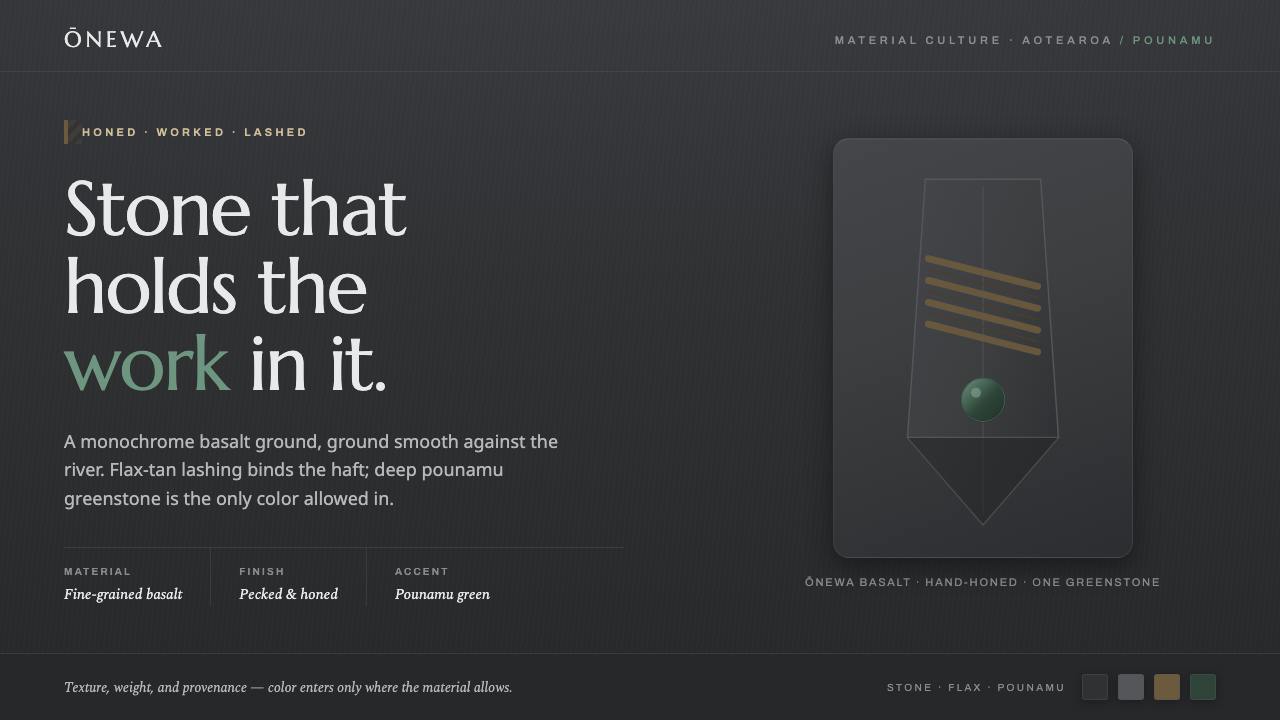 Māori Volcanic StoneColor enters only where the stone allows. Honed charcoal basalt, flax lashing…