What is Champeta Picó Sound?
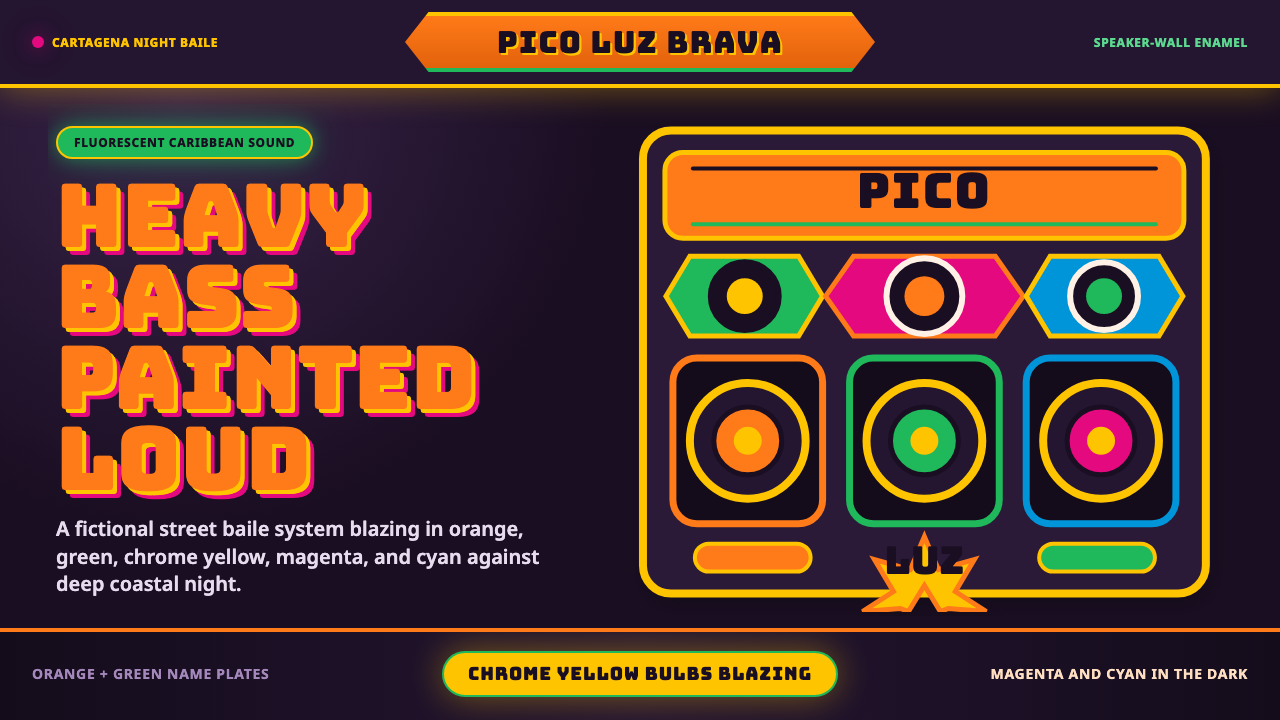
Champeta picó turns Cartagena's night-time street speaker culture into an interface language — tropical orange and picó green banners, thick shout-it-out lettering, and dragons and portraits glowing against a dark, dancing crowd.
Champeta Picó Sound in brief
Champeta Picó Sound is a psychedelic, fluorescent street-culture style drawn from picó culture on Colombia's Caribbean coast, where enormous, hand-painted wooden speaker stacks — the picós themselves — are the centerpiece of open-air night dances called bailes. Each picó is treated as a piece of branded folk art in its own right: painted, named, and decorated as elaborately as a carnival float, then wheeled out after dark to blast music at a crowd gathered in the street.
Visually, the system channels the exuberant, hand-painted signage that covers these speaker stacks — dragons, musicians, and larger-than-life portraits rendered in flat, saturated color, paired with bold, shouted lettering that functions less like a caption and more like a battle cry. The palette pulls from tropical, high-voltage color rather than restraint: warm orange and chrome yellow sit beside a signature acid green, with magenta and cyan cutting through as secondary accents, all of it set against a deep, near-black night ground so the colors read as if lit from within.
The overall effect is loud in the most literal sense the visual can achieve — everything is built to be legible and arresting from a distance, in the dark, over the noise of a crowd, the same way the picó's physical artwork has to compete with flashing colored lights and a wall of speakers for a passerby's attention. Nothing in this system whispers; every element is built to shout.
Where does Champeta Picó Sound come from?
Picó culture traces its roots to the mid-twentieth century, when sailors and merchant crews working the Caribbean shipping routes began bringing vinyl records from West and Central Africa — Congolese soukous, highlife, and other regional styles — into port cities along Colombia's Caribbean coast, including Cartagena, Barranquilla, and Santa Marta. Local Afro-Colombian communities, largely excluded from the country's mainstream cultural institutions, embraced this imported African music as their own, building a distinct sound-system culture around it that had no equivalent elsewhere in the country.
The picó itself — a massive, custom-built speaker stack, often assembled and modified by hand rather than bought as consumer equipment — became the physical and social center of this culture starting around the 1970s. Owning and operating a picó was a significant undertaking: it required building or commissioning speakers powerful enough to dominate an open street, and it demanded a visual identity striking enough to be recognized instantly, since rival picós competed directly for crowds at the same neighborhood bailes.
That competition is what produced the boom, roughly from the 1990s into the 2010s, of large-scale hand-painted picó artwork — dragons, mythic creatures, portraits of admired figures, and bold lettering spelling out each picó's name, all applied directly to the wooden speaker cabinets by local sign painters working in a loud, maximalist folk-art tradition. Well-known picós from this era, including named systems such as El Son Africano, El Solista, and The Monster of Sound, built reputations as much through their visual branding as through their sound selection, turning speaker-stack painting into a recognized craft with its own local stars.
William Gutiérrez is remembered within this tradition as an important figure connected to the picó scene's development, though — as with much of picó history, which was documented far more thoroughly by the community itself than by outside institutions — specific biographical details are closer to community lore than settled historical record, and should be treated as such rather than as precisely verified fact. What is well documented is the broader pattern: champeta and champeta urbana grew directly out of this picó sound-system culture, turning what began as an imported musical taste into a distinct Afro-Caribbean genre and visual identity that Cartagena and the surrounding coast now claims as genuinely its own.
What defines the Champeta Picó Sound look?
Color
The palette is tropical and high-voltage rather than restrained: warm orange and chrome yellow anchor most compositions, joined by a signature acid green, with magenta and cyan appearing as secondary cuts. All of it sits against a deep, near-black night ground, which is what allows the colors to read as glowing rather than simply bright.
Typography
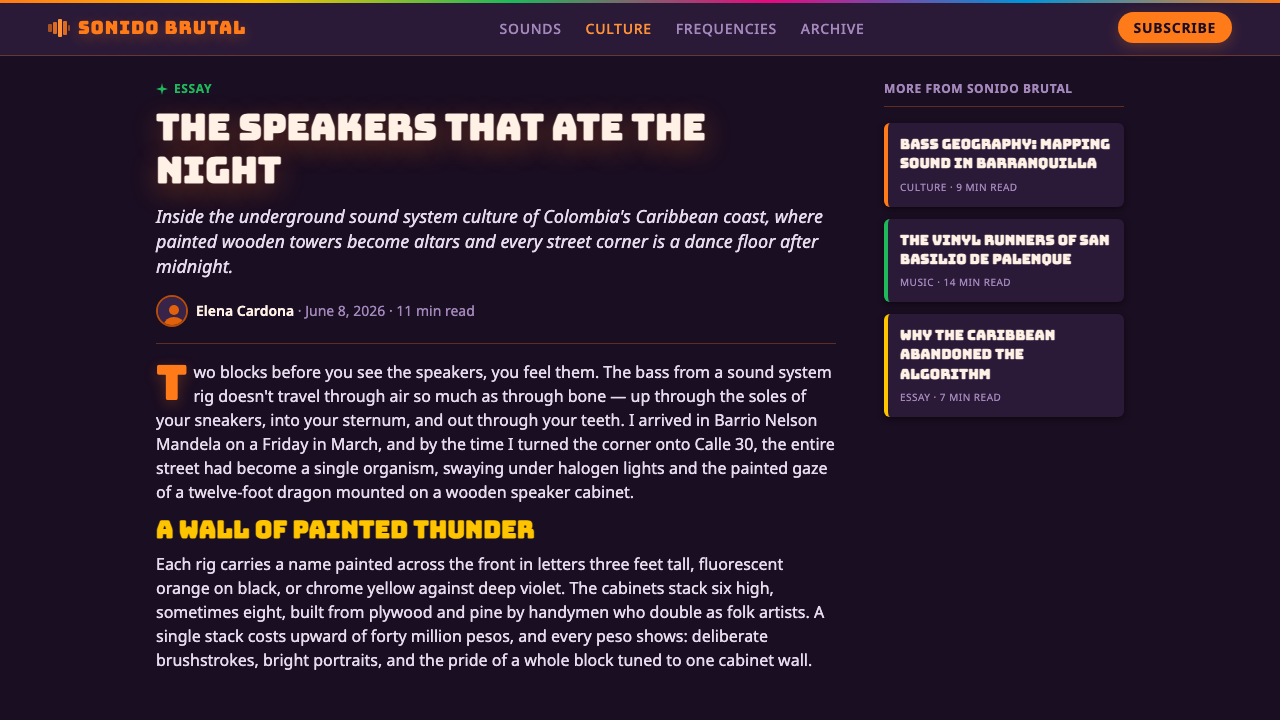
Lettering is thick, rounded, and painted-looking, built to be shouted rather than read quietly — closer to hand-lettered festival signage than to any refined type system. Letters are often outlined or given a secondary color fill so they hold up against a busy, image-dense background, functioning as much like a battle cry as a caption.
Iconography
Dragons, mythic creatures, and larger-than-life portraits of admired figures dominate the imagery, rendered in flat, saturated color rather than realistic shading. Each picó's artwork functions as a personal emblem — a visual signature specific to that one speaker stack — rather than generic decoration shared across a scene.
Composition
Layouts are dense and maximalist, packing figures, lettering, and pattern into every available surface rather than leaving generous negative space. Elements overlap and compete for attention in a way that mirrors the physical crowding of a night-time street baile, where multiple picós and their audiences occupy the same space at once.
Light & Glow
Bright colors are set against dark grounds so they behave like colored stage or string lighting rather than flat printed hues — the effect this style is chasing is the way a picó's painted cabinet looks under night-time colored floodlights, not how it would look in daylight. Glow and contrast, not shading, do the work of suggesting depth.
Cultural Voice
Every visual choice is built to compete and be recognized instantly, echoing the origins of picó culture as a competitive, branded practice where rival sound systems fought for the same crowd's attention. Nothing is designed to be subtle; the visual identity is meant to be loud, specific, and unmistakably its own.

Who shaped Champeta Picó Sound?
Remembered within picó tradition as a figure connected to the scene's development on Colombia's Caribbean coast. As with much picó history, precise biographical detail is preserved more through community memory than formal record, and should be read as tradition rather than settled fact.
A named picó whose reputation, like others of its era, was built as much on its hand-painted visual branding — a recognizable cabinet artwork and lettering — as on its music selection, illustrating how deeply intertwined sound and image are within this culture.
Another named picó from the tradition's competitive heyday, part of the broader field of rival sound systems whose visual identities — dragons, portraits, bold lettering — turned speaker-stack painting into a recognized local craft with its own reputations and rivalries.
A named picó whose title alone signals the style's core logic: bigger, louder, and more visually arresting than the competition. Names like this functioned as both a boast and a brand, reinforced by artwork built to be recognized instantly across a crowded street.
How do you use Champeta Picó Sound today?
Champeta Picó Sound works best wherever a product wants to feel loud, celebratory, and unmistakably alive rather than restrained or corporate — applying it well means embracing density and saturated color rather than softening the palette or thinning out the imagery for the sake of conventional polish.
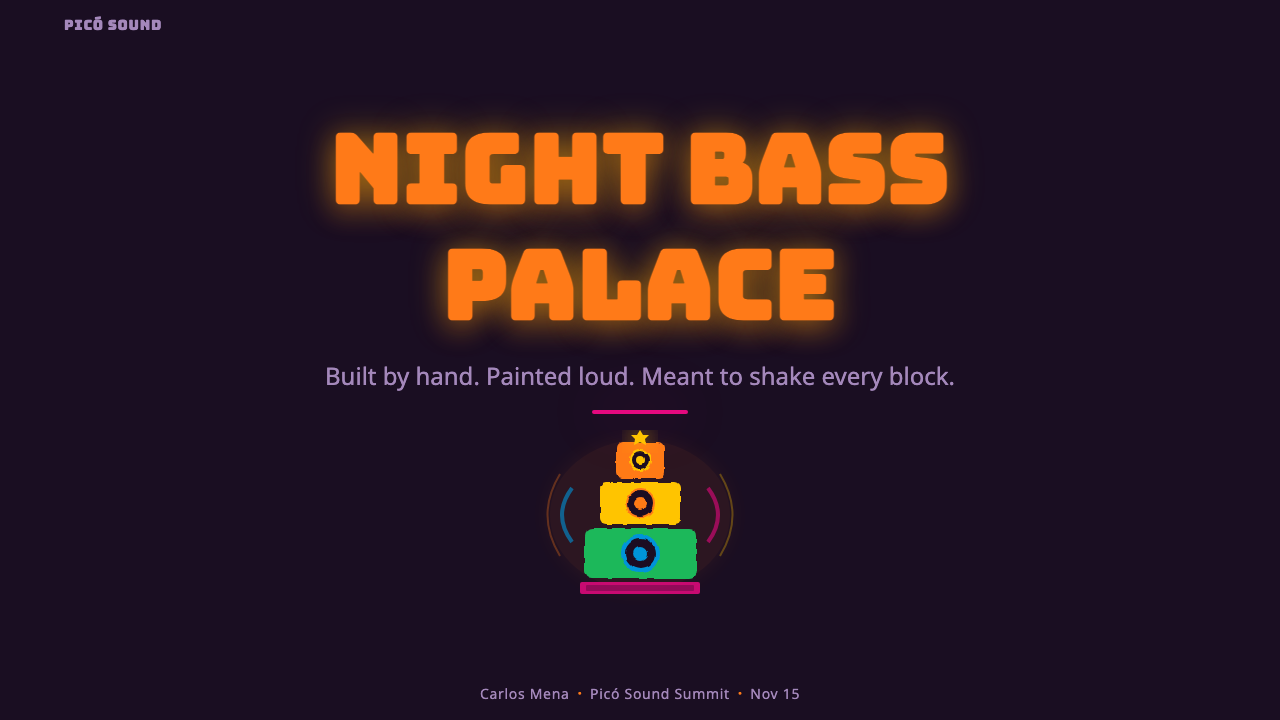
On presentation slides, a cover works well as a dense, poster-like composition — a large figure or emblem rendered in flat saturated color against a near-black ground, with the title set in thick, painted-looking lettering that competes for attention rather than sitting quietly in a corner. Content slides can stay dense by design, using color blocks in the tropical palette to separate sections instead of thin rules, while data slides benefit from treating each data point like a competing picó — bold, individually colored, and confidently labeled rather than muted into a uniform chart style.
For web interfaces, this style suits entertainment, music, nightlife, and festival-adjacent products where energy is the primary brand value; it is a poor fit for anything that needs to feel calm or minimal. Buttons and interactive elements can borrow the thick, outlined lettering treatment directly, and a near-black interface ground lets the tropical accent colors read as glowing rather than flat. On a pricing page, tiers can be differentiated the way rival picós differentiate themselves — each given its own color identity from the palette rather than a single accent scaled by opacity.
In editorial and marketing contexts, the style is a natural fit for music culture writing, festival promotion, and any brand telling a story about Caribbean or Afro-diasporic sound-system culture specifically — using it decoratively without that connection risks reading as costume rather than reference. Marketing key visuals benefit from the same maximalist density as the source material: layered figures, bold lettering, and saturated color filling the frame rather than a single hero image on a clean background.
A common mistake is applying the palette while flattening the density — spacing elements out generously in a clean, minimal grid contradicts the entire spirit of picó artwork, which is built to be packed, competitive, and loud. It is equally a mistake to treat the dragons, portraits, and lettering as generic decorative motifs detached from the culture that produced them; this style carries a specific cultural lineage, and using it without acknowledging that origin flattens a living tradition into surface pattern.
Champeta Picó Sound — FAQ
What exactly is a 'picó,' and why does it matter to this style?
A picó is a massive, custom-built speaker stack — often assembled and modified by hand — that serves as the centerpiece of open-air night dances on Colombia's Caribbean coast. Because rival picós compete directly for crowds, each one develops its own elaborate hand-painted visual identity, which is the direct source of this style's dense imagery and bold, competitive lettering.
Is this the same as generic 'tropical' or 'carnival' design?
No. Generic tropical design tends toward pastels, leaves, and beach imagery aimed at relaxation. This style is specifically rooted in Afro-Caribbean sound-system culture — dragons, portraits, and shout-it-out lettering painted directly onto competing speaker cabinets — and its energy is closer to a battle cry than a vacation postcard.
Can the density of this style be reduced for a cleaner, more minimal layout?
Reducing the density works against the style's core logic, since maximalist packing of figures and lettering is precisely what picó artwork evolved to do in a competitive, crowded street environment. A calmer, more spaced-out version can still borrow the color palette, but it stops being recognizably picó and becomes a generic tropical treatment instead.
What products or industries would this style be a poor match for?
It struggles anywhere calm, minimal, or highly formal presentation is the goal — enterprise software, financial services, healthcare, or any context where dense, saturated, competing color would read as noisy or unprofessional rather than energetic. It is also a poor fit for brands with no genuine connection to Caribbean or sound-system culture, where the imagery risks reading as borrowed rather than earned.
How should the dragon and portrait imagery be handled respectfully when adapting this style?
These images function as personal emblems specific to individual picós, not as generic decorative clip art — each one was a hand-painted signature tied to a real sound system and its reputation. Adapting the style responsibly means treating the imagery as a reference to a specific, living cultural tradition rather than stripping it down to an abstract pattern with no acknowledgment of where it comes from.
Related design styles
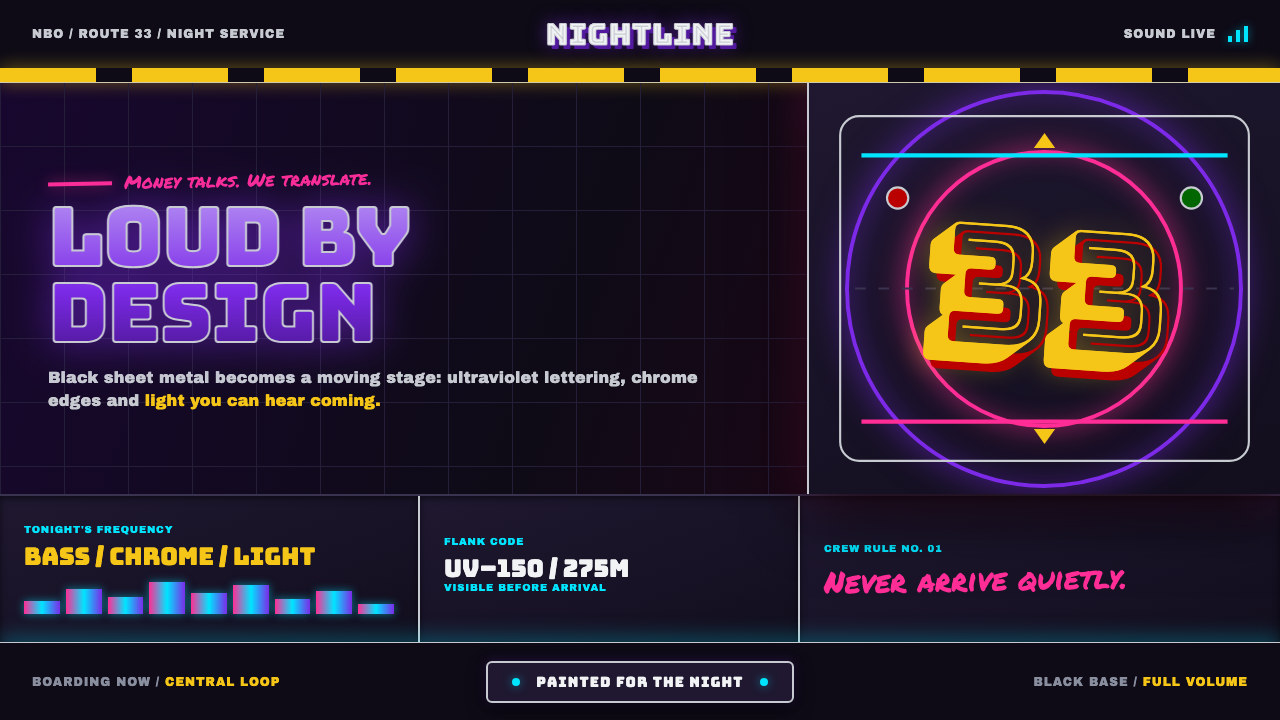 Nairobi Matatu ArtBuilt to be unmissable. Neon airbrush and chrome blaze across night-black hor…
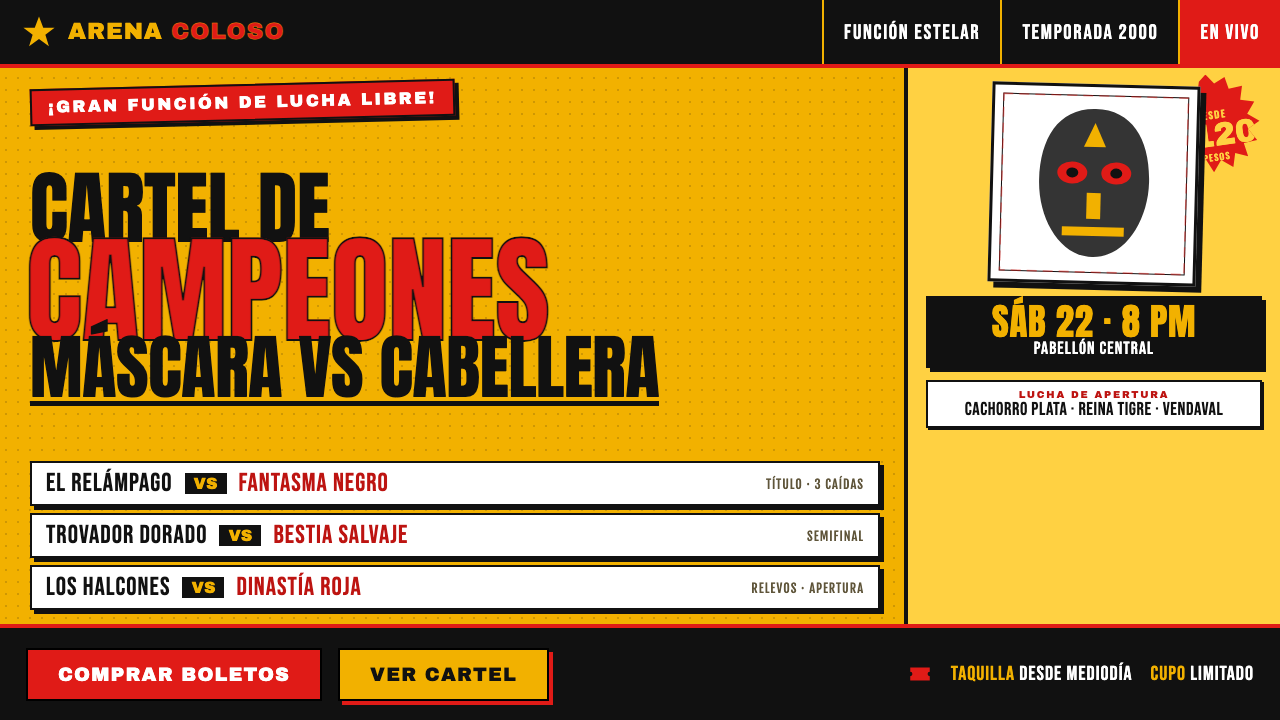 Lucha Libre Fight CartelTwo inks, maximum volume. Blood red on chrome-yellow, fat condensed type, sta…
 Mexican Lucha Mask GraphicComic-book lucha, lit from above. Silver-blue mask out of arena-night dark, h…
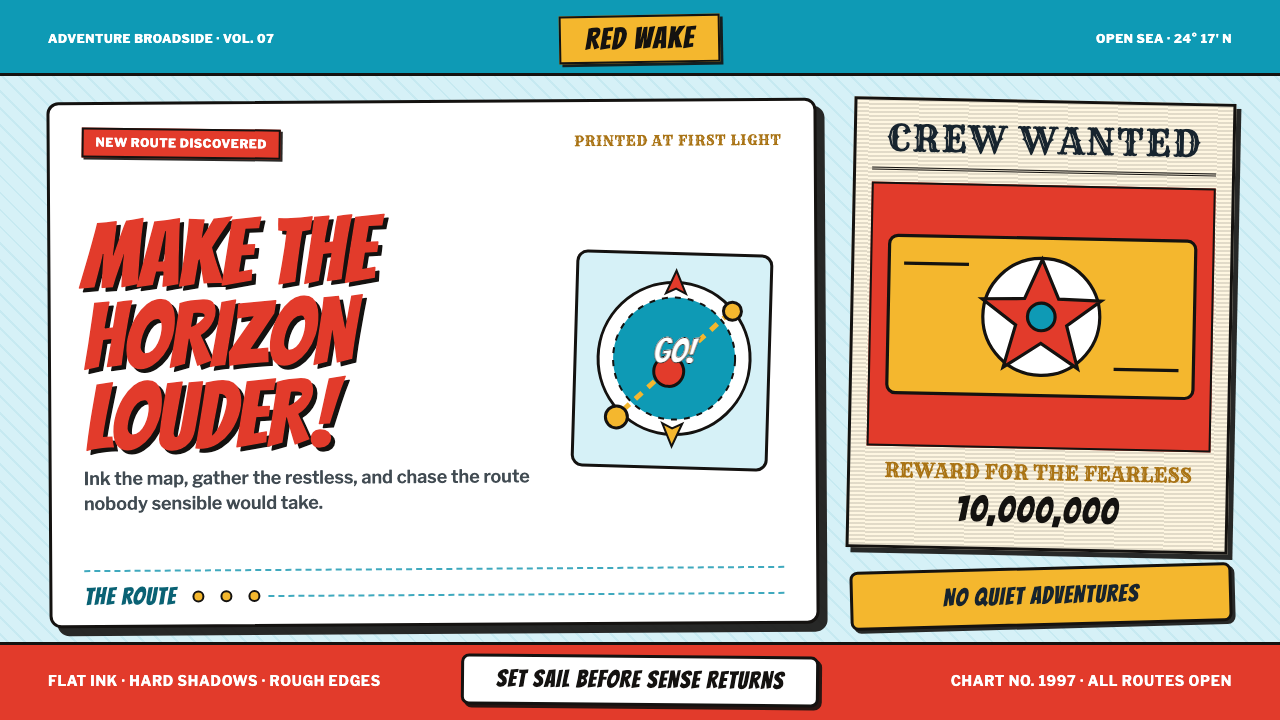 One Piece (Grand Line Adventure)Adventure shouts first. Vermilion splash type and cyan charts collide in hard…
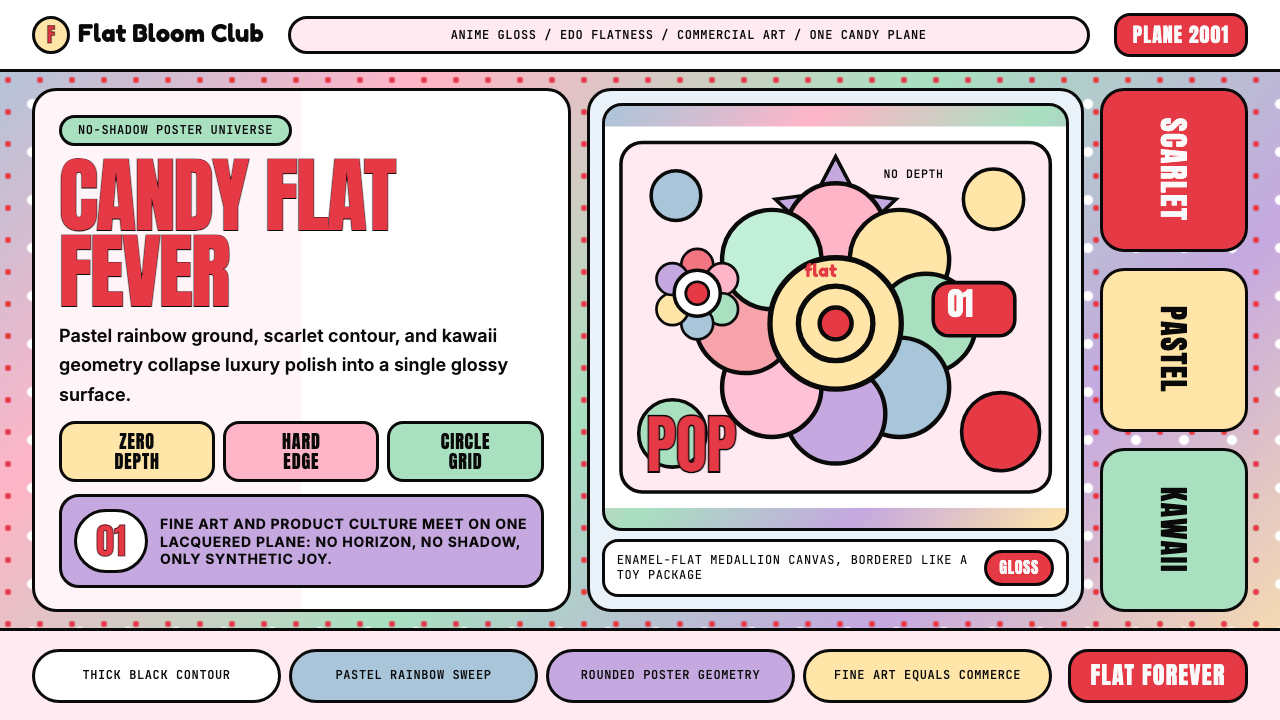 Takashi Murakami SuperflatJoy has no depth. Pastel rainbow, scarlet accents, and black contours flatten…
 Thai Night Market Street FoodLit against the night. Chili-orange and fluorescent glow punch off a black so…