What is Chinese New Year Spring Festival?
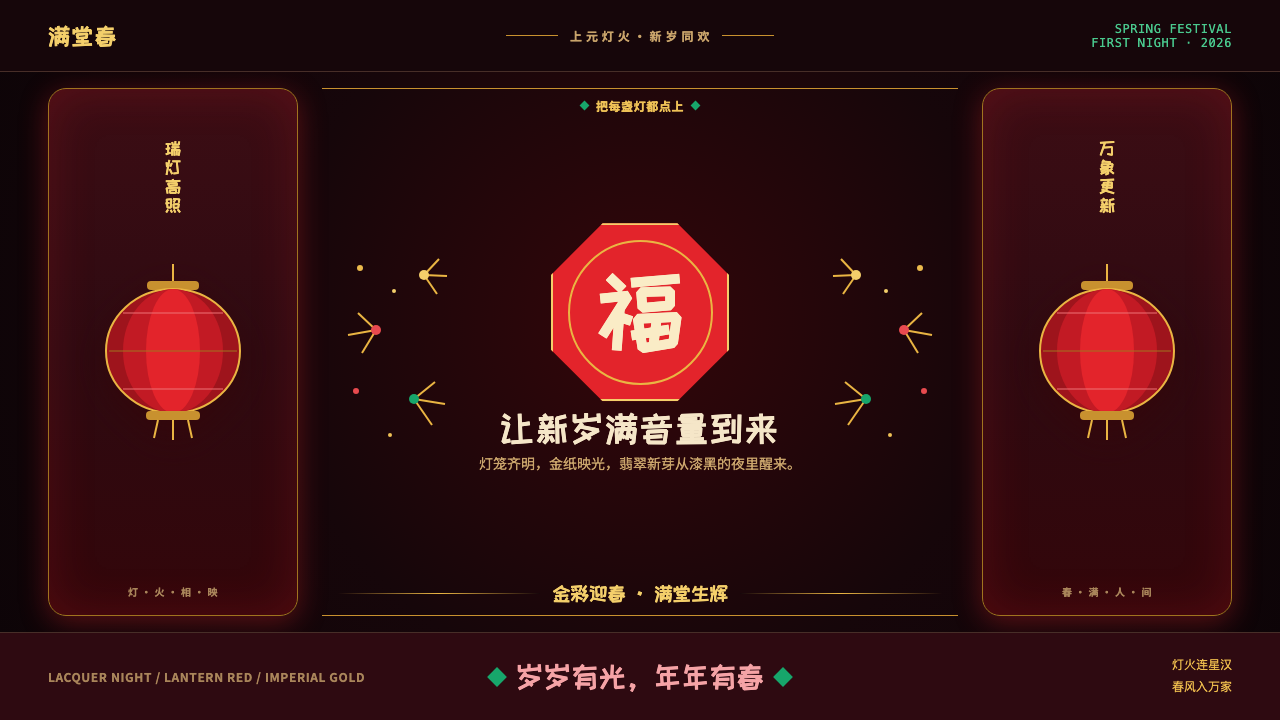
Chinese New Year Spring Festival arrives at full volume — lacquer-black night, lantern red, imperial gold, and the restless sparkle of a courtyard that refuses to stay quiet.
Chinese New Year Spring Festival in brief
Chinese New Year Spring Festival is a visual language of abundance, brightness, and auspicious display. Its strongest expression is not the restrained doorway couplet or the quiet brush mark on red paper, but the festival night when lanterns fill the courtyard, firecracker smoke hangs in the air, and gold paper-cut zodiac animals occupy every window. The style is deliberately dark so that its lights can perform: red lanterns glow against lacquer-black ground, gold catches imaginary firelight, and scattered sparks remain visibly separate from the darkness around them.
The palette is immediately legible across the Han Chinese cultural sphere: lantern red for celebration and visible warmth, imperial gold for prosperity and ceremonial radiance, and a carefully limited jade green for the auspicious promise of new spring. These colors are not treated as neutral decoration. Red carries the emotional force of the festival, gold gives it ritual richness, and jade prevents the composition from becoming only heat and spectacle.
Everything is maximal, radial, and slightly rowdy. Round lanterns, scalloped 窗花 edges, inverted 福 medallions, zodiac animals, sprays of sparks, and dense hanging ornaments build a sense of joyful accumulation. Symmetry provides the underlying order, while irregular clusters and lively overlaps keep the result from feeling static. The visual message is simple: light every lantern, hang the whole zodiac, and let the new year announce itself without apology.
Where does Chinese New Year Spring Festival come from?
The visual language of Chinese New Year Spring Festival grows from Han-antiquity folk custom and remains active across the Han Chinese cultural sphere: mainland China, Taiwan, Hong Kong, Singapore, Malaysia, and overseas Chinese communities. It is not a single regional style with one fixed appearance. It is a shared festive vocabulary that changes through local craft traditions, household practices, printed imagery, and contemporary celebration while retaining a recognizable emotional center: renewal made visible through red, light, gold, and auspicious symbols.
Its modern festival image crystallized through the Ming–Qing period, from the fourteenth through the nineteenth centuries, when popular print culture, seasonal decoration, paper-cutting, and lantern arts gave the New Year a rich and repeatable visual system. 年画 New Year woodblock prints carried auspicious scenes and symbolic figures into homes. 剪纸 jianzhi transformed paper into window ornaments and silhouettes. 灯彩 lantern arts turned illumination into architecture, procession, and spectacle. Together these practices made celebration something that could be displayed, repeated, exchanged, and recognized across generations.
Chinese folk art is therefore central to the style, not an optional reference layer. Its visual force comes from the relationship between hand-made irregularity and ceremonial order: a cut edge may scallop or vary, yet the placement of a window ornament can remain balanced; a printed figure may be dense with symbolic detail, yet the surrounding red or black ground keeps its silhouette legible. The result is decorative without being passive. Every ornament participates in a social language of welcome, prosperity, protection, reunion, or seasonal renewal.
The source tradition is carried by both individual makers and named workshops. Ku Shulan is associated with the expressive power of paper-cutting; Feng Jicai has helped preserve and articulate the cultural importance of folk art; the Yangliuqing and Taohuawu workshops represent the enduring role of New Year print traditions. Their presence in the history of the style makes clear that Spring Festival imagery is not merely a palette or mood. It is a living cultural system built from craft, print, household ritual, and collective memory.
What defines the Chinese New Year Spring Festival look?
Lacquer Night
The ground is deep, dark, and intentional. It behaves like lacquered night rather than neutral black: a field that absorbs surrounding detail so every lantern, spark, and gold ornament can appear luminous. Darkness is not used to make the style solemn. It is the stage that allows celebration to become visible at full intensity.
Lantern Red
Red is the emotional engine of the composition. It appears in round lantern bodies, paper decorations, auspicious emblems, and festive surfaces that need to feel warm, immediate, and unmistakably celebratory. Against the dark ground, red should read as a glow with weight, not as a thin accent scattered without purpose.
Imperial Gold
Gold supplies ceremony and prosperity. It is most effective when concentrated in borders, sparks, paper-cut details, medallions, and highlights that suggest reflected firelight. Rather than covering everything, it should create a hierarchy of glints: some elements feel gilded, others merely catch the celebration passing through them.
Radial Symmetry
Composition often organizes itself around a center: a lantern, 福 medallion, zodiac animal, or burst of sparks. Radial balance makes the image feel ceremonial and auspicious, while repeated circular and scalloped forms reinforce the sense of gathering around a shared event. Symmetry is a framework for abundance, not a demand for sterile perfection.
Scalloped Craft
Scalloped 窗花 edges bring the tactile memory of cut paper into the visual system. They soften geometric repetition without becoming smooth or ornamental in a generic way. The edge should feel cut, folded, and handled: rhythmic, slightly lively, and unmistakably connected to folk craft.
Zodiac Abundance
The zodiac is treated as a complete festive vocabulary rather than a single mascot. Animals can appear in gold paper-cut form, on printed panels, inside medallions, or among lantern clusters. Repetition is welcome because the feeling is collective and seasonal: the whole cycle belongs in the celebration.
Spark and Smoke
Firecracker smoke and golden sparks provide movement against the stable darkness. Sparks should radiate, scatter, and vary in density, while smoke creates a brief veil rather than a permanent haze. Together they keep the style from becoming a static ornament board: the night feels active, noisy, and still unfolding.

Who shaped Chinese New Year Spring Festival?
Ku Shulan represents the expressive, hand-cut energy of Chinese paper-cutting within the Spring Festival visual tradition. Her inclusion points toward the lively edge, dense symbolism, and human irregularity that distinguish folk craft from mechanically repeated decoration.
Feng Jicai is associated with preserving and articulating the cultural importance of Chinese folk art. His presence in this lineage reminds designers that festive imagery is not only a visual resource but also a form of collective memory that deserves context and care.
The Yangliuqing workshop represents the enduring role of New Year woodblock prints. Its place in the tradition connects Spring Festival style to printed household imagery, auspicious narrative scenes, and the circulation of recognizable festive motifs.
The Taohuawu workshop is another important reference for the New Year print tradition. It stands for the way folk imagery can be richly detailed, symbolically charged, and designed for repeated recognition across homes and generations.
How do you use Chinese New Year Spring Festival today?
Chinese New Year Spring Festival is highly transferable when the design needs warmth, ceremony, abundance, and a sense of shared occasion. Its dark ground is especially useful for making red and gold feel luminous, but the style should remain culturally specific: lanterns, window flowers, zodiac forms, paper-cut silhouettes, and auspicious medallions should do real communicative work rather than serve as generic decoration.
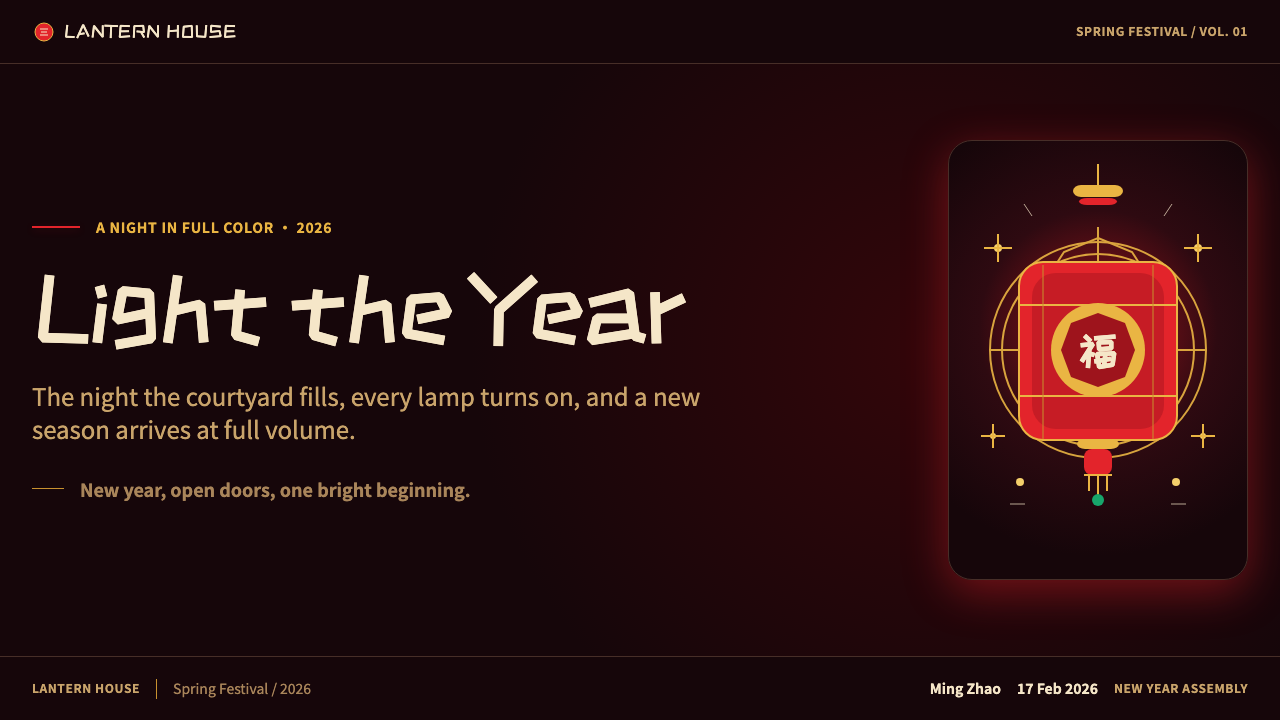
For presentation slides, use the language of a festival procession. A cover can place a large glowing lantern, zodiac silhouette, or 福 medallion at the visual center, surrounded by a controlled radial field of sparks and scalloped paper forms. Content slides should preserve a strong dark field and use red, gold, and jade to distinguish hierarchy or topic groups. Data slides can turn charts into ceremonial objects: radial diagrams, clustered marks, circular progress forms, and gold-highlighted figures can feel native to the style when the underlying information remains immediately legible.
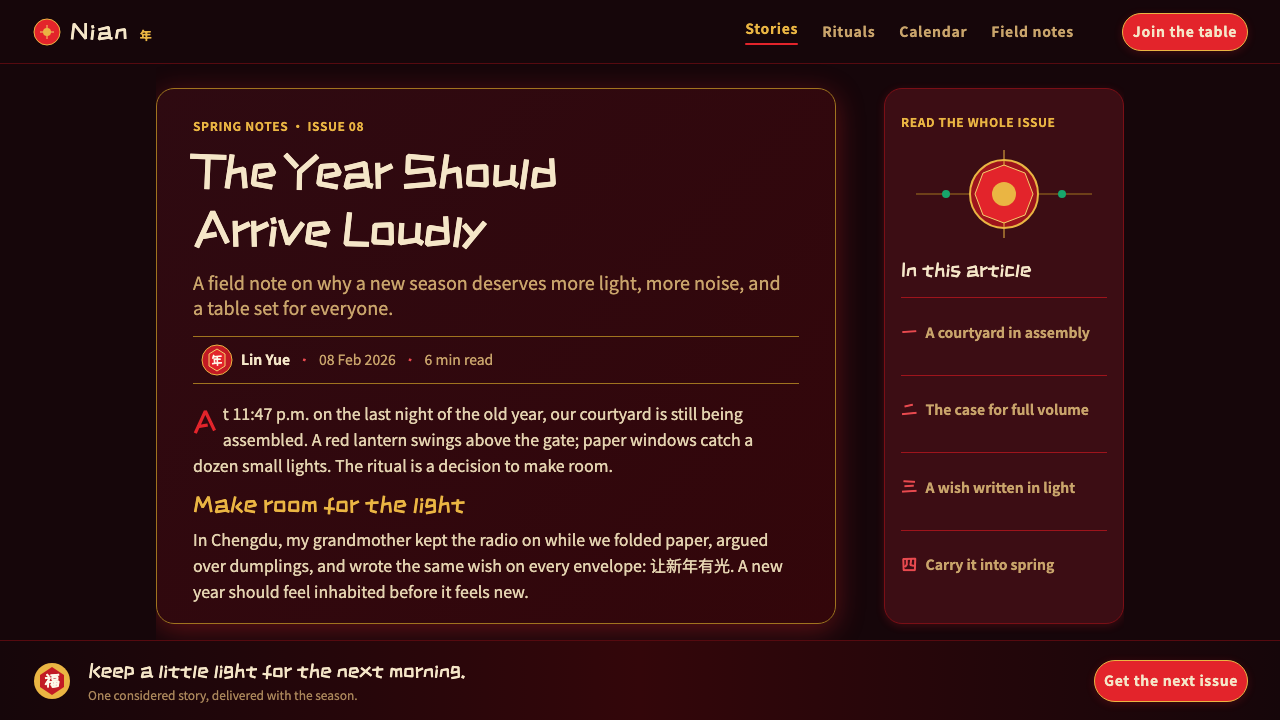
For web interfaces, the style suits dashboards and pricing pages that want to feel celebratory, seasonal, or community-oriented rather than purely technical. Keep navigation and primary text calm against the dark ground, then reserve lantern red for active states and calls to action, imperial gold for emphasis and value, and jade for positive status or renewal. Cards can use medallion-like framing, scalloped separators, or hard-edged ornamental borders, but interaction must remain clear beneath the festival surface.
For editorial and marketing work, Spring Festival imagery supports strong seasonal storytelling. Articles can alternate dense image-led sections with quieter dark passages, using paper-cut silhouettes, zodiac details, and short gold rules to mark transitions. Campaign pages can build toward a central lantern or reunion scene, while product stories can frame offers as gifts, blessings, or arrivals. The tone works best when it feels generous and public-facing, not luxurious in a distant or exclusive way.
The common mistake is treating the style as a red-and-gold sticker pack. Adding lantern icons, fireworks, and zodiac animals to an otherwise generic layout does not create Spring Festival visual language. The system depends on a dark stage, radial organization, crafted edges, symbolic repetition, and controlled abundance. It also needs restraint inside the maximalism: if every surface glitters equally, nothing feels illuminated; if every symbol appears at once, the celebration loses hierarchy and becomes visual noise.
Chinese New Year Spring Festival — FAQ
Is this the same visual language as quiet red-paper couplets?
They share the broader Spring Festival cultural context, but they express different registers. Doorway couplets emphasize paper, brushwork, restraint, and legibility. This direction focuses on the festival night: glowing lanterns, firecracker smoke, gold sparks, dense zodiac imagery, radial symmetry, and a deliberately dark ground. It is the louder, more theatrical side of the same seasonal world.
Why is the background dark instead of the familiar red?
The dark lacquer-like ground creates contrast for the festival lights. Red lanterns can glow instead of blending into a red field, gold can suggest reflected firelight, and sparks remain distinct. The darkness also gives dense ornament a visual stage. It is not meant to make the celebration gloomy; it makes the celebration more visible and more theatrical.
How should jade green be used beside red and gold?
Jade should remain a supporting auspicious note rather than compete with the two dominant festival colors. It works best in small symbolic areas, renewal cues, selected zodiac details, or positive interface states. If jade becomes as loud as red and gold, the palette loses its sense of hierarchy and the image becomes less like a concentrated Spring Festival night.
Can this style be used outside the Spring Festival season?
It can, but its symbols remain strongly seasonal and culturally specific. The dark ground, radial symmetry, scalloped edges, metallic warmth, and crafted paper language can inform other celebratory work, while lanterns, zodiac animals, 福 medallions, and window flowers should be used when the context genuinely supports them. Removing the cultural symbols leaves a festive formal vocabulary, but not the full Spring Festival identity.
How do I keep maximal decoration from becoming visual noise?
Use abundance in layers. Establish a clear center, let red carry the main emotional emphasis, use gold to create secondary glints, and allow jade to appear selectively. Repeat motifs with variation rather than placing every symbol at equal strength. The style should feel full, but the viewer still needs to know where to look first, what is important, and which details reward a closer reading.
Related design styles
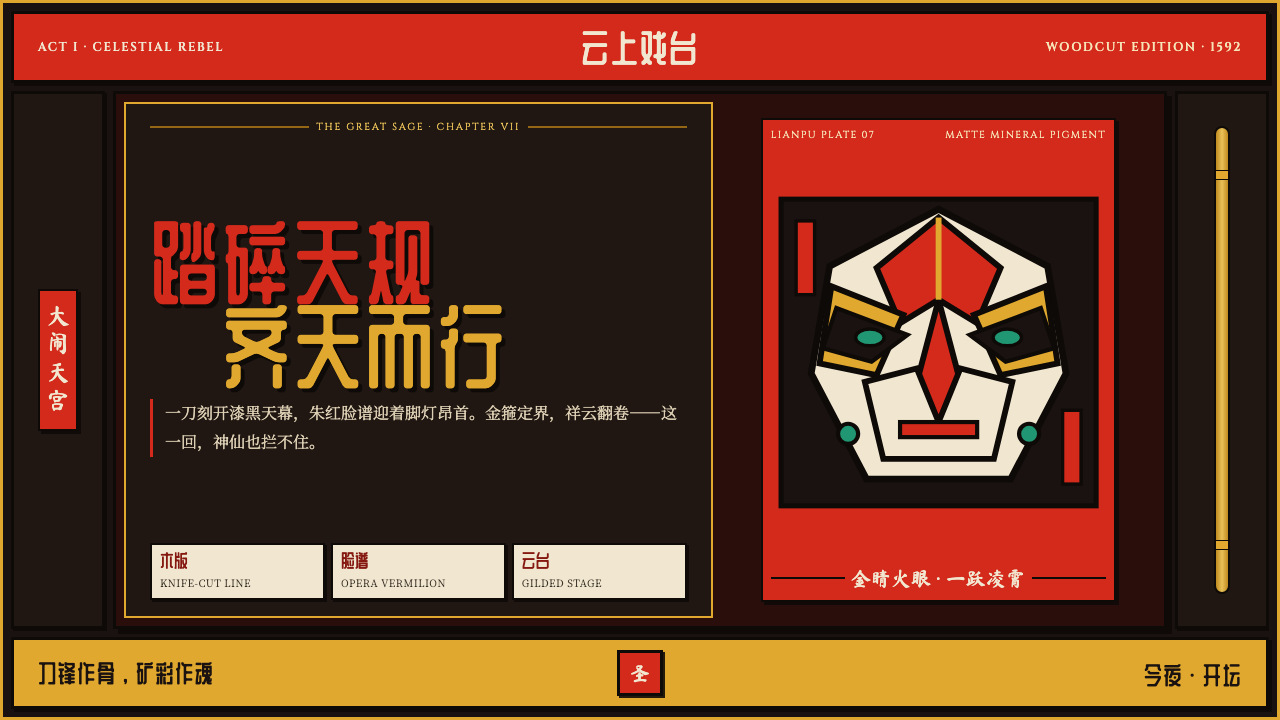 Journey to the West (Monkey King)A god roars off the block. Vermilion opera paint and gilt rules ignite a lacq…
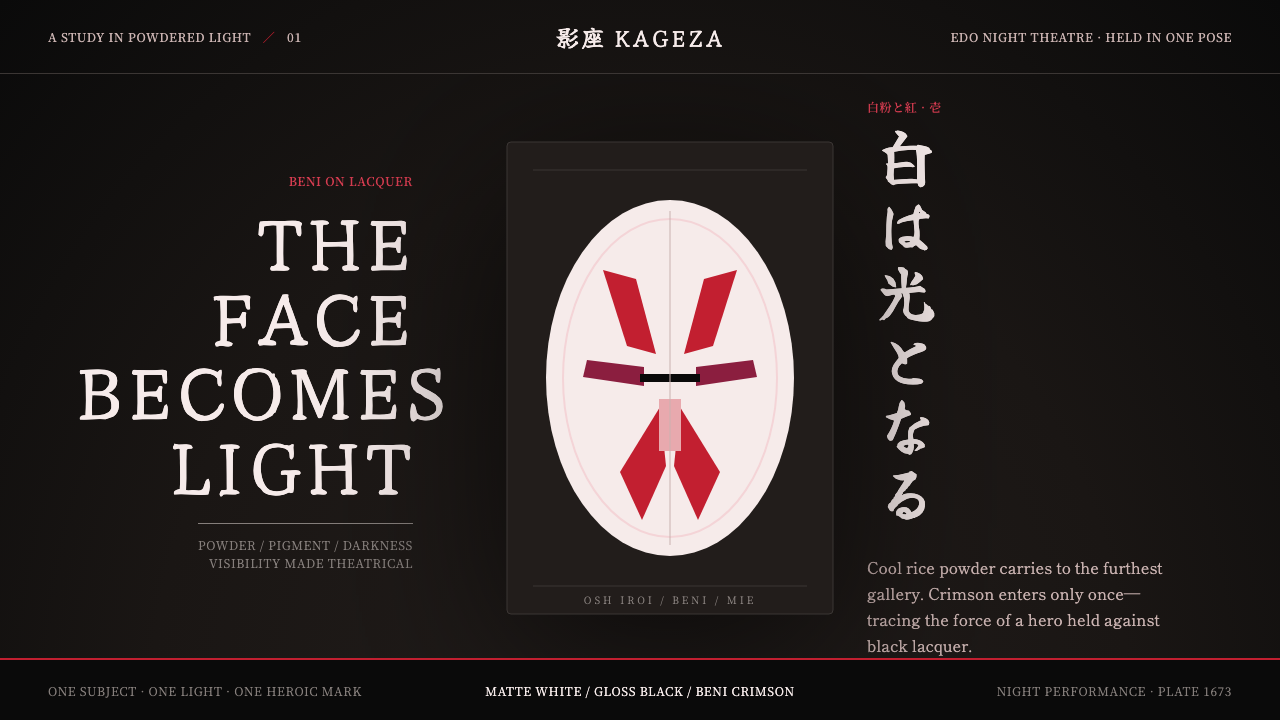 Kabuki Oshiroi WhitefacePowder becomes stage light. Cool white cuts through black lacquer with one he…
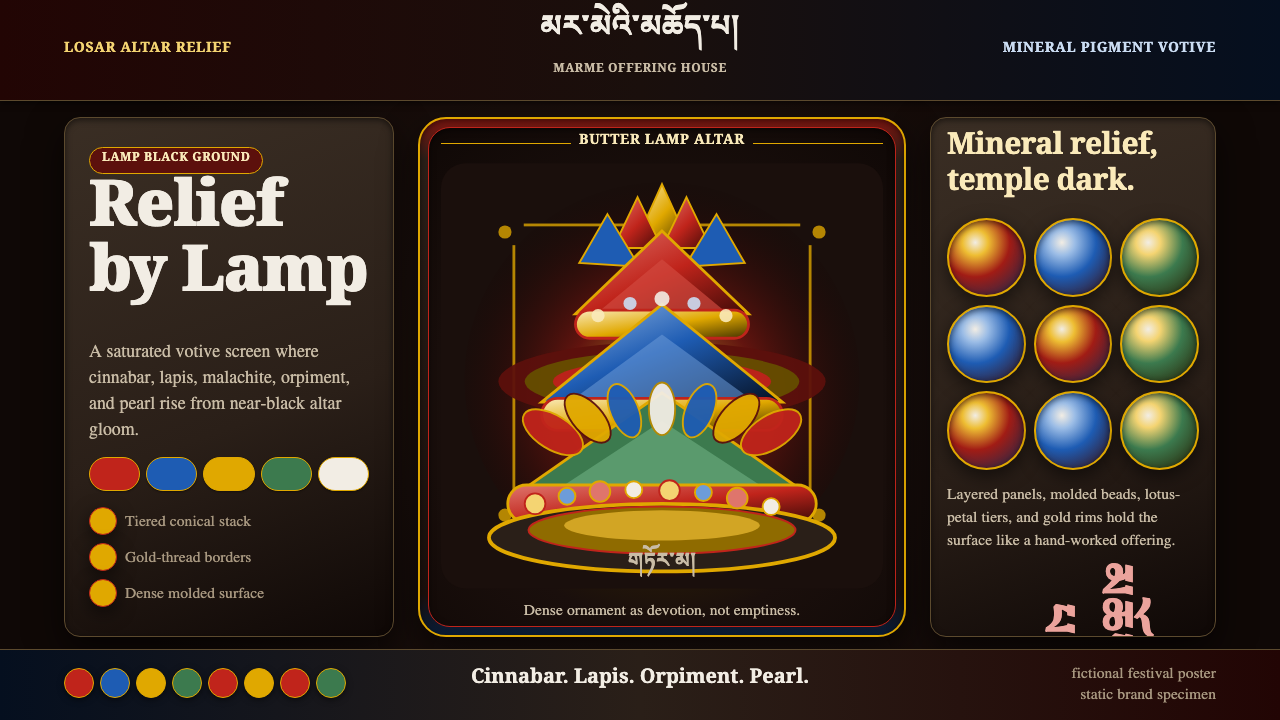 Tibetan Butter SculptureDevotion made dense. Cinnabar, lapis, and gold relief glow from altar black.
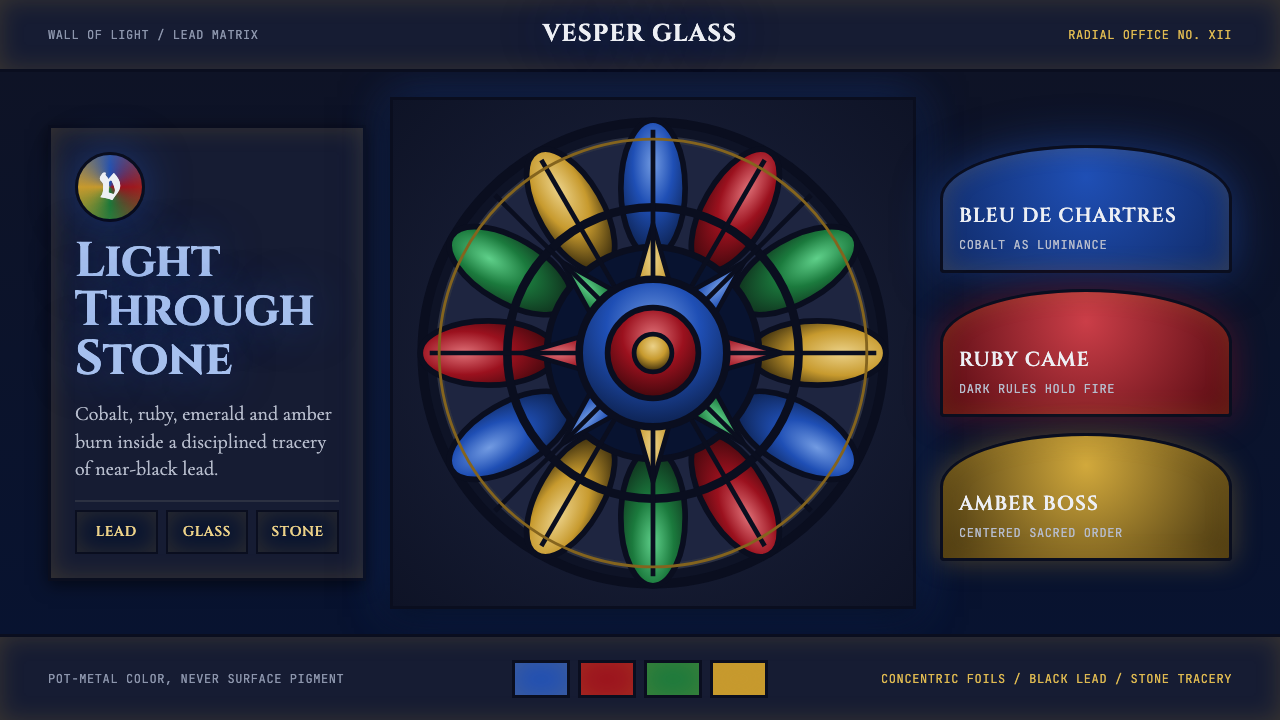 Gothic Rose WindowDarkness becomes light. Cobalt glass, ruby foils and black lead form a radial…
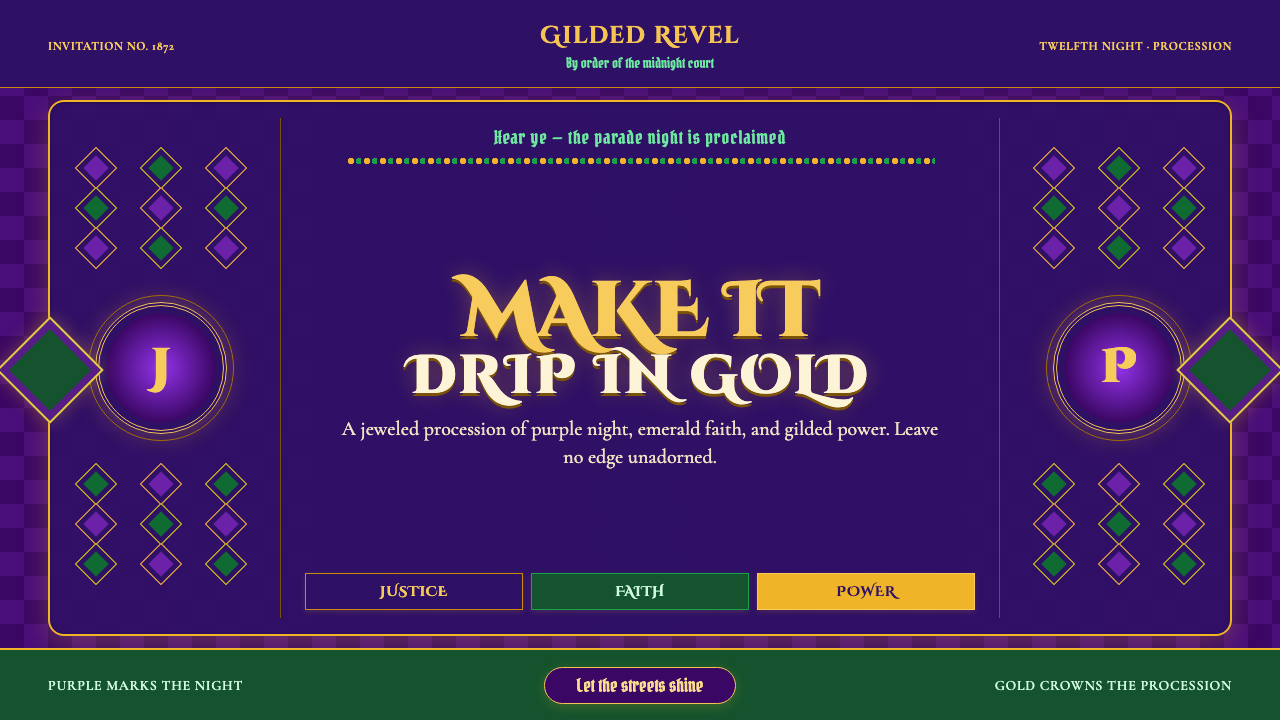 Mardi Gras New OrleansJoyfully excessive. Gilded type, jewel purple, emerald, and bead-strand borde…
 Momoyama Gold ScreenGold is the ground. Panel seams, ink contours, and mineral blocks make the fi…