What is Chillwave Tumblr 2010?
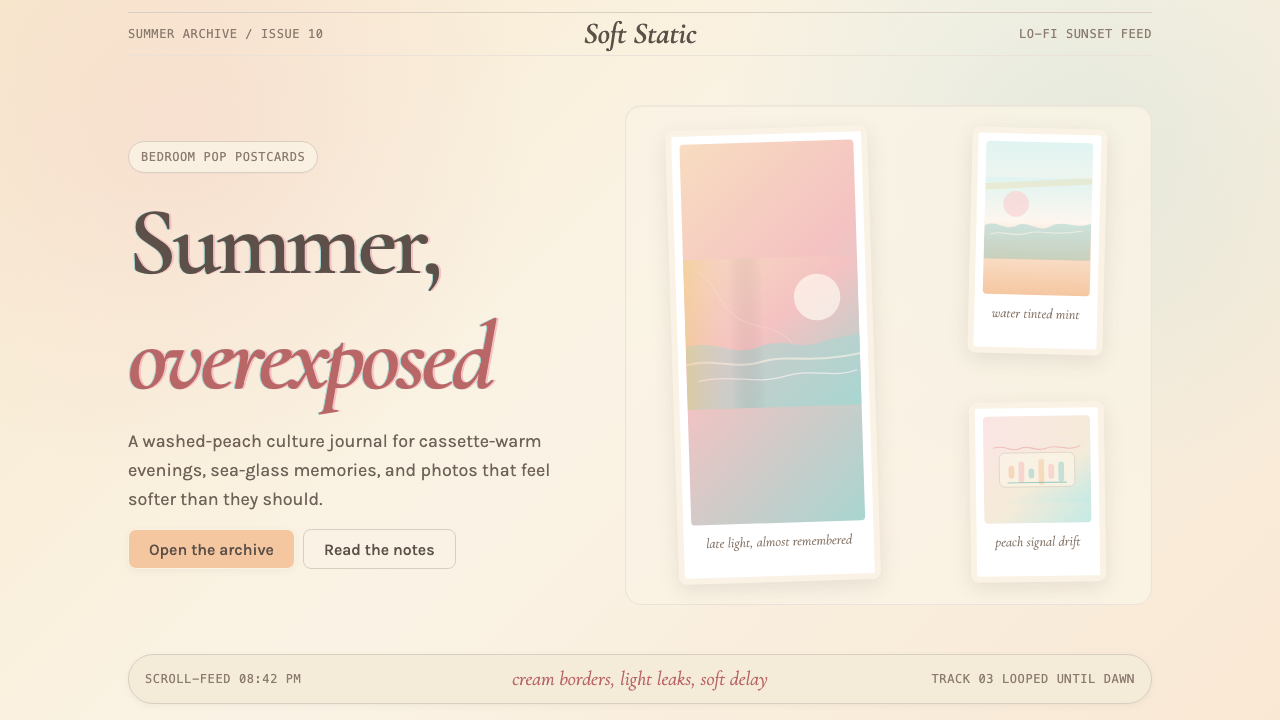
A summer that never quite happened — sun-bleached pastels, faded Polaroid borders, and the warm hiss of a cassette rewinding at the edge of memory.
Chillwave Tumblr 2010 in brief
Chillwave Tumblr is the visual language of a specific internet moment: roughly 2009 to 2012, when a loose cluster of bedroom musicians, Tumblr bloggers, and lo-fi aesthetes collectively willed into existence a nostalgic summer that none of them had actually lived. The look is instantly recognizable — overexposed cream and peach tones, washed-out gradients that bleed from warm amber into hazy turquoise, light-leak flares cutting across the frame, and romantic serif lettering that feels less like a typeface and more like handwriting on the back of a postcard found in a thrift-store jacket.
The palette refuses saturation. Where other design movements reach for vibrance, Chillwave Tumblr deliberately bleaches everything — pinks go dusty, blues go muted and coastal, yellows become the color of old paper left in a sunny window. Gradients are essential to the aesthetic, but they are slow, soft, and hazy rather than vivid; they simulate the way film emulsion shifts in overexposed conditions, or the way a summer afternoon light diffuses through a thin curtain. The effect is warmth without heat, brightness without sharpness.
Typography in this world leans toward elegantly worn serif letterforms — faces that evoke early-twentieth-century ephemera like travel posters, drugstore receipts, and handset type from small-town newspapers. These are not the confident geometric serifs of editorial modernism but something quieter and more wistful, letterforms that appear to have been handled many times. Layered with translucent washes, scratchy texture overlays, and occasional handwritten annotation, they complete a visual system that feels simultaneously designed and discovered.

Where does Chillwave Tumblr 2010 come from?
The word 'chillwave' was coined in August 2009 by Carles, the pseudonymous author of the music blog Hipster Runoff, as a partly satirical genre label for a cluster of bedroom-produced synth-pop acts whose music was defined by woozy tape warble, reverb-drenched vocals, and an atmosphere of hazy, sun-drunk nostalgia. The three acts most associated with the founding moment — Toro y Moi (Chazwick Bundick), Washed Out (Ernest Greene), and Neon Indian (Alan Palomo) — each released breakthrough material in 2009 and 2010, and each independently arrived at a sound that evoked cassette-taped summers from a childhood too young to have been theirs.
The term 'hypnagogic pop' was proposed around the same time by music critic David Keenan, who used it to describe a broader lineage of artists — including the Caretaker, Ariel Pink, and R. Stevie Moore — working in sounds that simulated the half-dreaming state between sleep and waking. Chillwave sat within this larger hypnagogic tendency but had a more specific generational flavor: it was not just lo-fi but internet lo-fi, made by people who had grown up with Napster and Myspace, who understood the online image as naturally degraded, and who found beauty in jpeg artifacts, low-resolution scans, and the compression noise of early streaming.
Tumblr, founded in 2007, was the natural habitat for this aesthetic. The platform's reblog architecture meant that images circulated rapidly and without attribution, accumulating layers of re-saving and re-uploading that subtly degraded them — adding grain, flattening contrast, washing out colors — in ways that only heightened their chillwave resonance. Scan a Polaroid, post it to Tumblr, watch it get reblogged five hundred times: by the end it was somehow more Polaroid than the original. The platform's visual culture in 2010 and 2011 was saturated with sun-flare photography, film-grain textures, pastel color fields, and romantic serif typographic treatments that would become the aesthetic's defining signatures.
The visual lineage draws from several streams simultaneously. Analog photography of the 1970s and 1980s — particularly the look of consumer-grade film processed in drugstore labs — supplied the color palette: cream, coral, dusty rose, sea-glass teal, and faded sage. The graphic ephemera of that same era — motel postcards, record inner sleeves, mall-arcade flyers — contributed the typography and compositional looseness. The lo-fi revival of the early 2000s, associated with artists like Sufjan Stevens and the Postal Service, had already rehabilitated the cassette tape as an emotional signifier; chillwave simply pushed that nostalgia further back and made it wetter, warmer, and more visual. The result was a design vernacular that felt like memory itself: soft at the edges, slightly wrong in its colors, and overwhelmingly beautiful for reasons you could not quite articulate.
What defines the Chillwave Tumblr 2010 look?
Palette
The palette is built around warmth and deliberate fading rather than vibrancy. Cream and warm off-white serve as base grounds. Peach, dusty rose, and coral occupy the warm range; muted teal, sea-glass blue-green, and hazy lavender provide cool counterweights. Nothing is fully saturated — every hue is pulled toward its pastel or washed-out form, as if the image has been left in sunlight too long. The resulting effect is simultaneously warm and melancholy, summer and nostalgia at once.
Light Leaks and Gradient Washes
The light leak — a streak of warm amber or rosy pink that bleeds across a corner or edge of the composition — is one of chillwave's most distinctive visual signatures. It derives from a real photographic phenomenon: light entering a camera's film chamber through a gap in the body, leaving an overexposed streak on the negative. In chillwave design, this artifact becomes decorative and intentional, applied as a translucent gradient that softens boundaries and imparts a sense of warmth and accident. Broader gradient washes, moving slowly from peach to lavender or from cream to coastal blue, serve a similar function: they dissolve hard edges and make the image feel like something gently remembered rather than precisely seen.
Texture and Film Grain
Smooth digital surfaces are deliberately broken up with analog imperfection. Film grain — a fine, slightly irregular texture reminiscent of photographic emulsion — is layered over images and color fields to undercut their digital precision. Scratches, dust, and light-bloom artifacts appear as thin overlaid marks that suggest physical film stock. Paper textures may appear in backgrounds, giving the impression that the design has been printed, aged, and scanned rather than rendered on screen. This accumulation of analog noise is not decoration in the conventional sense — it is a kind of deliberate temporal displacement, a signal that says: this came from before.
Typography
The typefaces that feel most native to chillwave are worn and warm rather than crisp and geometric. Display type leans toward older serif styles — faces that evoke the hand-set printing of earlier decades, with slightly irregular stroke weights and a sense of gentle craftsmanship. Headline lettering is often large and unhurried, with generous letterspacing that gives words room to breathe like a long exhalation. Handwritten elements — annotations, captions, casual notes in the margin — appear regularly, reinforcing the sense that this is personal correspondence rather than published design. Body text, where it appears, is kept sparse; the aesthetic does not favor density of information.
Photography and Imagery
Photography is central to the chillwave visual vocabulary, but it is always photography that has been processed, distressed, or filtered. The canonical images are overexposed outdoor scenes — sun-bleached beach shots, hazy backlit portraits where the subject dissolves into light, Polaroid-bordered squares with washed-out midtones. Colors within photographs are shifted warm, often toward amber and peach, with the cool tones in shadows desaturated or tinted toward lavender. Double exposures, motion blur, and soft focus are common; the image should feel like a half-remembered dream, not a document.
Composition and Space
Chillwave layouts favor openness and drift over rigid structure. There is rarely a hard grid in the sense that modernist design employs one; instead, elements float with generous breathing space, positioned according to a loose intuitive balance rather than mathematical alignment. Borders — particularly the thin, uneven borders that Polaroid photographs have — frame images in ways that emphasize their handmade quality. Negative space is pale and warm rather than stark white, softening the overall impression and giving the layout the quality of a scrapbook page or a collaged zine spread.
Emotional Register
If Bauhaus communicates through logic and Swiss Style through precision, Chillwave Tumblr communicates through feeling — specifically a feeling of bittersweet longing for something that may never have existed. The aesthetic deliberately constructs a mood: the warmth of late afternoon, the slight sadness of summer ending, the way a favorite song from ten years ago sounds different now. Every design decision — the washed palette, the soft edges, the grain, the handwriting — contributes to this emotional signal rather than to clarity or efficiency. It is a rare design system whose primary output is an emotion rather than information.

Who shaped Chillwave Tumblr 2010?
Carles was the pseudonymous author of Hipster Runoff, a music and culture blog that ran from approximately 2007 to 2013 and whose irony-saturated prose style was inseparable from the chillwave moment it helped name. In August 2009, Carles applied the term 'chillwave' to a cluster of acts including Washed Out, Toro y Moi, and Neon Indian, giving a name to a diffuse aesthetic that bloggers and fans had been circling without language for it. Whether the label was serious or satirical was itself part of the aesthetic — and this ambiguity, this refusal to take nostalgia too earnestly or dismiss it too coolly, captured something essential about how Tumblr culture processed feeling.
Ernest Greene released his debut EP 'Life of Leisure' in early 2010, and the title track became something close to the defining sound of the chillwave moment: slow, saturated synth chords, a vocal so drenched in reverb it is barely distinguishable from the melody, and a sense of suspended summer afternoon that lingered long after the song ended. Greene's visual presentation — tour flyers, album artwork, and early Tumblr-circulated images — drew from the same well as the music: sun-bleached photography, warm gradient fields, and a typography that leaned into aged imperfection. His work demonstrated that the sound and the image were inseparable aspects of a single aesthetic proposition.
Chazwick Bundick, recording as Toro y Moi, released 'Causers of This' in January 2010, an album whose layered, sample-based production and warm synthesizer textures placed it at the heart of the chillwave conversation. Bundick was notable among the chillwave cohort for having a background in visual arts as well as music — he created much of his own cover artwork and promotional material, and the aesthetic continuity between his visual and sonic output was tighter than most of his peers. His work established the feedback loop between music and image that would define chillwave as a holistic aesthetic rather than just a sound.
Alan Palomo's Neon Indian project — particularly the debut album 'Psychic Chasms,' released in 2009 — brought a more obviously psychedelic and saturated edge to the chillwave palette while remaining within its essential grammar. Where Washed Out leaned toward languor and Toro y Moi toward warmth, Neon Indian introduced a slightly more electric quality: neon against cream, the phosphorescent glow of a television left on in a dark room. Palomo's visual aesthetic, heavy with distorted VHS imagery and glitchy video artifacts, helped expand the chillwave image vocabulary beyond sun-bleached photography into territory that would eventually influence vaporwave.
No single visual artist defined the look of Chillwave Tumblr in the way that a named designer might define a corporate visual identity. The aesthetic was instead produced collectively by thousands of anonymous and pseudonymous Tumblr users — photographers, graphic designers, collage artists, and enthusiastic amateurs — who circulated images, remixed them, applied filters, and layered in typography according to shared aesthetic intuitions that were never formally articulated. This collective, uncredited authorship is itself meaningful: Chillwave Tumblr is perhaps the first major design movement whose primary medium was the reblog and whose canonical works are largely unattributable.
How do you use Chillwave Tumblr 2010 today?
Chillwave Tumblr is not a neutral style — it carries strong emotional freight, and that freight is the point. Applying it well means first deciding whether the emotional register of warm nostalgia and gentle melancholy serves the product or audience in question. It suits brands and experiences that want to evoke a sense of slowness, memory, and authenticity: independent music, boutique lifestyle goods, wellness and retreat concepts, editorial publications aimed at younger creative audiences. It is a poor fit for contexts that demand clarity, urgency, or trust signals — financial services, data-heavy dashboards, enterprise software, medical information.
For presentation slides, Chillwave Tumblr works best on covers and transitional pages rather than dense content slides. A cover slide should use a full-bleed washed photographic background — overexposed outdoor imagery — with a large, warm-toned serif headline given generous letterspacing. Light-leak gradients can appear in corners to frame without confining. Transitional divider slides benefit from a single slow gradient field — peach fading to lavender, or cream fading to coastal blue — with minimal text. Content slides should be sparse: pull a key phrase large, keep supporting text brief and lightly spaced, and use texture overlays at very low opacity to maintain the ambient warmth without obscuring readability. Data slides are difficult in this aesthetic and should be approached cautiously; if charts are necessary, soften them with muted palette versions of the characteristic colors and avoid gridlines, letting the shapes speak against a warm neutral ground.
For web interfaces and digital products, the style is best suited to landing pages, editorial sites, and portfolio presentations rather than functional applications. On a landing page, a full-width header with a warm gradient or sun-bleached photograph, overlaid with a large romantic serif heading, establishes the aesthetic immediately. Pricing and feature sections should use generous vertical spacing, light separator lines rather than heavy borders, and warm off-white backgrounds that feel softer than pure white. Navigation should be typographic, with letterforms given room to breathe. Interactive states — hover, active — should shift color temperature slightly warmer rather than relying on saturated accent colors. Avoid sharp contrasts and hard-shadow components; the entire interface should feel as if it exists slightly out of focus.
For editorial and marketing work, the style carries well into print-influenced digital layouts. An editorial spread uses a full-bleed washed image as a visual anchor, with pull quotes set in large, loosely tracked serif type floating in the generous margins. Body text should be set in a warm-toned serif at a comfortable reading size with relaxed line spacing — the text should feel unhurried. Marketing campaigns benefit from the style's poster-like warmth: hero images with light-leak overlays, headlines that feel handwritten or pressed rather than designed, and calls to action that are warm and inviting rather than urgent. The style pairs naturally with product photography that has been treated for warmth and slight overexposure.
A common mistake is reaching for oversaturation in an attempt to intensify the nostalgic effect. Chillwave's emotional power comes precisely from restraint — from colors that are almost right, from images that are slightly washed out, from warmth that stops just short of sweetness. Cranking saturation or contrast destroys the wistfulness and replaces it with something merely retro. Similarly, mixing too many different textures or gradient overlays at once produces visual chaos rather than layered depth; one or two carefully chosen analog imperfections are more effective than a dozen competing filters. The style rewards subtlety and patience — if it looks overworked, it has been overworked.

Chillwave Tumblr 2010 — FAQ
How is Chillwave Tumblr different from vaporwave?
They are close relatives that share a common ancestor — early internet nostalgia aesthetics and lo-fi music production — but they diverge significantly in palette, mood, and cultural reference. Chillwave Tumblr is warm: its palette runs toward cream, peach, dusty rose, and muted teal, and its emotional register is wistful and gentle, evoking the organic heat of summer. Vaporwave is cool and often neon-tinted: it references the air-conditioned corporate interiors of the 1980s and early 1990s, mall architecture, Windows 95 startup screens, and Greek statues placed in digital environments. Chillwave feels like a summer outside; vaporwave feels like a mall in 1991. Temporally, chillwave peaked between 2009 and 2012 and fed into vaporwave's emergence from about 2011 onward — the two movements overlap but chillwave generally came first.
Can this style work for a serious or professional brand?
It can, but the application requires careful calibration. The aesthetic's nostalgic warmth can read as authenticity, craftsmanship, and human warmth — all of which are valuable signals in many professional contexts, particularly for creative studios, independent consultancies, boutique agencies, and cultural organizations. The risk is that its lo-fi quality — the grain, the washed tones, the handwritten elements — may undercut perceived precision or authority in contexts where those qualities are expected. The approach for a professional brand is to use chillwave's palette and typographic warmth while treating texture and grain as very light touches rather than dominant elements. A single warm gradient on a white background, paired with a generous serif headline, carries the aesthetic's emotional warmth without the full lo-fi softness.
How do I use gradients in this style without them looking generic?
The difference between a chillwave gradient and a generic gradient is primarily in the color relationships and the rate of transition. A chillwave gradient moves slowly between colors that are perceptually close in temperature — peach into dusty rose, cream into pale lavender, muted teal into soft sage — rather than leaping between high-contrast complementaries. The transition should be long, soft, and slightly uneven; it should look like something that happened to light on a summer afternoon rather than something that was drawn with a digital tool. Direction matters too: light-leak gradients enter from a corner or edge at an angle, simulating the path of stray light through a lens, rather than running from top to bottom in a perfectly vertical gradient. Layering a very subtle texture or grain over the gradient is what separates the analog feel from a clean digital render.
Is this aesthetic inherently dated, and will it age poorly?
Chillwave Tumblr is intentionally nostalgic — it was nostalgic even when it was new. This paradox is actually part of its resilience: a style that explicitly references the past does not age in the same way that a style claiming contemporaneity does. The aesthetic peaked in cultural prominence between 2010 and 2013 and has since settled into a kind of self-aware vintage status — recognizable, associated with a specific cultural moment, and capable of being used either earnestly or with a layer of knowing irony. What ages poorly is the irony-free wholesale adoption of every element simultaneously; what holds up is the underlying grammar of warmth, openness, and wistful softness applied with restraint. The palette and typographic sensibility remain genuinely appealing when used selectively.
What is the single most important principle to get right when working in this style?
Restraint with warmth. Every element in the chillwave vocabulary — the gradients, the grain, the warm palette, the soft edges, the handwritten touches — is individually subtle. The mistake is applying all of them at full intensity at once, producing something that feels costume-like rather than authentic. The aesthetic works because its individual elements are held back: a gradient that is barely there, a texture that you feel rather than see, a serif headline that whispers rather than shouts. Think of it as seasoning rather than ingredient — the presence of warmth should be perceptible but not identifiable as a specific technique. When it works, the viewer feels something without being able to say exactly what produced the feeling. That gap between effect and cause is the style's actual achievement.
Related design styles
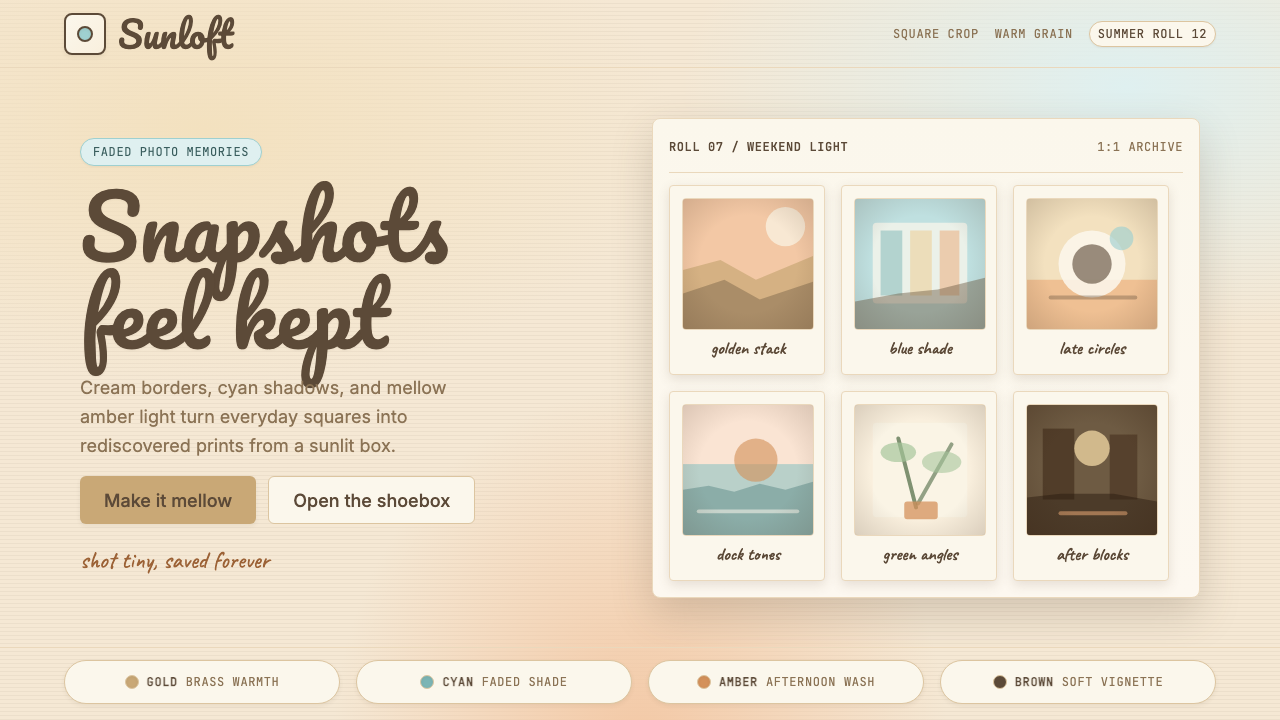 Instagram 2010s FilterWhen photos felt like memories. Faded warmth, dark vignettes, cream-tinted Po…
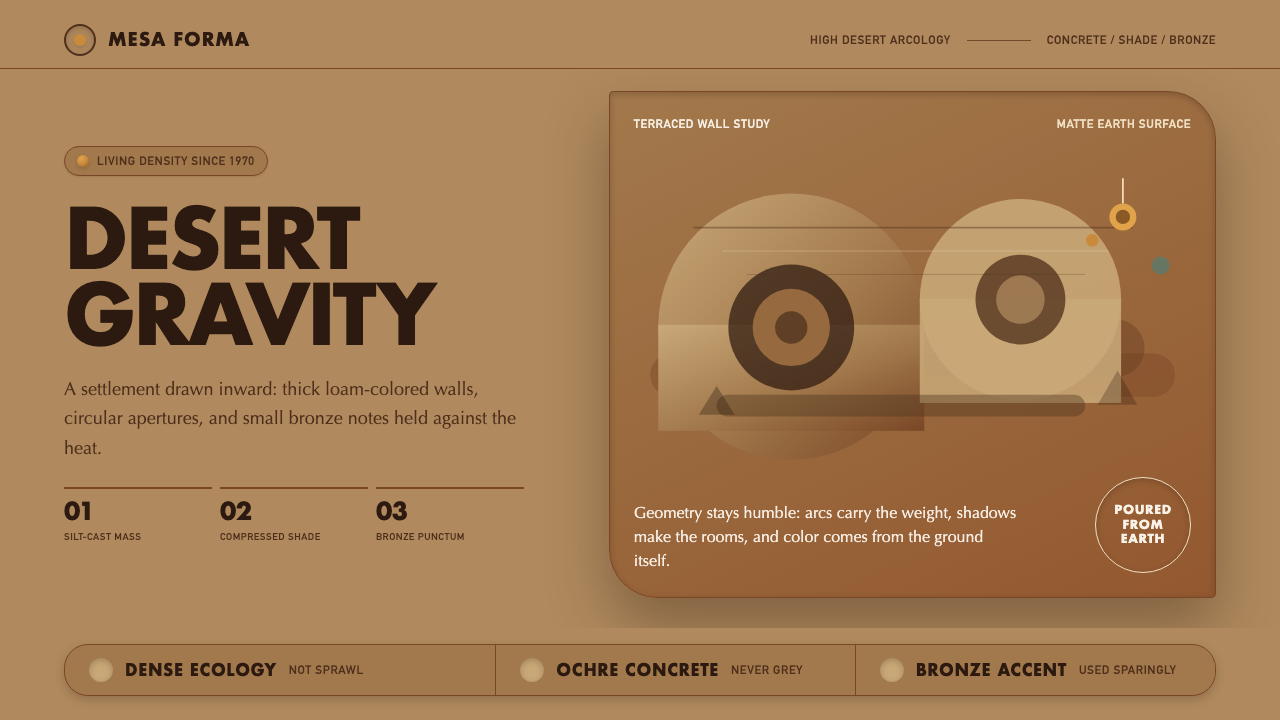 Arcosanti ArcologyArchitecture becomes desert. Ochre concrete, circular apertures, and bronze a…
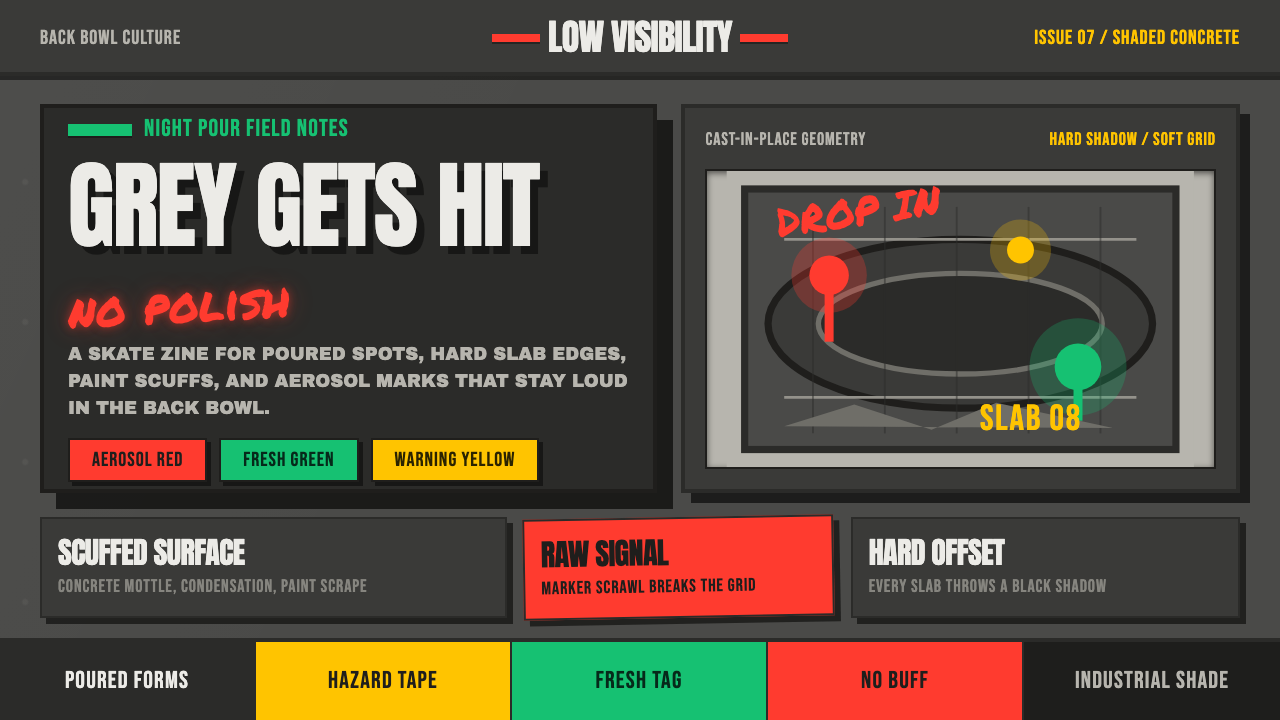 Concrete SkateparkRaw concrete detonates. Grey slab blocks carry red, green, and warning-yellow…
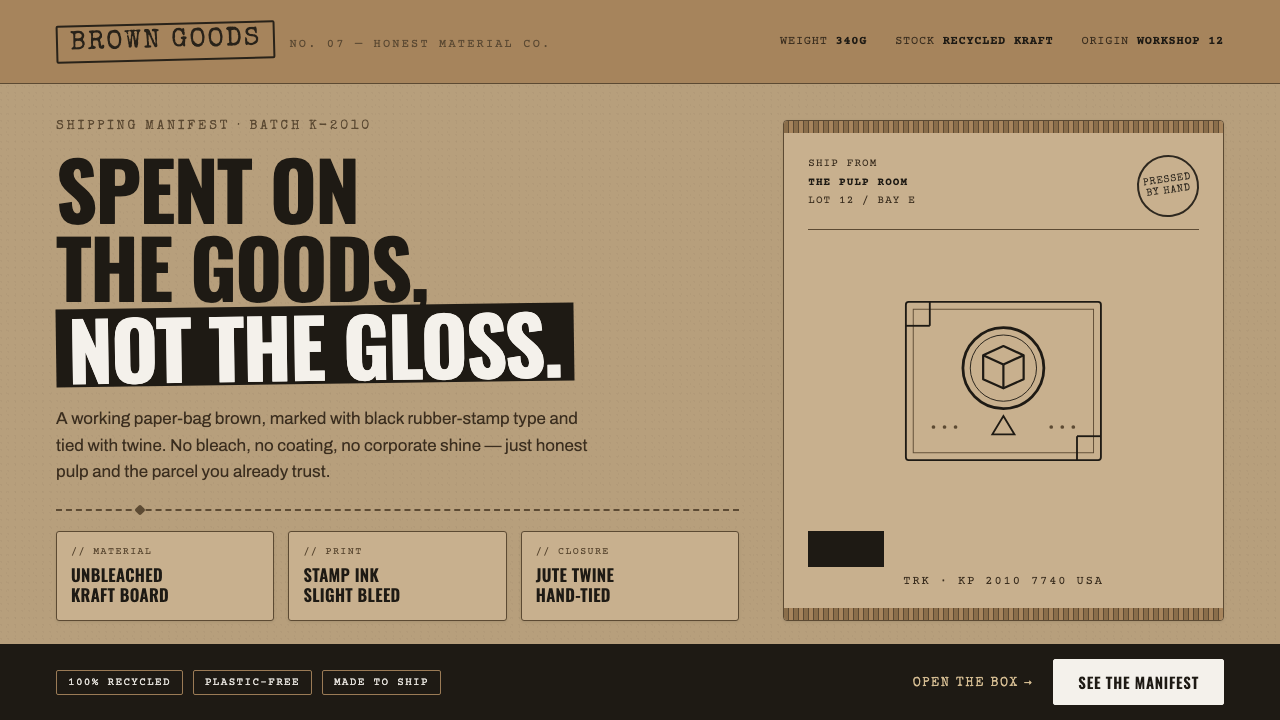 Kraft Paper PackagingThe goods, not the gloss. Mid kraft-brown fields, black rubber-stamp type, co…
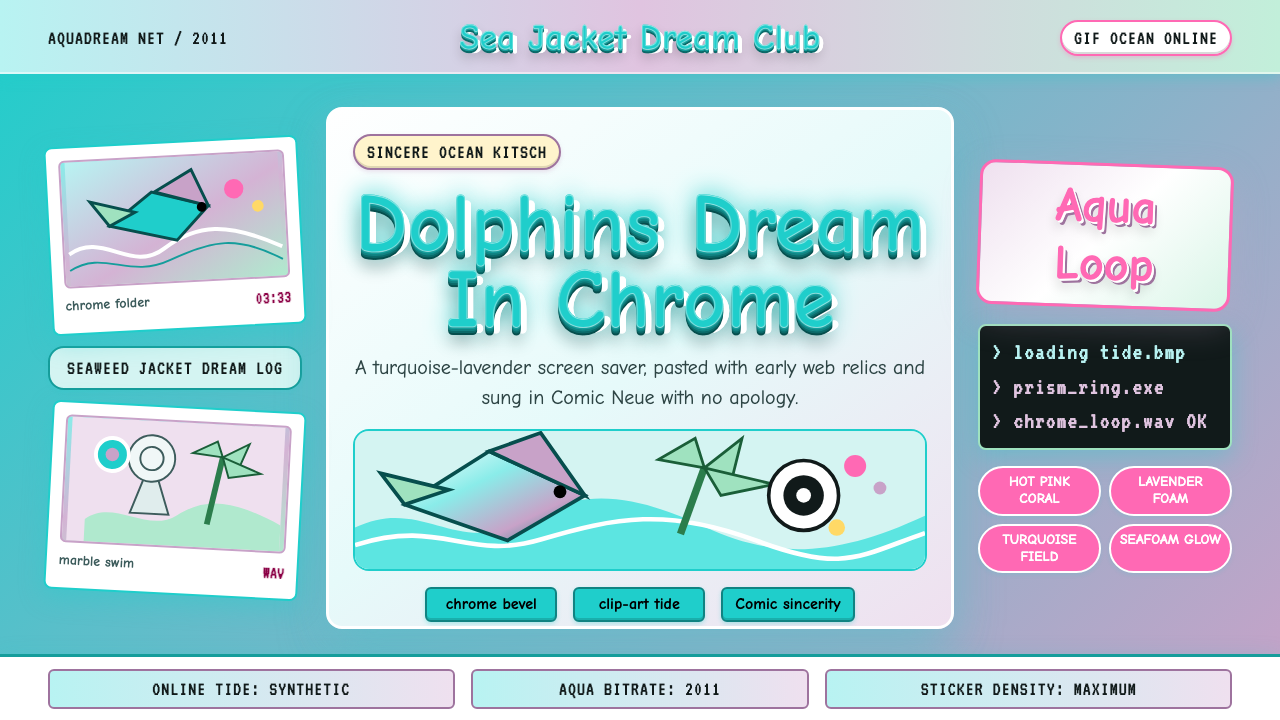 Seapunk 2011Sincere ocean kitsch. Turquoise gradients, Comic Neue chrome, and clip-art do…
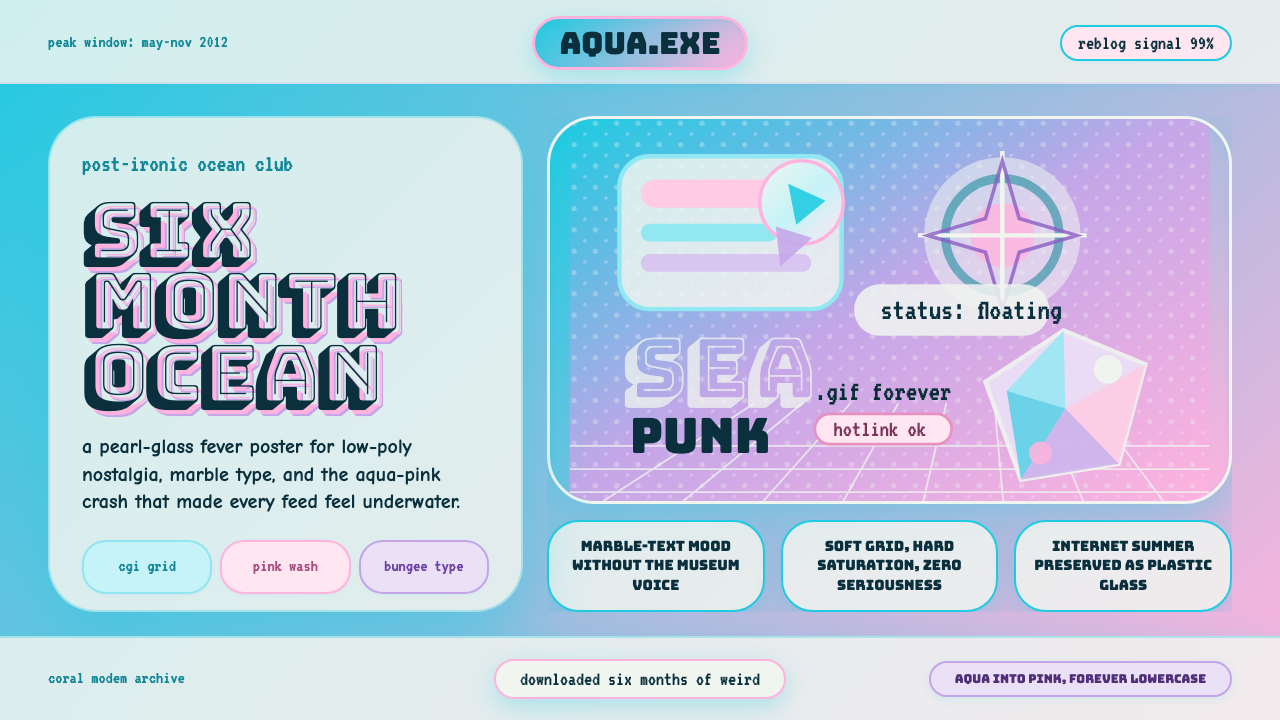 Seapunk Tumblr (2012)Burns bright then crashes. Aqua-pink wash, Bungee type, glassy CGI-grid colla…