What is Burmese Yun Lacquerware?
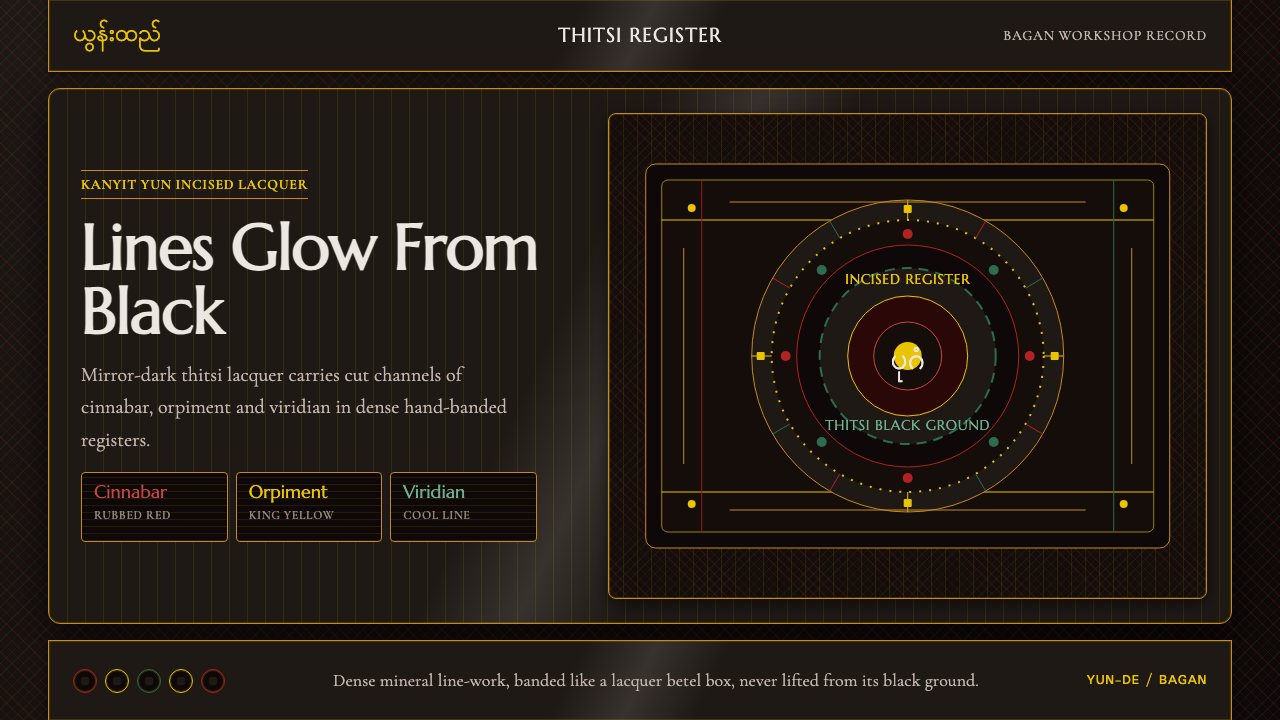
Burmese Yun Lacquerware turns Bagan's centuries-old incised lacquer craft into a design system: a mirror-black ground cut through with fine lines and filled with jewel-bright mineral color.
Burmese Yun Lacquerware in brief
Burmese Yun Lacquerware is a design system built from Bagan's kanyit yun technique, an incising method used on lacquerware for centuries before 1900. A vessel — traditionally built on a woven bamboo core — is coated in thitsi, the same near-black resin lacquer used across Myanmar's craft traditions, then fine lines are cut directly through that dried lacquer ground and rubbed full of pigment: cinnabar red, orpiment yellow, and viridian green, the three colors this system treats as its core palette.
Unlike the woven surfaces of related Burmese craft traditions, yun lacquerware has no visible weave at all — the bamboo core disappears entirely under the lacquer, and what's left is a continuous glossy black field carved with dense, fine-line ornament. The system translates that as a rule rather than a suggestion: every ground is dark and glossy, never cream or matte, and every color field is a jewel-toned shape cut out and bounded by black rather than blended into it.
The name itself points to the technique's origin: yun derives from Yunnan, reflecting the cross-border craft exchange that shaped this incising style. Visually, the system carries that history forward as concentric bands — rings of figural or floral motif running around a vessel or a page in registers, the way a bowl's ornament runs in bands from rim to base — combined with the sheer density of the linework, which reads closer to engraving than to painting.
Where does Burmese Yun Lacquerware come from?
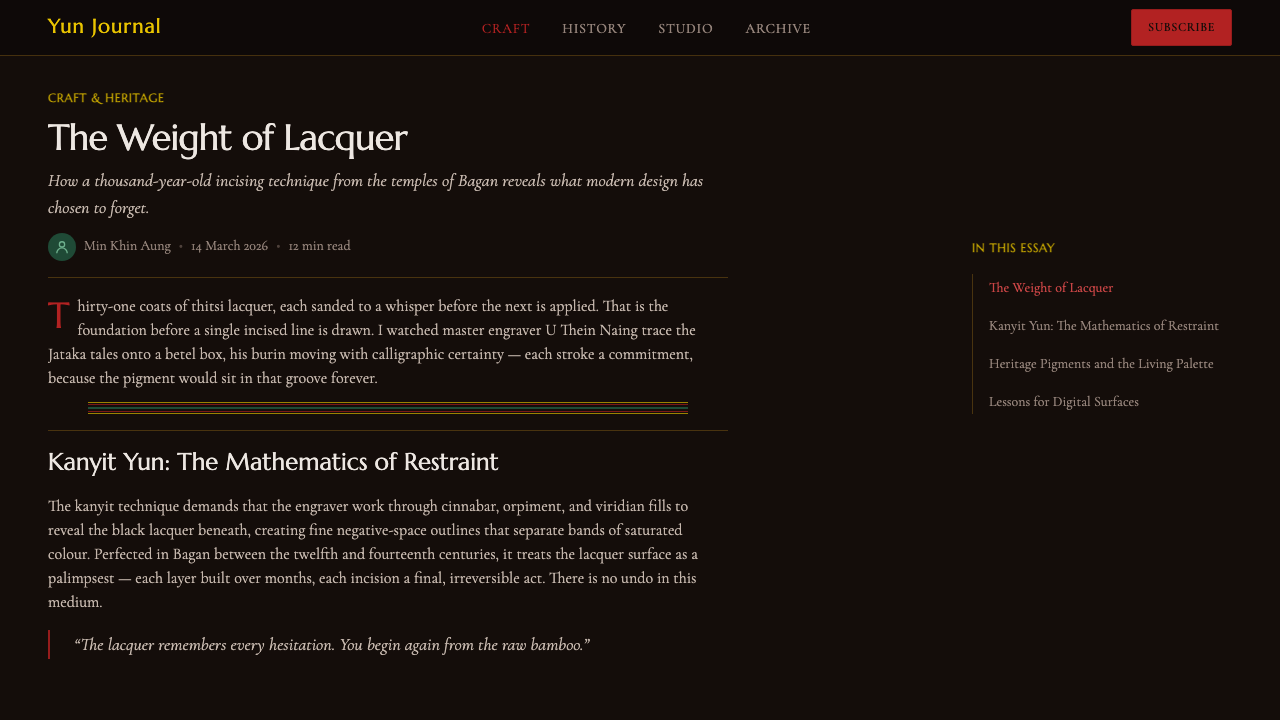
Bagan, in central Myanmar, has been the country's most prominent center of lacquerware production for centuries, and the yun incising tradition — pre-1900, and by most accounts older still — is one of its signature techniques. It works on vessels built around a light bamboo-strip core, which gives the finished object flexibility and lightness that a solid wood vessel could not match, while the lacquer coating that follows provides the strength, waterproofing, and the glossy black surface the technique depends on.
The word yun is generally traced to Yunnan, pointing to a historical exchange of craft technique across what is now the China-Myanmar border region — lacquer traditions moved along overland trade routes for centuries, and Bagan's artisans absorbed and adapted incising methods that arrived through that contact into a distinctly Burmese practice. Kanyit yun specifically names the technique of incising fine lines through a dried lacquer ground: the artisan cuts a design directly into the hardened thitsi surface, then packs the resulting grooves with colored pigment, so the ornament is physically recessed into the lacquer rather than sitting on top of it.
Thitsi, the resin at the center of the whole process, comes from a lacquer tree native to the region and is applied in multiple thin coats, each one dried and polished before the next goes on, building up the dense, mirror-black ground the incising is cut through. Cinnabar red, orpiment yellow, and viridian green were the mineral and pigment colors traditionally rubbed into the cut lines — a limited, deliberately chosen palette that stays saturated and jewel-like against the black rather than muddying into it.
The workshops that carried this technique forward — grouped in this system's sourcing under Bagan's kanyit yun lacquer workshops and its broader thitsi-lacquer master craftsmen — worked within a shared vocabulary: concentric bands of ornament, fine incised linework dense enough to read as texture from a distance, and a restraint about color that let three pigments do the work a wider palette would otherwise be needed for. That combination of technique, material, and palette is what this design system carries into digital form.
What defines the Burmese Yun Lacquerware look?
Color
Cinnabar red, orpiment yellow, and viridian green sit against a mirror-black ground, and the logic between them is jewel-toned rather than blended: colors never fade or gradient into one another, and every field of color is bounded by a black line, the way a cut groove separates one pigment from the next.
Incised Line Work
Fine cut lines are the system's primary drawing tool, closer in feel to engraving than to painting or brushwork. Every shape in the system begins conceptually as a line cut through the black ground first, with color filled in afterward — never the reverse.
Surface & Sheen
The lacquer ground is glossy and mirror-like throughout — there is no matte or cream surface anywhere in the system. Even static compositions carry a slight sheen, as if the black ground had just been polished, which is what separates this system from a generic flat dark theme.
Concentric Bands
Ornament is organized into rings or registers that run around a form or a page, rather than sitting as isolated, scattered motifs. This echoes how a lacquered bowl's decoration wraps continuously from rim to base, and it gives layouts a natural sense of circulation and containment.
Figural & Floral Density
Ornament runs dense and continuous rather than appearing as isolated icons — figural and floral motifs pack a band edge to edge. Empty black ground is used deliberately as a rest point between dense bands, not treated as a default background to be filled.
Bamboo-Core Lightness
Despite the dense surface ornament, the underlying feel is meant to stay light rather than heavy, mirroring how the vessels beneath this rich lacquer surface are actually built on a light woven bamboo core. Compositions should feel richly decorated but never leaden.
Who shaped Burmese Yun Lacquerware?
This is the community of ateliers in Bagan that developed and refined the fine-line incising technique this system is named for. Multi-generational workshops passed the cutting and pigment-filling method down through apprenticeship, keeping the craft alive well before 1900 and into the present.
These are the specialists responsible for building up the mirror-black lacquer ground itself, coat by coat, before any incising begins. Their standard for polish and depth of black is what this system's glossy dark ground is built to match.
Named here as a technique rather than a single person, kanyit yun is the exact craft of cutting fine lines through dried lacquer and packing them with pigment. It is what distinguishes this system from lacquerware that is simply painted rather than physically incised.
This is the wider Burmese practice of incised lacquerware that kanyit yun belongs to, encompassing the vessel forms, banded-register compositions, and pigment conventions this design system draws its structure from — the tradition rather than any one workshop's individual signature.
How do you use Burmese Yun Lacquerware today?
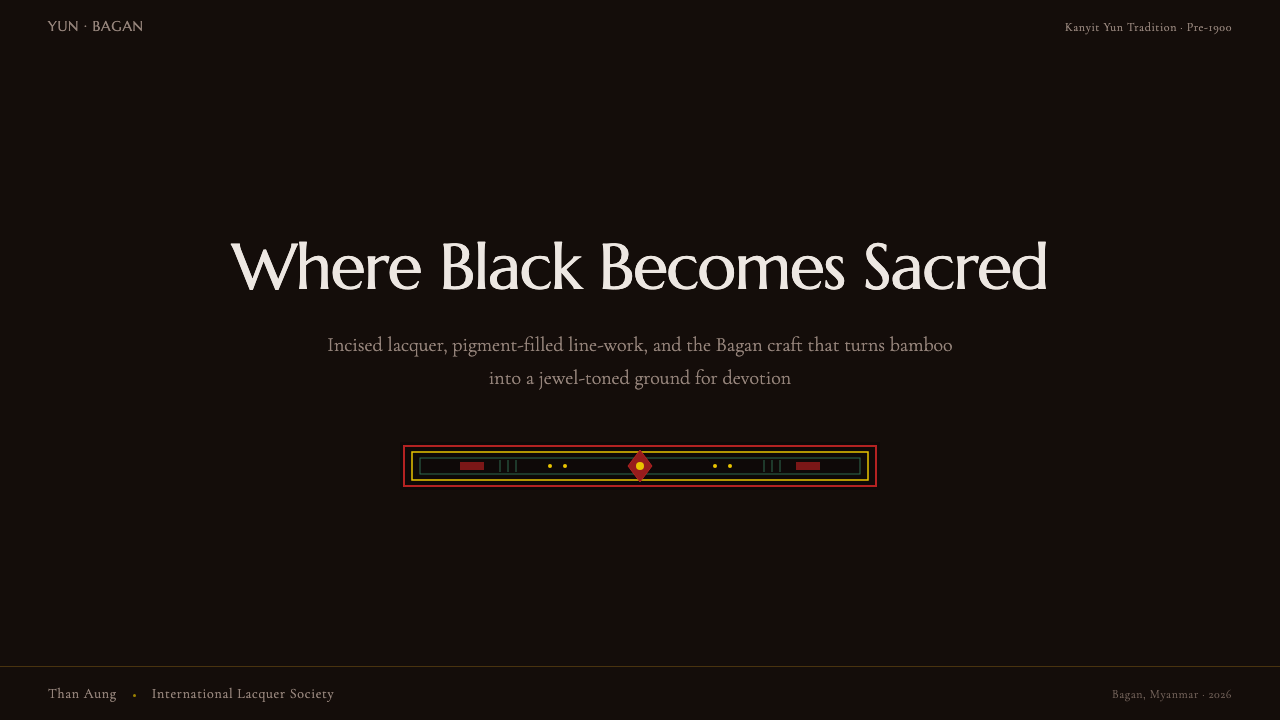
On a presentation cover, this system rewards a full-bleed treatment: a glossy black ground with one or two incised-style linework motifs picked out in cinnabar or orpiment, and the title set in a light, high-contrast color so it reads clearly against the dark field. Keep the colored ornament concentrated in a band near the edge or around the title, echoing how a real lacquered vessel keeps its dense ornament in registers rather than spreading evenly across the whole surface.
Content and data slides should preserve the black ground as a constant, with cinnabar, orpiment, and viridian reserved for information that needs emphasis — a highlighted row, a single standout data point, a call-out box. Because the palette is only three colors against black, it maps cleanly onto three-way data comparisons or a three-tier structure, and charts read best as flat, sharply bounded shapes rather than blended or gradient fills, in keeping with the incised, hard-edged look of the source craft.
For web interfaces, the dark, high-polish ground suits products that want to feel premium, ornamental, or collectible — jewelry and luxury goods, cultural and museum platforms, boutique hospitality, or any product presenting rare or crafted objects. Interactive elements can borrow the incised-line logic directly: a button or icon outlined in a single fine line rather than filled, with color appearing only on hover or selection, the way pigment only appears where a line has actually been cut.
In editorial and marketing work, the system's banded, concentric-ornament logic translates well into a layout with a strong repeating border or frame motif running around a page or a hero image, rather than ornament scattered loosely across it. Marketing headlines set in a light color against the black ground carry real authority, and the three-color palette gives a marketing system a built-in, easily learned color code — cinnabar for one message, orpiment for another, viridian for a third — rather than an open-ended color scheme.
A common mistake is treating the black ground as generic dark mode and losing the gloss, the incised linework, and the discipline of the three-color palette that actually define this system. A flat black background with arbitrary bright accent colors and soft shadows reads as a completely different, more generic dark theme — the system only holds together when the black stays glossy, the ornament stays line-based and banded, and the color stays limited to cinnabar, orpiment, and viridian.
Burmese Yun Lacquerware — FAQ
What does yun mean, and where does the name come from?
Yun is generally traced to Yunnan, reflecting a historical craft exchange across what is now the China-Myanmar border region — lacquer incising methods moved along overland trade routes and were absorbed and adapted by Bagan's artisans into a distinctly Burmese practice. The name preserves that cross-border history in the technique's everyday name.
What is kanyit yun incising, exactly?
It names the specific technique of cutting fine lines directly through a dried, hardened thitsi lacquer ground and then packing those cut grooves with colored pigment. Because the ornament is physically recessed into the lacquer rather than painted on top of it, the resulting surface stays smooth to the touch even though it carries dense, jewel-colored decoration.
Why does the system limit itself to just three accent colors?
Cinnabar, orpiment, and viridian are the traditional mineral pigment set rubbed into kanyit yun incisions, and keeping to just those three is what lets each field of color stay saturated and jewel-like against the black rather than muddying into a busier palette. A wider color range would work against the incised, bounded-field logic the whole system is built on.
Is this the same as Bagan lacquerware in general?
Not quite — Bagan produces several lacquerware techniques, including painted and gilded variants alongside incised ware. This system specifically models the incised kanyit yun style, distinguished by its fine cut lines and its cinnabar-orpiment-viridian palette rubbed into those cuts, rather than the broader painted or gilded traditions that also come out of the same city.
How does this differ from Burmese Cane Rattan?
Both draw on Myanmar's regional lacquer culture, but they foreground opposite crafts. Burmese Yun Lacquerware centers on the incised lacquer ground itself as the whole surface, with no weave visible at all. Burmese Cane Rattan centers on a visible woven surface, with lacquer appearing only as a rim accent around it. One is an incised-lacquer system with dense figural bands; the other is a weaving system with a single lacquer trim color.
Related design styles
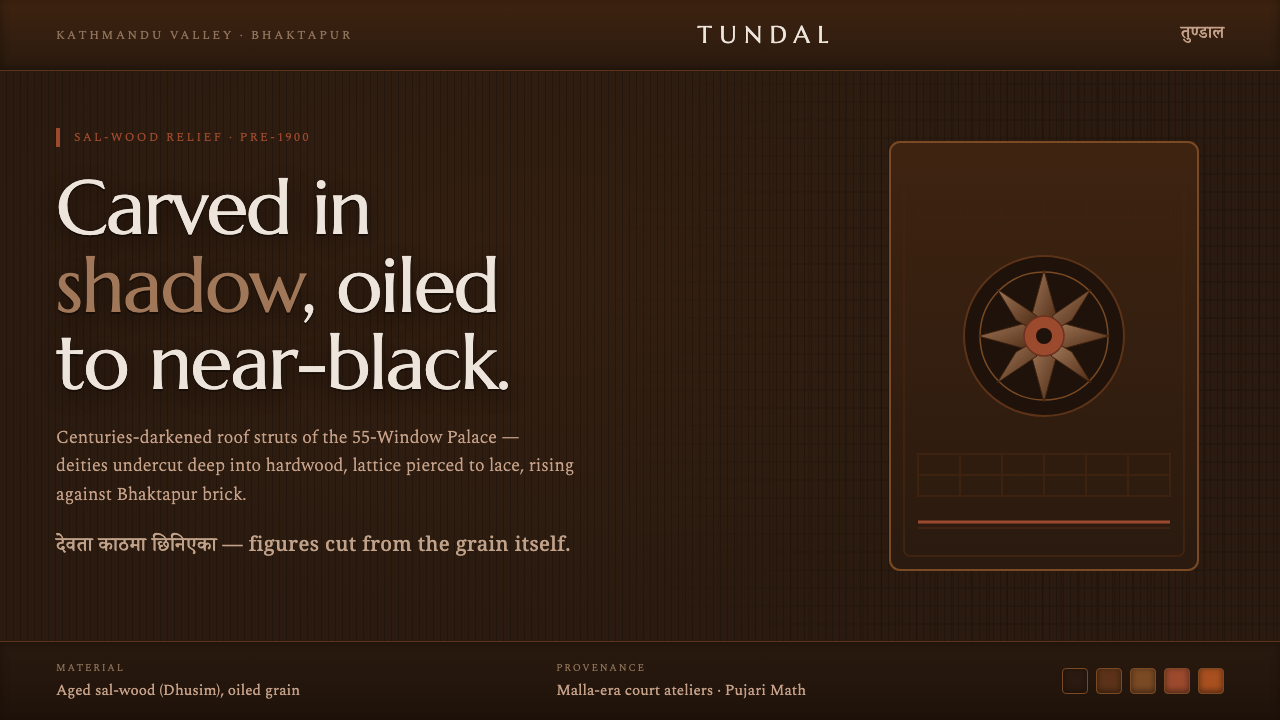 Newar Tundal Strut CarvingCenturies-darkened sal-wood. Carved deities and pierced lattice in mid-brown…
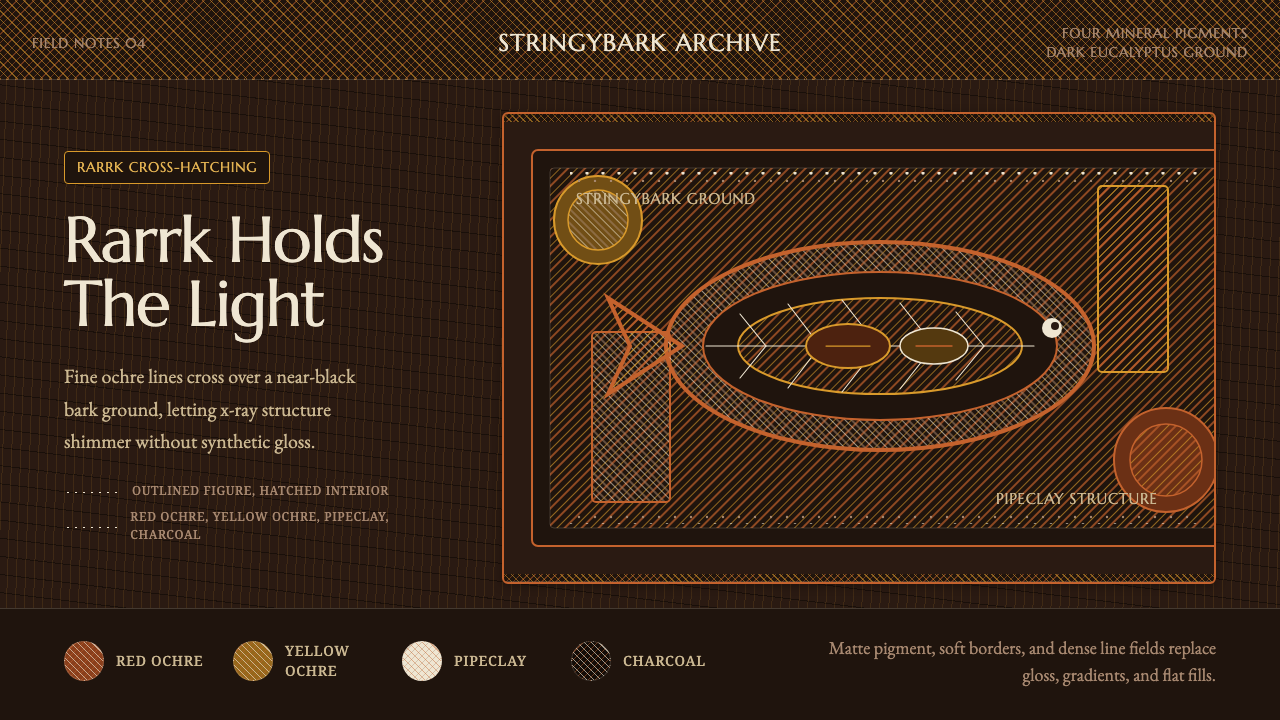 Arnhem X-Ray Bark PaintingShimmers without gloss. Ochre rarrk lines vibrate on dark stringybark.
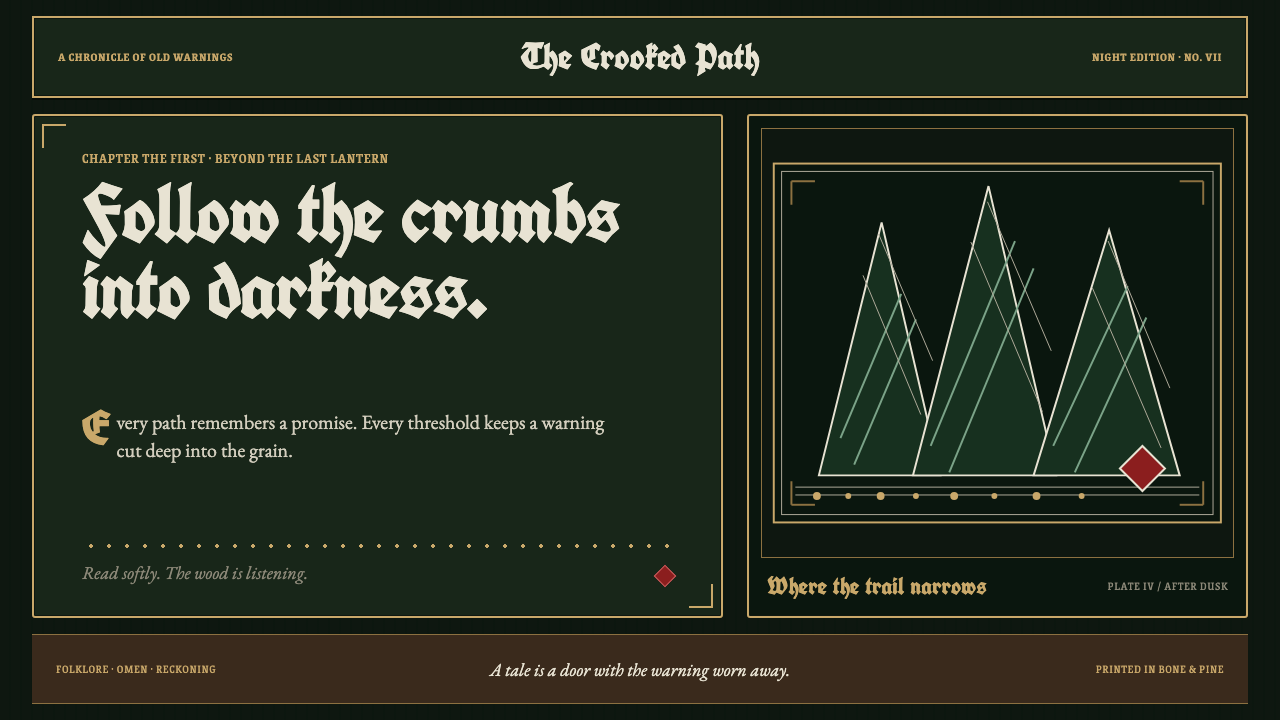 Grimm Fairy Tales (Black Forest Woodcut)The dark wood closes in. Bone-white cuts and aged-gold frames score a pine-bl…
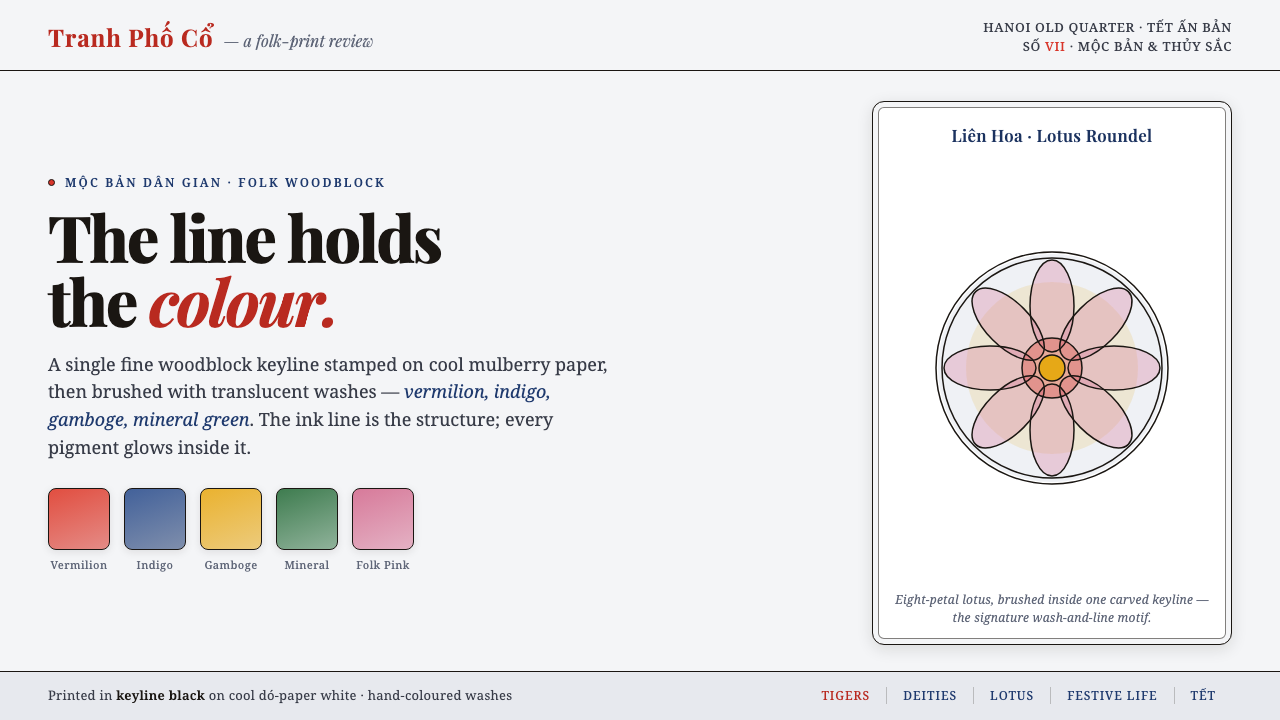 Hàng Trống Folk PrintBright folk colour, never loud. Translucent vermilion-indigo washes held insi…
 Kerala Mural TempleDevotional density over space. Saffron ground and cream panels, edged in gold.
 Macedonian Ohrid Fresco (Byzantine)Sacred darkness breathes. Tarnished gold rings, cinnabar folds, and plaster g…