What is Arnhem X-Ray Bark Painting?
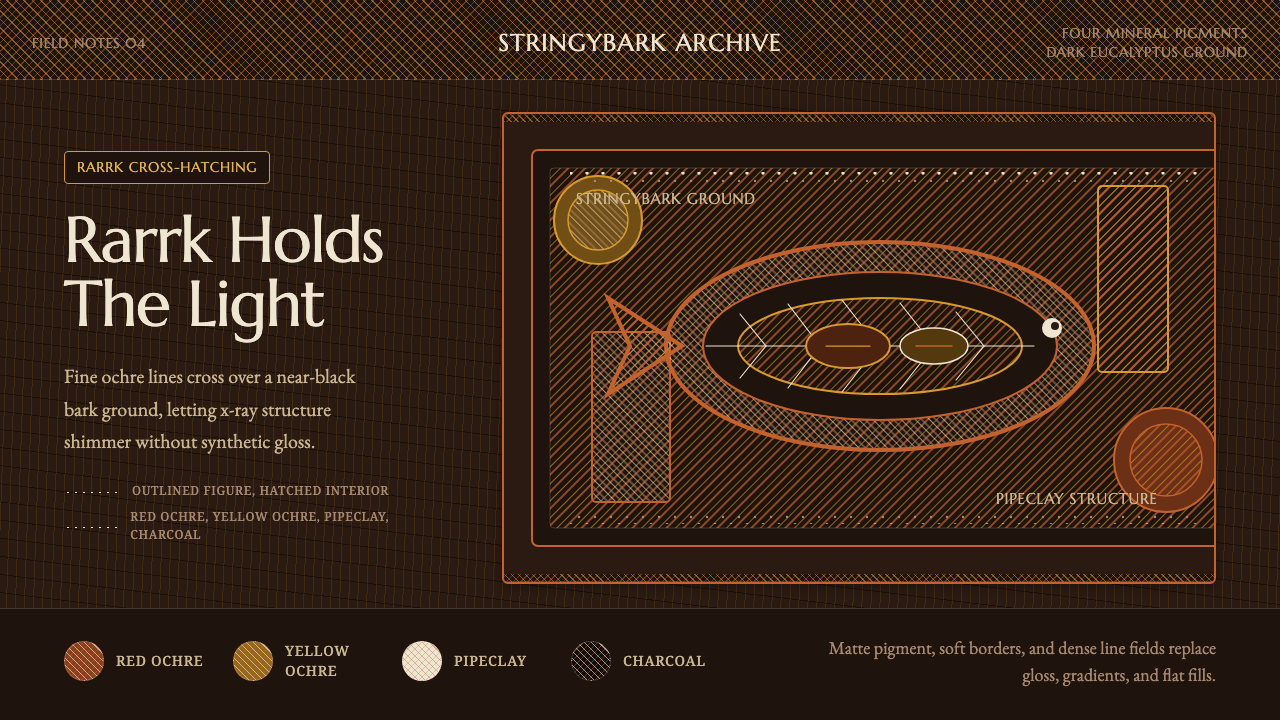
Arnhem X-ray bark painting shows the inside of a creature as clearly as its outside, and covers every surface with a hand-laid shimmer that no gradient can imitate.
Arnhem X-Ray Bark Painting in brief
Arnhem X-Ray Bark Painting is a design system built from the Yolŋu and Kunwinjku painting tradition of Arnhem Land in northern Australia, in which ancestral figures — barramundi, fish, and creator beings — are painted on sheets of dark eucalyptus stringybark with their bones and internal organs rendered visible, as if seen through x-ray vision. This figurative convention long predates the invention of actual x-ray imaging, and reflects a way of depicting a being's complete inner and outer reality simultaneously rather than a purely surface likeness.
The style's signature technique is rarrk: extremely fine cross-hatching applied with a brush made from a few strands of human hair, called a marwat, laid down in prescribed sequences of clan-specific ochre colors. The effect of this dense, disciplined hatching is a shimmering, vibrating optical brilliance — the surface seems to glow and move slightly even though it is entirely matte and made of natural earth pigments, an effect achieved through pattern and repetition rather than any reflective material.
This design system translates that tradition into a digital visual language: a warm red-brown bark ground that reads as nearly black in low, raking light, a fixed four-pigment ochre palette, and rarrk-textured surfaces where dense parallel lines carry the visual energy that a gradient would carry in other design systems — except here, texture and repetition do the work, never a smooth color blend.

Where does Arnhem X-Ray Bark Painting come from?
Arnhem Land is a vast region in the Northern Territory of Australia, home to numerous distinct Aboriginal language groups and clans, among the most prominent being the Yolŋu peoples of the northeast and the Kunwinjku peoples of the west, near Kakadu. Bark painting on sheets of stringybark eucalyptus is a living artistic tradition in this region, practiced continuously for generations and documented by anthropologists and art historians from the early twentieth century onward, though its roots extend back considerably further into oral and ceremonial tradition.
The x-ray convention — depicting the skeletal structure and internal organs of a figure alongside its outer form — is one of the tradition's most visually distinctive features, and appears especially in depictions of barramundi and other significant fish and animal ancestral beings central to particular clan stories. This is not a decorative flourish but a form of visual knowledge transmission: showing what is inside a creature alongside what is outside communicates a fuller understanding of the being's significance within a clan's ancestral narrative, known broadly across many Aboriginal traditions as the Dreaming.
The rarrk cross-hatching technique that fills these figures with shimmering texture is executed with a marwat, a fine brush traditionally made from a small number of human hair strands, capable of producing lines of extraordinary precision and thinness. Each clan holds specific rights to particular color sequences and hatching patterns, meaning that a knowledgeable viewer can identify which clan produced a given painting from its rarrk pattern alone — the technique functions simultaneously as artistic practice and as a form of protected cultural and legal identity.
The color palette used across this tradition is drawn entirely from natural, locally available mineral pigments: red and yellow ochre, white pipeclay, and charcoal black, ground and mixed by the artists themselves. This fixed four-pigment system, unchanged across generations, produces the tradition's distinctive warm, earthy color range and reflects a broader value across Aboriginal Arnhem Land art traditions of working within inherited, clan-sanctioned material and visual conventions rather than introducing outside materials or colors.
What defines the Arnhem X-Ray Bark Painting look?
Bark Ground
The base is a warm red-brown tone that reads as nearly black under low or raking light, echoing the natural surface of dark eucalyptus stringybark. This ground should carry a subtle warmth even at its darkest, distinguishing it from a neutral or cool black.
X-Ray Figuration
Figures — fish, ancestral beings, animal forms — show internal structure such as bones or organs alongside their outer silhouette, communicating a complete inner-and-outer understanding of the subject rather than a surface-only likeness.
Rarrk Cross-Hatching
Dense, extremely fine parallel or crossed lines fill figures and background areas, laid down with disciplined precision rather than loose or gestural mark-making. This hatching should read as tight, repetitive, and rhythmic — the source of the tradition's characteristic shimmer.
Four-Pigment Ochre Palette
Color is strictly limited to red ochre, yellow ochre, white pipeclay, and charcoal black — no other hues appear. This restraint should be treated as non-negotiable; introducing outside colors breaks the tradition's specific material logic entirely.
Clan-Specific Sequence
Within the four-pigment palette, specific ordering and combination of colors within a hatching pattern historically signals which clan produced the work. A digital design system should treat consistent, disciplined sequencing as important, even without reproducing an actual clan's specific protected pattern.
Matte, Non-Reflective Surface
Despite its shimmering visual effect, the surface itself is entirely matte, made of natural earth pigment rather than any reflective or metallic material. The shimmer is an optical effect produced by pattern density, not by surface gloss.
Dark Ground, Never Light
The bark ground remains dark throughout the composition — this is never inverted into a cream or white background. A light ground would eliminate the very contrast that makes the rarrk hatching and ochre figures shimmer against their surroundings.

Who shaped Arnhem X-Ray Bark Painting?
Artists of the Kunwinjku peoples, based in western Arnhem Land near Kakadu, maintain a living bark painting tradition that includes significant x-ray figurative work, passing hatching techniques and clan-specific patterns down through generations of practicing artists.
Artists of the Yolŋu peoples in northeast Arnhem Land developed and maintain their own distinct bark painting and rarrk traditions, with clan-specific color sequences and designs recognized as both artistic expression and protected cultural property.
The senior custodians responsible for a clan's sacred and secular design rights — known collectively across the region using terms including dhulang — determine who may paint particular ancestral stories and patterns, ensuring the tradition's continuity and protecting clan-specific visual knowledge from unauthorized use.
How do you use Arnhem X-Ray Bark Painting today?
On presentation slide covers, the style's dark ground and disciplined hatching create a sophisticated, textured backdrop: a deep red-brown field with a single rarrk-textured motif anchoring one area, and title type set cleanly against the dark ground rather than competing with the hatched texture. Content slides should keep the hatching restrained to accent areas or dividers rather than covering entire text blocks, since dense rarrk texture behind body copy would compromise legibility.
For web interfaces, the fixed ochre palette and dark ground suit products wanting to project craft, authenticity, and cultural depth — museums, cultural institutions, or premium products that value texture and material honesty over flat digital gloss. Dashboards are a difficult fit given the density of the hatching technique, but a restrained application — a rarrk-textured header band, ochre-toned status indicators — can carry the visual character without overwhelming functional data.
In pricing pages, the four-pigment restraint translates well into a disciplined, limited color system for differentiating tiers, using the same red-ochre, yellow-ochre, white, and black range rather than introducing unrelated brand colors, echoing the tradition's own commitment to a closed palette.
For editorial and marketing content about craft, heritage, or cultural depth, full-bleed hero sections can use a large expanse of dark bark ground with a single rarrk-hatched figure or motif as the visual focus, always presented with appropriate acknowledgment of the tradition's cultural origin and significance.
The most common and most serious mistake is treating rarrk hatching as a generic decorative texture pattern divorced from its meaning — the technique carries genuine clan-specific significance and should never be applied carelessly or without acknowledgment of its origin. A second frequent design error is lightening the bark ground toward cream or tan, which destroys the dark, near-black contrast the shimmer effect depends on, and introducing colors outside the fixed four-pigment range, which breaks the tradition's disciplined material logic entirely.

Arnhem X-Ray Bark Painting — FAQ
Is rarrk hatching just a decorative pattern, or does it carry deeper meaning?
It carries genuine cultural and legal significance. Specific rarrk color sequences and hatching patterns are held by particular clans, functioning as a recognizable signature of clan identity and as protected cultural property, not unlike a trademark. This is a key reason applications of this style should treat the technique with respect and acknowledgment rather than as generic decorative texture.
Why does the tradition depict a creature's insides as well as its outside?
The x-ray convention communicates a more complete understanding of a being's significance within ancestral narrative — showing bones and organs alongside outer form is a way of representing full knowledge of the subject rather than a superficial likeness. It long predates actual x-ray technology and should be understood as a distinct visual and conceptual tradition in its own right, not as a coincidental resemblance to medical imaging.
Can the four-pigment palette be expanded with additional colors for a modern application?
Doing so would move away from what makes this style genuinely distinctive. The fixed red ochre, yellow ochre, white, and black range is not an arbitrary limitation but reflects the actual natural materials available to and used by the tradition's artists for generations. Introducing unrelated colors turns the system into a loose visual reference rather than a faithful design language.
How dense should the rarrk hatching be relative to the amount of dark ground left visible?
The hatching should be dense and fine within the figures and designated pattern areas it fills, but it should not spread to cover the entire composition uniformly — leaving substantial dark ground visible around and between figures is essential to the contrast that makes the hatched areas shimmer. Density belongs within defined figure and pattern zones, not across the whole surface indiscriminately.
Is it appropriate to apply this style to commercial products without any cultural context?
This requires real care. Because rarrk patterns and x-ray figuration carry specific clan ownership and cultural significance, applications drawing on this tradition should be handled thoughtfully, ideally with acknowledgment of the tradition's origin, and should avoid reproducing any specific clan's protected pattern. The structural principles — dark ground, disciplined hatching as texture, a restrained natural palette — can be referenced respectfully, but the goal should never be to imitate a specific sacred design.
Related design styles
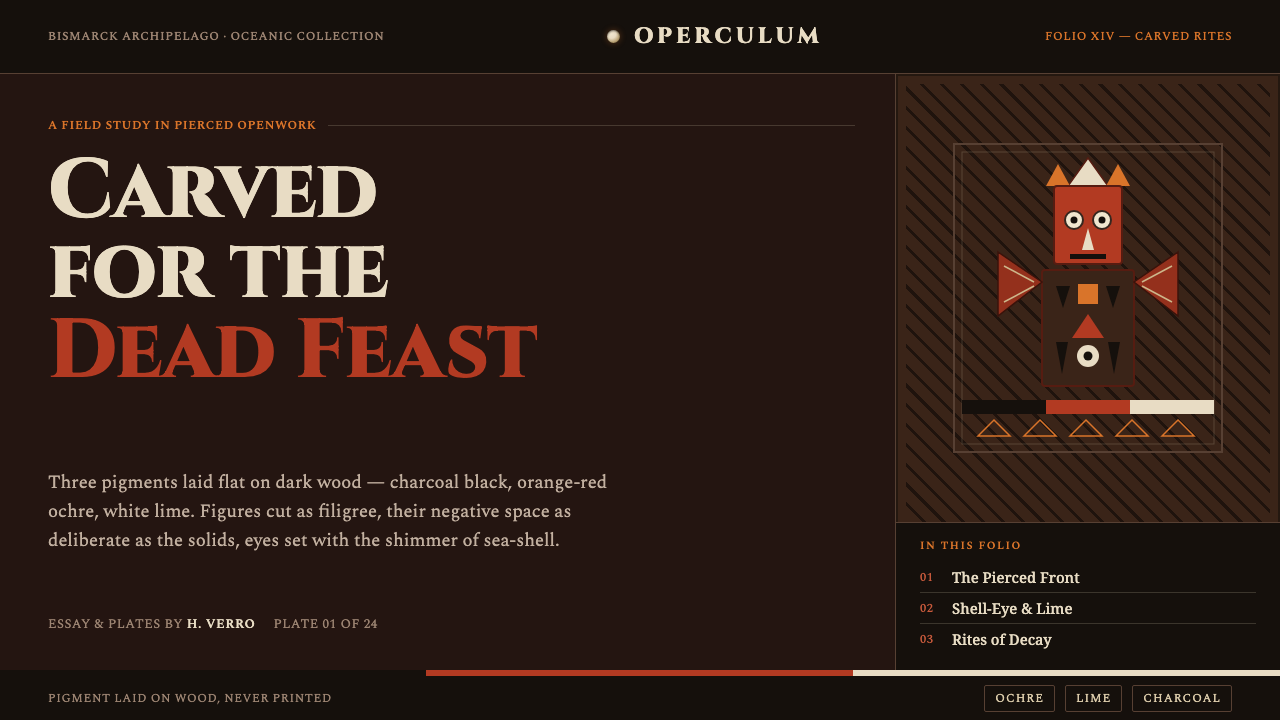 Malagan CarvingCarved for the dead feast. Ochre, lime and charcoal pierced into dark wood, e…
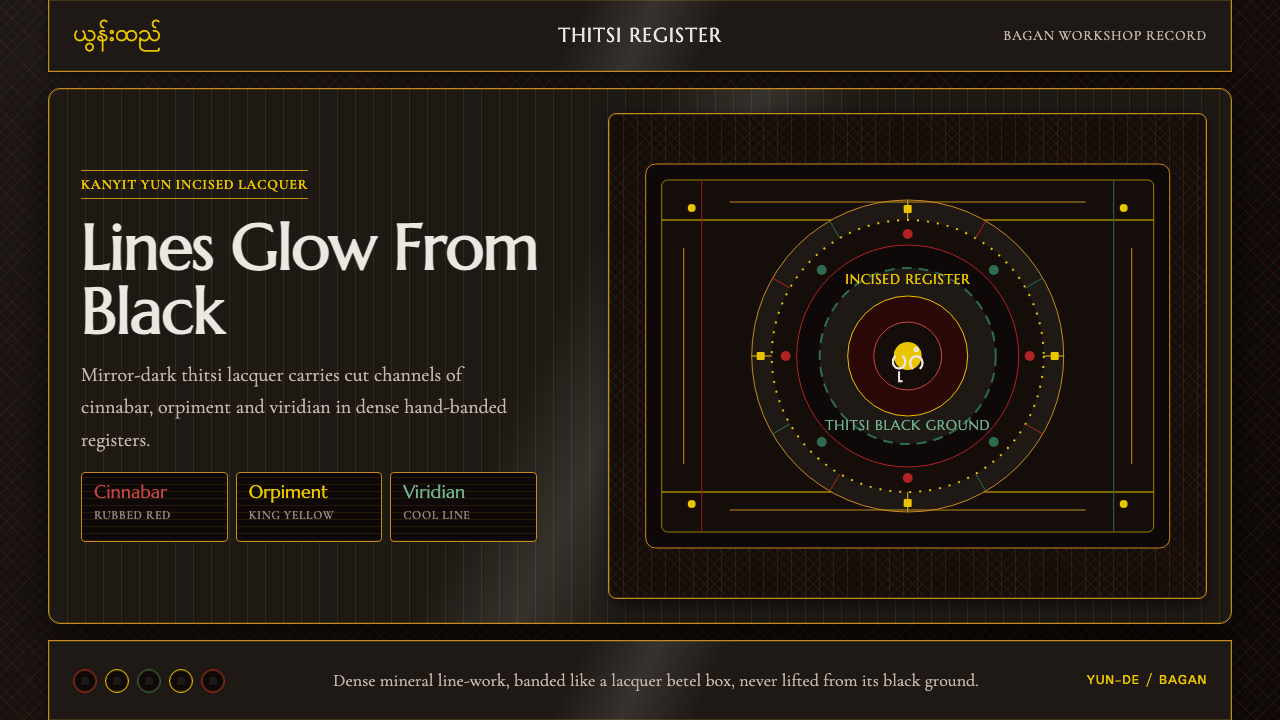 Burmese Yun LacquerwareLacquer glows in cut lines. Cinnabar, orpiment and viridian band a mirror-bla…
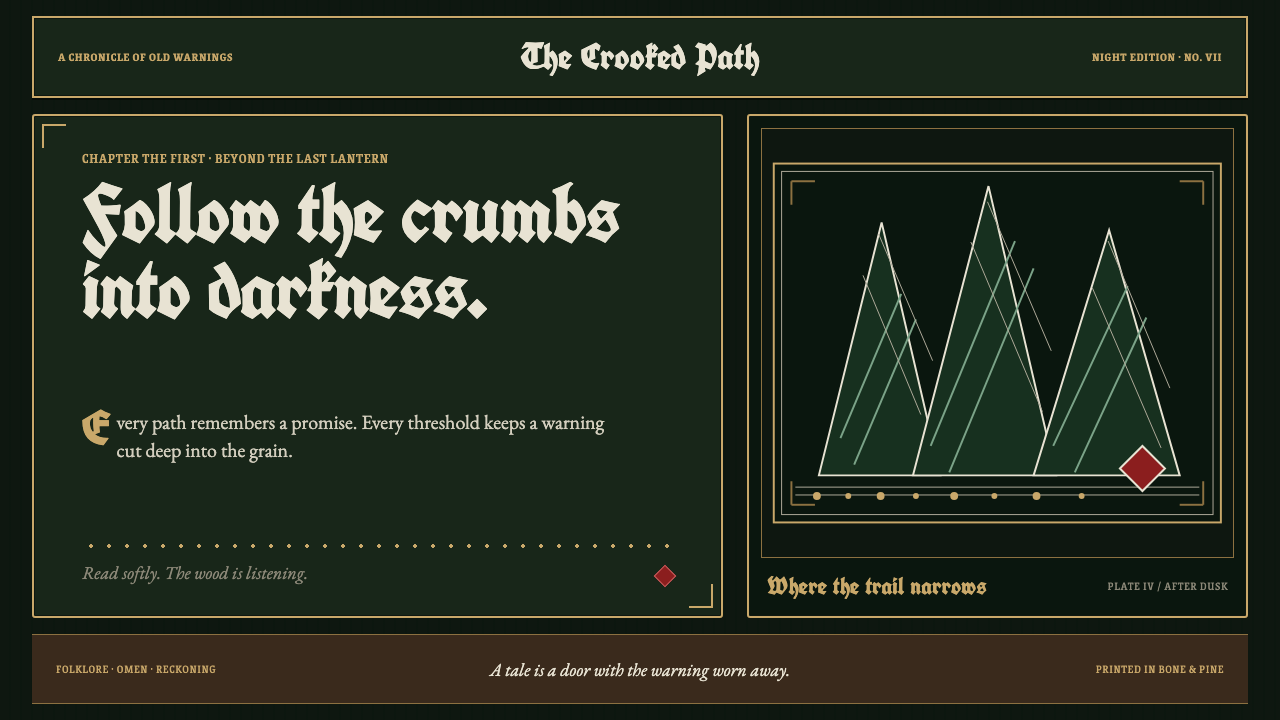 Grimm Fairy Tales (Black Forest Woodcut)The dark wood closes in. Bone-white cuts and aged-gold frames score a pine-bl…
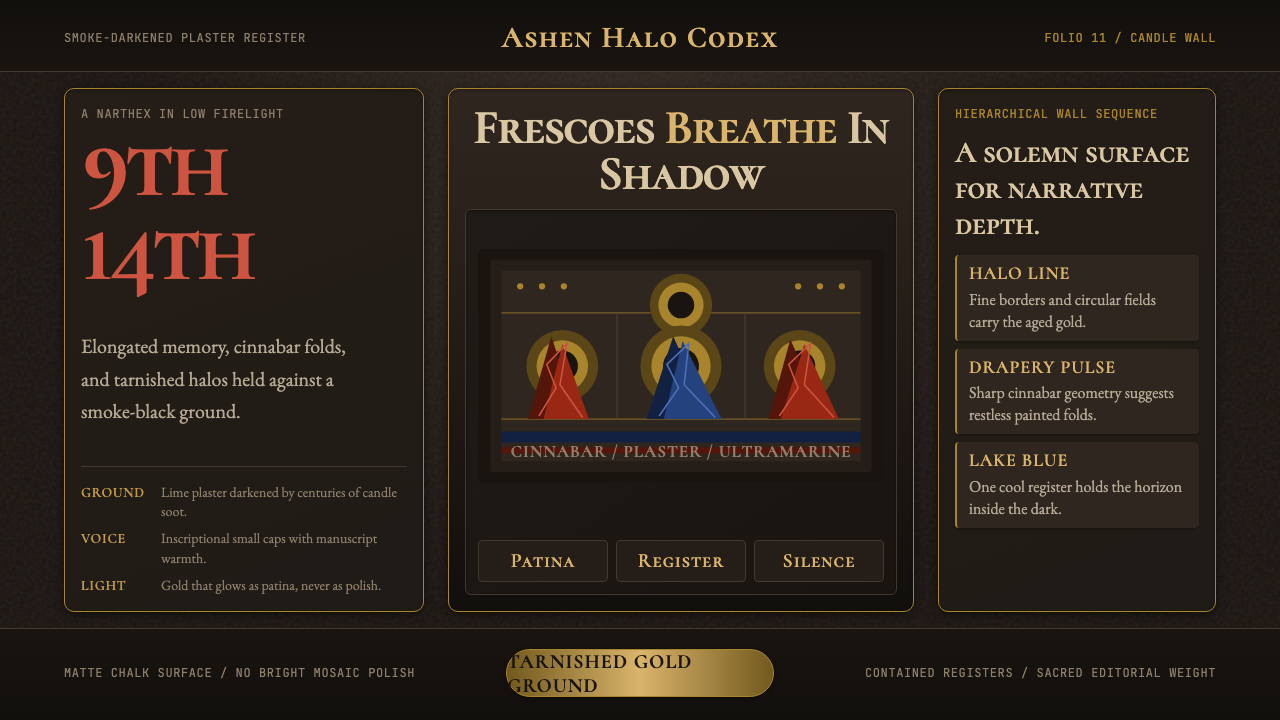 Macedonian Ohrid Fresco (Byzantine)Sacred darkness breathes. Tarnished gold rings, cinnabar folds, and plaster g…
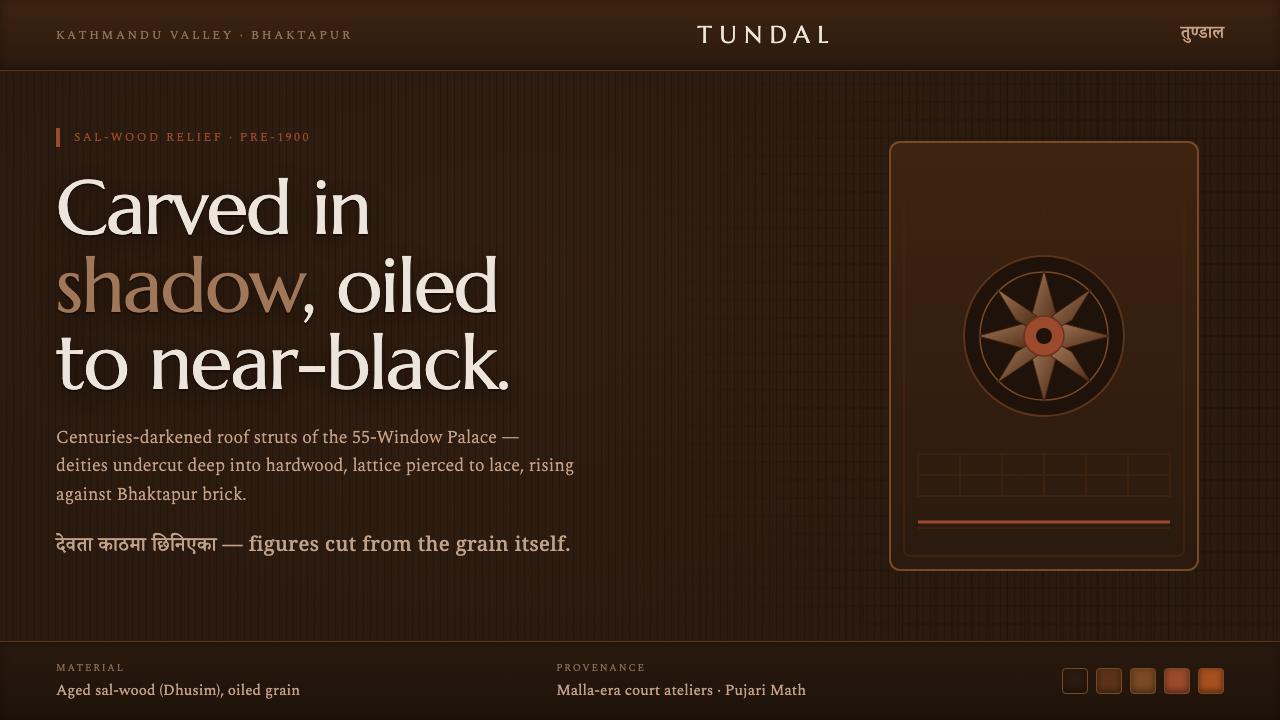 Newar Tundal Strut CarvingCenturies-darkened sal-wood. Carved deities and pierced lattice in mid-brown…
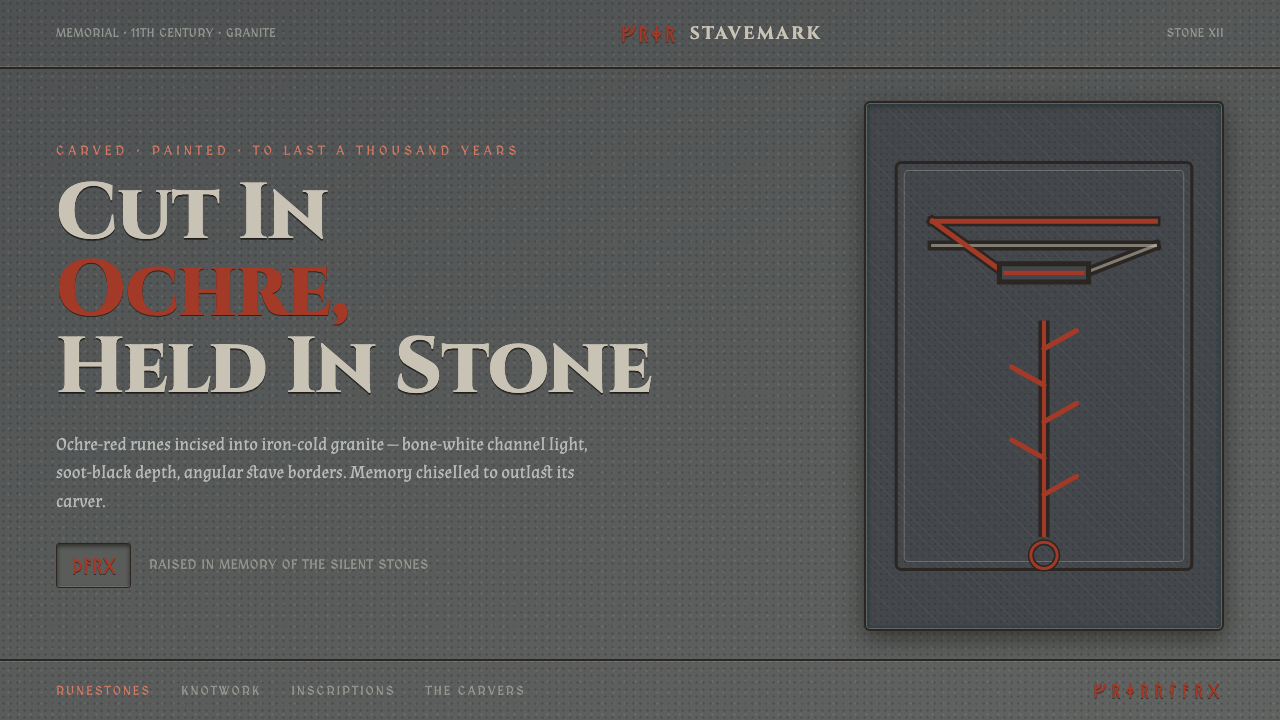 Norse Runic StaveCarved memory, painted to last. Ochre-red futhark runes incised into iron-col…