What is Botswana Coiled Basket?
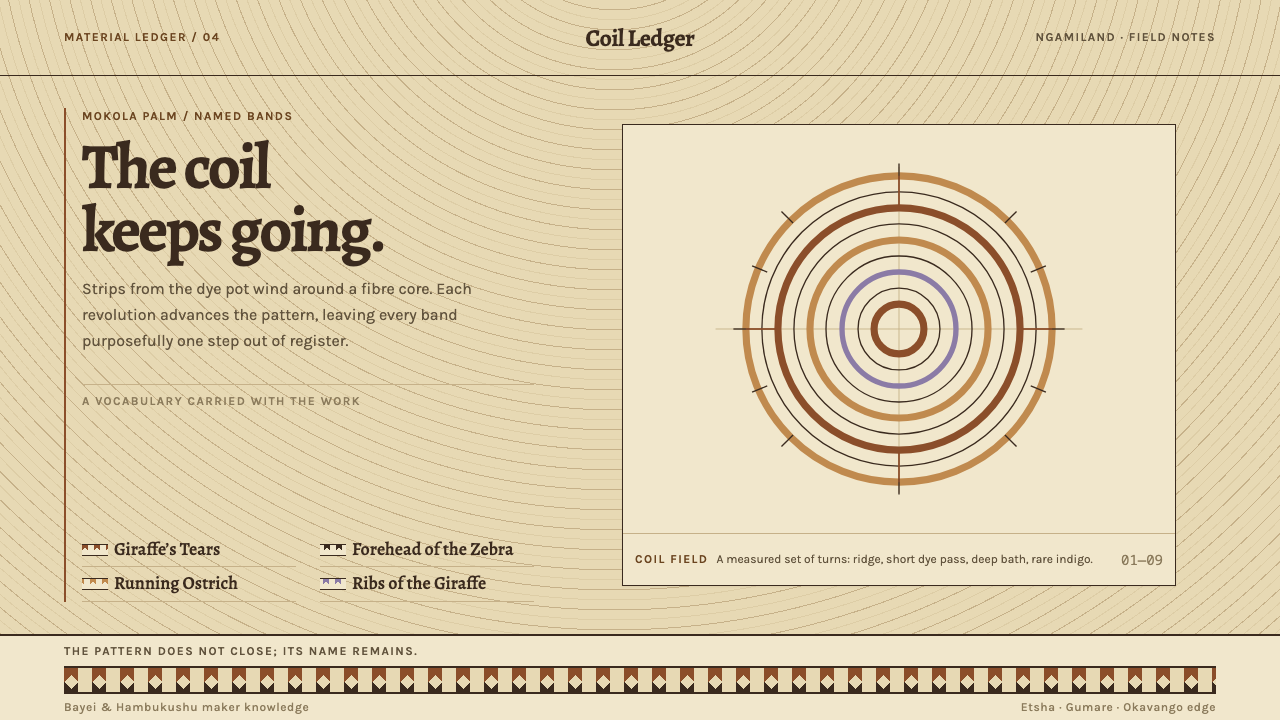
A coiled basket is a pattern that never closes: named bands of bark brown step across a straw ground, one slow turn at a time.
Botswana Coiled Basket in brief
The Botswana coiled basket is a woven craft from the Okavango Delta region in the north-west of the country, made by Bayei and Hambukushu women from strips of mokola palm. The strips are boiled with bark and root, dried, and then wound around a fibre core in a continuous spiral. A basket takes weeks to make, and some take years. What results is an object whose surface is the record of its own making: every turn of the coil is visible, and every band of pattern was placed by hand.
Two ideas make the style distinctive. The first is that the patterns are not decoration in the usual sense. Each band has a name, such as Giraffe's Tears, Forehead of the Zebra, Running Ostrich or Ribs of the Giraffe, and that name travels with the work. The second is structural: because a coil advances one turn per revolution, the bands never close back on themselves. The pattern drifts around the basket, always a little out of register with where it began.
Translated into design, the style becomes a straw ground carrying stepped bands in the browns of the dye bath, with near-black as accent and motifs that sit out of alignment on purpose. It is a warm, light, rhythmic language that values patience over polish, and it makes a persuasive case that irregularity can be the system rather than a flaw in it.
Where does Botswana Coiled Basket come from?
The tradition belongs to Ngamiland and the Okavango Delta of north-western Botswana. Around Etsha and Gumare, on the flood edge of the Okavango, Bayei and Hambukushu women build their baskets from mokola palm, working in a setting where river water and palm are everyday materials. Coiled basketry is a long-standing tradition in the region, and the knowledge of how to prepare strips, mix dyes and set patterns has been passed along through the hands of the makers themselves.
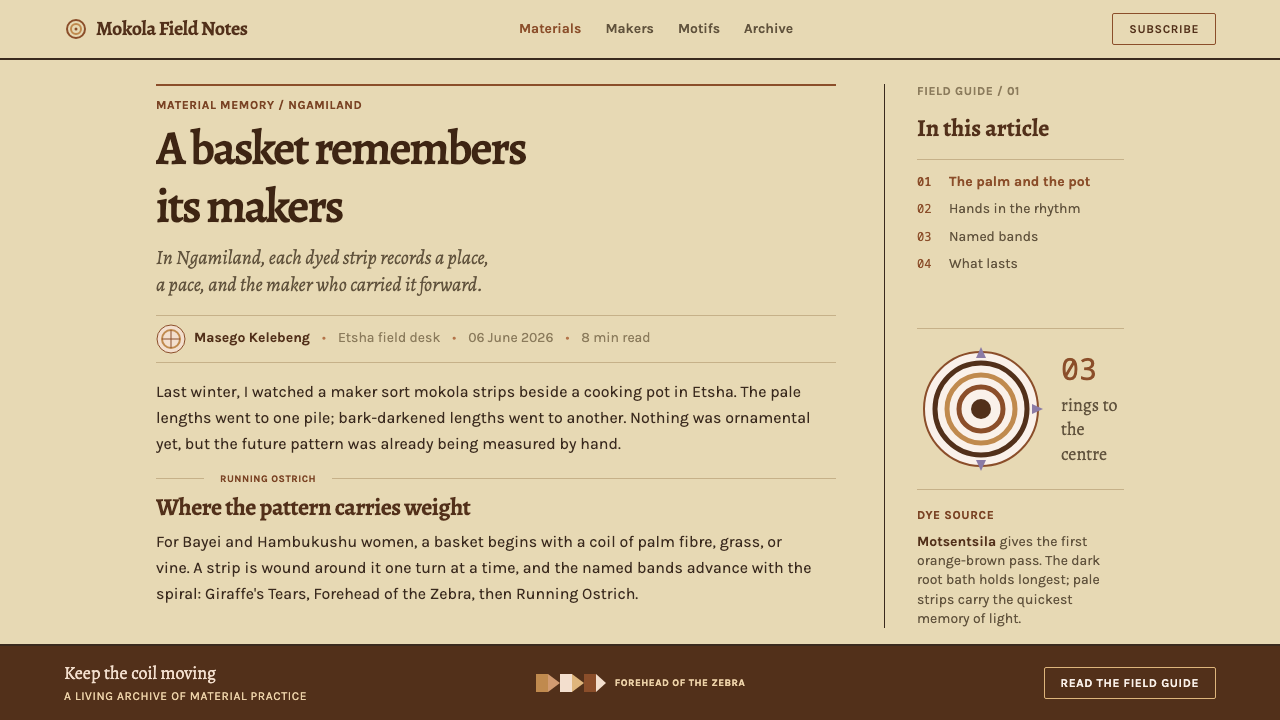
The colour comes from the materials. Palm strips are boiled with bark and root, and the dye bath yields browns and near-blacks that settle into the straw-coloured fibre. This is natural bark-and-root dyeing, and its palette is a direct record of what the plants give. There is no bright secondary colour here, because nothing in the bath produces one. The restraint of the palette is not a stylistic decision; it is a consequence of the process.
From the 1970s onward, production was increasingly organised through workshops and women's craft cooperatives. Botswanacraft is listed among the key references for this workshop-organised side of the tradition, alongside the weavers themselves. The organisation of the craft did not replace its logic: a basket still advances turn by turn, and each pattern band still carries its name. It meant that the work reached markets beyond the delta while the makers remained at the centre of the story.
For a design system, the importance of this history is that the style is process-first. Colour, rhythm and shape come from how a coil is built, how a dye is made and how a pattern is named. That gives it more internal logic than most decorative styles, and also a responsibility: when the look is borrowed, the makers and their naming tradition should be credited, not erased.
What defines the Botswana Coiled Basket look?
Straw ground
The field is the natural colour of palm fibre: a warm, pale straw. It is not white and not cream in the paper sense, but the colour of a dried plant. The ground sets the temperature for everything on it, and because the pattern is dyed into the same fibre rather than laid over it, the straw feels like a living surface instead of a blank page.
Dye-bath browns
Accent colour comes from boiling strips with bark and root, which yields bark browns and near-black. These are earthy, slightly uneven tones, strong enough to carry a pattern but never glossy or electric. The system keeps to this narrow family so that every band reads as part of one dye bath.
Stepped bands
Patterns arrive as bands that step across the field, built from small, regular increments rather than smooth curves. The stepping is a direct result of weaving: motifs are built up one stitch at a time. Visually it yields a clear, rhythmic geometry that is easy to scan and satisfying to follow.
Named patterns
Each band carries a name, and the name is part of the design. Giraffe's Tears, Forehead of the Zebra, Running Ostrich and Ribs of the Giraffe are not captions added afterwards; they travel with the work. In an interface this suggests a use for labels: sections, dividers and tiers can be named rather than numbered, so that the pattern and its meaning arrive together.
Deliberate offset
Because the coil advances one turn per revolution, bands never close back on themselves, and the pattern shifts slightly each time round. The system keeps this offset on purpose. Repeats are nudged out of register, so a row of motifs never lines up perfectly with the one above it. This is the single most important rule: remove the offset and the basket becomes wallpaper.
Coil rhythm
The surface has a horizontal, ribbed rhythm, the visible line of one coil laid against the next. The effect is a gentle, repeating pulse that gives large areas a texture without any imagery. In layout terms it argues for generous horizontal bands and steady spacing, a pace set by hand rather than by grid software.
Slow-made density
A basket takes weeks, and some take years, and that patience shows as an even, closely worked surface. The density here is calm, not crowded: pattern covers the object, yet the straw ground always shows between the bands. The impression is of concentration rather than of excess.
Who shaped Botswana Coiled Basket?
Bayei women of the Okavango, including those around Etsha and Gumare, build coiled baskets from mokola palm strips boiled with bark and root. Their hands carry the technique, the dye knowledge and the pattern names that make the style what it is.
Hambukushu women work in the same delta setting and in the same coiled technique. Together with the Bayei, they are the named carriers of the tradition, and they are the primary credit for any design that draws on it.
Listed among the key references for the workshop-organised production of the 1970s onward, Botswanacraft is a reminder that the craft reached wider markets through organised channels. It stands for the cooperative and workshop side of the tradition.
How do you use Botswana Coiled Basket today?
The coiled-basket system suits subjects that value craft, patience and provenance: handmade goods, cultural organisations, sustainability reports, travel and nature-led brands, and slow commerce. It is warmer and lighter than most heritage-inspired styles, and it works best where the interface can feel calm and human-paced rather than urgent.
For slides, a cover can be a straw field with a single band of stepped pattern running across the lower third and the title set in dark brown above. Content slides use the same bands as dividers, each one named after the section it introduces. For data pages, bars and line segments can be drawn as stepped bands in the brown family, with the straw ground left visible between them so the chart feels woven rather than printed.
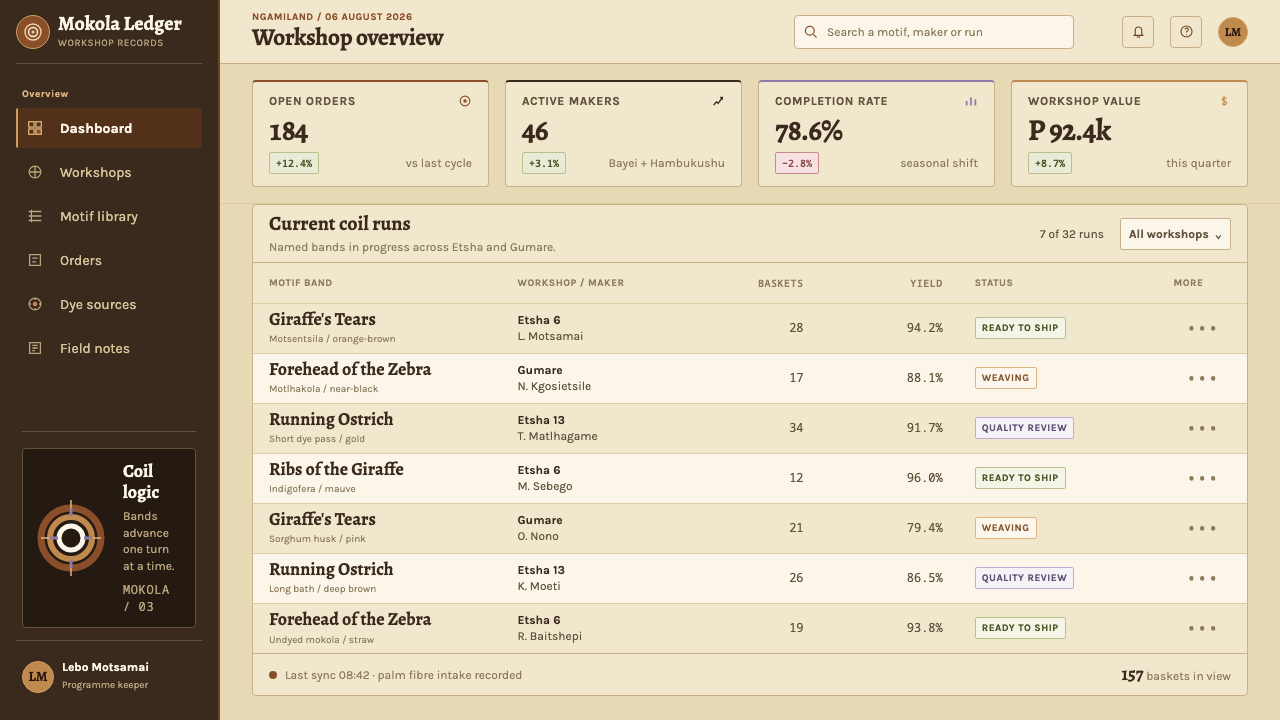
For web interfaces, the style fits marketplaces, nonprofit dashboards and pricing pages that want to feel unhurried. Tiers can be named rather than numbered, section dividers can be stepped bands, and cards can sit on the straw ground with a single brown rule. Keep the offset in any repeated border or header pattern, and avoid heavy shadows, which have no place in a surface that is meant to look woven.
For editorial and marketing work, named bands can mark chapters in a long article, and a single deliberate out-of-register motif can serve as a recurring signature. Photography of hands, fibre and process pairs well with the style; the straw ground is a good partner for natural light and unretouched images. Copy can mention the names of the patterns when it fits, which gives the layout a story rather than just a surface.
The most common mistake is to align everything. A perfectly repeating tile destroys the one feature that makes this style specific, and the result looks like a generic geometric wallpaper. A second mistake is to add bright secondary colours or neon accents; the palette is a dye bath, and it should stay within it. Finally, avoid using the look as a vague 'African pattern' pastiche detached from its makers and names, because the naming tradition is the heart of the style.
Botswana Coiled Basket — FAQ
What is a coiled basket, and how is it made?
A coiled basket is built from a fibre core wound round and round in a spiral, with each turn bound to the one below. In Botswana's Okavango region, Bayei and Hambukushu women use strips of mokola palm that have been boiled with bark and root, dried, and wound around the core. Because the spiral rises one turn at a time, the finished surface shows every coil. Making one takes weeks, and some take years.
Why do the patterns sit out of alignment?
Because that is how a coil works. It advances one turn per revolution, so a band cannot close neatly back on itself and the pattern drifts slightly each time round. The offset is therefore a structural trace of the weaving process, not a flaw. In a layout, preserving that nudge is what separates a convincing coil design from a flat repeating wallpaper.
Where do the browns and near-blacks come from?
They come from natural bark-and-root dyeing. Palm strips are boiled with bark and root, and the dye bath leaves earthy browns and near-black in the fibre. That is why the palette is so narrow: the bath does not produce bright secondary colours, so the system does not use them. When you extend the style, stay within the same dye-bath family.
Why do the pattern names matter in a design system?
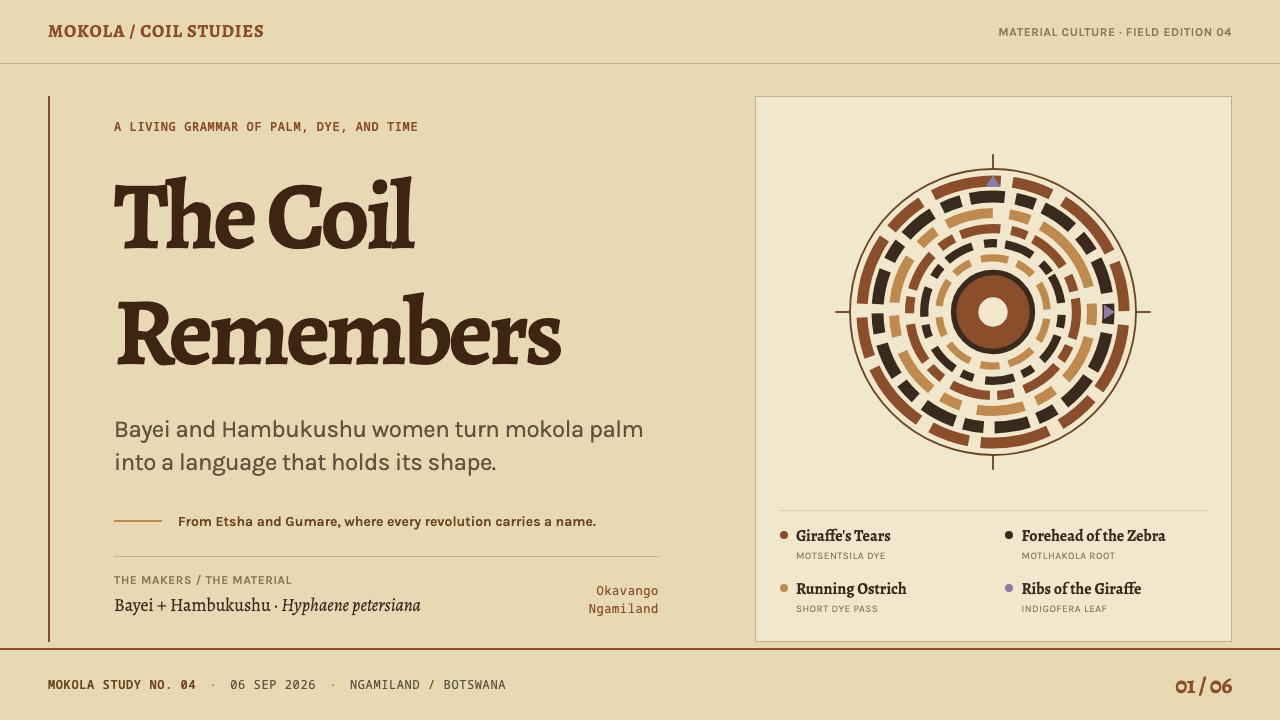
In this tradition the name is part of the pattern. Giraffe's Tears, Forehead of the Zebra, Running Ostrich and Ribs of the Giraffe each identify a band and travel with the basket. Using names in an interface, for sections, tiers or dividers, keeps that spirit alive and gives users something richer to read than a number. It also signals respect for where the pattern comes from.
How do I borrow this style without copying the baskets?
Borrow the logic rather than the specific motifs. Use a straw ground, a narrow dye-bath palette, stepped bands and a deliberate offset, and name the bands in your own system. Credit the Bayei and Hambukushu weavers when the context allows, and avoid presenting your own geometry as a particular traditional pattern. The aim is a design that feels woven, not an imitation of any one basket.
Related design styles
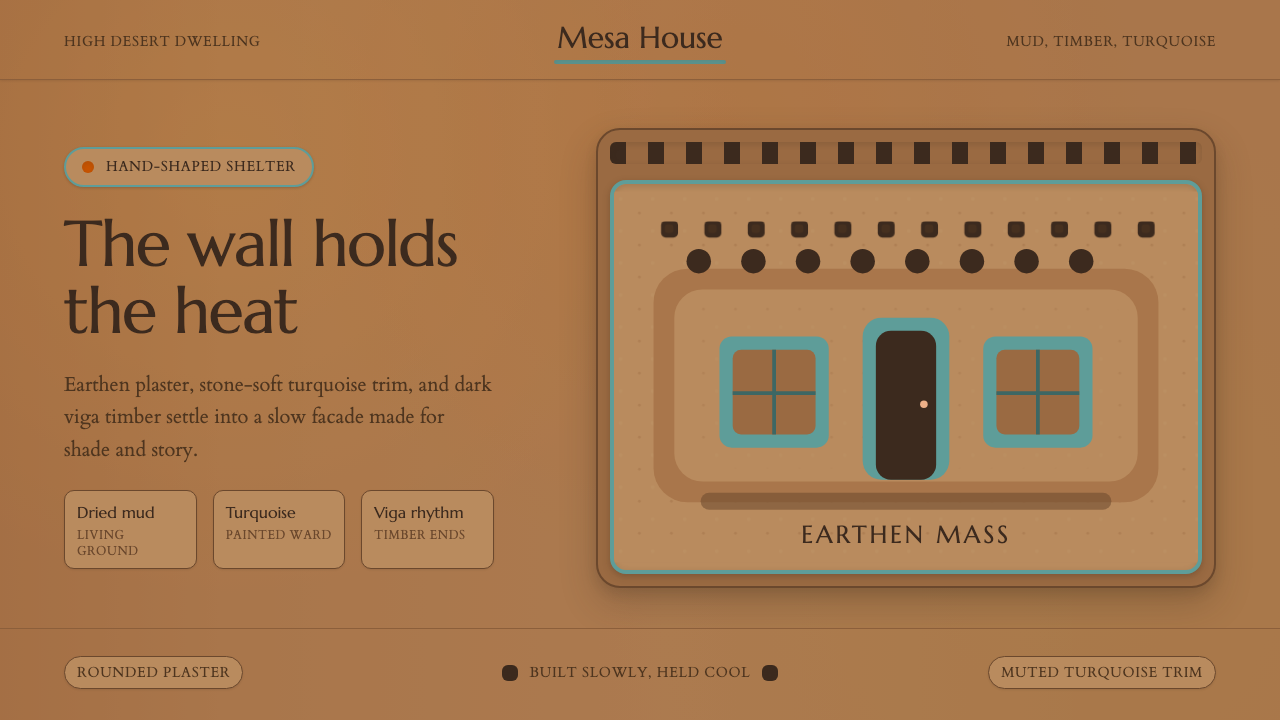 Adobe Pueblo SouthwestFeels made by hand. Earthen tan, turquoise trim, and viga rhythm shape the fr…
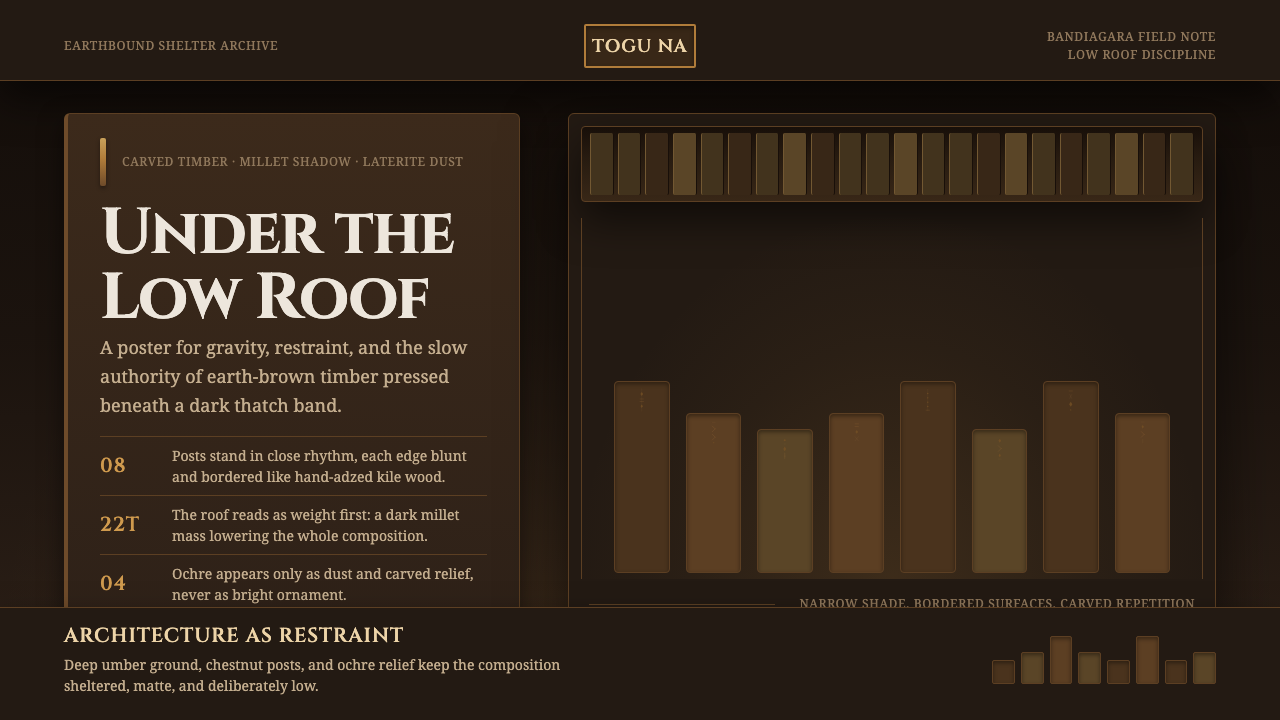 Dogon Toguna Shelter MaliGravity made visible. Deep umber ground, low roof band, chestnut posts in sha…
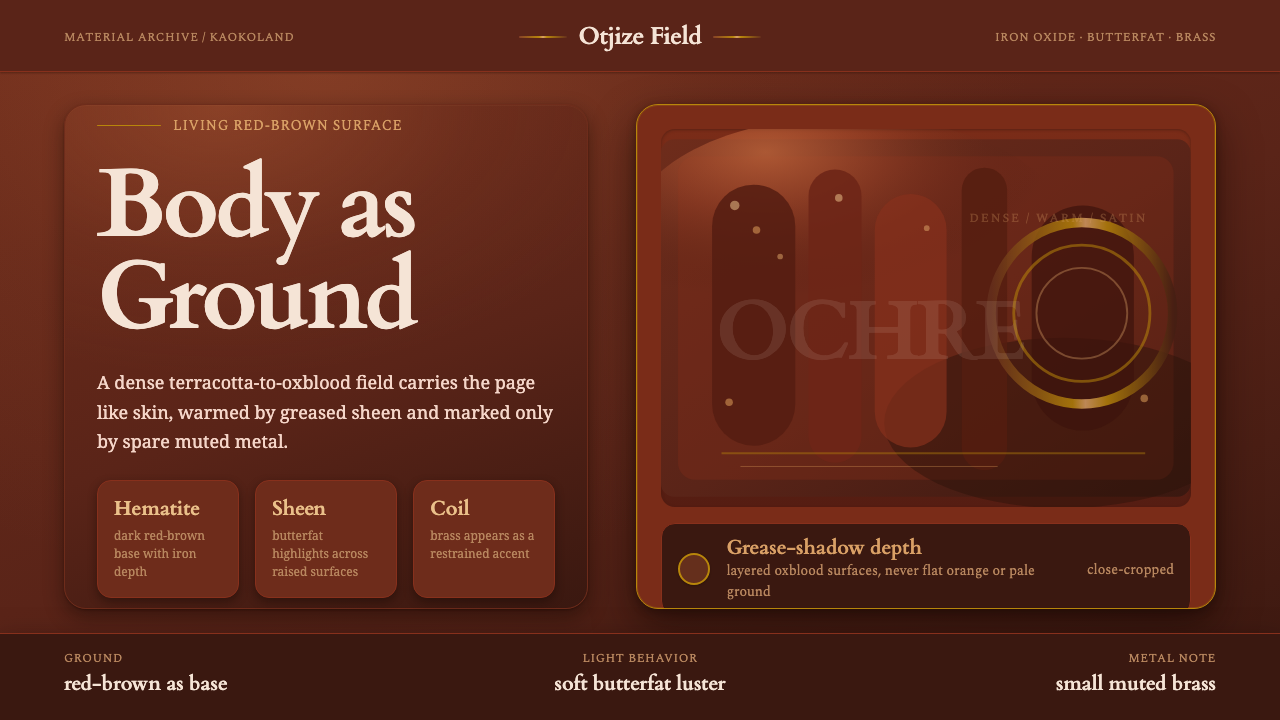 Himba Otjize Ochre NamibiaDense and ritual-warm. Oxblood ground, butterfat sheen, and sparse brass coil…
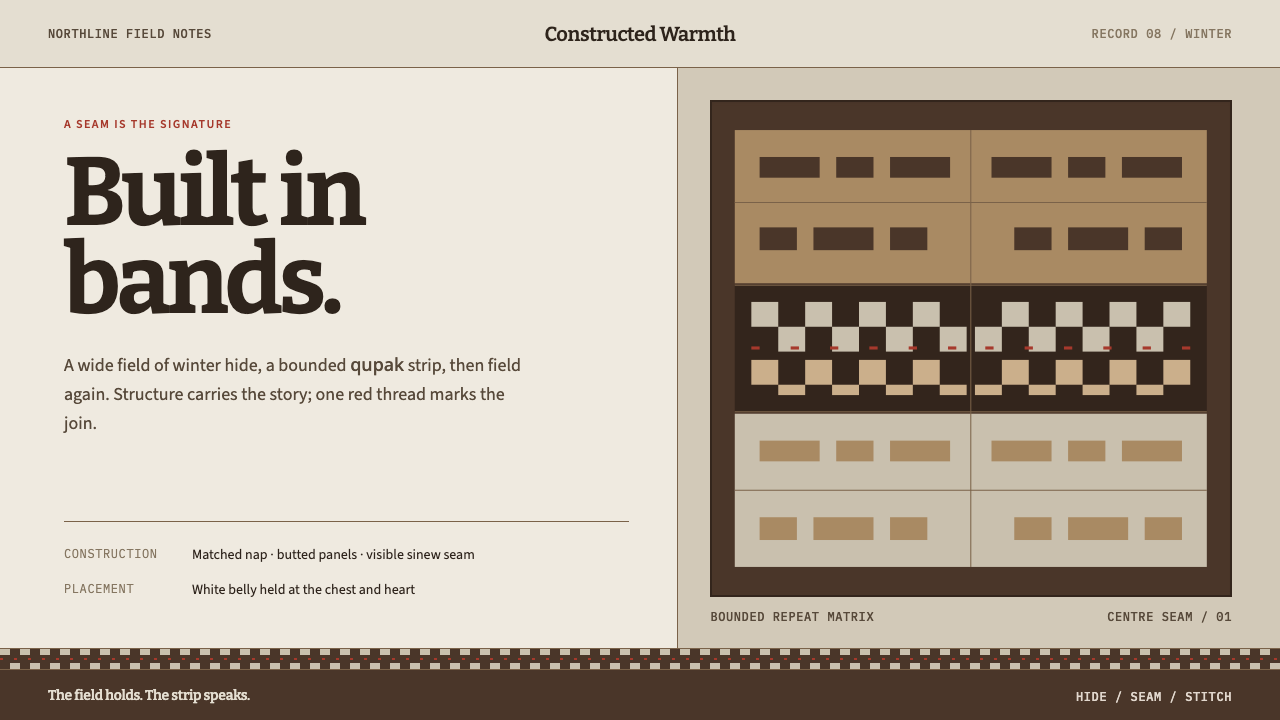 Iñupiat ParkaStructure carries the signature. Caribou-hide bands frame a bounded qupak rep…
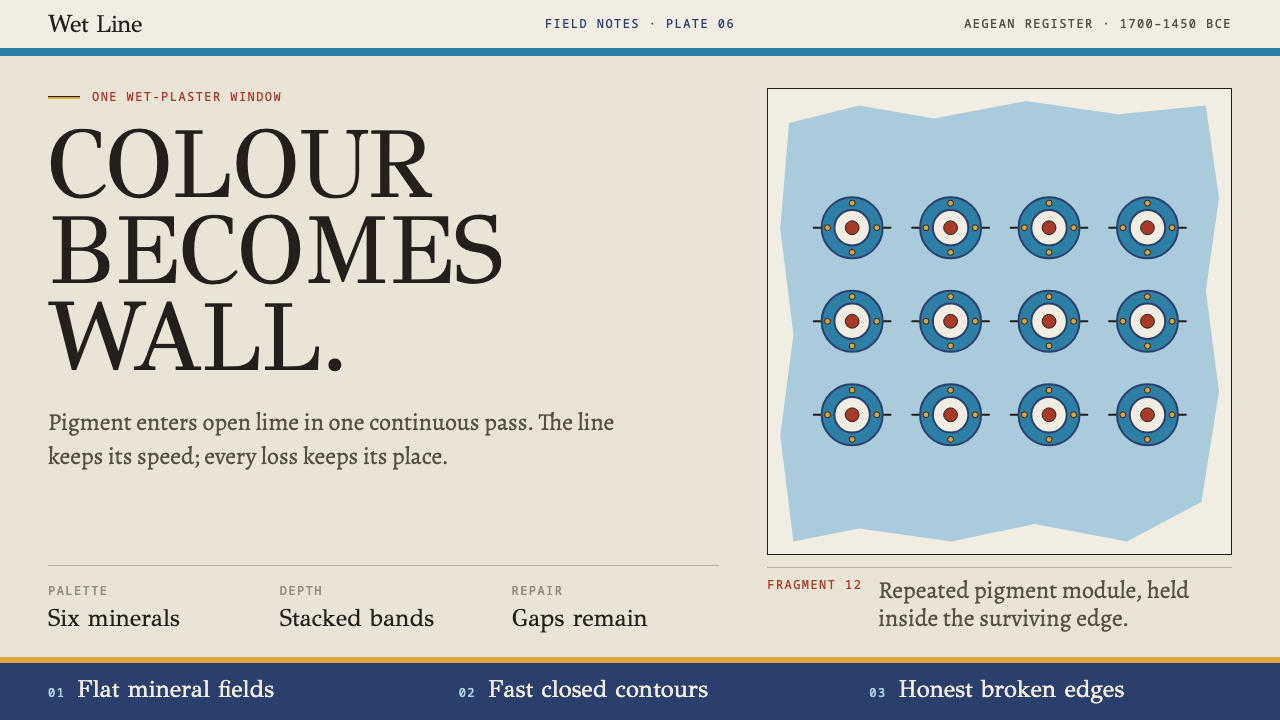 Knossos Minoan FrescoColour becomes wall. Six mineral fields meet swift contours and honest fragme…
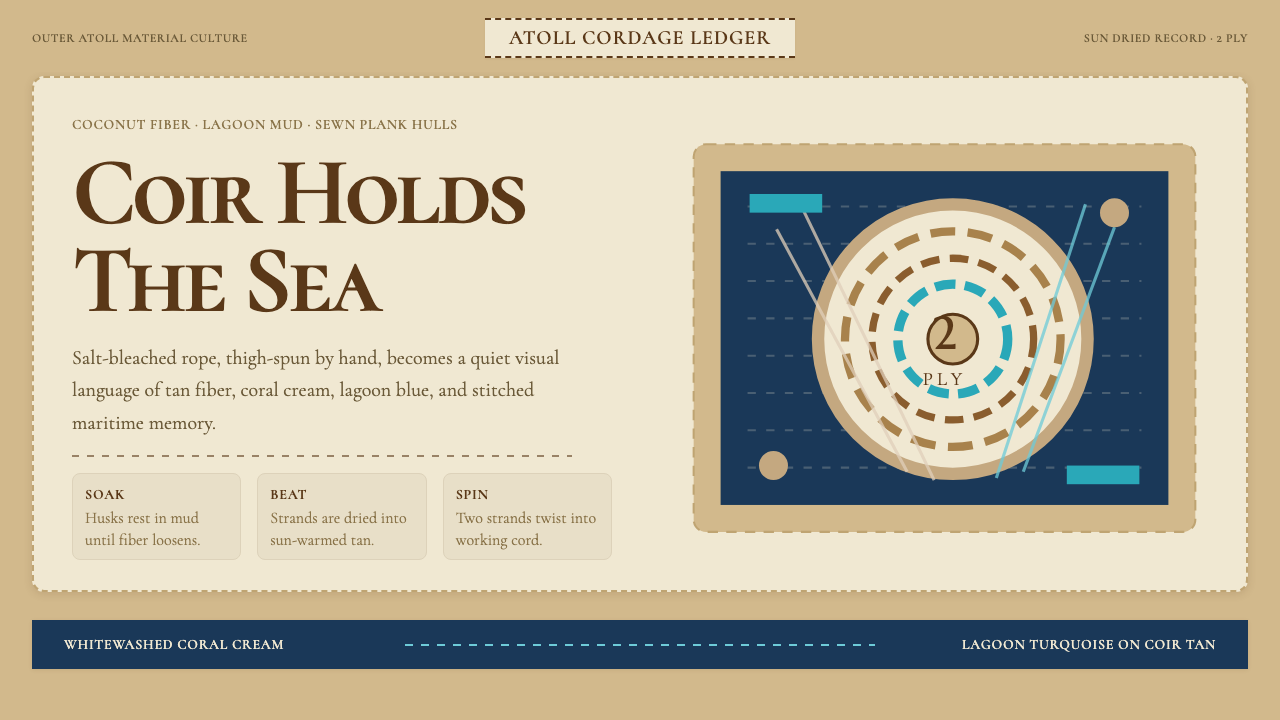 Maldivian Coir (Coconut Rope)Ocean-tested craft. Coir tan, coral cream, Cormorant type, and dashed seam ge…