What is Amazon Web Services (AWS)?
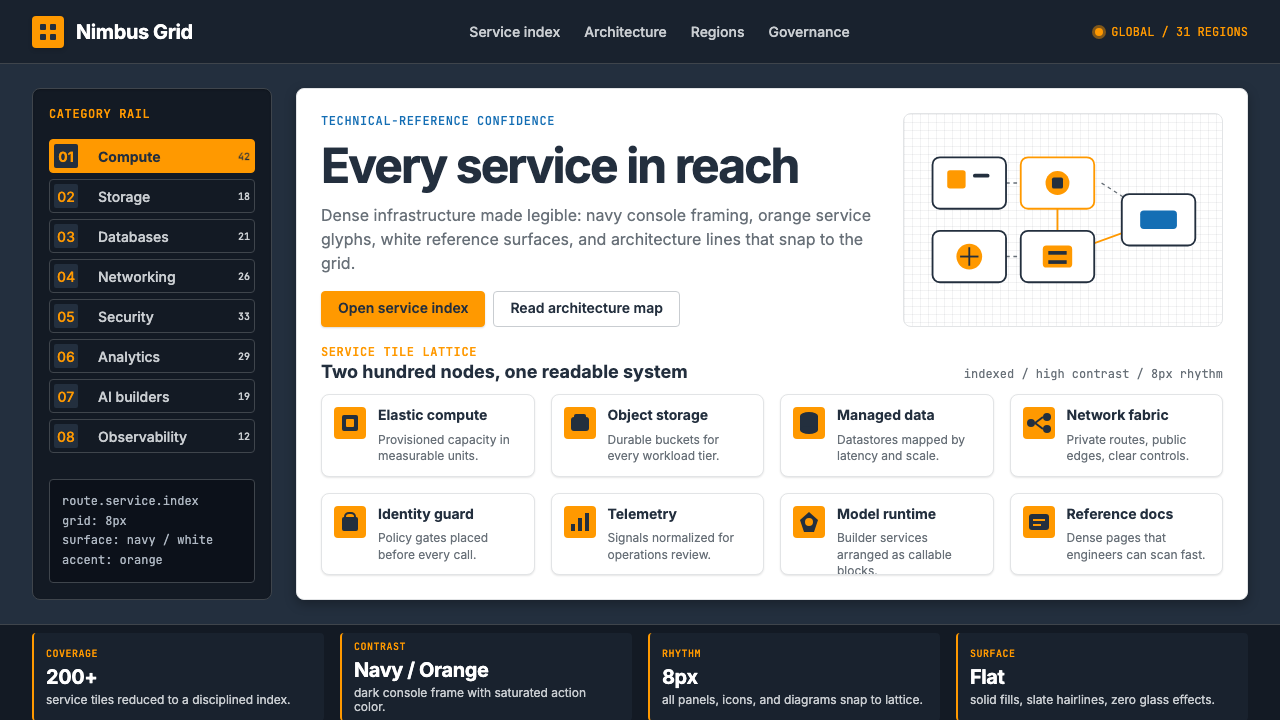
AWS turned enterprise cloud infrastructure into a visual language — dark navy, saturated orange, and relentless grid discipline that says 'serious engineering' before a single word is read.
Amazon Web Services (AWS) in brief
Amazon Web Services is the visual design system of the world's dominant infrastructure cloud — a platform launched in 2006 that now runs roughly thirty percent of the global web. Its aesthetic is not accidental decoration but a deliberate corporate signal: this is enterprise infrastructure, not a consumer app. The palette pairs a highly saturated warm orange brand accent against a deep, near-black navy console background, organized through a dense but legible grid of service-tile icons, white card surfaces, and high-contrast typographic labels. Nothing in the system tries to look friendly in the manner of consumer software; everything is calibrated to read as technically authoritative and professionally reliable.
The core tension in the AWS visual language is between density and legibility. The platform hosts over two hundred distinct services — compute, storage, databases, machine learning, networking, security, and dozens more — and each must be discoverable, identifiable, and distinguishable at a glance. The solution is systematic: a consistent orange-on-dark icon grid where each tile carries a service-category color treatment derived from the brand's orange anchor, organizing a complex catalog into a coherent navigational surface. The result feels less like software design and more like a technical reference document brought to life.
What distinguishes AWS's aesthetic from other enterprise platforms is its unapologetic commitment to chiaroscuro — the dramatic contrast between the deep navy console shell and the bright, warm service icons and orange call-to-action elements. This is not a muted, low-contrast enterprise grey that tries to disappear; it is a high-contrast, bold-color system that asserts presence. The design language says that the platform itself is confident, expansive, and too large to be shy.

Where does Amazon Web Services (AWS) come from?
Amazon Web Services was born not from a design vision but from an infrastructure problem. In the early 2000s, Amazon's engineering teams found themselves repeatedly building the same internal tools — storage layers, compute allocation systems, database primitives — for different projects. Andy Jassy, who had been working closely with Amazon's CEO Jeff Bezos, recognized that these internal services could be offered externally as a pay-per-use utility platform. In 2006, Amazon launched Simple Storage Service (S3) and Elastic Compute Cloud (EC2), the two foundational primitives that defined what cloud computing would become. The visual design of that early console was utilitarian to the point of severity — it was developer tooling, and it looked exactly like developer tooling.
The platform's brand identity evolved alongside its commercial ambitions. For its first decade, AWS's visual language was largely inherited from Amazon's e-commerce aesthetic: functional, data-dense, and not particularly distinctive. The 2017 brand refresh marked a turning point. AWS established its own visual system, architecturally distinct from the consumer-facing Amazon brand, built around what would become its signature combination: the deep navy console environment, the saturated orange service icon accent, and the Amazon Ember typeface — a custom sans-serif commissioned from the type foundry Dalton Maag in 2014 and first deployed across Amazon's family of products. Ember gave the platform typographic coherence across an enormous range of surface areas, from tiny console labels to full-page marketing spreads.
Werner Vogels, Amazon's Chief Technology Officer since 2005, became the intellectual and public face of the platform's engineering culture — his blog, 'All Things Distributed,' and his conference appearances at re:Invent established the vocabulary through which AWS communicated its identity to developers. This was a brand built through engineering credibility, not lifestyle aspiration. The architecture diagrams that appeared in AWS documentation and conference talks — dense boxes-and-arrows technical schematics using the service icon set — became one of the most recognizable forms of technical communication in the industry. These diagrams are as much a part of the AWS visual identity as the console itself.
Adam Selipsky succeeded Jassy as AWS CEO in 2021, inheriting a platform that had grown to roughly ninety billion dollars in annual revenue by 2023. By this point, the AWS visual system had become a reference standard in enterprise cloud design — its icon grid, service-category color conventions, and dark-console-on-white-content layout logic had been widely imitated by competitors including Microsoft Azure and Google Cloud, both of which adopted elements of the dark-navigation, service-tile pattern that AWS had pioneered. The irony is that a platform whose early console was purely utilitarian had, through scale and consistency, produced one of the most studied and copied visual systems in enterprise software.
What defines the Amazon Web Services (AWS) look?
Orange-on-Navy Contrast
The defining visual move is the pairing of a saturated warm orange against a deep, near-black navy background. This is not a neutral enterprise palette — it is a deliberately high-contrast, assertive combination that places the brand accent at maximum visibility against the darkest possible ground. The orange reads as warm, energetic, and action-oriented against the cold depth of the navy, creating a visual hierarchy that instantly separates navigation from content, action from information.
Service-Tile Icon Grid
AWS organizes over two hundred services into a coherent catalog through a systematic icon grid — each service rendered as a square tile carrying a simplified, flat pictogram against a colored background. The tile backgrounds use a set of category-derived hues that descend from the orange anchor: warm tones for compute and storage, cooler tones for networking and security. The grid itself is the taxonomy made visible: a spatial catalog where proximity implies category and color implies domain.
Dark Console, Light Content
The AWS console employs a deliberate split-surface logic: the navigation shell — header bar, service navigation, sidebar — is rendered in deep navy, while the primary content area sits on a clean white or near-white ground. This contrast is functional as much as aesthetic: the dark shell frames and recedes, making the white content area feel like the working surface, the place where actual engineering happens. The transition from navigation to content is a shift from orientation to operation.
Architecture Diagram as Identity
Few enterprise platforms have made a visual artifact as central to their identity as AWS has with its architecture diagrams. These are dense, technical schematics built from the service icon set — boxes, arrows, VPC boundaries, availability zone brackets — that appear in documentation, conference talks, and customer case studies. The diagrams have a distinct visual grammar: flat-color service icons arranged in spatial clusters, connected by directional arrows, enclosed in dashed-line region boundaries. Learning to read and draw these diagrams is itself a professional credential in the cloud industry.
Flat, Geometric Iconography
AWS service icons follow a strict flat-color, geometric reduction principle. Each icon reduces its subject — a compute instance, a database, a content delivery network — to its most recognizable geometric silhouette, rendered without gradients, shadows, or dimensional effects. The pictogram reads at small sizes because it carries only the essential geometric gesture. This is not decorative illustration; it is wayfinding at the scale of a service catalog.
Typographic Hierarchy Without Decoration
The AWS visual system achieves typographic hierarchy through scale, weight, and color contrast alone — no decorative borders, no ornamental dividers, no background tints applied purely for visual texture. Service names, category labels, pricing tiers, and status indicators are distinguished by their position in a size and weight scale, with the orange accent reserved for interactive elements and primary calls to action. The discipline is functional: in a dense service catalog, typographic clarity is survival.
Engineering Culture Aesthetic
The overall visual register of AWS is what might be called engineering confidence — the aesthetic of a technical manual produced by people who know the subject matter thoroughly and trust their audience to meet them at that level. There is no visual softening for onboarding, no playful illustration to ease complexity, no lifestyle imagery suggesting aspiration. The design assumes competence. This is simultaneously AWS's greatest strength with its core professional audience and its most significant limitation when reaching new or non-technical users.

Who shaped Amazon Web Services (AWS)?
Jassy served as the founding CEO of AWS from its inception through 2021, when he succeeded Jeff Bezos as CEO of Amazon itself. His strategic vision of cloud computing as a utility service — pay only for what you use, scale infinitely on demand — defined not just AWS's business model but the entire enterprise cloud industry. Under his leadership, AWS grew from an internal infrastructure experiment to a platform generating tens of billions in annual revenue, and the visual design system that emerged during his tenure reflects his engineering-first, customer-second cultural stance: function over form, capability over aesthetics.
As Amazon's Chief Technology Officer since 2005, Vogels became the engineering intellectual face of AWS — its most prolific public communicator and the architect of its technical credibility. His annual keynotes at re:Invent, AWS's flagship conference, are elaborate technical demonstrations in which new services are introduced through live architecture diagrams and code demonstrations. His long-running blog, 'All Things Distributed,' established a writing style for cloud technical communication that combines engineering rigor with strategic vision. Vogels made the architecture diagram a primary vehicle of AWS identity.
Selipsky served as AWS CEO from 2021 onward, inheriting a platform whose visual identity was already a global reference standard. His tenure coincided with the platform's expansion into machine learning services, generative AI tooling, and deeper industry-specific clouds — categories that required the visual system to extend into new domains while maintaining the legibility and authority that the orange-on-navy language had established. His re:Invent keynotes introduced a more polished presentation layer to AWS's public communications, while preserving the engineering-first visual register of the console itself.
The London-based type foundry Dalton Maag was commissioned by Amazon in 2014 to design Amazon Ember, the custom typeface that serves as the typographic backbone of the entire AWS visual system. Ember is a humanist sans-serif with a large x-height and open apertures, designed to remain legible at the small sizes demanded by dense console interfaces and to scale gracefully to large headline sizes in marketing contexts. By commissioning a custom typeface rather than licensing an existing one, Amazon gave AWS a typographic signature that no other enterprise platform shared — a subtle but powerful signal of the platform's scale and investment in its own identity.
AWS's annual re:Invent conference, held in Las Vegas since 2012, is not a figure in the biographical sense but a designed artifact that has shaped AWS's public visual identity as much as the console itself. The conference produces tens of thousands of architecture diagrams, technical session slides, and product announcement graphics each year — all subject to the AWS visual system's rules. The characteristic re:Invent aesthetic — orange on dark, dense technical diagrams, service icon grids, white-on-dark slide templates — has become a recognized genre of enterprise technical communication, distinguishable at a glance from any other cloud platform's conference materials.
How do you use Amazon Web Services (AWS) today?
The AWS visual language is most legible when applied to contexts that share its underlying values: technical authority, categorical density, and the need to orient expert users within a complex system. Applying it correctly requires understanding that the style's power comes from its systematic restraint — the orange is powerful because it is reserved, the dark navy reads as stable because the content surfaces are kept consistently light.
For presentation slides, the AWS aesthetic works best when applied with the same discipline it brings to the console. A cover slide benefits from the dark-navy-field approach: the service icon grid or a single large service icon in orange anchors the visual field, while the title and subtitle sit in high-contrast white type. Content slides should commit to the dark-shell, light-content split — a dark header band with orange accent carries the section title, while the body area operates on a clean white ground with the systematic typographic hierarchy that AWS console labels demonstrate. Architecture diagram slides are where the style truly excels: dense technical schematics using the AWS icon set, arranged in the boxes-and-arrows grammar that engineering audiences recognize instantly. Avoid importing lifestyle photography or illustrative imagery — it conflicts with the visual register.
For web dashboards and cloud service UI, the AWS visual pattern is a natural reference. Apply a dark top navigation bar as the primary orientation surface, reserving the orange accent strictly for active states, primary action buttons, and alert indicators. The main content area should be white or very lightly tinted, organized in a card grid that mirrors the service-tile logic. Use flat, outlined iconography rather than illustrated icons, and keep the icon color palette limited to functional category signals rather than decorative variety. Pricing pages work particularly well in this style: the tier-differentiation grid, with its horizontal comparison structure and orange highlight for the recommended tier, directly mirrors AWS's own pricing page conventions.
For editorial and marketing content — blog posts, technical white papers, case studies — the AWS visual language supports a clear hierarchy through its typographic discipline. Use a single sans-serif typeface at multiple weights rather than mixing families. Deploy the orange sparingly as a link color, pull-quote accent, or section marker. Technical diagrams should follow the boxes-and-arrows convention even when simplified, giving the reader a visual grammar consistent with what they encounter in AWS documentation. Marketing pages for infrastructure or developer tools are particularly well-served by the style's poster-like directness: alternating dark-navy feature blocks and white content sections, with orange used only for the primary call-to-action element per section.
A common mistake when applying the AWS visual language is treating the orange as a general-purpose accent to be distributed liberally across every interactive element, illustration, and decorative touch. In the AWS system, the orange is powerful precisely because it is rare — it marks the action, the selection, the critical status. Diluting it across the entire composition dissolves the visual hierarchy the system depends on. Equally damaging is softening the dark navy to a medium grey in the mistaken belief that it will feel more approachable; the dramatic contrast between the near-black navigation shell and the white content area is what gives the system its authority. Choosing a medium tone for both surfaces produces the worst of both worlds: neither bold nor clean.

Amazon Web Services (AWS) — FAQ
Is the AWS visual style appropriate for non-cloud products?
It can be, but only when the product shares the underlying values the style communicates: technical authority, categorical depth, and the assumption of expert users. The style works well for developer tools, data dashboards, infrastructure monitoring products, security platforms, and any interface where the user is a professional who values orientation over aesthetics. It struggles in consumer contexts, emotional service design, or products targeting non-technical audiences — the visual language's severity reads as cold or intimidating to users who are not already predisposed to trust it on professional grounds.
How does AWS's visual approach differ from other major cloud platforms?
AWS's visual language is the oldest and has defined the category default. Microsoft Azure and Google Cloud both arrived later and drew from AWS's conventions — the dark navigation shell, the service icon grid, the flat-color iconography — while diverging in palette and personality. Azure leans toward a cooler, more corporate blue-and-grey palette with Microsoft's Fluent Design language softening the edges. Google Cloud applies Material Design conventions, introducing more color variety, rounded geometry, and a lighter overall surface treatment. AWS alone maintains the dramatic high-contrast orange-on-near-black combination and the uncompromising density that comes from two decades of accumulated service catalog. The AWS aesthetic is the most severe and the most recognizable.
Can the AWS style work in a light-mode or all-white layout?
Yes — the AWS console itself uses white as the primary content surface, with the dark navy confined to navigation elements. A light-mode interpretation of the AWS style is therefore entirely authentic: white content cards, clean sans-serif typographic hierarchy, flat orange for active states and calls to action, and flat icon treatments in the service icon grammar. The critical requirement is that the orange retain its character as a rare, functional accent rather than a pervasive decorative color. The dark shell is not mandatory; what is mandatory is the restraint, the systematic hierarchy, and the orange's reserved status.
What is the right way to use the AWS icon style without the full icon library?
The principles behind the AWS icon style can be applied independently of the specific icon library. The core rules are: reduce the subject to its most recognizable geometric silhouette; render it in a single flat color against a contrasting tile background; keep the tile square; assign background colors by category rather than by individual preference. The result should read as a wayfinding system, not an illustration. If custom icons must be created from scratch, designing them through geometric reduction — starting with the simplest possible shape that still communicates the subject — produces results consistent with the AWS visual grammar.
Does the AWS aesthetic age well, or does it feel like a specific moment in enterprise software history?
The AWS aesthetic is simultaneously historically situated and remarkably durable. It is situated because the dark-console, service-grid pattern it pioneered has now been so widely adopted that it no longer reads as distinctive within the cloud category — it has become the category default. It is durable because its underlying principles — high contrast, systematic hierarchy, flat color, functional iconography — are structural rather than stylistic, and structural principles age more slowly than surface trends. The orange-on-navy combination will eventually feel dated in the same way that all specific color pairings eventually do, but the organizational logic of the AWS visual system — grid, icon, category, contrast — is likely to remain legible and influential long after its specific palette has been superseded.
Related design styles
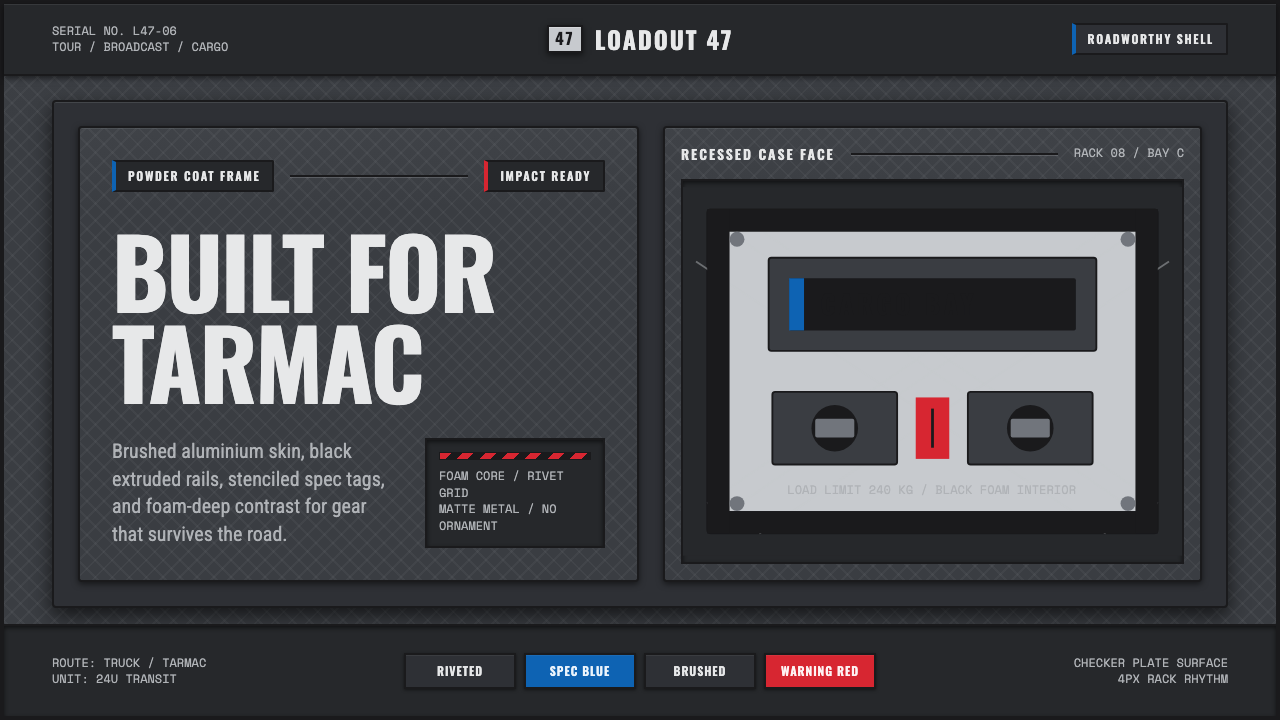 Aluminium Flight CaseRoadproof and exact. Diamond-plate gray, stencil type, black frames, blue-red…
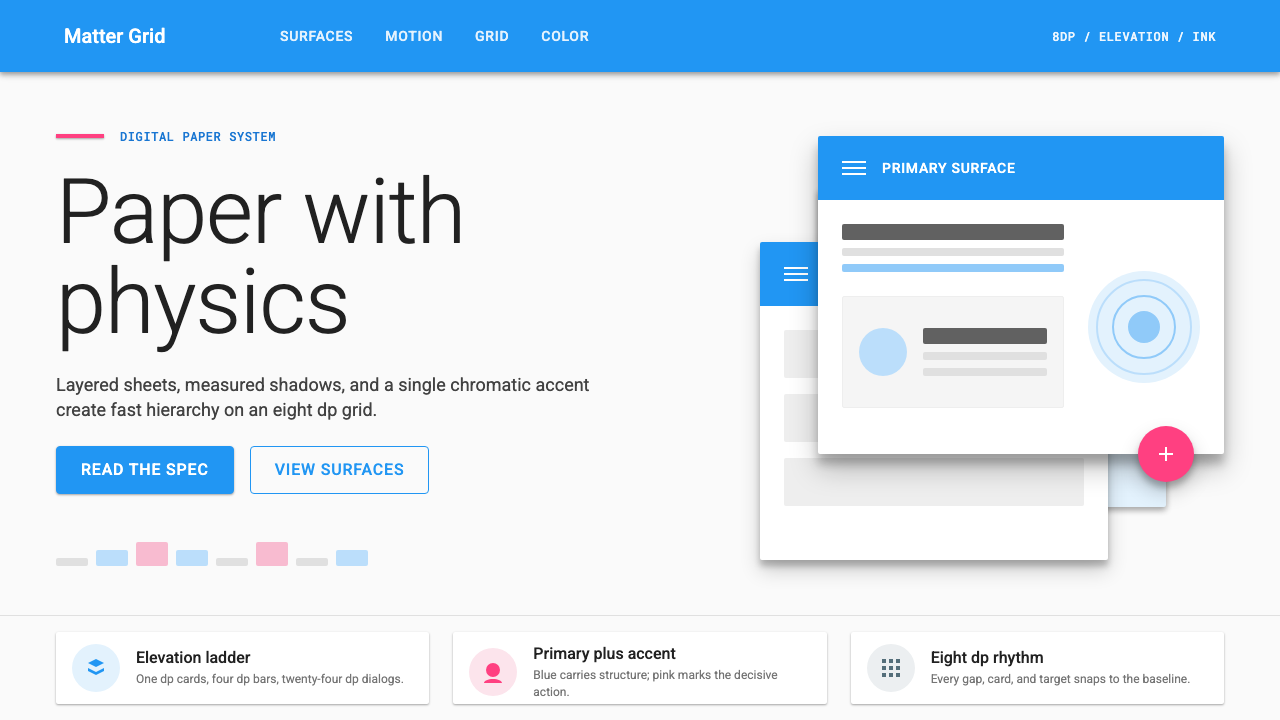 Material Design 1.0Depth made flat usable. Blue app bars, pink FABs, 8dp grids, and crisp paper…
 Dropbox ModernFriendly SaaS gets loud. Electric blue and Sharp Sans drive a structured geom…
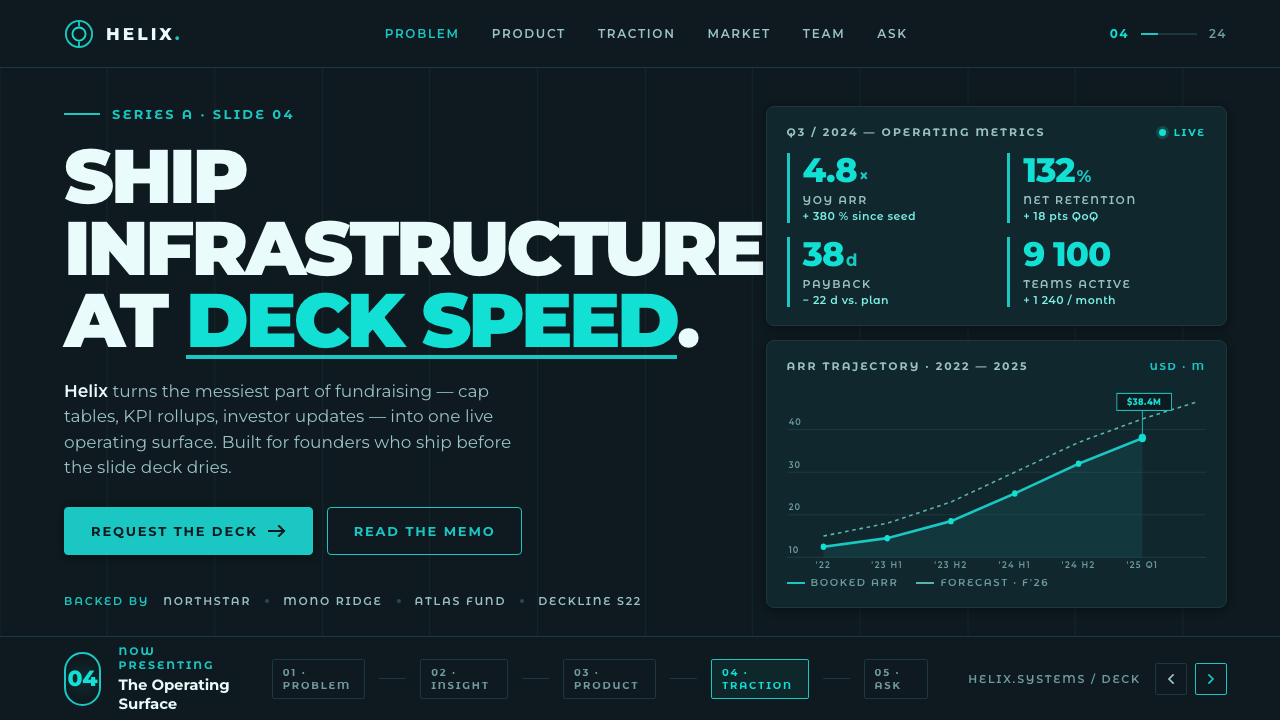 Montserrat StartupSeries-A on a projector. Black Montserrat on charcoal-teal, lit by one bright…
 Velodrome TrackSpeed is engineered. Shadow pine, black datum lines, and one cyan band measur…
 Adobe Creative CloudUnified, not uniform. Red anchor, white space, and saturated app tiles organi…