What is Assam Muga Silk & Gamosa?
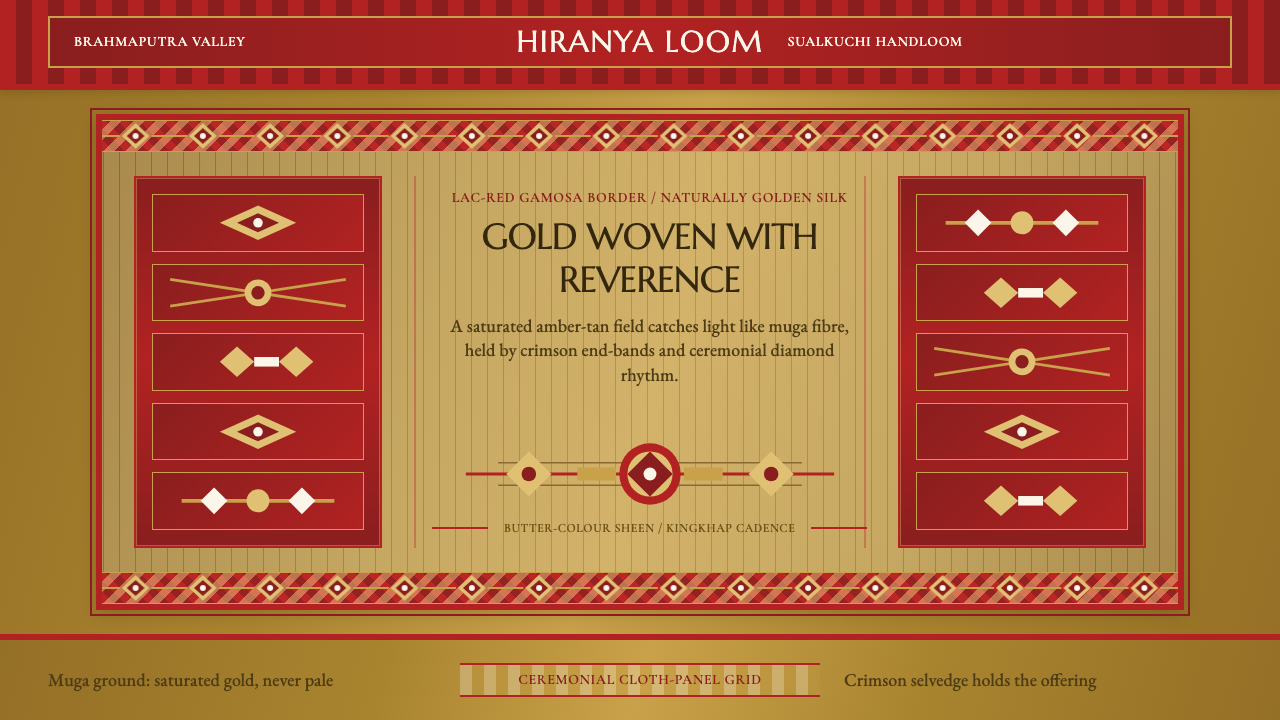
Muga is the only silk in the world that doesn't need to be dyed gold — the color is already in the thread.
Assam Muga Silk & Gamosa in brief
The Assam Muga Silk & Gamosa style is built around muga, a wild silk unique to the Brahmaputra valley whose golden-amber color is a property of the raw fiber itself rather than the result of dyeing. Unlike most silks, muga does not fade with washing — its sheen actually deepens over time, so the ground of any piece made from it looks less like paint and more like burnished metal catching light. The style takes this saturated, glossy gold as its dominant field.
Framing that gold field is a second, equally deliberate element: a woven crimson border, dyed with lac, running along the ends of the cloth rather than printed across the surface. Within that crimson border sit small repeating floral units known as kingkhap — brocade-woven motifs concentrated at the edges rather than scattered through the body of the piece. The relationship between a large plain gold field and a dense, ornamented border is structural, not incidental: it mirrors how the cloth itself is worn and displayed, with the ends visible and the body draped.
The overall palette commits fully to saturation rather than restraint. Where many textile-derived design systems mute their source colors for digital use, this one keeps the gold rich and the crimson deep — the style is meant to read as ceremonial and warm rather than quiet or neutral, echoing the fabric's role in festival and formal occasions rather than everyday utility.
Where does Assam Muga Silk & Gamosa come from?
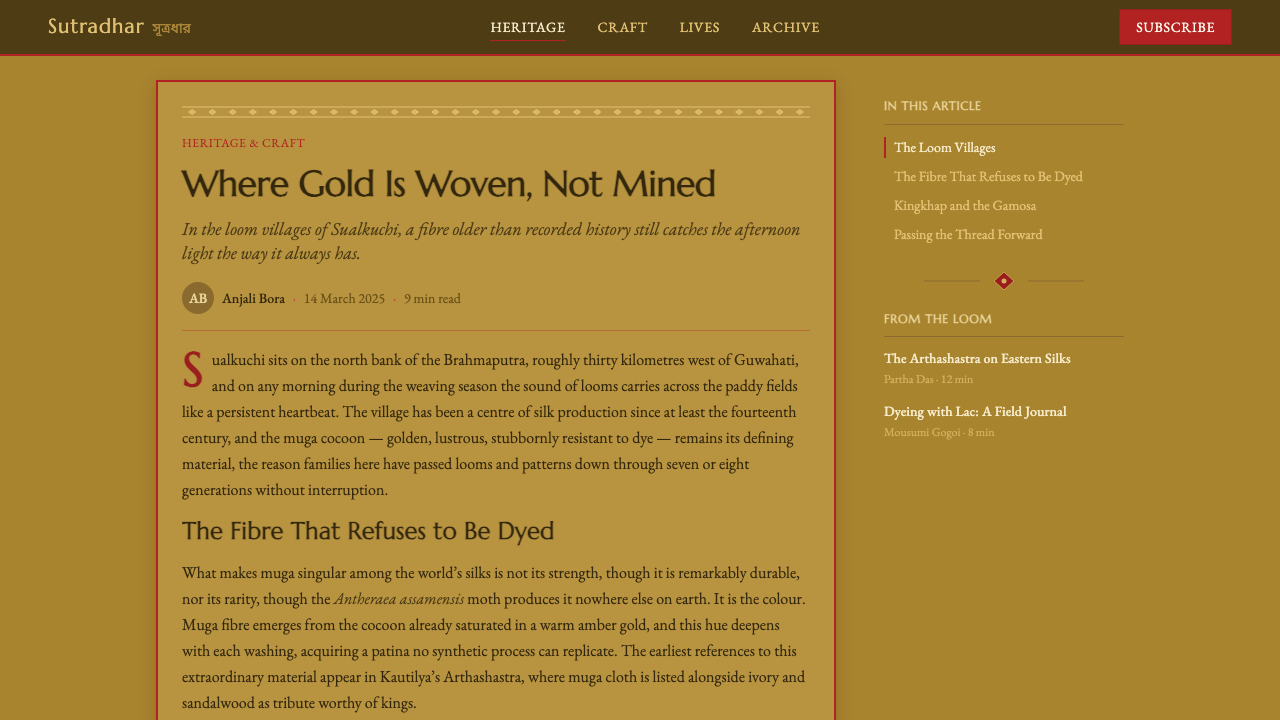
Muga is a wild silk produced by the semi-domesticated moth Antheraea assamensis, which feeds on som and sualu leaves found only in the climate of the Brahmaputra valley. Attempts to cultivate the silkworm outside Assam have never succeeded at scale, and this geographic exclusivity is the basis for muga's status as a Geographical Indication-protected product, formally recognized in 2007 — meaning that, by law, only silk produced in Assam under traditional methods can be sold under the name.
The fiber's reputation is old. Sources describe muga as being praised in the Arthashastra, the ancient Indian treatise on statecraft traditionally attributed to Kautilya, which is said to have described the silk as being 'of the colour of butter' — an early written acknowledgment that this particular golden sheen was recognized and valued long before the modern textile industry existed. For centuries afterward, muga's rarity and cost kept it largely reserved for royalty and nobility, most notably during the roughly six-century rule of the Ahom dynasty over Assam, when it was closely associated with the royal court.
The village of Sualkuchi, on the north bank of the Brahmaputra near present-day Guwahati, became the historical center of this weaving tradition and earned the nickname 'Manchester of Assam' for the density of handloom households working there. Many weaving families settled in Sualkuchi under royal patronage specifically to produce silk for the Ahom court, and the practice continued as a living cottage industry through the twentieth century — the design system here draws specifically on the 1950–1990 window of that living handloom tradition, with a further documented revival of the craft strengthening through the 2010s.
The gamosa — a plain-woven rectangular cloth with woven red end-borders, traditionally cotton but produced in muga silk for ceremonial use — is inseparable from Assamese cultural life. It is presented to honored guests as a mark of respect, offered during religious rites, tied around the head during traditional dance, and worn draped over the shoulder during Rongali Bihu, the Assamese spring new year festival, where it is paired with the mekhela chador — a two-piece garment traditionally woven from the same warm, golden silk.
What defines the Assam Muga Silk & Gamosa look?
Color
The ground color is a saturated golden-amber rather than a muted or pale yellow — the intended read is warm and metallic-bright rather than soft or pastel. Crimson, from lac dye, is the only other major hue in the system, reserved almost entirely for the woven border. No cool tones — no blues, greens, or grays — belong in this palette.
Luster and Sheen
Because muga silk grows more lustrous rather than duller with wear and washing, surfaces in this style should read as reflective and burnished rather than flat or matte. Light plays across the gold field unevenly, the way it does on a polished rather than a painted surface — a quality worth preserving even in flat digital renderings through subtle sheen or highlight treatment.
Woven Border Structure
The crimson border is woven into the cloth, not printed onto it, and it lives specifically at the ends of the piece rather than running along all four edges evenly. This creates a deliberate compositional asymmetry: a large, calm gold field dominates the body, while ornamentation concentrates and intensifies only at the terminal bands.
Kingkhap Floral Motif
Kingkhap motifs are small, repeating floral brocade units, confined strictly to the border strips rather than scattered across the main field. Their role is closer to a trim or a seal than a wallpaper pattern — dense and detailed within a narrow band, entirely absent elsewhere.
Weave Texture
The handloom origin leaves a fine, visible ribbing in the weave — a subtle textural regularity from the interplay of warp and weft threads. This distinguishes the style from smooth, printed, or synthetic fabric surfaces; the texture should read as woven, even at small scale, rather than as a flat printed color field.
Proportion and Composition
The underlying logic borrows from the long rectangular proportions of a woven cloth: a wide, dominant plain field bounded by narrow, ornamented end-bands. Compositions that stretch this proportion — long horizontal or vertical formats with concentrated detail only at the terminus — echo the source material more faithfully than compositions with ornament spread evenly throughout.

Who shaped Assam Muga Silk & Gamosa?
The households of Sualkuchi, on the north bank of the Brahmaputra near Guwahati, form the historical and continuing center of muga silk weaving. Generations of family-based handloom workshops there developed and preserved the specific techniques — from silk reeling to the weaving of kingkhap borders — that define the style, earning the village its nickname 'Manchester of Assam.'
During the roughly six-century rule of the Ahom dynasty over Assam, muga silk was closely associated with royalty and nobility, and the court's patronage is part of why weaving families settled and concentrated in centers like Sualkuchi. This royal association is the historical root of the fabric's ceremonial, rather than everyday, status.
The ancient Indian statecraft treatise traditionally attributed to Kautilya is cited as one of the earliest written sources to single out this golden Assamese silk for praise, reportedly describing it as being 'of the colour of butter.' Its inclusion in a text primarily concerned with governance and economy signals how early muga's value was recognized as a matter of trade and status, not just craft.
A documented revival of the handloom tradition through the 2010s has kept muga weaving a living practice rather than a museum craft, with newer generations of Sualkuchi weavers continuing to produce both ceremonial gamosa and mekhela chador using techniques passed down through family workshops, sustaining the visual system this style draws on into the present day.
How do you use Assam Muga Silk & Gamosa today?
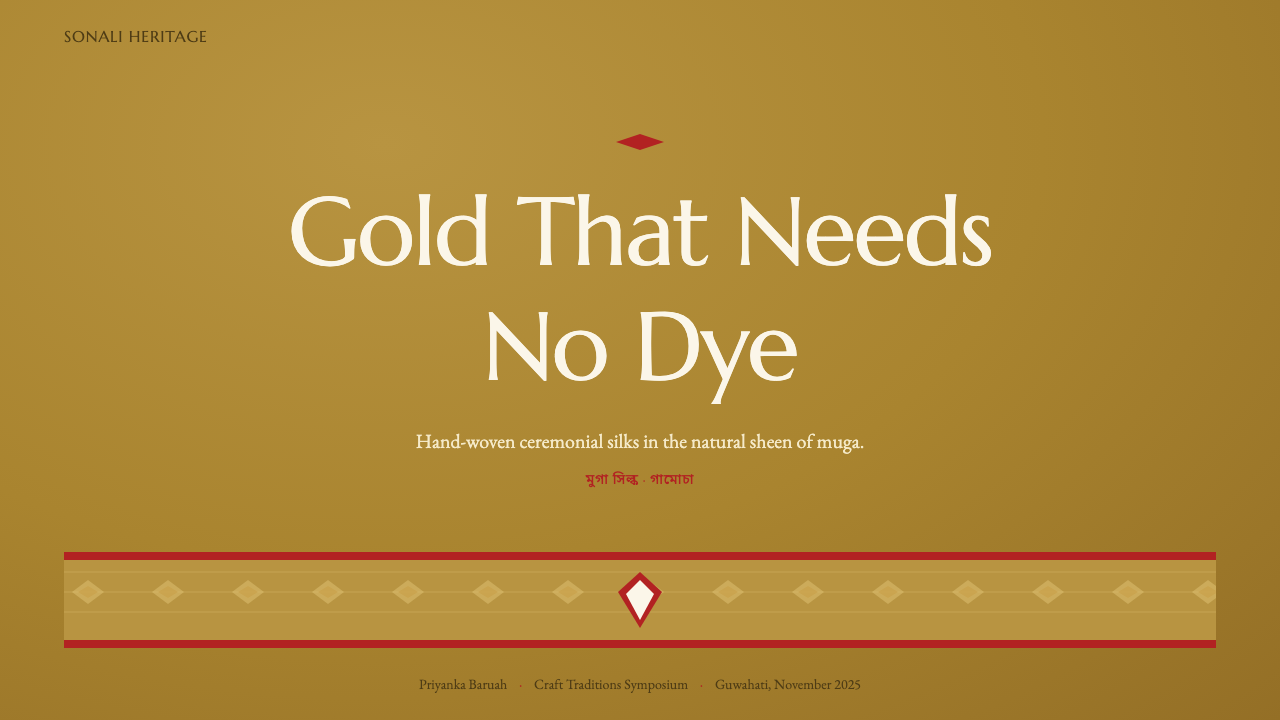
On presentation slides, this style is strongest as a cover treatment: a rich, saturated gold field filling most of the frame, with a narrow crimson band — carrying a small repeating motif — confined to one edge, such as the bottom or a single side, echoing the terminal borders of the source cloth. Content slides should keep the gold as background but shrink the crimson to a thin rule or tab rather than a full border, so text stays legible against the warm ground.
For web interfaces, the palette suits products that want to feel warm, premium, and ceremonial rather than clinical — think hospitality, cultural, wedding, or luxury-goods contexts more than productivity software. Dashboards can use the gold as a card background with dark warm-brown text for contrast, and a crimson accent reserved for primary actions or highlighted states, mirroring the way the source cloth reserves red only for its most important edges.
In editorial and marketing work, the style rewards long, generous compositions — a full-bleed gold background behind a headline, a single crimson rule marking a section break, and kingkhap-inspired small motifs used only as corner or footer flourishes rather than throughout the body copy. This keeps the design ceremonial without becoming visually noisy.
A common mistake is spreading the crimson and floral border motif evenly across an entire layout, as if it were a repeating wallpaper pattern. In the source textile, ornament is concentrated specifically at the ends of the cloth against a large calm field — flattening that structure into an even, all-over pattern loses the asymmetry that gives the style its visual logic.
A second common mistake is muting the gold into a pale, desaturated cream to make it 'safer' for digital use. Doing so erases the defining quality of muga silk itself — its saturated, metallic warmth — and the result reads as generic neutral rather than as this specific textile tradition. The gold should stay rich even when used as a large background field.
Assam Muga Silk & Gamosa — FAQ
What makes muga silk different from other silks like mulberry or tussar?
The defining difference is color and geographic exclusivity. Most silk is naturally pale and is dyed to achieve color; muga is naturally golden-amber straight off the cocoon, and that color deepens with washing rather than fading. It also comes from a wild silkworm species that feeds on specific plants growing only in Assam's climate, which is why the fiber has never been successfully produced at scale outside the region and carries formal Geographical Indication protection.
What exactly is a gamosa, and why does it matter so much in Assamese culture?
A gamosa is a plain-woven rectangular cloth, most commonly cotton, with red woven end-borders and sometimes small motifs — muga silk versions exist for formal or ceremonial use. It functions as a universal marker of respect and hospitality in Assamese life: offered to welcome a guest, presented at religious ceremonies, tied around the head during traditional dance, and worn across the shoulder during festivals. Its role is closer to a flag or a handshake than to an ordinary textile.
If muga silk is always gold, how much color variation does a designer actually have to work with?
More than it first appears, but within a disciplined range. The gold itself varies in intensity and warmth depending on how the raw silk has been processed and how much it has been worn or washed, giving a spectrum from bright amber-gold to a deeper, almost bronze tone. The crimson border adds the system's second color. Working within this narrow, disciplined range — rather than introducing unrelated hues — is what keeps a design recognizably tied to the source material.
Does this style require literal floral kingkhap patterns to feel authentic, or can the motif be abstracted?
The motif can be abstracted, as long as its structural role is preserved: small, detailed ornament confined to a narrow border, set against a large plain field. A geometric or simplified interpretation of the floral brocade still reads as faithful to the style if it respects that placement logic. What breaks the style is not abstraction of the motif itself, but moving ornament away from the edges and spreading it through the main field.
Is this style limited to South Asian or Assamese-focused brands, or can it work more broadly?
The underlying formal logic — a saturated warm ground, a structurally distinct woven border, motif concentrated at the edges rather than throughout — travels well to any brand wanting to signal warmth, ceremony, and craftsmanship, regardless of geography. What keeps the use respectful is treating it as a considered aesthetic system rather than erasing its origin: acknowledging the muga and gamosa tradition it draws from, rather than presenting the look as generic 'gold and red' with no source.
Related design styles
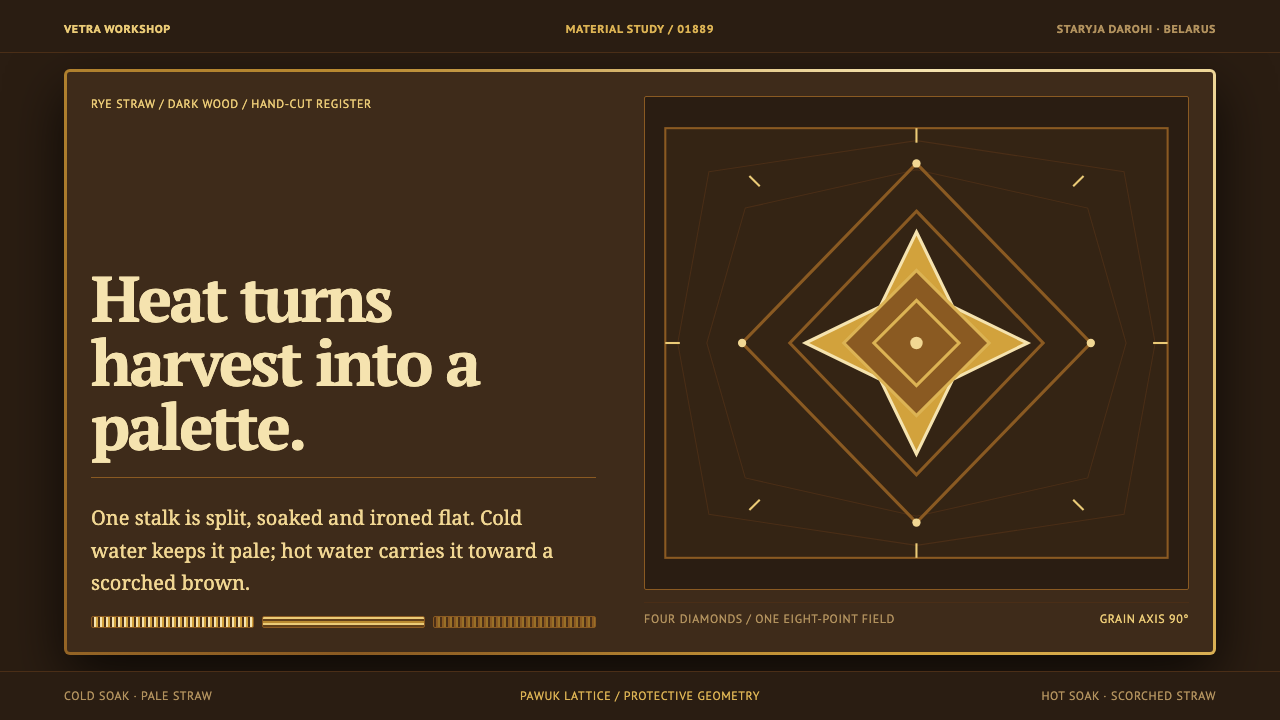 Belarusian SolomkaOne harvest, a tonal ladder. Straw diamonds turn pale gold to scorched brown…
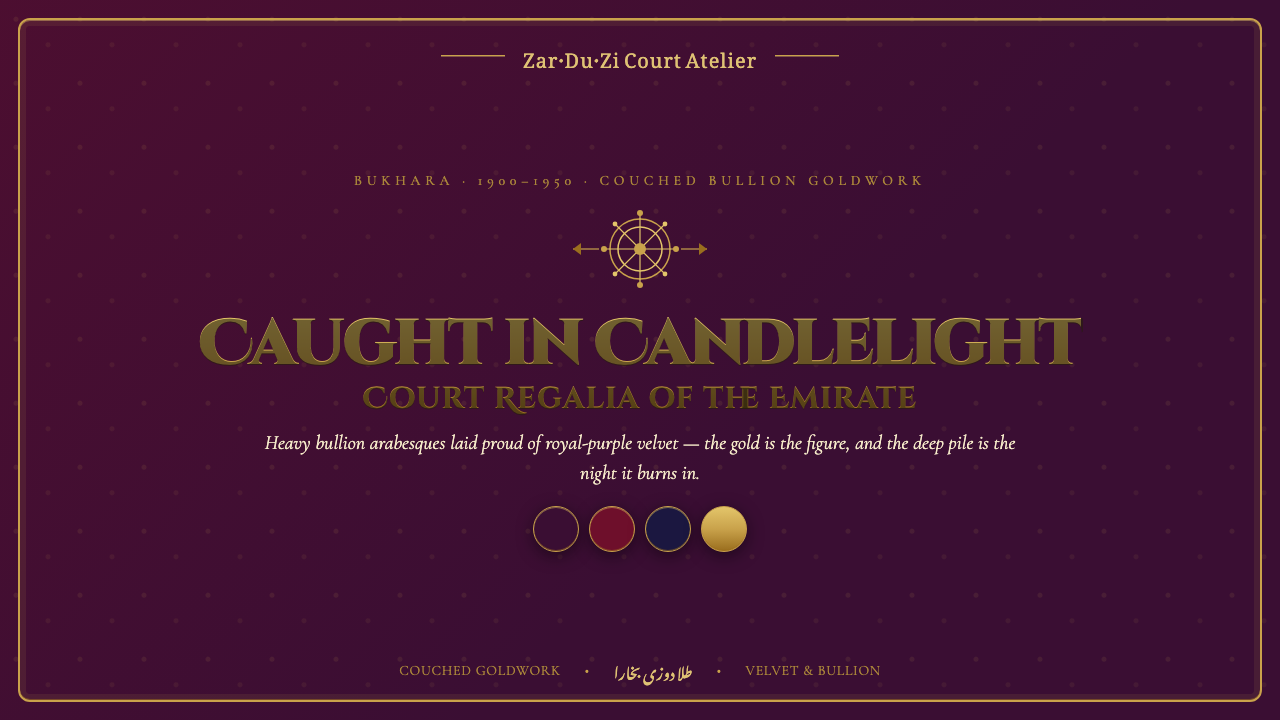 Bukhara Gold-Embroidered ChapanGold is the figure, velvet the night. Bullion arabesques blaze on royal-purpl…
 Filipino Narra HardwoodPolished heritage, held in shadow. Reddish hardwood grain meets thin rattan-t…
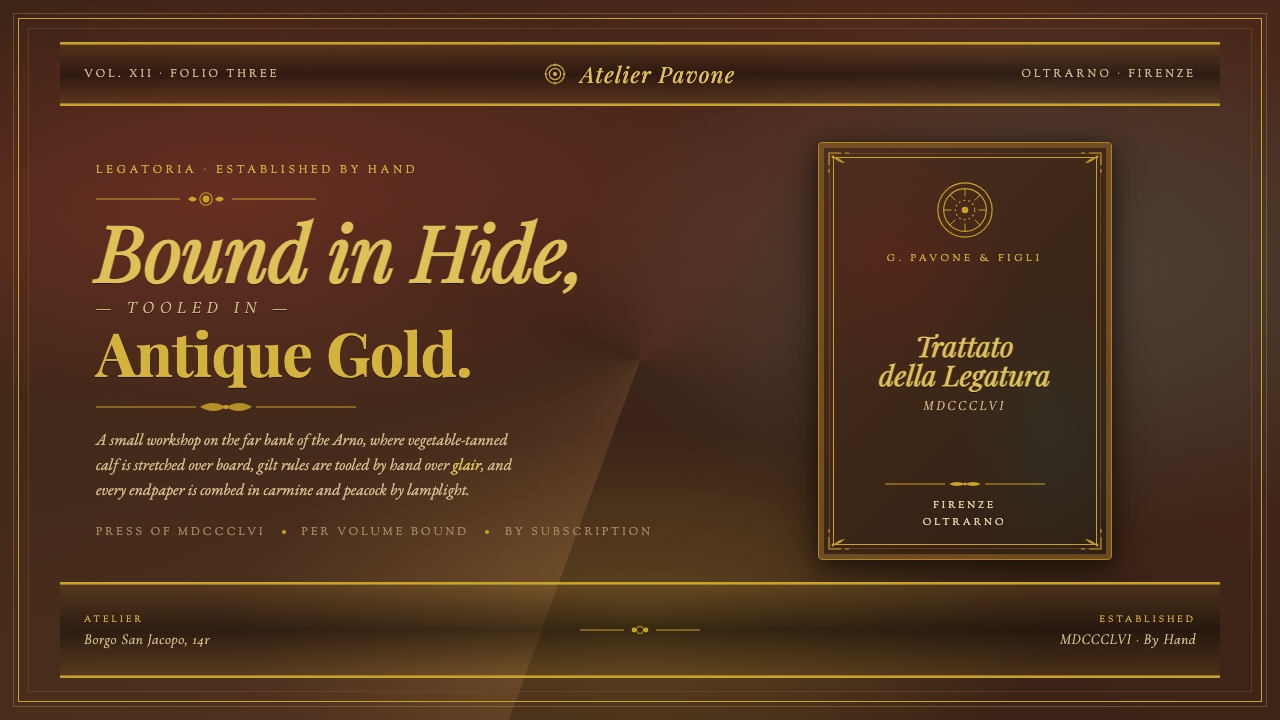 Florentine Leather BinderyRenaissance craft as luxury. Tanned hide, antique gold tooling, carmine-and-p…
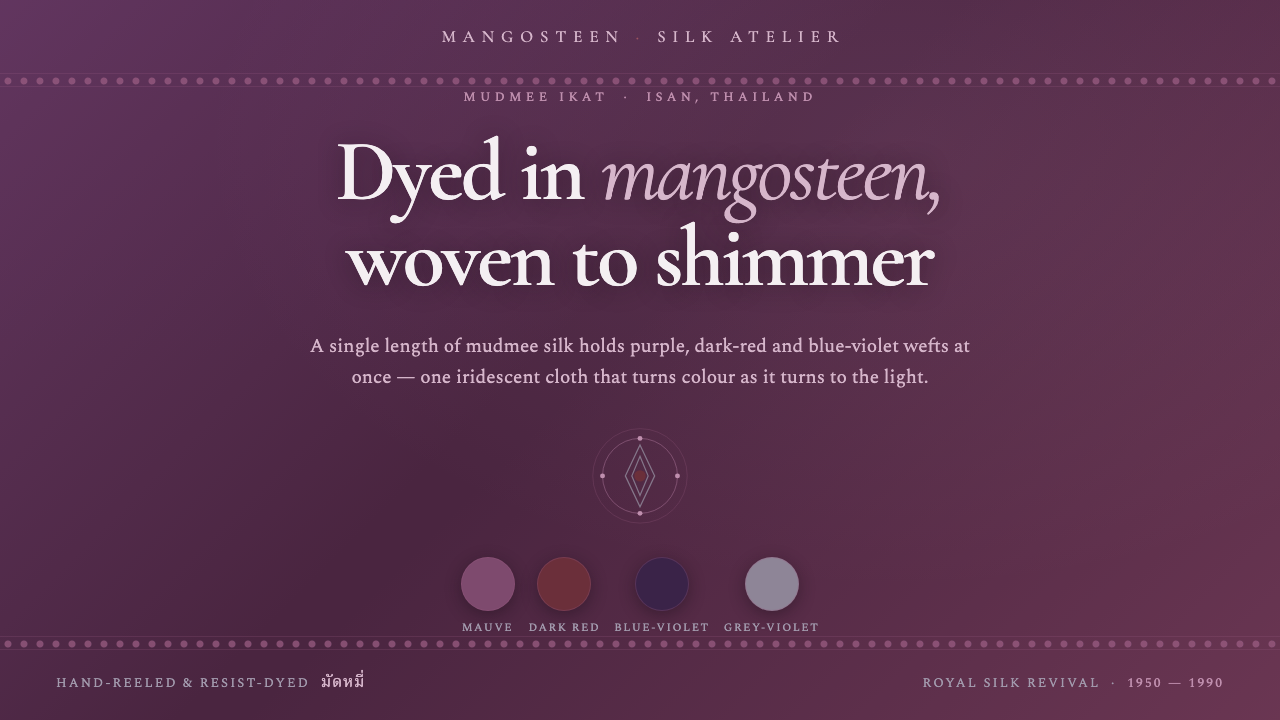 Thai Mangosteen SilkOne cloth, many colours. Mangosteen-dyed mauve ground, layered red and blue-v…
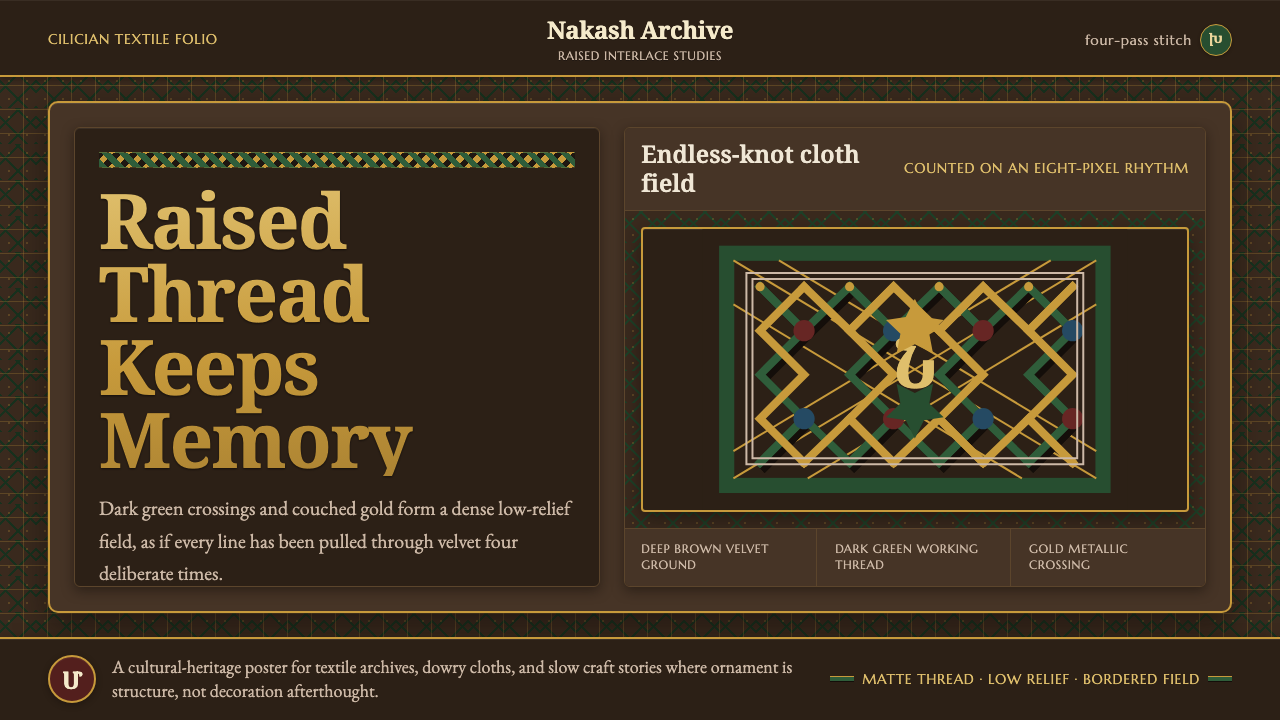 Armenian Marash Interlace EmbroideryDense memory in raised thread. Green-gold interlace locks over deep brown clo…