What is Florentine Leather Bindery?
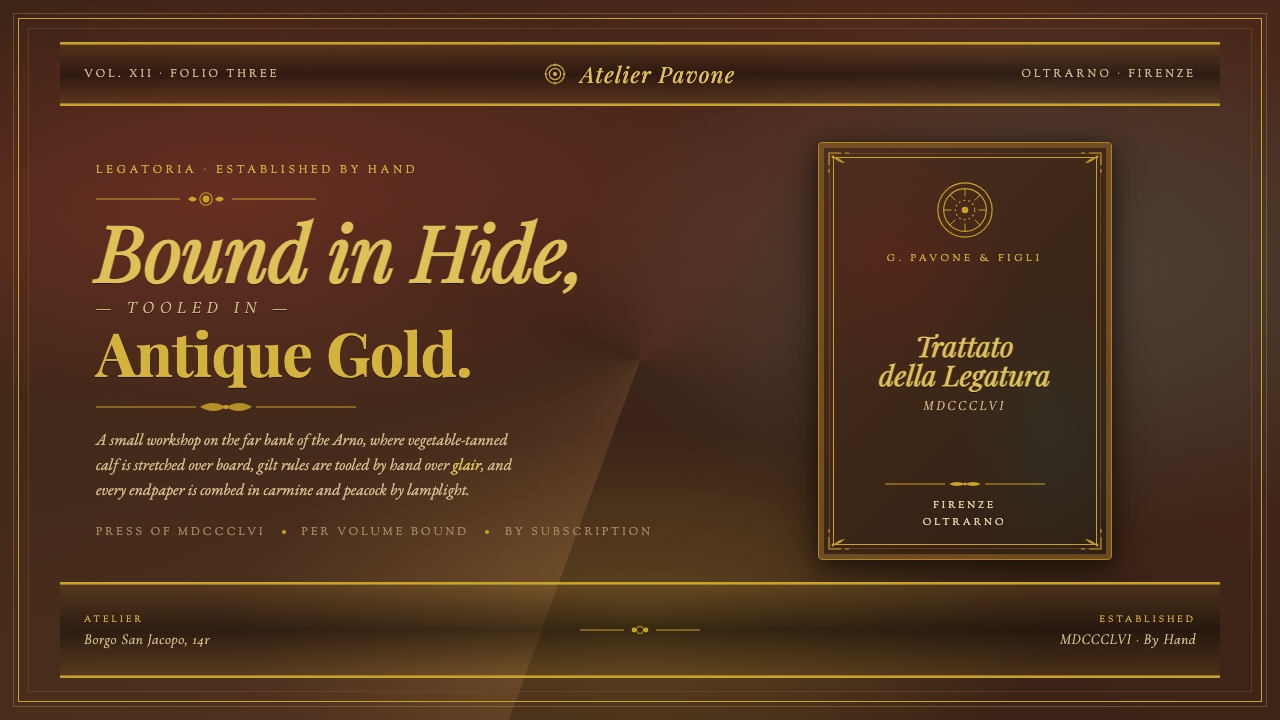
Florentine leather bindery turns the book into a small reliquary of Renaissance craft: dark hide, antique gold, and marbled color held in deliberate tension.
Florentine Leather Bindery in brief
Florentine Leather Bindery is a luxury craft style rooted in Renaissance Italian book arts and preserved by artisan workshops in Florence’s Oltrarno quarter. Its visual language begins with aged vegetable-tanned calf or goat hide stretched over boards, then adds hand-tooled real gold leaf laid over glair. The result is tactile, warm, and quietly ceremonial: a book that looks made to be kept, handled, and inherited.
The style depends on the contrast between restrained outer structure and ornamental inner surprise. The cover is usually a deep, warm leather field, enriched by antique-gold tooling rather than bright modern shine. Open the book and the endboards reveal carmine and peacock marbled papers, whose hand-worked swirls introduce motion, irregularity, and color without breaking the sense of luxury.
Florentine bindery design is not generic vintage decoration. Its authority comes from material honesty and patient labor: hide should feel like hide, gold should read as applied metal, and marbling should retain the small variations of a handmade surface. The atmosphere is scholarly, intimate, and sumptuous, with no place for cream printer paper, synthetic gloss, or ornamental effects detached from the object’s craft tradition.
Where does Florentine Leather Bindery come from?
The style reaches back to Renaissance Italian book arts, when the book was understood not only as a container for written knowledge but also as a crafted object worthy of ceremony. Florentine binding brought together the practical architecture of boards and stretched hide with the visual refinement of tooling, marbled paper, and humanist Garaldic printing. Its luxury is therefore structural: beauty is built into the object rather than placed on top as an afterthought.
Leather binding begins with the physical body of the book. Aged vegetable-tanned calf and goat hide are stretched over boards, creating a surface that carries the marks of handling, time, and changing light. The cover is not meant to imitate polished stone or lacquer. Its richness comes from grain, depth, and the subdued variation of a material that remains visibly organic.
Gold tooling introduces a second language. Real gold leaf is laid over glair, then worked by hand into the leather. The antique effect is important: the gold should feel integrated with the hide, closer to inherited ornament than showroom decoration. Lines, frames, and motifs become evidence of touch and pressure, giving the cover a disciplined pattern while preserving the dignity of the material beneath it.
Marbled paper completes the interior transformation. Carmine and peacock tones move through the paper in swirling, hand-worked patterns, traditionally made and handled in lamplight. The trade has remained alive through Oltrarno houses such as Giulio Giannini & Figlio and Legatoria Il Torchio. Their continued presence connects contemporary luxury with a Renaissance-to-today tradition of Florentine binding and carta marmorizzata.
What defines the Florentine Leather Bindery look?
Aged Leather
The dominant surface is warm, dark vegetable-tanned calf or goat hide. It should feel dense, handled, and quietly varied rather than uniformly polished. Leather supplies the style’s authority and warmth, making the object feel archival without becoming dusty or theatrical.
Antique Gold Tooling
Gold is used as a worked line and surface pattern, not as glitter. Real gold leaf over glair gives the tooling a physical presence, while its antique character keeps the cover intimate. Gold marks structure: a border, a title, or a restrained motif can organize the entire field.
Carmine and Peacock
The inner palette is led by carmine and peacock blue, colors that feel saturated, mineral, and ceremonial. They belong primarily to the marbled paper, where their movement is softened by handmade variation. Against dark hide and old gold, they read as a discovered interior rather than a loud exterior statement.
Marbled Movement
Marbling supplies the style’s organic counterpoint to the disciplined cover. Swirls, pools, and irregular veins create movement without illustration. Because the pattern is hand-worked, variation is part of its value: no two surfaces need to behave as identical repeats.
Material Depth
Depth comes from layering real materials and visible processes: boards beneath hide, glair beneath gold, and marbled paper beneath the act of opening. The effect is tactile rather than atmospheric. Surfaces should suggest construction, contact, and age, not digital simulation.
Scholarly Luxury
The mood is cultivated rather than ostentatious. Dark hide, controlled tooling, and jewel-like marbling imply knowledge, preservation, and private attention. The style suits objects that want to feel collected and enduring, while its handmade irregularities prevent luxury from becoming sterile.

Who shaped Florentine Leather Bindery?
An Oltrarno house identified in the source as one of the workshops keeping Florentine binding alive. Its significance is continuity: Renaissance craft remains legible as a living luxury practice rather than a museum reconstruction.
A Florentine artisan bindery named as part of the tradition’s present-day custodians. The workshop represents the link between hand tooling, leather construction, and the continued cultural life of the bound book.
The Florentine district associated with the houses that preserve this craft. Its role is not merely geographic: the quarter provides the living setting in which material knowledge, workshop practice, and local luxury remain connected.
The historical field from which the style draws its authority. Binding, tooling, marbling, and humanist Garaldic printing belong to a shared idea of the book as both intellectual vessel and crafted object.
The Italian tradition of hand-marbling that gives the interior its carmine and peacock movement. Its irregular surface prevents the style from becoming rigid, adding a private, made-by-hand character to the formal leather cover.
How do you use Florentine Leather Bindery today?
For presentation slides, the cover should behave like a closed heirloom volume: a dark leather-like field, a restrained antique-gold title, and one controlled glimpse of carmine or peacock marbling. Content slides should preserve generous quiet around the text and use gold rules or small tooling-like marks to establish hierarchy. Data slides can treat charts as illuminated diagrams, with one marbled accent carrying emphasis while the rest remains leather-dark and parchment-like.
For web interfaces, the style suits dashboards and pricing pages that need to communicate trust, permanence, and premium attention. Use a dark hide-like foundation, warm light text, and antique gold for active states or primary actions. Carmine and peacock blue should be reserved for meaningful distinctions, selected states, or compact data highlights. Panels should feel like layered boards and covers, while marbled surfaces work best as occasional interior reveals rather than repeated backgrounds.
For editorial and marketing work, build the page around the sensation of opening a finely bound book. Lead with a quiet leather field, introduce a strong title as if stamped into the cover, then allow a marbled section or color wash to mark a change of subject. Product stories, cultural institutions, luxury stationery, publishing, and craft-led brands can use the style to make preservation and patience feel tangible. Gold should identify the important passage, not decorate every available surface.
For campaigns and landing pages, the strongest composition often alternates restraint and discovery: a dark, disciplined opening gives way to a richly marbled feature section, then returns to leather and gold for the call to action. Imagery should focus on hide, tooling, paper, boards, and the act of making. The tone is intimate and collected, closer to a private library or atelier than to a theatrical palace.
The common mistake is treating the style as a generic old-world luxury package: adding indiscriminate gold, ornate frames, excessive texture, and every jewel color at once. Florentine bindery aesthetics depend on hierarchy. Let the leather establish the ground, let gold perform precise structural work, and let marbling provide the rare moment of movement. If every surface competes for attention, the craft disappears.
Florentine Leather Bindery — FAQ
Is Florentine Leather Bindery simply a vintage style?
No. Its references are historical, but its defining logic is material and structural. Leather, boards, glair, gold leaf, and marbled paper each perform a distinct role. A convincing interpretation preserves that hierarchy and the sense of handwork. A generic vintage treatment may borrow dark brown and gold, but without material relationships it loses the character of the bindery.
Why are marbled papers so important to the style?
Marbled paper provides the interior counterpoint to the controlled leather cover. Its carmine and peacock movement introduces color, irregularity, and a sense of discovery when the book opens. Without it, the style can become uniformly dark and formal. The marbling gives the object a private interior life while remaining tied to hand-made book construction.
Can the style work on a dark-background digital interface?
Yes, because dark hide is already its visual ground. The challenge is preserving legibility and restraint. Warm light type can sit against the dark field, while antique gold marks interaction and carmine or peacock blue supplies limited emphasis. Avoid turning every panel into a textured leather imitation; the digital interpretation should borrow the hierarchy and tactility, not simulate every physical surface.
How should gold be used without making the design gaudy?
Treat gold as tooling, not glitter. It should establish a title, border, rule, or small structural motif, and then recede into the leather. The antique quality matters because it softens the contrast and makes the gold feel inherited. When gold appears everywhere or becomes the brightest element in every region, it stops suggesting craft and starts announcing decoration.
Related design styles
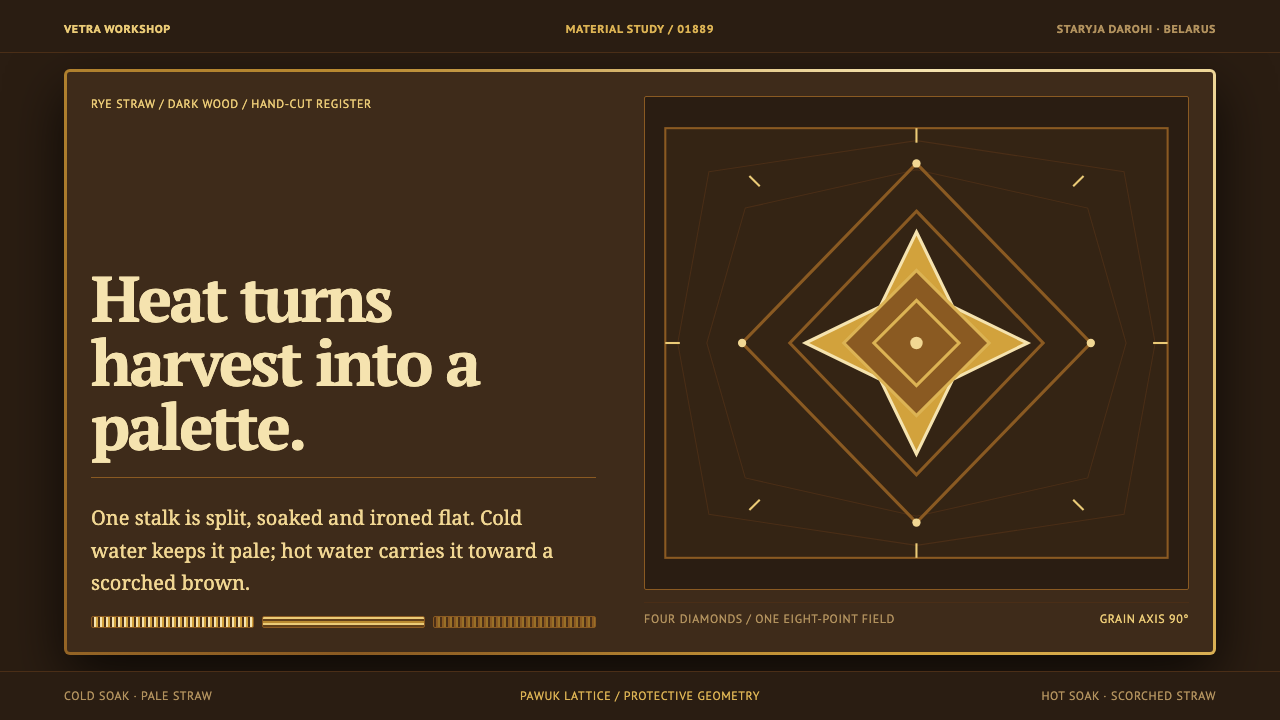 Belarusian SolomkaOne harvest, a tonal ladder. Straw diamonds turn pale gold to scorched brown…
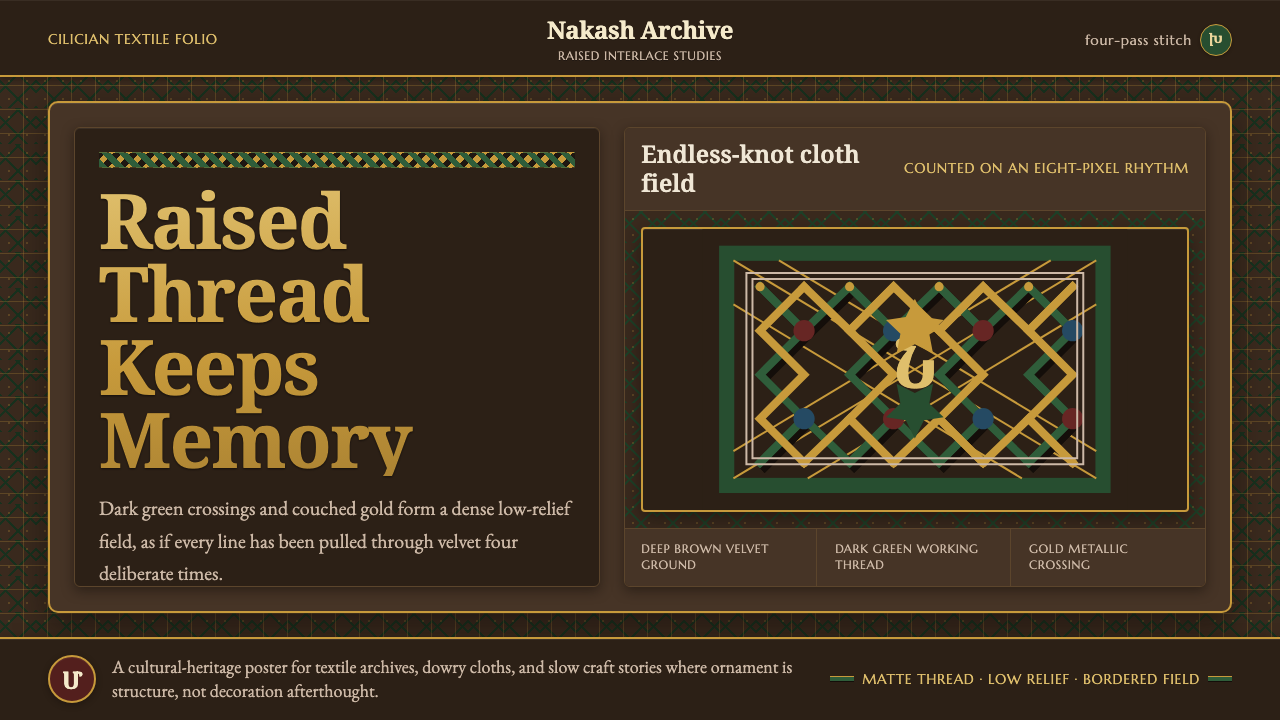 Armenian Marash Interlace EmbroideryDense memory in raised thread. Green-gold interlace locks over deep brown clo…
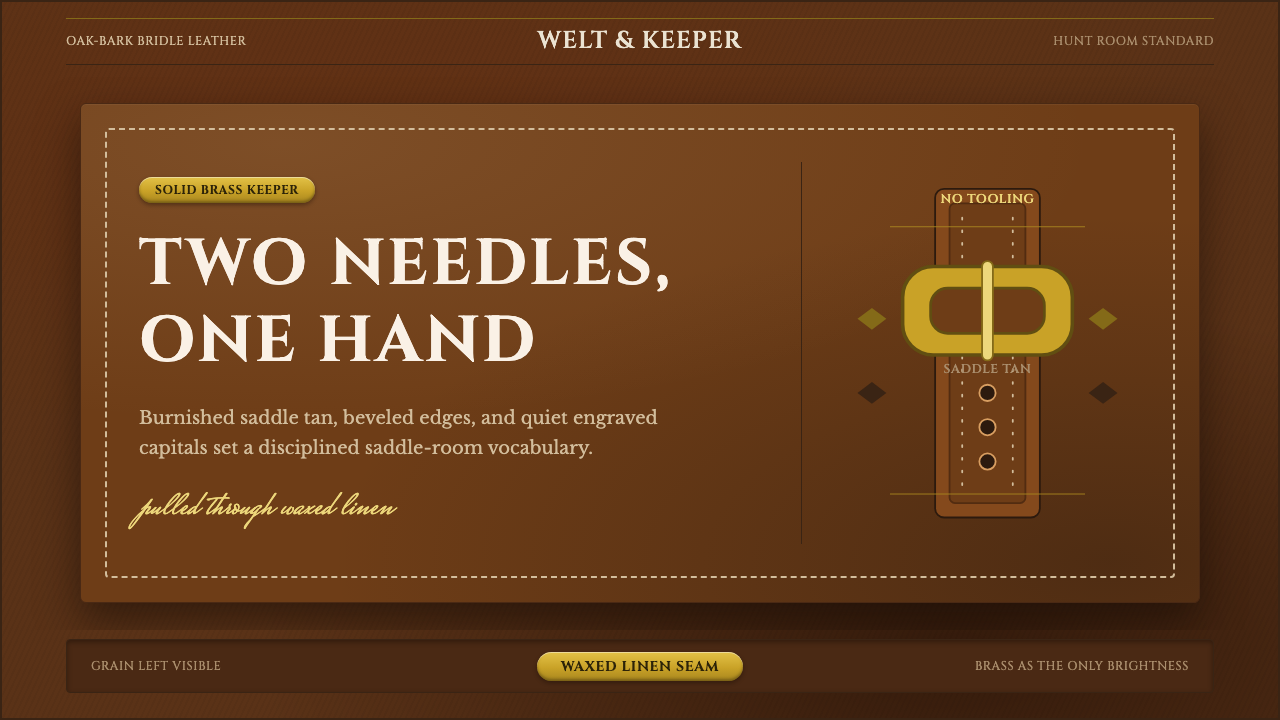 English Saddlery TanQuiet hand-made luxury. Saddle tan leather, brass accents, and waxed-linen st…
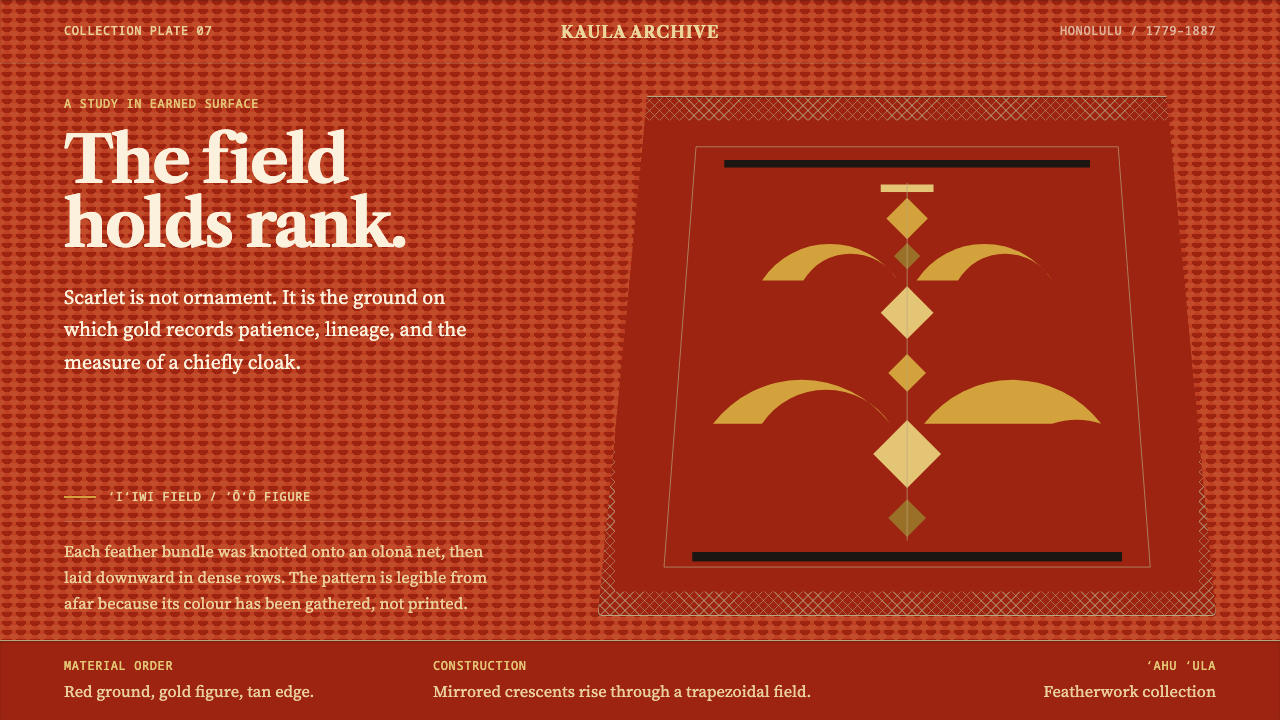 Hawaiian ʻAhu ʻula FeatherworkRank becomes a field. Scarlet nap carries sparing gold crescents in a mirrore…
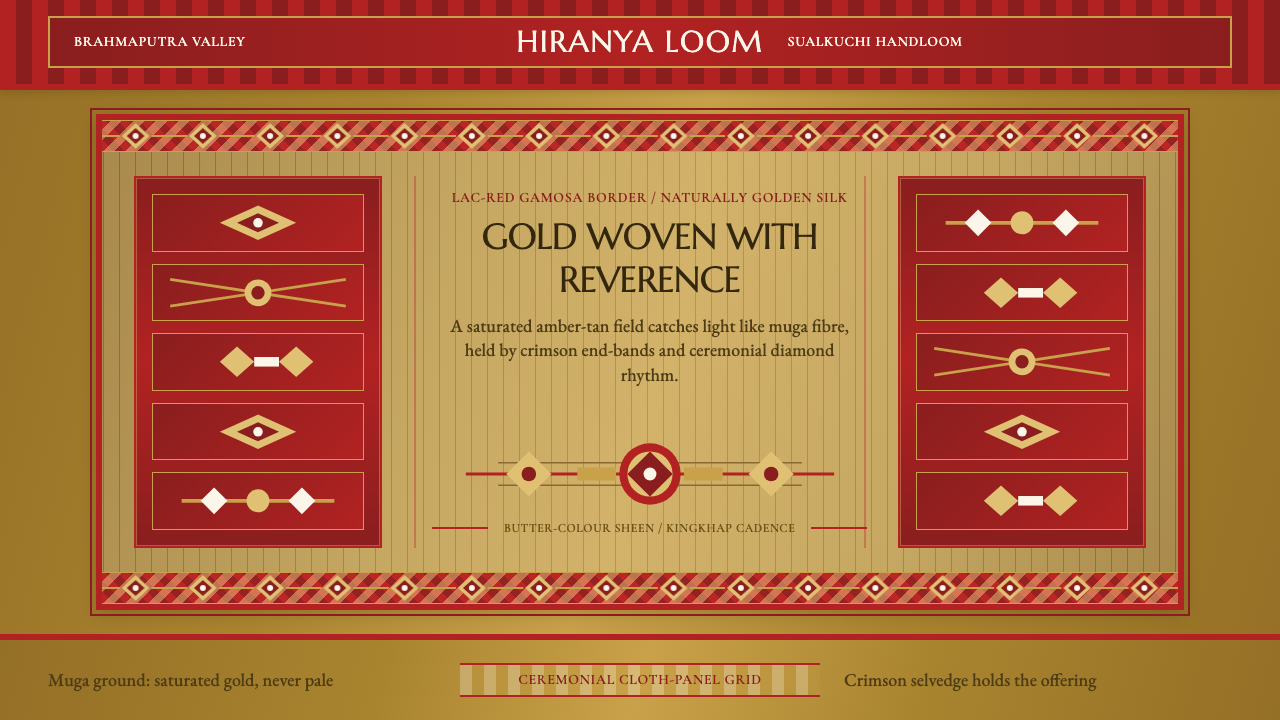 Assam Muga Silk & GamosaWarm ceremony in silk. Muga gold sheen meets crimson borders and woven diamon…
 Bukhara Gold-Embroidered ChapanGold is the figure, velvet the night. Bullion arabesques blaze on royal-purpl…