What is Hawaiian ʻAhu ʻula Featherwork?
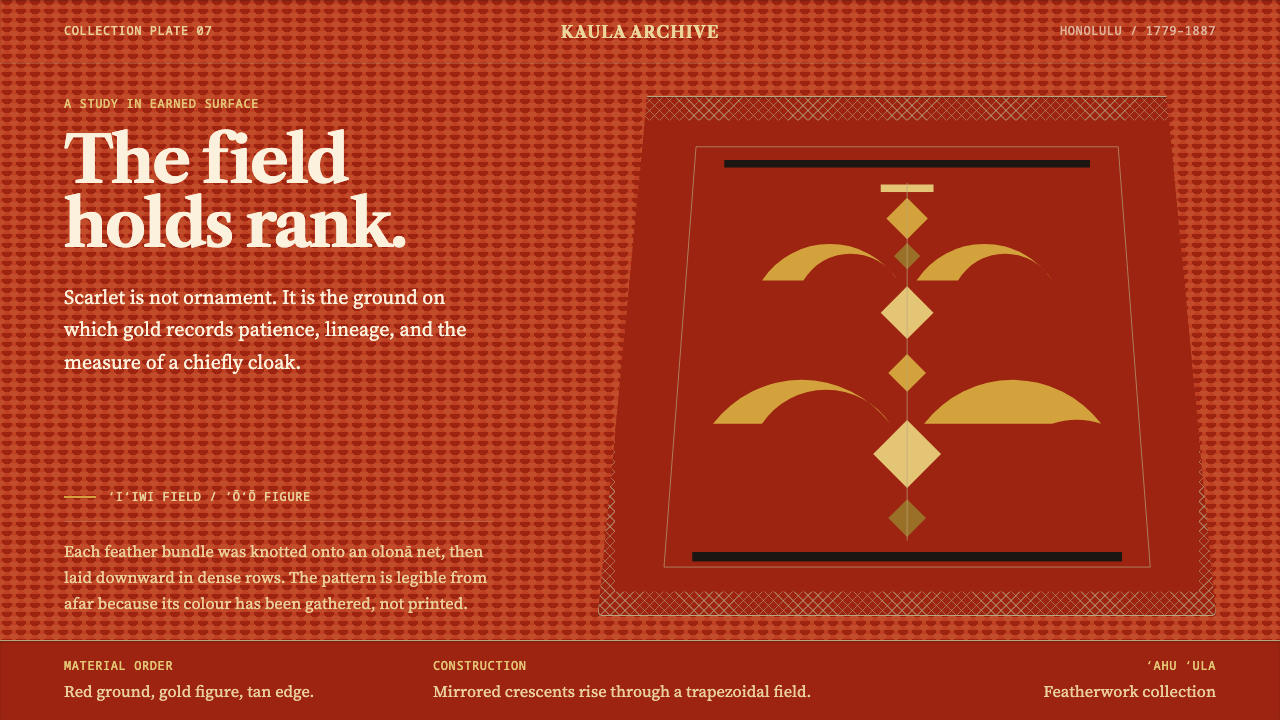
The ʻahu ʻula makes rank into a surface: a field of scarlet feathers carrying sparing gold crescents, ordered as strictly as the society that wore it.
Hawaiian ʻAhu ʻula Featherwork in brief
The ʻahu ʻula is the featherwork cloak of a Hawaiian chief (aliʻi), made from tens of thousands of small bird feathers knotted one by one onto a net of olonā fibre. Scarlet ʻiʻiwi feathers form the field. Golden ʻōʻō and mamo feathers draw crescents and lozenges across it. As a design style it is a dark, dense, mirrored grid of scarlet nap with sparing gold figures, finished at its edges with tan netting and glossy black bands.
The order of colour is the whole point. Red is the ground and never ornament. Gold is the figure, and it is spent sparingly, because in the original object gold was expensive in birds and in years. Everything else is finishing: the tan of the netting appears only at edges and openings, and the glossy black serves as bands that tie the composition together. Rank is legible in the proportions of colour and area. Tradition holds that Kamehameha I's cloak of golden mamo feathers took eight generations of chiefs, and some eighty thousand birds, to assemble.
The typography follows the same historical logic. The system's letters take their cue from the old serif type of nineteenth-century Honolulu Hawaiian-language newspapers such as Ka Nupepa Kuokoa, and Hawaiian words are always written with the ʻokina and the kahakō, the long-vowel mark, never with an apostrophe standing in. That is more than a detail of spelling. It is the same refusal of substitution that governs the red field: the right element in the right place, with nothing standing in for it.
Where does Hawaiian ʻAhu ʻula Featherwork come from?
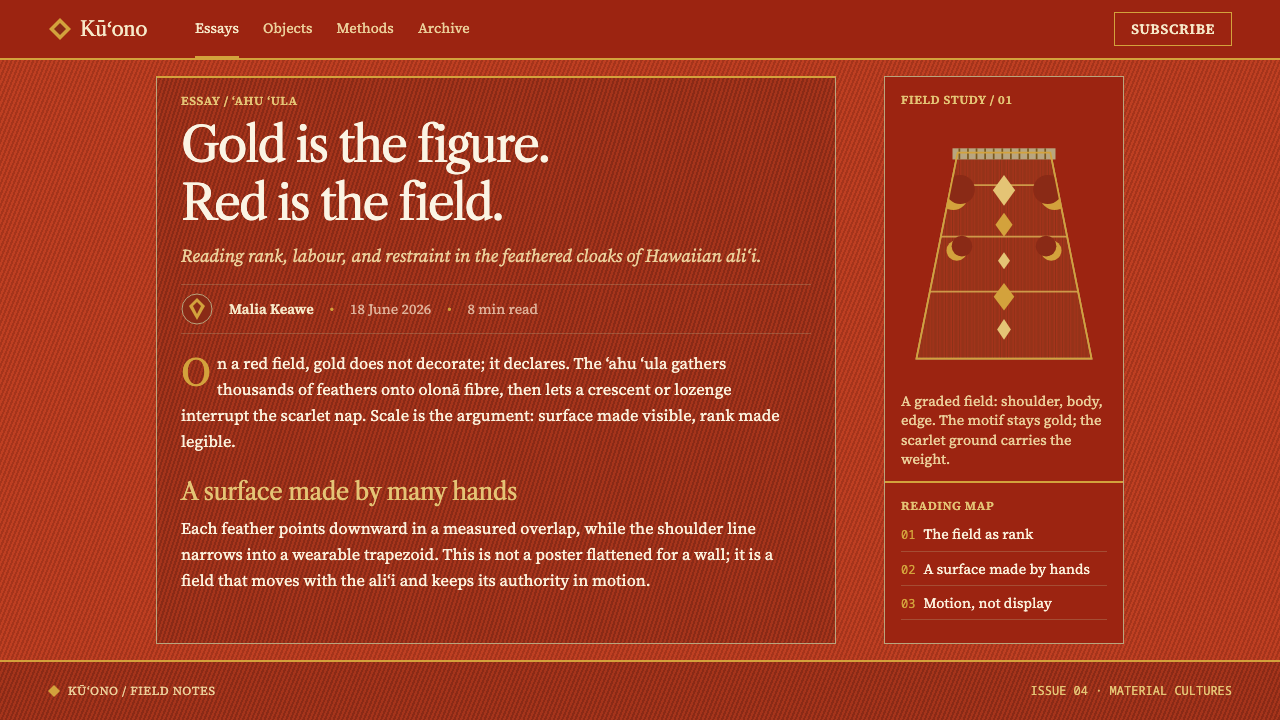
Featherwork is among the most important art forms of the Hawaiian Islands. Chiefs wore cloaks (ʻahu ʻula) and helmets (mahiole) built from feathers, and the olonā cordage tradition supplied the foundation, a native plant fibre twisted into fine, strong cord and knotted into a net. The net is the invisible skeleton of the cloak, and every feather is tied onto it. The period in view is the eighteenth and nineteenth centuries.
The materials explain the cost. The ʻiʻiwi gives the scarlet; the ʻōʻō and the mamo give the gold. A cloak therefore demanded an immense quantity of birds and an immense quantity of labour in collecting and knotting. Status was written in the amount and quality of the feathers: the larger the red field and the more gold set in it, the higher the rank it announced. That is why the style treats gold as a figure to be spent with care and red as the ground that gives the gold its meaning.
Our records of these objects came through collections. Kalaniʻōpuʻu's cloak, presented in 1779, is one of the documented pieces, and it belongs with the objects gathered on Cook's voyages. The Bishop Museum in Honolulu holds a major collection of Hawaiian featherwork. William T. Brigham, who worked with that museum, is the name most often linked to the early scholarly record of the craft. Museum documentation gives designers precise descriptions of the objects, though it also lifts them out of the setting in which they were worn.
As a design system, the style inherits the order exactly. Red is the ground, gold is the figure and is rationed, the tan netting and the black bands finish edges, and the whole is mirrored across a central axis like a cloak laid out flat. Because these cloaks were chiefly regalia, the style should be handled with respect. It borrows ratio, restraint and structure, and it does not treat the cloak as a generic symbol of luxury.
What defines the Hawaiian ʻAhu ʻula Featherwork look?
Scarlet Nap
The ground is a field of scarlet, dense and napped like fine pile, and it is never ornament. It occupies the largest area and sets the temperature of the whole composition. Because it is a surface made of countless small units, it reads as deep and slightly soft in texture, and it should stay consistent so that gold has something to stand against.
Sparing Gold
Gold is the figure and the rarest element, spent sparingly because it was costly in birds and in years. It draws the shapes that carry meaning and appears in small, deliberate quantities. If gold is everywhere, it stops signalling rank and becomes ordinary yellow. The discipline of leaving gold unused is what makes each use of it count.
Crescents and Lozenges
The gold figures are crescents, half-moons and lozenges, crisp geometric shapes set against the soft nap. They are arranged across the field in deliberate rhythm. The contrast between hard-edged forms and the fine fuzz of the ground is one of the style's pleasures, so keep the shapes clean and avoid decorative embellishment around them.
Mirrored Grid
The composition is mirrored across a central axis, like a cloak laid out flat, and organised on a grid. Symmetry here is a statement of order and status, not a lack of invention. Placing the focal figure on the axis and echoing secondary shapes on either side gives a solemn, ceremonial balance that suits formal subjects.
Netting and Black Bands
The tan of the olonā netting appears only at edges and openings, where the foundation shows through the feathers. Glossy black serves only as bands. These two finish the composition and tie it down, and they are the only places where the field changes character. Keep them thin and structural so they frame the red rather than compete with it.
Many Small Units
Tens of thousands of feathers, each knotted by hand, make a surface that reads as a fine, dense grain at close range and a single colour from a distance. The style gets its richness from fine texture and large calm fields, not from added effects. Prefer subtle grain and tonal depth over gradients, glows or metallic sheens.
Old Honolulu Serif
Type takes its manner from the serif faces of nineteenth-century Hawaiian-language newspapers published in Honolulu, such as Ka Nupepa Kuokoa: dignified, bookish and legible. Hawaiian words keep their ʻokina and kahakō in every context. A font that lacks those characters is the wrong font, whatever its style.

Who shaped Hawaiian ʻAhu ʻula Featherwork?
Kalaniʻōpuʻu is the chief associated with a cloak presented in 1779, one of the documented landmarks of Hawaiian featherwork, which belongs with the Cook-voyage collections. The presentation shows what these objects were: not decoration but statements of rank, given and received as such. Any design that borrows the cloak's authority should respect that purpose.
Tradition says that Kamehameha I's cloak of pure golden mamo feathers took eight generations of chiefs, and some eighty thousand birds, to assemble. Whether read as history or as legend, the figure expresses the style's central idea: gold is accumulated over generations, and it should be rationed accordingly. His name stands for the highest end of the scale of rank this style encodes.
Brigham worked with the Bishop Museum and is the name most often linked to the early scholarly study of Hawaiian featherwork. His inclusion here points to how the style reaches the modern world: through museum documentation, which gives careful descriptions but separates objects from the occasions on which they were worn. Designers drawing on that record should keep the distinction in mind.
The Bishop Museum holds a major collection of Hawaiian featherwork. Together with the collections formed on Cook's voyages, it is the principal record this style draws on. The museum's role is to keep the objects and their documentation available, and a style built from that record should in turn name the objects and the tradition it learns from.
How do you use Hawaiian ʻAhu ʻula Featherwork today?
The ʻahu ʻula style carries rank, ceremony and weight, so it suits work about honour, heritage and occasion: cultural institutions, exhibitions, awards, high-end editorial, hospitality and formal publications. It is a poor fit for playful, casual or fast consumer products, where its solemnity and its dark scarlet field would feel heavy.
For presentation slides, a cover can be a dark field bearing a dense scarlet block with a single gold crescent, and the title set in an old-style serif beneath it. Content slides keep to the red ground and spend gold on the one thing that matters on each slide, laid out symmetrically around the centre. Data slides draw bars in scarlet, highlight the single key value in gold, and use tan netting only for axes and black bands for headers.
For web interfaces, treat red as the surface and gold as the accent. A dark interface with scarlet panels, a gold primary action, tan borders and black header bands follows the cloak's hierarchy faithfully. On dashboards, allow only one gold element per view, so that it keeps meaning. A pricing page can mark a single tier in gold. Choose a typeface that includes the true ʻokina and the macron vowels, and never fake them with an apostrophe or an accent.
For editorial and marketing work, the style supports ceremonial, symmetrical layouts: a centred headline on the axis, mirrored side panels, and generous quiet fields of red. Photographs of featherwork are museum objects with their own credit lines, so use them with attribution and permission. Write Hawaiian terms with full diacritics every time, and lead with the tradition's name before the design's.
The most common mistake is to read the style as red-and-gold luxury and put gold everywhere, or to flip the order by making red a small accent on a neutral ground. Others follow: adding metallic gradients or glow to the gold, giving the netting and black bands equal weight with the field, writing ʻokina as an apostrophe, and using cloak imagery as casual tourist decoration. The style's power lies in rationing, order and respect.
Hawaiian ʻAhu ʻula Featherwork — FAQ
Why is red the ground and gold the figure?
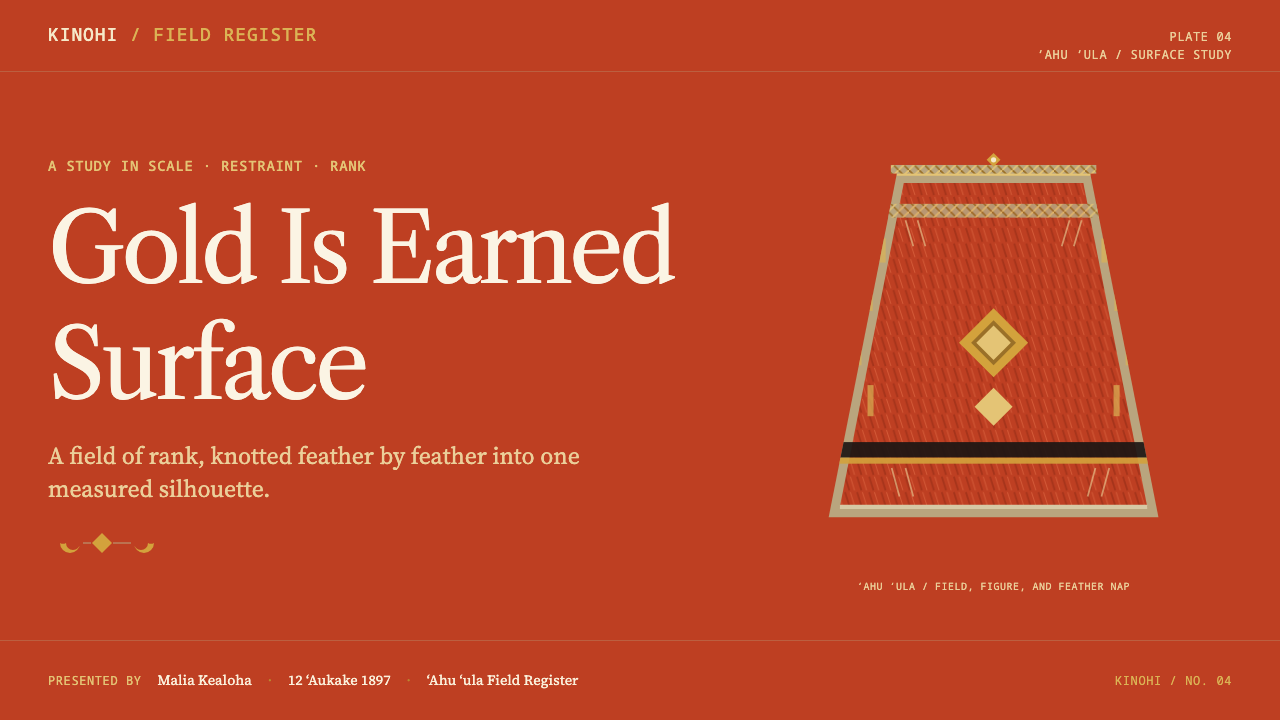
Because that is how the cloak is made. Scarlet ʻiʻiwi feathers form the field, and golden ʻōʻō and mamo feathers draw crescents and lozenges across it. Gold was costly in birds and in years, so it is the rarer and more meaningful element. The system keeps that order exactly: red is never ornament, gold is never filler, and reversing them changes what the page says about rank.
Is this just a red-and-gold luxury look?
No. A generic red-and-gold look uses both colours freely and often adds metallic shine. Here the colours have a strict hierarchy: scarlet as ground, gold as a rationed figure, tan and black only for finishing edges. The restraint, the mirrored grid and the correct writing of Hawaiian words are what separate the style from decoration. Without them it is simply a warm palette.
What are ʻiʻiwi, ʻōʻō and mamo?
They are the birds whose feathers made the colour of the cloaks. The ʻiʻiwi supplies the scarlet that forms the field, while the ʻōʻō and the mamo supply the gold used for crescents and lozenges. Knowing this helps explain the ratio of the style: a cloak needed a vast number of birds, and gold was the harder and rarer colour to gather.
Why does the style insist on ʻokina and kahakō?
They are letters of the Hawaiian language, not decoration. The ʻokina marks a glottal stop and the kahakō marks a long vowel, and both change how a word is read and what it means. An apostrophe in place of an ʻokina is a substitution, and the style is built on refusing substitution. Using the right characters is a basic form of respect for the language the cloaks belong to.
Can I use this style for a brand with no Hawaiian connection?
Think carefully. The ʻahu ʻula was chiefly regalia, a statement of rank and lineage, and borrowing its look for a generic luxury product can empty it of that meaning. If the project's values really align, with ceremony, restraint and honour, borrow the structure and the ratios, name the tradition, and avoid pasting in cloak imagery. Where the work speaks about Hawaiʻi directly, involve Hawaiian people.
Related design styles
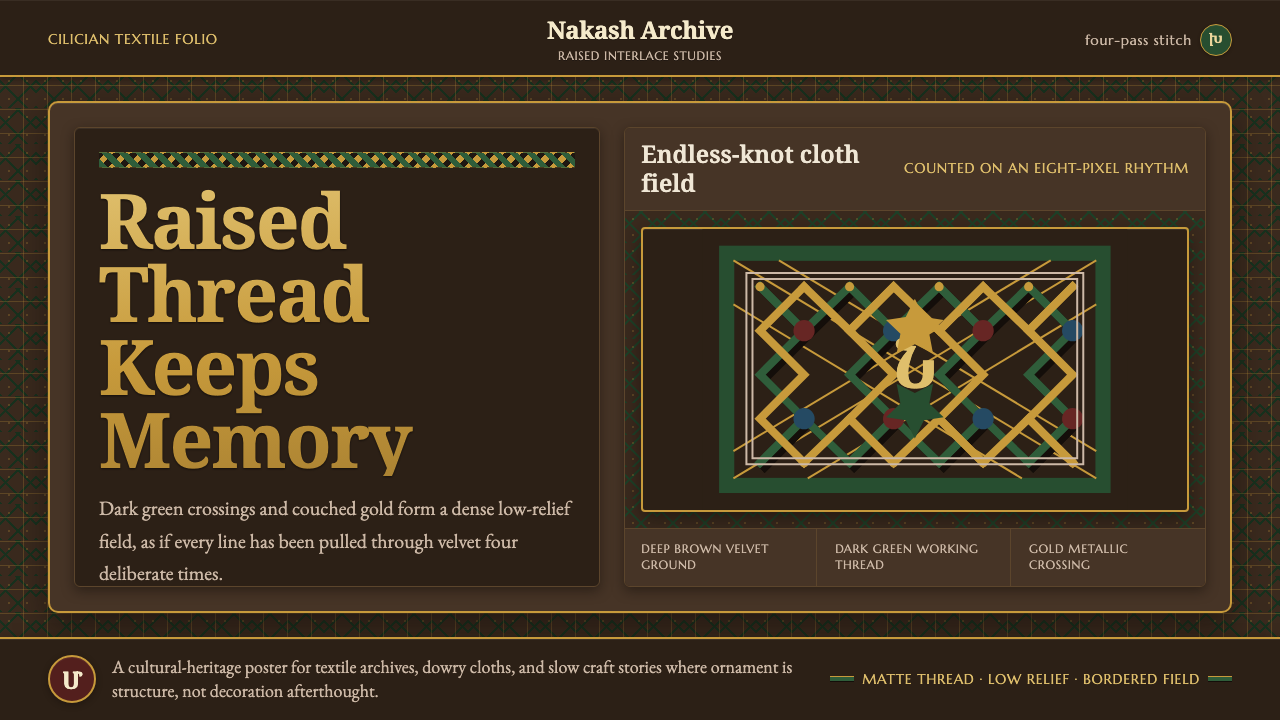 Armenian Marash Interlace EmbroideryDense memory in raised thread. Green-gold interlace locks over deep brown clo…
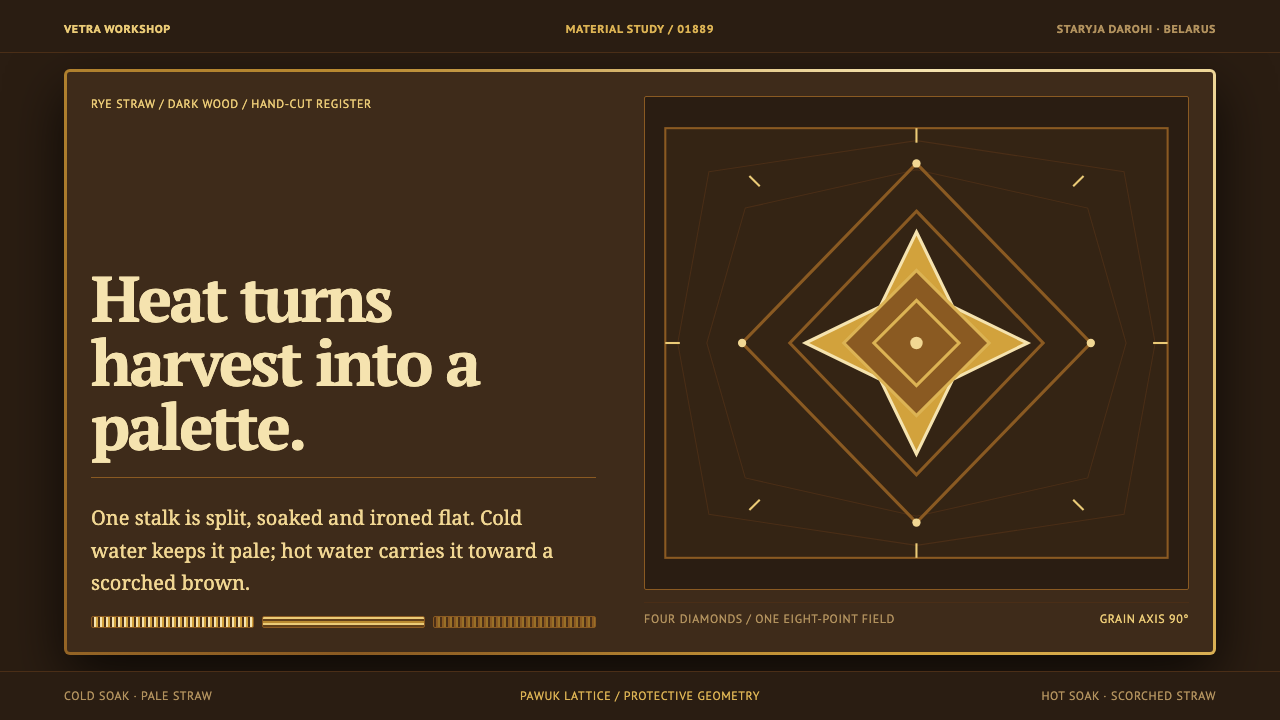 Belarusian SolomkaOne harvest, a tonal ladder. Straw diamonds turn pale gold to scorched brown…
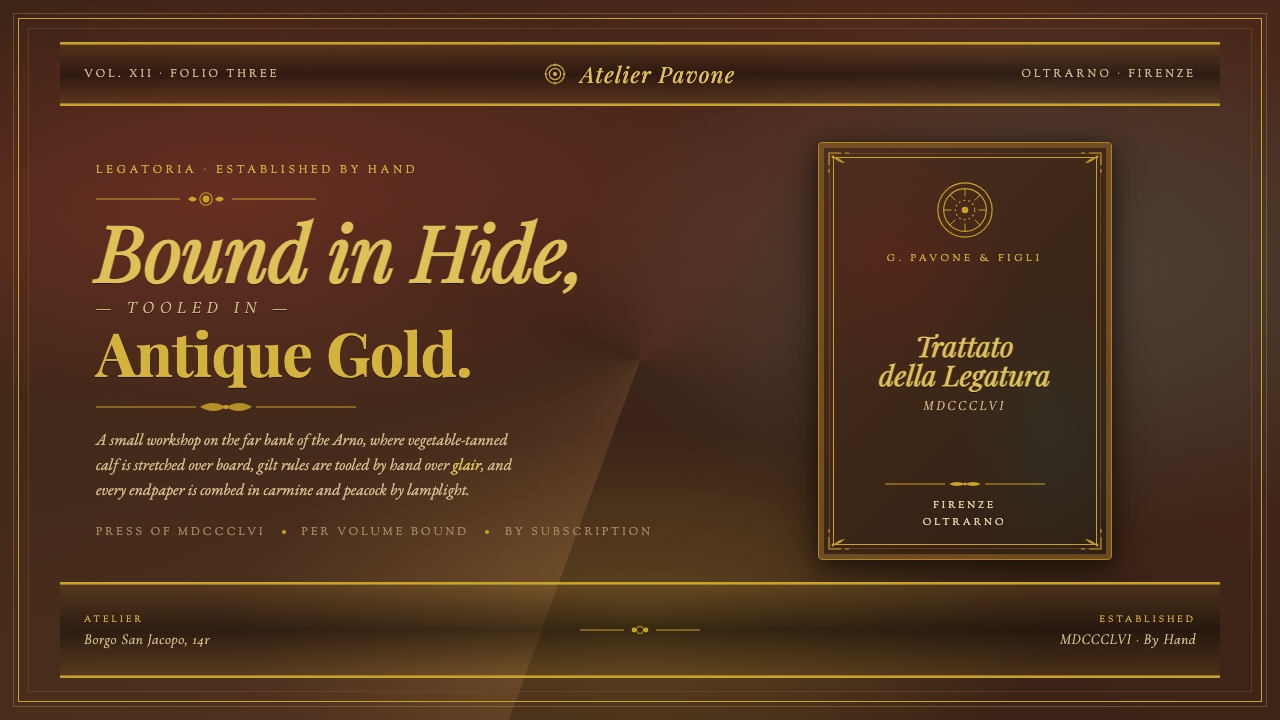 Florentine Leather BinderyRenaissance craft as luxury. Tanned hide, antique gold tooling, carmine-and-p…
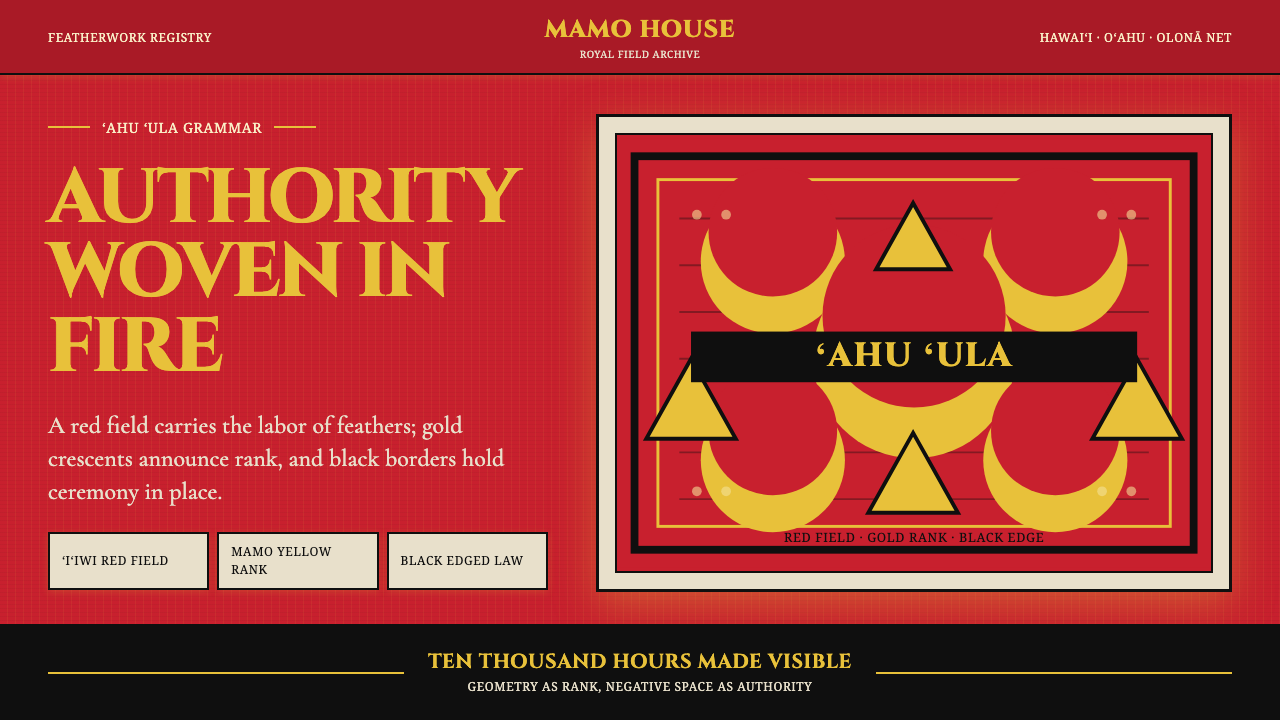 Hawaiian Feather Cape (ʻAhu ʻUla)Ceremony has weight. Red feather fields, mamo yellow crescents, black borders.
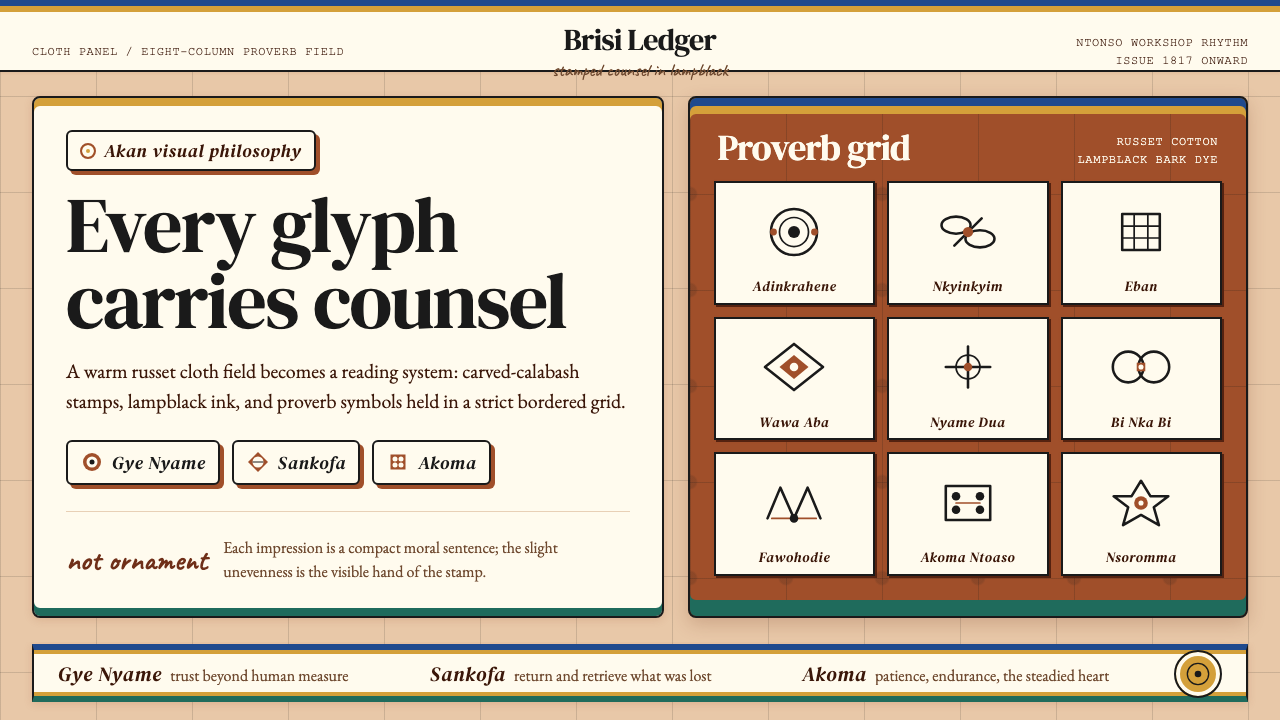 Akan Adinkra (Ghana)Proverbs become cloth. Russet grids, lampblack serif marks, and gold-edge ban…
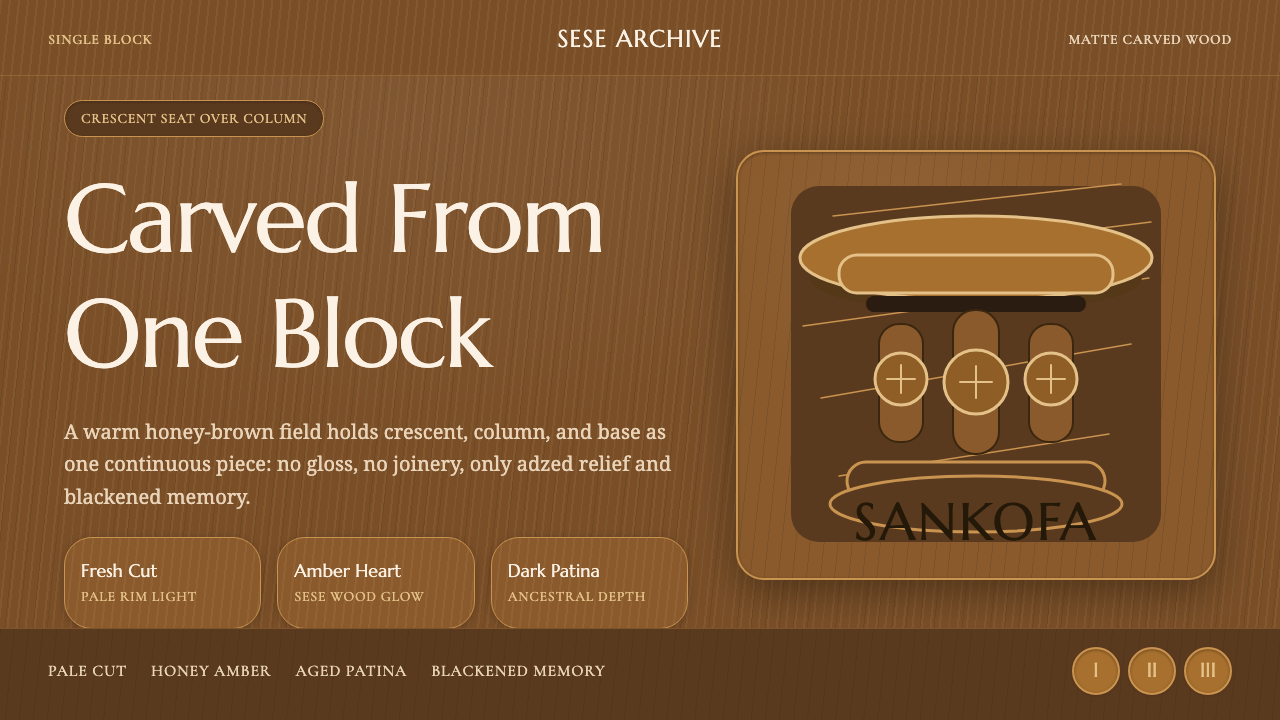 Akan Carved StoolMatte wood carries memory. Honey amber, Marcellus type, and crescent-column r…