What is Belarusian Solomka?
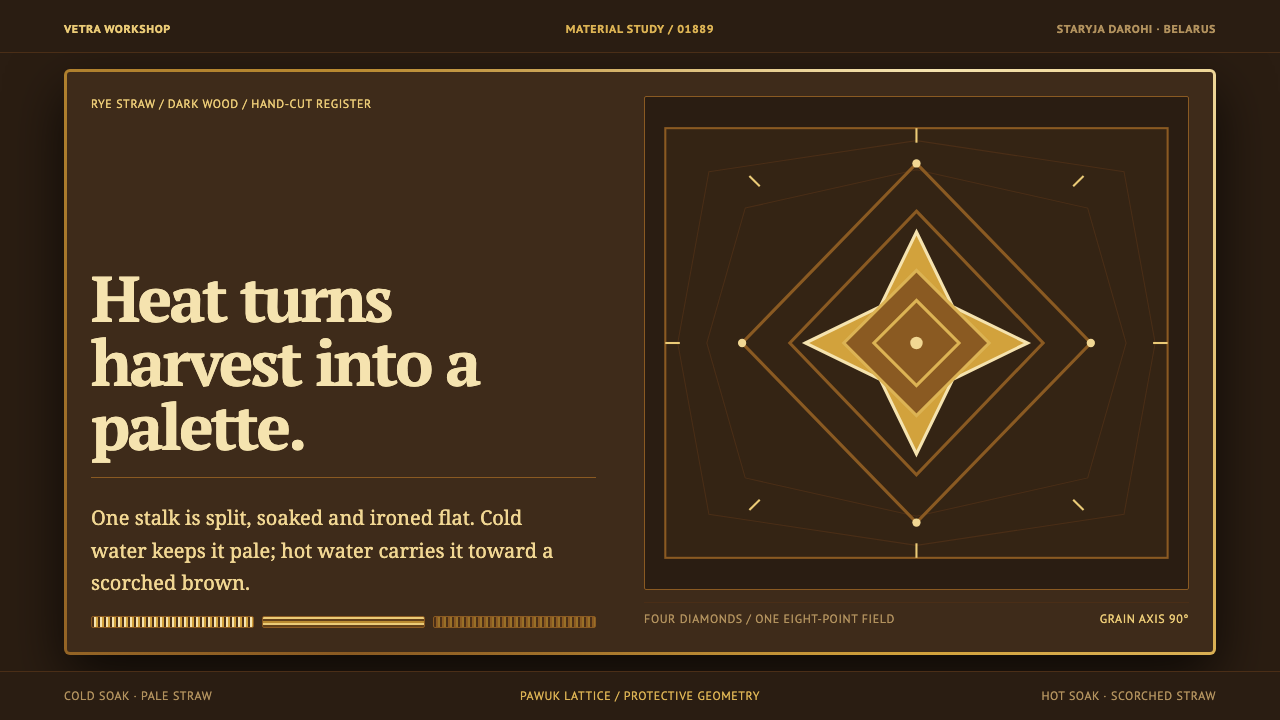
Solomka turns a single harvest into a full tonal ladder: split straw, ironed flat and laid in rhombus patterns on near-black wood, shining wherever it catches the light.
Belarusian Solomka in brief
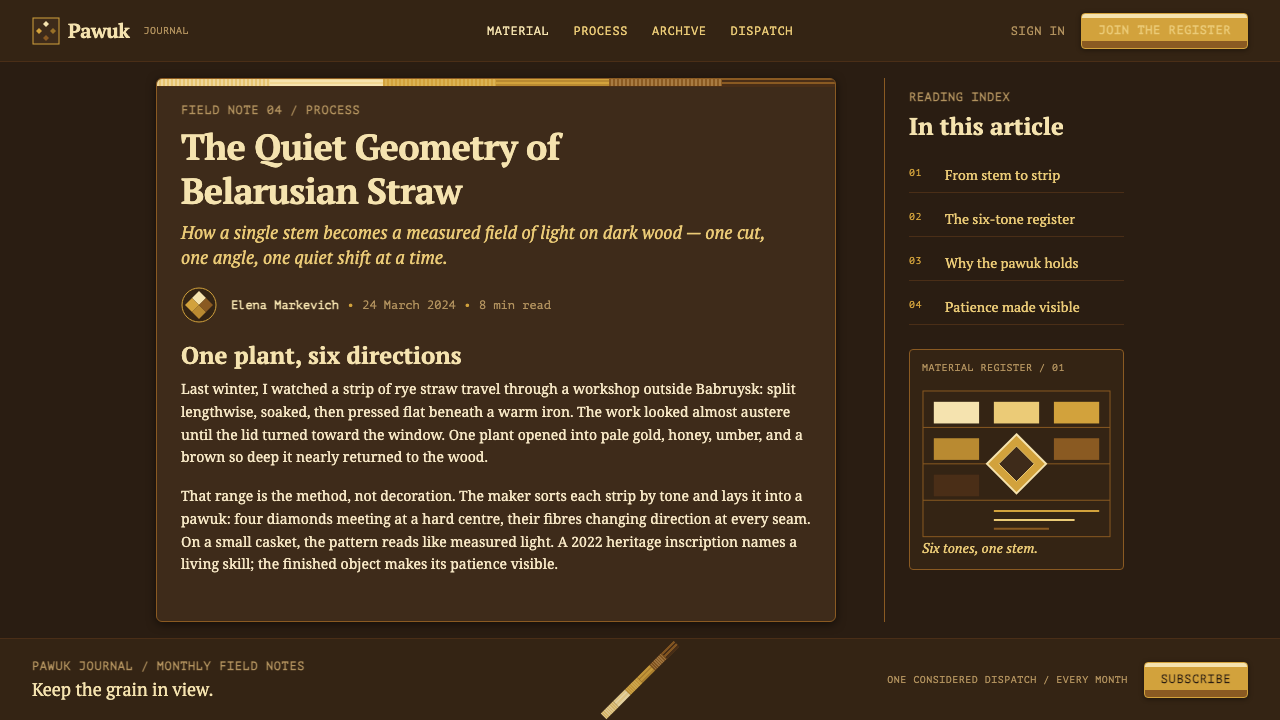
Solomka is Belarusian straw inlay, a craft in which rye, wheat or oat straw is split open, soaked, ironed flat, cut into strips and laid onto dark-stained wood: the lid of a casket, a box, a plaque. The fibre has a natural gloss, and the whole craft is built on that gloss, which flashes bright when the surface is tilted to the light and falls dark when it is viewed head-on.
The soak temperature sets the tone. Cold, warm or hot water draws different colours out of the same plant, so one harvest yields a complete ramp from pale gold through wheat and ochre to a deep scorched brown. This is why the style never uses a single flat 'gold'. Its palette is a ladder of straw tones, stacked against wood that is almost black.
The pattern vocabulary is narrow and strict: rhombus lattices borrowed from the pawuk, nested rhombi, and an eight-pointed star built from four rhombi. Strips are mitred and butt-joined at hard angles, and there is not a single curve in the work. Adjacent panels are turned a quarter turn, so identical straw reads as two different values depending on the direction of the fibre.
Where does Belarusian Solomka come from?
Solomka has been a continuous village practice in Belarus since before 1900, a craft of the farmstead in which the by-product of the grain harvest becomes a luminous surface. It was kept alive in village households across the Minsk region around Staryja Darohi, around Vetka, and in the Brest and Homiel countryside. The material is humble and local, the labour is patient, and the results are small, precious objects such as caskets, boxes and plaques.
The central motif has a protective origin. The pawuk is a rhombus-shaped straw ornament hung beneath the roof beam of a house, and it was believed to ward off illness and misfortune. The lattice of rhombi, the nested rhombi and the eight-pointed star in solomka all descend from it, which is why the craft is classed as a protective household craft and as part of Slavic folk ornament. The pattern was never merely decorative. It was a sign made from the harvest and placed in the home to keep it safe.
Solomka also belongs to a wider European family, straw marquetry, in which flattened straw is cut and laid onto a surface like veneer. What makes the Belarusian tradition distinctive is its geometry and its restraint: strictly angular rhombus patterns, a limited tonal ladder and a dark wooden ground. The masters of Staryja Darohi and the pawuk-makers of Vetka are the communities the record names, and both are groups of anonymous practitioners rather than celebrated individuals.
In 2022 UNESCO inscribed Belarusian straw weaving on the Representative List of the Intangible Cultural Heritage of Humanity, recognising the communities that carry the craft. The inscription is a reminder that this is a living practice. Treating it as a design language therefore carries a small obligation: to keep what makes it recognisable, and to credit the craft rather than using its look as an anonymous texture.
What defines the Belarusian Solomka look?
The straw ramp
The palette is a ladder, not a colour: pale gold, wheat, ochre and scorched brown, all drawn from the same plant by different soak temperatures. The steps are close enough to blend into one family, and far enough apart to read as distinct tones when set side by side. A single flat gold is the clearest sign of a shallow imitation.
Near-black wood ground
Everything sits on dark stained wood so deep it is almost black. The dark ground is the stage that makes the straw glow, and without it the tonal ladder collapses into beige. The wood should be matte and uniform, a quiet field that never competes with the inlay.
Gloss as light
The fibre's natural gloss is the craft's chief material. Seen at an angle it brightens, and seen head-on it dims, so the straw seems to hold a little light of its own. In design this means warm highlights confined to the straw tones, matte dark surroundings and no ambient glow around the objects. The sheen belongs to the material, not to an effect laid on top.
Rhombus lattices
The motif is the rhombus: single, nested, tiled into lattices, or grouped four at a time into an eight-pointed star. All of it comes from the protective pawuk. A single motif, repeated with discipline, is stronger here than a rich vocabulary, and variety comes from tone and orientation rather than from new shapes.
Hard mitres and butt joints
Strips are cut straight and meet at mitred corners or butt joints at hard angles. Edges are decisions made with a blade, and there is not a curve anywhere. Seams appear as thin dark lines where the wooden ground shows between strips. Rounded corners, soft outlines and organic flourishes contradict the material.
Quarter-turn panels
Adjacent panels are turned a quarter turn so that identical straw reads as two different values. Gloss reflects differently across the fibre than along it, so rotation alone produces contrast with no new colour. In a layout, alternating the orientation of textured or striped panels is the way to build hierarchy without leaving the palette.
Small-object scale
Solomka lives on caskets, boxes and plaques, so its natural scale is that of a framed object held in the hand. Compositions are bordered and finished at the edge like a lid or a plaque, with a rim. Pieces feel like objects with a border, which suits cards, badges and framed panels better than endless full-bleed fields.
Who shaped Belarusian Solomka?
The unnamed craftspeople of the Staryja Darohi district in the Minsk region, whose work forms the core of the tradition. Their anonymity is part of the point: the craft was handed down in households and villages as a shared skill, with the knowledge held in the hands rather than in signatures.
The makers of the pawuk, the rhombus-shaped straw ornament hung from the roof beam to ward off illness, in the area around Vetka. Their object supplies the motif on which solomka inlay is built, so the geometric grammar of the whole style traces back to what they made.
In 2022 UNESCO inscribed Belarusian straw weaving on its Representative List of the Intangible Cultural Heritage of Humanity, recognising the communities that carry the tradition as its bearers. That recognition places the craft among living heritage, and it sets the tone for how designers should treat it: with credit, and with attention to what the craft actually is.
How do you use Belarusian Solomka today?
Solomka is a dark, warm, tactile style that rewards patience. It suits any design that wants the feeling of a crafted object: precious, small, geometric and made by hand. Its method is simple to state: a near-black ground, a tonal ladder of straw colours, rhombus geometry, hard edges, and a gloss that appears only where the material would hold it.
For presentation slides, a cover can be a near-black field with a single inlaid rhombus-lattice panel in the straw ladder, framed like the lid of a casket, with the title in a plain, warm tone. Content slides use the dark ground with one or two inlay panels, and section dividers can be strips of lattice. Data slides suit the ladder directly: use the ramp from pale gold to scorched brown for sequential values, and rely on quarter-turn orientation, not new colours, to separate categories.
For web interfaces, the style fits craft marketplaces, heritage and museum sites, premium food and gift brands, editorial products and portfolios that want a handmade premium feel. Build cards as framed inlay panels with straight edges, make dividers from thin lattice strips, and let the straw tones act as the interactive colours against the dark ground. Gloss belongs to small highlights, such as the edge of a hovered element, not to large surfaces. Avoid rounded corners and soft shadows.
For editorial and marketing work, it fits stories about craft, folk art, heritage materials, harvest and rural tradition, and products with a handmade or protective narrative. Use lattice bands as headers and section breaks, keep photography warm and low-key against dark backgrounds, and let captions sit beneath the images like labels in a display case. The pattern can run as a border around a page, the way it runs around a lid.
The common mistake is to reduce solomka to a single metallic gold on black. That loses the ladder, which is the style's actual subject, and the result looks like luxury packaging rather than straw. The second mistake is to round the corners or curve the motifs, which contradicts a craft made of straight cuts. The third is overusing gloss: sheen applied everywhere looks like plastic, while sheen confined to straw-coloured inlay looks like material.
Belarusian Solomka — FAQ
What exactly is solomka?
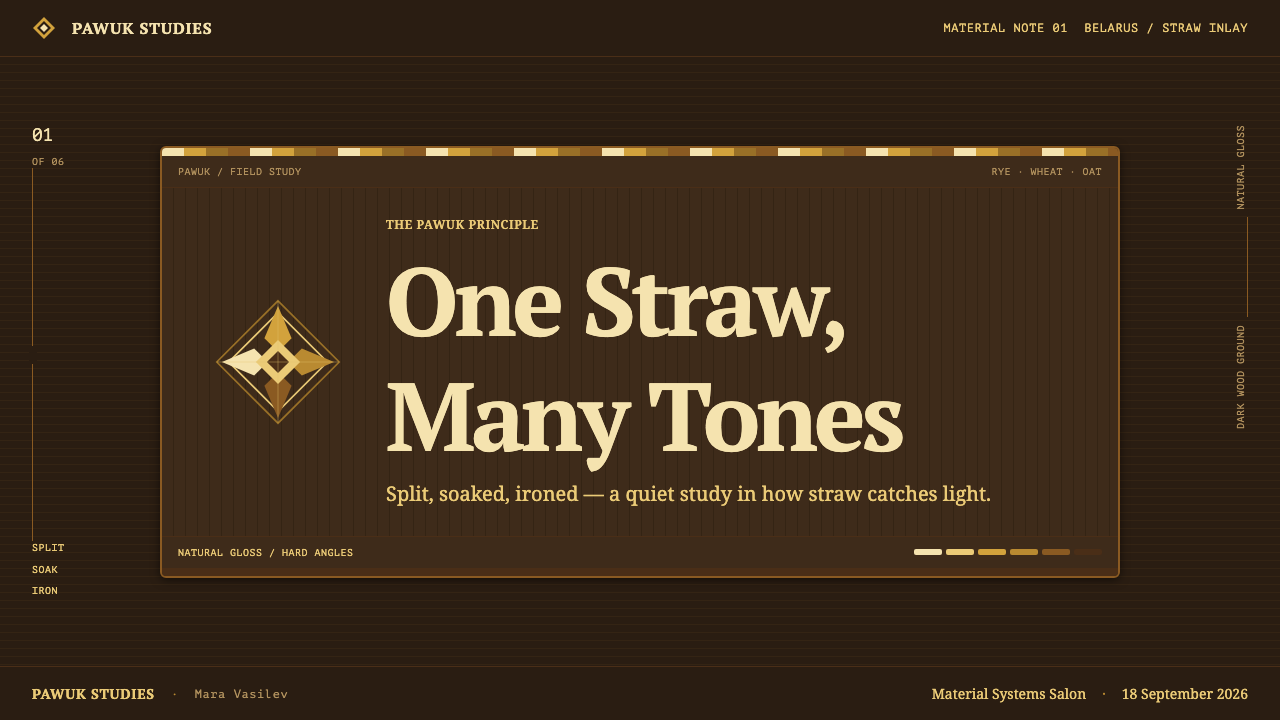
Solomka is Belarusian straw inlay. Rye, wheat or oat straw is split open, soaked in cold, warm or hot water, ironed flat, then cut and laid into dark-stained wood, as on a casket lid, a box or a plaque. It descends from village practice that goes back before 1900, and in 2022 UNESCO inscribed Belarusian straw weaving on its Representative List of the Intangible Cultural Heritage of Humanity.
Why does one kind of straw look like several colours?
There are two reasons. First, soak temperature draws different tones out of the same plant, giving a ramp from pale gold to scorched brown. Second, the fibre's natural gloss reflects differently across the grain than along it, so adjacent panels turned a quarter turn read as two different values even when the straw is identical. A design can borrow both tricks: a tonal ladder, and alternating orientation.
Why are there no curves?
Because the craft is made of straight cuts. Strips of straw are mitred and butt-joined at hard angles, and the motifs, rhombus lattices and eight-pointed stars built from four rhombi, are straight-edged by nature. Curves would contradict the way the object is made. In design terms, treat every edge as a decision: straight lines, hard corners, and shapes that meet at crisp angles.
Can I use it on a light background?
The style is dark by nature. The near-black wood is what makes the straw glow, and on a pale ground the tonal ladder flattens into beige and loses its gloss. If a light layout is unavoidable, keep the dark wood as a framed panel or lid-like block and let the lattice live inside it, rather than spreading the straw tones across a light page.
Where does the style struggle?
It struggles with cool, clinical or purely minimal products, and with very dense interfaces, because its warmth, gloss and lattice patterns carry a lot of visual texture. Very small text laid directly over inlay also suffers. Use it where craft, warmth and heritage are part of the message, and keep functional text on plain dark areas beside the inlay.
Related design styles
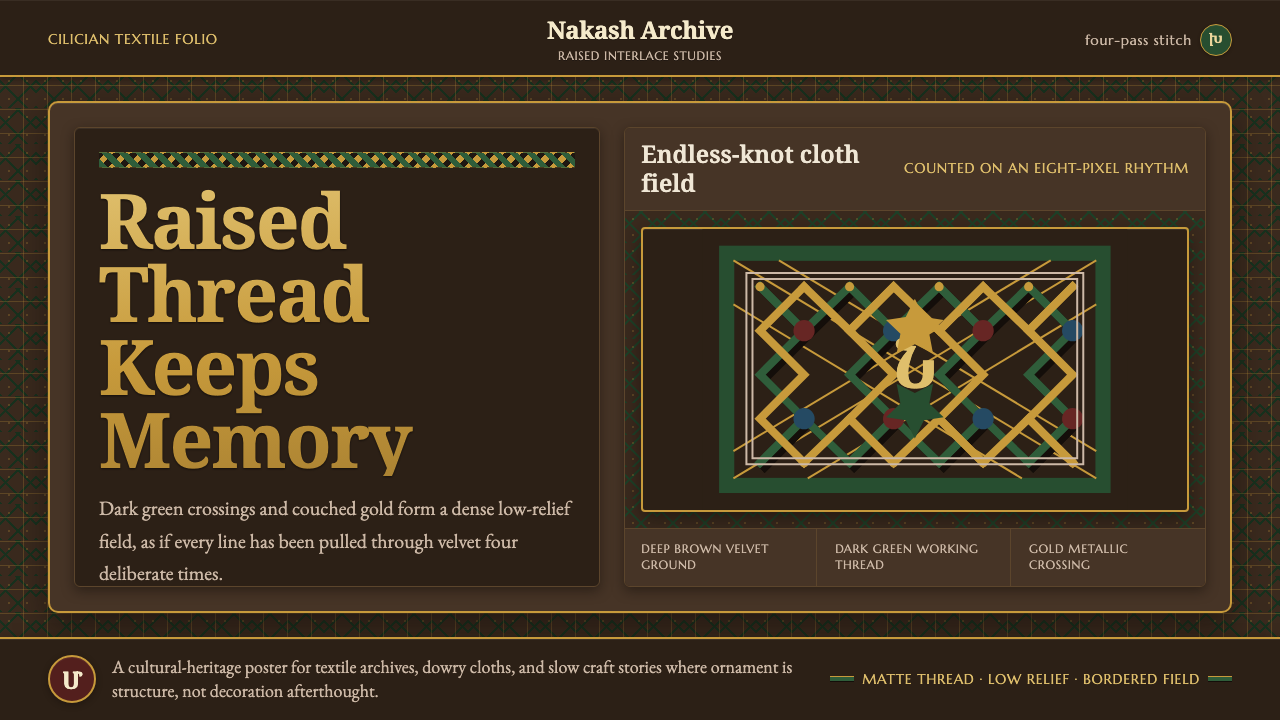 Armenian Marash Interlace EmbroideryDense memory in raised thread. Green-gold interlace locks over deep brown clo…
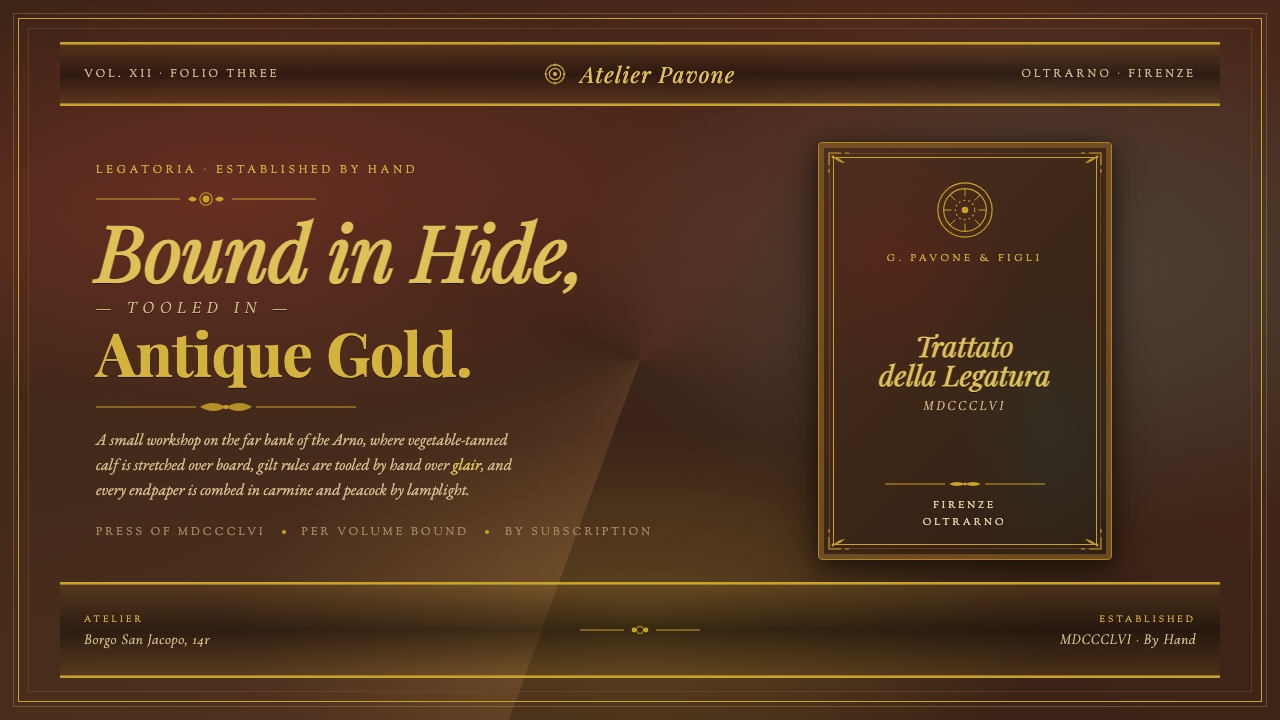 Florentine Leather BinderyRenaissance craft as luxury. Tanned hide, antique gold tooling, carmine-and-p…
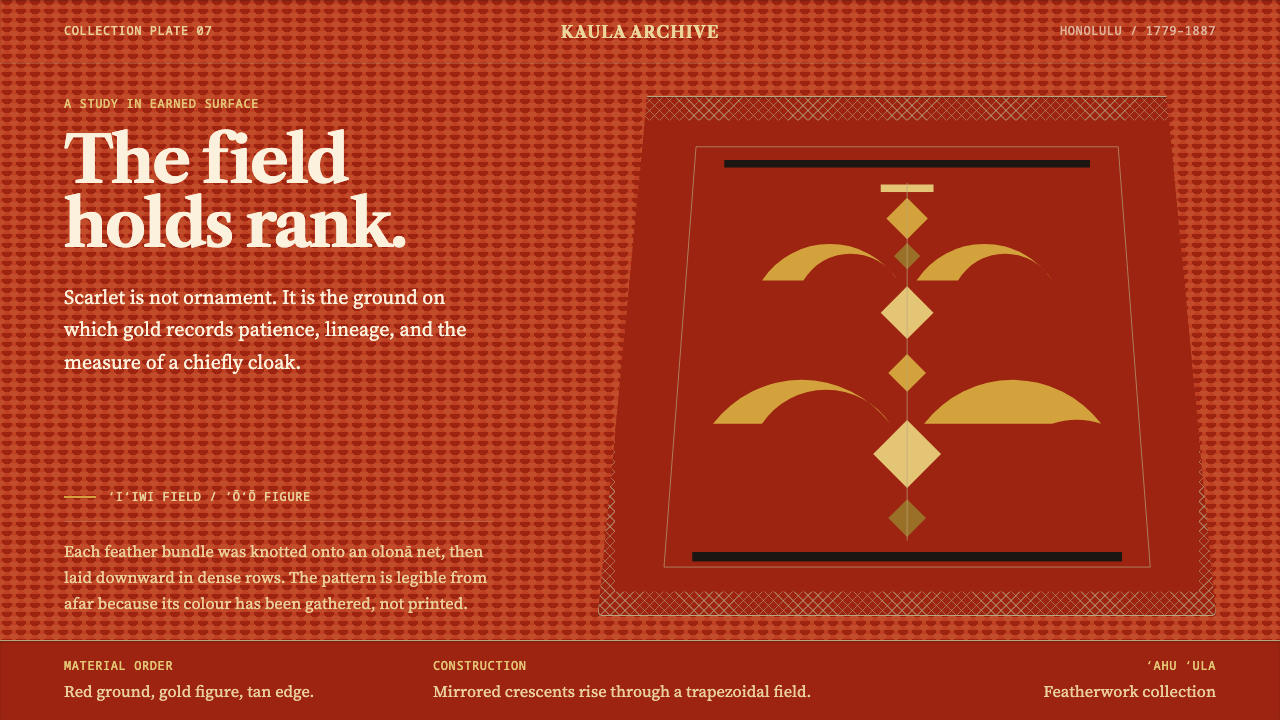 Hawaiian ʻAhu ʻula FeatherworkRank becomes a field. Scarlet nap carries sparing gold crescents in a mirrore…
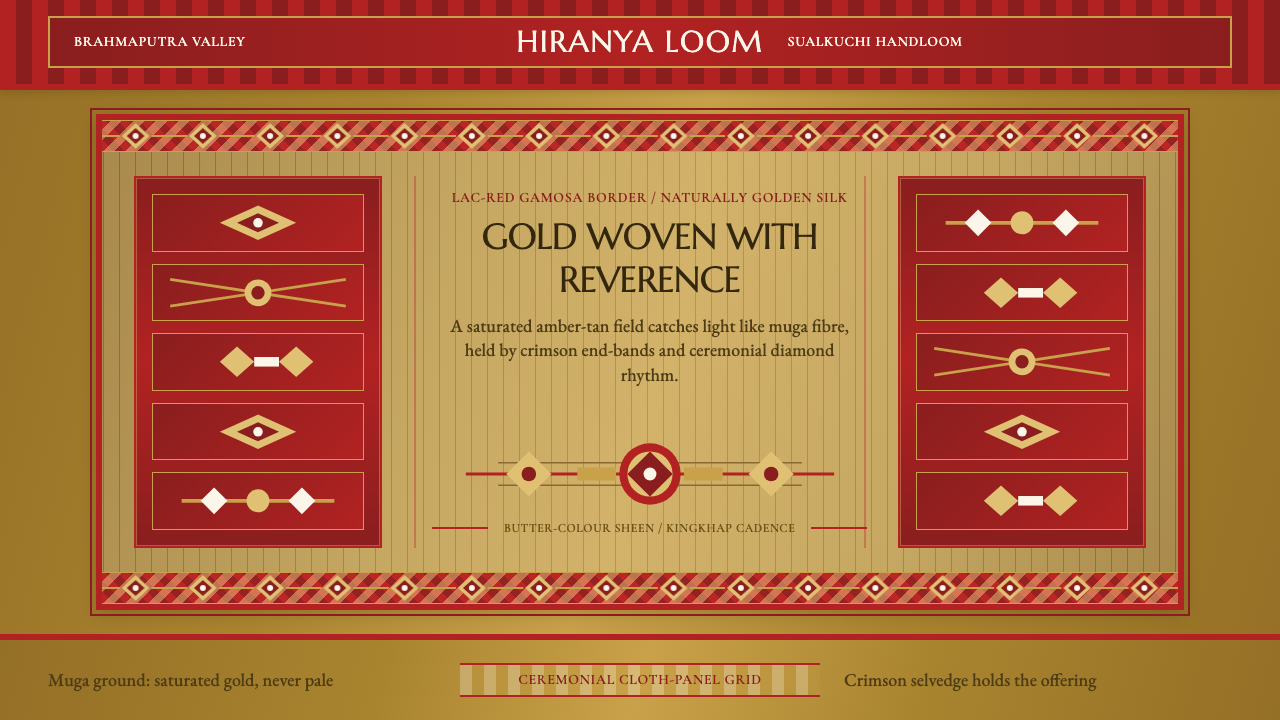 Assam Muga Silk & GamosaWarm ceremony in silk. Muga gold sheen meets crimson borders and woven diamon…
 Atlas Silk (Etles)Soft before it is woven. Walnut-black silk holds vertical emerald and gold dy…
 Bashkir Honeycomb Felt OrnamentSteppe craft feels weighty. Umber felt holds blue honeycomb and raw-wool hook…