What is Banded Agate Slice?
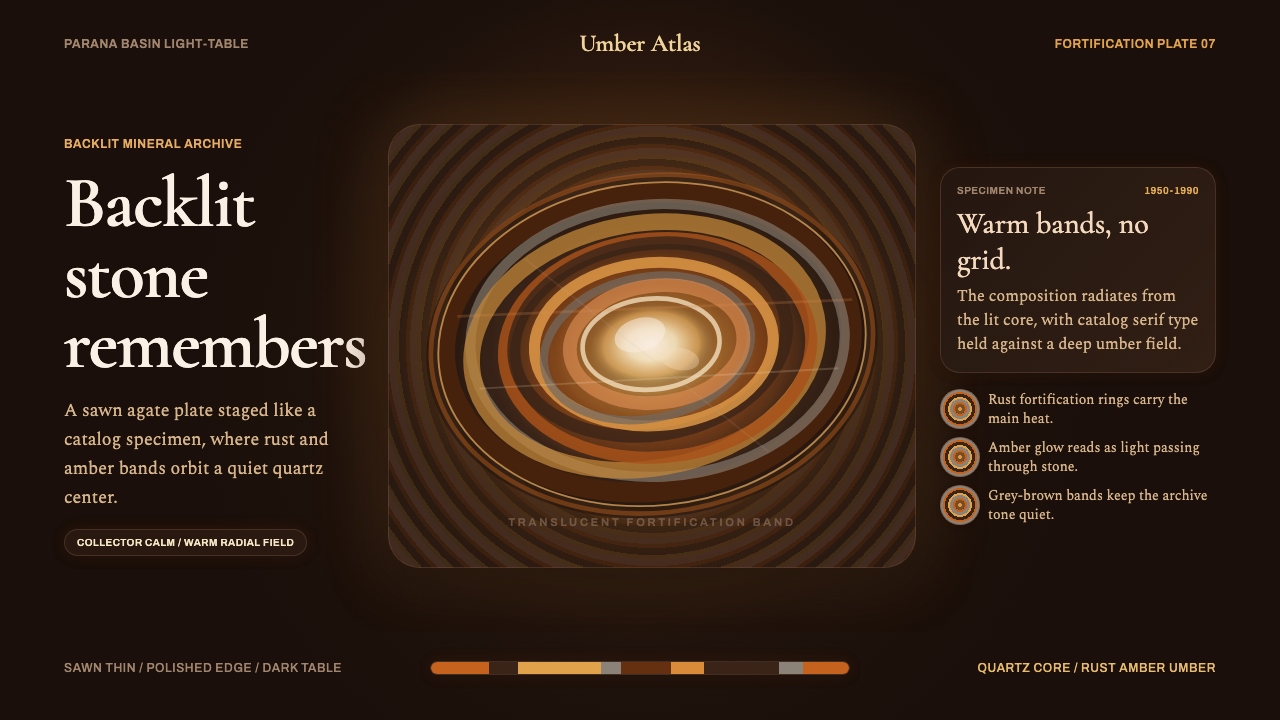
Banded Agate Slice recreates a sawn stone lit from behind — concentric rust and amber rings glowing around a quartz core on a near-black lapidary light-table.
Banded Agate Slice in brief
Banded Agate Slice translates a specific object into a design system: a Brazilian fortification agate, sawn thin enough to become translucent, and displayed backlit on a lapidary light-table the way mineral collectors and gem dealers have staged their specimens for photography and sale since the mid-twentieth century. The result is a warm, radial, glowing composition that feels organic and geological rather than engineered.
The core visual mechanic is concentric banding: rust, amber, and grey-brown rings wrap around a translucent quartz center, each band reading as a distinct layer of mineral deposit built up over geological time. Lit from behind, the thinnest and most crystalline sections of the stone glow brightest, while denser mineral bands remain darker and more opaque — producing a natural gradient of light that no flat digital fill can quite replicate without careful attention to this radial logic.
Unlike rectilinear, grid-based design traditions, this style is fundamentally organic and radial: forms curve and nest around a center rather than aligning to straight edges, and the near-black warm-brown field surrounding the glowing stone exists specifically to intensify the sense of internal light, much as a jeweler's light-table uses darkness to make a thin stone slice appear luminous.

Where does Banded Agate Slice come from?
Agate is a banded variety of chalcedony, a microcrystalline form of quartz, formed when silica-rich fluids fill cavities within volcanic rock over long geological periods, depositing mineral layers in concentric bands as the cavity slowly fills. Brazil's Paraná basin, an enormous flood-basalt formation, produces some of the world's most prized agate specimens, found within geodes — hollow, crystal-lined rock cavities — that can range from fist-sized to enormous.
Fortification agate specifically refers to banding patterns that resemble the angular walls of a fortress or castle when viewed in cross-section — a naming convention among mineral collectors describing the zigzagging, layered geometry some agates display as their bands wrap around internal irregularities in the original cavity. When a geode or agate nodule is sawn into thin slices, these fortification patterns become visible as a flat, sliced cross-section rather than a solid rounded stone.
The mid-twentieth century saw the rise of a dedicated lapidary hobbyist and collector culture, particularly in North America and Brazil, supported by mineral-catalog photography that popularized a specific presentation technique: thin-sliced agate specimens lit from behind on a light-table or window, which made the translucent qualities of the stone visible in a way reflected light never could. This backlit presentation became the standard, almost canonical way of photographing and displaying banded agate for decades, appearing in specimen catalogs, rock-and-gem show displays, and hobbyist collections alike.
The technique of examining and photographing minerals under transmitted and polarized light — sometimes using a polariscope, an instrument that reveals internal stress patterns and crystal structure through polarized illumination — further reinforced this glowing, luminous way of seeing stone, treating the mineral less as an opaque rock and more as a lens for light itself.
What defines the Banded Agate Slice look?
Color
The palette centers on warm rust, amber, and grey-brown tones arranged as concentric bands, with a lighter, near-translucent quartz tone at the core acting as the brightest point of the composition. The surrounding field is a near-black warm brown rather than neutral black, keeping the entire palette within a single warm mineral family.
Concentric Banding
Rings of color wrap around a central point rather than running in parallel straight lines — this radial, nested structure is the single most defining compositional device and should organize any layout built in this style.
Backlit Glow
The quartz core and thinner mineral bands are treated as if lit from behind, with brightness increasing toward the translucent center and fading outward into the darker, denser outer bands — a light source implied from within the object rather than falling on it from outside.
Near-Black Warm Ground
The field surrounding the glowing stone motif is a deep, warm umber-brown rather than a cool or neutral dark, functioning like the darkened room of a light-table display to intensify the perceived glow of the banded core.
Organic Irregularity
Band edges are never perfectly smooth circles — they carry the slight irregularity of natural mineral growth, with occasional angular fortification-style zigzags breaking an otherwise rounded rhythm.
Translucent Layering
Where bands overlap or approach the crystalline core, a sense of translucency — one layer subtly visible through another — reinforces the stone-slice premise rather than treating each band as a fully opaque flat color.
Catalog Presentation Mood
The overall staging recalls mid-century lapidary catalog photography — a single specimen centered and isolated against darkness, presented with quiet reverence rather than busy surrounding decoration, suited to narrative, collector-grade display.

Who shaped Banded Agate Slice?
The craftsmen who sawed, polished, and prepared thin agate slices from raw Paraná basin geodes developed the cutting techniques that made the concentric banding and translucent glow of fortification agate visible and displayable in the first place.
Photographers who popularized the backlit, light-table presentation of sliced agate in mineral catalogs and hobbyist publications established the specific glowing, radial visual convention this design style directly recreates.
How do you use Banded Agate Slice today?
Banded Agate Slice suits contexts wanting a warm, collector-grade, narrative mood rather than a crisp, corporate one. Applying it well means committing to the radial, concentric structure rather than forcing the motif into a rectilinear grid, and preserving the near-black warm ground that makes the glow read correctly.
For presentation slides, the style works beautifully for cover slides in natural-history, collector, or luxury-goods storytelling: a full agate-slice motif centered on a dark field with the title set to one side, letting the radial glow anchor attention. Content slides can use partial arcs of the banding pattern as section dividers or background texture, without needing the full circular motif on every page.
For web interfaces, this aesthetic suits mineral and gem e-commerce, natural-history or museum platforms, wellness and crystal-adjacent brands, or any product wanting an organic, warm-glow visual identity distinct from typical flat-color dashboards. Hero sections benefit from the full radial motif, while functional UI elements should simplify to flat warm-dark panels with occasional banding accents at edges or corners.
For editorial and marketing work — natural-history features, collector storytelling, luxury or wellness branding — the style provides an immediately recognizable warm-glow mood: full-bleed dark-brown sections, a central radial agate motif as key visual, and photography treated with warm, low-contrast tones to sit comfortably within the palette.
A common mistake is flattening the concentric bands into straight, parallel stripes, which discards the radial logic that makes the style read as agate rather than generic striped pattern. A second common error is lightening the surrounding ground, which removes the darkness needed to make the core glow convincingly.

Banded Agate Slice — FAQ
Why must the bands be concentric rather than straight?
Concentric banding is what distinguishes agate from every other striped mineral or pattern — the rings form because mineral deposits accumulate around the inside of a roughly spherical cavity over time. Straightening the bands into parallel stripes removes this geological logic and turns the motif into a generic striped pattern with no connection to the actual stone.
How dark should the surrounding field be?
The ground should read as near-black but warm — a deep umber or brown-black rather than a cool neutral black — since this is what allows the glowing core to read as backlit stone rather than simply a bright shape on a dark background. A pure, cool black shifts the mood toward generic dark-mode UI rather than lapidary display.
Can this style be used for data visualization?
The radial, banded structure translates naturally to circular or ring-based data displays — a ring chart or radial progress indicator can borrow the concentric-band logic directly. Bar charts or grid-based tables, however, sit awkwardly within this style and are better rendered in a plainer, complementary treatment.
Is this style only suited to mineral or gem-related products?
While the motif is drawn directly from agate, its underlying qualities — warm radial glow, organic banding, collector-grade quiet presentation — transfer well to any brand wanting a natural, warm, narrative visual identity, from wellness products to premium consumer goods, as long as the radial structure and warm-dark ground are preserved.
What typography suits this style?
A refined serif or understated humanist sans-serif, set with generous spacing, complements the quiet, collector-catalog mood without competing visually with the radial glow motif. Heavily decorative or novelty typefaces work against the restrained, reverent presentation the style relies on.
Related design styles
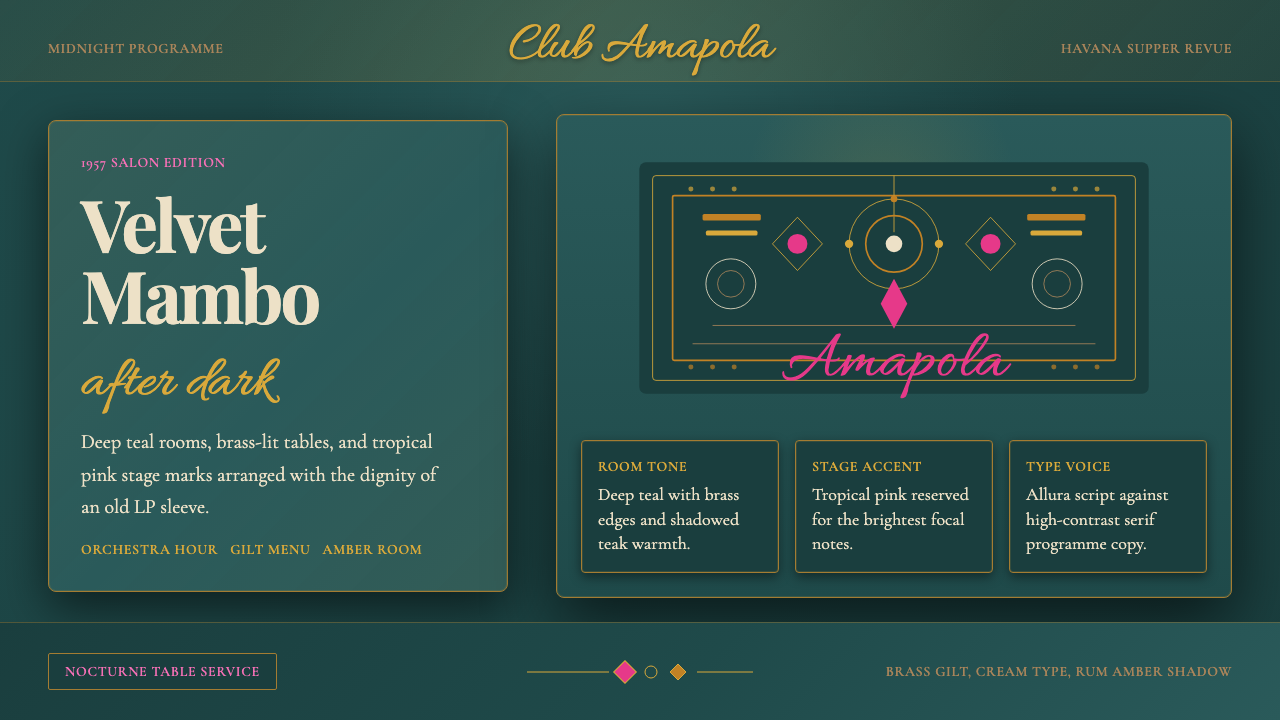 Cuban Salsa Cabaret (1950)Nightlife with dignity. Deep teal, brass gilt, and Allura script stage the ro…
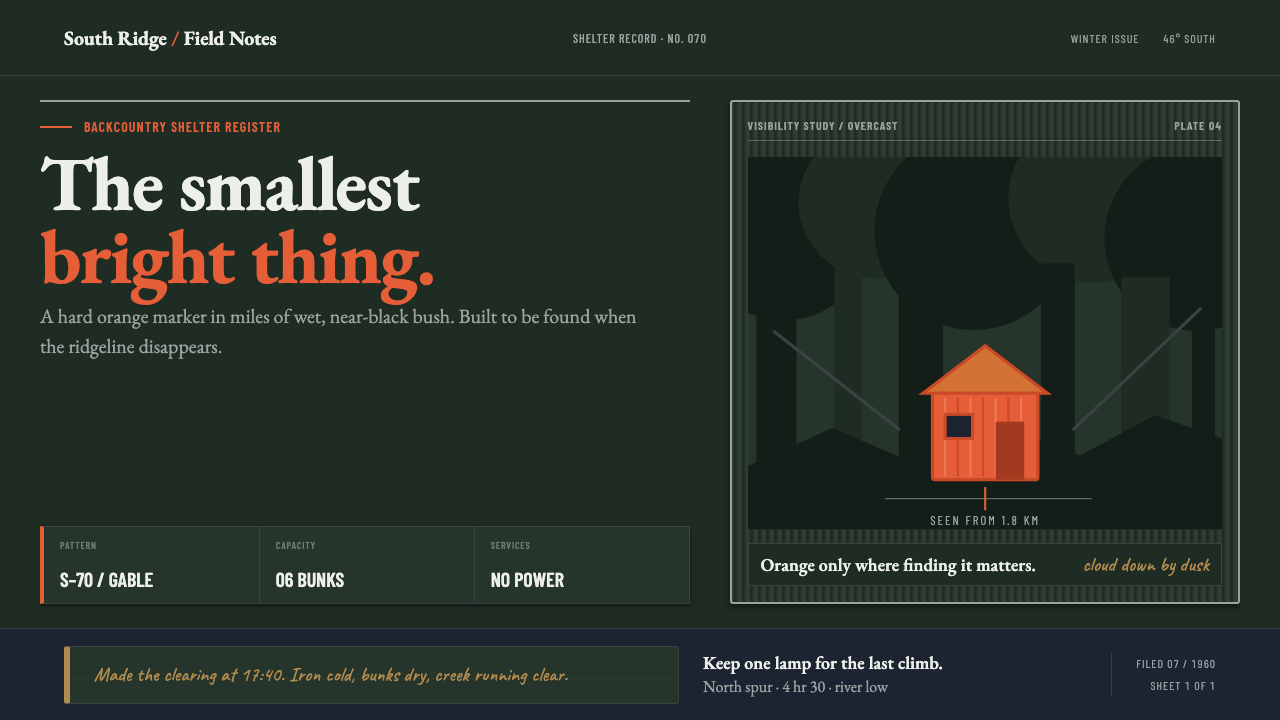 NZ Backcountry HutBuilt to be found. Survival orange cuts through a near-black beech field.
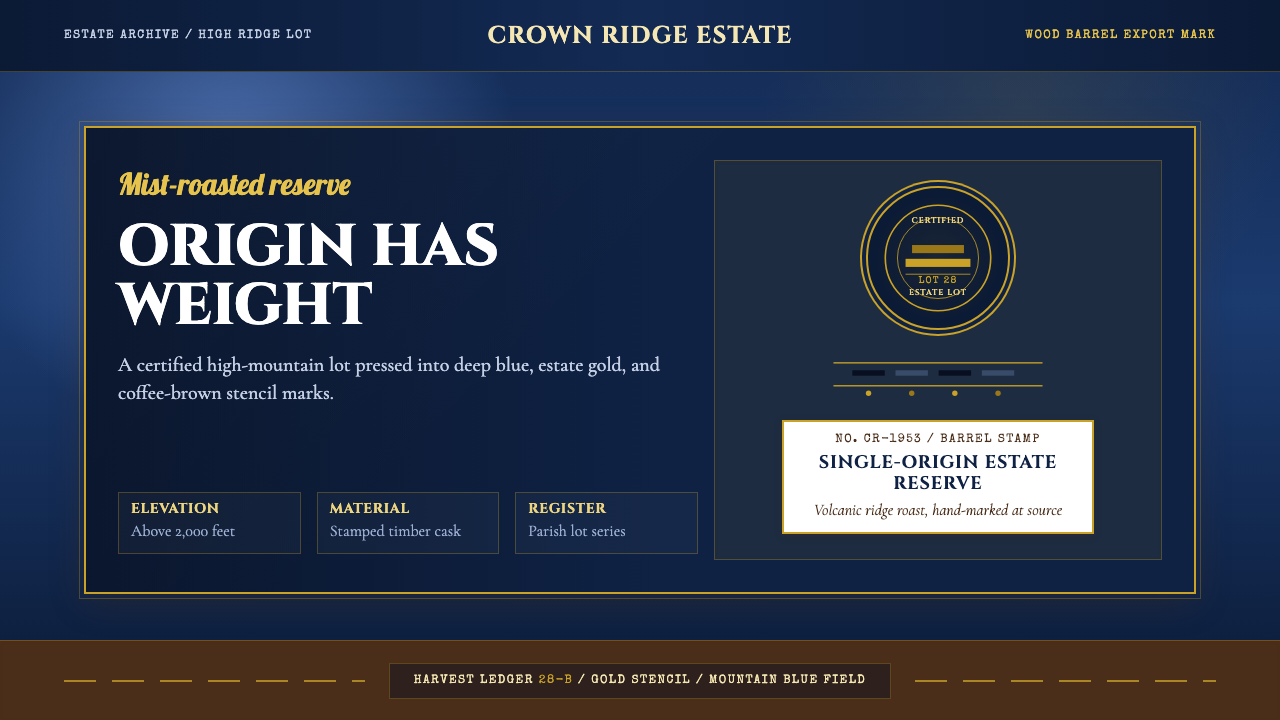 Jamaican Blue Mountain CoffeeOrigin has weight. Mountain blue, estate gold, and stencil type press like a…
 Starbucks (Siren)Hospitality becomes an emblem. Forest green medallion on cream paper, with re…
 1970s Earth TonesWarm maximalism stays muddy. Bulbous slabs, avocado bands, and harvest-gold r…
 Akubra Outback (1970s Stockman)Worn honesty. Leather brown, Pilbara orange, and cream catalogue frames carry…