What is Jamaican Blue Mountain Coffee?
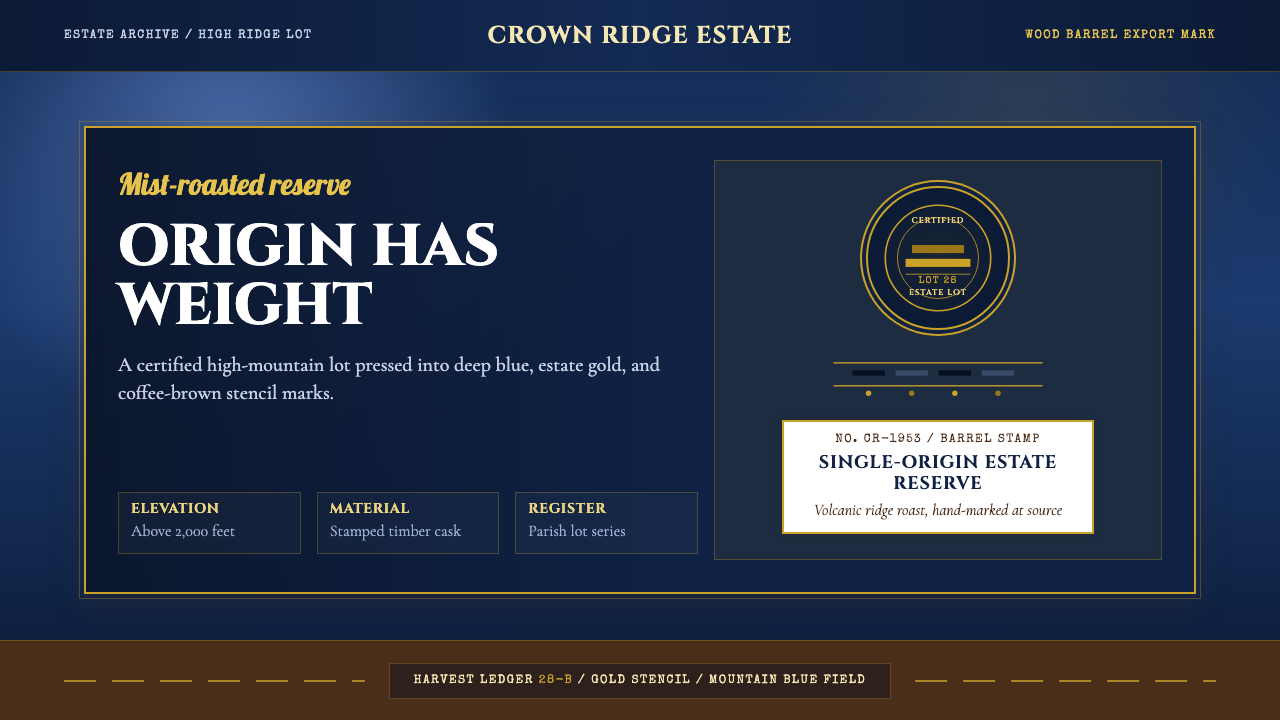
Grown on volcanic ridges above the clouds and shipped in hand-stamped wooden barrels, Jamaican Blue Mountain Coffee turned the rituals of certified-origin agriculture into one of the world's most commanding visual identities.
Jamaican Blue Mountain Coffee in brief
Jamaican Blue Mountain Coffee is a design system rooted in the visual culture of one of the world's most rigorously certified agricultural brands. Its palette — anchored in the deep, mist-saturated blue of high-altitude mountain ridges, warm gold lettering, and the rich brown of roasted coffee — reads less like a branding exercise and more like a geological fact. Every color earns its place by tracing back to something real: the mountains themselves, the aged barrels, the hand-stamped lot numbers.
The aesthetic draws on two overlapping traditions. The first is colonial estate signage — the heavy serif type, medallion seals, and engraved borders that plantation owners and export houses used to mark premium lots as far back as the eighteenth century. The second is stencil culture: the ink-pressed barrel stamps, lot codes, and origin marks that certifying authorities and cooperatives have used for generations to distinguish Blue Mountain coffee from the imitations that crowd lesser shelves. Together these traditions produce a visual language of weight, certification, and earned authority.
What makes this system distinctive among heritage food and beverage aesthetics is the discipline with which it uses darkness. This is a dark-background system — the deep mountain blue or near-black grounds are not accidental; they evoke the pre-dawn harvest hour, the interior of a curing warehouse, the dense canopy of Blue Mountain forest. Against that darkness, gold and cream lettering has the quality of candlelight on old paper: warm, legible, and unmistakably hand-produced.
Where does Jamaican Blue Mountain Coffee come from?
Coffee first arrived in Jamaica in 1728, when Sir Nicholas Lawes, then Governor of Jamaica, received plants from Martinique and established the island's first coffee cultivation in the parish of St. Andrew. The plant found ideal conditions in the Blue Mountain range east of Kingston: volcanic soil rich in minerals, consistent rainfall, cool temperatures at elevation, and the near-permanent mist that slows the cherry's maturation and concentrates its flavors. Within decades, Jamaican coffee was being exported to Britain and commanding premium prices in London counting houses.
The certification apparatus that defines the brand today was formally established in 1953, when the Coffee Industry Board of Jamaica was created to regulate production, set altitude requirements, and enforce the geographic boundaries of the Blue Mountain designation. Only coffee grown in the parishes of St. Andrew, St. Thomas, Portland, and St. Mary — above two thousand feet — qualifies. This precision gave the brand its most powerful visual asset: the geographic boundary itself, a line drawn on a map that separates authentic from imitation.
The barrel became the brand's most iconic physical element — and its most distinctive visual one. While most coffee regions ship in burlap sacks, Blue Mountain coffee is exported in hand-crafted wooden barrels, each stencil-stamped with the lot number, estate name, and certification marks. The barrel is simultaneously a practical container, a quality signal, and a piece of heritage theatre. Its form — the staved cylinder, the iron hoop, the flat-stamped typography — became the primary source material for the design system's typographic and structural vocabulary.
The modern brand era, from the 1970s forward, was shaped partly by the Japanese market, which became the dominant buyer of Blue Mountain coffee and developed an intense connoisseurship around it. Japanese importers and roasters created packaging and presentation standards that reinforced the premium, almost ceremonial quality of the product. Their influence pushed the visual language toward precision: cleaner seal medallions, more controlled typography, a stricter hierarchy between the estate name, certification authority, and lot designation. The design system reflects this layered history — colonial estate culture refracted through Japanese precision.
What defines the Jamaican Blue Mountain Coffee look?
Palette: Darkness as Foundation
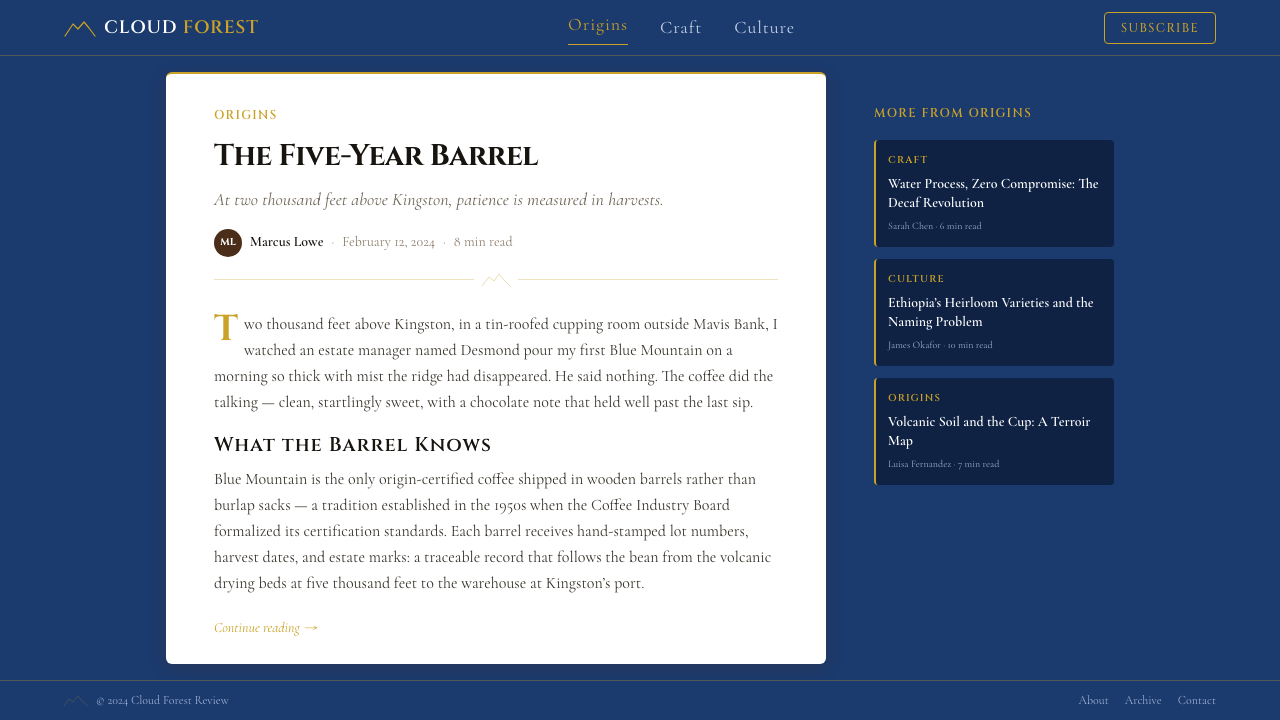
The system builds on a dark foundation — a deep, saturated mountain blue that sits between indigo and midnight, evoking the pre-dawn ridgelines and misty forest interior of the Blue Mountain range. Against this ground, warm gold and aged cream carry all the primary information: estate names, certification marks, and lot designations. Coffee-bean brown appears as a secondary mid-tone, grounding the palette in the product itself. The overall effect is rich and nocturnal — closer to a cured leather journal cover than to a contemporary brand system.
Typography: Barrel-Stamp Heritage
Type in this system carries the weight of a physical stamp. Headings and estate names use heavy, high-contrast serif letterforms — the kind that read clearly when pressed through a stencil onto wood, where fine detail is lost and only the fundamental skeleton of each letter survives. Body text and certification copy are set in compressed, tightly spaced forms that evoke the dense information blocks found on export documentation and cooperative registers. Capitals dominate; lowercase appears only for secondary or supporting text. The hierarchy is explicit and almost bureaucratic, reflecting the system's origin in regulatory documentation.
Medallion Seals and Cartouches
The seal medallion is the visual heart of the system. Circular or oval, it contains a compressed hierarchy: the certification authority at the outer ring, the estate or cooperative name in the middle band, and the lot designation or grade at the center. Borders are engraved-looking — fine concentric rings, dot-dash rules, or radial line patterns that evoke the intaglio printing of banknotes and official documents. Cartouche frames — the shield-and-ribbon forms borrowed from estate heraldry — contain secondary information like altitude, parish, and harvest year. Both forms communicate that this is regulated, authenticated, and traceable.
Texture: The Feel of Certified Origin
Unlike design systems that use texture as decoration, this system uses texture as evidence. The aged paper grain, the ink-bleed at stencil edges, the slight imprecision of a hand-applied stamp — these qualities are not flaws to be smoothed away; they are proof of the human process behind certification. In digital application, these textures are rendered with restraint: a subtle noise overlay, a slightly uneven ink quality in display type, a logo treatment that looks as though it was once pressed onto wood. The goal is tactile memory — surfaces that feel as if they have passed through careful hands.
Hierarchy: Lot, Estate, Region
The information architecture of Blue Mountain certification maps directly onto the visual hierarchy of the design system. At the top: the regional designation (Blue Mountain, the broadest category). Below it: the estate or cooperative (the producer). Below that: the lot number and grade (the specific batch). This three-tier structure appears in every piece of work — from a barrel stamp to a web page header — and is enforced through type scale, weight, and spatial separation rather than through color differentiation. The system trusts structure over decoration to communicate importance.
Restraint in Gold
Gold is the system's most precious tone, and it is treated as such — used sparingly for what matters most. Estate names, certification seals, and primary calls to action receive gold treatment; supporting text and secondary metadata are rendered in cream or light grey. This discipline prevents the palette from tipping into excess. A surface covered uniformly in gold loses the sense of elevation that gold implies; a single gold headline on a dark ground announces itself with the quiet authority of a wax seal on a letter of introduction.
Compositional Formality
Layouts in this system are centered and symmetrical in a way that contemporary design rarely is. The medallion sits at the center. The estate name frames it above; the certification authority frames it below. Borders align to invisible axes. This formality is not traditionalism for its own sake — it mirrors the formal protocols of certification documents, where bilateral symmetry signals official standing and impartiality. Asymmetric layouts feel out of register with the system's authority; centering is the compositional default.
Who shaped Jamaican Blue Mountain Coffee?
As Governor of Jamaica from 1718 to 1722, Lawes introduced coffee cultivation to the island in 1728, planting seedlings received from Martinique in the parish of St. Andrew. This founding act established the geographic and agricultural conditions that would, over two centuries, develop into one of the world's most recognizable certified-origin brands. Lawes had no visual system in mind — only an agricultural experiment — but his decision to plant in the Blue Mountain foothills set in motion everything that followed.
Established by statute in 1953, the Coffee Industry Board is the regulatory body that created the certification framework defining Blue Mountain coffee as a geographic designation. It set the altitude thresholds, the parish boundaries, the grading standards, and the inspection protocols that gave the brand its legal and visual coherence. The Board's official marks — the certification seals and stamps applied to approved barrels — are the direct ancestors of the medallion-and-seal visual language at the center of this design system.
A key figure in the twentieth-century development of the Blue Mountain coffee industry, Grant represents the generation of Jamaican agricultural leaders who transformed a colonial export commodity into a nationally controlled premium brand. His work with producer cooperatives helped establish the collective certification structures — and the shared visual marks that went with them — that allowed smallholder farmers to participate in the Blue Mountain designation alongside large private estates.
Associated with the contemporary stewardship of Blue Mountain coffee's global brand positioning, Watson represents the modern phase of the brand's development — the period in which the visual language shifted from purely functional export documentation to deliberate premium brand communication. This transition, from stamp to system, is the design-historical moment that separates Jamaican Blue Mountain Coffee as an agricultural commodity from its existence as a global luxury designation with a coherent visual identity.
How do you use Jamaican Blue Mountain Coffee today?
The Jamaican Blue Mountain Coffee design system is a heritage authority system — its strengths lie in conferring certified-origin credibility, premium positioning, and the tactile weight of physical provenance. The contexts where it performs best are those where the product genuinely has a story of quality, geographic specificity, or rigorous production — and where that story needs to be legible to a discerning audience. Applied indiscriminately, the system's formality can feel anachronistic; applied to the right subject, it is unmistakable.
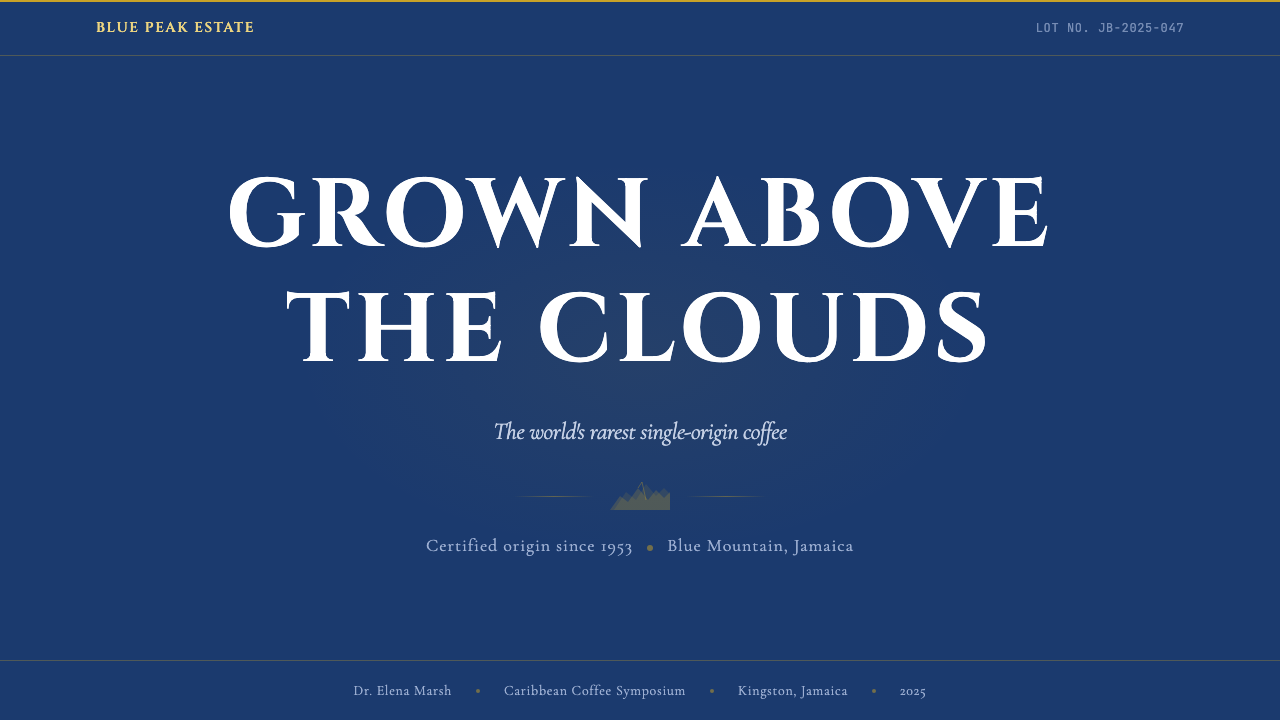
For presentation slides, the system works exceptionally well on covers and section dividers. A cover built on a deep mountain-blue ground, with a centered medallion seal and a gold estate-name heading, achieves an immediate premium signal. Content slides should simplify: use a cream background for dense information, reserving dark grounds for emphasis slides or summary statements. Data visualization should follow the lot-and-grade hierarchy logic — primary metrics rendered in gold, secondary metrics in cream, comparative or negative data in a muted brown or grey. Avoid overpopulating slides with the ornamental elements; one seal, one border treatment, used consistently, is more authoritative than a page dense with decorative detail.
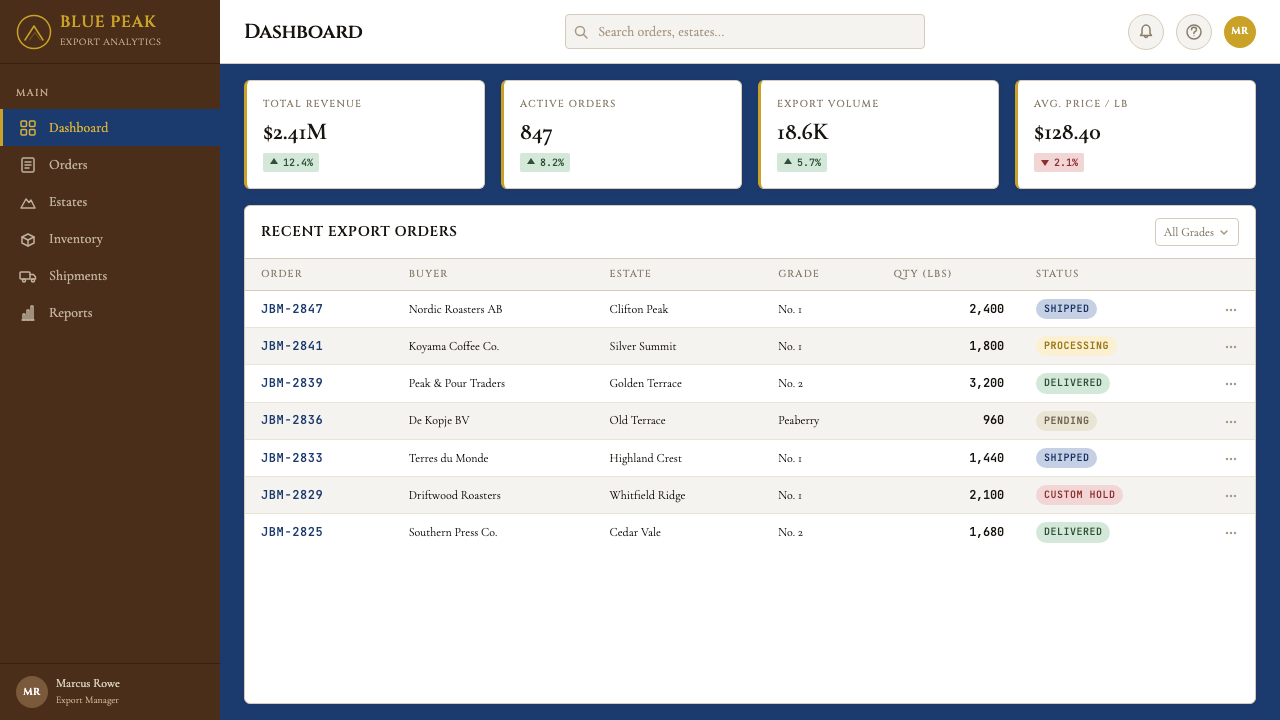
For web UI, this system is best suited to landing pages, product detail pages, and checkout flows for products that can genuinely claim premium or artisan provenance. Dashboard applications are a poor fit — the system's centered formality and dark grounds slow down scannability, which dashboards require above all else. On appropriate web contexts, the system dictates: center the primary product seal, use a dark-ground hero section with gold headline, and transition to cream or near-white for text-heavy content sections. Navigation should be minimal and text-based, with no icon decoration. Interactive states can use a warm amber highlight in place of a conventional link color.
For editorial and marketing materials, the system's poster-like quality is a strong asset. Full-bleed dark-ground spreads work well for feature stories, product launches, or brand campaigns where the objective is establishing prestige rather than driving rapid conversion. The medallion-and-cartouche vocabulary scales well to print — from a business card to a full-page advertisement — maintaining its authority at every size. In marketing copy, the visual hierarchy should reflect the certification logic: brand name largest, estate or product designation second, supporting claims at body scale.
The most common mistake when applying this system is confusing richness with excess. The system is visually dense by design, but its density is controlled — each element has a defined role in the certification hierarchy, and adding decorative elements outside that hierarchy breaks the system's logic. A second common error is applying the dark ground universally; the dark-ground treatment is reserved for high-emphasis surfaces, while workhorse content pages need the breathing room of a cream or near-white field. Finally, this system does not translate well to contexts requiring warmth, playfulness, or accessibility in the mainstream sense — its authority register can feel exclusionary to audiences unfamiliar with the heritage it references.
Jamaican Blue Mountain Coffee — FAQ
Is this style appropriate for brands that have no connection to Jamaica or coffee?
The system's core vocabulary — medallion seals, stencil type, dark grounds, gold accents — can be abstracted and applied to any context where certified-origin credibility and premium positioning are relevant. The heritage referencing becomes problematic only if it is literal: using Blue Mountain imagery or text to imply a geographic connection that does not exist. At the level of visual language, though, the conventions of certified-origin documentation (seal hierarchies, formal typography, restrained gold) are a legitimate design tradition with applications far beyond coffee — artisan spirits, small-batch manufacturing, luxury agricultural products, and any brand where traceable provenance is the primary value proposition.
How does this system work in a fully digital-native context, where there is no physical barrel or stamp?
The physical origins of the design vocabulary are a source of richness, not a limitation. In a digital context, the barrel-stamp aesthetic translates through specific typographic choices — heavier, higher-contrast serif letterforms — and through texture treatments applied with restraint. The medallion seal becomes a logo or badge component; the stencil-weight type becomes a display heading style; the dark mountain-blue ground becomes a hero or card background. What the digital application must preserve is not the physical object but the feeling it produces: weight, certification, and the sense that quality has been verified by someone who knows.
The system is described as dark-background. Can it work on a light background?
Yes, but with a significant shift in register. On a light ground — cream or aged paper rather than pure white — the system becomes more legible for dense content and loses its nocturnal, pre-dawn quality. The medallion seals and stencil type hold up well on light grounds; the coffee-bean brown and a deep, unsaturated navy replace the near-black as anchoring darks. Light-ground application suits content-heavy contexts: a product specification page, an editorial layout, a certification document. The dark ground is better suited to hero sections, covers, and high-emphasis moments where the premium signal needs to arrive before a word is read.
How does the system handle color when representing data — charts, progress indicators, status tags?
The certification hierarchy provides the logic: gold for primary or highest-tier values, cream for standard or comparative values, and coffee-bean brown or a muted warm grey for negative or low-priority data. Status tags should avoid bright primary colors — an alert tag in saturated red or primary green reads as a system intrusion rather than as part of the design language. Instead, use a warm amber (analogous to the gold in a lower saturation) for warnings, and a desaturated teal or slate for neutral informational states. The key principle: all data colors should feel as though they belong to the same provenance vocabulary, not borrowed from a separate UI pattern library.
What is the biggest visual difference between this system and other heritage food and beverage styles?
Most heritage food and beverage design systems — whisky, wine, artisan cheese — default to a warm, domestic register: amber grounds, hand-lettered scripts, pastoral illustration, and a palette that evokes the hearth and the harvest table. Jamaican Blue Mountain Coffee diverges from this in its formality, its darkness, and its institutional rather than domestic reference points. The primary visual ancestors are not the farmhouse pantry or the tavern wall but the export warehouse, the customs document, and the regulatory seal. This gives the system a quality that is cool, precise, and slightly official — less about sensory pleasure and more about certified excellence.
Related design styles
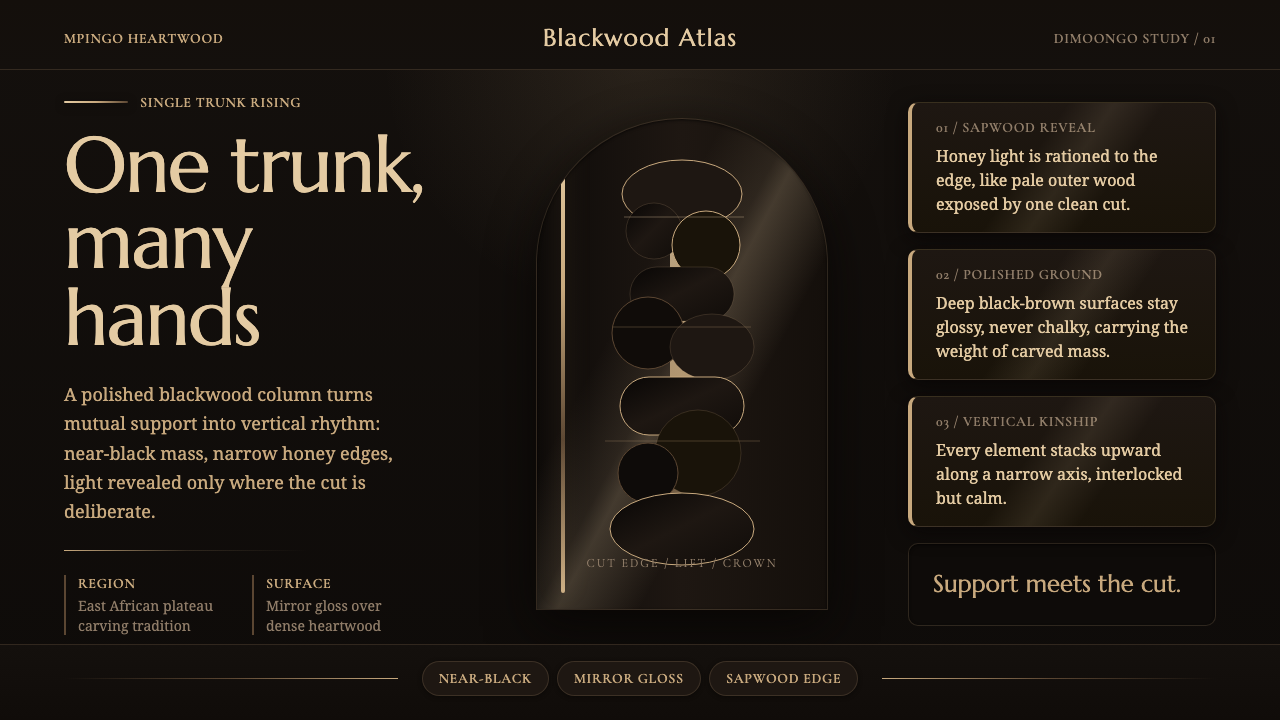 Makonde Ujamaa BlackwoodKinship carved upward. Near-black gloss climbs a sapwood-lit vertical column.
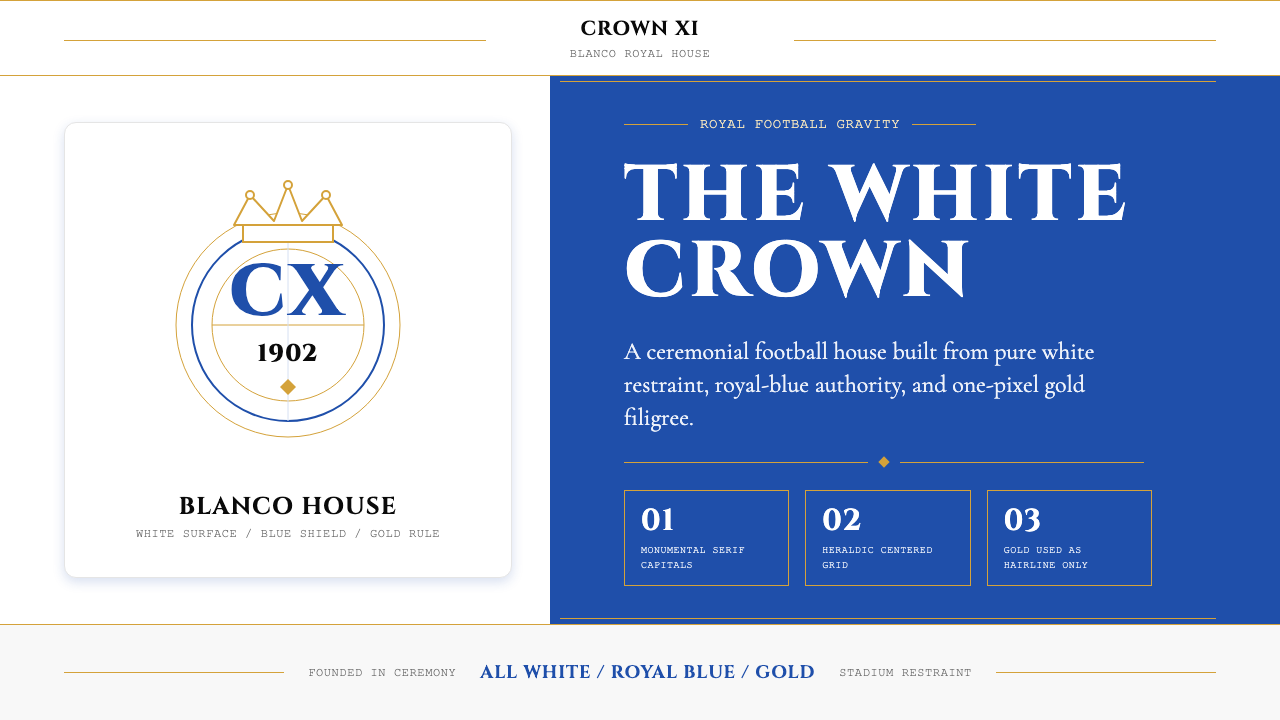 Real Madrid (Blanco)Royal restraint wins. Pure white, royal blue panels, and 1px gold filigree ca…
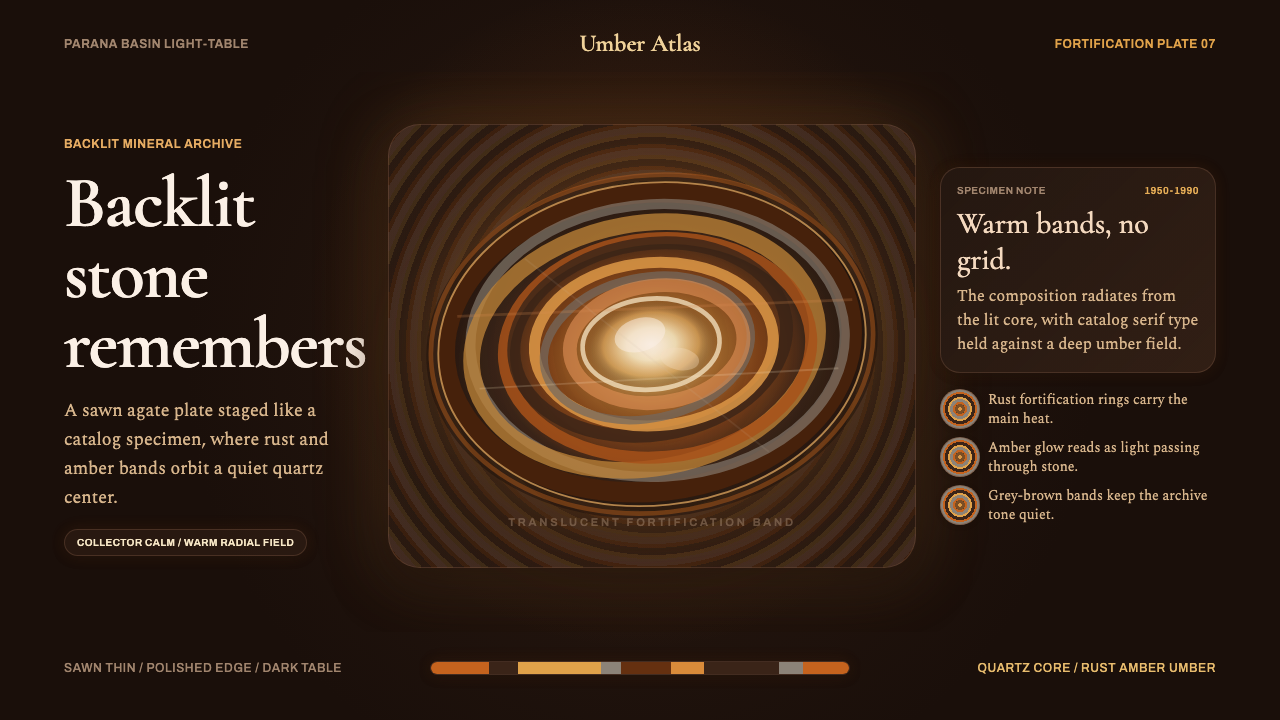 Banded Agate SliceCollector-calm glow. Rust and amber rings orbit a quartz core on near-black b…
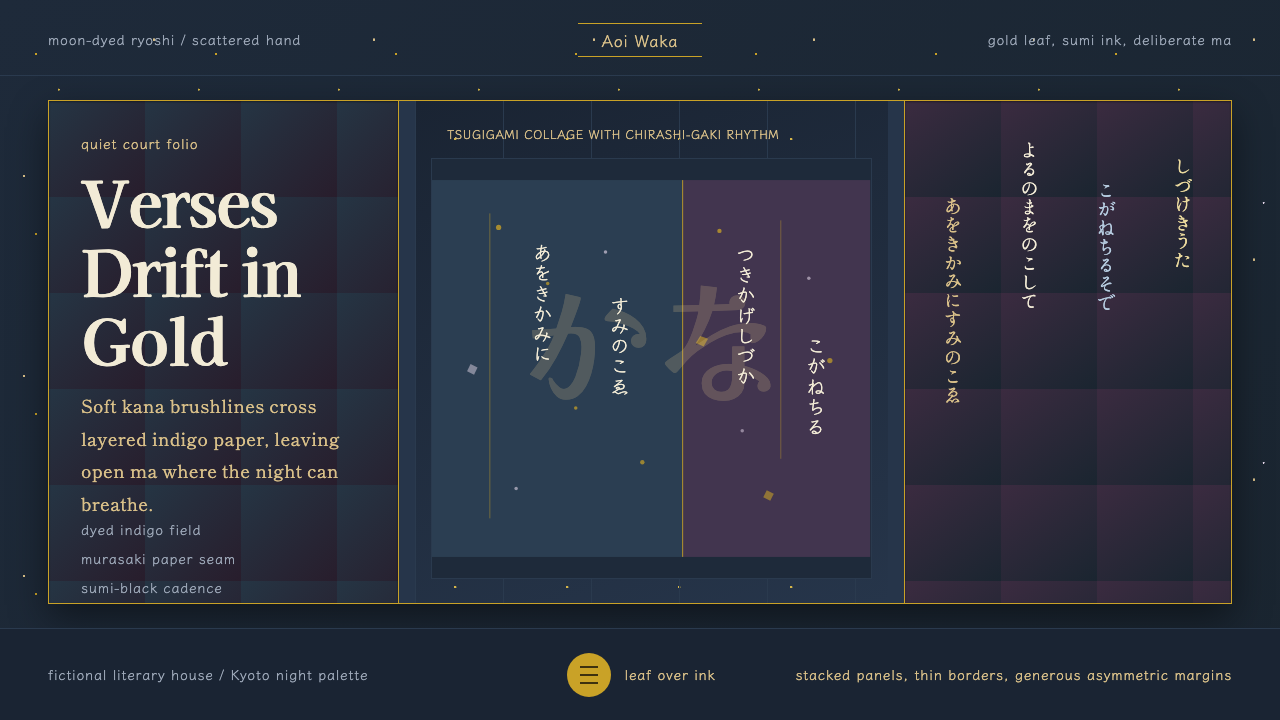 Kana Waka CalligraphyQuiet luxury in ink. Indigo ryoshi, Kaisei serif, scattered kana, and gold fl…
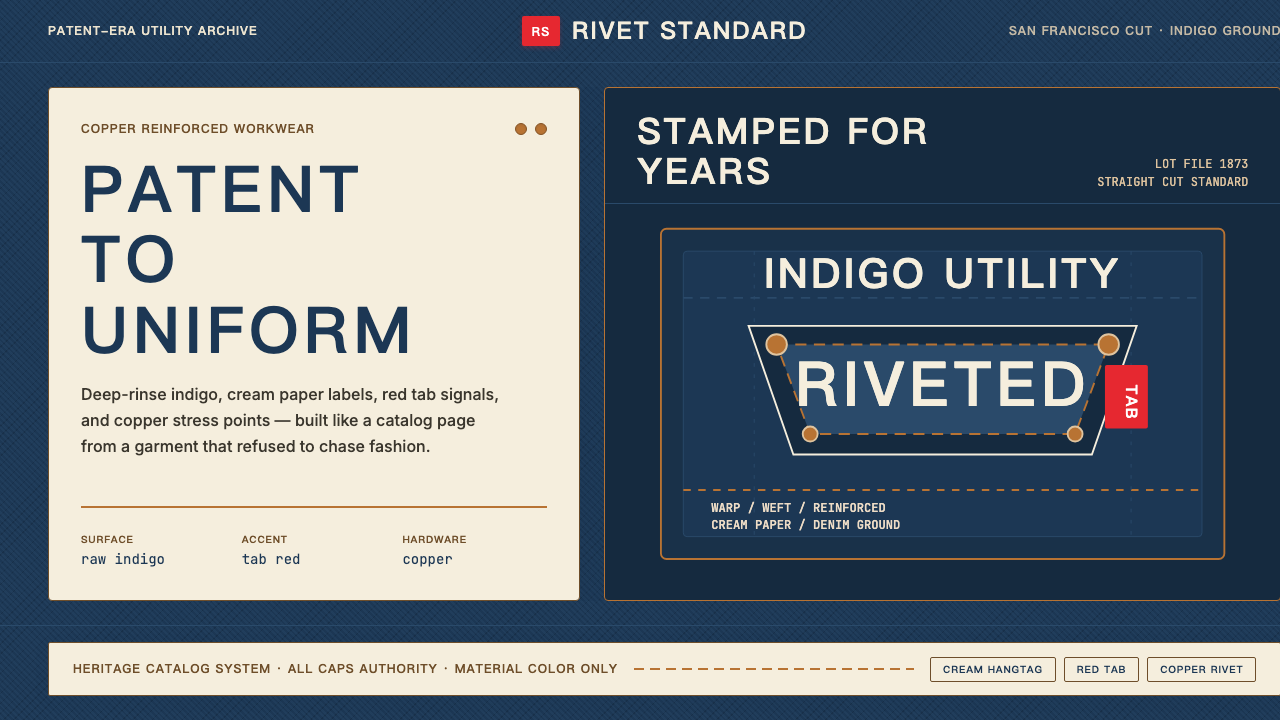 Levi's 501Utility becomes permanent. Indigo ground, cream hangtag panels, red tab and c…
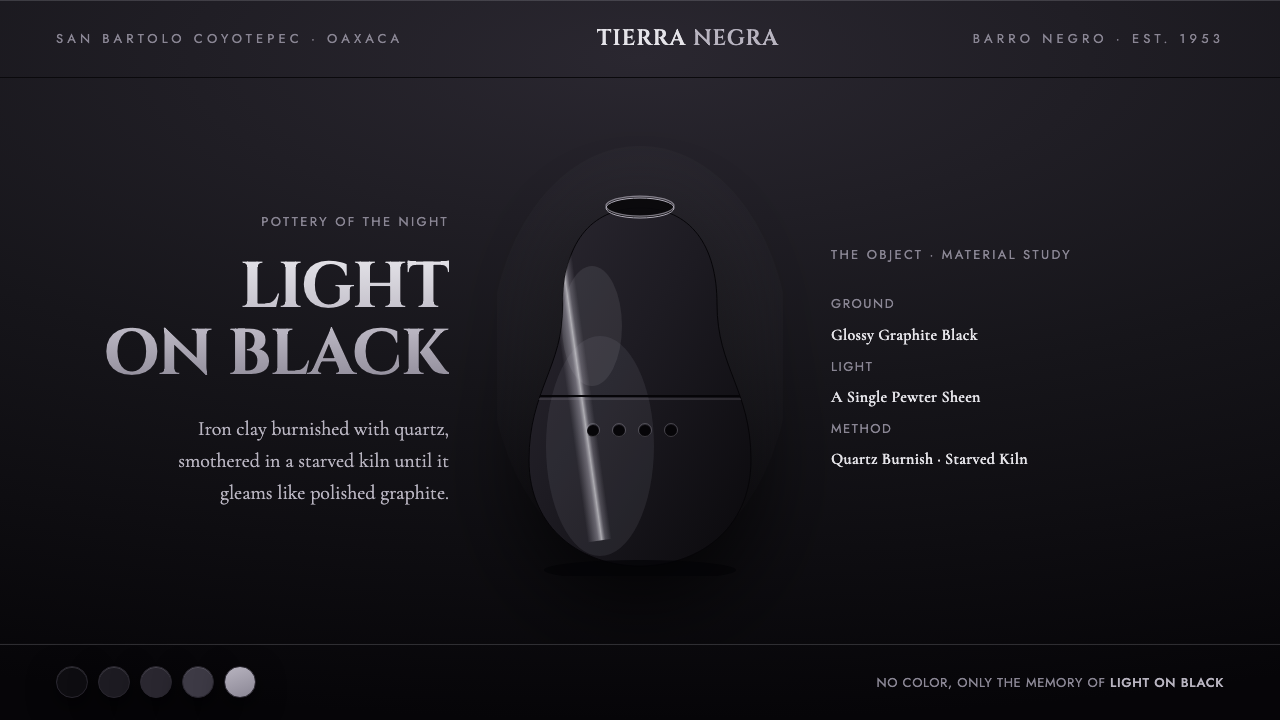 Oaxaca Barro NegroPottery of the night. Glossy graphite on matte black, one pewter sheen on the…