What is Kakadu Rock Shelter Charcoal?
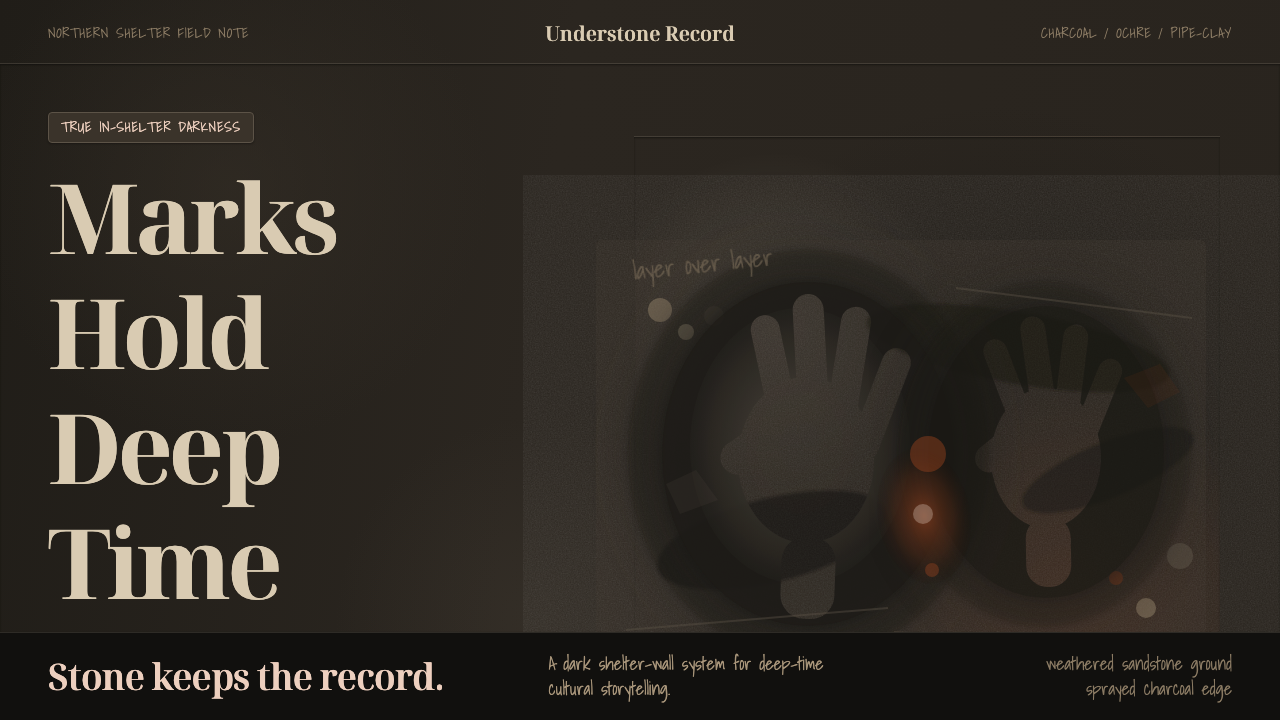
In the sandstone shelters of Kakadu, a hand pressed to rock and a mouthful of blown charcoal created marks that have accumulated for tens of thousands of years — memory made visible in soot and stone.
Kakadu Rock Shelter Charcoal in brief
Kakadu Rock Shelter Charcoal is a design system built from one of the oldest continuous artistic traditions on Earth: the soot-black hand stencils and charcoal figures found across the sandstone rock shelters of Kakadu and Arnhem Land in northern Australia. The technique is direct and physical — a hand pressed flat against the rock while charcoal or ochre pigment is blown from the mouth around it, leaving a negative silhouette ringed by a soft, sprayed edge.
What distinguishes this style from other historical or cultural design references is its relationship to darkness and time. These marks were made and remade inside genuinely dark rock shelters, layered and overpainted across tens of thousands of years by countless hands, accumulating on overhangs stained black by the smoke of cooking fires lit beneath them for equally long stretches of time. This is not the sunlit, brightly colored ochre imagery familiar from tourist photography of open rock faces — it is art made and experienced in shadow, at close range, by firelight.
This design system deliberately renders that in-shelter darkness rather than a brightened, photographed version of it: a dark weathered sandstone ground, figures with soft sooty edges rather than crisp printed outlines, and a documented, restrained palette of charcoal, weathered brown, stone gray, ochre-tan, haematite red, and pipe-clay white — colors drawn directly from the actual pigments and rock surfaces of the tradition rather than an invented decorative range.

Where does Kakadu Rock Shelter Charcoal come from?
Kakadu National Park and the wider Arnhem Land region in the Northern Territory of Australia contain some of the oldest documented sites of continuous human occupation on the continent, including Madjedbebe and Nauwalabila, whose archaeological deposits have been dated to tens of thousands of years of continuous use. The sandstone escarpments and rock shelters throughout this landscape provided natural protection from weather, making them long-term sites of habitation, ceremony, and artistic practice for the Bininj/Mungguy peoples who are the traditional custodians of this country.
The soot-black hand stencil, made by pressing a hand flat against a rock surface and blowing charcoal or ochre pigment from the mouth around its outline, is among the most widespread and enduring forms of rock art found in these shelters, appearing alongside painted and drawn figures depicting animals, ancestral beings, and, in later periods, contact with European settlers and their technology, providing a visual record that spans an extraordinary span of time within continuously used sites.
The accumulation of marks in these shelters is itself part of the tradition's character: because shelters were used and reused across many generations, surfaces became layered with overlapping images from different periods, painted over soot-stained overhangs blackened by the smoke of cooking and ceremonial fires maintained beneath them over comparably long stretches of time. This layering means a single rock face can hold a visual record spanning enormous stretches of time, with older and newer images coexisting on the same weathered surface.
The pigments used across this tradition — charcoal for black, various ochres for red, yellow, and brown tones, and pipe-clay for white — were sourced locally and prepared by the artists themselves, reflecting the same broader Aboriginal Australian pattern of working within materials directly available from country rather than imported substances. Bininj/Mungguy custodians and the ancestral artists who created and maintained these sites hold deep cultural and legal responsibility for their care and interpretation, and contemporary custodianship continues to govern how these sites and their imagery are documented, discussed, and represented.
What defines the Kakadu Rock Shelter Charcoal look?
Weathered Sandstone Ground
The base tone is a dark, weathered sandstone — never bright or clean-edged, but carrying the irregular staining and texture of a real rock surface that has been smoked and weathered over an immense span of time. This ground should feel like actual worn stone, not a flat color field.
Hand Stencil Motif
The negative-space hand shape, formed by blowing pigment around a pressed hand, is a recurring central motif — a silhouette defined by what surrounds it rather than by an outline drawn directly onto the surface.
Sooty Sprayed Edges
Where figures meet the ground, edges should feel soft, sprayed, and slightly diffuse — the result of blown pigment rather than a brush or pen. Crisp, hard-edged outlines break this quality entirely and should be avoided.
Documented Six-Color Palette
Color is restricted to charcoal, weathered brown, stone gray, ochre-tan, haematite red, and pipe-clay white — a palette drawn directly from the tradition's actual materials. No bright or saturated hues outside this range should appear.
Layered Accumulation
Multiple figures or marks can overlap and layer on a single surface, echoing how real shelter walls accumulated images across generations. Overlapping should feel like a natural record of accumulated time, not a chaotic or careless composition.
In-Shelter Darkness
The overall lighting logic of the composition should evoke a dim, sheltered interior rather than open, sunlit rock — closer to what an actual visitor would see by torchlight or ambient shadow inside a shelter, not the brightened tones common in tourist photography.
Restraint and Material Honesty
Every color and mark should feel traceable to an actual natural pigment and physical technique — nothing glossy, synthetic, or digitally smooth. The style's authenticity depends on this material honesty being preserved rather than polished away.

Who shaped Kakadu Rock Shelter Charcoal?
The traditional custodians of the Kakadu and western Arnhem Land region, Bininj/Mungguy peoples hold ongoing cultural and legal responsibility for the care, interpretation, and protection of the rock art sites within their country, continuing a relationship to these places that long predates their documentation by outside researchers.
The generations of unnamed artists who created and repeatedly added to the imagery found across Kakadu and Arnhem Land's rock shelters over tens of thousands of years, whose individual identities are largely unrecorded but whose collective work constitutes one of the longest continuous artistic records on Earth.
How do you use Kakadu Rock Shelter Charcoal today?
On presentation slide covers, the style creates a sense of deep time and material weight: a dark, weathered sandstone ground, a single hand-stencil or figure motif with soft sooty edges, and minimal, restrained title type set against the dark surface rather than a bright overlay. Content slides should keep the weathered dark ground consistent throughout, using the documented six-color palette sparingly for callouts or highlighted data rather than introducing unrelated brand colors.
For web interfaces, this style suits products built around heritage, deep history, museums, or cultural documentation, where a sense of accumulated time and material authenticity is a genuine value. Dashboards are a difficult fit given the style's textural density, but a restrained application — a weathered dark header, sooty-edged status icons in the six-color range — can carry its character without overwhelming functional data.
In pricing pages, the layered accumulation motif can be used subtly as a background texture, with a single hand-stencil-like accent reserved for the most important tier, echoing how the most significant figures on a real shelter wall often stand out from the layered accumulation around them.
For editorial and marketing content about deep history, cultural heritage, or material authenticity, full-bleed hero sections built from the dark weathered ground with a single soft-edged figure or hand motif can carry genuine visual weight, provided the tradition's cultural origin, ownership, and significance are acknowledged with care rather than treated as a purely decorative texture.
The most common and most serious mistake is brightening the palette toward the sunlit, saturated ochre tones familiar from tourist photography of open rock faces — this misrepresents the actual in-shelter darkness that defines the tradition and should be avoided. A second frequent error is giving figures crisp, hard printed edges instead of the soft, sprayed quality of blown pigment, which erases the tactile, physical origin of the technique entirely.

Kakadu Rock Shelter Charcoal — FAQ
Why does this style use a dark ground rather than the brighter ochre tones often seen in photographs of Aboriginal rock art?
Many widely circulated photographs of Aboriginal rock art are taken on open, sunlit rock faces or brightened for visibility and publication, which does not reflect how these particular Kakadu and Arnhem Land shelter images actually appear in their true setting — deep within dim, soot-stained rock shelters. This design system deliberately restores that in-shelter darkness rather than reproducing the brightened, more commonly seen photographic version.
How is the hand stencil actually made — is it painted directly onto the rock?
No — the hand is pressed flat against the rock surface as a physical mask, and pigment such as charcoal or ochre is blown from the mouth around its edges, leaving a negative silhouette once the hand is removed. This is why the edges of a hand stencil have a soft, sprayed, slightly diffuse quality rather than the crisp line of a painted or drawn outline.
Can additional bright colors be added to make this style feel more vivid for a modern audience?
Doing so would move away from what makes the style specific and authentic. The documented six-color palette reflects the actual natural pigments available to and used by the tradition's artists, and introducing unrelated bright or synthetic colors turns the system into a generic 'earthy' aesthetic rather than a faithful reference to this particular tradition.
Why does the design encourage layering and overlapping marks rather than a clean, uncluttered composition?
The layering reflects a genuine historical reality: these shelters were used and painted upon across an immense span of time by many generations, and their surfaces genuinely accumulated overlapping imagery as a result. Reproducing this layered quality — rather than a single, isolated, clean figure — honors the accumulated-time character that is central to what makes these sites significant.
Is it appropriate to use this style for products with no connection to Aboriginal Australian culture or heritage?
This warrants real care. The imagery and sites this style draws from belong to specific living communities with ongoing cultural and legal custodianship over their meaning and use. Applications should ideally connect to heritage, cultural documentation, or history in some genuine way, and should acknowledge the tradition's origin rather than using it as a purely decorative 'ancient' texture stripped of context.
Related design styles
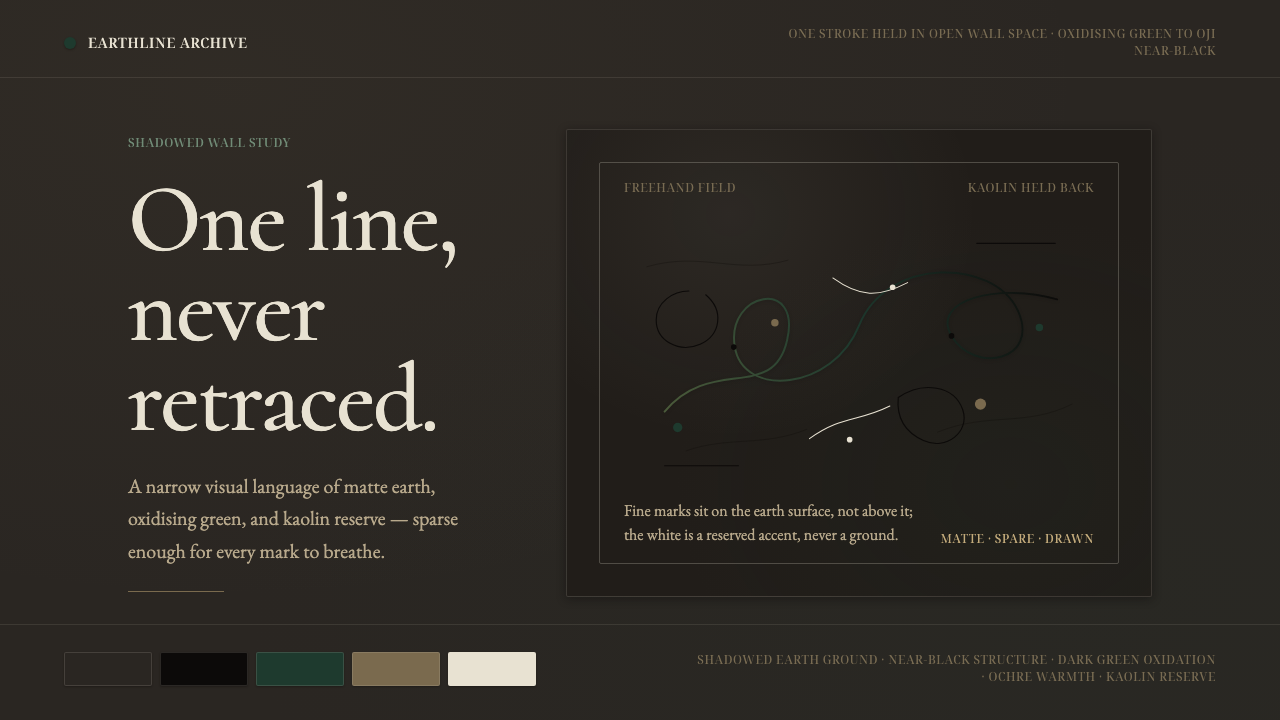 Igbo Uli Painting NigeriaSpare line carries the wall. Near-black curves breathe on dark earth with kao…
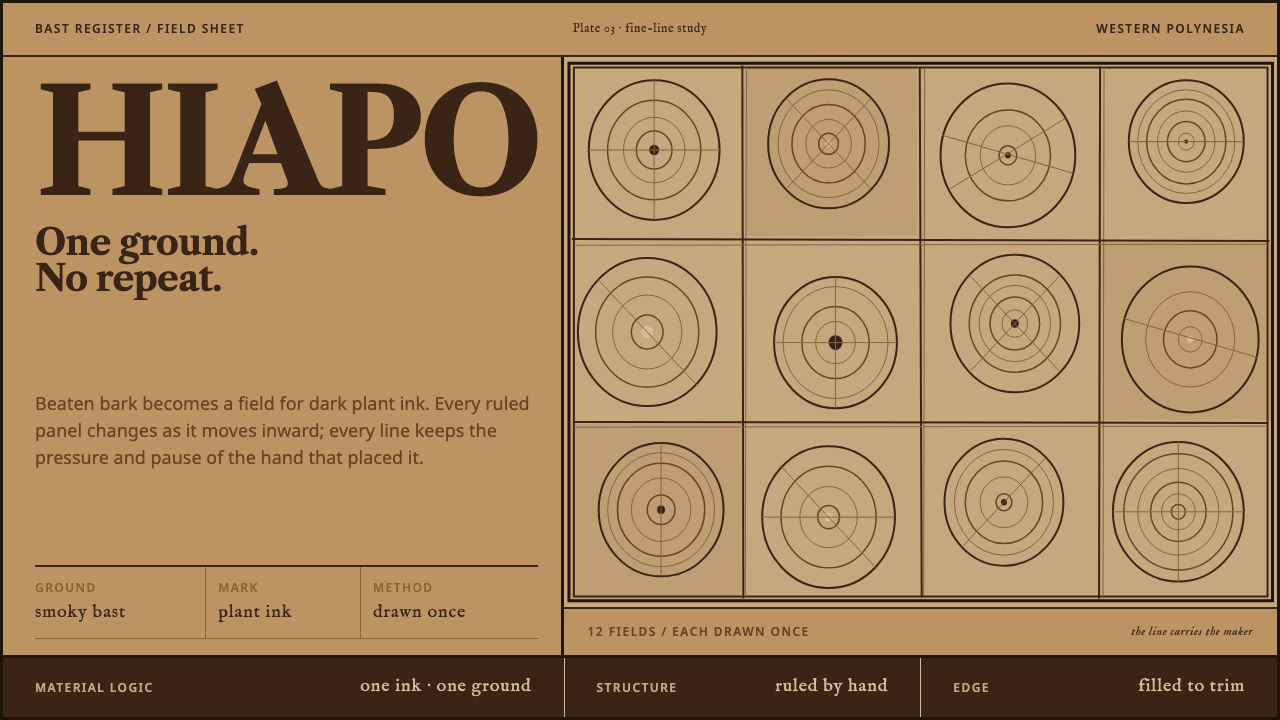 Niuean HiapoEvery line keeps its maker. Dark plant ink fills smoky barkcloth in hand-rule…
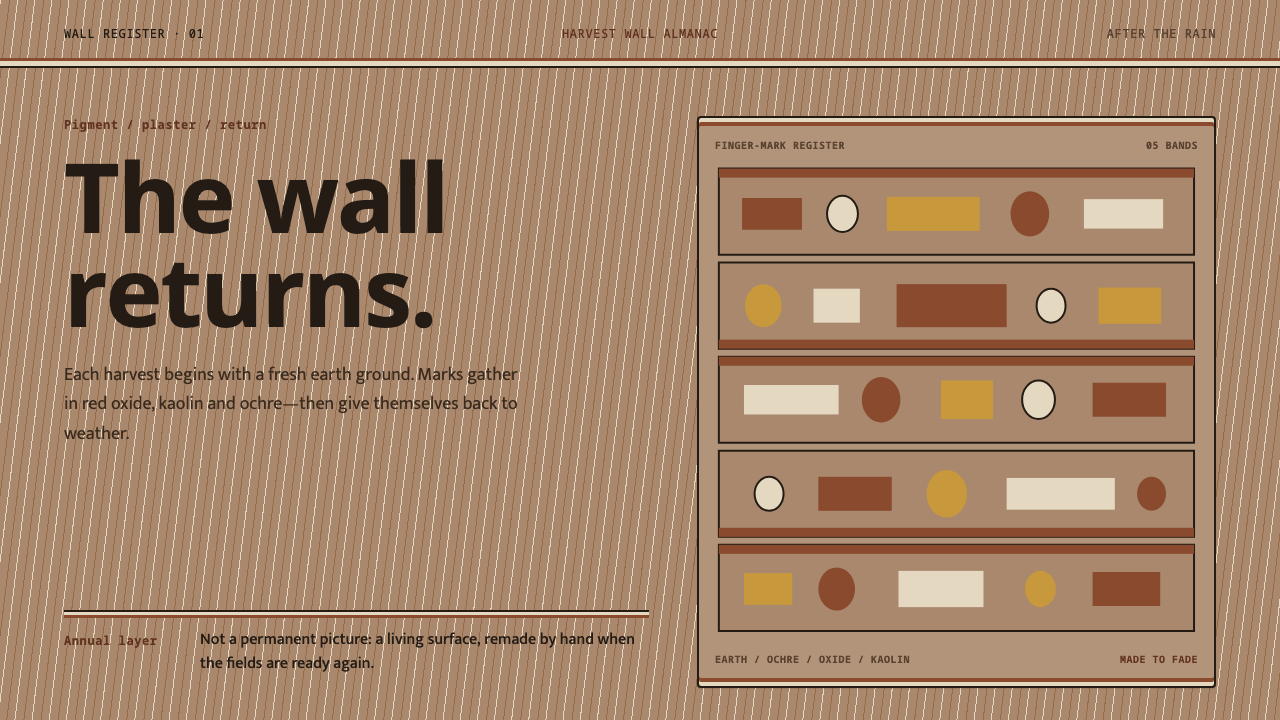 Santhal Sohrai MuralA wall that renews itself. Red oxide bands and Ol Chiki type ride warm mud pl…
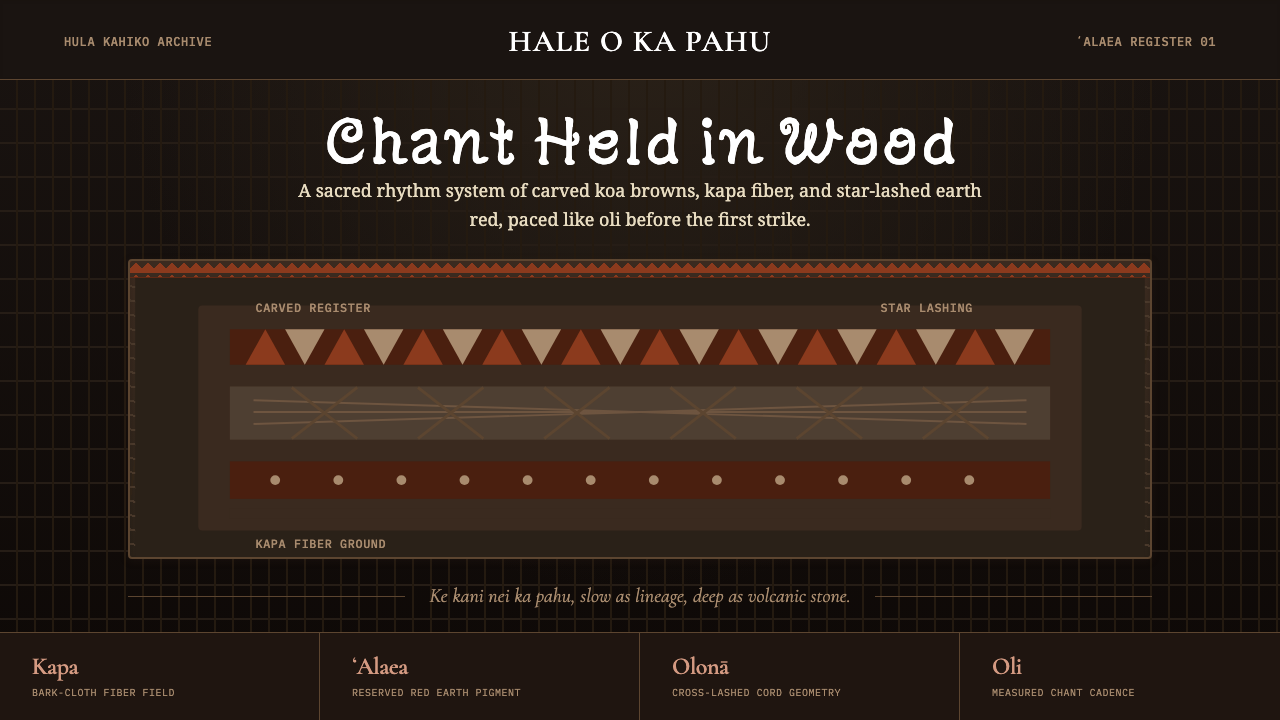 Hawaiian Hula Pahu DrumSacred weight, hand-marked. ʻAlaea red, kapa texture, and stacked carved regi…
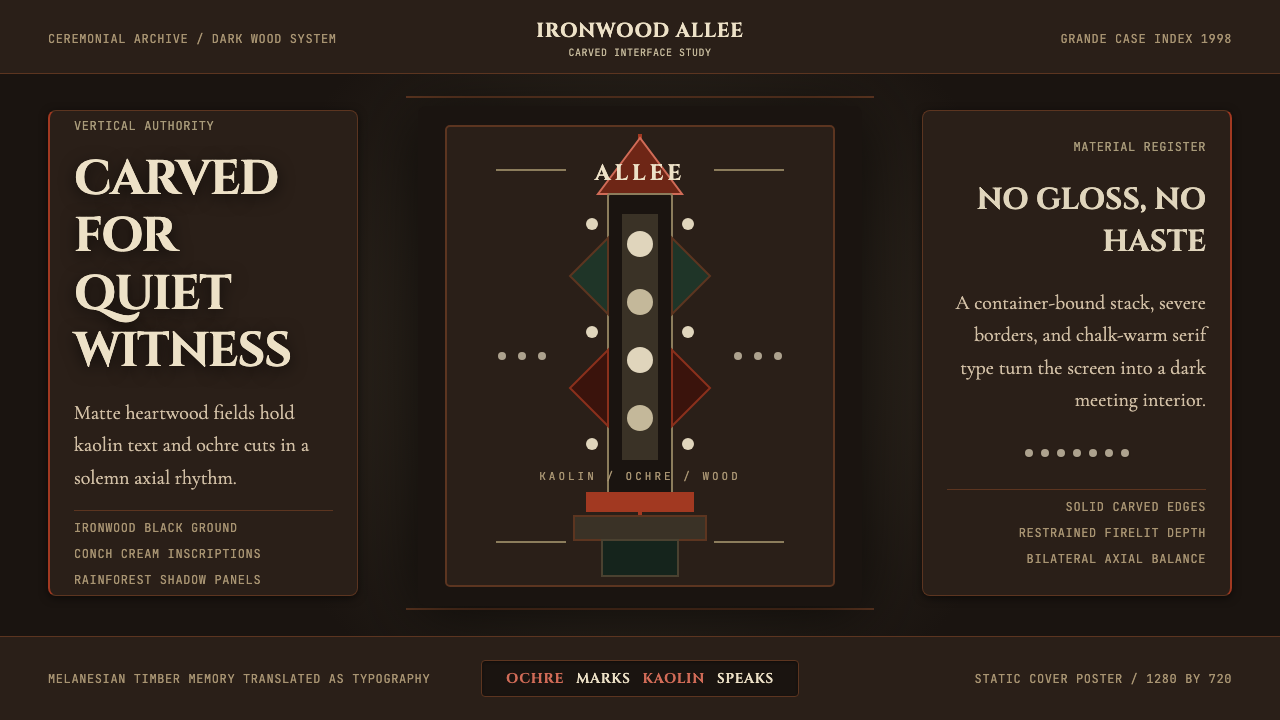 New Caledonia Kanak TotemSolemn carved darkness. Ochre axis, kaolin serif type, and conch dots hold th…
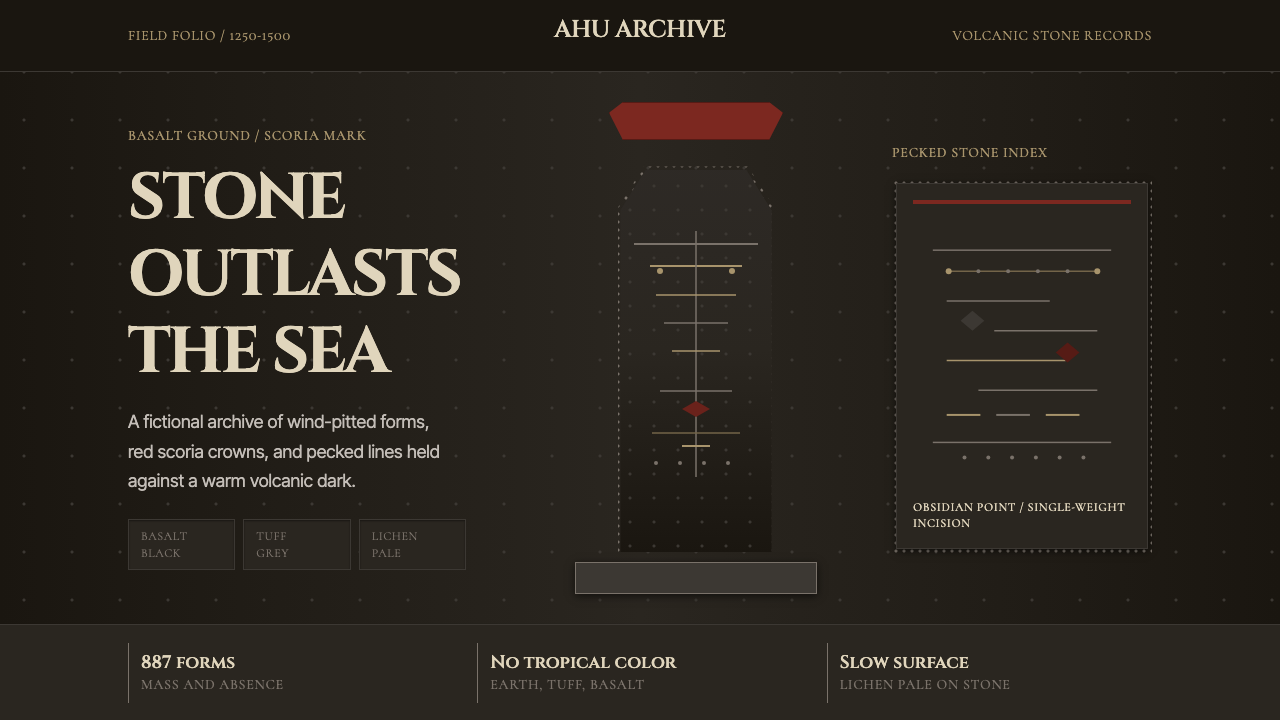 Rapa Nui Moai PetroglyphMonumental sparseness. Basalt black, scoria red, and pecked-dot borders hold…