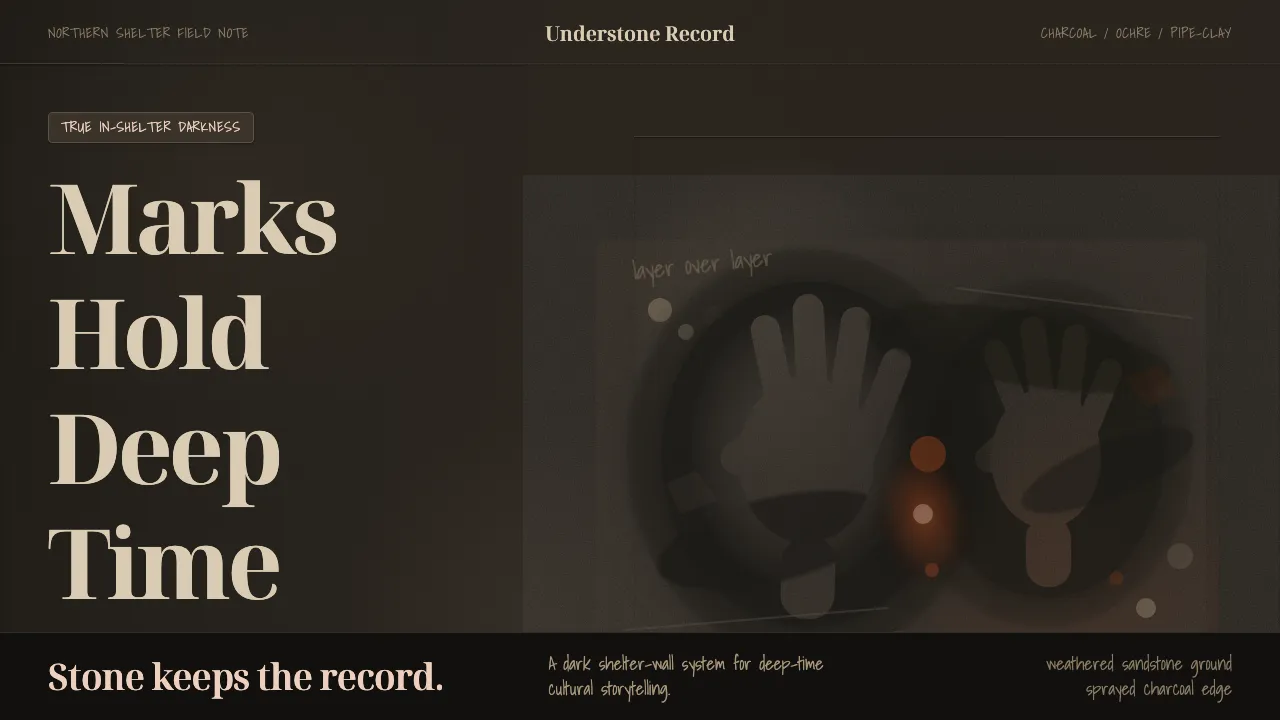
About Kakadu Rock Shelter Charcoal
Across the sandstone shelters of Kakadu and Arnhem Land, Aboriginal peoples of northern Australia made the soot-black hand stencil — a hand pressed to the rock while charcoal or ochre was blown from the mouth around it. The marks accumulated over tens of thousands of years, layered and overpainted on weathered, soot-stained overhangs.
This system reads those marks at their true in-shelter darkness — not the sunlit ochre of tourist photographs. The ground is dark weathered sandstone; figures sit on the stone with sprayed, sooty edges, in a documented palette of charcoal, weathered brown, stone gray, ochre-tan, haematite red, and pipe-clay white.
- Origin
- Kakadu / Arnhem Land, Northern Territory, Australia (Oceania)
- Era
- pre-1900 (continuous tradition spanning tens of thousands of years; some of the oldest occupation sites at Madjedbebe and Nauwalabila)
- Key figures
- Bininj/Mungguy custodians · ancestral rock-shelter artists
- Movements
- Aboriginal rock art · hand stencils · blown-charcoal figures · ochre pigment painting
Kakadu Rock Shelter Charcoal design spec
Colors
Typography
The other 11 sections — buttons, cards, spacing, motion, techniques and more — open once you unlock. Download the DESIGN.md or send it to your AI in one click. Unlock once, yours forever.
Sign up nowStyles similar to Kakadu Rock Shelter Charcoal
Also inspired by crafts & folk art, with a close feel.
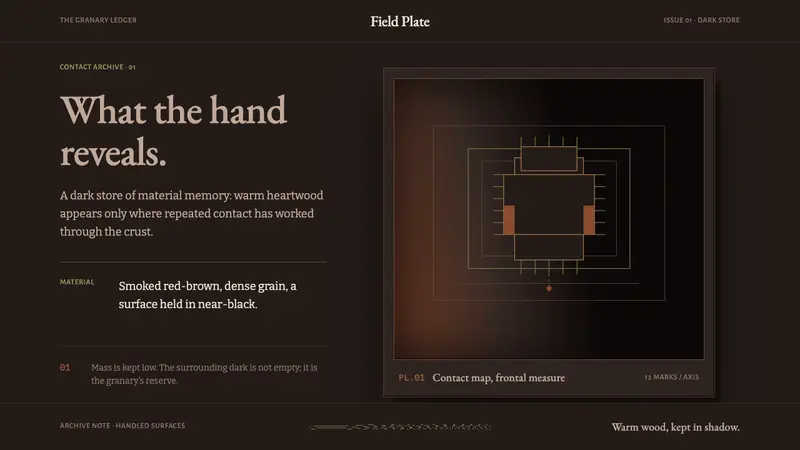 Ifugao BululTouch reveals the archive. Narra red breaks through near-black patina in a quiet plate grid.
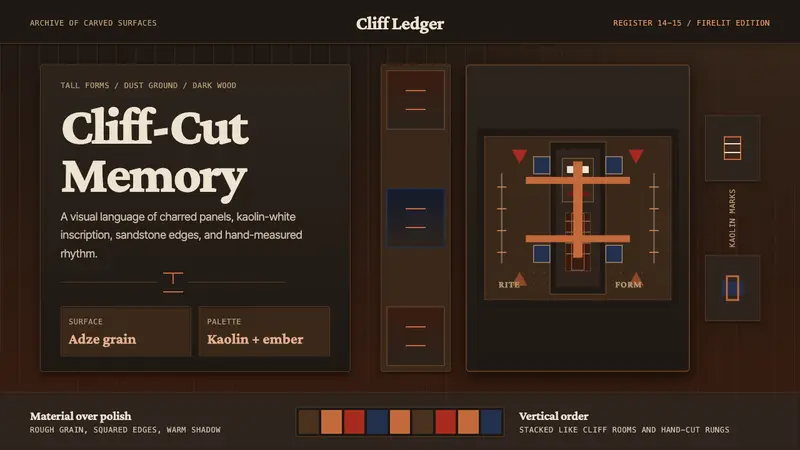 Dogon Bandiagara Cliff MaskHand-hewn gravity. Charred wood, kaolin type, and sandstone geometry stack like carved panels.
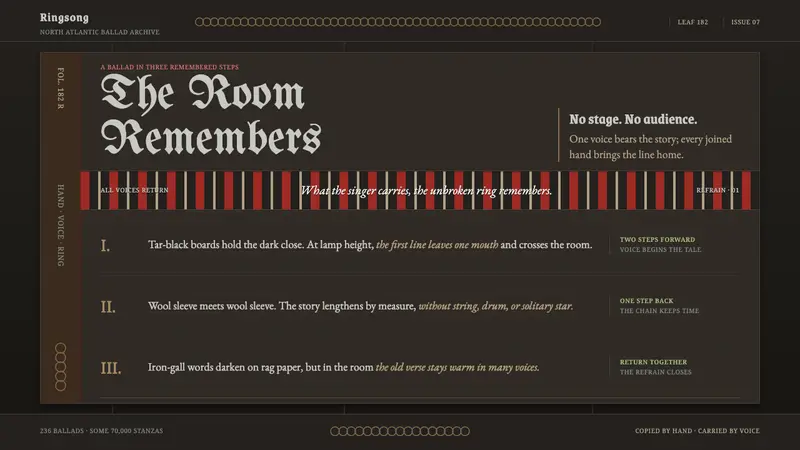 Faroese KvæðiThe room sings as one. Silver type and red refrain bands rule a tar-black manuscript leaf.
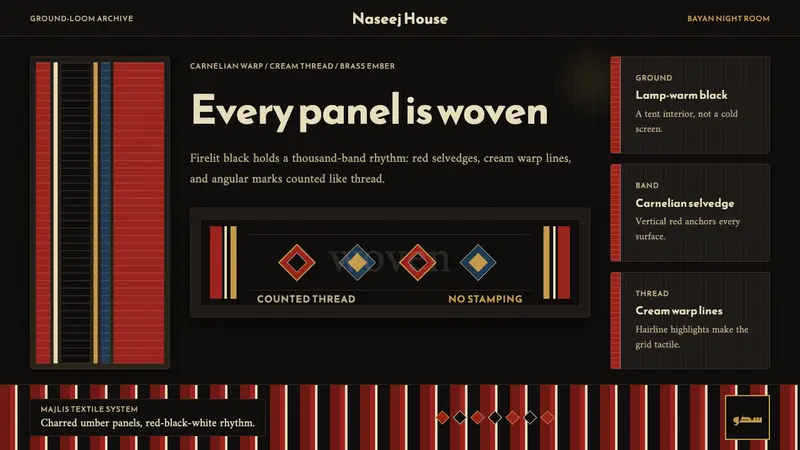 Kuwaiti Sadu Bedouin WeaveFirelit craft, not dark mode. Carnelian bands and cream warp lines make each panel feel woven.