What is Zurkhaneh?
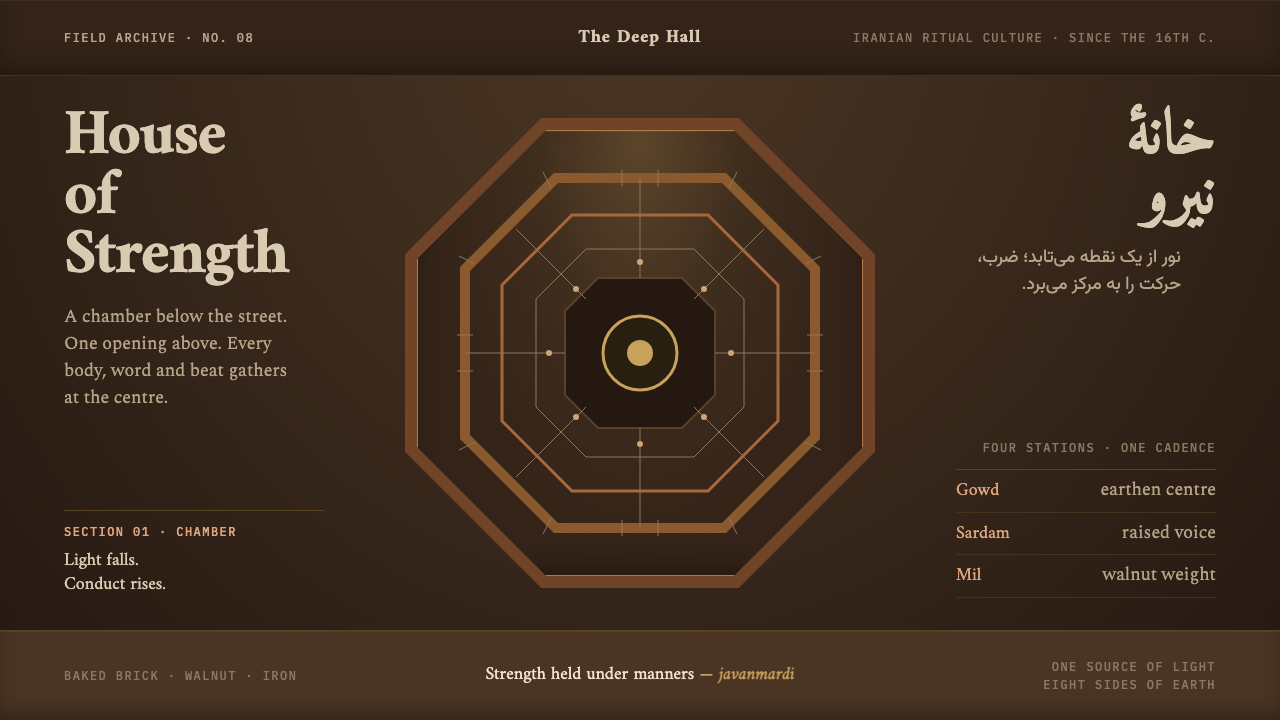
The zurkhaneh is a house of strength sunk below the street, where one shaft of light, one octagonal pit and one drum organise everything the eye and the body do.
Zurkhaneh in brief
The zurkhaneh, Persian for 'house of strength', is the traditional training hall of Iran, and the visual world of this style is the room itself. It is a baked-brick chamber set a few metres below the street, entered through a single low door and lit by one opening in the ceiling. At its centre is the gowd, an octagonal earthen pit about a metre deep, in which athletes swing wooden clubs called mil and lift the iron bow known as the kabbadeh.
Above one edge of the pit sits the morshed at his sardam, striking a goblet drum, the zarb, and chanting verses from Ferdowsi. The drum sets the pace for everyone in the room. Strength here is not displayed to an audience; it is practised together, turned inward, with music and poetry shaping the movement of the body.
As a design language, the style takes two facts of the room literally. There is one source of light, so interfaces are lit from above and their edges fall away into darkness. There is one centre, so layouts gather inward around a focal well instead of spreading out left to right. The palette comes straight from the hall: the walnut and elm of the club shafts, baked brick walls, the cold grey of iron, the deep brown of suede shorts, and the dust drifting in the light. It is dark, but with the darkness of architecture, not an atmospheric filter.

Where does Zurkhaneh come from?
The zurkhaneh has pre-Islamic roots, and the tradition it houses has been continuous for many centuries. It was formalised under the Safavids, in the sixteenth to eighteenth centuries, remained in continuous use through the nineteenth century, and is still practised today in cities such as Tehran, Yazd, Isfahan and Tabriz. In 2010 UNESCO inscribed the associated Pahlevani and zoorkhaneh rituals on its list of intangible cultural heritage, which acknowledges that the room and its ceremony are a living practice and not an archaeological curiosity.
The activity goes by several names that capture different sides of it. Varzesh-e bastani means 'ancient sport' and describes the exercise system; the Pahlevani and zoorkhaneh rituals describe the ceremony as a whole; and javanmardi, often translated as chivalry or manly generosity, names the ethic that governs it. In this tradition a champion is expected to be humble and generous as well as strong, and the room is arranged to teach that: the low door is commonly read as a lesson in bowing one's head on entry.
The architecture is part of the meaning. By sinking the floor below the street and admitting light only from above, the room shuts out the city and concentrates attention on the pit. Whatever the practical origin of that arrangement, whether keeping the hall cool or sheltered, the effect is that everything faces inward and downward, and everything is lit from one place. The octagonal gowd takes the geometry of the room to its centre, a shape between the square of the walls and the circle that the athletes naturally form.
Sound and poetry organise the ritual. The morshed sits at the sardam, beats the zarb and chants verses of Ferdowsi, the poet who completed the epic Shahnameh, the Book of Kings, in the early eleventh century. The stories of heroes in those verses link the exercise of the present with a mythic and historical past, while the drum gives the movement of the clubs and the iron bow a shared tempo. Among the figures honoured in the tradition is Pahlavan Mahmoud, a medieval wrestler and poet who stands for the ideal pahlavan. This design system takes the room's physical facts at face value: light falls, layouts fall inward, and the drum sets the pace.
What defines the Zurkhaneh look?
A Single Source of Light
The room has one opening in the ceiling and therefore one direction of light: down. A shaft of warm light falls into the pit, catches dust in the air, and leaves the walls and corners in deep shade. In a layout this means a clear top-to-bottom lighting logic, with highlights on upper edges, a fast fall-off below, and no competing glows. The light is the main character, and everything else is what it reveals.
Inward and Downward
Everything in the room faces the pit, and the pit is below eye level. Compositions in this style therefore converge: content gathers toward a central focal area, with margins that close in rather than open out, and a sense of looking down into something. Wide, evenly spread rows of equal elements work against this; a narrowing, centred arrangement works with it.
Palette Taken from the Room
The colours are taken from physical things: the warm, closely grained wood of walnut and elm club shafts, the earthy red-brown of baked brick, the cold grey of iron, the deep brown of suede, and the pale gold of lit dust. Iron is the only cool note, and it is the one that makes the warm tones feel warmer. There is no decorative accent colour, because nothing in the room is there for decoration.
The Octagon
The octagonal pit gives the system its signature geometry. An octagon sits between a square and a circle: it has the stability of straight sides and the gathering quality of a round form. It appears as focal frames, cropped corners on panels and the outline of key elements, and it can echo in the layout as the way a central block is surrounded by the rest.
Honest, Worn Materials
Brick, wood, iron and earth are shown as themselves: matte, grainy and slightly worn by use. Surfaces avoid gloss, glass-like transparency and plastic smoothness. Where a texture appears, it should feel like the effect of long handling, such as polished wood on the club shaft or dull iron on the bow, and not like a decorative filter laid over a flat shape.
The Drum's Tempo
The zarb sets the tempo of the whole room, so motion in this style follows a steady pulse. Transitions are measured and even, repeated at the same pace, and they begin and end with weight instead of springing or bouncing. In practice, that means animations that feel like a beat being kept: regular, unhurried, and never playful.
Darkness as Architecture
The system is dark because the room is dark, not because dark is a mood. Light has an origin, so shade has a shape: it pools in corners, deepens toward edges and makes volume. Uniform dark backgrounds with a coloured glow miss the point; what matters is the falloff of attention from the lit centre to the shadowed edge. The darkness is a property of the building.

Who shaped Zurkhaneh?
Pahlavan Mahmoud is a medieval wrestler and poet honoured in the Pahlevani tradition as the model of what a champion should be. He stands for the ideal at the heart of the zurkhaneh ethic: strength joined to humility, generosity and fairness toward others. For a designer his name is a reminder that the room's severity is not aggression; the whole space is arranged to produce gentleness in the strong.
Ferdowsi completed the Shahnameh, the Persian Book of Kings, in the early eleventh century, and his verses are what the morshed chants in the zurkhaneh. The epic ties the athletes' exercises to a heroic past of kings and champions. In design terms, the poet supplies the room's voice: rhythmic, narrative and slow, which is why text in this style reads best in steady, unhurried lines.
The morshed is the singer and drummer who sits at the sardam and conducts the session, and he is the closest thing the room has to an author. He does not perform for spectators; he keeps time for the athletes, chooses the verses and leads the ritual. His seat, above the pit and to one side, is a useful model for a hierarchy that guides without dominating: elevated enough to be heard, close enough to belong to the circle.
How do you use Zurkhaneh today?
The zurkhaneh system is best for subjects built on discipline, ritual and gathered attention: training, martial arts, craft, heritage, documentary and any product that wants to feel serious without feeling cold. It is a dark system by nature, so its strength shows when a project wants depth, focus and a sense of ceremony.
For presentation slides, a cover can show a single pool of warm light falling from the top onto an octagonal frame, with the title inside it and the rest of the slide in deep shade. Content slides keep one idea at the centre and let supporting text gather around it. Data slides work well as a few strong figures in the lit area, with secondary values receding into shade. Charts with even-paced bars or steps can echo the drum: each bar is a beat, evenly spaced, and only the active value catches the light.
For web interfaces, think of the page as a well. A narrowing, centred column or a hero set in an octagonal frame draws the eye inward; panels have a highlight on the top edge and darken toward the bottom; hover and focus states raise the light rather than add a coloured glow. Motion is steady and even, like the drum. The system suits fitness and martial arts products, sports organisations, archives, craft studios, and documentary or heritage sites.
For editorial and marketing work, the style supports slow, immersive storytelling. A photo essay on a training hall, a festival page, a long article on a sport or a craft, or a campaign where the sound of a drum matters can all use the lit-centre, dark-edge composition. Verse can be set as pull quotes in a calm, measured typographic voice. Photographs of wood, brick, iron and hands are natural companions.
The commonest mistake is to treat dark as a filter: a uniform black background with a neon or golden glow added for drama. That abandons the single-light logic that gives the style its meaning. A second mistake is to reach for the ornament of Persian palaces or manuscripts; the zurkhaneh is a plain brick room, and its dignity comes from material, light and geometry, not from decoration. Finally, wide left-to-right layouts and evenly lit panels flatten the inward, downward feeling and make the result look like a generic dark theme.

Zurkhaneh — FAQ
What is a zurkhaneh?
A zurkhaneh, literally 'house of strength', is a traditional Iranian training hall where athletes practise a system of exercises with wooden clubs, an iron bow and other equipment, to the rhythm of a drum and the chanting of epic verses. It is both a gymnasium and a ritual space, tied to the values of javanmardi, and it is still active in cities such as Tehran, Yazd, Isfahan and Tabriz.
What do the Persian terms gowd, mil, kabbadeh, morshed and zarb mean?
The gowd is the octagonal earthen pit at the centre of the room. Mil are the wooden clubs swung inside it, and the kabbadeh is the iron bow lifted by the athletes. The morshed is the singer and drummer who leads the session from the sardam, the raised seat above one edge of the pit, and the zarb is the goblet drum he plays. In design terms, the pit is the centre of the composition and the morshed's seat is the position from which pace is set.
Is the zurkhaneh system just a dark mode?
No. A dark mode is usually a colour inversion of a light design. The zurkhaneh system is dark because it models a particular room lit from a single opening, where shade has shape and direction. Its darkness is built from light falling, edges receding and materials absorbing, so removing the light logic would remove the identity. A light variant would be closer to a different system than to a toggle.
Is it related to Persian miniature painting or Islamic geometric ornament?
Only loosely. Persian manuscripts and palace architecture are known for dense ornament, rich colour and intricate geometry. The zurkhaneh is the opposite: a plain, low, brick-and-wood room whose power comes from light, material and a single octagonal form. They share a cultural region and a literary heritage, since Ferdowsi's epic is both illustrated in manuscripts and chanted in the zurkhaneh, but not a visual language.
How can I borrow from the zurkhaneh respectfully?
Describe it as what it is: an Iranian tradition of Pahlevani and zoorkhaneh rituals, inscribed by UNESCO in 2010 and still practised. Borrow the method, meaning the single light, the inward layout, the material palette and the steady rhythm, rather than costume details or religious and cultural symbols out of context. Where the project concerns the tradition itself, give the athletes, the music and the poetry their due and avoid using the room as exotic background.
Related design styles
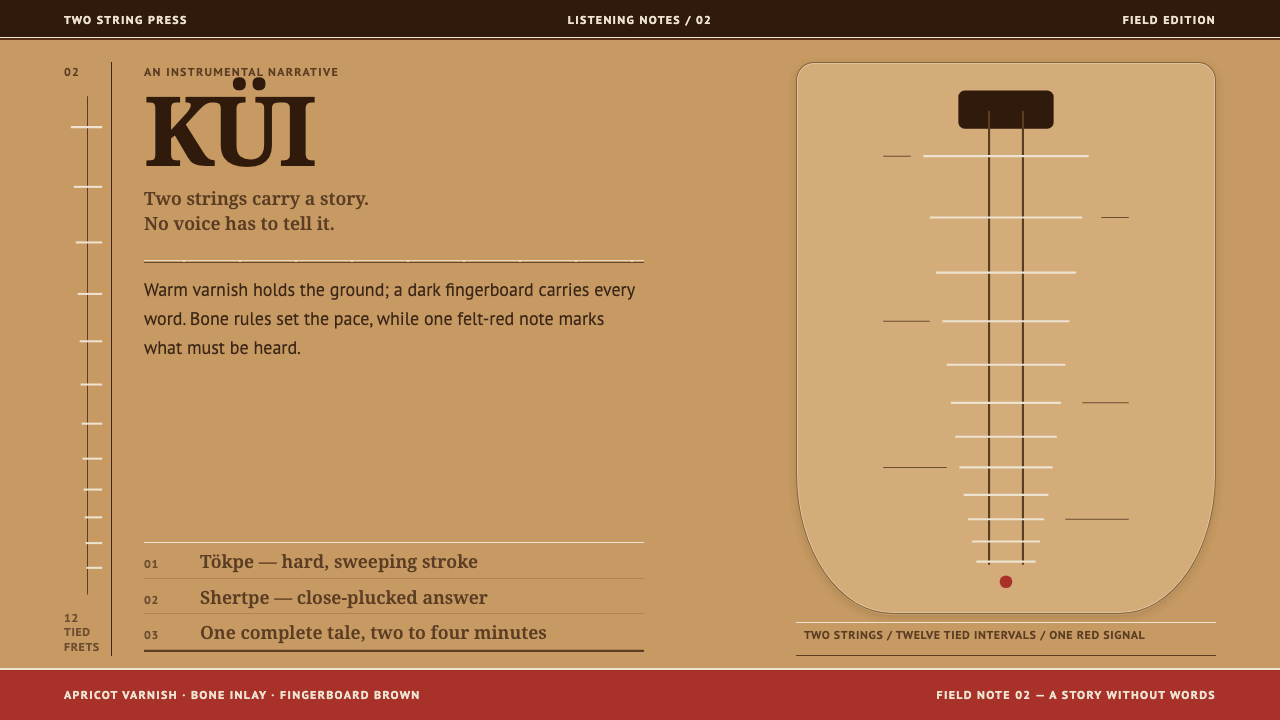 Kazakh DombraA story without words. Apricot varnish, bone hairlines, and two-string fret r…
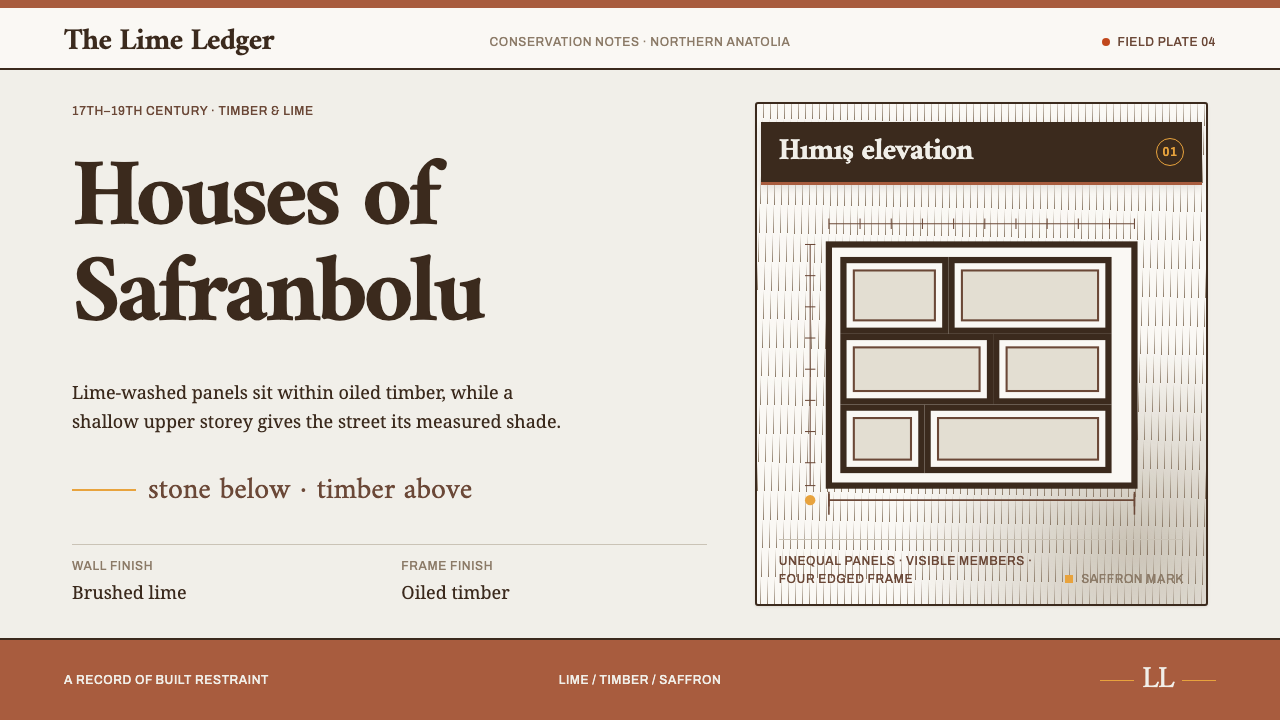 Safranbolu HousesBuilt, not decorated. Lime panels and oiled-timber frames carry a single saff…
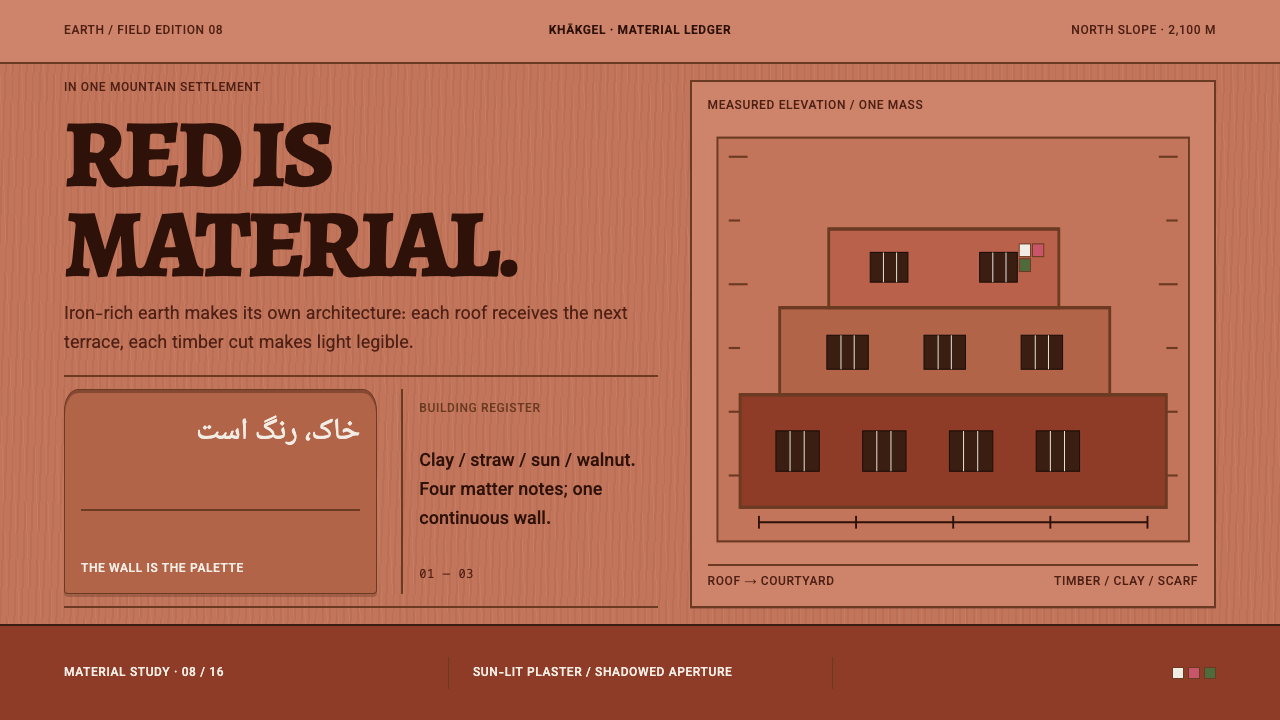 Abyaneh Red VillageRed is material, not decoration. Stepped clay bands and dark timber apertures…
 Adobe Pueblo SouthwestFeels made by hand. Earthen tan, turquoise trim, and viga rhythm shape the fr…
 Bashkir Wild HoneyA working forest held on one axis. Pale tamga cuts and honey gold rise throug…
 Botswana Coiled BasketThe pattern keeps travelling. Bark-brown stepped bands wind across a straw co…