What is Zhostovo Lacquer Tray Bouquet?
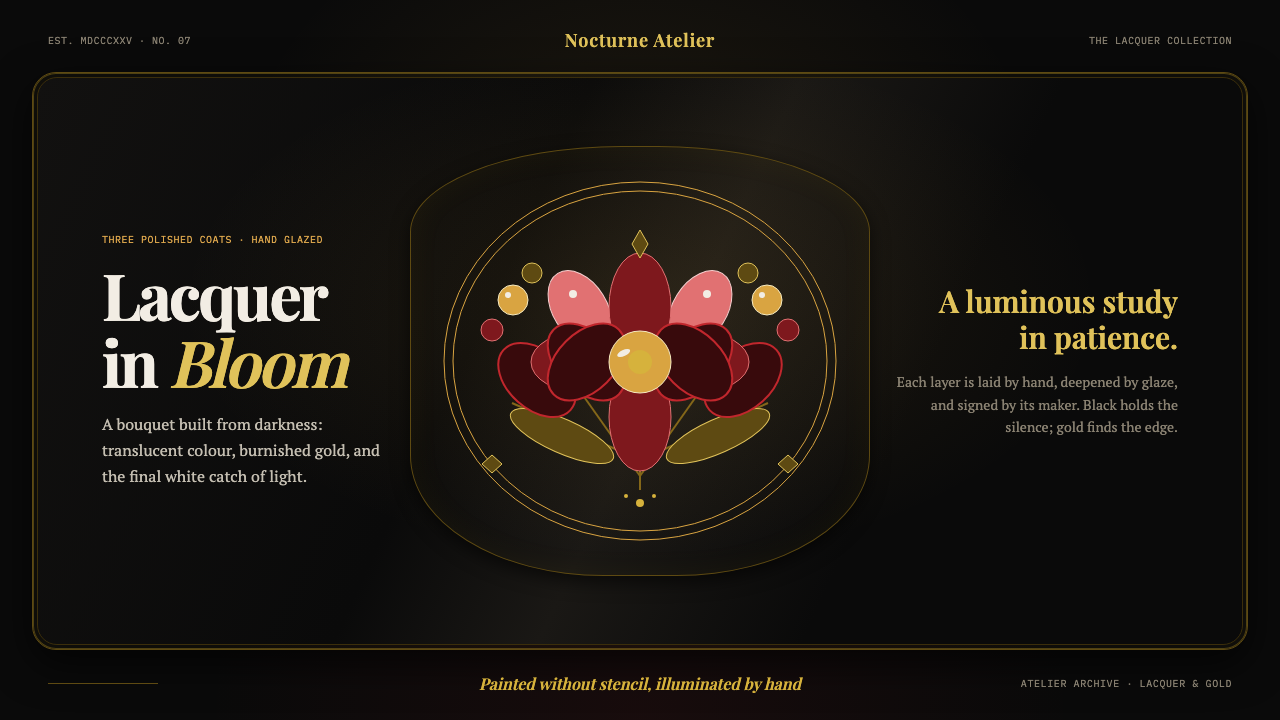
The darker the ground, the brighter it blooms: Zhostovo turns a black lacquer tray into a stage for glazed petals, white catch-light, and gold filigree.
Zhostovo Lacquer Tray Bouquet in brief
Zhostovo painting is the folk art of the japanned metal tray, associated with Zhostovo village near Moscow. Its defining image is a luminous bouquet of roses and wild flowers held against an almost pure black lacquer ground. The tray is not treated as a neutral surface. Its dark field establishes depth, ceremony, and visual silence, allowing the bouquet to appear as though it has been brought forward by light rather than simply placed on top of color.
The painted bouquet is built through translucent layers of glaze. Petals do not read as a single flat mark: darker interiors, lighter turns, and glazed transitions give each blossom a sense of accumulation. White blik highlights are placed at points where a petal, leaf, or rounded form seems to catch the light. These small bright accents are essential to the style. They make the flowers feel polished and alive while preserving the controlled stillness of the black ground.
A fine gold filigree border gathers the composition and gives the tray its finished edge. Gold is not a general wash of luxury; it is a narrow framing device that answers the brightness of the flowers without competing with them. The result is formal yet handmade: dark lacquer carries gravity, layered floral color supplies radiance, white highlights sharpen the bloom, and the gold border keeps the entire bouquet within a decorative world of its own.
Where does Zhostovo Lacquer Tray Bouquet come from?
The tradition began in 1825 in Zhostovo village near Moscow and belongs to the wider field of Russian lacquer folk art. Its medium is crucial to its identity: a metal tray finished as japanned decorative painting. The physical object already contains a useful tension for designers to notice. A practical tray becomes a carefully prepared pictorial ground, and a durable lacquered surface becomes the setting for flowers whose apparent softness is achieved through disciplined, repeated layers.
The Vishnyakov family workshops are named among the tradition’s key figures, with Osip Vishnyakov specifically associated with its origin story. Their presence in the history matters because Zhostovo is not best understood as an isolated image or a fixed graphic formula. It is a workshop-rooted decorative practice, shaped around the making and finishing of trays. The recurring bouquet, lacquer field, and ornamental edge therefore belong together as parts of one object-based language.
Generations of Zhostovo tray-painters have carried the classic nineteenth-century tray tradition continuously into the present. That continuity gives the style a particular visual character: it has recognizable rules without becoming mechanically uniform. A bouquet may contain roses and wild flowers, but its vitality comes from the painterly sequence of dark ground, translucent bloom, concentrated white light, and enclosing gold line. The enduring lesson is not merely to decorate black with flowers; it is to make darkness and illumination depend on one another.
What defines the Zhostovo Lacquer Tray Bouquet look?
Black Lacquer Ground
The near-pure black field is the style’s visual foundation. Built in three polished lacquer coats, it reads as deep, smooth, and reflective rather than empty. Its darkness creates the contrast that makes every glazed petal, white highlight, and gold line feel deliberate. The ground should remain spacious enough to function as an active part of the composition, not as leftover background.
Layered Glaze
Flowers are constructed through multiple translucent glaze layers. The visual effect is one of petals emerging gradually from shadow into light. Color should appear to gather within a blossom and thin toward an illuminated edge, preserving the impression of depth without replacing the painterly process with a flat floral symbol.
White Blik Highlights
White blik highlights are small, focused points of brightness. They sit on the most light-catching turns of petals and leaves, making the bouquet look glazed and newly lit. Their restraint is important: a few concentrated marks can activate a flower, while too many broad white areas would weaken the dark-to-light drama on which the style depends.
Bouquet Composition
Roses and wild flowers are organized as a bouquet rather than scattered as separate decorative icons. Forms overlap, recede, and gather into a central floral presence. The composition should feel abundant but contained, with the bouquet carrying the visual lightness and the surrounding black field supplying calm, depth, and room for the eye to rest.
Gold Filigree Border
A fine gold border frames the floral field with precision. It gives the tray a ceremonial perimeter and creates a final contrast against black lacquer. The line should feel delicate rather than heavy, functioning as a crafted enclosure for the bouquet instead of becoming an independent ornamental spectacle.
Polish and Handwork
The style combines a polished lacquer surface with visibly hand-built floral modeling. This contrast prevents it from reading as merely glossy luxury. The black ground is controlled and finished; the flowers feel accumulated, attentive, and touched by a painter’s hand. Its richness comes from that dialogue between immaculate surface and living brushwork.

Who shaped Zhostovo Lacquer Tray Bouquet?
The Vishnyakov family workshops are identified as key figures in the Zhostovo tradition. Their place in the account emphasizes the art’s workshop basis: the lacquered metal tray, floral painting, polished finish, and decorative border are parts of a connected craft practice rather than separate visual effects.
Osip Vishnyakov is named among the tradition’s key figures and is connected to its early history in Zhostovo village. In a style defined by a prepared lacquer ground and layered floral illumination, that association anchors the visual language in a specific local tray-making tradition rather than in a generic floral motif.
Generations of Zhostovo tray-painters have sustained the classic tray tradition from the nineteenth century to the present. They represent continuity in the method itself: the dark polished field, translucent floral layers, white blik, and gold edging remain meaningful because they are practiced as an interconnected sequence.
How do you use Zhostovo Lacquer Tray Bouquet today?
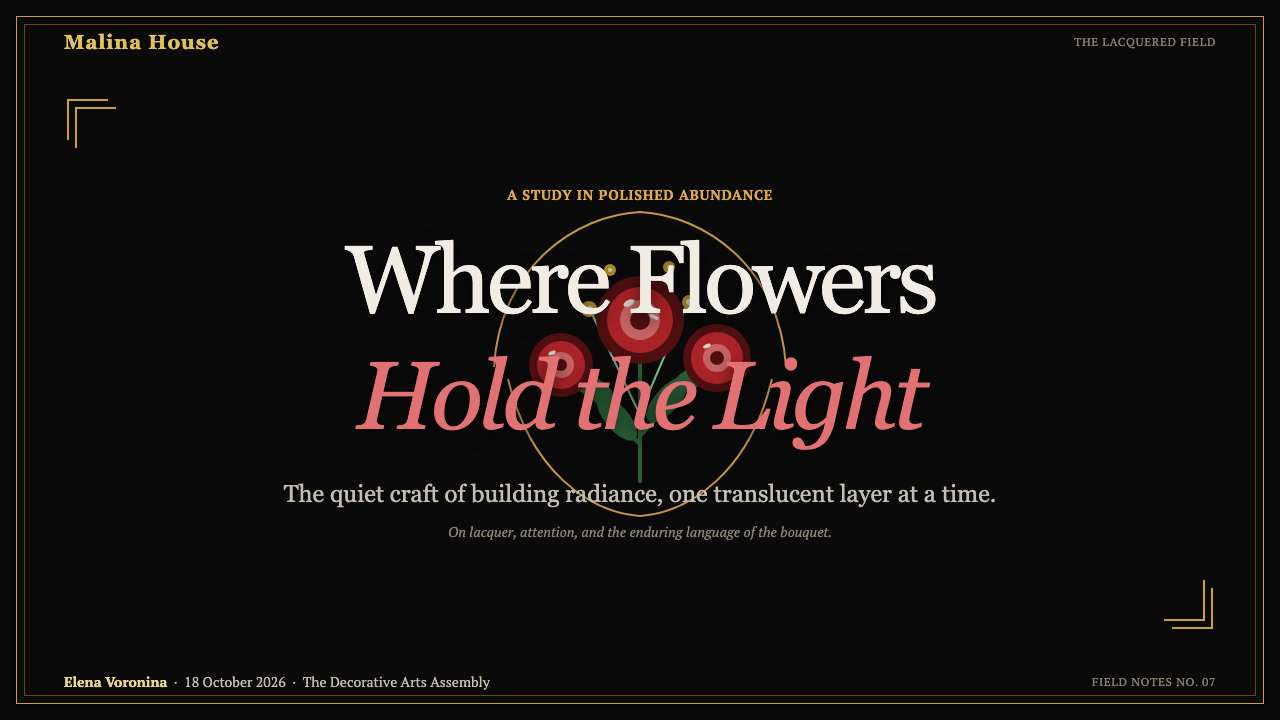
For presentation covers, use the Zhostovo logic as a dark ceremonial field rather than as a generic floral background. Let a single bouquet or tightly gathered floral cluster hold the visual center or an off-center focal area. Place the title where the black lacquer can give it room to breathe, and let a restrained gold edge or fine gold framing gesture establish the perimeter. The cover should feel illuminated from within, not crowded with decorative additions.
On presentation content and data slides, borrow the style’s hierarchy rather than reproducing a full painted tray on every page. Keep the dark ground broad and calm, use a floral cluster only to introduce a section or anchor a key idea, and reserve bright white marks for the most important information. For data, distinguish major categories through the same relationship of dark field, luminous focal color, and occasional gold boundary. The result should remain readable as information first, while retaining the bouquet’s controlled drama.
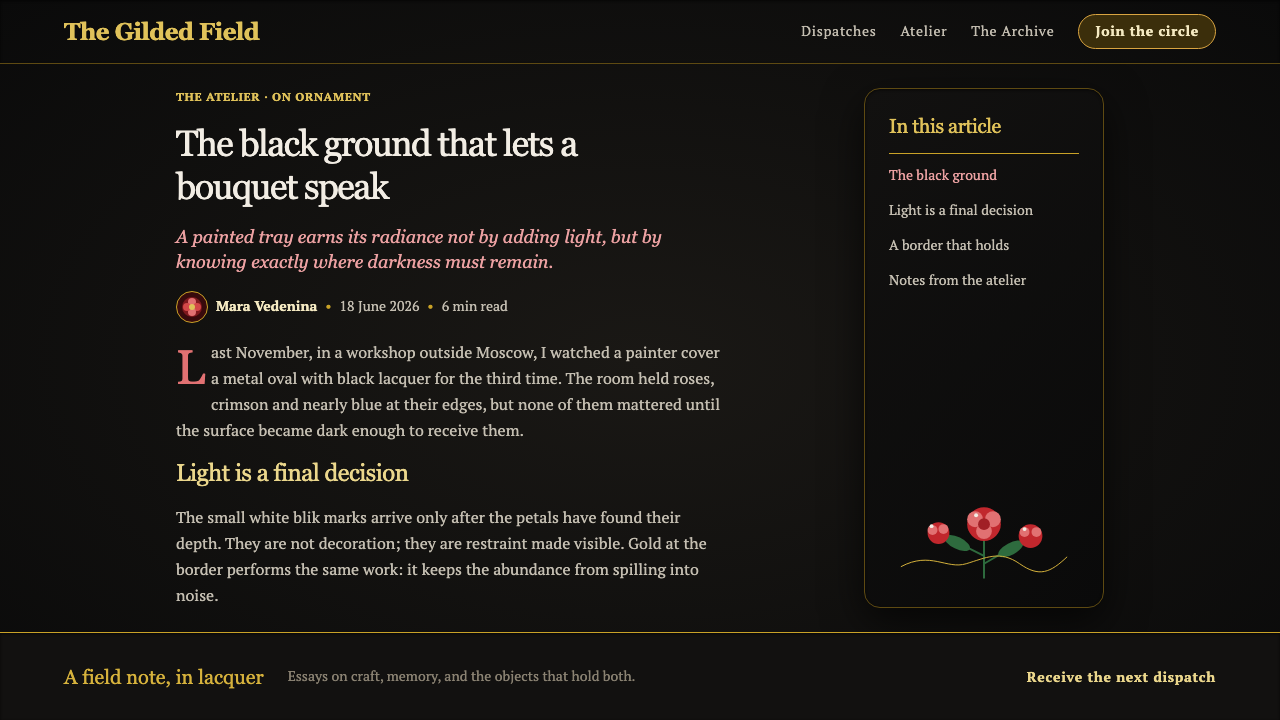
For web interfaces, this language suits dashboards, premium collections, and pricing pages that need to feel composed, formal, and materially rich. Use the dark surface as a visual stage, not a place to fill with competing panels. A luminous floral illustration can mark a featured state, a membership tier, or a key editorial area; fine gold rules can define boundaries; white should be held for the clearest labels, critical values, and interactive focus. The interface benefits when darkness creates hierarchy instead of reducing legibility.
For editorial and marketing work, Zhostovo is especially effective when a story needs an atmosphere of cultivated abundance framed by restraint. A feature page can open with a bouquet emerging from black, then move into quieter text-led sections with gold details acting as chapter markers. Product storytelling can use close floral crops to suggest glaze, polish, and handwork, while the larger black field preserves elegance. The most persuasive applications let the floral image carry emotion and let the surrounding composition carry order.
A common mistake is to treat the style as black background plus random bright flowers and metallic decoration. That loses the sequence that gives Zhostovo its force: polished darkness first, translucent accumulation second, selective white light after that, and a fine gold enclosure at the end. Avoid filling every available area with flowers, making every petal equally bright, or turning gold into a broad decorative texture. The style becomes convincing when the bouquet feels discovered by light within darkness, not pasted onto it.
Zhostovo Lacquer Tray Bouquet — FAQ
Is Zhostovo painting simply a floral pattern on black?
No. The black field, polished lacquer finish, translucent floral layers, white blik highlights, and gold filigree border work as one system. Flowers are important, but their brightness depends on the prepared dark ground and on the controlled sequence of glazing and highlighting. Removing that relationship leaves a floral motif, not the full Zhostovo character.
Why is the dark ground so important?
The near-pure black lacquer ground supplies the contrast that lets petals appear luminous. It also gives the tray a polished, formal, and spacious character. If the background becomes visually busy or too bright, white highlights and gold edging lose their special role, and the bouquet no longer appears to emerge from depth.
What does blik contribute to the floral painting?
Blik is the white catch-light placed on illuminated parts of petals and related forms. It concentrates brightness at selected points, helping translucent glaze layers read as polished and dimensional. It should be selective: its value comes from contrast with the darker floral interiors and the black lacquer around them.
Can this style work without a gold border?
A floral composition can still recall aspects of Zhostovo without a gold edge, especially its dark lacquer field and luminous bouquet. But the fine gold filigree border completes an important part of the tray language: it frames the flowers, clarifies the object’s perimeter, and adds a precise final note of ornament. Omitting it produces a looser interpretation.
Related design styles
 Bulgarian Revival WoodcarvingDark devotion in relief. Walnut panels, Cardo serifs, and gilt rosettes catch…
 Circassian Adyghe Gold BraidCourtly gold on dark wool. Raised braid edges coil over indigo-black panels.
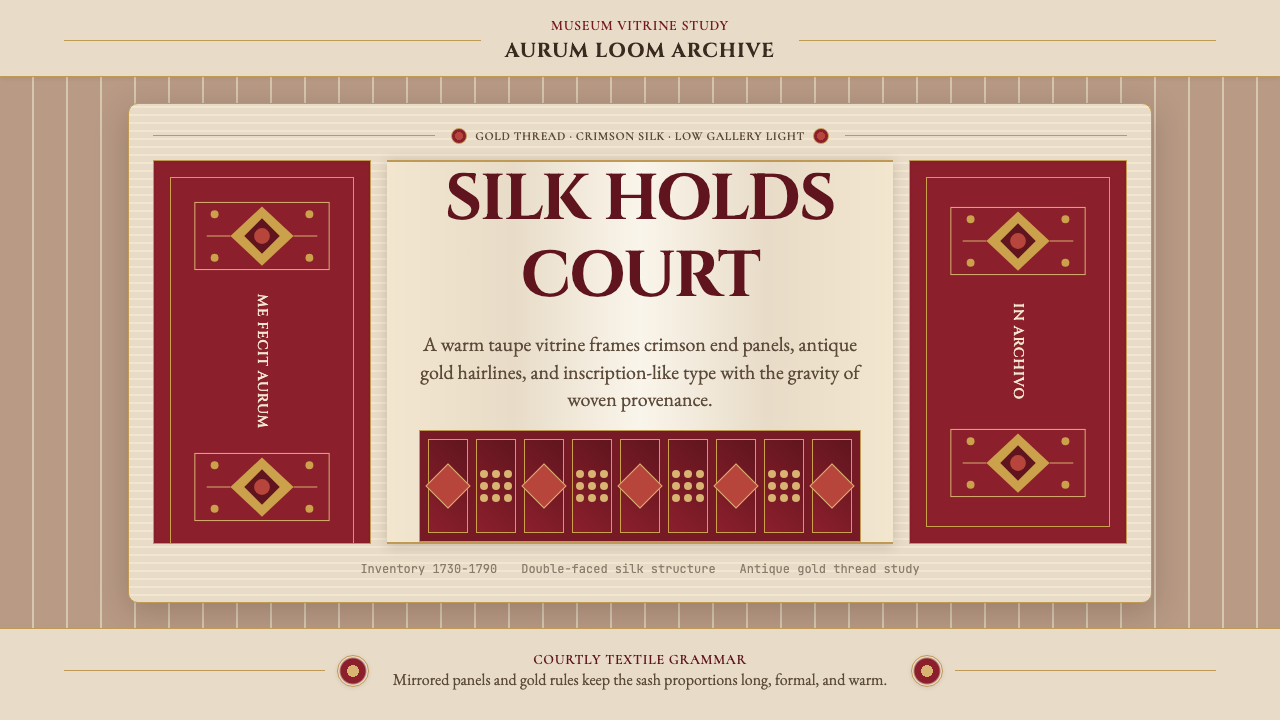 Belarusian Slutsk SashCourtly silk, vitrined. Taupe ground, crimson panels, Cinzel type, antique go…
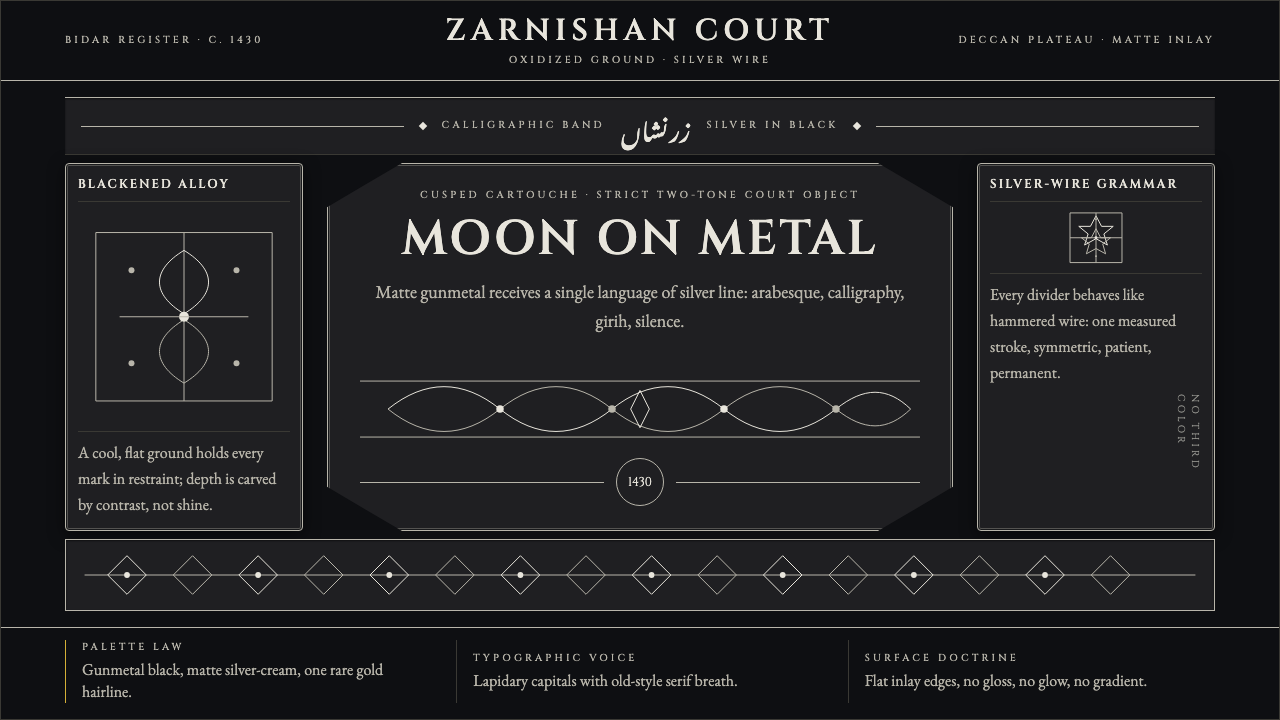 Bidri Deccan MetalworkCourtly darkness, tooled by silver. Cinzel caps and hairline arabesques cut g…
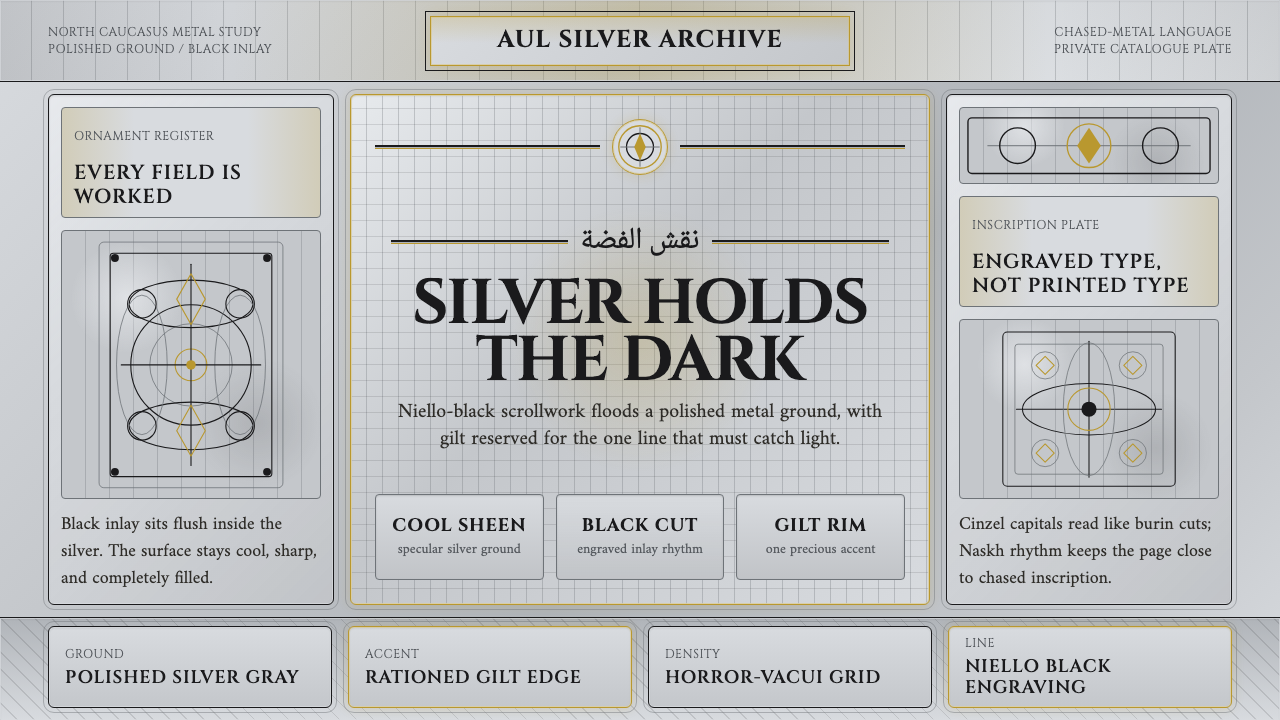 Dagestan Kubachi Silver NielloSilver made obsessive. Niello-black scrolls cover cool metal, with one ration…
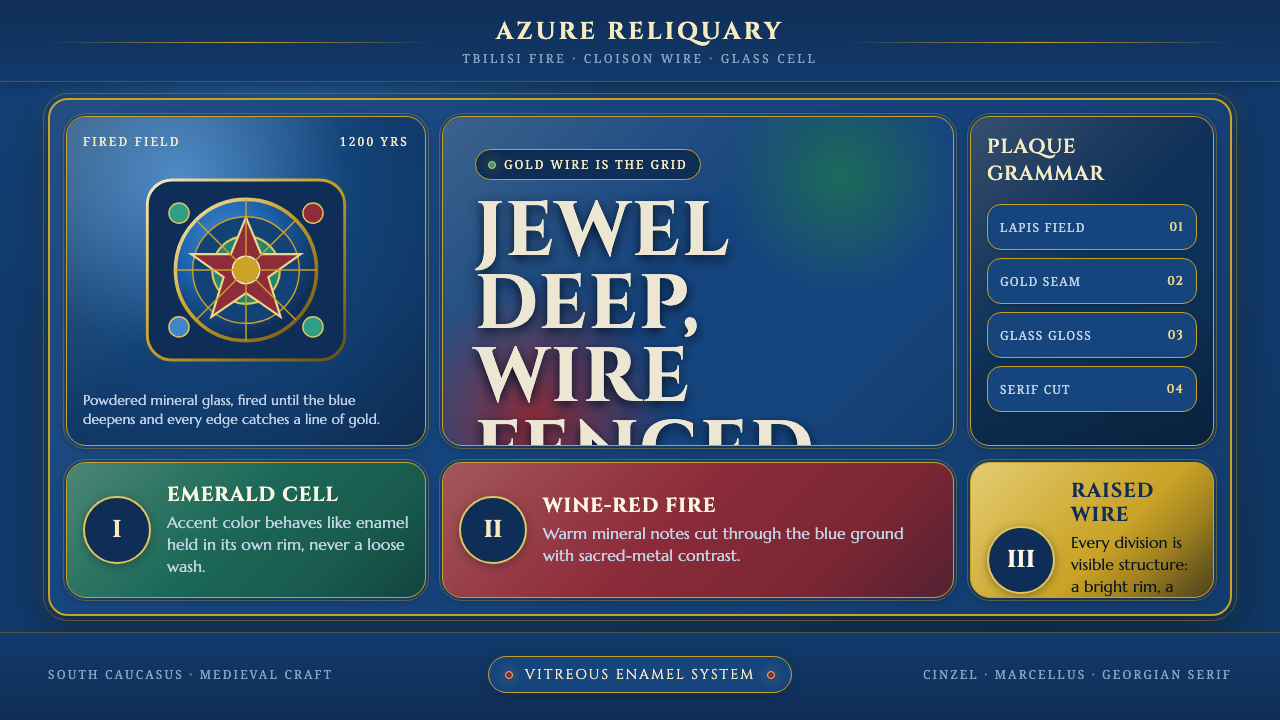 Georgian Minankari CloisonnéJewel-deep and wire-fenced. Lapis enamel, gold seams, emerald cells, glossy s…