What is Y2K Aluminum Iridescent (1999)?
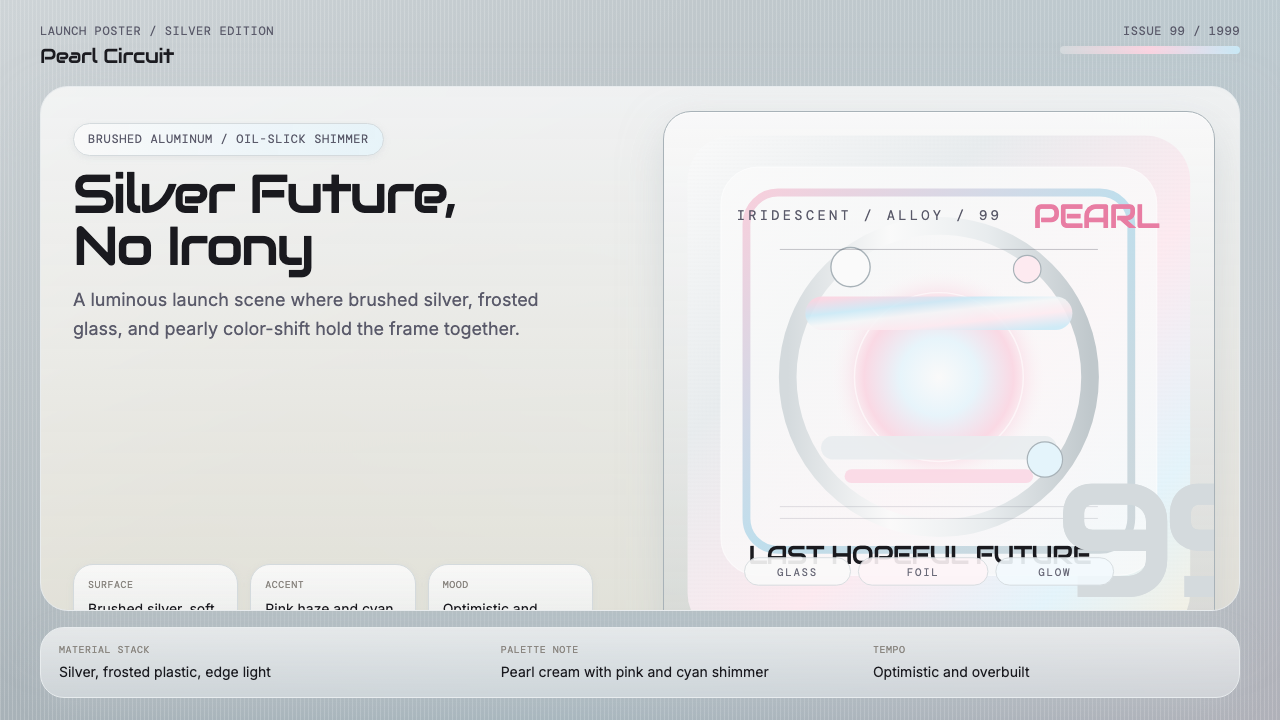
At the turn of the millennium, optimism had a texture — brushed silver that shifted to pink and cyan depending on the angle of the light.
Y2K Aluminum Iridescent (1999) in brief
Y2K Aluminum Iridescent is a design style rooted in the visual language of consumer technology and fashion from 1998 to 2002. Its defining characteristics are the directional grain of brushed aluminum, holographic color-shift that moves across surfaces like oil on water, frosted translucency, and pearlescent shimmer. Every surface implies a material reality: cool to the touch, machined, precise, yet alive with iridescent light.
This aesthetic sits in a specific and narrow window of design history. It is not the candy-colored translucency of the original Bondi Blue iMac era, nor is it the austere matte minimalism that followed in the mid-2000s. It occupies the cooler, more refined middle ground — the metallic-iridescent language of products that treated the future as something luminous and tactile. The palette moves from cold silver-white at its base through pale champagne and platinum, then breaks into color-shift accents of soft rose, holographic cyan, and iridescent lavender wherever a surface catches light differently.
What makes this style distinctive is its relationship to material optimism. The late 1990s consumer technology boom produced objects that people genuinely believed signaled a better future. The brushed aluminum finish, the pearlescent housing, the semi-transparent panel revealing precision-engineered components underneath — these were not merely aesthetic choices but expressions of confidence that technology was becoming beautiful, accessible, and humane. The design style preserves that confidence: it is the last optimistic future, before the irony set in.

Where does Y2K Aluminum Iridescent (1999) come from?
The Y2K aluminum iridescent aesthetic crystallized between 1998 and 2002, shaped by the convergence of three forces: a consumer electronics industry flush with venture capital and racing toward mass elegance, a fashion world in the midst of a radical deconstruction of craft and material, and a cultural moment that genuinely believed the digital future would be warm, luminous, and physical. Products like the Apple Power Mac G4 Cube, the Sony Cybershot DSC-P1, and the Nokia 8210 were not merely devices but aesthetic manifestos — objects that said something about what the future should feel like.
The geography of this aesthetic was genuinely global. In Cupertino, Jony Ive's industrial design group at Apple was developing the visual logic of machined aluminum as a premium consumer material — an approach that would define the company's product language for the next two decades. In Tokyo, Sony's design laboratories were refining a parallel vocabulary of silvered plastics, brushed finishes, and holographic accents that expressed precision engineering for a consumer audience. In Vienna and New York, fashion designers were reaching the same set of surface ideas from a different direction: Helmut Lang stripped garments to their material essences, often using silvered and iridescent fabrics that read as industrial but felt as luxurious as couture. Issey Miyake's pleated and heat-pressed synthetics carried a similar conviction — that new materials could be simultaneously futuristic and humanly beautiful.
The cultural backdrop was the pre-millennium mood itself: a combination of genuine technological optimism, end-of-decade prosperity in much of the industrialized world, and a fascination with what was then called cyberculture. The Y2K computer anxiety — fear that digital infrastructure would collapse at midnight on January 1, 2000 — paradoxically intensified the glamour of technology. Objects that looked like they belonged to the future were desirable precisely because the future felt imminent. The holographic, the pearlescent, and the iridescent carried a readymade cultural meaning: they signified the digital, the advanced, the not-yet-arrived.
After 2001 and 2002, this specific aesthetic moment closed. Consumer electronics shifted toward the black glass rectangles and invisible-interface philosophy that defined the following decade. Fashion moved on from the silvered and iridescent toward other material explorations. The Y2K aluminum iridescent style passed into memory — and eventually into the archive, which is to say into the position from which revivals become possible. The 2018 and onward Y2K aesthetic revival drew heavily on this material vocabulary, particularly in digital design, fashion photography, and social media visual culture, where the style's inherent warmth-within-chrome quality lent itself to nostalgic reinterpretation without irony.
What defines the Y2K Aluminum Iridescent (1999) look?
Metallic Surface Grain
The foundational surface quality is the directional grain of brushed aluminum — parallel fine lines that catch light differently depending on angle, creating a subtle but persistent sense of material depth. This grain is not chaotic or organic; it is controlled, uniform, and mechanical. It reads as craftsmanship through industrial process. In two-dimensional design work, this quality is evoked through fine parallel textures that give otherwise flat surfaces a sense of physical presence without becoming decorative noise.
Iridescent Color Shift
The signature color effect is a holographic shift from neutral silver-white through soft rose, pale cyan, and lavender — colors that appear and recede as viewing angle changes, mimicking the behavior of oil on water or the surface of a compact disc. These are not flat colors but transitional ones: the rose is always on its way to becoming silver, the cyan is always about to disappear back into pearl. This shift is applied sparingly, as accent rather than field color, concentrated at edges, highlights, or transitional zones where two surfaces meet.
Frosted Translucency
A recurring material quality is a milky, frosted translucency — surfaces that admit diffused light without full transparency, as though made from sandblasted glass or frosted polycarbonate. This quality softens contrast without losing luminosity, and it allows layered compositions where background elements bleed through foreground surfaces in a controlled way. The effect is simultaneously technical and delicate: industrial in origin, optical in behavior.
Pearl and Champagne Neutrals
The base palette avoids pure white and matte gray in favor of warm and cool pearl tones — a champagne that reads as almost-gold without committing to yellow, a platinum that reads as almost-silver without the coldness of pure grey, and an off-white that carries a faint iridescent cast as though the paper itself were slightly luminous. These neutrals provide the ground against which color-shift accents operate. They are never flat or inert; they have a slight reflective quality that distinguishes them from ordinary neutral backgrounds.
Precision and Softness in Balance
The style holds a productive tension between hard precision and soft luminosity. Edges are clean and machined-looking — the exactness of a milled component — but the light that falls across surfaces is diffused and gradual rather than harsh. Type and structural lines carry the precision; backgrounds and surface treatments carry the softness. This balance is what separates the aesthetic from cold industrial design on one side and from dreamy irridescent softness on the other. It is the specific combination of the two that makes it feel simultaneously futuristic and approachable.
Restrained Use of Accent Color
Despite the holographic color range potentially available in the palette, the style is disciplined in its application of color. The dominant register is always achromatic — silver, pearl, platinum — and color appears as accent or as the consequence of a surface catching light at a particular angle. A design that saturates the full color range simultaneously loses the essential quality of material restraint. The iridescent shifts should feel discovered rather than announced, emerging from the composition rather than imposed on it.
Typographic Clarity Against Shimmer
Because the surface treatments are rich and optically active, typography in this style must maintain absolute clarity. Type is set in clean, geometric letterforms — without decorative flourishes, without simulated metal effects — that read crisply against iridescent grounds. The contrast between the shimmering background and the legible foreground type is itself part of the aesthetic: the shimmer says future, the clear type says precision. The two together communicate the style's core promise — that beauty and function are the same material.

Who shaped Y2K Aluminum Iridescent (1999)?
As Senior Vice President of Industrial Design at Apple from 1997, Jony Ive oversaw the development of the Power Mac G4, Power Mac G4 Cube, and early PowerBook designs that became the canonical expressions of brushed aluminum as a consumer material. His design group's work established the principle that precision-manufactured metal finishes could carry emotional weight — that a material normally associated with aerospace and professional equipment could make a personal computer feel both powerful and personal. Ive's influence extended far beyond Apple: the aluminum-as-premium-consumer-material language he refined became the default register of aspirational technology design through the first decade of the twenty-first century.
Issey Miyake's work in the late 1990s — particularly the Pleats Please line and the collaborations with engineers to develop heat-pressed synthetic fabrics — explored the same material territory as the consumer electronics aesthetic from within the fashion system. His fabrics caught light iridescently, moved with precision-engineered behavior, and felt simultaneously industrial and luxurious. Miyake demonstrated that the visual language of the Y2K aesthetic was not accidental or merely technological but corresponded to a genuine shift in how designers across disciplines thought about the relationship between material, light, and the human body.
Helmut Lang's fashion work of the late 1990s shared the Y2K aesthetic's material seriousness from a different angle. Where other designers of the period chased warmth or maximalism, Lang pursued a cold, precise, and almost clinical beauty — using iridescent and silvered fabrics, industrial closures, and stripped-back silhouettes that made clothing feel like precision instruments. His work had significant influence on how the broader culture understood the iridescent-metallic aesthetic as serious rather than frivolous, connecting it to a lineage of conceptual design rather than pop gloss.
Marc Jacobs, particularly during his tenure at Louis Vuitton beginning in 1997 and through his own label, engaged the Y2K iridescent aesthetic from within the luxury system, commissioning collaborations and developing accessories and garments that translated holographic and iridescent surface effects into high fashion contexts. His work demonstrated that the aesthetic could travel vertically through the market — from mass consumer electronics to luxury goods — while retaining its essential character. Jacobs's contribution was to establish the style's legitimacy within fashion's most prestigious tier, a move that accelerated its cultural saturation.
How do you use Y2K Aluminum Iridescent (1999) today?
Y2K Aluminum Iridescent is a style with specific emotional and contextual affinities. It works best when the design goal includes signaling forward-looking optimism, material quality, and a light-meets-precision sensibility. The style carries built-in cultural resonance for audiences who experienced the late 1990s consumer technology moment, and for younger audiences it carries the appeal of a recently archived aesthetic — familiar enough to feel warm, distant enough to feel fresh. Understanding both registers is important when deploying it intentionally.
For presentation slides, the style is particularly effective on cover pages and section dividers, where its material richness and visual specificity create immediate atmosphere. A cover benefits from a surface treatment that suggests brushed metal — fine directional texture in the background, a title set in clean geometric type without simulated metal effects — with iridescent color-shift used sparingly at edges or as a subtle gradient that moves from pearl through rose to pale cyan across the width of the composition. Content slides require more discipline: the iridescent accent should appear only in structural markers — active section indicators, data highlights, call-to-action elements — while body text sits against lighter, near-neutral grounds. Data visualization in this style takes on a material quality: chart elements read as precision components, with shimmer reserved for the highlighted or featured value.
For web interfaces, the style suits products that want to signal quality, precision, and forward-looking confidence — technology platforms, fintech dashboards, creative tools, and premium consumer services. The approach for dashboards involves a layered neutral background using pearl and platinum tones, with iridescent accents on interactive states, active indicators, and primary calls to action. Pricing pages work well with the style's inherent sense of material tiers: base tiers in silver-cool neutral, premium tiers in champagne or light gold, and highlighted or enterprise tiers with a restrained iridescent treatment on the card border or header. Navigation and typography must remain legible against the optically active backgrounds — this means clean geometric letterforms with sufficient contrast, never decorative or simulated-metallic type.
For editorial and marketing contexts, the Y2K aluminum iridescent style lends itself to product photography art direction, social media visual systems, and brand campaigns for audiences with an affinity for the aesthetic's cultural moment. In editorial layouts, the background surface treatment does much of the atmospheric work: a subtle brushed texture with iridescent cast allows body text to remain readable while the overall composition carries material depth. Marketing pages and hero sections benefit from the style's boldness — a full-width surface in the platinum-pearl range, with a single iridescent accent color used consistently for emphasis, creates a sense of quality without visual chaos. The style works particularly well in fashion, beauty, and technology categories where material sophistication is a core brand value.
A common mistake when applying this style is treating the iridescent color-shift as a license to saturate every surface with pink, cyan, and purple simultaneously. Authentic Y2K aluminum iridescent work is fundamentally achromatic at its base — the silver, pearl, and platinum tones should dominate — with iridescence appearing as a discovered quality rather than a designed-in feature. Another frequent error is applying simulated metallic effects to type, which tends to read as dated rather than elegant. Type in this style should be clean and precise, maintaining contrast against the shimmering background rather than competing with it. Finally, the style requires restraint in texture application: one or two surface treatments applied consistently will produce more convincing results than layering multiple effects that undermine each other.

Y2K Aluminum Iridescent (1999) — FAQ
Is Y2K Aluminum Iridescent the same as the general Y2K aesthetic?
No — it is a specific subset. The general Y2K aesthetic is broad, encompassing candy-colored translucent plastics, inflated bubbly letterforms, bright lime greens and hot pinks, and the playful exuberance of the late 1990s internet and pop culture. Y2K Aluminum Iridescent is narrower and cooler in temperature: it focuses specifically on the brushed metal, holographic shimmer, and pearl-neutral palette associated with consumer electronics and high fashion of the same period. Where the general Y2K aesthetic is warm and playful, the aluminum iridescent variant is precise and luminous. Think of the general Y2K aesthetic as the iMac G3; think of aluminum iridescent as the Power Mac G4.
Can this style work on dark backgrounds, or does it need a light ground?
It works on both, but with different handling. The historical reference point for the style is light-ground — pearl, platinum, and near-white — because the consumer electronics and fashion objects it derives from were typically light in overall tone. A dark ground is possible and can be effective, particularly in contexts where the product wants to feel premium or nocturnal — think of a high-end audio equipment interface or a luxury watch brand. On a dark ground, the iridescent accents tend to read more dramatically, but they can also tip into feeling generic if not handled with restraint. The key on a dark ground is to maintain the sense of material precision: the background should feel like anodized metal or smoked glass, not just darkness.
How do I prevent this style from looking like a nostalgic novelty rather than a serious design choice?
The key is structural seriousness. The Y2K aluminum iridescent aesthetic fails when it is applied as pure surface — iridescent gradients pasted onto a layout that has no other coherent visual logic. It succeeds when the visual system underneath is rigorous: a clear typographic hierarchy, a well-resolved grid, and restrained color use, with the iridescent surface treatment operating as material depth rather than decorative entertainment. In practice, this means spending as much effort on the structure of the composition as on the surface effects. The shimmer should enhance a well-organized layout, not compensate for an unresolved one.
What kinds of products and brands should avoid this style?
The style struggles in contexts where warmth, earthiness, or human vulnerability are core brand values. Healthcare products, children's educational platforms, food and beverage brands emphasizing natural provenance, and any service where the user experience depends on organic warmth and low-friction emotional accessibility will generally find the aluminum iridescent aesthetic too cool and material-focused. The style also struggles when applied to brands that need to communicate long institutional history or traditional craft heritage — the forward-looking, technological optimism embedded in the aesthetic sits awkwardly with claims to centuries of artisanal tradition. Finally, any context where legibility at small sizes or in print is critical requires caution: the surface richness that makes the style compelling at large scale can undermine clarity at reduced sizes.
Is the Y2K revival in digital design faithful to the original aesthetic, or is it a reinterpretation?
It is primarily reinterpretation, and understanding the difference matters for using the style well. The original aesthetic of 1998 to 2002 was rooted in physical materials — actual brushed aluminum, actual holographic foil, actual frosted polycarbonate — and its visual properties emerged from the behavior of those materials in light. The contemporary digital revival translates those material properties into screen-rendered effects: iridescent gradients, frosted glass blur treatments, simulated surface textures. These translations are sophisticated and often beautiful, but they carry the sensibility of designers working from memory and image archives rather than from physical prototypes. The best contemporary applications acknowledge this gap — they use the style's emotional register and cultural references while solving the specific design problems of the current moment, rather than attempting literal period reconstruction.
Related design styles
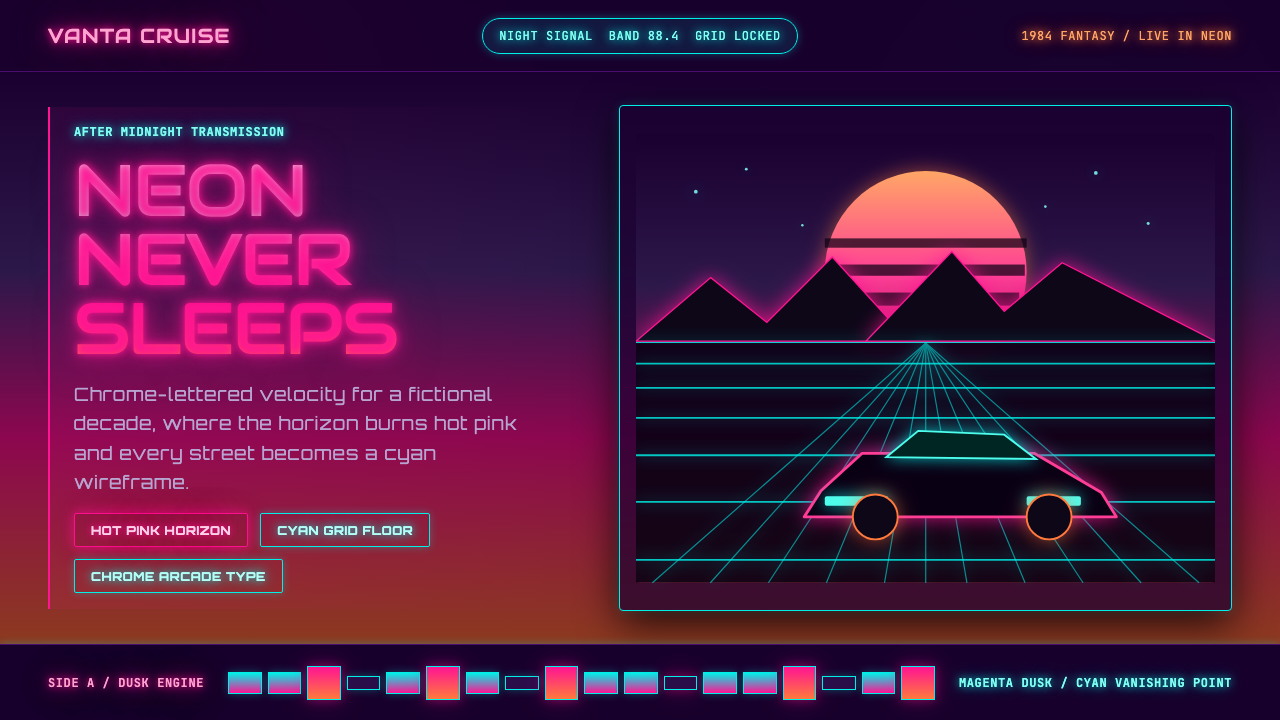 Synthwave Outrun 1984Sincere neon nostalgia. Hot pink sunset, cyan grid, chrome type against pure…
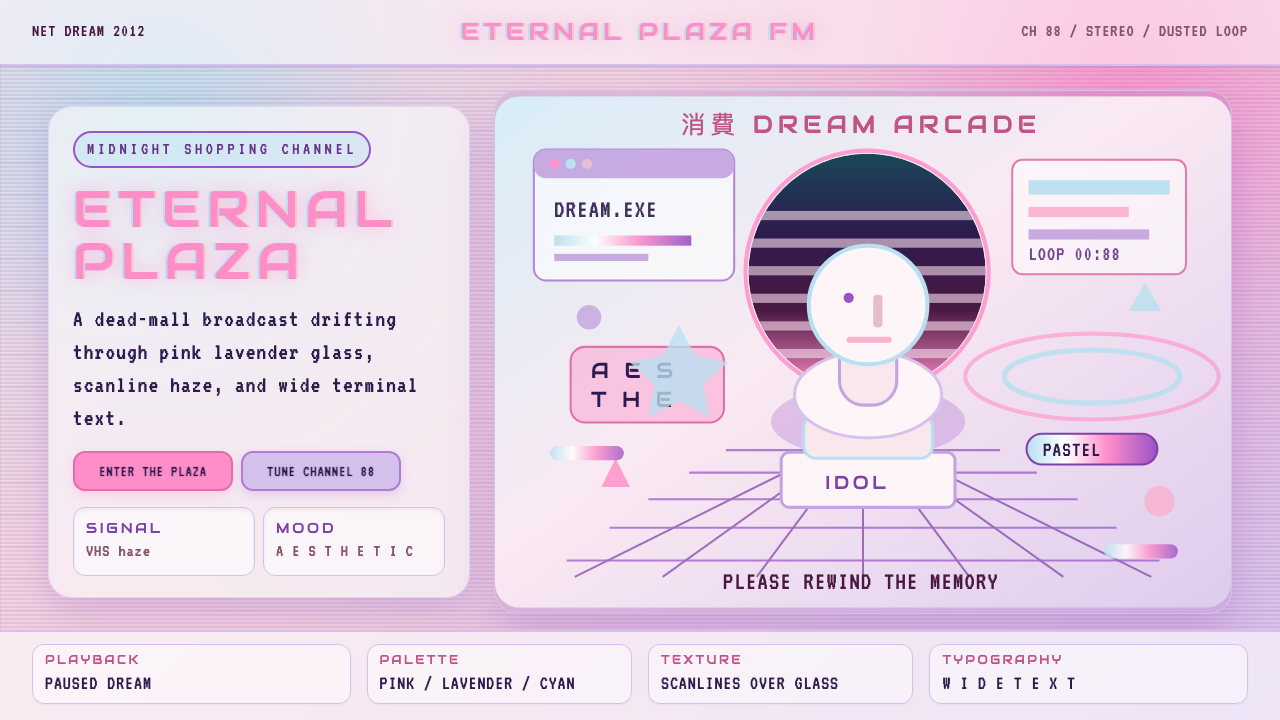 Vaporwave (Tumblr 2012)Dead-mall nostalgia glows. Pink-lavender glass, VHS scanlines, and wide retro…
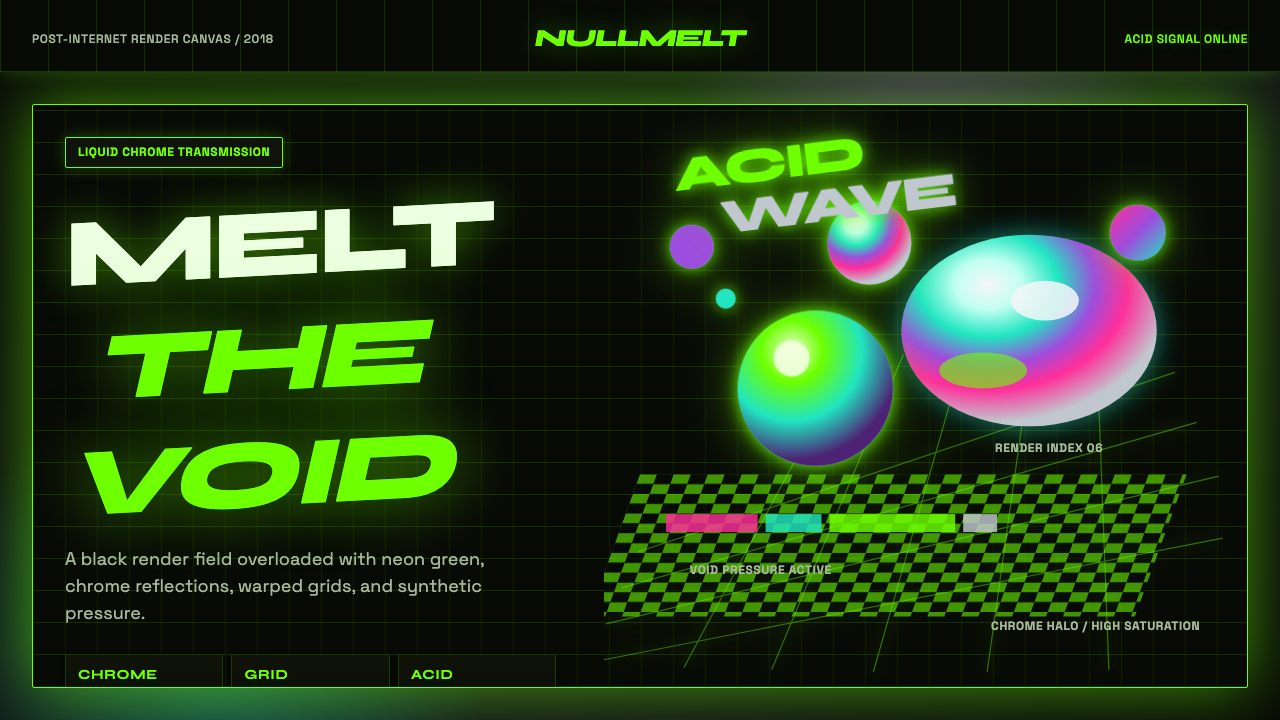 Acidwave 3D RenderPsychedelia hits the render engine. Neon green, chrome orbs, and warped grids…
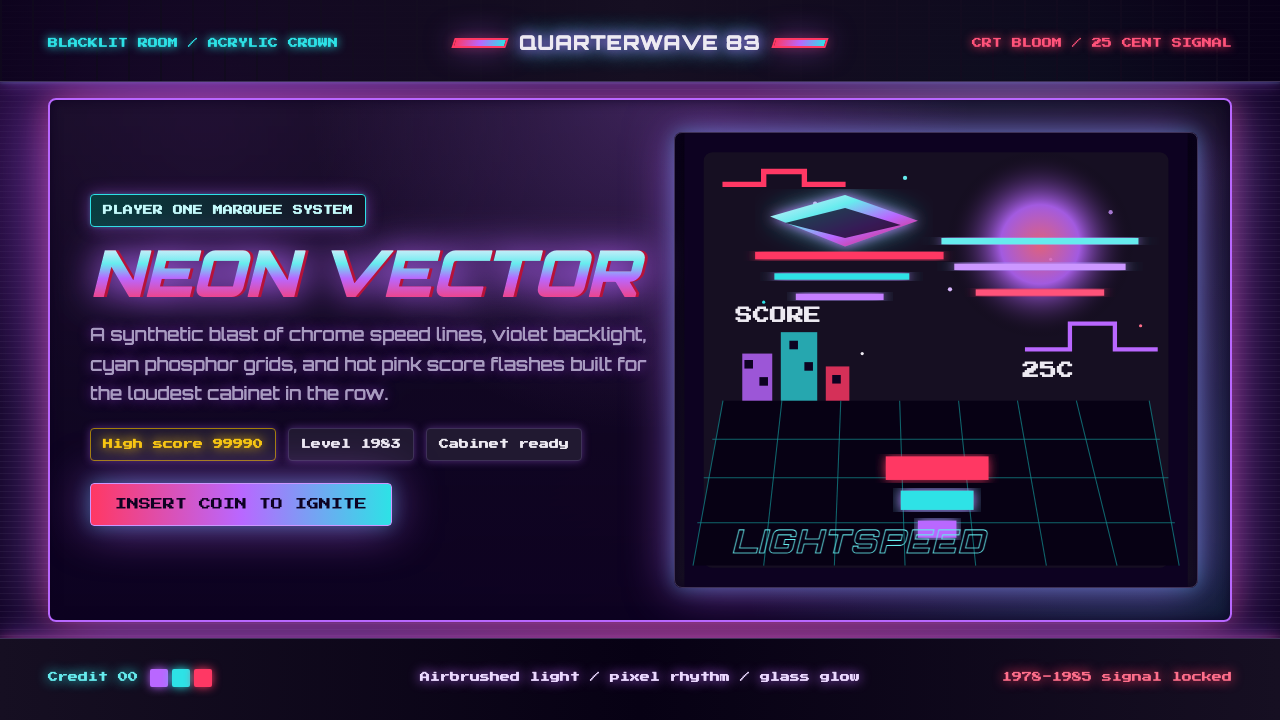 Arcade Cabinet MarqueeToo loud to ignore. Black-indigo glass, violet glow, cyan grids, hot-pink arc…
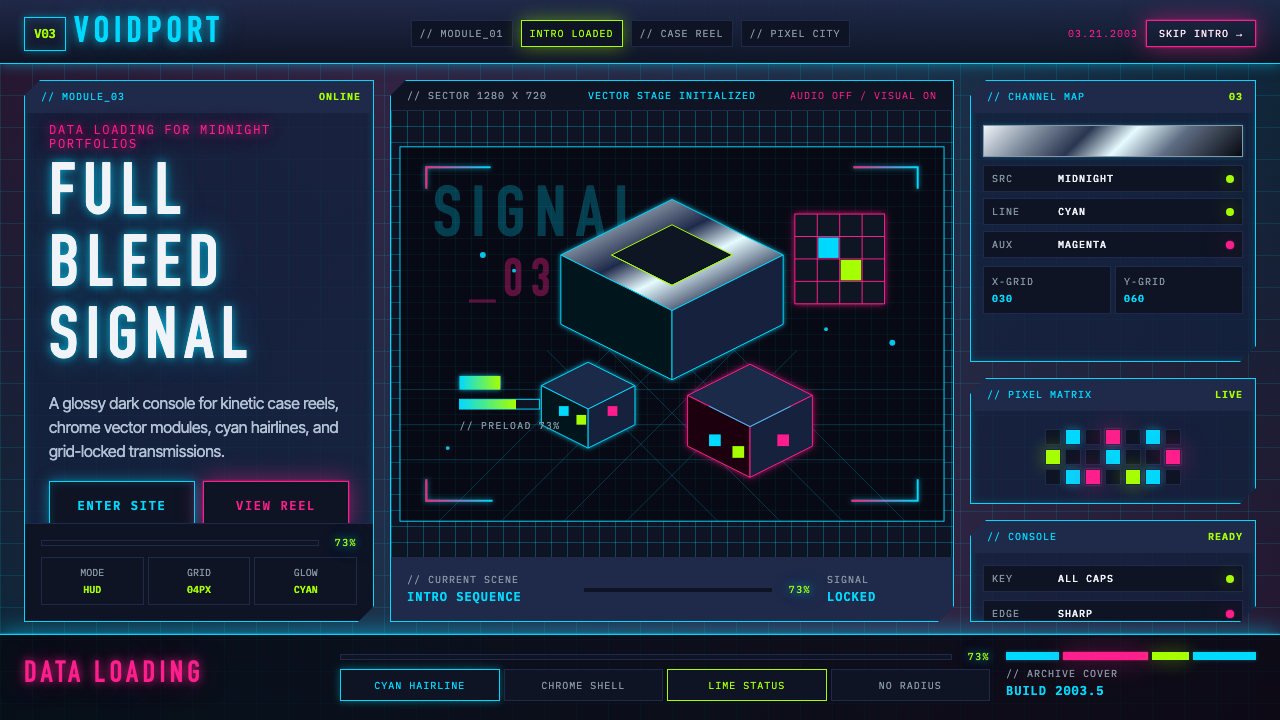 Flash Website Era (2003)A browser turned sci-fi console. Cyan HUD hairlines, chrome gradients, and 4p…
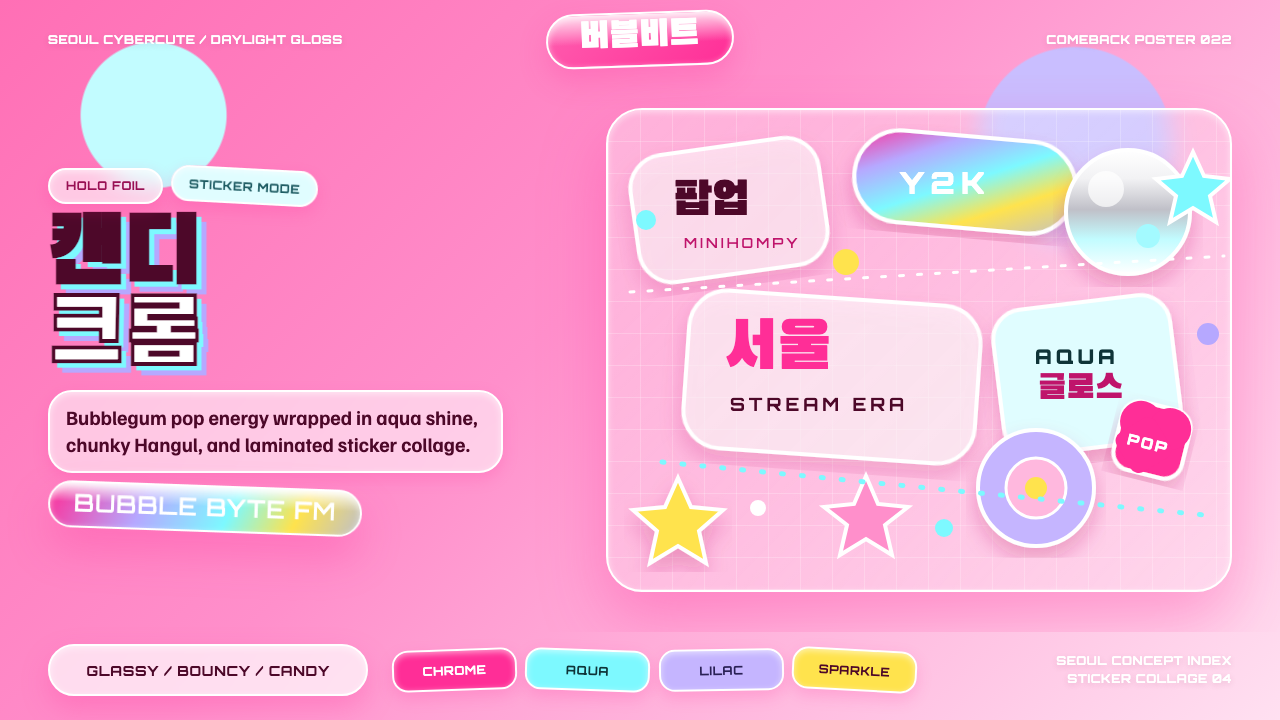 K-Pop Y2K SeoulCandy chrome goes maximal. Hot pink, aqua, Hangul type, and sticker collage s…