What is Xiaohongshu (RedNote) 2024?
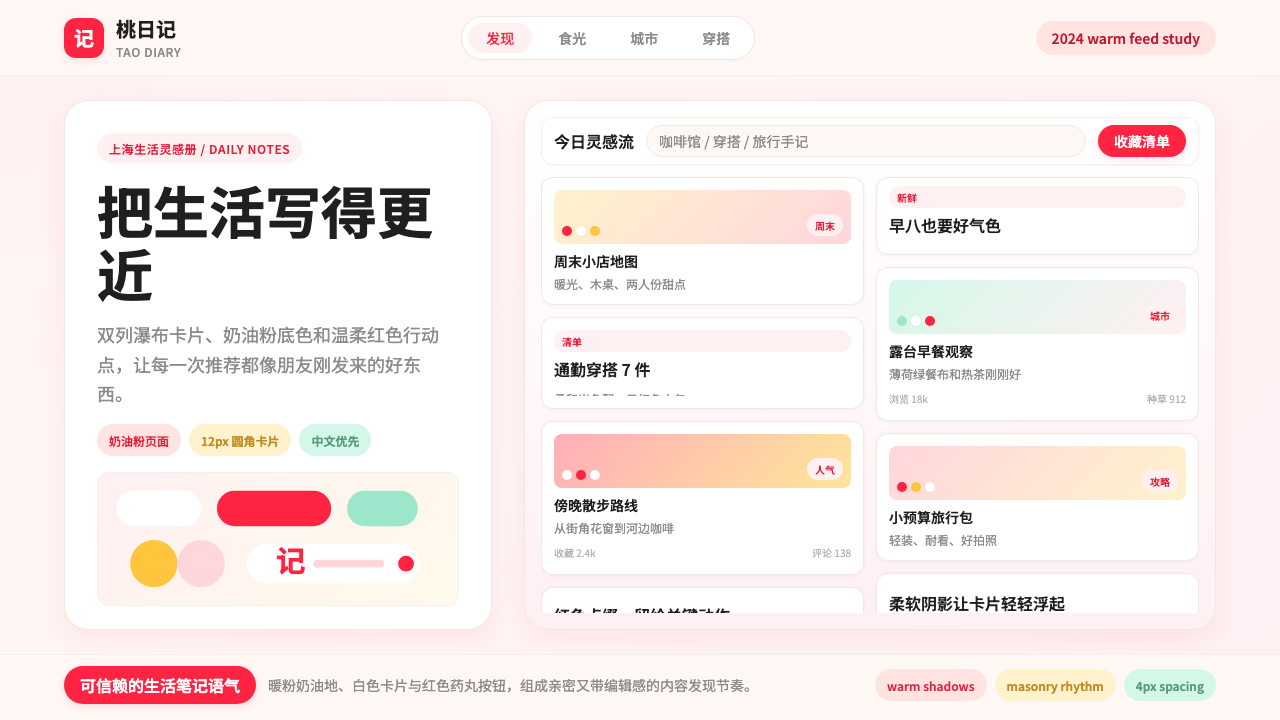
Xiaohongshu 2024 turns a lifestyle app into a visual friend — warm cream-pink waterfall cards and a signature red accent that feels like a recommendation from someone you trust.
Xiaohongshu (RedNote) 2024 in brief
Xiaohongshu 2024 is the visual design language of China's most influential lifestyle content platform — a system built around warmth, intimacy, and the feeling of a curated personal diary shared among friends. Its hallmark is the two-column waterfall photo card layout, where softly rounded image tiles cascade on a cream-pink ground, each card just editorial enough to feel elevated without feeling cold or corporate.
The aesthetic bridges two worlds: the discovery-grid logic of a visual search engine and the personal warmth of a handwritten shopping notebook. Every interface decision — the gentle rounding of card corners, the tinted warmth of drop shadows, the pill-shaped call-to-action buttons in signature Xiaohongshu red — reinforces a single emotional premise: this is content from a trusted friend, not an ad from a brand.
What distinguishes the 2024 iteration from earlier versions of the platform is a more refined bilingual typographic hierarchy that gracefully layers Chinese and English text, and a more deliberate use of negative space to let photography breathe. The result is a design system that feels simultaneously intimate and editorial — warm enough to invite browsing, polished enough to confer credibility on every note it displays.

Where does Xiaohongshu (RedNote) 2024 come from?
Xiaohongshu — literally 'Little Red Book,' also marketed internationally as RedNote — was founded in Shanghai in 2013 by Charlwin Mao (毛文超) and Miranda Qu (瞿芳). The platform began as a cross-border shopping guide, helping Chinese consumers discover and review foreign products at a time when outbound travel was booming and overseas goods carried enormous aspirational weight. Its earliest visual identity was functional and utilitarian, organized around user-generated photos and text reviews rather than any coherent design philosophy.
The transformation from directory to design system happened gradually between 2018 and 2022 as the platform's audience shifted from overseas shoppers to a much broader urban Chinese demographic seeking lifestyle inspiration across beauty, food, travel, fashion, and home decor. During this period the in-house design team, working from Xiaohongshu's Shanghai headquarters, began formalizing the visual conventions that users had already adopted organically: warm-toned photography, handwritten annotations, softly decorated layouts that felt personal rather than promotional. The signature red — a vibrant, slightly warm-leaning hue — became the primary brand accent, appearing consistently in interactive elements and identity marks.
The 2024 visual vocabulary represents the mature expression of a design system that had been iterating in production at scale for nearly a decade. By this point the platform had over 300 million registered users and a monthly active base exceeding 100 million, with content ranging from three-second short videos to long-form illustrated essays. The design system had to accommodate this range while maintaining a consistent emotional register. The solution was a flexible card-based grid where image proportions, caption lengths, and overlay treatments could vary widely while the palette, corner radii, shadow treatment, and typographic hierarchy remained constant.
Contextually, the Xiaohongshu 2024 aesthetic sits within a broader tradition of what critics and designers have termed 'Asian warm UI' — a design sensibility that emerged across Japanese, Korean, and Chinese consumer applications in the early 2020s, characterized by cream and blush grounds, soft shadows, rounded forms, and typography that prioritizes readability and warmth over graphic assertiveness. Within this tradition, Xiaohongshu occupies a distinctive position: more editorial than domestic Japanese apps, more personal than Korean beauty platforms, and more photographic than Chinese e-commerce competitors. Its design reflects the specific character of its content — notes (笔记, biji), a form that sits between a review, a diary entry, and a how-to guide.
What defines the Xiaohongshu (RedNote) 2024 look?
Palette
The Xiaohongshu 2024 palette is built on a warm cream-pink ground — not pure white, not beige, but a softly tinted neutral that reads as inviting rather than clinical. Against this ground, the signature Xiaohongshu red operates as the single dominant accent: it appears in primary buttons, notification badges, the logo mark, and interactive highlights, never diffused across large surface areas but concentrated into small, precise moments of emphasis. Secondary tones are drawn from muted blush, warm sand, and soft sage — neutrals that appear in tag backgrounds, secondary card surfaces, and state indicators. The overall effect is warm without being sweet, and cohesive without being monotonous.
Waterfall Card Grid
The defining structural motif of the interface is the two-column waterfall grid, where cards of varying height cascade downward in alternating columns. Each card is a self-contained unit: a photograph or video thumbnail at the top, followed by a short title in Chinese, a user avatar and handle, and an engagement count. The grid is never rigid — card heights are governed by image proportions and content length — which creates a pleasantly irregular rhythm that encourages extended browsing. The card corner rounding is consistent and generous, giving each tile a soft, approachable silhouette.
Typography
The typographic system is built for Chinese-first bilingual display. The primary typeface family is humanist and highly legible at small sizes, chosen for its friendly rather than authoritative quality. Hierarchy is established through size, weight, and color temperature rather than through decorative ornament: primary titles appear in medium-to-bold weight at a comfortable reading size, secondary information drops to a lighter weight and smaller size, and metadata — likes, saves, user handles — recedes further into a warm mid-tone. Where English text appears alongside Chinese, it is sized to be complementary rather than competing, giving the layout a quietly cosmopolitan feel without breaking the warmth of the overall register.
Shadows and Elevation
Xiaohongshu 2024 uses soft, warm-tinted drop shadows rather than the crisp, neutral shadows of earlier flat-design conventions. The shadows are subtle — just enough to lift a card off the cream ground and suggest a gentle z-axis depth — and their warmth is calibrated to feel natural against the overall palette rather than as a graphic device. Elevated surfaces, such as bottom sheets and modal overlays, use slightly cooler and more diffuse shadow treatments to differentiate them from card-level content. The result is an interface that feels layered and tangible without resorting to the heavy skeuomorphic effects of an earlier era.
Interactive Elements
Buttons, tags, and action indicators in the 2024 system share a consistent rounded language: pill-shaped primary CTAs in the signature red invite action without aggression; rounded rectangular secondary buttons sit comfortably at lower visual weight; filter tags and category chips use the same corner language at a smaller scale, often on a soft blush or warm sand background. Icon usage is restrained and line-based, favoring simplicity over expressiveness. The overall interaction design communicates availability and affordance through shape and color temperature rather than through bold visual noise.
Photography and Content Framing
Photography is the dominant content medium on Xiaohongshu, and the 2024 design system treats it with care. Images are never forced into a single fixed crop ratio within the waterfall grid; instead, the grid accommodates portrait, square, and landscape proportions, letting the content itself determine the visual rhythm. High editorial standards have evolved within the user community — bright, airy backgrounds, flat-lay compositions, and warm-filtered tones are so pervasive that they have become a recognizable subcultural aesthetic in their own right. The interface design supports rather than competes with this photographic content, using neutral card backgrounds and restrained overlay typography to keep image quality at the fore.
Brand Red as Anchor
Across the entire interface, the Xiaohongshu red functions as a precise semantic anchor: it appears where the platform wants the user to act, react, or identify. It is never used decoratively, never used for text beyond the most critical labels, and never allowed to bleed into the photographic content layer. This disciplined restraint is what gives the color its power — because it appears sparingly and consistently, users immediately understand its meaning without reading any text. It is an accent that behaves like a signal.

Who shaped Xiaohongshu (RedNote) 2024?
Co-founder and CEO of Xiaohongshu, Charlwin Mao built the platform from a cross-border shopping guide into China's foremost lifestyle content community. His vision of Xiaohongshu as a space for authentic peer-to-peer recommendation — distinct from both pure social networks and transactional e-commerce — directly shaped the editorial warmth and trust-first emotional register that defines the platform's design language. Under his leadership the company resisted the aggressive commercial visual conventions of Chinese super-apps and maintained the intimate, note-like aesthetic that became Xiaohongshu's signature.
Co-founder and former COO Miranda Qu was instrumental in shaping the early community guidelines and content norms that became the invisible foundation of Xiaohongshu's visual culture. Her focus on genuine user experience and quality content moderation created the conditions under which the platform's characteristic photographic aesthetic — warm, airy, editorial — could emerge organically from user behavior rather than being imposed top-down. The design system that matured by 2024 is in many ways a formal expression of the content culture she helped cultivate.
The platform's Shanghai-based design organization — operating without a single named public figurehead — has been responsible for systematizing the visual conventions that users first developed organically. Over the years between 2018 and 2024, this team formalized the card radius standards, shadow warmth calibration, color hierarchy rules, and bilingual typographic system that constitute the 2024 design language. Their work is notable for its fidelity to user behavior: rather than imposing a design vision from above, the team repeatedly observed which visual patterns earned user trust and refined the system to amplify those patterns.
Uniquely among major platform design languages, Xiaohongshu's visual identity was co-authored by its user base. The warm-filtered photography, flat-lay composition conventions, handwritten annotation overlays, and pastel accessory styling that became the platform's aesthetic were developed not by designers but by hundreds of thousands of lifestyle content creators responding to what earned engagement on the feed. By 2024, these user-originated conventions had become so consistent and recognizable that the platform's design team essentially formalized what the community had already built.
How do you use Xiaohongshu (RedNote) 2024 today?
The Xiaohongshu 2024 aesthetic is among the most immediately recognizable and emotionally accessible contemporary design styles, and it translates well beyond its native app context — but only when the emotional premise is preserved. The system works because it makes content feel like a trusted personal recommendation. Wherever that premise is appropriate, the visual language can follow.
For presentation slides, the style works best when applied to lifestyle, consumer, or community-oriented decks. A cover slide benefits from a softly tinted warm ground with a strong centered or left-aligned photograph and a clean Chinese-first bilingual title treatment. The Xiaohongshu red should appear only in the brand mark or a single accent element — a button label, a category badge — not as a field color. Content slides should use the card motif: each key point presented as an individual card unit with a thumbnail, a heading, and two to three lines of supporting text. Data slides take on an editorial quality when treated like infographic notes rather than chart dumps — use warm-toned illustration or soft photography as the context layer beneath the data.
For web interfaces and product dashboards, the aesthetic suits discovery-oriented surfaces, user profile pages, and any interface where content quality and personal curation are the primary value propositions. Apply it with a cream-tinted background across the entire viewport, the two-column card grid as the primary content container, and the signature red reserved strictly for primary calls to action and notification states. Navigation should be typographic and restrained, with category labels rather than icon-heavy toolbars. Avoid large empty white areas — the warmth of the aesthetic depends on the cream ground being consistently maintained.
For editorial layouts and marketing materials, the style supports aspirational lifestyle content across beauty, food, travel, and home categories. A marketing page built in this language might open with a full-bleed warm-toned hero photograph, followed by a tightly spaced two-column grid of card-style feature blocks. Section breaks should be handled typographically — a larger weight heading at a warmer color temperature — rather than with decorative dividers or ruled lines. Email campaigns in this style benefit from centered single-column layouts with generous padding around card-style content blocks, maintaining the intimate feel of a personal note rather than a broadcast message.
A common mistake when applying this style outside its native context is importing the warmth without the restraint. The Xiaohongshu palette reads as warm and inviting because the signature red appears rarely and precisely — it is the rarity that creates the warmth of its welcome. Applying the red to headlines, decorative borders, background fields, or secondary buttons simultaneously destroys the signal value and makes the design read as a generic consumer brand rather than a curated lifestyle voice. Similarly, softening every element into rounded corners and blush tones without any anchoring typographic clarity produces sweetness without hierarchy — a mood board rather than a design system.

Xiaohongshu (RedNote) 2024 — FAQ
Is Xiaohongshu 2024 the same as general 'Chinese soft aesthetic' or 'quiet luxury' design?
Related but meaningfully distinct. The broader Chinese soft aesthetic and quiet luxury trends share the warm palette and restrained decoration, but they lean toward minimalism and premium restraint. Xiaohongshu 2024 is more editorial, more photographic, and more socially oriented — it is built around discovery and community validation rather than the solitary consumption of premium goods. The card grid, the bilingual typography, the user-attribution elements, and the specific warmth of the signature red are all native to the platform's social-content function and do not appear in quiet luxury or general soft aesthetic work.
Can this style work for B2B or enterprise products?
With significant adaptation, yes — but the more enterprise the audience, the more the system needs to be shifted toward its restrained end. The card grid and bilingual typographic hierarchy transfer well to data-rich B2B dashboards. The cream ground, when kept subtle, reads as warmth in B2C contexts and as approachability in B2B ones. What should not transfer is the soft shadow treatment at full intensity, the pill-button forms, and the community-annotation visual language — these read as consumer-grade in enterprise contexts. Think of it as borrowing the palette and grid logic while replacing the social-content-specific elements with more authoritative typographic treatments.
How should the signature red be used when designing in this style outside the Xiaohongshu brand?
The red should be treated as a semantic signal, not a decorative choice. Replace it with whatever primary brand accent color the product uses, but maintain the same discipline of restriction: the accent appears only in primary interactive elements, notification states, and brand identification marks — never in decorative borders, background fields, or secondary interface elements. The warmth of the overall palette will carry the aesthetic even with a completely different accent color, as long as the cream-pink ground, the soft shadows, and the rounded card forms are preserved. The critical principle is not the specific hue but the ratio of restraint to emphasis.
Why does the Xiaohongshu aesthetic feel so different from other major Chinese platform designs?
Most major Chinese super-apps — including shopping, payments, and short video platforms — are designed around density, speed, and conversion. Their visual language maximizes the number of stimuli per screen area: bright saturated colors, dense information grids, countdown timers, discount badges, and high-contrast promotional banners all compete for attention simultaneously. Xiaohongshu's design philosophy inverts this: it optimizes for lingering, trust-building, and peer-to-peer discovery rather than transaction velocity. The warm grounds, restrained palette, and editorial card format are all expressions of a different conversion theory — that users will spend more time and ultimately more money on a platform that feels like a friend's recommendation than on one that feels like a marketplace.
Is this style suitable for dark mode applications?
The Xiaohongshu 2024 aesthetic is fundamentally a light-mode design language — the cream-pink ground, warm shadows, and soft tonal ranges all depend on the brightness of a light environment to read correctly. A dark inversion is technically possible but requires a complete rethinking of the palette: dark mode equivalents should use deep warm charcoal or dark brown tones as grounds rather than pure black, replace the cream accents with warm off-white highlights, and keep the signature accent color at reduced saturation to prevent it from becoming garish against a dark field. The photographic card content, which anchors the aesthetic, translates reasonably well to dark mode because photography is media-agnostic. The most challenging element to translate is the warm shadow — on a dark ground, shadows are invisible, so elevation must instead be handled through subtle border highlights or very slightly lighter surface tones.
Related design styles
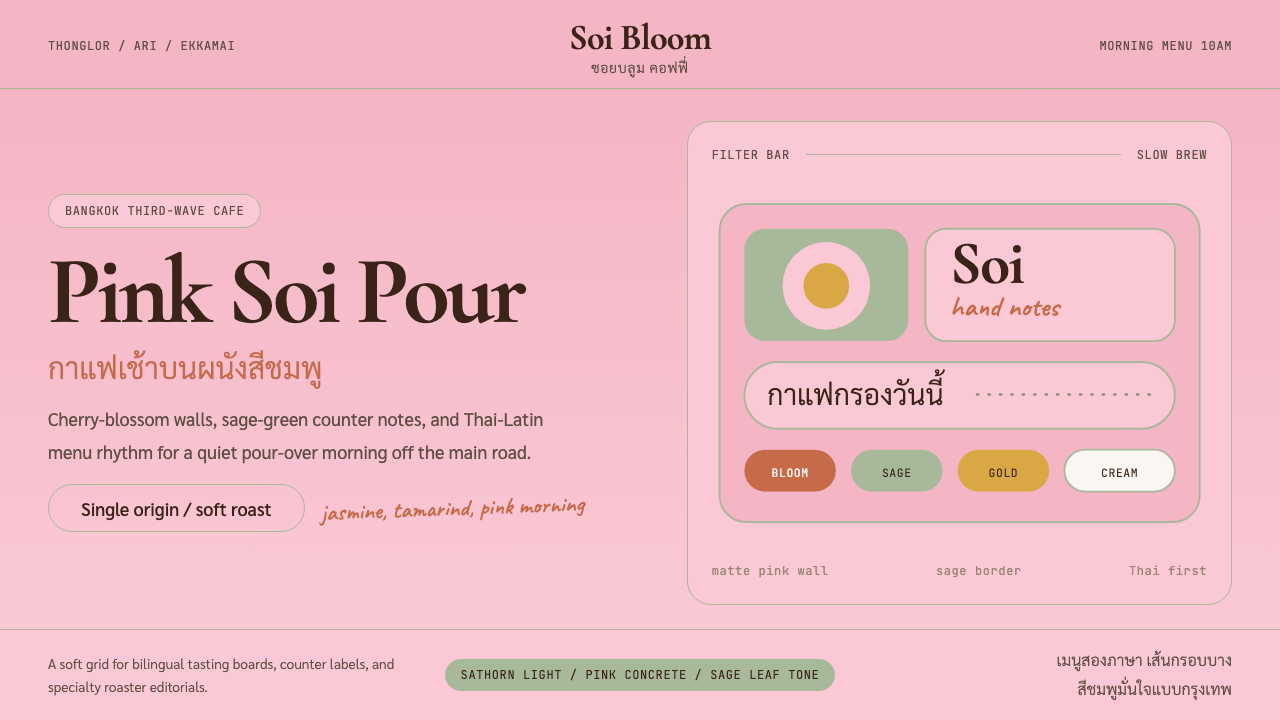 Bangkok Third-Wave CafeBangkok feels soft but sure. Cherry pink, sage borders, and Thai-Latin menu r…
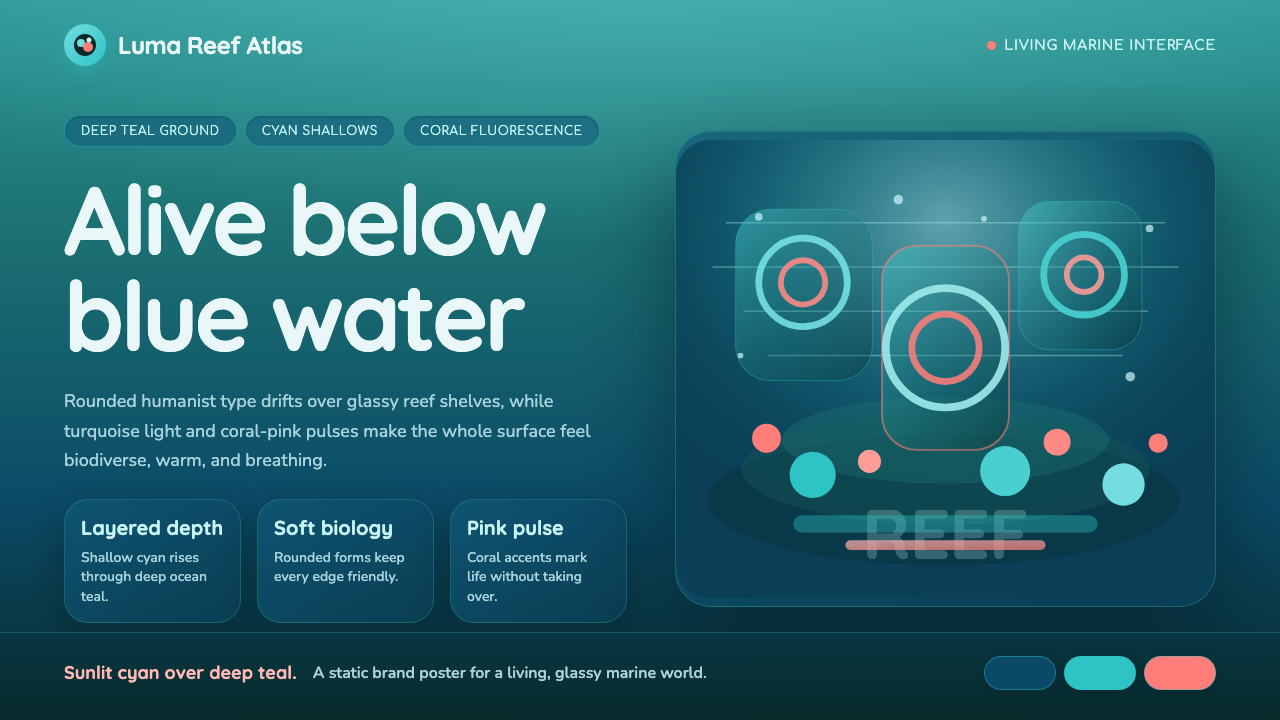 Great Barrier ReefAlive under deep teal. Quicksand curves, cyan glow, and coral-pink pulses bui…
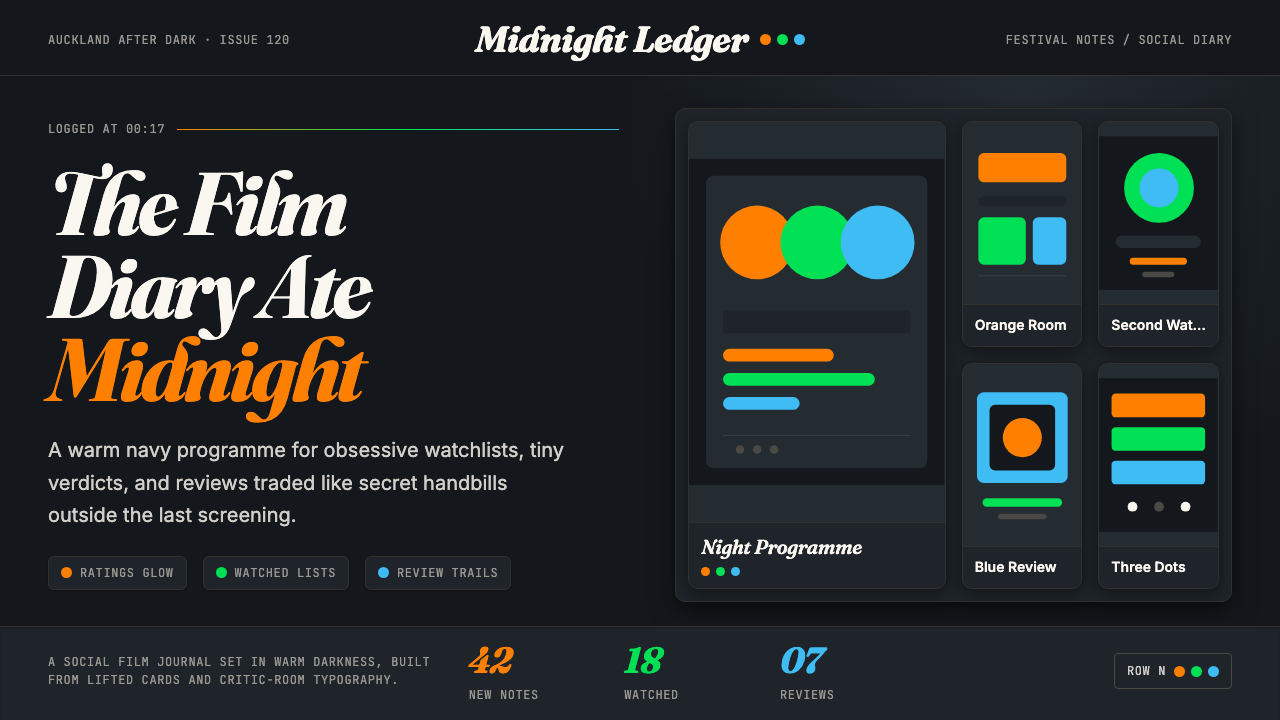 Letterboxd Cinephile Orange-GreenMidnight cinephilia glows. Fraunces italics and orange-green-blue dots cut th…
 Provence LavenderSaturated pastoral dusk. Violet rows, ochre soil, and sun-gold haze build the…
 Substack Orange NewsletterLit page, dark room. Orange serif bylines ignite white cards on charcoal.
 Taobao (淘宝)Every pixel sells. Orange on cream, dense price grids and gold coins shout ab…