What is Letterboxd Cinephile Orange-Green?
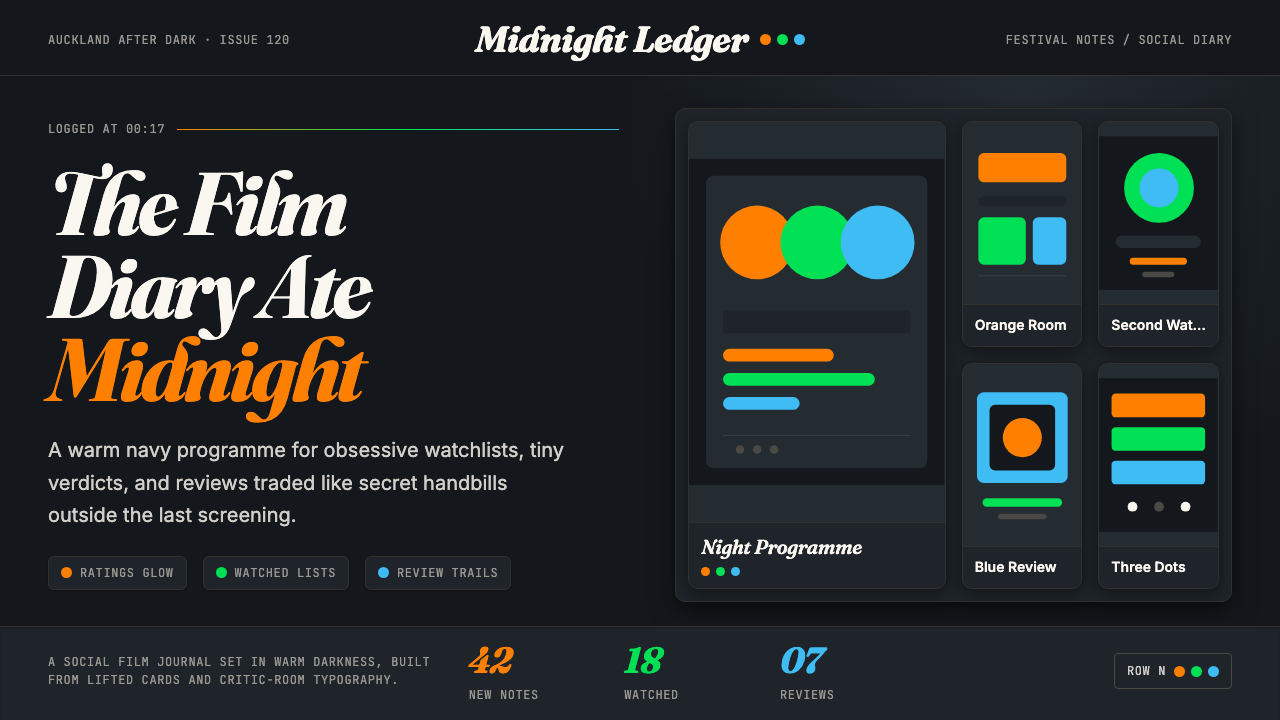
Letterboxd turned the humble film diary into a design statement — deep cinema-navy backgrounds, expressive italic serifs, and three glowing dots that rate every film on earth.
Letterboxd Cinephile Orange-Green in brief
Letterboxd Cinephile Orange-Green is the visual language of the world's most design-conscious film community. It marries the warmth of old cinema — the amber glow of a projection booth, the tactile weight of a festival programme — with the clarity of a modern social feed. The result is a dark, immersive aesthetic that feels like browsing a beautifully typeset film festival catalogue at midnight.
The style is immediately recognizable through a handful of signature moves: deep navy grounds that recall a darkened auditorium, expressive italic serif headlines that carry personality and cinephile warmth, and those three colored rating dots — orange, green, and blue — that have become one of the most iconic micro-interaction systems on the modern web. Typography does the heavy lifting, with headline type that leans and gestures while body text stays composed and readable.
What distinguishes this style from generic dark-mode design is its emotional register. It is not cold or austere — it is intimate and curatorial, the visual equivalent of a trusted friend recommending a film. The palette glows rather than merely sits on screen. The type feels chosen, not defaulted. Every design decision reflects a community built by people who care about cinema as much as they care about craft.
Where does Letterboxd Cinephile Orange-Green come from?
Letterboxd was founded in 2011 by Matthew Buchanan and Karl von Randow in Auckland, New Zealand. It began as a niche tool for serious cinephiles — a place to log films, write reviews, and maintain watchlists. The founding vision was modest in ambition but precise in taste: create the film equivalent of Goodreads, but designed by people who genuinely love typography and interface craft.
The platform's visual identity evolved alongside its growth. In the early years, the design was functional but restrained. As the community deepened — attracting critics, programmers, festival-goers, and obsessive completionists alongside casual viewers — the design language grew more expressive and self-assured. The shift to a darker, more cinematic palette reflected both the community's identity and a broader cultural moment in which dark-mode interfaces moved from accessibility option to aesthetic statement.
Gemma Gracewood, who joined as editor in chief and later became a key cultural voice for the platform, helped articulate the editorial sensibility that the design reflects: serious but never snobbish, encyclopedic but warmly personal. The orange rating dots — which mark a film as seen — became shorthand for the entire community's ethos. By the time the platform reached twelve million users, those three colored circles had achieved something rare: they were instantly understood by anyone who cared about film.
The current visual identity, refined through roughly 2023 to 2025, represents the mature expression of a design system that grew organically from community values rather than being imposed from a brand strategy document. The italic serif headline style, the navy ground, and the glowing dot accents feel inevitable rather than designed — which is the hallmark of any identity that has found its true register.
What defines the Letterboxd Cinephile Orange-Green look?
Color Palette
The foundation is a deep cinema-navy — not black, but the blue-inflected darkness of a theater before the lights go down. Against this ground, the signature orange-green-blue dot trio provides warm, saturated accent energy without overwhelming the negative space. Secondary interface tones are cool and muted, creating a hierarchy where the rating dots and key calls to action glow with purpose. The overall effect is cinematic warmth within a controlled, night-sky depth.
Expressive Italic Serif
Headline typography leans into italic serif letterforms — specifically the kind of high-contrast, lively serif associated with literary and editorial design traditions. The italic angle gives headlines a sense of forward motion and enthusiasm that upright type cannot convey. Fraunces, the typeface most associated with this style, has an unusual warmth for a display serif: it curves where others cut, and its optical sizes behave differently at different scales, giving the system a natural hierarchy without mechanical repetition.
The Three-Dot Rating System
The orange, green, and blue dots — indicating whether a film has been seen, liked, or wishlisted — are the most distinctive micro-design element in the system. They are small enough to be unobtrusive in a grid of film posters but distinctive enough to be recognized at a glance. Their round form against dark grounds creates a quality of illumination, as if each dot is its own small light source. This treatment elevates what could have been a functional checkbox into a visual signature of the entire community.
Film Poster Grid
The gallery grid of film posters is the primary visual rhythm of the interface. Posters arrive in all aspect ratios, colors, and eras — from silent-film one-sheets to contemporary digital art — and the design system must hold them together without homogenizing them. It does this through restraint: the navy ground, consistent card sizing, and the rating dot overlay are the only unifying elements. Each poster remains itself; the system is the frame, not the content.
Intimate Editorial Voice
The design supports a distinctive editorial register — neither the cold objectivity of a database nor the breathless enthusiasm of consumer entertainment, but something closer to the voice of a trusted film critic writing for a specialist audience. Long-form reviews sit comfortably in wide measures with generous line spacing; short diary entries feel immediate and personal. The typography signals that words matter here — that this is a place for considered opinions, not algorithmic recommendations.
Controlled Glow and Luminosity
Rather than relying on hard contrast alone, the Letterboxd visual language uses a subtle sense of luminosity — elements appear to glow softly against the dark ground, as if backlit. This is achieved through careful color saturation management: the accent colors are vivid enough to feel alive, but not so aggressive that they disrupt the overall sense of calm immersion. The effect echoes the warm halo of light around a cinema screen in a dark room.
Community and Social Texture
The design reflects the fact that Letterboxd is fundamentally social. User avatars, follower counts, and activity feeds are woven into the interface alongside the film data. The visual language accommodates both the solitary experience of logging a late-night film and the communal experience of seeing what friends are watching. This dual register — intimate yet networked — shapes decisions about spacing, card density, and the treatment of user-generated content alongside editorial material.
Who shaped Letterboxd Cinephile Orange-Green?
Buchanan co-founded Letterboxd in Auckland in 2011 and shaped its early product and design sensibility. His background in web design and interface craft established the principle that a film diary should be as pleasurable to look at as the films it catalogues. The emphasis on typographic quality and considered visual detail that defines the platform traces back to his founding influence.
Von Randow co-founded Letterboxd alongside Buchanan and has been instrumental in the platform's technical and product direction. The decision to build Letterboxd as a dedicated platform rather than a feature inside an existing service — a bold choice in an era of social media consolidation — preserved the design integrity that makes the platform distinctive. Von Randow's commitment to the platform as a standalone product created the conditions for a coherent visual identity to develop.
Gracewood joined Letterboxd as editor in chief and became a key voice in defining the platform's editorial and cultural identity. Her curatorial sensibility — serious about cinema without being exclusionary, encyclopedic without being dry — helped articulate the register that the design reflects. The warmth and intellectual confidence of the platform's editorial voice is inseparable from the warmth and confidence of its visual language.
Fraunces — designed by Phaedra Charles and Flavia Zimbardi and released by Undercase Type — is a variable optical size serif with an unusual warmth and expressiveness for a display face. Its italic forms, with their lively contrast and slightly unconventional letter construction, are central to the Letterboxd headline aesthetic. The typeface's ability to feel simultaneously literary and contemporary, and its behavior across a wide range of optical sizes, made it a natural fit for a platform that bridges cinephile culture with modern social design.
Unusually for a design system analysis, the community itself deserves mention as a shaping force. Letterboxd's visual language emerged in dialogue with twelve million users whose taste, literacy, and enthusiasm for film culture set the expectations that the design had to meet. The rich, immersive aesthetic is partly a response to a user base sophisticated enough to notice and appreciate design quality — and vocal enough to signal when something feels off.
How do you use Letterboxd Cinephile Orange-Green today?
Letterboxd Cinephile Orange-Green is a rich starting point for any project where the user base is engaged, taste-driven, and deserves more than a generic dark interface. Its principles translate well beyond film: any platform built around a collection, a community of enthusiasts, or the act of curation can draw on this visual language without pastiche.
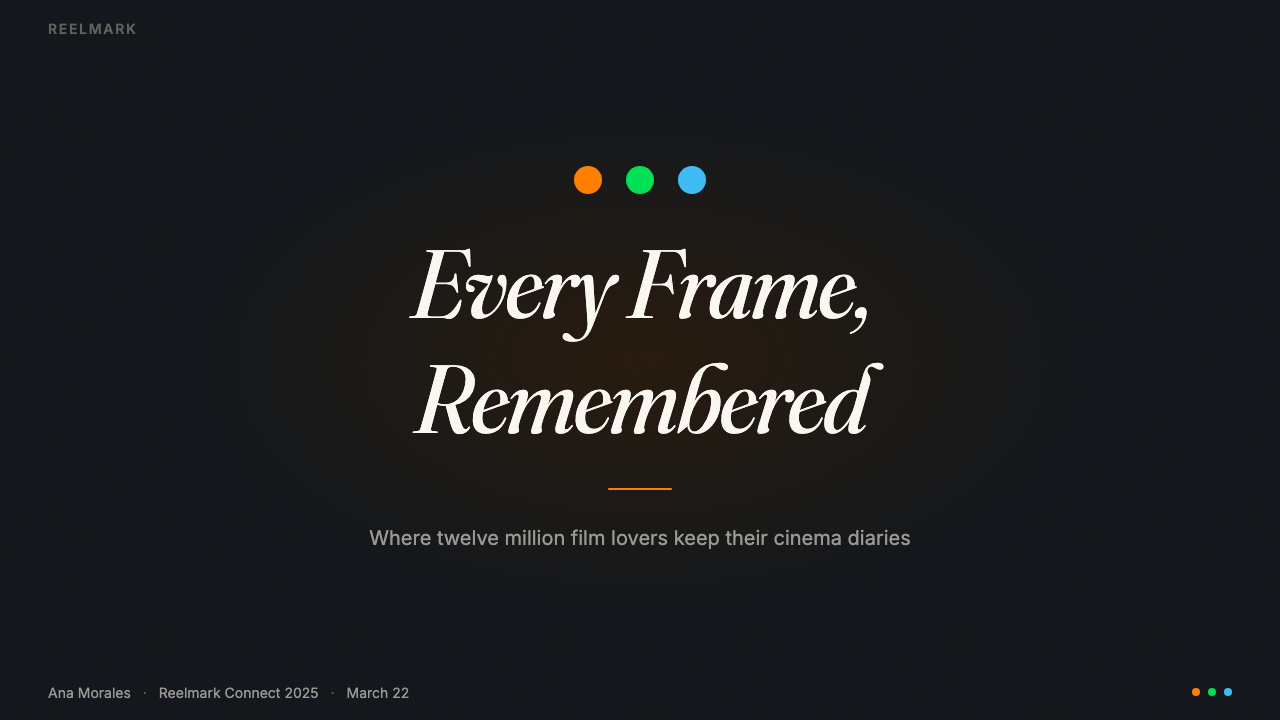
For presentation slides, the style works particularly well on covers and section dividers. A cover built in this register uses a deep navy ground, a large italic serif headline set at generous scale, and one or two of the signature accent colors used sparingly — for a film title, a year, a key statistic. Content slides should maintain the dark ground and lean on typographic contrast rather than decorative elements. Data slides take on an almost cinematic quality when charts and graphs are rendered with the accent color palette against the dark ground, giving numerical information an unusual visual weight and presence.
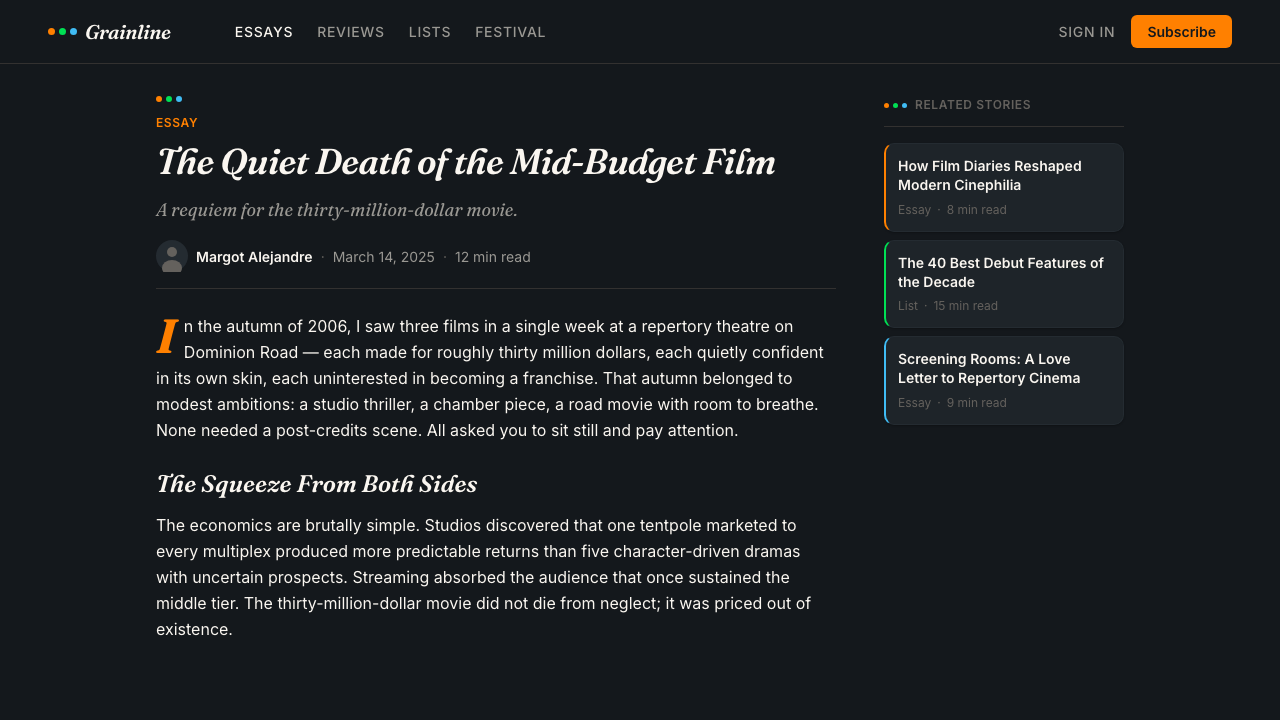
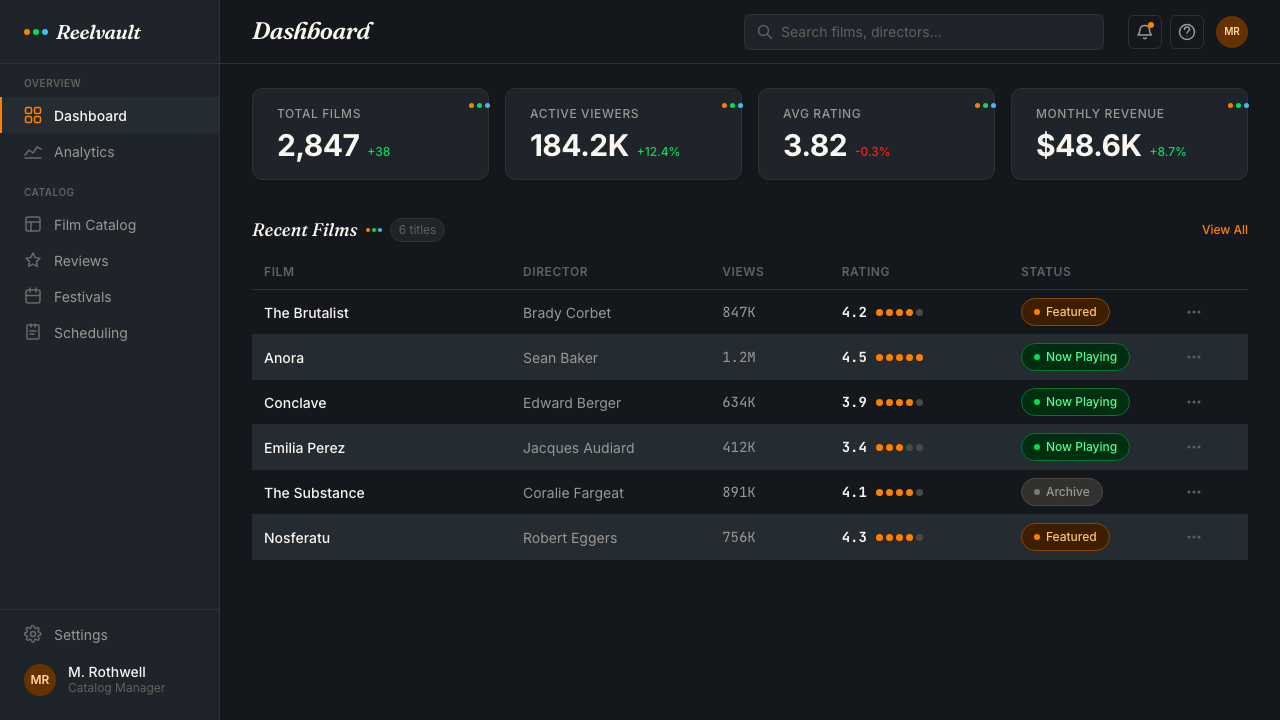
For web interfaces, this style suits editorial platforms, cultural recommendation tools, community dashboards, and any product where the user's personal collection or history is central. The approach: commit to the dark ground as a baseline rather than as an option, use the italic serif for display headings and key labels only, reserve the colored accent dots or highlights for interactive state and key action indicators. Card components work well with subtle inner glow or light border treatments rather than heavy drop shadows. Navigation should be restrained — wordmarks and clean labels, with the color accent appearing only on the active state.
For editorial and marketing contexts, the style's poster-like sensibility makes it effective for campaign visuals, event announcements, and seasonal features. A Letterboxd-influenced editorial layout pairs wide italic serif headlines with short, sharp body text in high contrast. The navy ground works as both a background and a framing device — white or cream text on deep navy evokes a film title card, giving even a promotional message a sense of occasion and care. Marketing pages can use the three-color accent system as a content taxonomy device, color-coding categories or themes without resorting to arbitrary brand colors.
A common mistake when applying this style is over-saturating the accent palette — using orange, green, and blue simultaneously at full intensity across a single layout. In the source material, each color occupies its own space and purpose; they rarely compete directly. A second common mistake is reaching for italic serif type everywhere: the expressiveness of italic display type depends on contrast with more neutral body settings. When everything is italic and expressive, nothing is. Use the italic serif for the moments that need personality — headlines, pull quotes, film titles — and let the rest of the layout breathe in a quieter voice.
Letterboxd Cinephile Orange-Green — FAQ
Is this style only appropriate for film or entertainment products?
Not at all. The Letterboxd visual language works for any platform built around curation, community, and personal collections — music libraries, book communities, travel logs, restaurant diaries. The core transfer is the combination of a dark, immersive ground with expressive typography and a small, purposeful accent color system. The style signals taste, care, and engagement, which are values relevant far beyond cinema.
How does this style differ from generic dark-mode design?
Generic dark mode typically inverts a light interface — dark backgrounds with light text, using the same structural logic as the light version. Letterboxd's approach is built for darkness from the outset: the deep navy is not simply a dark grey, and the accent colors are chosen specifically for their behavior against a rich dark ground rather than a neutral one. The expressive italic serif and the luminous quality of the accent dots are choices that would not make sense in a light interface — they are native to the dark register rather than adapted to it.
Can this style work for a light-background product?
It can, but with significant adaptation. The three accent colors were calibrated for deep navy — on a cream or white ground, orange and green need to be more carefully managed to avoid a garish quality. The italic serif works beautifully on light grounds and should remain. The most successful light-mode interpretation of this style leads with the typographic expressiveness and the three-dot color language, while treating the navy as an accent block rather than a ground — using it for hero sections, callout panels, or key feature blocks rather than as the dominant surface.
What makes the italic serif so central to this style, and can it be swapped for a different typeface?
The italic serif provides the emotional register that separates Letterboxd from utilitarian dark interfaces. It signals that this is a place for opinion, for personal voice, for considered recommendations — not just data storage. A different typeface can work, but it needs to carry the same qualities: high contrast between thick and thin strokes, a lively and somewhat idiosyncratic italic, and optical behavior that changes meaningfully between display and text sizes. A transitional or old-style serif in italic will generally read as more formal; a humanist sans-serif will read as more neutral. The choice of a high-personality display serif is a deliberate editorial decision, not merely a typographic preference.
How should the three accent colors be used to avoid visual chaos?
The key principle is functional separation: each accent color should own a specific semantic role rather than being used decoratively or interchangeably. In the source design, orange marks the 'seen' state, green marks 'liked', blue marks 'watchlisted' — each appears in the context of its function, not scattered across the interface for visual richness. When adapting this to other contexts, assign each color a clear and consistent role — for instance, one color for primary actions, one for secondary status indicators, one for informational callouts — and never use all three in proximity without clear functional justification.
Related design styles
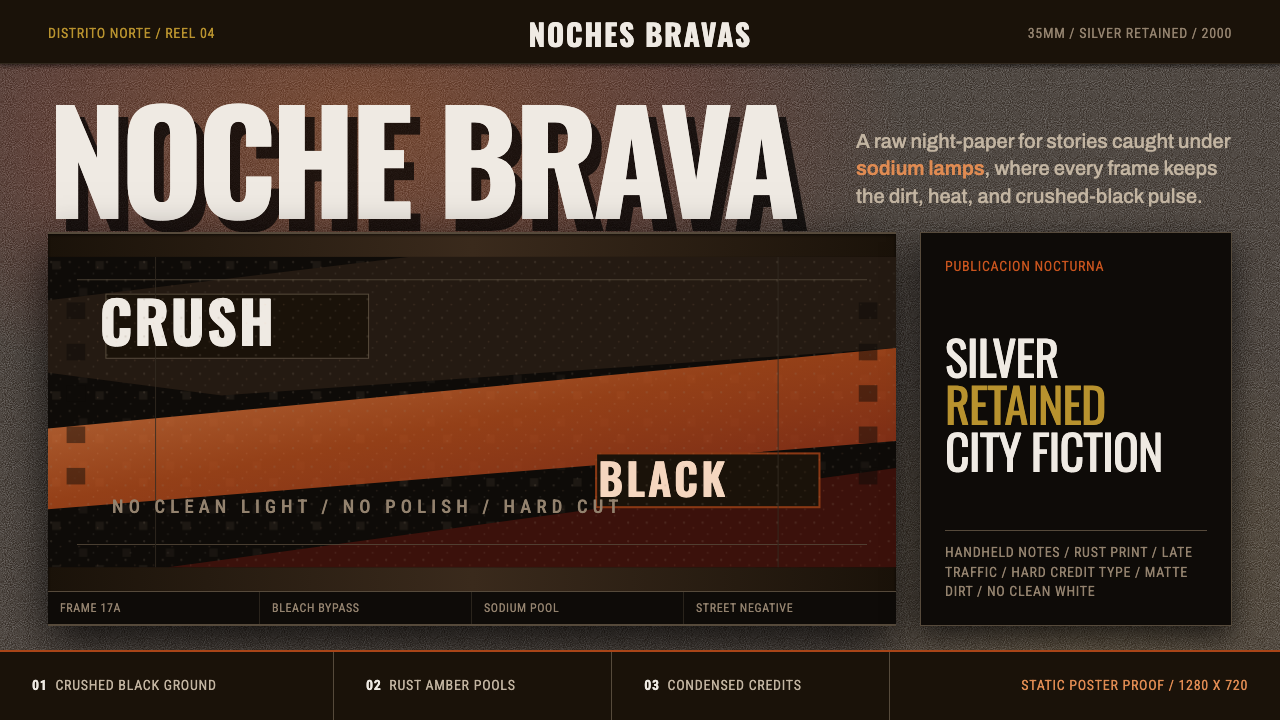 Amores Perros New WaveRaw street cinema. Crushed black, sodium amber, Oswald credits, heavy 35mm gr…
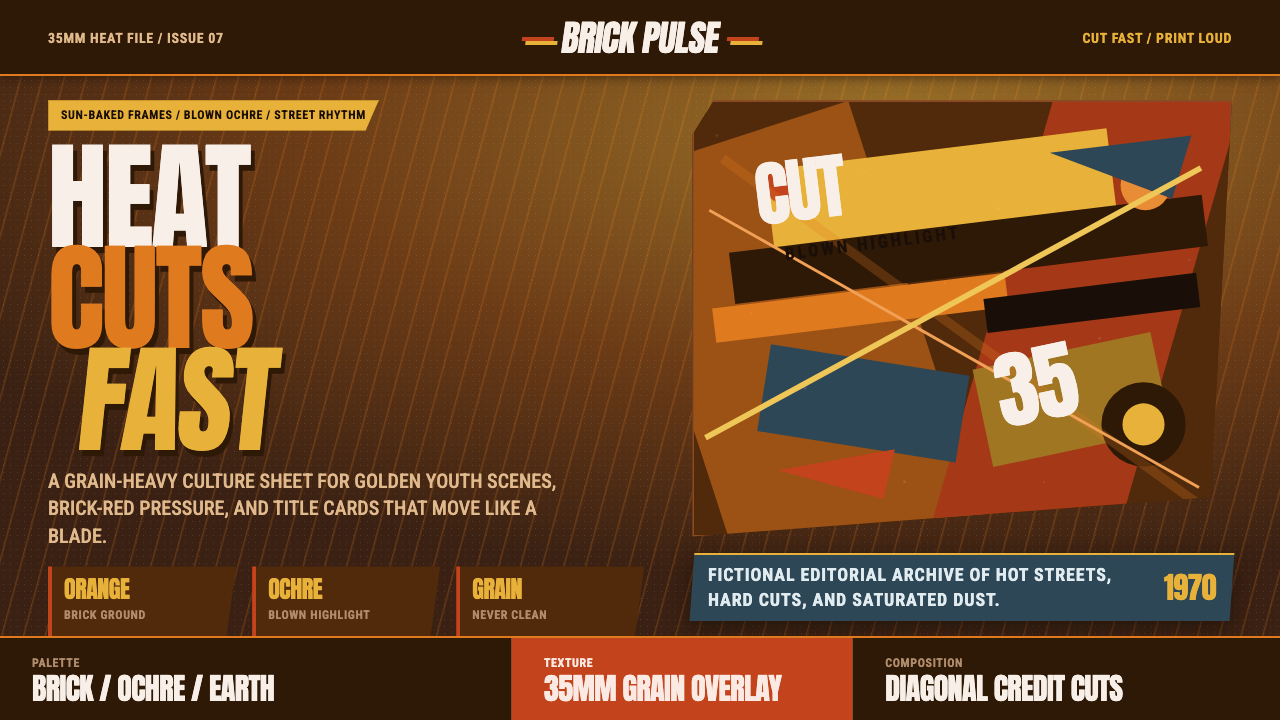 City of God FavelaHeat refuses polish. Orange brick, ochre glare, diagonal cuts, and grain do t…
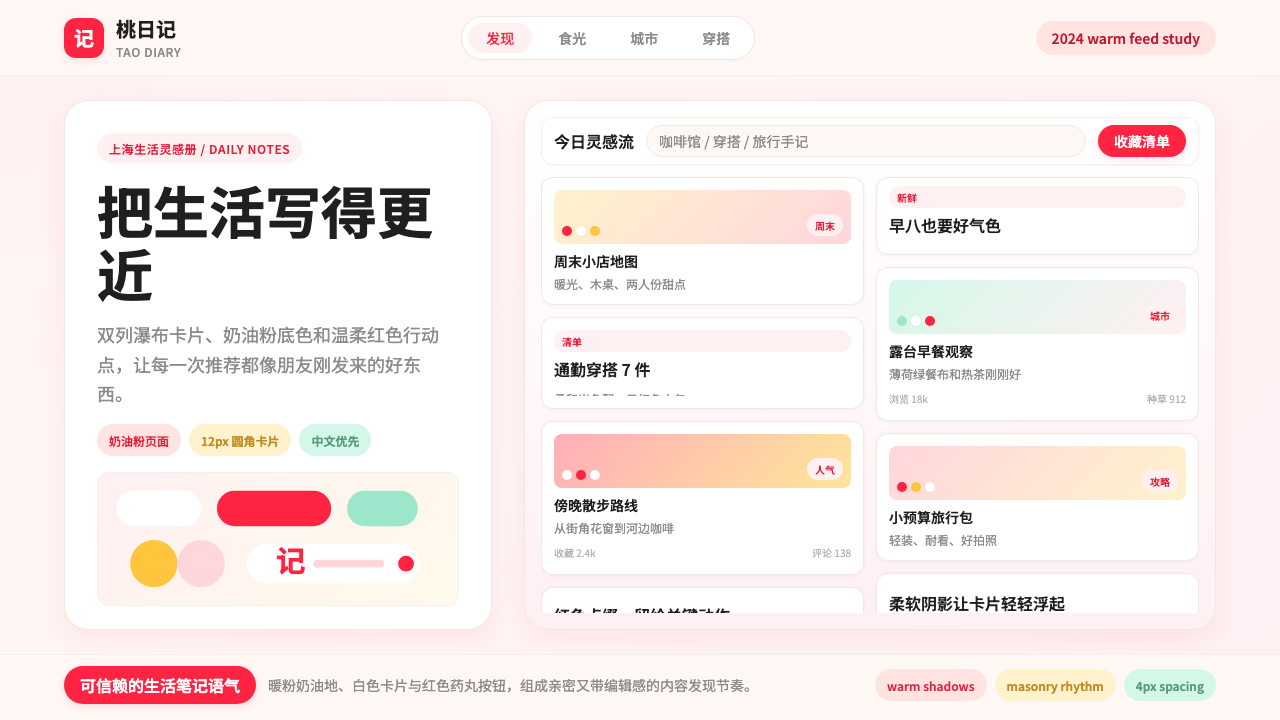 Xiaohongshu (RedNote) 2024Warm notes feel trusted. Cream-pink masonry cards glow with signature red acc…
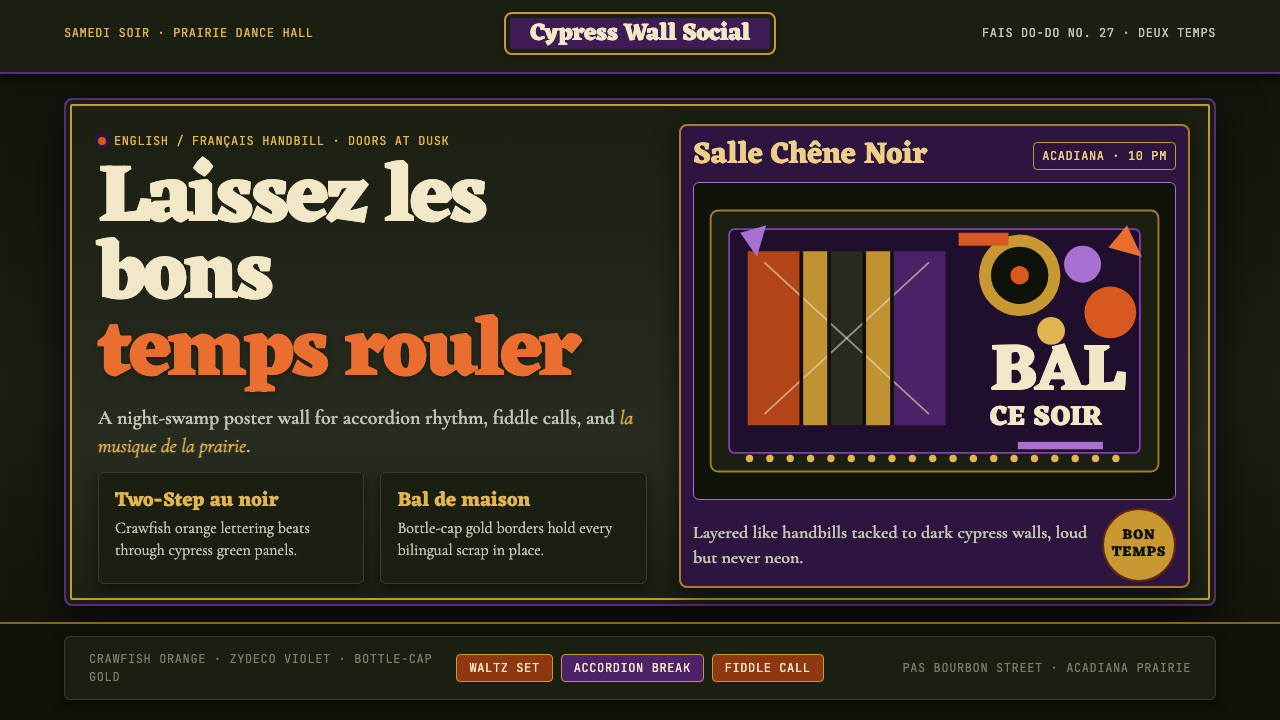 Cajun Louisiana Bayou Fais Do-DoSaturday darkness dances. Crawfish orange and Mardi Gras violet stack on bayo…
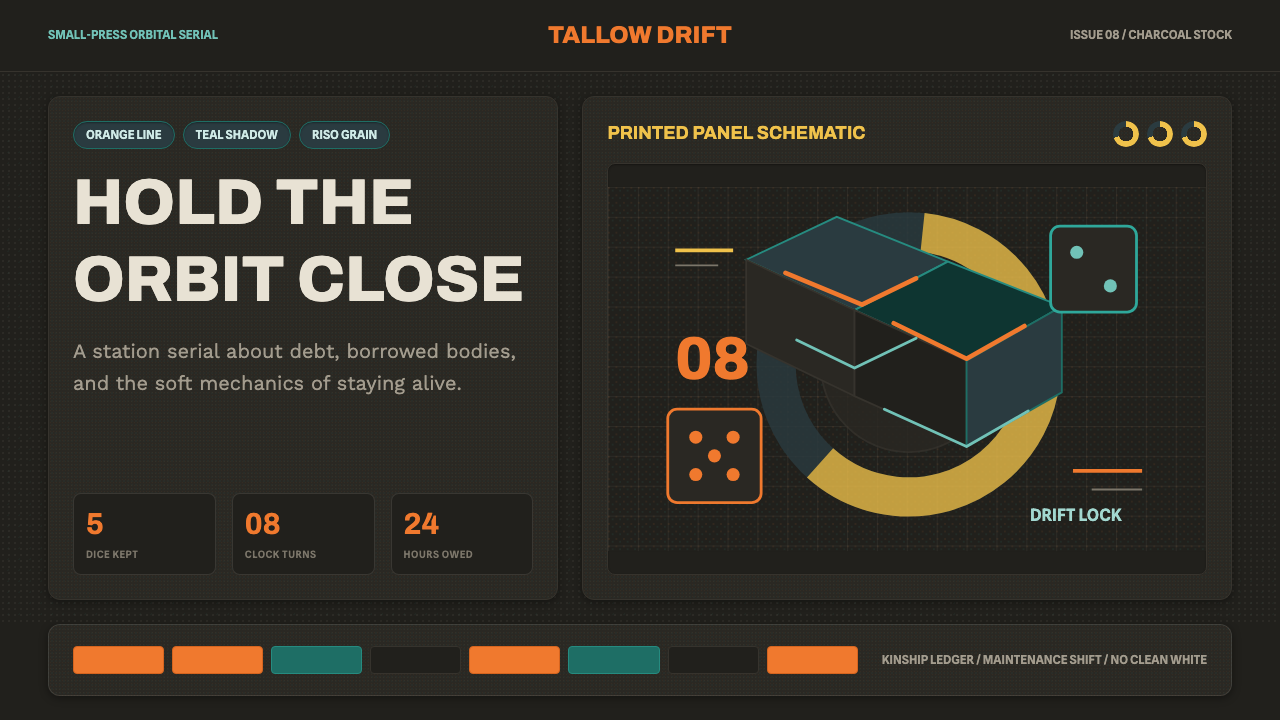 Citizen SleeperWarm sci-fi, handmade. Orange-on-teal panels glow with riso grain and dice-cl…
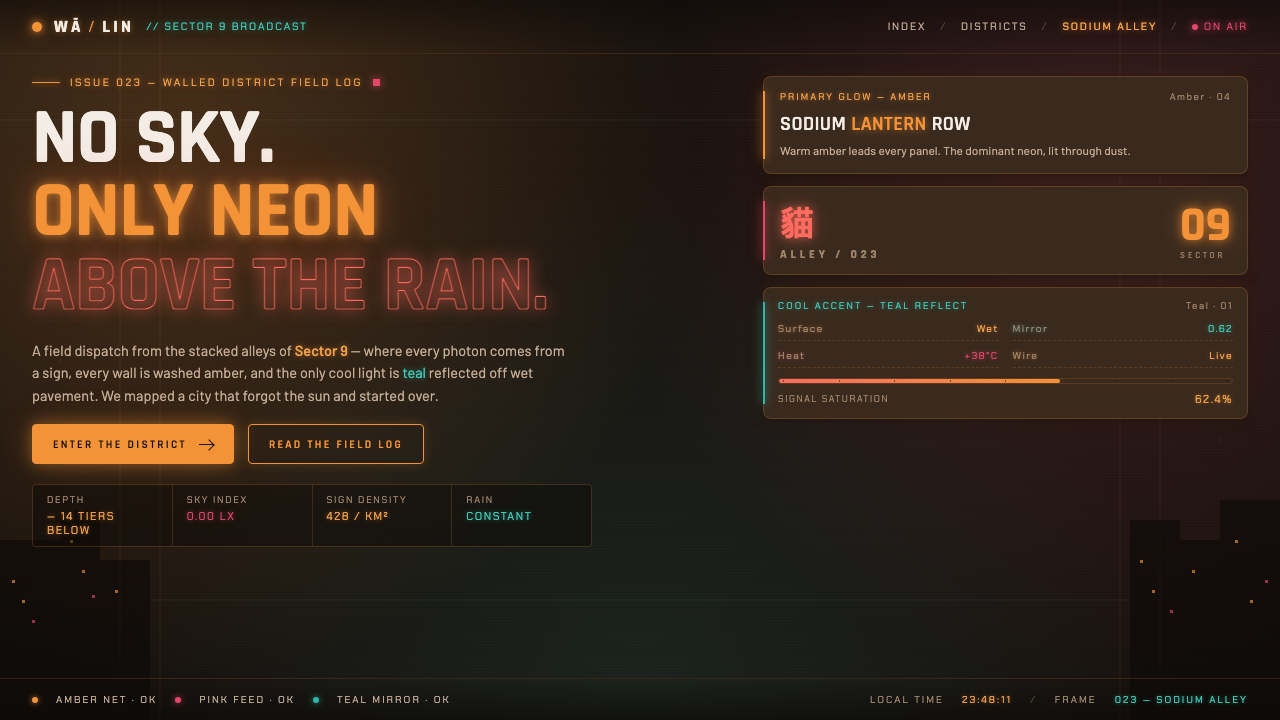 Stray Cyber CityNo sky, only neon. Warm amber and pink signs glowing over wet alleys, with on…