What is Wicked Elphaba Emerald?
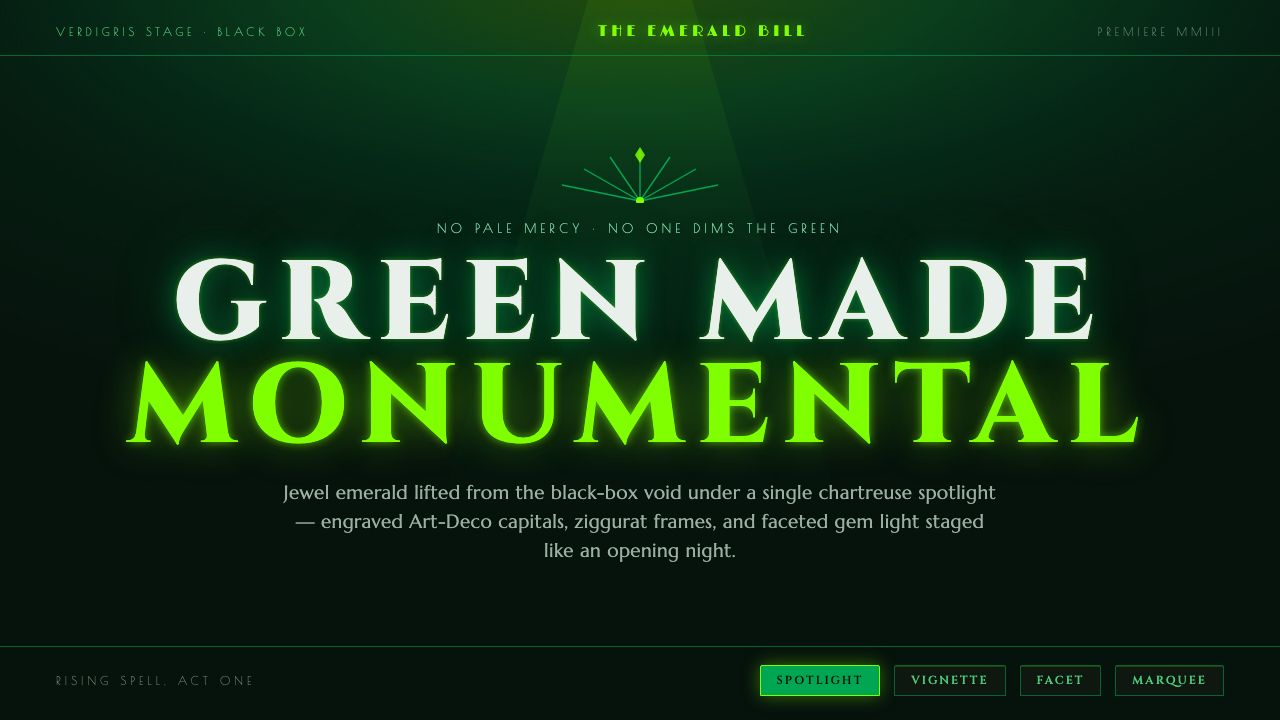
Wicked Elphaba Emerald makes green monumental: a jewel-bright presence held in a black theatrical void, where every glow feels summoned rather than merely applied.
Wicked Elphaba Emerald in brief
Wicked Elphaba Emerald is a dark theatrical design language distilled from the 2003 Broadway phenomenon Wicked. Its central image is vivid stage green, moving from deep emerald toward sharp lime brightness, isolated by a black-box surround and made to feel almost physical under concentrated light. The system does not treat green as a pleasant accent or a natural cue. It treats it as the protagonist: luminous, strange, powerful, and large enough to organize the entire composition.
The visual atmosphere combines several supplied lineages: Broadway musical theatre, Art-Deco and Ozian design, and theatrical gel lighting. Engraved Art-Deco display lettering gives titles a ceremonial, architectural character. Warm light blooms soften the transition between darkness and color, while faceted emerald-jewel forms introduce sharp planes and refracted brilliance. Together, these elements create an image of spectacle held under control: theatrical enough to feel spellbinding, but structured enough to remain legible.
This is not a general green luxury style, nor a generic dark fantasy treatment. Its drama depends on contrast between absence and appearance. Black functions as the stage, curtain, and surrounding silence; green appears as an event within it. The most convincing work feels as though a hidden production has opened briefly in darkness, revealing engraved titles, lit jewels, and a charged Ozian glow before the scene closes again.
Where does Wicked Elphaba Emerald come from?
The supplied lineage begins with Baum’s Oz source in 1900, the earliest point named in this theme’s provenance. Wicked Elphaba Emerald does not attempt to reproduce that source as a period illustration system. Instead, it uses the Ozian association as an atmosphere of theatrical otherness: a world in which color can carry narrative force, darkness can become a stage, and a luminous green presence can feel larger than ordinary life.
Its immediate theatrical reference is the Broadway premiere of Wicked in 2003 at the Gershwin Theatre in New York. The theme translates the idea of a Broadway event into interface and editorial terms. A spotlight becomes compositional focus; a black-box stage becomes the page field; the sensation of a reveal becomes a hierarchy system. The result is designed to preserve the feeling of performance even when there is no literal curtain, set, or actor in view.
Art-Deco provides the second major historical layer. The supplied lineage places it between roughly 1925 and 1939, and its role here is visible most strongly in display typography and ornamental structure. Rather than using Art-Deco as a dense pattern library, Wicked Elphaba Emerald selects its most theatrical qualities: carved-looking capitals, vertical confidence, beveled suggestion, symmetry under tension, and a sense that lettering has been cut into a proscenium or polished theatrical object.
The final lineage is theatrical gel lighting. This is what turns the palette from a static jewel treatment into a stage treatment. Emerald and lime do not simply occupy a dark background; they seem to shimmer, bloom, and emerge from it. Warm glow acts as the transitional medium, making the illuminated green feel intentional and theatrical rather than digital and decorative. The theme’s strongest historical idea is therefore not a single period reference, but a meeting point between Ozian spectacle, Broadway darkness, Art-Deco inscription, and colored stage light.
What defines the Wicked Elphaba Emerald look?
Monumental Green
Green is the organizing force, not a supporting accent. It should appear jewel-bright and theatrically alive, ranging in perception from deep emerald to a more electric lime lift. The contrast with the dark field makes even a restrained amount of green feel consequential. Use it to establish the visual subject, direct attention, and create the sensation of charged presence.
Black-Box Void
The dark surround is not merely a dark background. It behaves like a theatrical black box: an enclosing field that removes ordinary environmental context and allows illuminated elements to arrive with force. Generous darkness is essential. If every region is filled, the style loses its stage depth and the green no longer feels spotlit.
Engraved Art-Deco Type
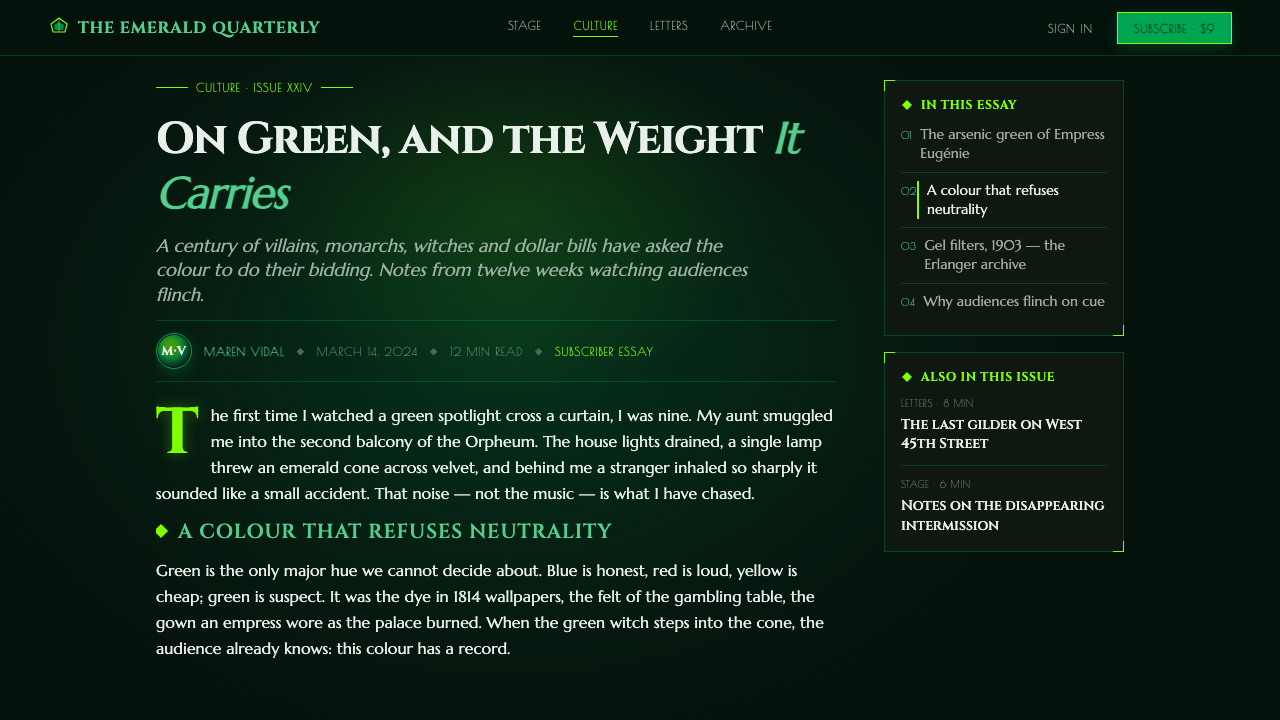
Display type should feel inscribed, faceted, and ceremonial. Art-Deco capitals are especially effective when treated as objects with edge, shadow, or internal illumination rather than as neutral labels. Their role is to announce, invoke, and frame. Supporting copy should remain quieter so the title can carry the theatrical authority.
Gel-Light Glow
Light is warm at its edge and vivid at its green center, recalling colored theatrical illumination rather than ambient screen polish. Glows should read as projected light meeting darkness: concentrated near the source, then gently dispersing into the void. The effect should feel optical and dramatic, never like a soft decorative haze spread evenly behind every object.
Faceted Emerald Forms
Emerald-jewel motifs introduce precision and refraction. Their facets can suggest cut stone, polished theatrical ornament, or a sharply lit magical object. These forms work best as rare focal devices: a medallion, frame, seal, marker, or isolated image treatment. Repetition weakens their specialness and turns a dramatic object into ordinary decoration.
Revelation and Restraint
The style depends on selective revelation. A title, jewel, emblem, or green-lit surface should appear to emerge from darkness because the surrounding composition has withheld competing information. Maintain a clear hierarchy of reveal, support, and silence. When every label glows, every panel is faceted, and every surface competes for attention, the theatrical spell dissolves.

Who shaped Wicked Elphaba Emerald?
Stephen Schwartz appears in the supplied material as one of the key figures connected to the 2003 Broadway source of Wicked. Within this design lineage, that association anchors the theme to musical-theatre scale: a visual system intended to feel performed, announced, and emotionally charged rather than merely styled.
Winnie Holzman is named among the key figures in the supplied Broadway context. Her presence in the source material reinforces that Wicked Elphaba Emerald belongs to a theatrical work with narrative force behind it. The design should therefore preserve a sense of implication and dramatic arrival, rather than reducing its references to green ornament alone.
Idina Menzel is included as a key figure in the supplied Wicked reference. In stylistic terms, this connection supports the theme’s emphasis on presence: the central green element should command attention as a theatrical focal point, with darkness and typography arranged around its arrival.
Eugene Lee is named in the supplied group of key figures. For this visual language, the relevant lesson is scenic framing: the black-box void, engraved display elements, faceted forms, and colored illumination should read as parts of a composed stage picture rather than unrelated interface effects.
How do you use Wicked Elphaba Emerald today?
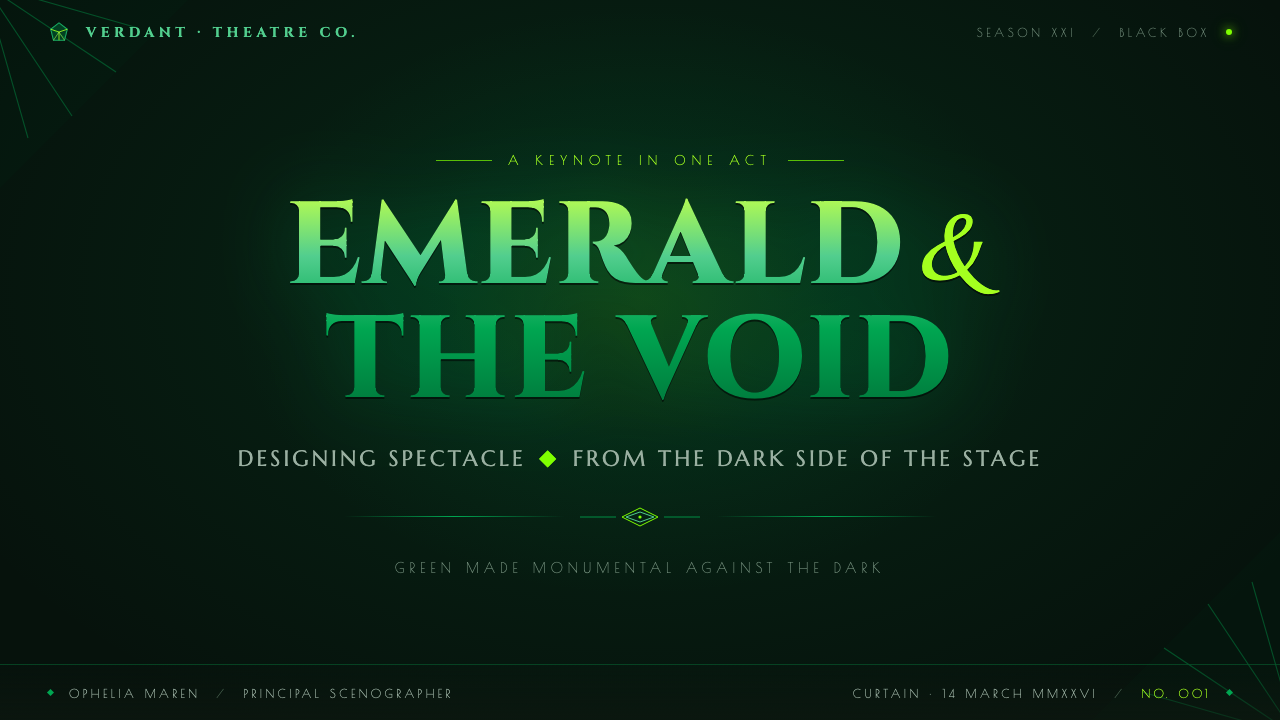
For presentation covers, make the first impression feel like a theatrical reveal. Let a dark field carry most of the page, then place an engraved Art-Deco title where it can command the composition. A concentrated emerald presence may appear as a lit jewel, a luminous plane, or an isolated title treatment. Keep secondary information subdued and allow the empty surround to make the cover feel deliberate, ceremonial, and ready to open.
For content and data slides, translate stage logic into hierarchy rather than decoration. Use the strongest green illumination for the main argument, key result, or featured number, and keep supporting text quieter against the black field. Charts can adopt the palette’s dramatic contrast when they make a single story visible: a leading series can glow in emerald while contextual material retreats into restrained darkness. Avoid turning every bar, label, and legend into a spotlight, because data needs a focal performance rather than constant visual noise.
For web interfaces, Wicked Elphaba Emerald is especially effective for dashboards, premium overview pages, and pricing experiences that benefit from high drama and clear emphasis. The dark environment can make a featured metric, selected plan, or important action feel elevated when it receives the green treatment. Navigation, controls, and body copy should remain calm enough to support fast scanning. The theatrical language works when it organizes attention; it fails when ordinary controls are styled as if each were the finale.
For editorial and marketing work, use the system to create campaign pages, launch stories, feature announcements, and cultural or entertainment material with a strong sense of occasion. Pair large engraved headings with black negative space, then reveal green imagery or faceted emblems in carefully chosen moments. Promotional copy can feel more potent when it is staged in short, confident blocks rather than crowded into a continuously glowing surface. The visual rhythm should alternate between darkness, inscription, and illuminated payoff.
The common mistake is confusing spectacle with saturation. Filling every background with bright green, adding glow behind all type, and repeating jewel facets across the layout eliminates the very contrast that makes the style persuasive. Another mistake is treating Art-Deco lettering as a generic luxury signal detached from the stage. The authentic direction is more selective: black creates suspense, green marks revelation, warm light makes that revelation believable, and engraved type gives it a theatrical name.
Wicked Elphaba Emerald — FAQ
Is Wicked Elphaba Emerald simply a dark green theme?
No. Dark green alone does not create the style. The system relies on a specific theatrical relationship between black-box darkness, vivid emerald-to-lime stage green, warm gel-light glow, engraved Art-Deco display type, and faceted jewel forms. Green must feel revealed by the darkness around it. Without that staging logic, the result becomes a conventional dark palette rather than a Wicked-derived visual language.
Can this style work without literal Wicked imagery?
Yes. The system is designed around atmosphere and structure rather than literal depiction. A black theatrical field, a monumental green focal element, engraved Art-Deco lettering, and carefully controlled warm illumination can communicate the mood without reproducing a character, scene, or theatrical image. This makes the style useful for original work while retaining its Broadway and Ozian source cues.
How should typography behave in this style?
Display typography should carry the Art-Deco theatrical role: formal, carved-looking, and visually weighty. It should feel like an inscription or a stage title rather than ordinary interface text. Body copy and functional labels need much less drama, because the contrast between ceremonial headline and quiet support is what keeps the composition readable. If every line uses the same engraved treatment, hierarchy collapses.
Why is so much empty darkness necessary?
Because the dark field performs the work of the black-box stage. It removes distraction, creates suspense, and gives green illumination somewhere to arrive from. Empty darkness also makes engraved titles and jewel facets feel more object-like. Reducing every gap with panels, texture, or extra copy weakens the sense of theatrical space and makes the composition feel crowded rather than spellbinding.
Where does the style struggle?
It struggles where sustained calm, dense routine data entry, or a light and informal tone is the primary need. Its visual language is built around focus, reveal, and heightened presence, so it can make ordinary tasks feel overly ceremonial if applied without restraint. It is best reserved for moments that genuinely benefit from drama: a featured story, a premium overview, a major announcement, a central metric, or a campaign with theatrical ambition.
Related design styles
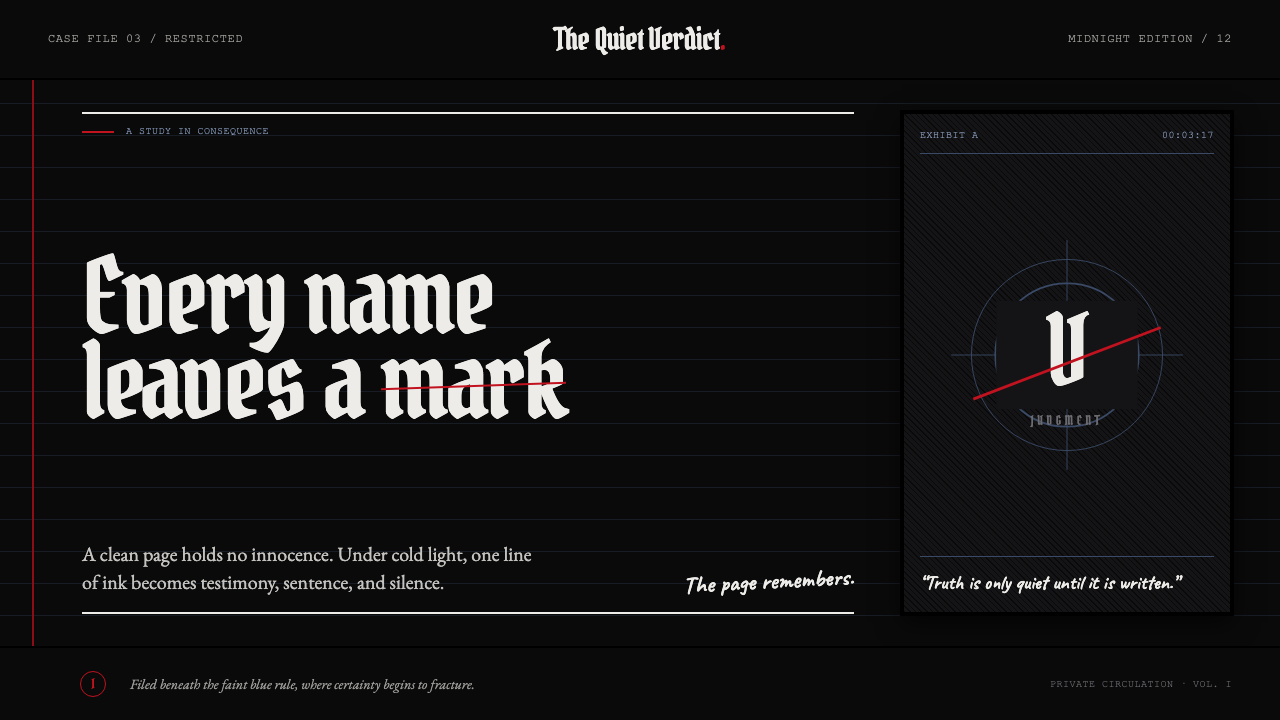 Death Note (2003)Silence becomes judgment. Bone-white blackletter and blue rules break under o…
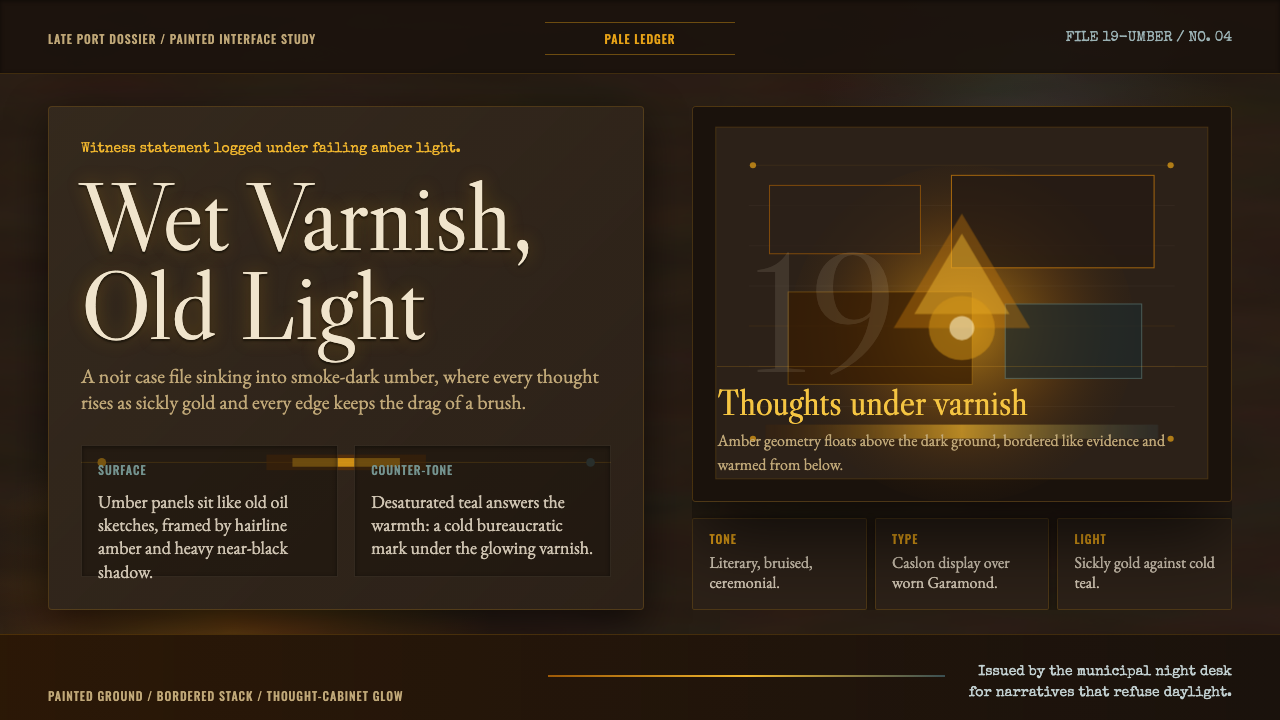 Disco ElysiumNoir rot glows from within. Amber Caslon type cuts through varnish-dark umber.
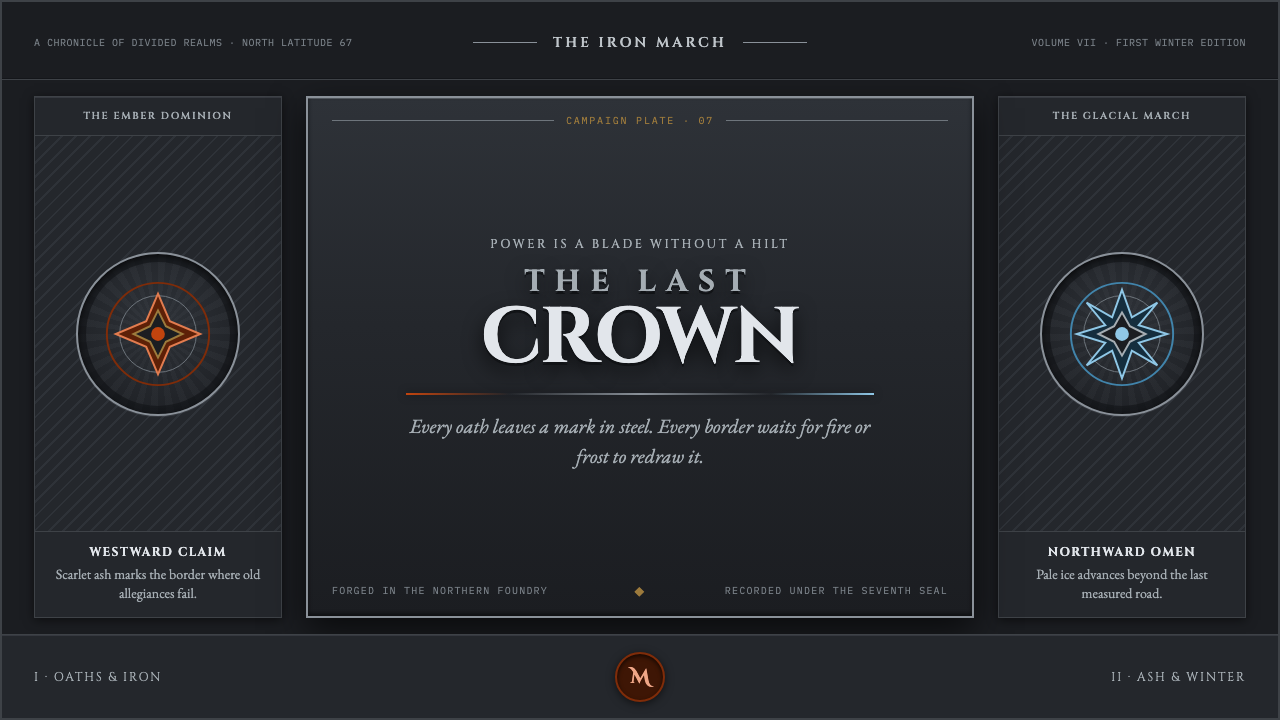 Game of Thrones (2011)Power is forged cold. Chiseled Roman capitals divide ember from glacial ice o…
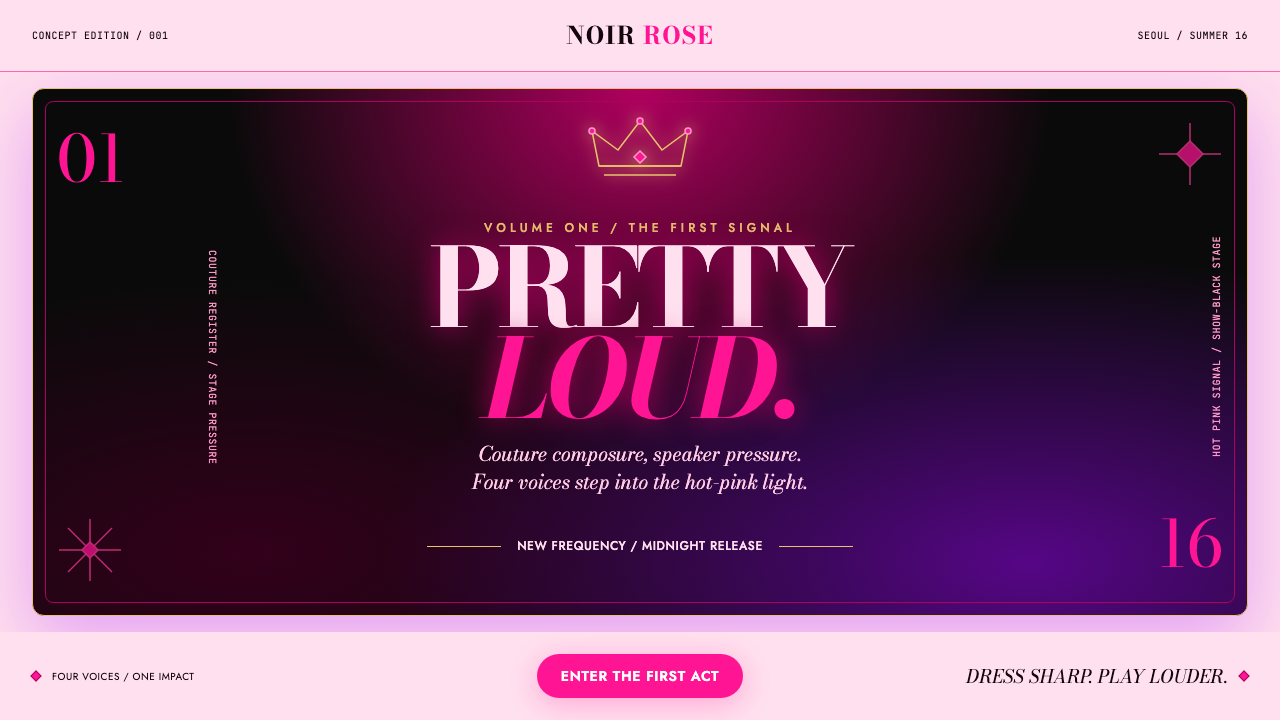 BLACKPINK (2016 Debut Era)Couture hits at full volume. Hot pink, show-black and Bodoni lock onto a spot…
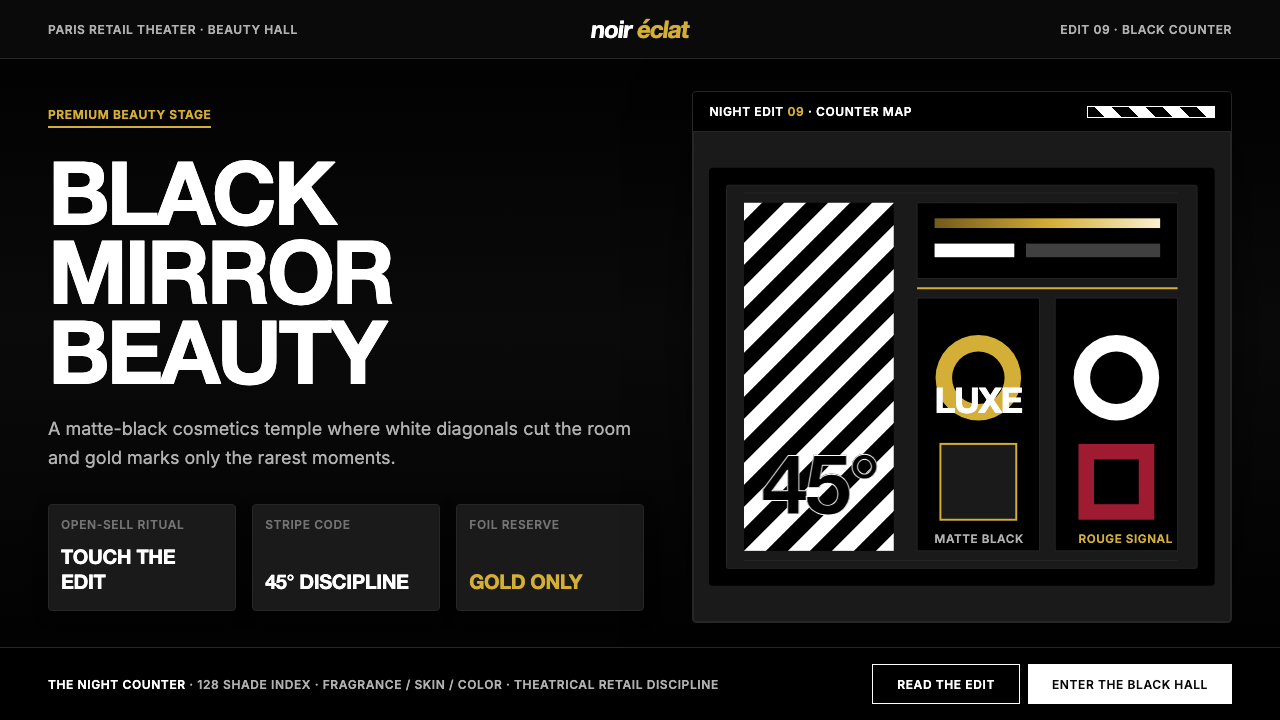 SephoraBlack is the stage. White 45° stripes and restrained gold foil make cosmetics…
 Emirates Airline (Red-Gold)Scarlet confidence, never casual. Ivory stock, gold foil, and serif restraint.