What is Whole Foods Market?
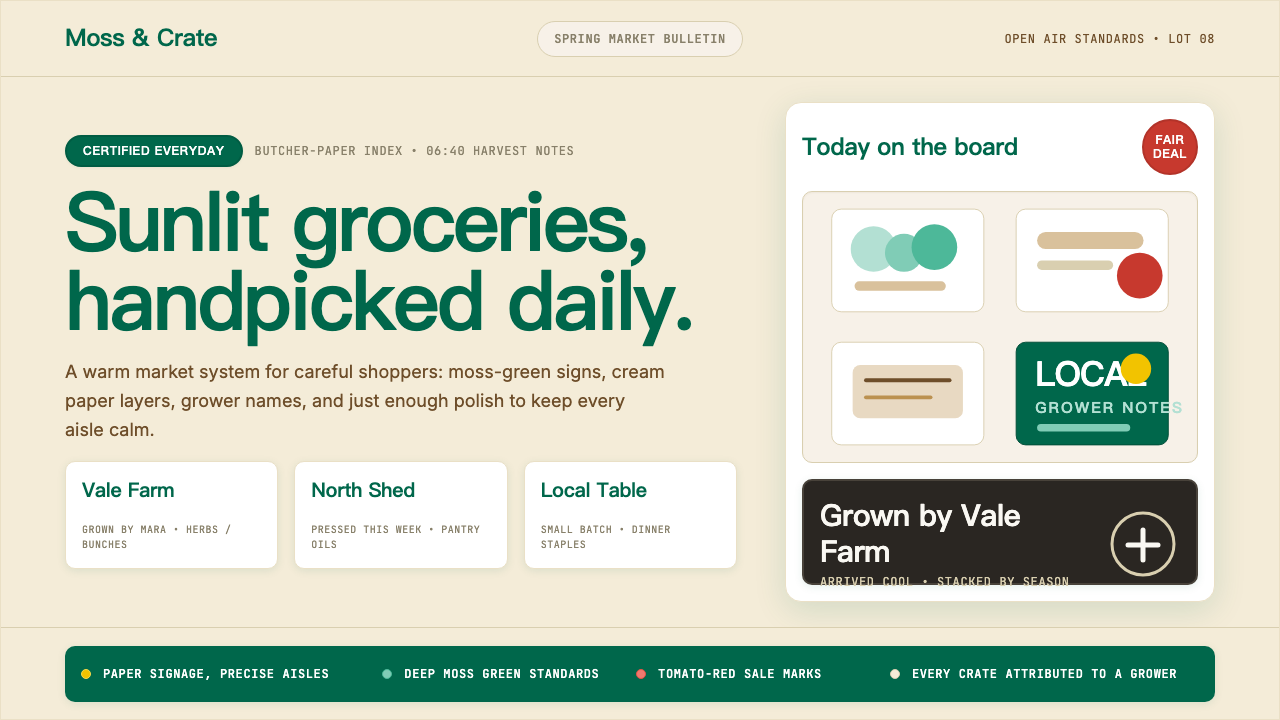
Whole Foods Market dresses premium organic retail in the warmth of a sun-dappled farmer's market — deep mossy greens, butcher-paper creams, and chalkboard lettering that makes grocery shopping feel like a Saturday morning ritual.
Whole Foods Market in brief
Whole Foods Market's visual identity is the rare retail design system that succeeds at fusing two normally contradictory impulses: handcrafted authenticity and corporate operational polish. Its palette centers on a deep, earthy mossy green paired with warm butcher-paper cream, accented by natural whites and rich soil tones. The result reads less like a supermarket brand and more like the visual language of the organic farming movement itself — earthy, grounded, and quietly aspirational.
The system draws heavily on market-stall typography: chalkboard hand-lettering naming individual growers, kraft-paper tags, and cards that attribute produce to specific farms and regions. This attribution design — telling you not just what you're buying but who grew it and where — is the visual equivalent of the conscious-consumer ethos the brand embodies. Typography moves between a sturdy, warm serif for editorial moments and handwritten or chalk-style lettering for product callouts, giving the identity an artisanal range that few retail brands achieve.
What distinguishes the Whole Foods aesthetic from generic 'natural' branding is its sense of material specificity. Textures evoke real things — the rough weave of burlap, the soft grain of unbleached paper, the matte surface of a chalkboard. Even in digital contexts, the design system preserves this texture-forward sensibility, favoring warm-toned photography of actual food and farms over flat illustrations or abstract patterns. The overall feeling is abundance without excess, quality without coldness.

Where does Whole Foods Market come from?
Whole Foods Market was founded in Austin, Texas in 1980, when John Mackey and Renee Lawson Hardy merged their small natural foods store, SaferWay, with a local competitor, Clarksville Natural Grocery. The timing placed the brand at the center of a cultural shift: the American natural foods movement was gaining mainstream traction, and a growing number of middle-class consumers were beginning to connect what they ate with their values around health, environment, and social responsibility. The original store, at roughly twelve thousand square feet, was unprecedented in scale for a natural foods retailer — a deliberate signal that organic food could be a serious, abundant commercial proposition rather than an austere countercultural alternative.
The visual identity that emerged over the company's first decades was rooted in the visual grammar of the farmer's market and the whole earth movement. The Whole Earth Catalog, published from 1968 onward by Stewart Brand, had established a particular visual language for the alternative lifestyle movement: kraft paper, hand-lettered type, illustrated engravings, and a commitment to showing the provenance of goods. Whole Foods inherited and commercialized that sensibility — taking its earthy palette, its attributional typography, and its ethos of knowing your source, and applying them at grocery chain scale.
The company expanded aggressively through the 1990s and 2000s, and with growth came the challenge of maintaining the handcrafted, market-stall feeling across hundreds of locations. Walter Robb, who became co-CEO alongside John Mackey in 2010, oversaw a period in which the brand's operational systems were professionalized without sacrificing the artisanal character of its store environments. Each location retained the visual vocabulary — chalkboards, grower cards, wooden produce displays — while store design became increasingly codified. The tension between local authenticity and national consistency became a defining design challenge.
The most significant shift in the brand's recent history came with Amazon's acquisition in 2017, for approximately thirteen billion dollars. Jeff Bezos's involvement brought data-driven retail logic and Prime member integration to a brand built on handcrafted warmth — a pairing that many observers found incongruous. The visual identity had undergone a notable refresh around 2016, led by design agency Concrete, which sharpened the green palette, refined the typographic system, and brought greater consistency to signage and packaging. This refreshed system had to absorb the Amazon integration without losing the farmer's-market feeling that justified the brand's premium positioning. The result is a dual character that is now central to what the Whole Foods aesthetic represents: artisanal visual warmth as a scalable system.
What defines the Whole Foods Market look?
Color Palette
The foundational palette pairs a deep, earthy mossy green — somewhere between forest floor and aged sage — with warm butcher-paper cream as the primary ground. This pairing anchors the brand in the natural world without reaching for the artificial brightness of conventional grocery retail. Supporting tones include rich soil browns, warm off-whites, and occasional barn reds or harvest golds used as secondary accents. The overall palette reads as warm, grounded, and seasonal — the colors of a produce table at peak harvest rather than the colors of a branded system.
Typography
Whole Foods typography occupies a deliberately artisanal register, moving between several registers within a single layout. A sturdy, slightly humanist serif carries the weight of product names and editorial headlines, lending warmth and readability at large scales. Hand-lettered or chalk-style display type appears on chalkboards, signage, and promotional materials — its slight imperfection a deliberate signal of human involvement. Body text is kept clean and unhurried. The mix reads as curated rather than designed: a typographic market stall where each voice is distinct but the overall effect is harmonious.
Material Texture
Texture is a primary carrier of meaning in the Whole Foods system, not a decorative afterthought. Kraft paper, burlap, unbleached wood, and chalkboard surfaces recur across packaging, signage, and environmental design. These materials are chosen not for visual novelty but for their associations: they evoke farmstand simplicity, pre-industrial craft, and the physical weight of real goods. In digital contexts, the texture vocabulary is preserved through warm-toned photography and matte-finish treatment rather than glossy or flat abstraction.
Provenance Typography
One of the most distinctive typographic conventions in Whole Foods design is the grower attribution: small-scale cards, chalkboard notes, or shelf tags naming the farm, the farmer, and often the specific region or growing method. This practice turns a grocery label into a narrative — and the typographic treatment reinforces that narrative quality. Names appear in a warmer, more personal typeface than product specifications; the layout gives personal attribution visual priority over price. The net effect is a design system that encodes trust and transparency as visual values.
Abundance Composition
Whole Foods environmental and marketing design favors a sense of generous abundance: produce displayed in heaped wooden crates, photography that fills the frame with color and texture, layouts that suggest plenty without feeling crowded. This is the opposite of minimalist restraint — it is a designed harvest aesthetic. The composition logic asks: does this feel like a table at peak season? Rather than reducing elements, the approach layers them, always maintaining warmth and legibility within the abundance.
Environmental Wayfinding
In-store wayfinding at Whole Foods is typographic rather than iconographic — department names are set in generous, warm type against dark green or chalkboard-toned grounds, with little reliance on symbols or pictograms. This typographic directness contributes to a feeling of knowledgeable welcome: the store communicates as a host would, in words, rather than resorting to the reductive symbol language of a transit system. Seasonal and regional specials are called out with handwritten emphasis, breaking the regularity of the system just enough to signal freshness and curation.
Photography Direction
Whole Foods photography is consistently warm-toned, close-cropped, and tactile in quality. Subjects are real food and real environments — not studio composites or overly lit packshots. Light appears natural and directional, often raking across surfaces to reveal texture. Color grading leans warm without crossing into golden-hour excess. The camera favors depth and imperfection: a bruise on a peach, the irregular shape of an heirloom tomato, the shadow across a wooden board. These photographic choices make the brand's premium positioning feel earned rather than aspirational.

Who shaped Whole Foods Market?
Mackey co-founded Whole Foods Market in Austin in 1980 and served as CEO for most of the company's history, shaping both its business philosophy and its brand identity. His conscious capitalism framework — the idea that a corporation should simultaneously serve customers, employees, suppliers, communities, and investors — was not just a business theory but a design brief: it mandated a brand experience that felt genuinely values-driven rather than commercially calculated. The farmer attribution cards, the grower partnership stories, and the environmental certifications that populate Whole Foods stores are all expressions of the design philosophy Mackey embedded from the beginning.
Hardy was Mackey's co-founder and partner in the original SaferWay natural foods store, which merged with Clarksville Natural Grocery to become the first Whole Foods Market. Her contribution established the small-store, community-oriented character of the brand's origins — the sense that Whole Foods was born from an alternative retail culture rather than engineered as a corporate concept. That founding character, rooted in the Austin natural foods community of the late 1970s, continues to inform the design system's preference for local warmth over generic retail polish.
Robb joined Whole Foods in 1991 and rose to become co-CEO alongside Mackey from 2010 to 2017. During his tenure, he oversaw the period of most intensive national expansion and the design challenge that came with it: how to codify a handcrafted, market-stall aesthetic for replication across hundreds of stores while preserving the local feeling that justified the brand's premium. Robb's leadership shaped the operational design systems — the signage standards, the store layout templates, the product display protocols — that made the Whole Foods visual language scalable without becoming generic.
Amazon's 2017 acquisition of Whole Foods for approximately thirteen billion dollars brought Bezos into the brand's story as the figure whose influence most tests the design system's integrity. The Amazon integration — Prime member discounts, Amazon Lockers in stores, algorithmic inventory management — introduced a data-driven retail logic that sits in visible tension with the handcrafted-market aesthetic. Bezos represents the commercial pressure that forces the Whole Foods design system to prove its resilience: can artisanal warmth survive at Amazon scale? The answer, so far, has been a qualified yes — the visual identity has remained largely intact even as the operational logic has shifted.
The Toronto- and New York-based design agency Concrete led the brand identity refresh that was implemented around 2016, refining and systematizing the visual language Whole Foods had developed organically over three decades. Concrete's work sharpened the green palette, brought typographic consistency to the signage system, and developed the packaging design guidelines that allowed individual store-made products to feel coherent at national scale. The refresh is notable for what it preserved as much as what it changed: the chalkboard lettering, the grower attribution, the kraft-paper textures — all the signals of market-stall authenticity — survived the systematization intact.
How do you use Whole Foods Market today?
The Whole Foods aesthetic is one of the most useful historical retail references for contemporary designers working on brands where quality, provenance, and values-alignment are the primary positioning levers. Applying it correctly requires understanding its underlying logic: the design communicates trust through specificity — specific farms, specific growers, specific growing methods — and warmth through material reference, not color sweetness. Surface-level imitation (adding green and kraft paper to any layout) produces generic 'natural' branding; authentic application requires understanding what the system is actually saying.
For presentation slides, the Whole Foods aesthetic works especially well when the content is itself about quality, sustainability, provenance, or community. A cover slide benefits from warm-toned photography treated with a slightly desaturated, matte quality — food, landscape, or a producer portrait — set against a deep mossy green ground with a generous, slightly imperfect serif for the headline. Content slides should favor warmth and legibility over complexity: a two-column layout with a generous margin, body text in a warm off-white or cream against green, or dark text against a paper-cream ground. Data slides can adopt a tactile quality by treating charts as though they were hand-drawn on a chalkboard ground — the bars and lines rendered in warm greens and soil tones rather than synthetic primaries.
For web interfaces, the style suits brands in food, wellness, sustainability, agriculture, and premium consumer goods where the buyer journey requires trust-building and the audience skews toward values-conscious consumers. Apply a ground of warm cream or soft white; use the mossy green as a primary action color and section divider. Typography should mix a warm serif for headings with a clean, slightly humanist sans-serif for body text — never a cold geometric sans. Navigation and product cards should feel generous in padding, with ample breathing room; tight grids undermine the market-stall abundance that makes the aesthetic work. Pricing pages benefit from the provenance convention: each tier should read as though it includes a brief story, not just a feature checklist.
For editorial and marketing work, the aesthetic enables strong storytelling. A feature article in the Whole Foods mode opens with a full-bleed warm-toned photograph, runs body text at a comfortable width with generous leading, and uses pull quotes set in chalk-style or hand-lettered display type. Marketing campaigns borrow the attribution card logic: a single strong image of a product or producer, accompanied by a few lines of specific provenance copy in a warm typeface, is more persuasive in this aesthetic than a polished product shot with abstract taglines. The system rewards specificity — the more concrete the detail, the more authentic the execution.
A common mistake when applying the Whole Foods aesthetic is confusing warmth with visual busyness. The style's market-stall reference point suggests abundance, but successful executions are in fact quite restrained: one or two colors, one or two typeface registers, focused photography, and generous white (or cream) space. A second common error is treating all texture as interchangeable — layering multiple simulated textures (wood grain over burlap over kraft paper) produces visual noise rather than authenticity. The textures in the Whole Foods system work because they reference specific materials; mixing them arbitrarily breaks that specificity and tips the aesthetic into pastiche.

Whole Foods Market — FAQ
Is the Whole Foods aesthetic the same as generic 'natural' branding?
No, and the distinction matters practically. Generic natural branding typically signals its values through palette alone — greens and browns and kraft paper applied indiscriminately. The Whole Foods system goes further: its distinguishing feature is attribution and specificity. Named farms, named growers, named regions, named growing methods — the design communicates trust by being specific rather than by simply looking earthy. When you apply a kraft-paper texture and call it done, you get natural branding. When you design a system that makes specificity itself the visual value, you approach the Whole Foods register.
Can the Whole Foods aesthetic work for non-food brands?
Yes, with care. The system's core values — provenance, quality, transparency, and community — are not inherently food-specific, and the visual language translates well to adjacent categories: wellness and personal care products, sustainable fashion, craft beverages, farm-to-table hospitality, and even financial services that position around ethical investment or community banking. The key is whether the brand's actual values support the aesthetic's promises. Using the Whole Foods visual language for a product or service that cannot deliver genuine provenance or quality claims produces a credibility gap that attentive consumers will notice.
How does the Whole Foods aesthetic handle digital contexts, where real textures are impossible?
The system's digital translation works through photography and color temperature rather than through simulated texture. The key directive is warmth and specificity: real food photographed with natural light and visible texture, real environments (market tables, farm scenes, producer portraits) rather than composited studio imagery, and a color grading approach that preserves the warmth of the natural palette without adding artificial golden-hour saturation. Typography carries the texture role digitally — the imperfection of a slightly irregular serif or the humanist quality of a carefully chosen sans-serif does for digital what chalkboard lettering does for physical spaces.
Does the Amazon acquisition undermine the visual authenticity of Whole Foods design?
This is a genuine tension, not a settled question. The visual identity itself has largely survived the acquisition intact — the green palette, the grower attribution, the market-stall typography are all still present. What has changed is the operational context in which the design exists: algorithmic pricing, Prime discounts, and Amazon Locker integration all introduce signals that sit uneasily alongside the handcrafted aesthetic. Perceptive observers will note the contradiction. For designers, the Whole Foods case is a useful study in the difference between a visual system and the values it claims to express — and in how long a strong visual identity can maintain its associations when the underlying business model shifts.
What is the single most important thing to get right when applying the Whole Foods aesthetic?
Specificity over generality. The system's entire credibility rests on its willingness to name things: this farm, this grower, this region, this method. Every design decision in the Whole Foods vocabulary — the attribution cards, the chalkboard lettering, the close-cropped produce photography — serves the goal of making things feel known rather than marketed. When adapting the aesthetic, the question to ask is not 'does this look natural?' but 'does this feel specific?' A layout that names its sources and tells its stories in concrete detail will always outperform one that applies the palette and textures without the substance.
Related design styles
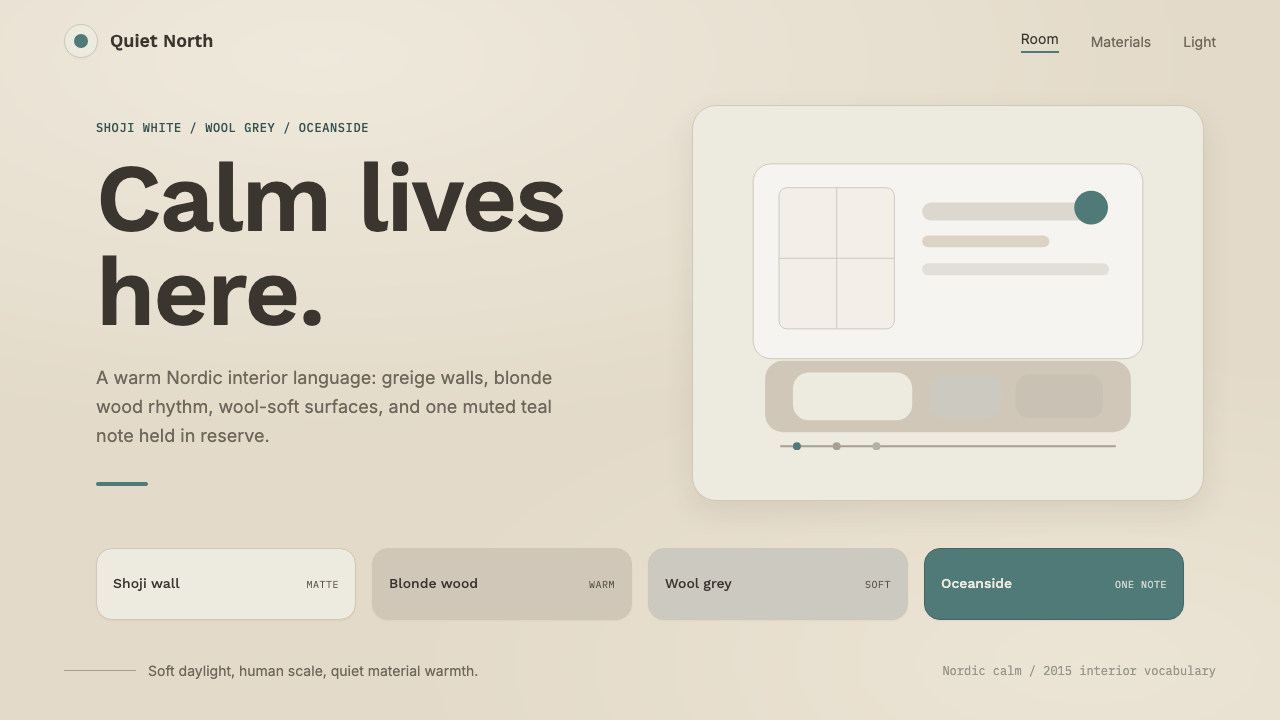 Scandinavian HyggeCalm is the brief. Greige walls, wool-grey cards, and one muted teal line.
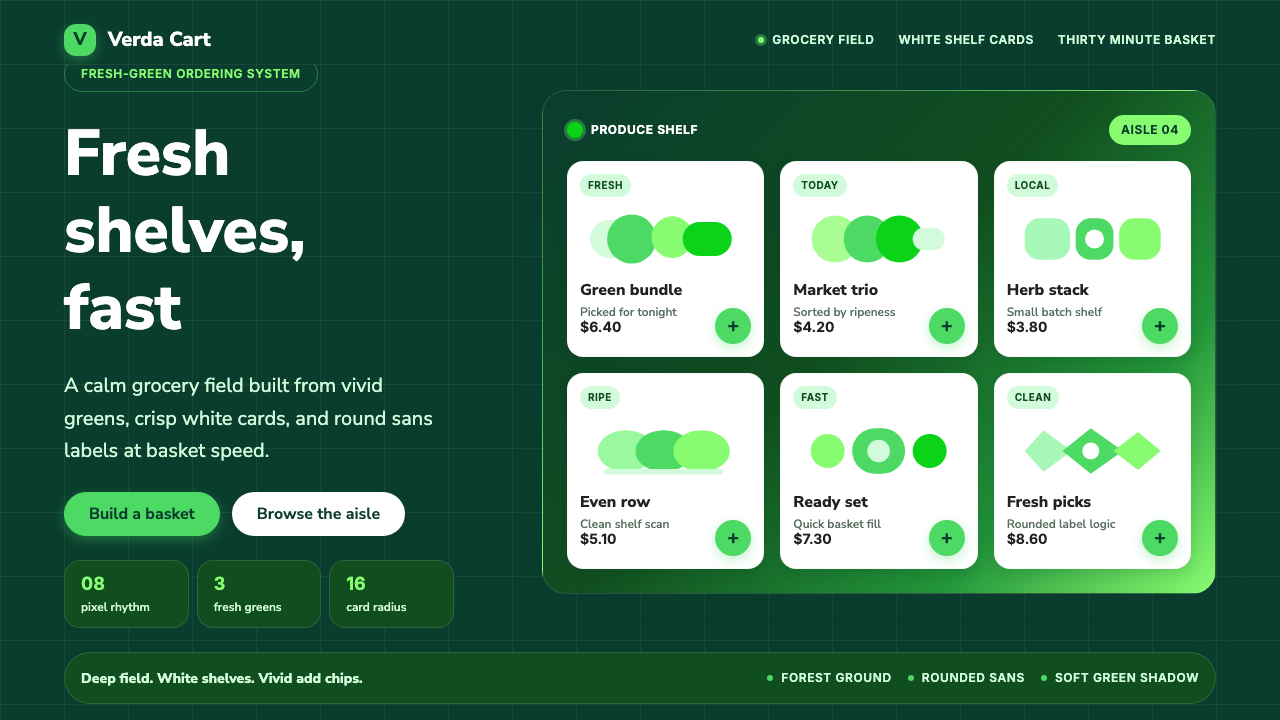 Cornershop AppProduce-fresh and calm. Forest green field, white shelf cards, vivid green ac…
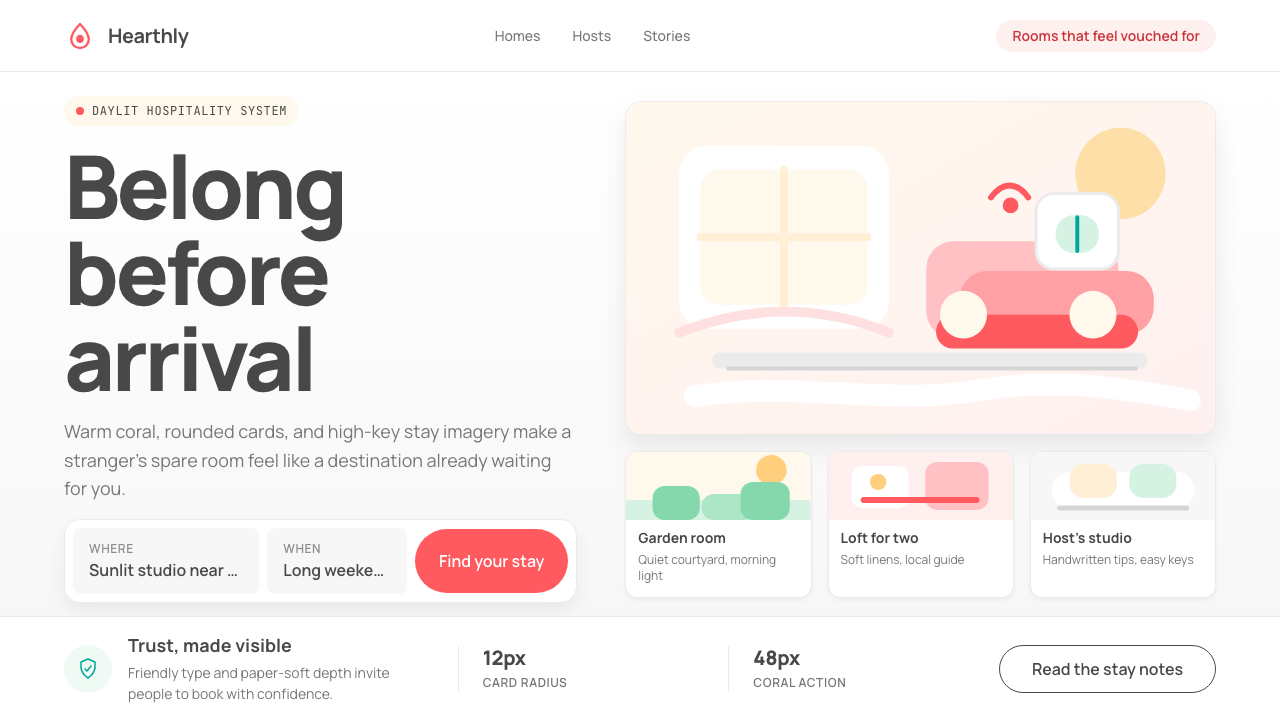 Airbnb 2014Coral red, soft pill cards, Cereal type. The Bélo wraps strangers in warm, da…
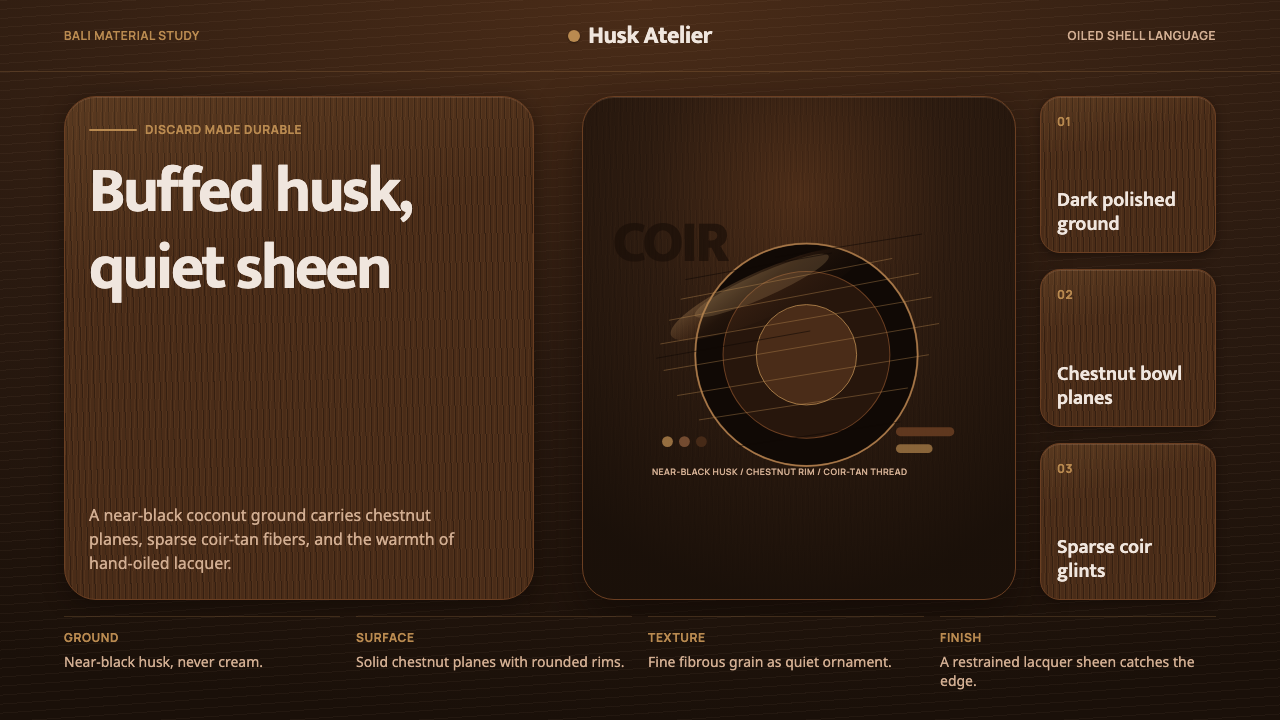 Balinese Coconut ShellQuietly hand-oiled. Near-black husk, chestnut planes, and sparse coir-tan gra…
 Fukasawa Without ThoughtHand reaches before mind decides. Milky cool-gray plastic, rounded squares, o…
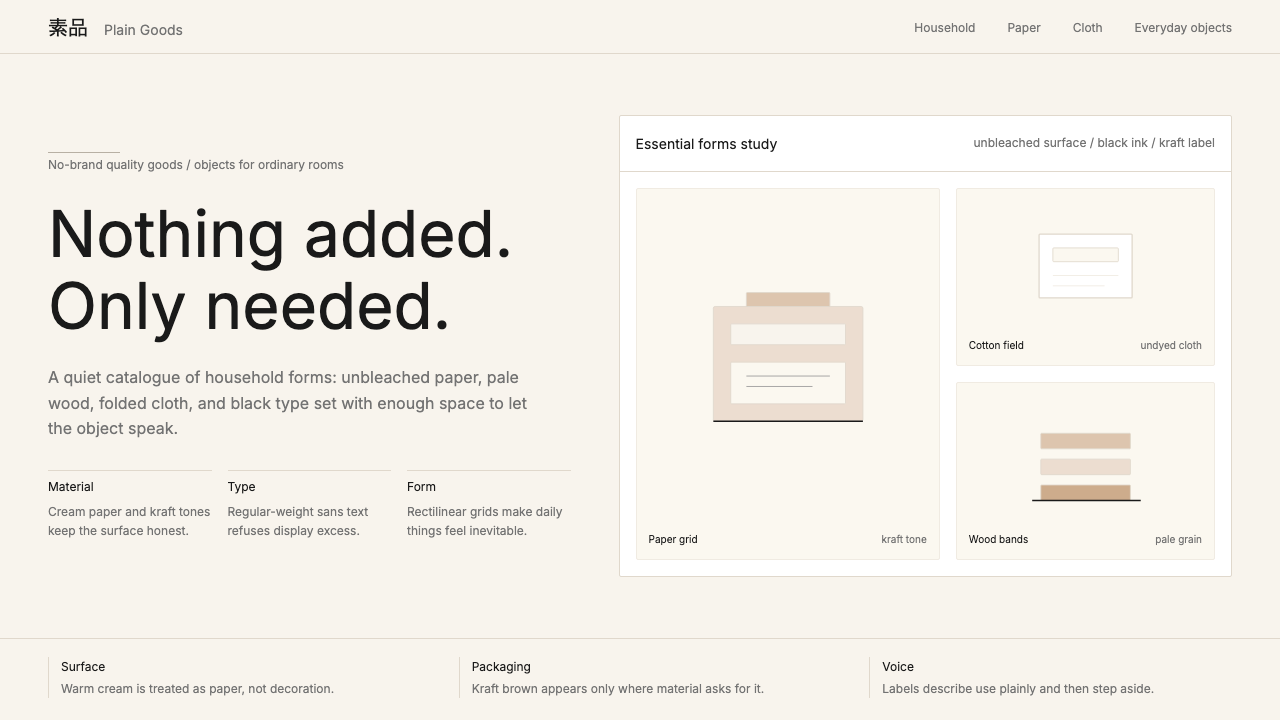 MUJIAnti-brand restraint. Cream paper, kraft brown, and regular Inter leave only…