What is Allbirds?
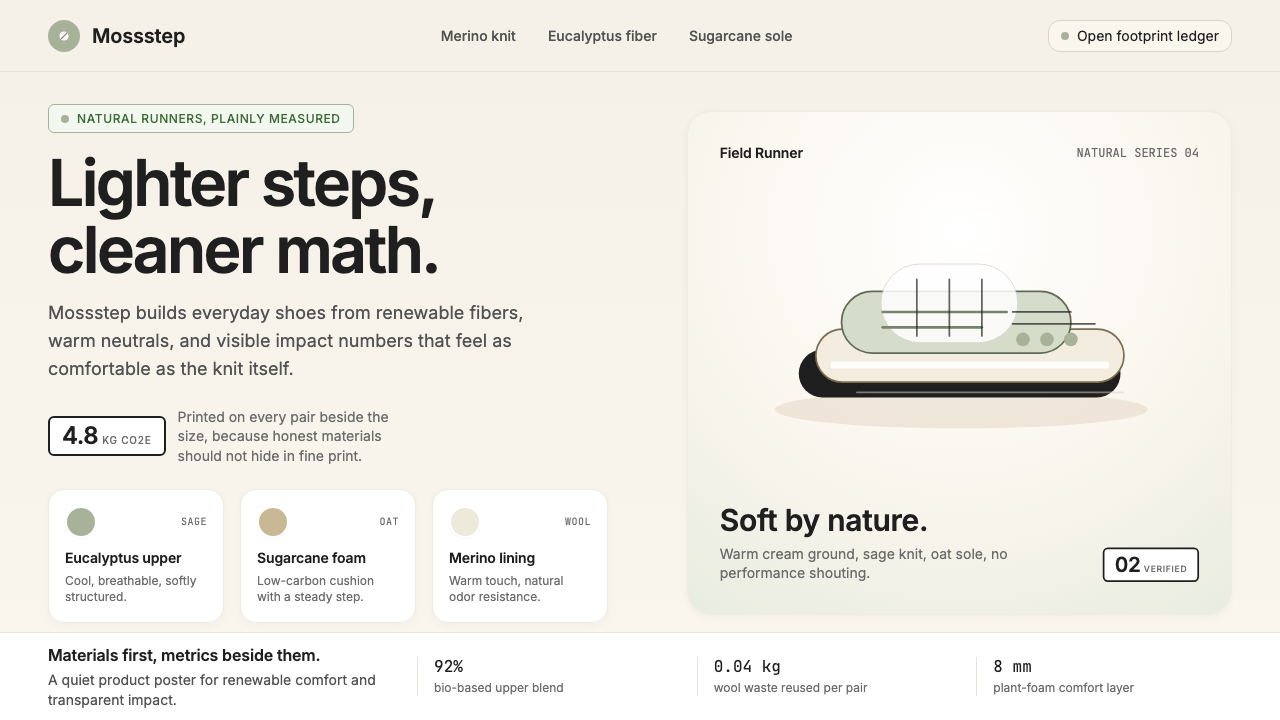
Allbirds proved that sustainability could be soft-spoken — a cream-and-sage palette, carbon labels beside price tags, and never a lecture in sight.
Allbirds in brief
Allbirds is a San Francisco-based footwear and apparel brand founded in 2014 by Tim Brown and Joey Zwillinger. Its visual identity is built around a single conviction: that environmental transparency should feel warm and approachable, not clinical or moralistic. The brand's palette of warm off-whites, muted sage greens, and soft earthy neutrals mirrors the natural materials at the heart of its products — merino wool, eucalyptus tree fiber, and sugarcane-derived foam.
What makes the Allbirds visual system distinctive is its insistence on honesty as an aesthetic act. Carbon-footprint labels appear beside price tags the way nutrition facts appear on food packaging — matter-of-fact, unadorned, and genuinely informative. Product photography favors warm neutral backdrops over aspirational lifestyle staging. Copy stays conversational rather than evangelical. The cumulative effect is a brand that feels like it has nothing to hide, which, deliberately, it does not.
By the time the brand refreshed its visual identity through the early 2020s, it had established one of the more coherent 'eco-modern' design languages in consumer retail — one that other sustainable brands have since adopted and diluted. The original is distinguished by its restraint: fewer colors, softer tones, and a refusal to let environmental claims crowd out the product itself.

Where does Allbirds come from?
The brand emerged from a frustration Tim Brown felt as a New Zealand professional footballer turned entrepreneur: he could not find a shoe made from natural materials that did not apologize for it aesthetically. His early experiments with merino wool led to a Kickstarter campaign in 2014 that was quickly oversubscribed, confirming that the market was ready for footwear that wore its material origins openly. Joey Zwillinger, a biotech engineer, joined Brown to scale the operation, bringing a rigorous scientific approach to material sourcing and carbon accounting.
The visual identity that coalesced around the brand in its first years was in many ways a reaction against the dominant design vocabulary of that moment in Silicon Valley consumer tech — the flat bold gradients, the neon accents, the aggressive whitespace. Allbirds chose the opposite register: soft, warm, slightly imperfect, like a hand-pressed linen card rather than a polished app screen. The brand's New Zealand roots contributed a particular antipodean sensibility — open, unpretentious, closer to a farmer's market stall than a luxury boutique.
The carbon-labeling initiative, which began in earnest around 2020, became the most structurally important design decision the brand made after its initial palette. Rather than burying its environmental impact in a footnote, Allbirds placed a carbon score on every product page with the same visual weight as the price. This created a design system demand: a label typographically equivalent to a price tag, legible at a glance, and devoid of the green-washing iconography — leaves, globes, recyclable arrows — that crowds competitors' packaging.
By the mid-2020s, Allbirds had become a case study in what B-Corp brand identity looks like in practice. Its certification as a B Corporation — a legal designation for for-profit companies meeting high standards of social and environmental performance — shaped every brand touchpoint, from the recycled shipping bags to the way in which the brand discusses its failures publicly alongside its achievements. The visual system is less a logo-and-color exercise than an argument: that the details of how a thing is made are as important to show as the thing itself.
What defines the Allbirds look?
Palette
The Allbirds palette is built on warm off-whites and creams as the dominant ground, with muted sage and olive greens serving as the primary brand accent. Earthy taupes, oat tones, and soft terracotta appear as supporting naturals. There are no saturated primaries, no neon accents, and no cool-toned grays — every hue is slightly warm, as if slightly exposed to sun or hand-touched. The palette communicates natural origin without resorting to the clichéd bright greens of conventional eco-branding.
Typography
Allbirds typography is warm and slightly rounded — soft without being playful, modern without being cold. Headline type sits with comfortable weight at generous sizes, giving the brand voice room to breathe without crowding the product. Body text is set at relaxed line spacing and modest measure, prioritizing readability over density. The brand avoids both the razor-thin letterforms of luxury fashion and the heavy geometric slabs of tech hardware; the tone lands closer to a well-designed independent magazine than a corporate annual report.
Carbon Label as Design Element
The most original contribution of the Allbirds visual system is the carbon-footprint label — a small, typographically clean score displayed with the same prominence as the product price. The label eschews green iconography and relies entirely on numeral and unit to communicate impact. This design decision converts a piece of supply-chain data into a brand signal: the willingness to display it plainly, without softening imagery, is itself the message. It also imposes a useful formal discipline — the label must be legible at small sizes and integrate cleanly into price-tag layouts across digital and print contexts.
Photography and Texture
Allbirds product photography favors close-cropped, tactile shots that show the texture of materials — the weave of merino, the grain of natural rubber — over polished, highly retouched studio composites. Backgrounds are warm neutrals: raw linen, unbleached cotton, pale stone. This approach communicates material honesty visually: you are shown what the shoe is made of, not just what it looks like at arm's length. Lifestyle photography, where it appears, tends toward natural light, outdoor settings, and an unhurried pace — consistent with the brand's antipodean sensibility.
Packaging and Materiality
Physical brand touchpoints — shoeboxes, bags, tissue, receipts — are made from recycled or renewable materials and carry that fact quietly, without ceremonial announcement. The shoebox doubles as a shipping box, eliminating a layer of packaging and a layer of branding in the same move. Color on packaging follows the brand palette: warm neutral grounds with minimal print, carrying only the information necessary. The material choice is itself the graphic statement: the unbleached cardboard and uncoated paper are the aesthetic, not a substrate awaiting decoration.
Conversational Tone
The verbal identity is as important as the visual system and directly shapes how the visual system is designed. Allbirds copy is informal, self-deprecating, and specific — it will tell you the exact carbon score and then acknowledge that the brand is still working to reduce it. This honesty-as-personality approach means that the design system cannot be pompous or aspirational in the conventional luxury sense; it must stay legible, matter-of-fact, and grounded. Marketing layouts that are crowded, heavily layered, or visually dramatic are incompatible with the verbal register.
Restraint and Negative Space
The most consistent formal discipline across all Allbirds design touchpoints is restraint in the deployment of elements. Digital pages carry generous white space around product images and text blocks. Marketing layouts resist the temptation to fill every available zone with brand content. The visual system relies on comfortable breathing room to signal confidence: a brand that is not anxious about being seen has no need to fill every corner. This negative space is not accidental emptiness — it is an active choice to let the product and the material story do the work.

Who shaped Allbirds?
Brown co-founded Allbirds after a career as a New Zealand international footballer, bringing an outsider's impatience with the footwear industry's conventions. His original insight — that merino wool was an underused material with exceptional comfort properties — drove the first product, and his intuition that sustainable design should be honest rather than aspirational shaped the brand's visual register. He has served as CEO and as the primary public voice for the brand's environmental commitments, including its advocacy for an industry-wide carbon labeling standard.
Zwillinger, a biotech engineer and Brown's co-founder, brought the scientific and operational rigor that transformed the brand from a single-product wool shoe into a materials-innovation company. His background in renewable energy and biotechnology directly shaped the brand's carbon-accounting framework — the infrastructure behind the carbon labels that became the brand's most distinctive design element. Zwillinger's insistence on measuring and disclosing actual lifecycle emissions, rather than offsetting or approximating, gave the visual system its factual backbone.
The in-house brand team is responsible for translating the founders' material and ethical commitments into a coherent visual language across digital, retail, and packaging contexts. Unlike many DTC brands that outsource brand identity to a single agency, Allbirds developed its visual system iteratively, refining the palette, photography approach, and label system over multiple product cycles. The team's ongoing work includes maintaining the discipline of the warm-neutral palette against commercial pressures to introduce louder seasonal colors, and managing the visual integration of ever-more-specific sustainability metrics into product-level communication.
While not a designer or brand figure in the conventional sense, B Lab — the nonprofit organization that administers B Corporation certification — has functioned as an external structural constraint on Allbirds' brand decisions. Meeting and maintaining B Corp certification requires public transparency about impact metrics, which in turn demands that those metrics be communicated legibly. The certification's reporting requirements effectively mandated the design problem that the carbon label solves: how to present environmental data with the same prominence as commercial data, at every customer-facing touchpoint.
How do you use Allbirds today?
Applying the Allbirds design language to presentation decks works best when the deck's subject matter shares the brand's values of transparency, considered craft, and a willingness to show the work behind the product. Cover slides benefit from a warm off-white or cream ground with a single product or material photograph cropped to show texture rather than context. The title sits in comfortable, unhurried type — not dramatically oversized. A muted sage or earthy green accent can anchor section headers or call-out blocks without competing with the imagery. Avoid bold geometric shapes or dynamic diagonals; the cover should feel like a deep breath, not an announcement.
For content slides, the organizing principle is radical clarity with room to breathe. Use one hierarchical level of heading, a second level of body copy, and resist adding a third level of bullet sub-points. Leave generous margins. If a slide contains a single statistic or a single product claim, let it live alone — surrounded by warm neutral space rather than crowded by supporting visual elements. Data slides should follow the same discipline: simple bar or line charts, labeled with clear text rather than a legend, colored in the brand's warm neutrals with a single sage accent for the primary data series.
Web interfaces designed in the Allbirds register work well for sustainability-focused product pages, DTC brand stores, and any context where consumer trust is built through information rather than aspiration. The layout approach: generous vertical spacing between sections, product imagery that shows material texture at close range, and a pricing module that sits cleanly alongside secondary information (carbon score, material origin) at equivalent visual weight. Dashboards for impact reporting — internal or public — can use the same palette: warm ground, clear tabular data, sage accents for positive metrics and a warm terracotta for areas requiring attention.
Editorial and marketing applications suit long-form storytelling about supply chains, material science, or environmental commitments — the kind of content the brand publishes about its own manufacturing process. An editorial layout in this mode uses wide body text measure with a warm off-white ground, generous leading, and pull-quotes set in the same typeface at a larger size rather than switching to an accent face. Marketing pages for product launches work with the brand's texture-forward photography and a minimal overlay of type — a single product name, a single carbon score, a single price. Resist adding taglines, icons, or secondary descriptors that compete with the core product and data pairing.
The most common mistake when working in the Allbirds visual register is introducing the color palette's warmth while abandoning its restraint — using the cream and sage tones as a permission structure to add visual richness through texture overlays, multiple type weights, floating cards, and ambient shadows. The palette is warm but the system is sparse. Any design that feels busy or layered has drifted from the source. The second most common mistake is using generic eco-iconography — illustrated leaves, recycling arrows, globe icons — alongside the brand's typographic data elements. The carbon label works precisely because it does not look like traditional environmental communication; adding that iconography erodes the honesty signal the whole system depends on.

Allbirds — FAQ
How is Allbirds' visual style different from other eco-brands?
Most eco-brands lean heavily on bright greens, recycling symbols, illustrated nature motifs, and a general visual language that signals environmental consciousness through iconographic convention. Allbirds does the opposite: its palette is warm and earthy rather than bright-green, its environmental communication is typographic and data-driven rather than iconographic, and it applies no visual flourishes that announce its sustainability credentials. The result is a brand that communicates environmental commitment through structural design decisions — the carbon label, the material photography, the unbleached packaging — rather than through borrowed symbolism.
Can the Allbirds palette work for a dark-mode interface?
The brand's native mode is light-ground — the warm off-whites and creams are central to its identity, and a dark inversion requires care. If a dark mode is necessary, the most faithful approach is to use a very dark warm neutral (a charcoal with a slight brown undertone rather than a cool-gray or pure black) as the ground, and bring the sage and earthy tones forward as mid-tone accents. The typography should remain light and readable without becoming stark. The key is maintaining the warm temperature across all values — cold darks feel inconsistent with the brand's sensibility even if the color choices are otherwise correct.
How prominently should the carbon label feature in brand-inspired designs?
The carbon label's power comes from its equivalence with the price — it is not a badge or a certification stamp but a data field given equal status to commercial information. In designs inspired by the Allbirds system, the equivalent principle is: any environmental or impact metric you choose to display should receive the same typographic treatment as your primary commercial metric, placed in spatial proximity rather than relegated to a footer or secondary panel. If you cannot give it equal weight, consider not displaying it at all — a half-hearted disclosure communicates less confidence than no disclosure.
Is Allbirds' style appropriate for luxury or premium product positioning?
The Allbirds visual language occupies a particular zone: premium in quality signal but deliberately anti-aspirational in affect. It communicates that the product is well-made and worth paying for, but it does not use the visual registers of exclusivity — dark grounds, gold accents, dramatic typography, imagery of status — that conventional luxury relies on. Applying this style to a genuinely luxury product would likely underserve the brand, as it reads as approachable and democratic rather than exclusive and elevated. Conversely, it works very well for products positioned as considered purchases: the kind of thing a thoughtful buyer spends more on because it is better made, not because it signals social status.
How do you avoid the style feeling dated as sustainability branding evolves?
The Allbirds visual system has aged well because its core decisions are structural rather than trend-dependent. The warm neutral palette, the carbon label as a data element, the texture-forward photography, and the conversational tone are all grounded in the brand's material reality rather than in a particular moment's aesthetic fashions. Design that ages poorly typically relies on what is visually current — a particular gradient style, a specific illustration trend, a fashionable typeface — rather than on what is functionally right for the content. To keep brand-inspired work from dating: anchor every visual decision to a content reason rather than a trend reason. If you can explain why a design choice serves the product's story, it will remain defensible as fashions shift.
Related design styles
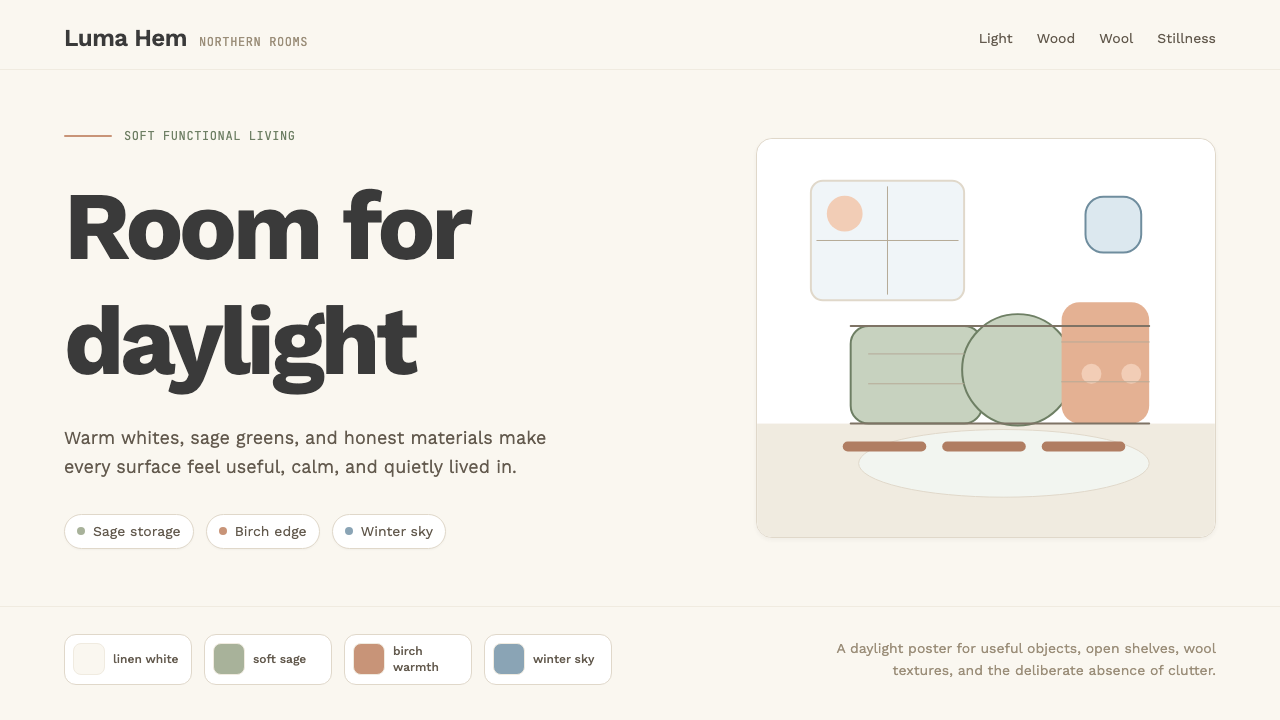 Scandi Hygge (IKEA)Warmth from restraint. Sage, linen white, Work Sans, and wide breathing room.
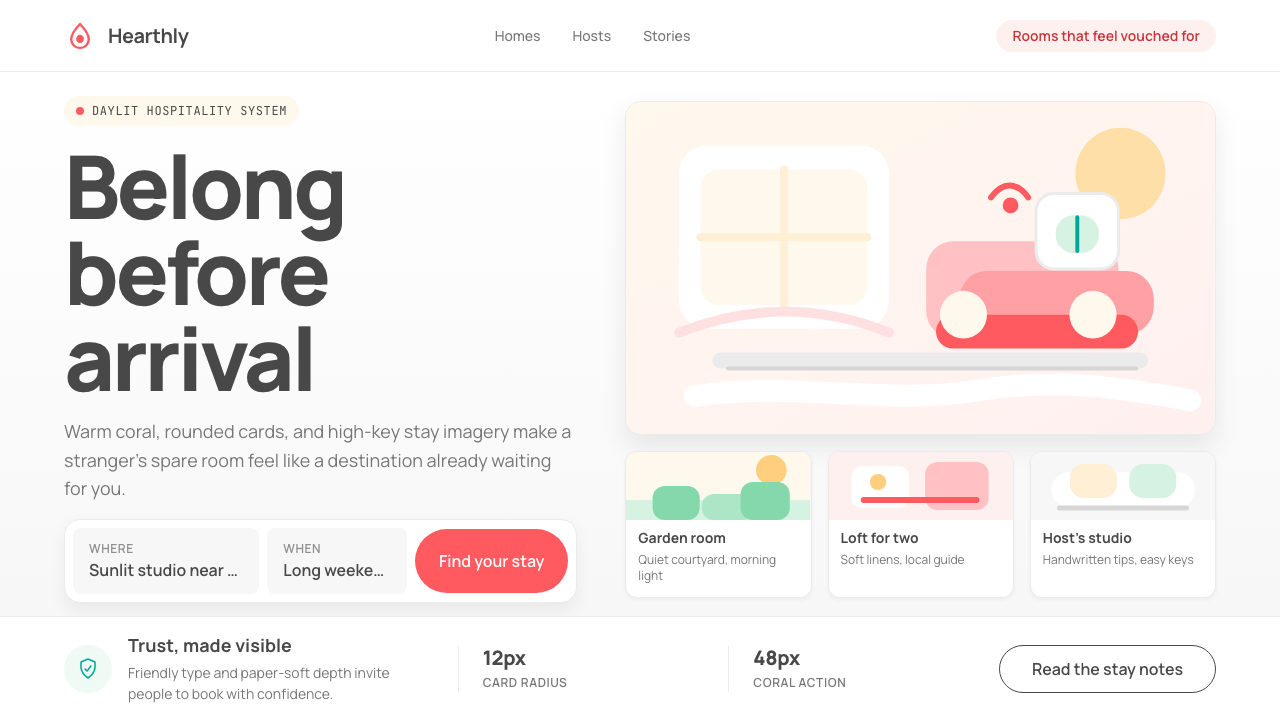 Airbnb 2014Coral red, soft pill cards, Cereal type. The Bélo wraps strangers in warm, da…
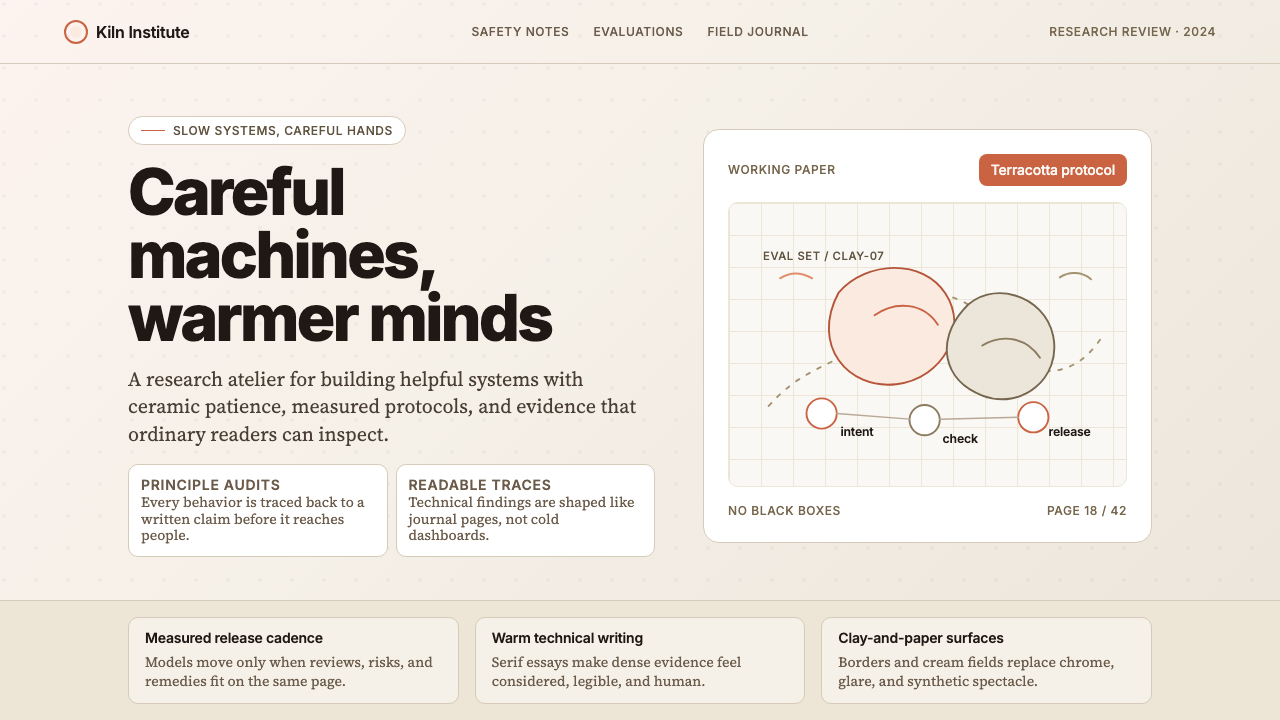 Anthropic ClayAI safety in handmade clay. Sand backgrounds, terracotta accents, serif body…
 AsanaCalm productivity breathes. Cream canvas, lavender panels, coral-blue-yellow…
 Fukasawa Without ThoughtHand reaches before mind decides. Milky cool-gray plastic, rounded squares, o…
 Glean Enterprise-SearchWarm enterprise AI. Cream ground, yellow focus, sage graph nodes, and sans ca…