What is Uyghur Kashgar Doppa?
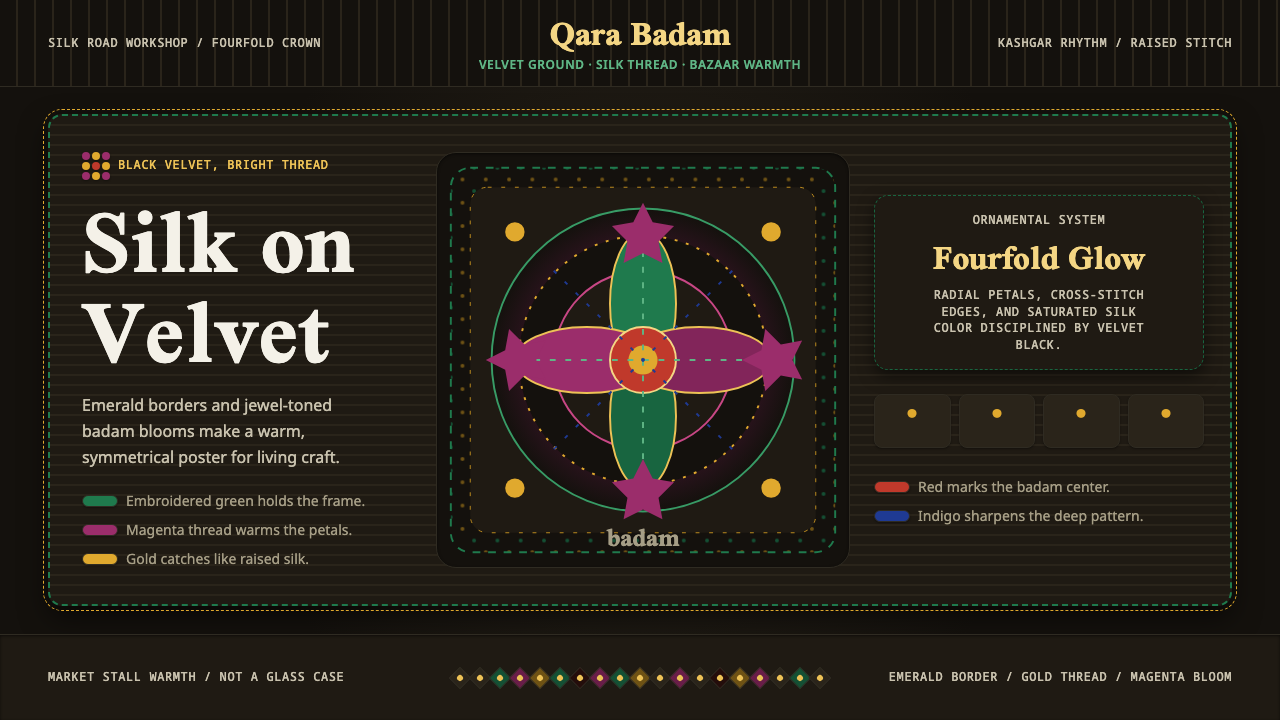
In the bazaars of Kashgar, a small embroidered cap carries an entire visual language of jewel-toned silk thread raised against black velvet.
Uyghur Kashgar Doppa in brief
Uyghur Kashgar Doppa is a design system drawn from the doppa, the small, brimless embroidered cap worn across Uyghur communities in Central Asia, most richly expressed in the traditional embroidery workshops of Kashgar — the ancient Silk Road oasis city at the western edge of the Taklamakan Desert. Unlike design languages that originate from architecture, print, or industrial products, this style comes from a living textile and needlework tradition, and its visual grammar is the grammar of embroidery: dense stitching, raised thread texture, and symmetrical floral motifs worked by hand onto a dark ground.
The defining move of the style is placing richly saturated embroidery colors — emerald green, magenta, gold — against black velvet rather than a light or neutral background. This is not a stylistic accident; it reflects the actual material construction of a doppa, where velvet is chosen because its texture and light-absorbing depth make embroidered thread appear to glow rather than merely sit on the surface. The result is a palette that reads as luxurious and warm rather than somber, because the darkness exists specifically to set jewel tones alight.
At the center of the visual vocabulary is the badam, a four-petal almond or teardrop motif that recurs throughout Central Asian textile and architectural ornament. Alongside it, grapevine scrolls and dense cross-stitch patterning create a sense of ornamental abundance and rigorous symmetry at once — every motif mirrors its counterpart, and negative space is treated as something to be filled rather than left empty. This is a maximalist, celebratory aesthetic, closer to the atmosphere of a bazaar stall lit at dusk than to the clinical hush of a museum display case.

Where does Uyghur Kashgar Doppa come from?
The doppa's history is tied to Kashgar's position as a crossroads city on the Silk Road, where trade routes connecting China, Central Asia, Persia, and the broader Islamic world brought textiles, dyes, and decorative motifs into constant contact and exchange for well over a thousand years. Uyghur embroidery traditions absorbed and reworked ornamental vocabulary from across this network — floral and vine motifs with roots in Persian and broader Islamic decorative art, geometric symmetry principles shared across Central Asian textile cultures, and locally distinct color preferences that favored saturated jewel tones over the more muted palettes found in some neighboring traditions.
The doppa itself functions as everyday dress rather than ceremonial costume alone — it is worn by men, women, and children across generations, with regional and gender variations in shape, motif, and color that allow a trained eye to identify where a particular cap was made. The Kashgar style, and the badam motif in particular, is among the most widely recognized regional variants, closely associated with the city's historic role as a center of craft production and trade.
The embroidery work itself has traditionally been the domain of Uyghur women, who developed and passed down the needlework techniques — dense cross-stitch, couched gold thread, raised satin stitch — through generations within families and workshops. This craft knowledge sits alongside a broader Central Asian oasis decorative tradition that also produced carpets, ikat fabrics, and architectural tilework sharing similar motifs and color sensibilities, suggesting a shared regional visual vocabulary that moves across different materials and craft forms.
Doppa-making and embroidery remain a living practice in Kashgar today, sold and worn in the city's bazaars rather than existing only as a historical artifact in a collection. This continuity is part of what distinguishes the aesthetic from many of the historical styles in a design library: it describes an ongoing craft culture rather than a closed chapter of design history, and the motifs and color choices documented here reflect techniques still practiced by embroiderers working in the tradition today.
What defines the Uyghur Kashgar Doppa look?
Color on Velvet Ground
The foundational color is a deep, near-black velvet, against which emerald green, magenta, and gold are layered as embroidered accents rather than flat printed color. The darkness of the ground is what allows the jewel tones to read as luminous rather than muted — the same colors on a white background would look considerably flatter and less rich. Red badam blooms provide a warm counterpoint to the cooler emerald, giving the palette both depth and warmth simultaneously.
The Badam Motif
The four-petal almond or teardrop shape known as badam is the system's core repeating unit. It appears at multiple scales — as a small accent dotting a border, as a medium-sized focal bloom, and occasionally as a larger anchoring shape in a composition's center. Its consistent presence across scales gives the aesthetic a coherent visual signature even when other elements vary.
Grapevine Scrollwork
Curling grapevine scrolls frame and connect the badam blossoms, functioning as border ornament and as a linking device between separate motifs. The scrollwork is continuous and rhythmic rather than broken into isolated segments, echoing the way embroidered borders wrap continuously around the edge of a physical cap without interruption.
Dense Symmetry
Compositions are built around strict mirror symmetry, both left-to-right and often top-to-bottom, with almost no empty space left unfilled. This density is a defining departure from minimalist design languages: where restraint signals sophistication in many modern systems, here abundance and complete coverage signal craftsmanship and devotion of labor.
Metallic Gold Thread
Gold thread accents — used sparingly compared to the emerald and magenta but always present — mark the most important lines in a composition: the outline of a central motif, a border seam, or a highlight along a petal's edge. Gold is never used as a flat fill; it functions as a linear accent that catches light, echoing how metallic thread is actually couched onto fabric in the physical craft.
Raised Texture over Flatness
Even in a digital or flat interpretation, the system implies raised, dimensional stitching rather than perfectly flat printed color — subtle shading along motif edges suggests the thickness of embroidery thread rising off the velvet ground. This is a deliberate departure from purely flat, vector-style illustration, since flatness would lose the tactile, handmade quality that defines the craft.

Who shaped Uyghur Kashgar Doppa?
The needlework knowledge behind the Kashgar doppa tradition has historically been carried and transmitted by Uyghur women, who learn techniques such as dense cross-stitch and couched gold thread within families and workshops. This craft knowledge is passed down rather than formally documented in the way a Western design movement might be, making the embroiderers themselves — as a collective tradition rather than named individual designers — the true authors of this visual language.
Kashgar's markets have long served as the commercial and cultural hub where doppa are made, sold, and worn, functioning as an informal but effective mechanism for style transmission — buyers and sellers negotiate over regional variants, motif preferences, and craftsmanship quality in a living marketplace rather than a curated exhibition. This bazaar context is central to understanding the aesthetic's warmth and accessibility, as opposed to a more rarefied museum presentation.
How do you use Uyghur Kashgar Doppa today?
Uyghur Kashgar Doppa suits contexts that want to feel warm, celebratory, ornamental, and culturally rich rather than minimal or corporate. It is a strong fit for products centered on craft, heritage, hospitality, or cultural storytelling — an ecommerce brand selling handmade textiles, a travel platform highlighting Central Asian destinations, or an editorial project documenting textile traditions.
For presentation slides, the style is best used with restraint on content-heavy slides and full richness on cover or divider slides. A cover slide can carry the full velvet ground with badam-motif framing around the edges and a title set in clean, legible type at the center — the ornament should frame the message rather than compete with it for legibility. Data slides should pull back the ornamental density considerably, using the color palette (emerald, magenta, gold) for chart elements while keeping backgrounds simpler than a fully ornamented cover.
For web interfaces, the aesthetic works well for hero sections, storytelling landing pages, and product categories tied to craft or cultural heritage, but requires real restraint in dashboards or data-dense screens, where the dense symmetry and rich ornament would overwhelm functional UI. A safer approach for interface work is to use the velvet-ground palette and badam motif as accents — border treatments, section dividers, icon badges — while keeping core content areas comparatively calm.
For editorial and marketing work, the style is naturally suited to feature articles, brand storytelling, and premium packaging that wants to communicate craftsmanship and cultural depth. Full-bleed velvet-ground sections with badam borders make strong feature openers; pull-quotes can be framed with a simplified badam motif rather than a plain rule line to keep the ornamental character present even in typographic moments.
A common mistake is treating this style as generic 'ethnic pattern' decoration applied superficially to a Western layout — scattering a badam-like shape without the velvet ground, the symmetry discipline, or the gold-thread accenting loses the specificity that makes this an actual craft tradition rather than an exoticized surface pattern. The velvet ground and disciplined symmetry are not optional details; they are what make the aesthetic legible as Kashgar embroidery rather than generic floral ornament.

Uyghur Kashgar Doppa — FAQ
Is the doppa exclusively a men's garment?
No. The doppa is worn by men, women, and children across Uyghur communities, with shape, motif density, and color choices varying by age, gender, and region. Women's doppa often carry richer floral and badam ornamentation, while some men's styles favor more geometric or restrained patterning. The design system documented here draws primarily on the richly embroidered, jewel-toned Kashgar tradition rather than any single gender-specific variant.
Why does the palette look so much richer against black than it would against white?
This is a direct consequence of the physical material — velvet is a light-absorbing fabric, so any reflective or saturated color placed against it appears to glow by contrast rather than being washed out by surrounding brightness. A white or pale background reflects ambient light evenly across the whole surface, which flattens the perceived intensity of the embroidered colors sitting on top of it. The velvet ground is therefore not an arbitrary stylistic choice but a functional one rooted in how the actual cap is made.
How does this style differ from other Central Asian or Islamic decorative traditions in the library?
While it shares a broader family resemblance with Persian and Islamic decorative art — floral scrollwork, geometric symmetry, an emphasis on pattern over representational imagery — the Kashgar doppa tradition is distinguished by its specific material grounding in velvet embroidery, its signature badam motif, and a color palette skewed toward saturated emerald, magenta, and gold rather than the tilework blues and turquoises common in some other regional traditions. It is best understood as one specific regional and material expression within a much larger family of Central Asian decorative craft.
Is this a historical style, or is it still practiced today?
It is a living tradition. Doppa embroidery continues to be practiced and sold in Kashgar's bazaars today, worn as everyday and festive dress by Uyghur communities rather than existing only as a preserved historical artifact. This distinguishes it from many other design systems in the library that describe closed historical periods; here, the craft techniques and motifs described are still actively produced by embroiderers working today.
What is the risk of using this style without understanding its cultural context?
Because the badam motif and jewel-toned embroidery are specific to a living cultural and craft tradition rather than a generic decorative trend, applying the aesthetic thoughtlessly — stripping the motifs of their symmetry discipline, material grounding, or context — risks flattening a specific culture into decorative wallpaper. Designers working with this style should aim to honor the craft's precision and richness rather than treating it as an interchangeable 'exotic' pattern option among many.
Related design styles
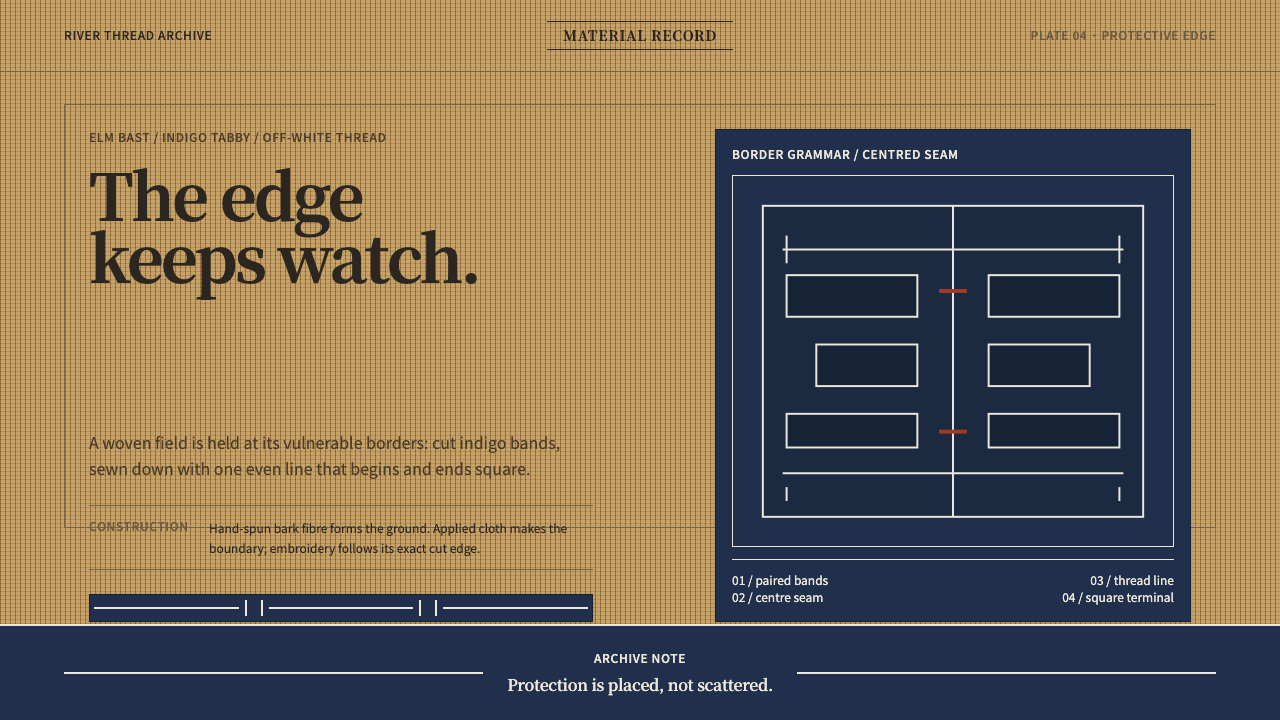 Ainu Attus RobeProtection is cut, not painted. Indigo bands and square-ended thread hold elm…
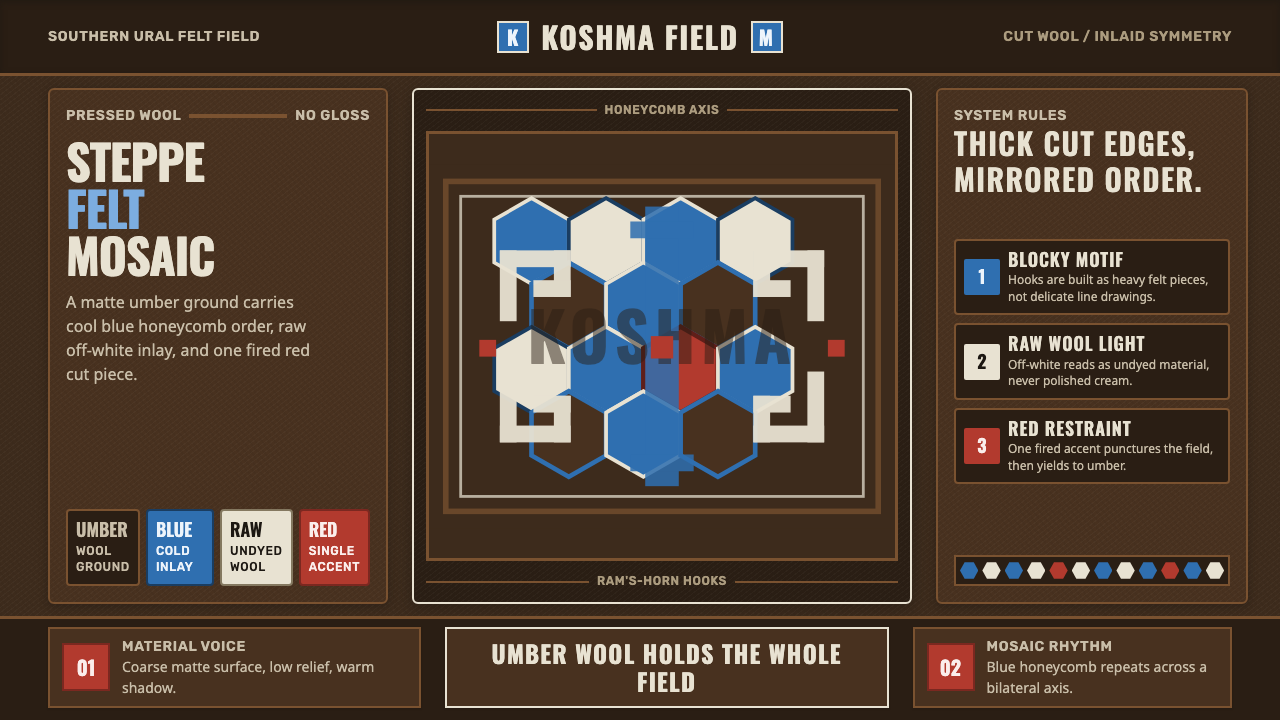 Bashkir Honeycomb Felt OrnamentSteppe craft feels weighty. Umber felt holds blue honeycomb and raw-wool hook…
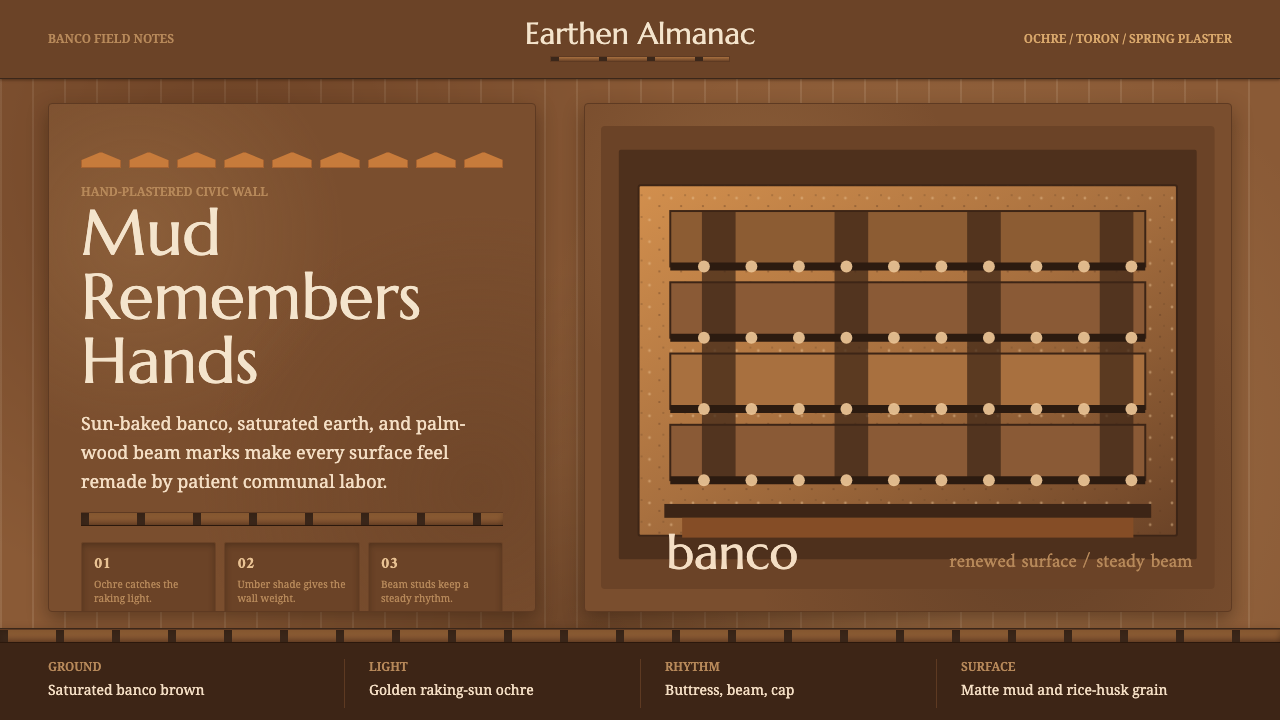 Djenné Mud MosqueBuilt from renewal. Banco brown, ochre caps, and toron grids feel hand-plaste…
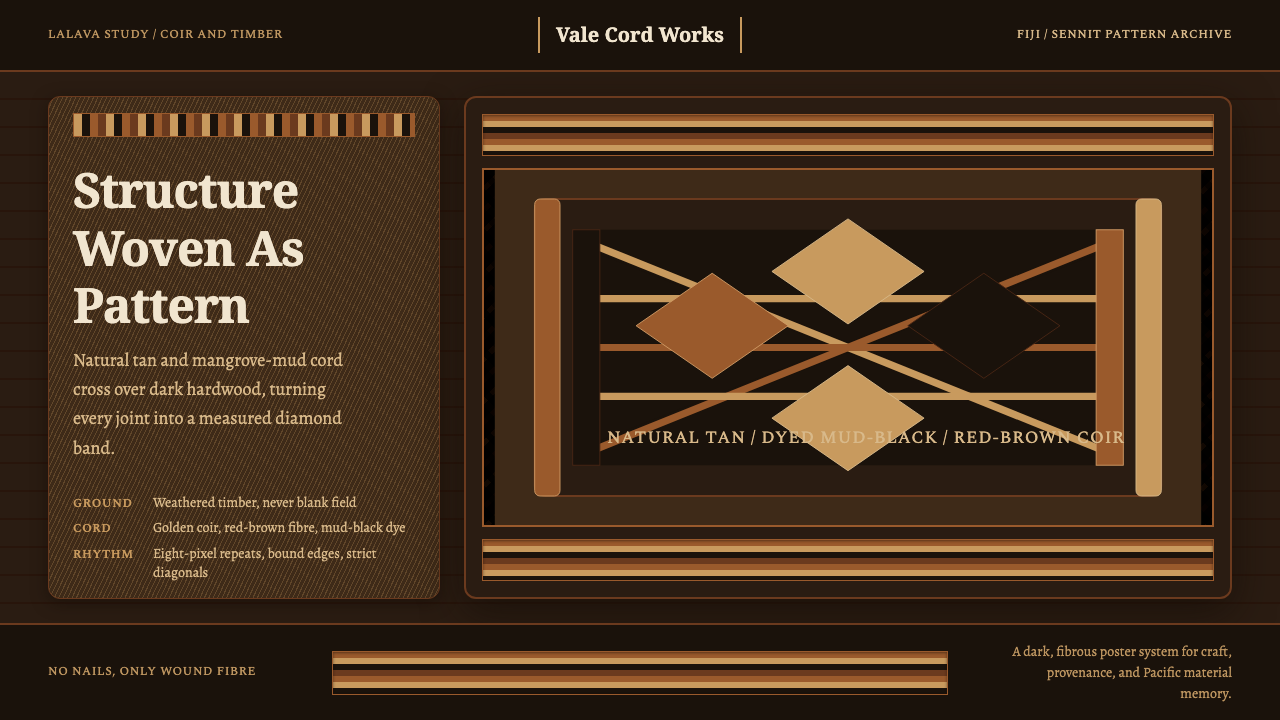 Fijian Magimagi LashingStructure becomes ornament. Tan coir diamonds bind mud-black timber in a stri…
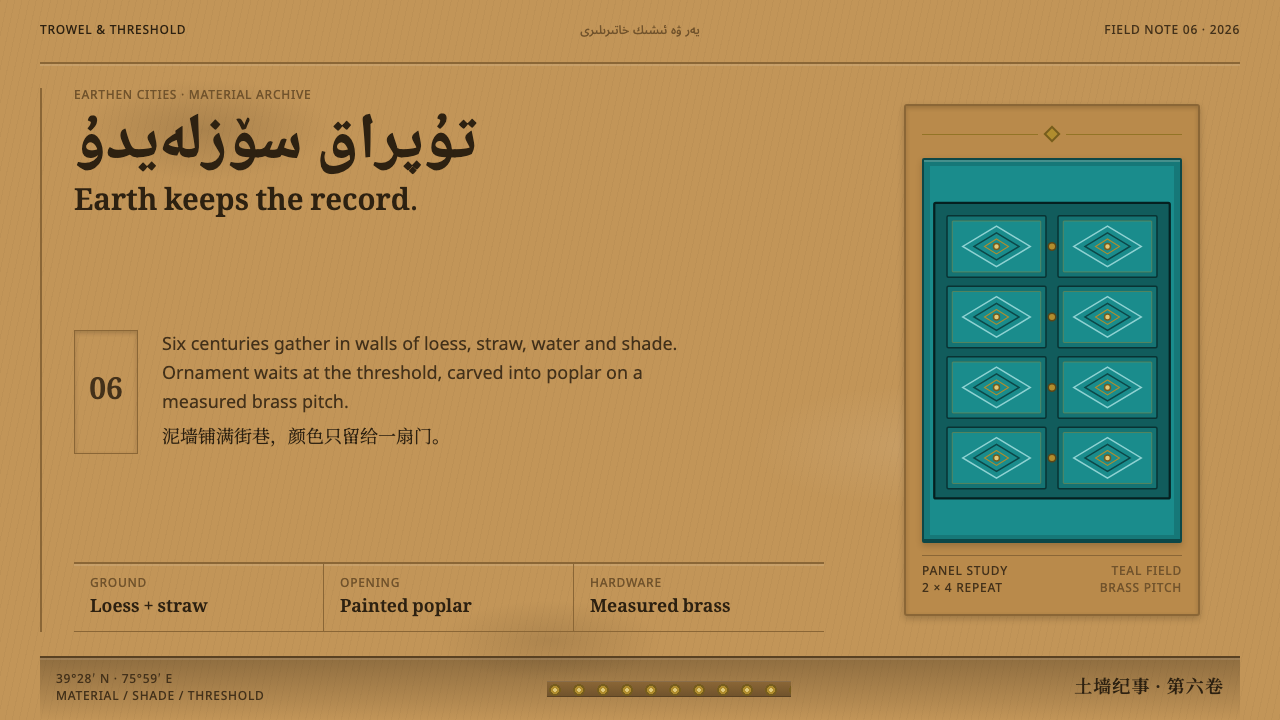 Kashgar Old TownEarth holds the field; ornament waits at one teal door, cut in a strict brass…
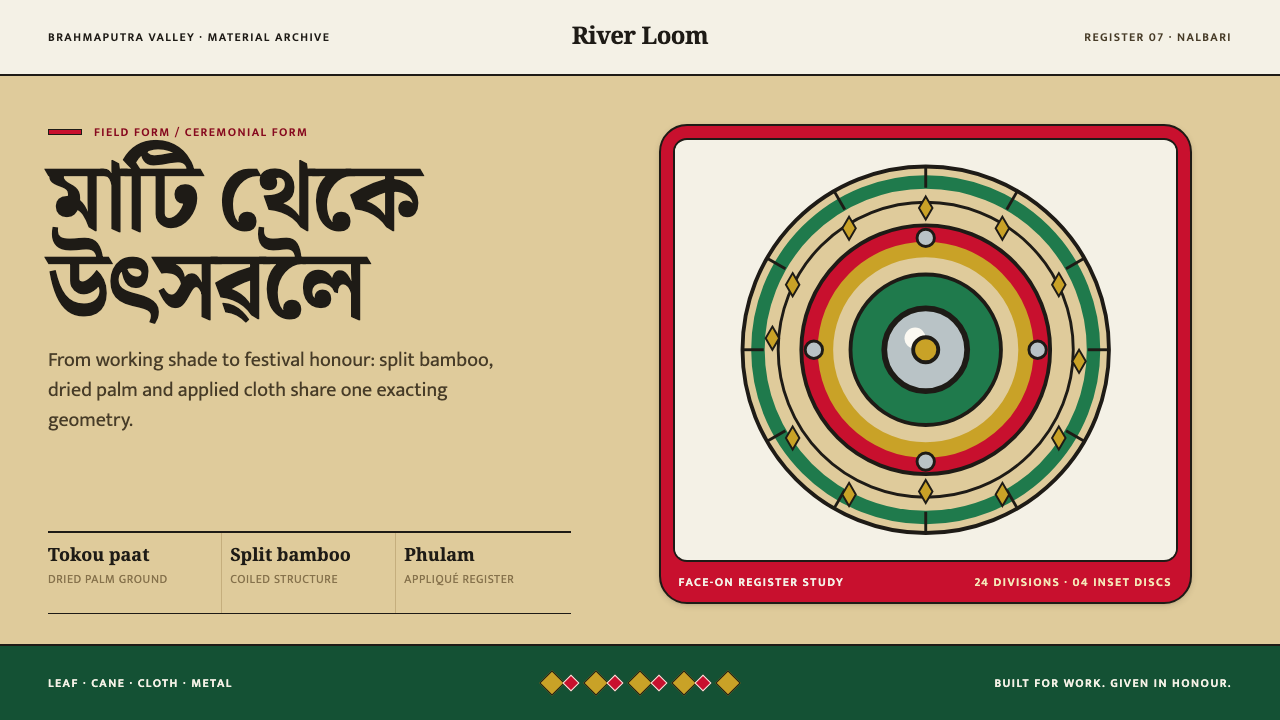 Assamese JapiWork becomes ceremony. Straw-gold rings carry green appliqué, festival red an…