What is Uruguayan Yerba Mate?
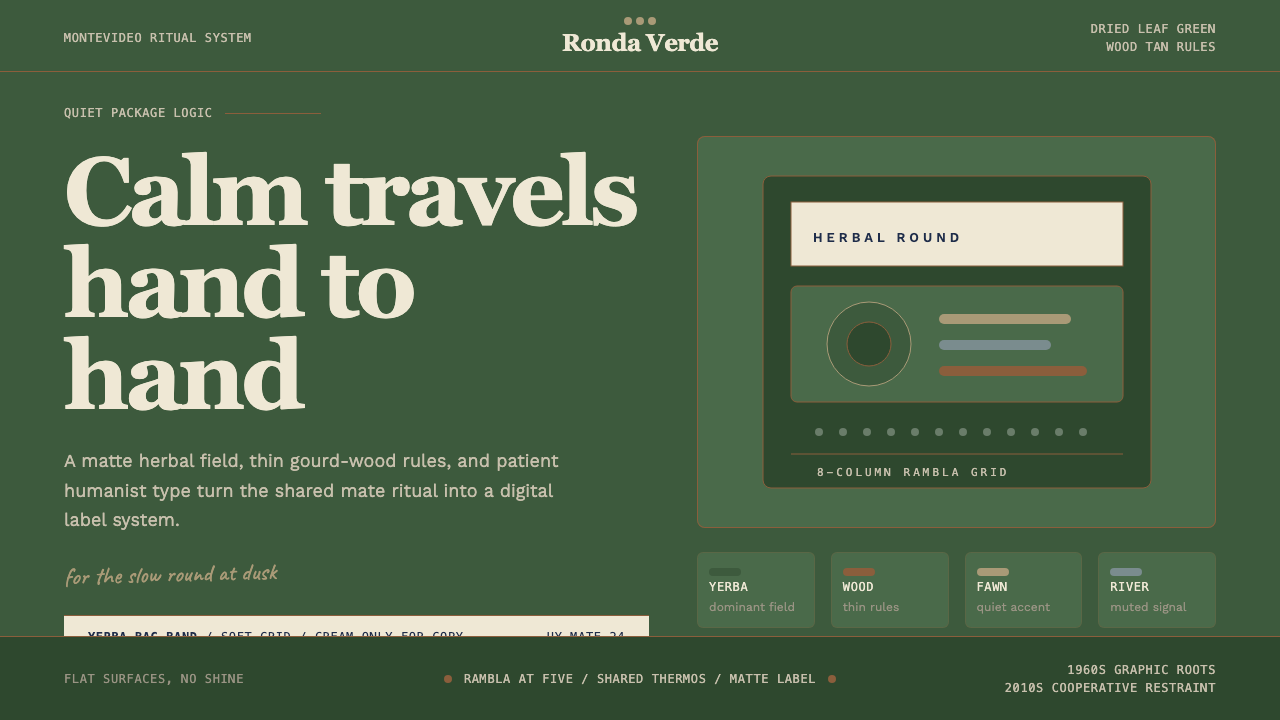
Uruguay's mate culture turned a daily ritual into one of the world's most quietly assured packaging languages — deep herbal greens, warm gourd tones, and humanist restraint rooted in sixty years of Montevideo modernism.
Uruguayan Yerba Mate in brief
Uruguayan Yerba Mate is a design system distilled from the visual identity of South America's most mate-saturated country. Uruguay consumes more yerba mate per capita than any nation on earth, and that ubiquity has given its leading brands — Canarias, Sara, Del Cebador — decades to settle into a visual language as settled and unhurried as a shared gourd passed around a rambla bench at dusk. The system draws directly from that language: deep dried-herb greens that recall the plant itself, warm wood-tan tones derived from the traditional gourd and bombilla, and a humanist typographic sensibility that never raises its voice.
What distinguishes this system from generic Latin American packaging is its specific rootedness in Montevideo's mid-century modernist graphic tradition. Uruguayan commercial printing in the 1960s was shaped by designers influenced by the Río de la Plata school — a current that absorbed European constructivism and Swiss international typography while remaining grounded in gaucho material culture and the quiet civic temperament of a small, literate, egalitarian country. The result is not loud or folkloric. It is steady, warm, and deeply considered.
The design vocabulary emphasizes organic calm over geometric assertiveness. Where Bauhaus reaches for primary color and hard geometric contrast, Uruguayan Yerba Mate reaches for natural analogy and tonal quietness. The palette evokes things you can touch and smell: dried leaves, worn timber, bleached linen, the dark ceramic of a traditional mug. Type is legible and grounded rather than spectacular. Space is used generously, in the manner of something that has nothing to prove.
Where does Uruguayan Yerba Mate come from?
Yerba mate — the dried leaves of Ilex paraguariensis — has been cultivated and consumed in the Río de la Plata basin for centuries, long before European contact. The Guaraní people prepared it as a cold infusion called chimarrão, drinking from gourds through filtered reed straws. Spanish colonists adopted the habit in the seventeenth century and spread it across what would become Argentina, Uruguay, Paraguay, and southern Brazil. By the nineteenth century, mate had become the defining ritual of gaucho culture: the thermos, the gourd, and the bombilla were as essential to the mounted herder's kit as the facón knife.
Uruguay's particular relationship with mate intensified through the twentieth century. Unlike Argentina, where coffee culture competes strongly in urban centers, Uruguay retained mate as the dominant social beverage across all classes and regions. State campaigns in the mid-twentieth century promoted domestic consumption, and cooperative packaging operations — including the Canarias cooperative, which dates its graphic identity to the early 1960s — developed visual standards that remained essentially stable for decades. These cooperatives were design clients with unusual constraints: budgets were modest, print runs were enormous, and the audience was the entire country. The result was packaging designed for legibility, durability, and recognition across every context from a rural almacén to a city supermarket.
The graphic design backdrop matters. Uruguay in the 1960s had a small but serious design community centered around ADGU (Asociación de Diseñadores Gráficos del Uruguay), which connected local practitioners to the international modernist conversation. Designers such as Tito Sequeira worked in a visual language that balanced European rigor with local material warmth — a sensibility directly legible in the mate brands of the period. The color choices were not arbitrary: the deep greens of the yerba plant, the tans and ochres of dried grass and timber, and the cream of unbleached paper were practical and culturally resonant simultaneously.
The 2010s brought a wave of cooperative and artisan rebranding across the Southern Cone. Hermanos Estudio and similar Montevideo design practices revisited the classic mate brands with a contemporary minimalist sensibility, stripping away the accumulated decorative layers of intervening decades while preserving the essential palette and material references. This rebrand wave is the system's most direct design ancestor: it explains why the visual language feels both historically grounded and contemporary, rooted in the 1960s but refined through a twenty-first-century lens that removed sentimentality and tightened hierarchy.
What defines the Uruguayan Yerba Mate look?
Color — Herbal and Earthy
The palette is anchored by a deep dried-herb green that sits closer to olive than to emerald — a color you associate with dried plant matter rather than living foliage. Against this, warm wood-tan tones derived from the gourd and the bombilla provide the dominant accent, ranging from pale straw to burnished amber. A quiet cream provides the ground for most typographic elements, and near-black is used for primary text. The palette is warm-neutral overall: nothing is cool, nothing is synthetic, and saturated color appears only in small, purposeful doses as a signal rather than a mood.
Typography — Humanist and Unhurried
Type choices favor humanist letterforms — designs where the geometry is guided by the hand and the breath rather than the compass. This creates a warmth that geometric sans-serifs lack: letterforms feel lived-in rather than constructed. Hierarchy is established through size and weight contrast that is pronounced but not aggressive, and generous leading gives body text room to settle. All-caps settings appear in label and header contexts with comfortable tracking, conveying authority without severity. The overall effect is legible from a distance, like text on a label designed to be read across a kitchen shelf.
Texture and Material Reference
Unlike purely geometric design systems, Uruguayan Yerba Mate carries an implicit material memory. Surface treatments evoke kraft paper, unbleached linen, and weathered timber — the substrate of cooperative packaging before gloss finishes became standard. In digital contexts this translates not to simulated textures but to tonal warmth: backgrounds that read as slightly organic rather than clinically white, borders that feel like printed edges rather than CSS lines, and component surfaces that suggest tactility without resorting to skeuomorphism.
Rhythm and Ritual Spacing
Mate is consumed slowly, in repeated rounds, with deliberate pauses. The spacing system internalizes this rhythm. Elements are not crowded; margins are wide enough to suggest ceremony rather than efficiency. Vertical rhythm is consistent and calm, with section breaks that feel like the pause before the next pour rather than hard interruptions. Component padding is generous without being wasteful. The system is opposed to urgency: call-to-action elements exist without visual alarm, positioned with confidence that the user will find them at their own pace.
Iconography and Emblem
Where symbols appear, they draw from the material culture of the practice itself: the silhouette of the gourd, the arc of the bombilla, the simplified frond of the yerba plant. These are used sparingly and with the same restraint applied to color. Decorative borders, when present, reference the woodblock printing tradition of cooperative labels — simple repeated unit patterns derived from natural forms, not abstract geometry. The overall emblem vocabulary is warm and recognizable rather than novel: it builds on visual memory rather than demanding attention for its own originality.
Tone — Cooperative, Not Luxury
The emotional register of this system is deliberately collective and egalitarian. Mate is a shared beverage — the same gourd passes from hand to hand — and the visual language refuses the signals of premium exclusivity that dominate contemporary packaging. There is no gold, no high-gloss finish, no aggressively narrow type suggesting aspiration. The system communicates quality through restraint and material honesty rather than through markers of status. It feels like something owned by everyone who uses it, not by the brand that sells it.
Who shaped Uruguayan Yerba Mate?
One of the defining figures of mid-century Uruguayan graphic design, Sequeira worked across commercial, editorial, and cultural contexts in Montevideo during the period when the country's packaging aesthetic was being established. His work exemplifies the Río de la Plata school's ability to absorb European modernist influences — Swiss typography, constructivist composition — and translate them through a local material and cultural sensibility, producing work that felt international in rigor and Uruguayan in warmth. His influence is traceable in the typographic restraint and earthy palette choices that became standard across Uruguayan cooperative packaging.
A Montevideo-based design practice that became emblematic of the 2010s mate brand renewal wave. Hermanos Estudio's approach to heritage brands — particularly in the yerba mate and food cooperative sector — combined deep respect for existing visual equity with a rigorous contemporary edit: reducing decorative accumulation, tightening typographic hierarchy, and returning attention to the essential material palette that had made the original designs endure. Their work demonstrated that the 1960s Uruguayan packaging language needed refinement, not replacement, and that its humanist warmth was a competitive advantage in a design landscape dominated by geometric cool.
The Canarias cooperative is not a single designer but a collective enterprise that, over six decades of continuous operation, produced one of the most stable and trusted graphic identities in Uruguayan consumer goods. The cooperative's packaging decisions — constrained by cooperative economics, domestic print technology, and the need to survive unchanged on shelves for years at a time — became an involuntary design system: consistent, durable, and deeply absorbed into the national visual memory of what mate looks like. Its graphic history is a case study in how practical constraints can produce aesthetic discipline.
The professional association of Uruguayan graphic designers, ADGU played a formative role in connecting Montevideo practitioners to international modernist discourse from its founding in the mid-twentieth century. By creating a community of practice and facilitating access to international design publications and exhibitions, ADGU helped establish shared standards of craft and critical vocabulary among designers who otherwise worked in relative isolation from European and North American centers. Its influence is visible in the consistent professional quality of Uruguayan packaging design during the decades when the mate brand aesthetic was being solidified.
Del Cebador — named for the person who prepares and serves mate in the traditional round — represents the lineage of artisan and regional mate brands that maintained hand-drawn lettering, regional color associations, and material reference long after the cooperative giants had standardized their packaging. These smaller brands preserved design decisions that later rebranders would rehabilitate: irregular baselines, slightly imprecise registration, and the visual warmth of letterpress printing. Del Cebador's graphic history documents how regional character persisted in Uruguayan packaging even as international modernism exerted pressure toward uniformity.
How do you use Uruguayan Yerba Mate today?
The Uruguayan Yerba Mate system is most at home in contexts that value earned trust, collective warmth, and material honesty over novelty or luxury signaling. It is the right choice for products and services that want to feel like a long-standing cooperative rather than a venture-backed startup — consumer food and beverage, community platforms, health and wellness applications that emphasize ritual over optimization, and editorial projects rooted in cultural specificity. The system performs best when the product genuinely shares its values: if the brand is actually egalitarian and slow-paced, the visual language will feel authentic; if it is a premium brand borrowing cooperative aesthetics as a marketing strategy, the mismatch will be perceptible.
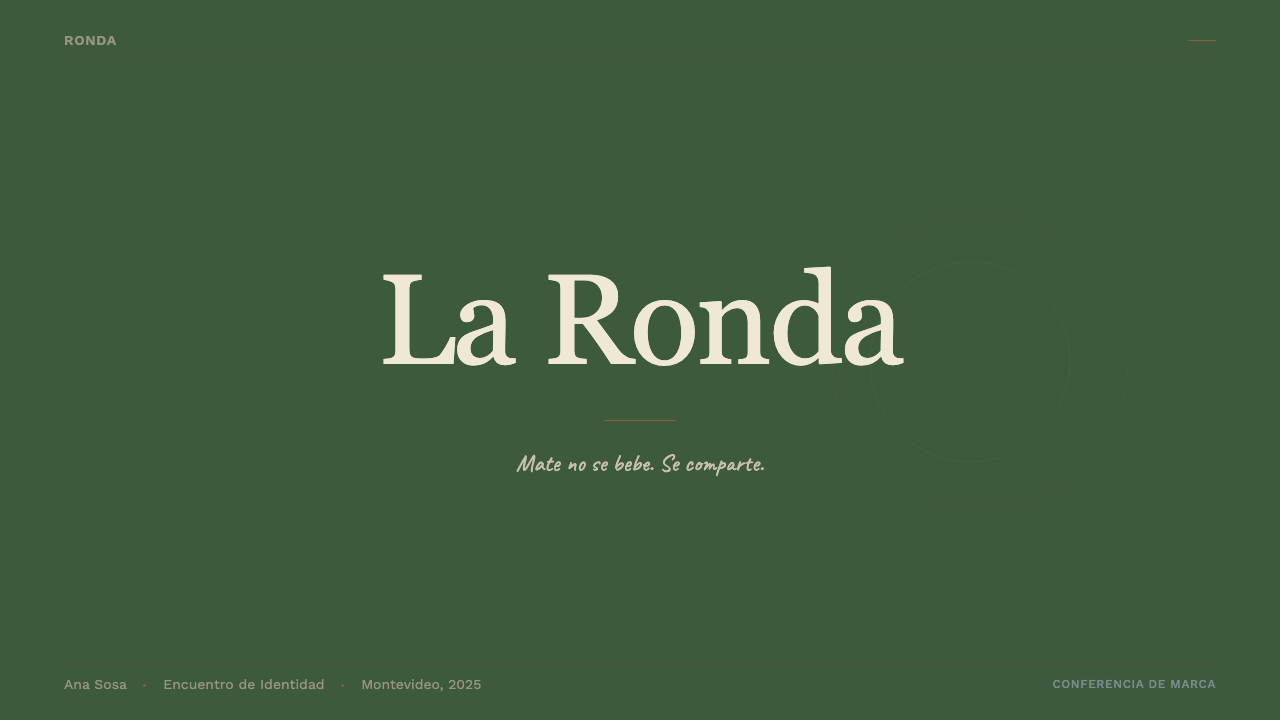
For presentation slides, the system's palette and typographic hierarchy produce covers and content pages that feel grounded and authoritative without visual aggression. A cover works well with a full-bleed deep green ground, the presentation title in warm cream type at generous scale, and a single material-reference emblem — a simplified gourd silhouette or a botanical frond — placed asymmetrically as an anchor rather than a decoration. Content slides should maximize white or cream space, using a single strong typographic hierarchy rather than competing visual systems. Data slides should treat charts as objects in the material palette — bars in the wood-tan range, key values in deep green, with generous padding between elements so the data has room to breathe in the way the system treats everything.
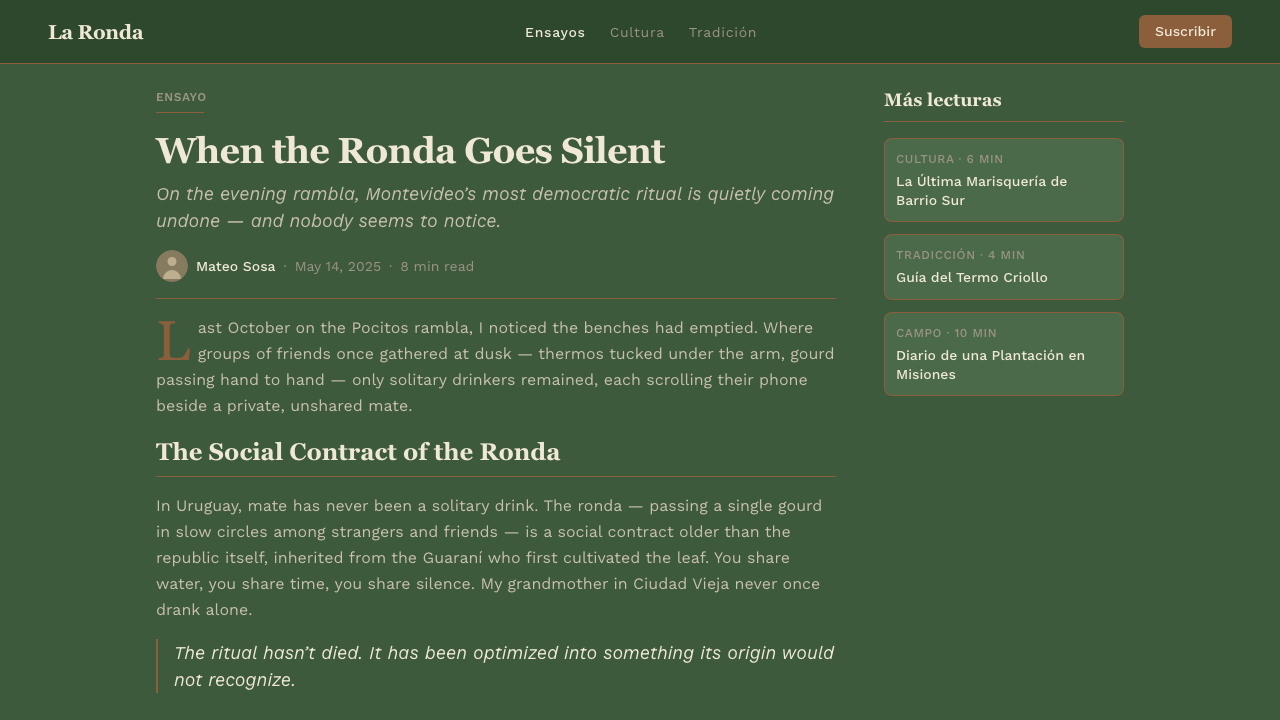
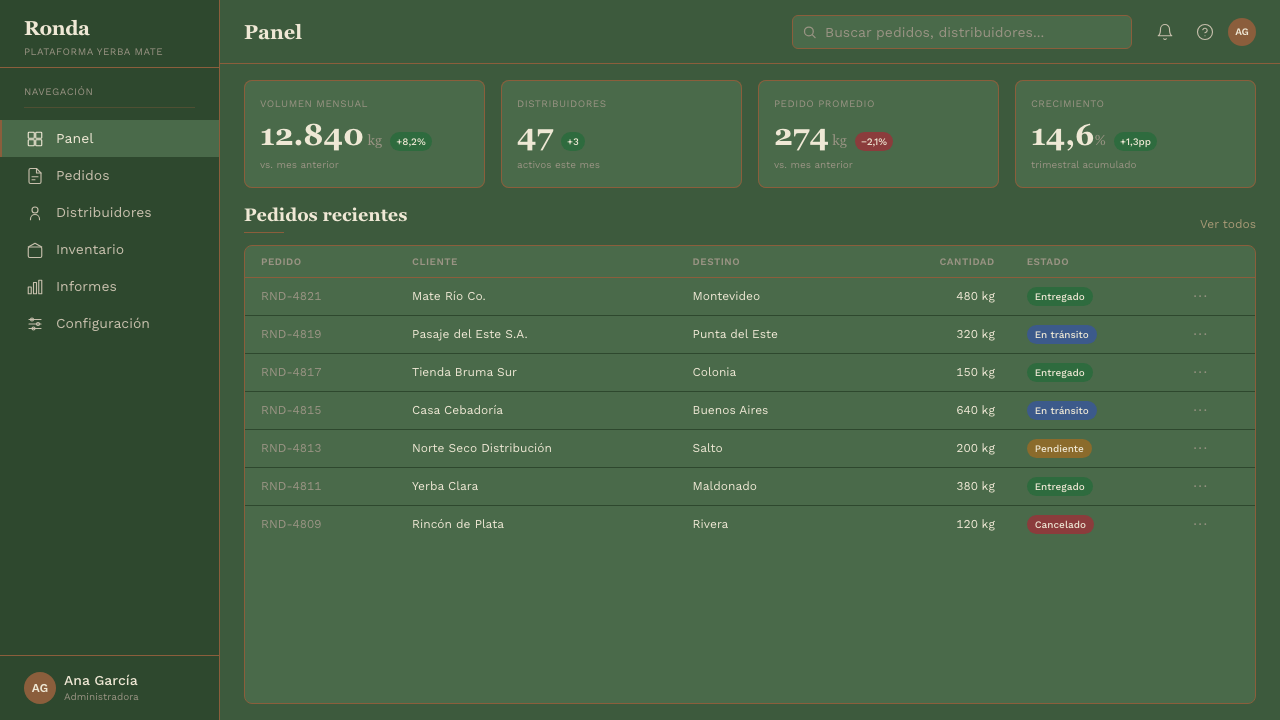
For web interfaces and dashboards, the system's warmth and generous spacing make it particularly effective for applications where users spend extended time — long-form reading interfaces, journaling tools, community forums, and cooperative management platforms. The approach is: warm off-white backgrounds rather than pure white, generous body text leading, and interactive states that use the deep green as a focus indicator rather than the electric blue that dominates contemporary UI. Cards use soft shadow over hard border; navigation is typographic and unhurried. Avoid urgent visual patterns — no red badges on non-emergency notifications, no animated attention-grabbers, no density that implies the user should feel rushed.
For editorial and marketing work, the system excels at projects where heritage and continuity are values: cultural journalism, cooperative annual reports, food and agriculture publications, and brand campaigns for products with genuine long histories. A Uruguayan Yerba Mate editorial layout uses a wide measure for body text on cream ground, positions pull-quotes in the warm wood-tan range, and uses the deep green sparingly for section headers and structural dividers. Marketing pages feel most authentic when they resist the temptation to accelerate: hero sections with generous vertical space, feature blocks that give each claim room to land before the next begins, and calls to action that invite rather than demand.
A common mistake when applying this system is reaching for the palette while ignoring the spacing and typographic rhythm that give it meaning. Deep greens and wood tans applied at high density on a tight grid produce something that reads as earthy without conveying the ritual calm that is the system's actual distinguishing quality. The system requires generosity of space to work: if the layout feels crowded, the palette alone cannot rescue it. A secondary error is adding decorative folklore elements — cacti, gauchos, maps — that the original system explicitly avoids. The visual language earns its cultural specificity through material reference and typographic temperament, not through illustration. The moment explicit regional imagery appears, the system tips from quietly rooted to costume.
Uruguayan Yerba Mate — FAQ
How is Uruguayan Yerba Mate different from other Latin American design styles?
Most Latin American design traditions lean toward warmth through chromatic richness — vivid yellows, terracottas, saturated magentas — and figurative imagery drawn from regional iconography. Uruguayan Yerba Mate is unusual in achieving warmth through material restraint rather than chromatic exuberance. The palette is narrow and desaturated by regional standards; the typography is humanist and quiet rather than expressive and folkloric; the imagery is material rather than symbolic. This reflects the specific character of Uruguayan culture — a small, literate, European-inflected country with a strong cooperative tradition — rather than a pan-Latin aesthetic. The system is closer in spirit to Scandinavian cooperatives or Japanese folk craft traditions than to Mexican or Brazilian visual cultures.
Can this style work for digital products, or is it too rooted in physical packaging?
The style translates well to digital contexts precisely because its core principles — material warmth, generous spacing, typographic restraint, structural calm — are not dependent on physical substrate. What needs translation is the tactile quality: in digital contexts, this becomes tonal warmth in background colors, consistent border-radius choices that feel organic rather than sharp, and a typography scale that never feels compressed. The system avoids features that are exclusively digital — aggressive hover effects, animated transitions for their own sake, notification badges — not because they are impossible to do in the style but because they introduce urgency that contradicts the system's fundamental temperament. Used in a long-form reading application, a community platform, or a wellness product, it can feel as appropriate digitally as it does on a kraft-paper label.
Is this system appropriate for brands that have no connection to Uruguay or mate culture?
Yes, as long as the application avoids explicit cultural signifiers and engages with the underlying values the style expresses rather than its surface imagery. The system's core — cooperative warmth, material honesty, unhurried pacing, egalitarian tone — is universal. A food brand in Japan, a community platform in Sweden, or a wellness application in Canada can use the typographic and color principles authentically if the brand genuinely shares those values. The risk arises when a brand borrows the visual surface while contradicting the underlying values: a luxury product using cooperative aesthetics to simulate accessibility, or an urgency-driven product using the calm palette to appear more considered than it is. The question to ask is not whether the brand is Uruguayan but whether it is genuinely slow, collective, and honest — if those words describe it accurately, the system will feel earned.
How should this style handle dark mode?
Dark mode is possible but requires care. The canonical form of the system is light-ground — cream and near-white backgrounds are load-bearing to the material warmth. A dark inversion should not simply swap cream for black, because pure black backgrounds remove the tonal warmth that the system depends on and make the deep green palette element disappear. A successful dark variant uses a very deep, slightly warm near-black as the ground — something closer to very dark olive or dark charcoal with a warm undertone — and brings the cream and wood-tan tones forward as primary text and accent colors. The deep green can shift toward a lighter, muted sage for visibility. The key constraint is preserving warmth throughout: if the dark variant starts reading as cool or tech-forward, the system's identity has been lost.
What makes this system feel different from general 'natural' or 'organic' design trends?
Contemporary 'natural' and 'organic' design trends often achieve their effect through simulated textures, grain overlays, illustrated botanicals, and a kind of deliberate imperfection that reads as hand-crafted. Uruguayan Yerba Mate achieves its organic quality through entirely different means: palette choices rooted in actual material reference, typographic decisions grounded in humanist rather than geometric forms, and spacing that mirrors the pacing of the cultural practice it draws from. There is no grain texture, no illustrated leaf, no deliberate imperfection. The warmth comes from proportion and color temperature rather than from surface decoration. This makes the system more durable and more transferable: it ages better than trend-driven organicism because it is not imitating craft — it is practicing the design principles that craft produces.
Related design styles
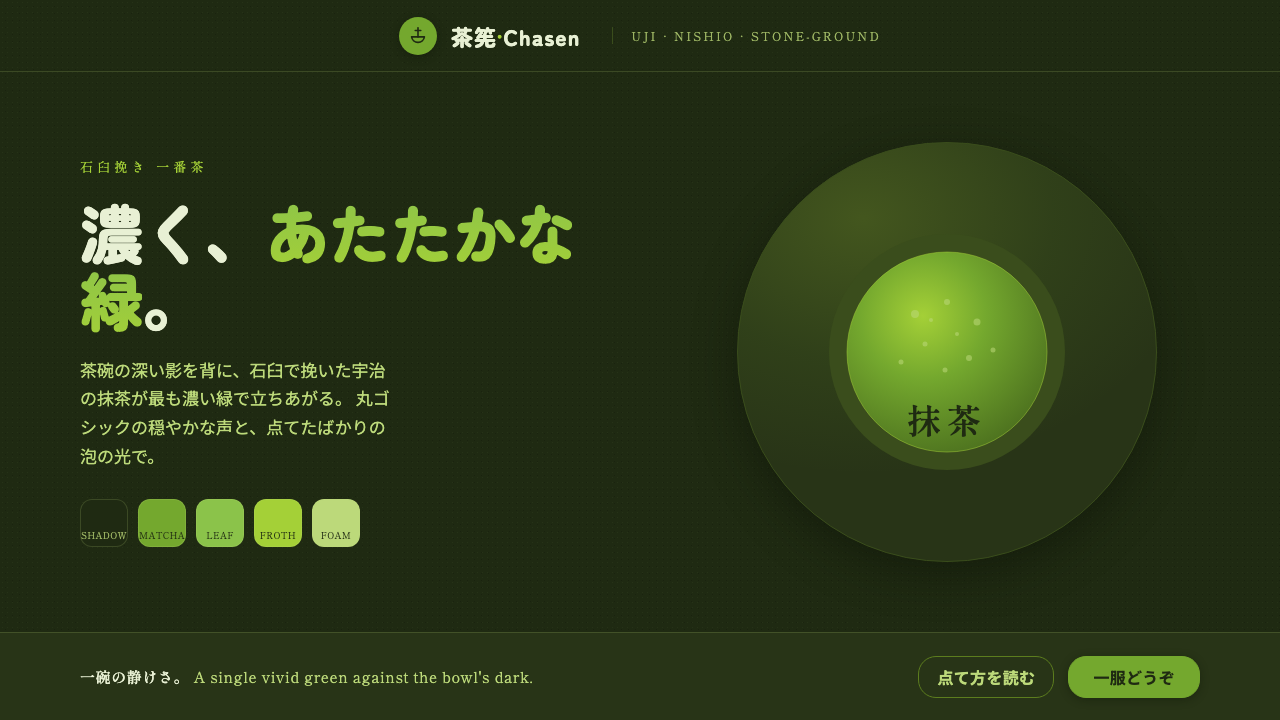 Matcha Latte Powder GreenA single vivid green at full strength. Stone-ground matcha on a dark tea-bowl…
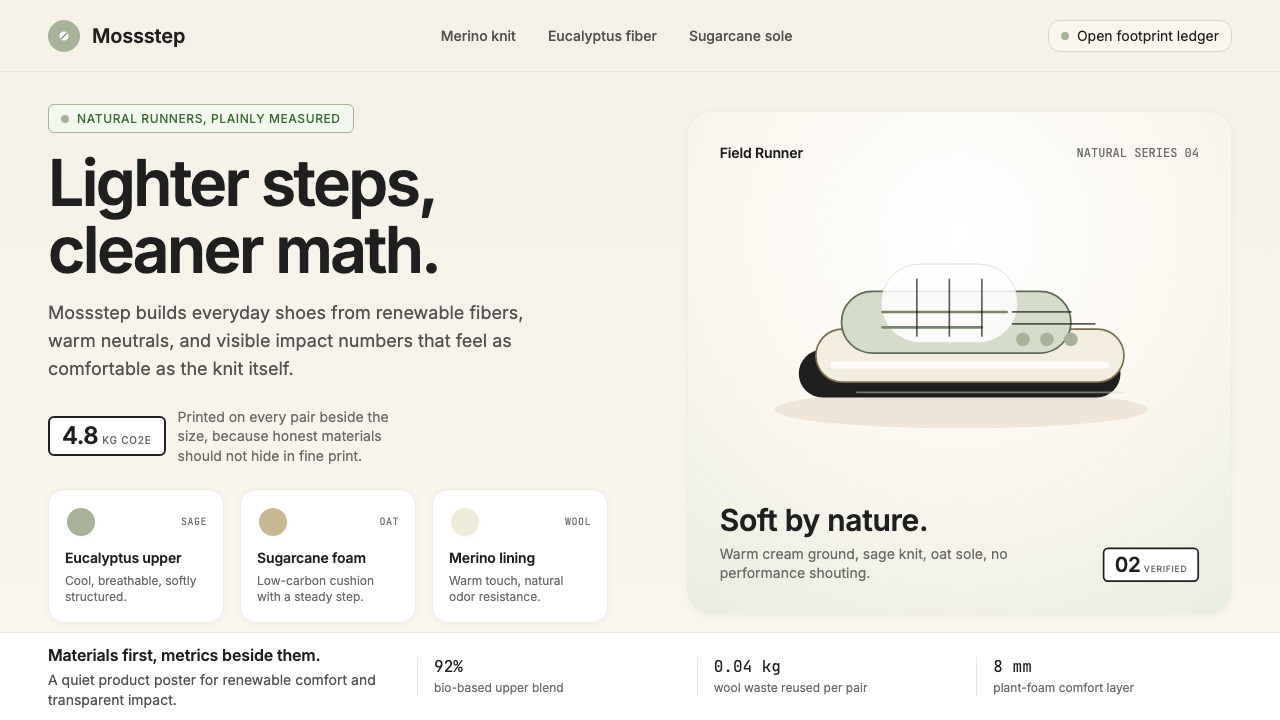 AllbirdsSustainability that breathes. Cream-and-sage tones, carbon labels next to pri…
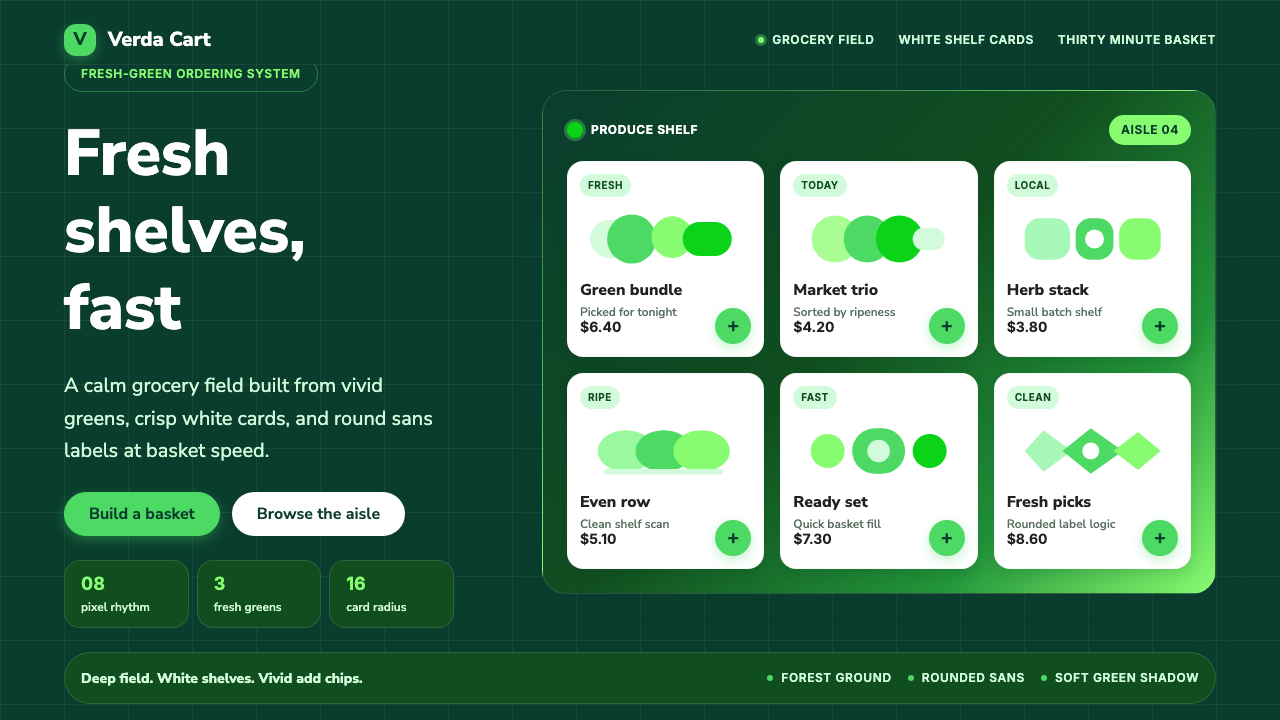 Cornershop AppProduce-fresh and calm. Forest green field, white shelf cards, vivid green ac…
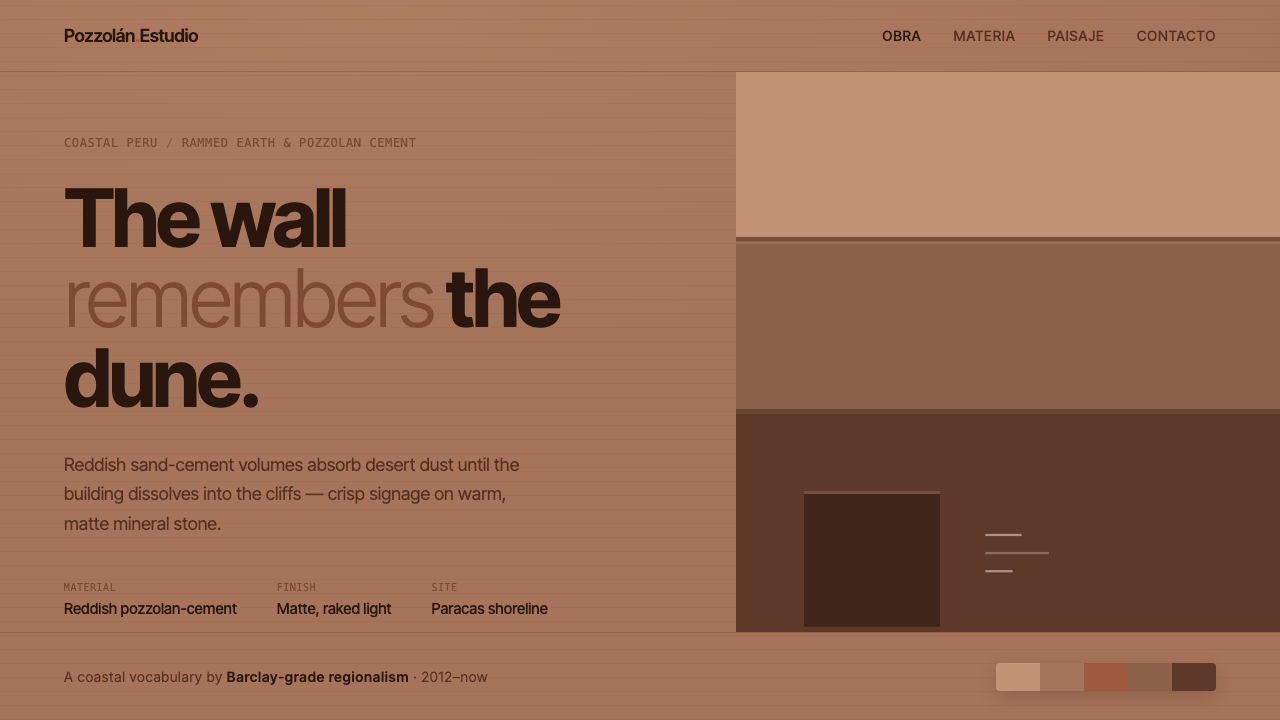 Peruvian Contemporary Adobe-ModernThe building dissolves into the dune. Reddish pozzolan-cement planes, matte r…
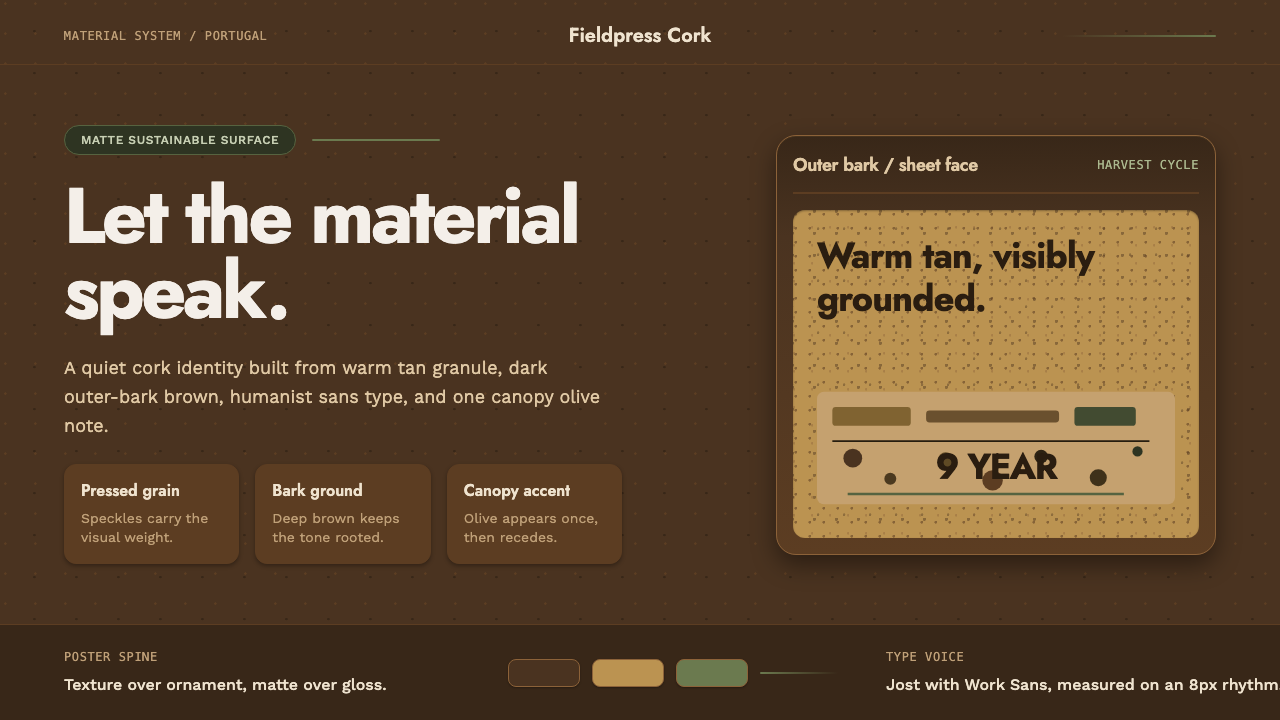 Portuguese CorkGrounded by texture. Cork tan speckles on bark brown, with one olive rule.
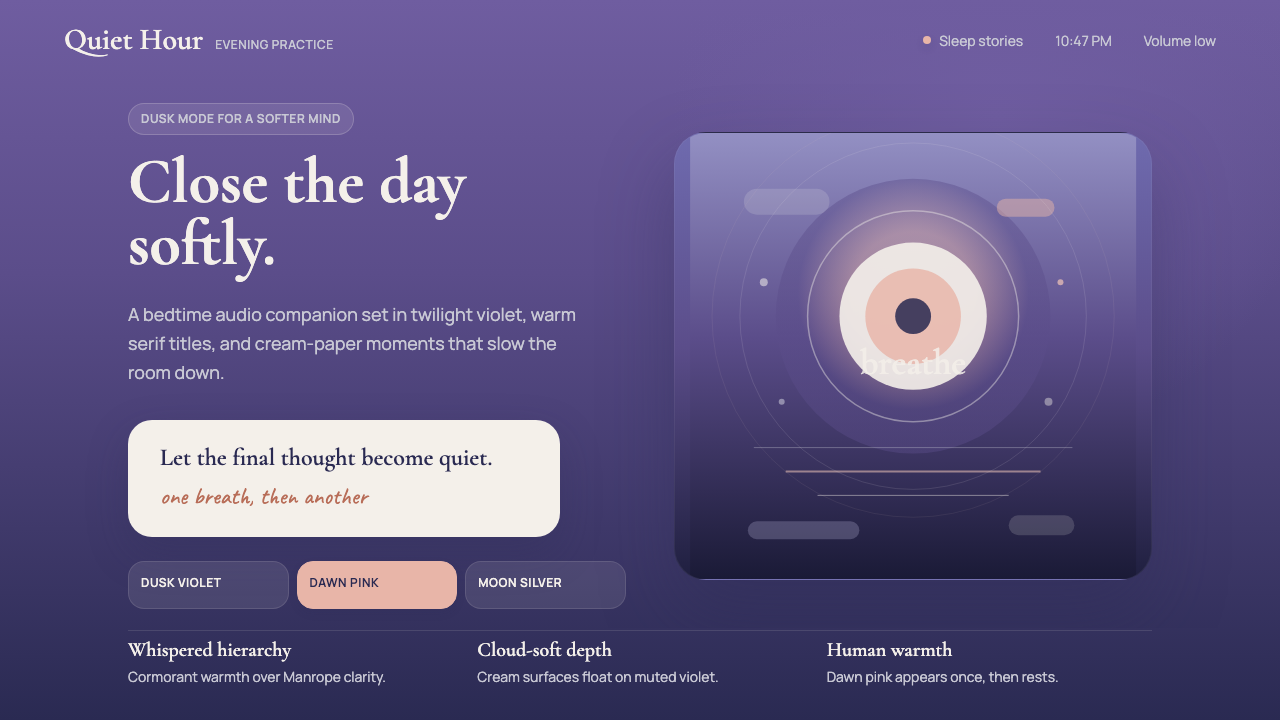 Calm App Purple MeditationWhispers at bedtime. Dusk-purple gradients, cream serif type, and dawn-pink w…