What is Twitch?
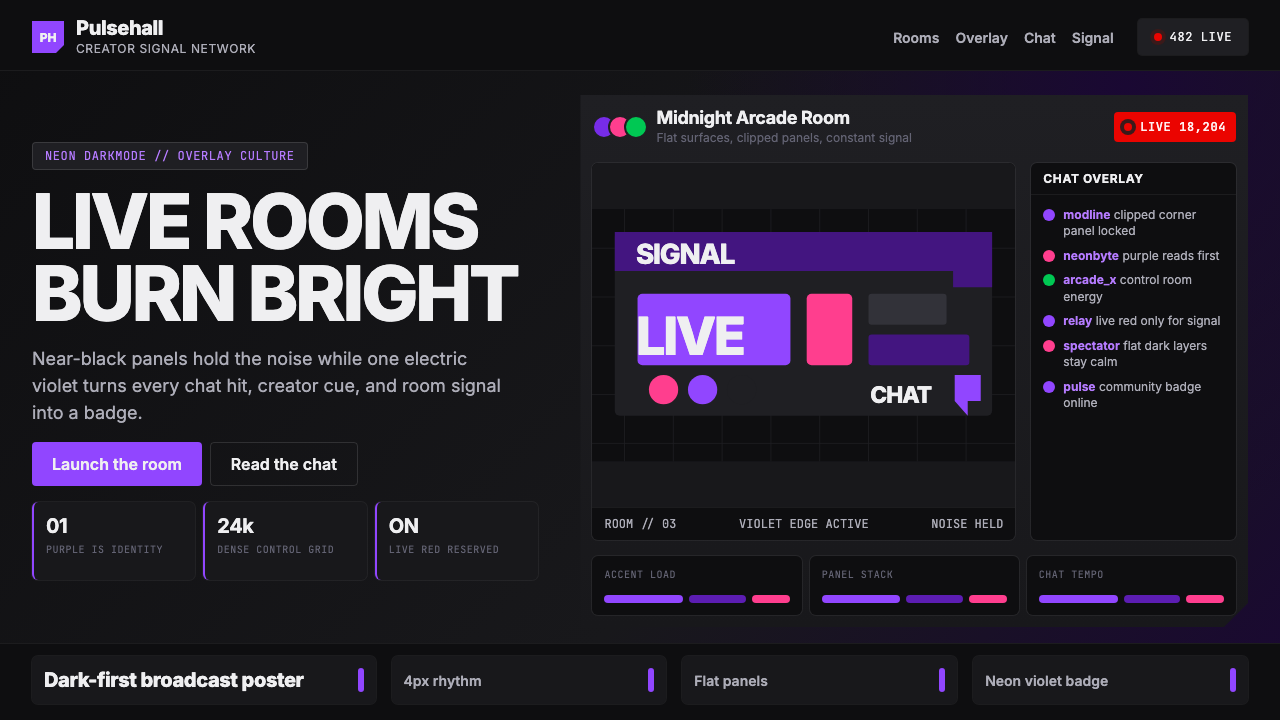
Twitch transformed a single shade of electric violet into the defining signal of an entire generation of live-streaming culture.
Twitch in brief
Twitch Purple is the visual identity system born from one of the most consequential rebrands in digital product history. When the design studio COLLINS overhauled the platform's look in 2019, the goal was not merely cosmetic refresh — it was to codify, in a single coherent visual language, what live-streaming culture had already taught millions of viewers to feel: the electric charge of presence, the tribal warmth of a shared chat room, the control-room intensity of a creator's workspace.
At its center is a vivid, deeply saturated violet that sits in an unusual perceptual register — neither the corporate blue of legacy tech brands nor the aggressive neon of gaming peripherals, but something that reads simultaneously as dark-mode-native and unmistakably alive. This anchor color functions as both brand mark and community badge; it appears on filled action buttons, live-indicator dots, subscription highlights, and donation banners, pulsing with the same electric identity across every surface.
The broader design language draws from stream-overlay culture — the layered HUD panels, chat feeds, and alert boxes that creators build on top of their game footage. Flat dark backgrounds, neon accent edges on interactive elements, rounded avatars floating over near-black surfaces, and dense information grids form a visual ecosystem that feels like a control room: functional and information-rich, never cold or sterile.

Where does Twitch come from?
The story of Twitch Purple begins not with a designer's palette but with a platform pivot. In 2011, Justin Kan and Emmett Shear spun out the gaming-focused live-streaming section of Justin.tv into a standalone service called Twitch. The name, borrowed from an internet slang term for the twitching reflex of a gamer's hands under pressure, signaled from the start that this was a platform built from and for a specific subculture. The early visual identity was utilitarian — a dark interface inherited from the practical demands of streaming software overlaid on gaming sessions, without deliberate aesthetic ambition.
The visual culture of early Twitch was in large part shaped not by the company's designers but by its creator community. Stream overlays — the custom graphic panels, animated alerts, and chat boxes that streamers placed over their broadcasts — established the visual grammar that would eventually define the brand. Neon accents on dark grounds, high-contrast information panels, rounded avatar frames: these conventions emerged organically from thousands of independent creators building their own visual identities, then became the common language of the medium.
Amazon acquired Twitch in 2014 for nearly one billion dollars, accelerating its growth far beyond the gaming niche into a broader live-entertainment platform. By the late 2010s, Twitch hosted cooking shows, political commentary, live music, and talk formats alongside its core gaming content. This expansion created a visual identity problem: the scrappy dark-ground aesthetic of early streaming culture needed to mature into a system capable of representing a platform at the scale and ambition of a major media company.
In 2019, COLLINS — the New York-based brand and design consultancy — undertook the rebrand that would crystalize the Twitch visual identity into its current form. The studio's approach was to look at what the community had already created — the overlay culture, the emote vocabulary, the ritual language of raids and hype trains — and distill those vernacular signals into a designed system. The choice of a single vivid violet as the irreducible brand signal was deliberate: it honored the community's longstanding association of purple with Twitch (a color that had been present since the early interface) while giving it the formal precision and consistency needed to function as a global visual brand.
What defines the Twitch look?
Anchor Violet
The defining characteristic of the system is a single, electrically saturated violet that functions simultaneously as brand color, interactive signal, and community marker. This violet sits at a precise perceptual point: deep enough to read as dark-native, vivid enough to pulse with energy against near-black backgrounds. It appears on every primary action surface — filled buttons, live indicators, subscription badges — and its consistent deployment across contexts means users instantly associate any appearance of this color with Twitch's presence and liveness.
Dark-First Foundations
The system is engineered from the ground up for dark environments. Near-black backgrounds are not an alternative mode — they are the canonical surface. This decision is grounded in platform context: viewers and creators typically use Twitch in dimly lit rooms during long sessions, and a dark foundation reduces eye strain while making the vivid violet accent feel more electric rather than simply bright. Text, icons, and structural elements are rendered in light tones calibrated to maintain comfortable contrast across extended use.
Layered Information Density
Twitch interfaces are designed to carry multiple simultaneous streams of information: video content, live chat, channel metadata, recommended streams, and viewer statistics can all coexist on a single screen. The design system manages this density through clear visual hierarchy — chat panels, video frames, and navigation surfaces are distinguished by subtle tonal shifts within the dark range, not by hard dividing lines or decorative borders. The result is a layout that reads as structured even when packed with real-time information.
Rounded, Soft-Edged Identity Marks
Avatar frames, emote containers, and badge shapes throughout the system use pronounced rounding — circles and pill shapes rather than sharp rectangles. This softness is not incidental; it creates a sense of personal warmth and approachability that counterbalances the density and technicality of the surrounding interface. Rounded shapes have become shorthand for community membership: the circular avatar is an identity badge as much as a profile image, and its consistent form across millions of channels creates visual cohesion across the entire platform.
Neon Accent Economy
Beyond the primary violet, the system deploys a small vocabulary of secondary neon accents — electric greens for achievement indicators, bright magentas and teals for promotional moments — that echo the aesthetic of stream overlays and gaming peripherals. Critically, these accents are used sparingly and contextually rather than spread across the interface uniformly. Each accent color earns its presence by signaling something specific: a milestone, a notification, a live status. This controlled scarcity keeps each accent legible as a signal rather than noise.
Broadcast Typography
Type in the Twitch system is direct, legible, and scale-conscious. Headlines and channel names are set boldly to compete with the visual noise of live video thumbnails; interface labels and metadata use compact, tightly spaced settings that maximize information density without sacrificing readability. The typographic register is closer to sports broadcast graphics than to traditional print or web editorial — designed for fast scanning, ambient awareness, and the interrupted attention patterns of a viewer who is also engaged with chat and gameplay.
Emote and Icon Vernacular
Twitch's visual system extends beyond the designed interface into a rich community-generated vocabulary of emotes — small expressive icons that function as a specialized emoji dialect unique to each channel. The platform's design accommodates this vernacular by treating the emote grid as a native interface element rather than an external plug-in. This integration is philosophically significant: the brand acknowledges that the community's own visual language is as much a part of the platform's identity as any asset created by the design team.

Who shaped Twitch?
Justin Kan co-founded Justin.tv in 2007 and pioneered the concept of always-on personal live-streaming before the medium had an established audience or economic model. His decision to spin out the gaming-focused segment as Twitch in 2011 was a pivotal act of product vision: recognizing that gaming audiences had distinct cultural needs and community behaviors that warranted a dedicated platform. Though Kan departed before the current visual identity was established, the structural decisions he made — the dark-by-default interface, the chat-centered community model — became the cultural substrate on which the Twitch aesthetic was eventually built.
Emmett Shear served as Twitch's CEO from its founding through 2023, overseeing the platform through its most transformative periods: the Amazon acquisition in 2014, the explosive growth of the creator economy in the late 2010s, and the 2019 COLLINS rebrand that crystallized the visual identity. Under his leadership, Twitch made the cultural and product decisions — investing in streamer relationships, developing the subscription and bits economy, formalizing the emote system — that gave the design language its social meaning. A visual system carries weight only when the community it represents is real; Shear's long tenure helped ensure the Twitch community was.
COLLINS is the New York-based brand consultancy responsible for the 2019 Twitch rebrand that transformed an ad-hoc visual vernacular into a designed system. The studio's approach — treating the streaming community's own aesthetic conventions as raw material rather than noise to be cleaned up — was methodologically distinctive. By studying overlay culture, emote design, and chat behavior before setting any visual direction, COLLINS arrived at a brand identity that felt indigenous to the platform rather than imposed upon it. The resulting system has proven durable across multiple years of rapid platform change, a testament to how grounded its origins were.
The internal Twitch brand and design team has been responsible for extending and evolving the COLLINS-established visual system across every touchpoint of the platform — from mobile app interactions to partnership marketing, from streamer onboarding materials to the physical presence at events like TwitchCon. The ongoing work of maintaining a brand system at the scale of a platform with millions of daily active users requires constant decisions about how to apply the visual language to new product surfaces, emerging creator categories, and cultural moments. The internal team's stewardship has been as important to the identity's coherence as its original design.
How do you use Twitch today?
Applying the Twitch visual language outside its native platform context requires understanding what the system is actually communicating: immediacy, community belonging, and the electric tension of live presence. These are not values that every product shares, and the design language will feel inauthentic if applied purely for its visual drama without matching emotional register. The style works best for products that genuinely operate in real-time, community-driven, or high-engagement contexts — tools for creators, gaming platforms, live event experiences, and community-centric social products.
For presentation slides, the Twitch aesthetic translates most naturally into covers and section breaks rather than dense content pages. A cover built on a near-black ground with a single vivid violet headline and a bold rounded logotype immediately evokes the platform's broadcast energy. Content slides should maintain the dark foundation and use the accent color exclusively for the single most important data point or call-out per slide — treating the violet the way a live indicator dot treats liveness, as a signal that demands attention precisely because it appears rarely. Data visualizations benefit from the high-contrast approach: charts with dark backgrounds and neon-edged bars or highlighted segments read as broadcast-graphics, authoritative and immediate.
For web interfaces — particularly dashboards, creator tools, and subscription or pricing pages — the design system's density management principles are directly applicable. Define a clear surface hierarchy using tonal shifts within a dark range: the deepest near-black for background, a slightly elevated dark tone for card and panel surfaces, and a lighter mid-tone for secondary information areas. Reserve the primary violet strictly for interactive elements: primary buttons, active navigation states, and live or status indicators. Secondary accent colors should appear only for categorical differentiation in data displays or promotional badges, never as decorative fill.
For editorial and marketing applications — event announcements, creator spotlights, partnership decks, and social cards — the Twitch style supports a bold, poster-like visual register. Full-bleed dark backgrounds allow vivid typography and graphic elements to carry maximum visual weight. A recurring design move is the neon-edged frame or panel: a thin violet or secondary-neon border around a content block creates the visual grammar of a stream overlay, immediately anchoring the piece in the platform's cultural context. Photography and video stills integrate naturally into dark-ground compositions when treated with high contrast and tight cropping, echoing the thumbnail culture of the platform.
The most common mistake when working with Twitch-style visual language is over-saturating the accent palette. The system's power comes from restraint: the vivid violet earns its impact because everything around it is dark and comparatively neutral. Introducing multiple bright accent colors simultaneously — violet competing with neon green, electric teal, and bright magenta on the same surface — collapses the hierarchy and reads as chaotic rather than electric. A second common error is applying rounded corners inconsistently: the soft-edged avatar and badge forms are markers of community identity, and their application to structural layout elements like content cards or navigation panels dilutes their meaning. Use rounding intentionally, at the identity level, and keep structural layouts more angular.

Twitch — FAQ
Is Twitch Purple only appropriate for gaming or streaming products?
Not strictly, but it carries strong cultural associations with live digital communities, and those associations will color how audiences read the design. The system works well for any product whose core experience involves real-time participation, community membership, or high-engagement interaction — creator tools, event platforms, competitive gaming adjacent products, and community-centric social apps. It will feel mismatched in contexts calling for calm authority, professional formality, or organic warmth — financial products, healthcare applications, and lifestyle brands, for instance. The question to ask is whether the values of immediacy and communal electric energy align with what the product is actually trying to make the user feel.
How does Twitch Purple handle light mode?
The design system is architecturally dark-first, and the vivid violet accent is calibrated to work against dark grounds. A light-mode variant is technically possible but involves genuine tradeoffs: on white or light-gray backgrounds, the same vivid violet can read as overly aggressive or corporate rather than electric. The accent's sense of charged energy is partly a product of its dark context. If a light-mode application is required, the violet typically needs to be slightly desaturated or deepened to maintain visual comfort, and the characteristic broadcast-dense information layering should be simplified considerably — the dark-mode aesthetic of overlapping panels and neon edges does not translate gracefully to light grounds.
What is the difference between Twitch Purple and generic dark-mode neon design?
Generic dark-mode neon design typically stacks multiple high-saturation colors against black for visual spectacle, often with gradients, glow effects, and futuristic science-fiction references. Twitch Purple is disciplined in a way that generic neon is not: it commits to a single dominant accent color, uses secondary accents contextually rather than decoratively, and grounds its aesthetic in the specific functional vernacular of streaming overlays rather than in generalized cyberpunk or synthwave imagery. The rounded organic shapes, the chat-panel information density, and the community-identity forms like avatar circles are all specific to live-streaming culture — they are not borrowed from science fiction but evolved from actual platform use patterns.
Can the Twitch visual style work for print or physical media?
Yes, with deliberate adaptation. The dark-ground vivid-accent palette translates well to print contexts where the production process supports rich dark inks — event programs, promotional posters, merchandise, and packaging for gaming-adjacent products. The main challenge is that the style's most distinctive characteristics — the ambient glow around interface elements, the translucent layered panels, the real-time chat density — are intrinsically digital and do not have direct print equivalents. A successful print adaptation preserves the color logic and the bold typographic scale while substituting the digital translucency for solid flat shapes and the layered density for cleaner, more readable composition.
How should the Twitch style handle brand moments that need to feel celebratory or festive?
The system has natural mechanisms for escalation that do not require abandoning its core visual language. Celebratory moments in Twitch's own design — subscriber milestones, hype-train peaks, seasonal events — are handled through controlled amplification rather than palette replacement: additional secondary accent colors enter the composition, animation brings static elements to life, and the information density temporarily spikes with celebratory overlays. For static applications like event posters or partnership announcements, the equivalent approach is introducing a second accent color alongside the primary violet, increasing typographic scale, and leaning into the broadcast-graphics energy of the system's boldest compositions. The celebration is in the volume, not in switching to a different visual system entirely.
Related design styles
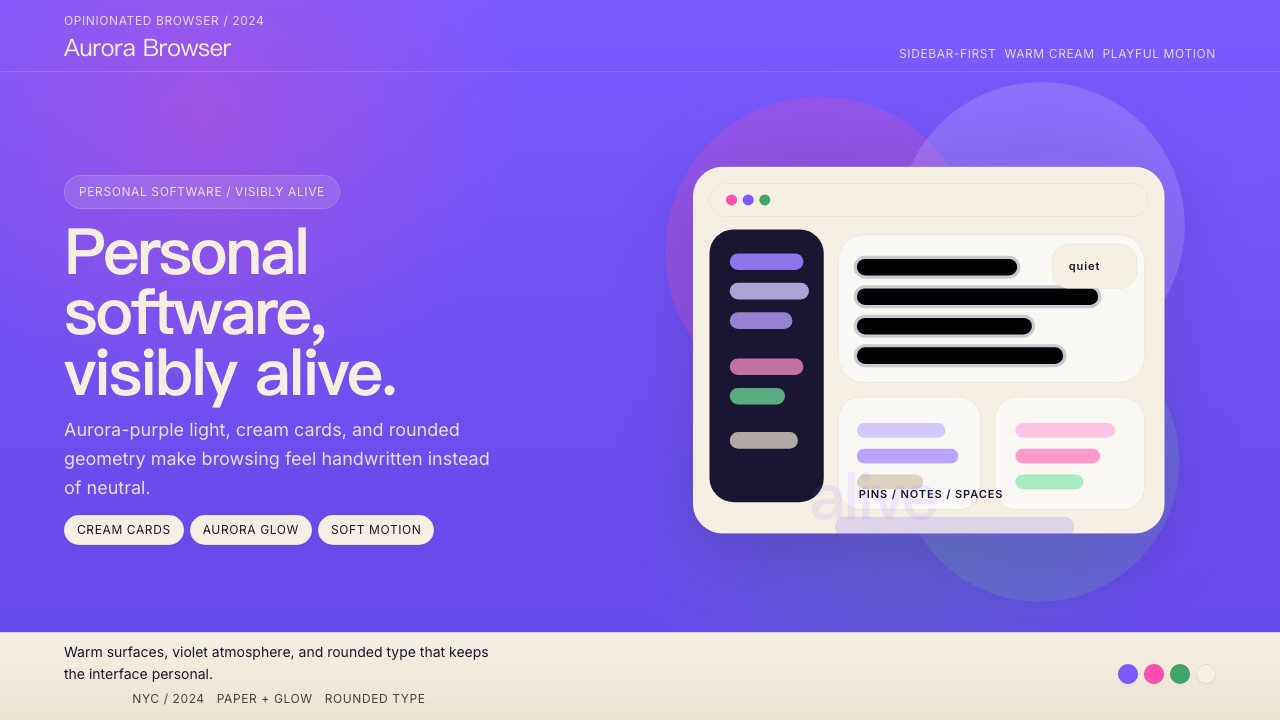 Arc BrowserPersonal software, visibly alive. Aurora purple glows over cream cards and ro…
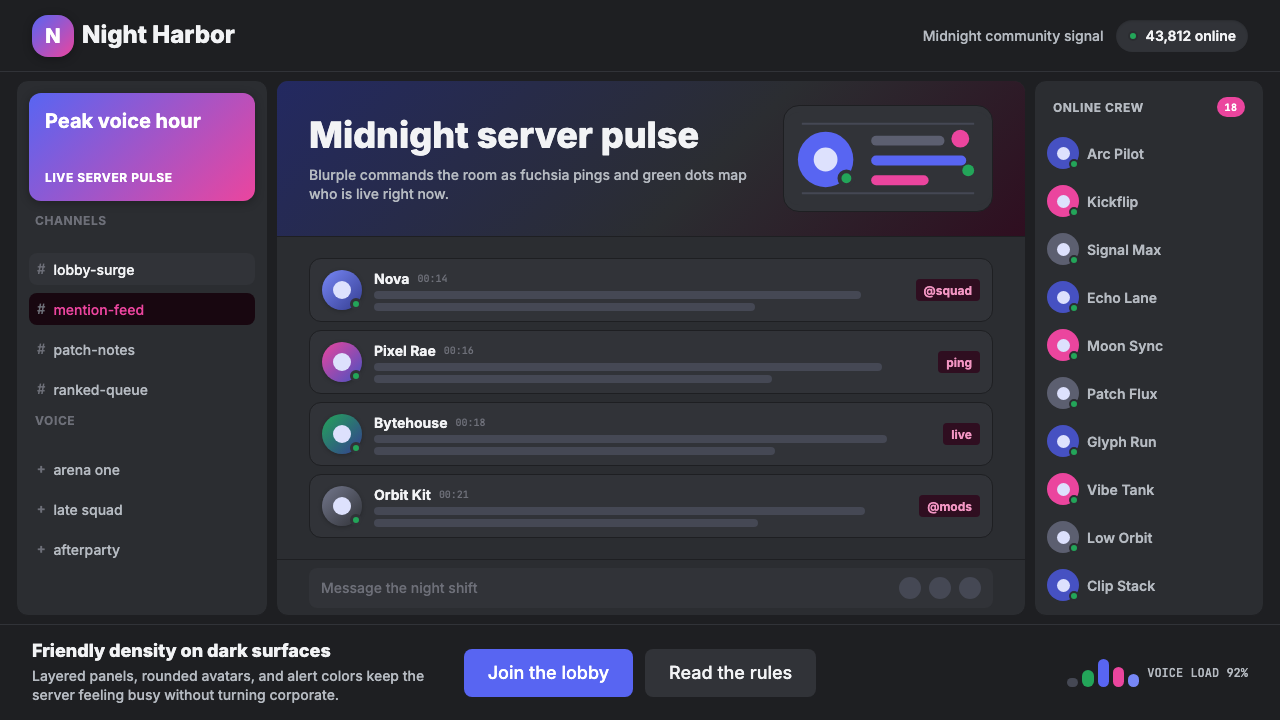 Discord Blurple Server (2020)Midnight server energy. Blurple panels, fuchsia pings, and green status dots…
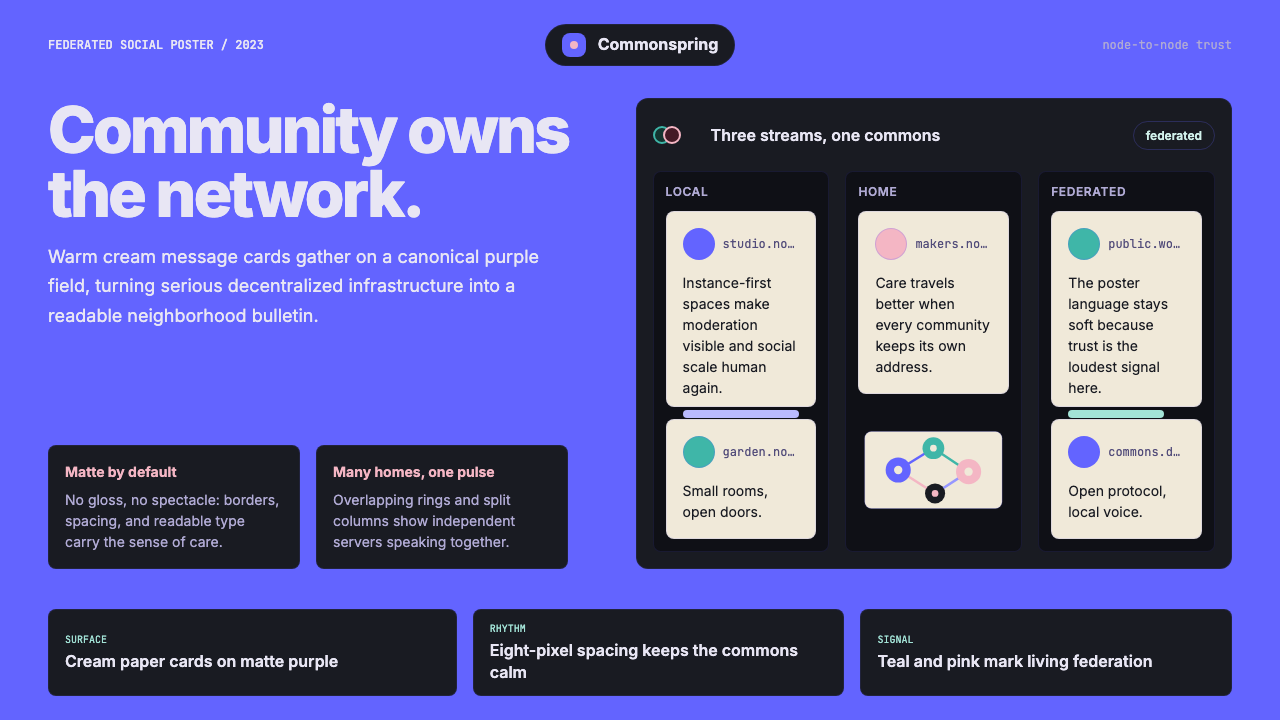 Mastodon FediverseDecentralized warmth. Purple fields and cream toot-cards make federation feel…
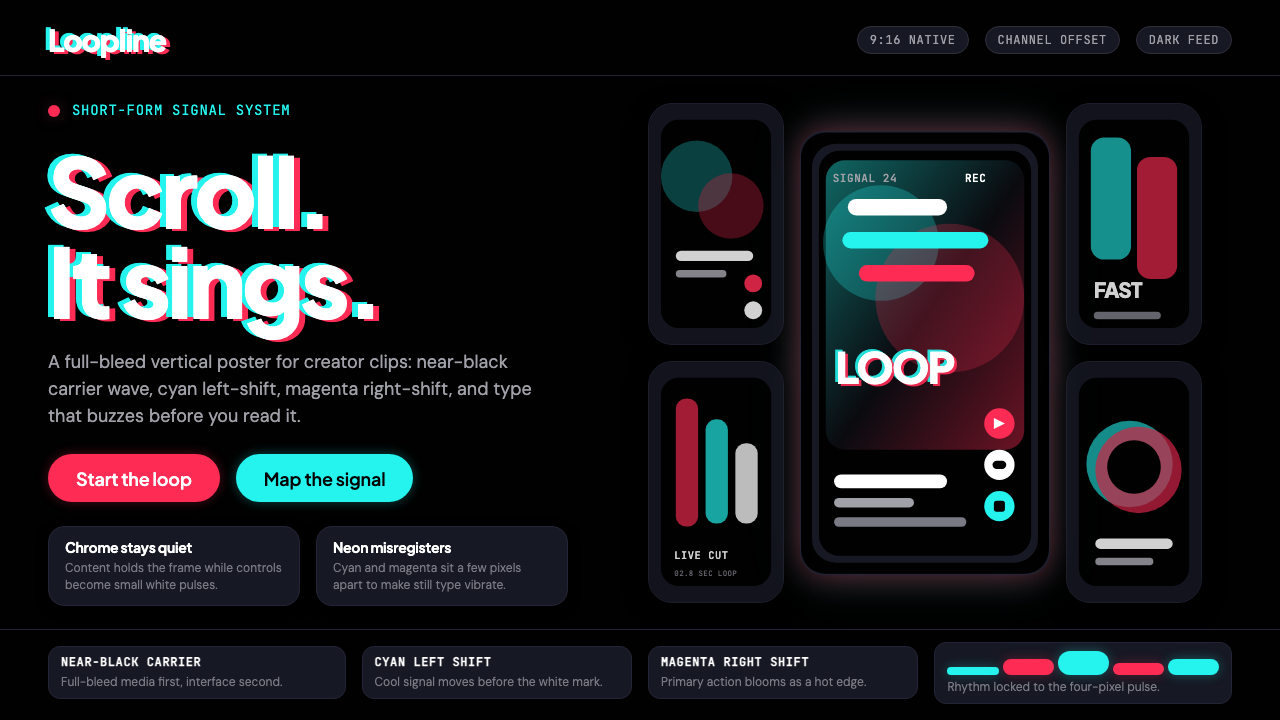 TikTok 2024Attention vibrates. Near-black feed, cyan-magenta offsets, and vertical frame…
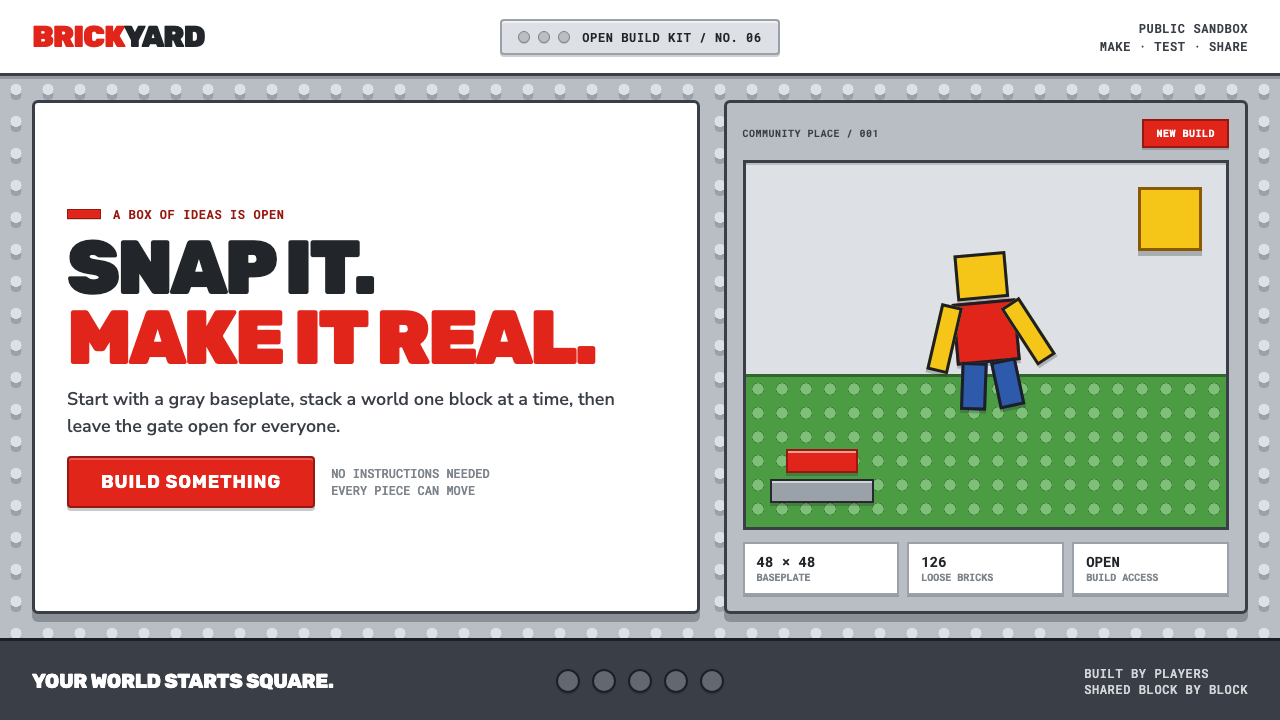 Roblox (2006)Play begins with a click. Fire-engine red cuts through a hard-edged gray stud…
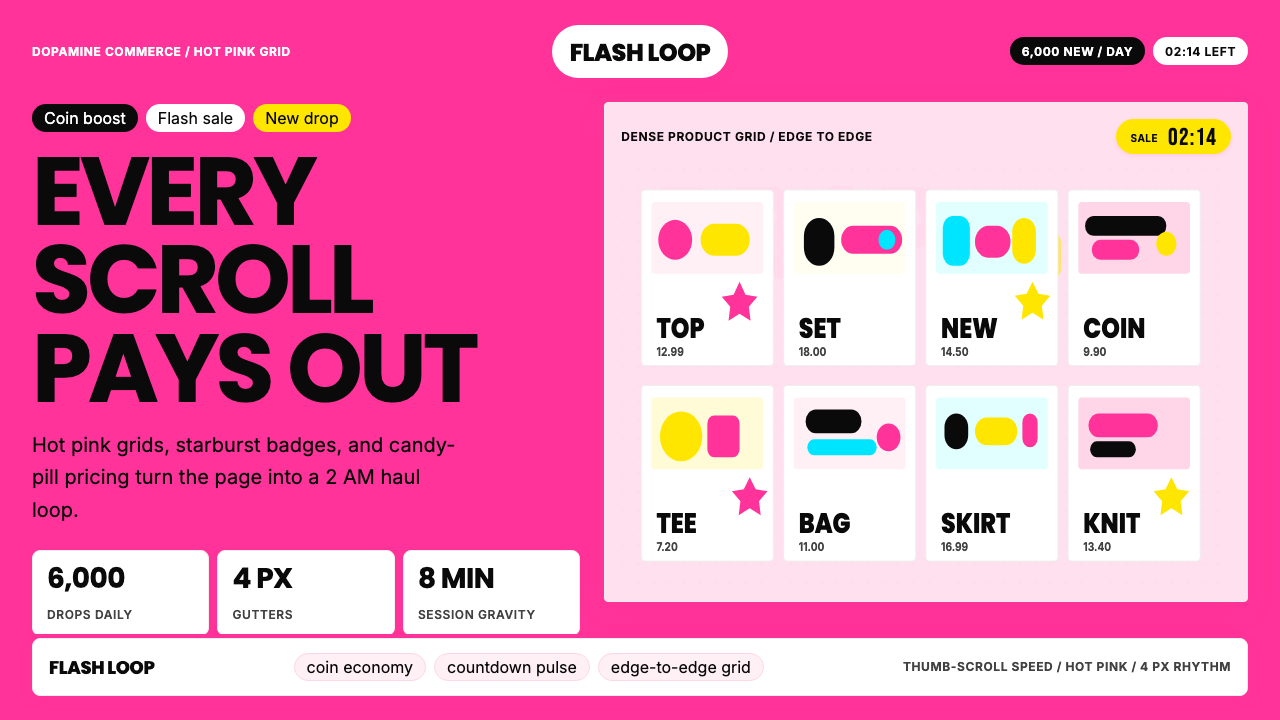 Shein Fast FashionDopamine density wins. Hot pink grids, starbursts, and candy pills pack every…