What is The Atlantic Monthly?
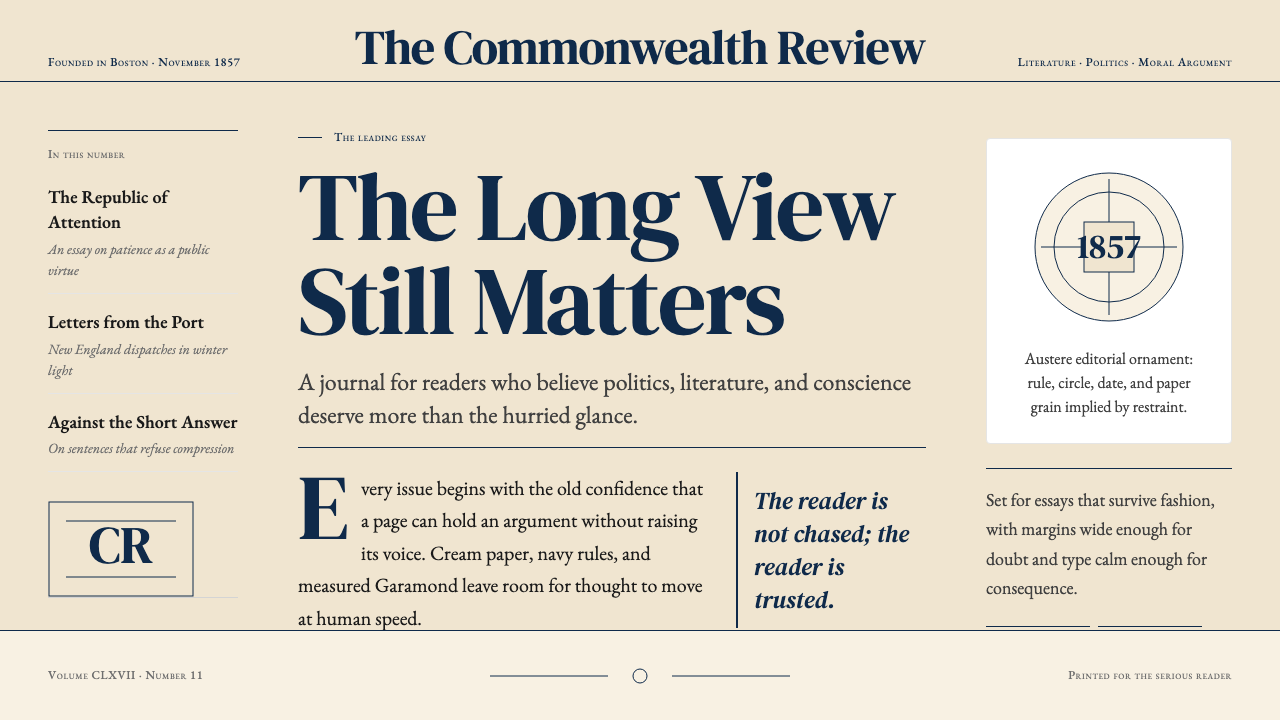
Deep navy, warm cream, and classical serifs — The Atlantic Monthly's visual restraint has been the face of American intellectual authority since 1857.
The Atlantic Monthly in brief
The Atlantic Monthly is America's longest-running literary-political journal, and its design language is one of the most recognizable in publishing: a cool, deep navy paired with warm cream paper stock, classical Garamond-style serifs setting long-form essays, generous margins, and hairline dividers that rule the page like the lines of a leather-bound ledger. The overall effect is one of measured intellectual authority — a visual system that does not try to seduce the reader into clicking but invites them to settle in and read.
Unlike design movements born in art schools or manifestos, this aesthetic emerged from editorial practice: from the needs of a journal that has always published dense, serious, long-form writing and needed its pages to serve that writing rather than compete with it. The result is a design that trusts the reader. No saturated accent colors to signal urgency, no sans-serif boldness to project modernity — only a quiet insistence on the primacy of the sentence.
The style has evolved across eras and ownership changes but has retained its essential commitments. Color is used with restraint and purpose, not as decoration. Type is set to be read, not scanned. Space is not empty — it is where the reader breathes between ideas. These commitments give the Atlantic aesthetic a timelessness that makes it feel equally at home in a nineteenth-century reading room and in a contemporary digital feature.

Where does The Atlantic Monthly come from?
The Atlantic Monthly was founded in Boston in November 1857, at a literary dinner that brought together some of the most distinguished minds of New England: Ralph Waldo Emerson, Henry Wadsworth Longfellow, Oliver Wendell Holmes, and James Russell Lowell, who became the magazine's first editor. The founding group was not primarily concerned with design — they were concerned with ideas. But the visual form that the magazine took from its earliest issues reflected the typographic conventions of serious Boston publishing: classical Roman typefaces, well-leaded columns, and a dignified restraint that signaled the journal's intellectual seriousness to its readers.
Throughout the nineteenth century, the magazine published writers who defined American literary culture — Harriet Beecher Stowe, Mark Twain, Henry James, and Frederick Douglass among them. The design remained anchored in the traditions of letterpress typography: high-quality paper, generous margins, and type set with the patience that only hand-composition demanded. These were not aesthetic choices in a contemporary sense; they were the natural outcome of a craft tradition in which the printer and the editor shared a common understanding of what a serious publication looked like.
The twentieth century brought successive redesigns as the magazine changed ownership and navigated the economic pressures of a mass-market publishing industry, but it consistently returned to its core visual vocabulary. The deep navy that became the signature cover color, the warm cream of the interior paper stock, and the classical serif that carried the body text all persisted through these evolutions as markers of editorial identity. By the time the Emerson Collective acquired the magazine in 2017 under Laurene Powell Jobs, the aesthetic had been distilled into something approaching a canonical form: austere, confident, and instantly legible as a journal that has outlived presidents.
The contemporary visual identity, which took shape most fully in the period around 2020 to 2024, reflects both the magazine's historical inheritance and the demands of digital publishing. The navy and cream palette translates naturally to screen, where it reads as cool and authoritative against the bright, saturated competition of the social feed. The Garamond-influenced serif typeface, with its long ascenders and classical proportions, performs the same function online that it did in print: it tells the reader that what follows is worth slowing down for. The hairline rules and generous white space, once necessitated by the physical constraints of the printed column, now serve as deliberate signals of restraint in a media environment that rewards density and noise.
What defines the The Atlantic Monthly look?
Color Palette
The Atlantic palette is built on a dialogue between two anchors: a deep, authoritative navy that carries covers and primary accents, and a warm cream that serves as the ground for interior pages and digital backgrounds. Against these two, black carries all body type and structural rules. The navy reads as institutional and serious — closer to the blue of a banker's binding than the blue of a corporate brand — while the cream prevents the palette from feeling clinical or cold. Accent colors appear rarely, and when they do, they are desaturated and warm rather than bright and assertive.
Typography
Classical serif letterforms in the Garamond tradition are the typographic backbone of the Atlantic aesthetic. These typefaces are chosen for their long history of use in scholarly and literary publishing, their legibility in long-form reading, and their unmistakable association with a certain quality of intellectual attention. Headlines are set in the same serif family as body text, distinguished by scale and weight rather than by switching to a contrasting face. The result is a typography that feels continuous and composed — every word on the page coming from the same considered source.
Space and Measure
Generosity with white space is a defining commitment of the Atlantic aesthetic. Margins are wide enough to breathe, columns are set at a measure that supports comfortable long-form reading, and section breaks are given room to register rather than being crammed into the flow of text. This approach signals — deliberately — that the reader is not being rushed. The space is not decorative; it is structural, holding the text in a frame that slows reading to a pace at which ideas can be absorbed rather than merely processed.
Hairline Rules and Dividers
Thin horizontal rules — the typographic equivalent of a quiet clearing of the throat — are used throughout the Atlantic design to organize content without asserting hierarchy loudly. These dividers are fine enough to feel structural rather than decorative, marking the boundary between a headline and a deck, between a pull quote and surrounding text, or between sections within a long feature. They carry the logic of the ruled essay page: a gentle insistence on order that never competes with the content they organize.
Illustrative Restraint
Photography in the Atlantic tradition is used to illuminate, not to lure. Images are typically chosen for their compositional seriousness and their relevance to the argument of the text, not for visual excitement or emotional manipulation. Portrait photography favors direct, unguarded compositions; documentary photography is presented without decorative cropping or filter treatments. When illustration is used, it tends toward the classical and the figurative — editorial drawings with line and wash that complement a literary tradition rather than competing with its seriousness.
Editorial Hierarchy
The Atlantic design supports a clear but understated hierarchy: the headline states the subject, the deck qualifies or complicates it, the byline credits the authority, and the body text makes the argument. Each level is visually distinct through size, weight, and sometimes color, but the distinctions never feel aggressive. The hierarchy is legible to anyone who has read a serious magazine — it does not need to be decoded. This is design in service of editorial logic, not design as a performance of itself.
Tonal Register
The Atlantic aesthetic is austere without being cold, authoritative without being aggressive, classical without being archaic. This tonal balance is achieved through the warmth of the cream ground, the humanist qualities of the serif letterforms, and a consistency of treatment that never surprises the reader with an unexpected visual gesture. Everything on the page feels considered and intentional. The experience of reading The Atlantic — whether in print or on screen — is designed to feel like consulting a trusted, senior source rather than consuming a product.

Who shaped The Atlantic Monthly?
Lowell served as the founding editor of The Atlantic Monthly from 1857 to 1861, setting the editorial and visual standards that would define the magazine for generations. A poet, critic, and Harvard professor, he understood the magazine as a vehicle for serious literary and political thought, and his editorial decisions shaped the tone — measured, authoritative, unhurried — that the visual design would come to embody. Under Lowell, the Atlantic established its identity as a journal that could be trusted precisely because it never pandered.
Emerson was among the founding circle of The Atlantic Monthly and a regular contributor throughout the magazine's early decades. His philosophical influence — the primacy of individual thought, the moral seriousness of the examined life, the trust in the reader's intelligence — pervades the editorial sensibility that the Atlantic design came to express. The magazine's visual restraint can be read as a kind of Emersonian refusal: if the ideas are strong enough, they do not need decorative assistance.
Holmes, the physician, poet, and essayist who coined the term 'Boston Brahmin,' was one of the most prominent voices in the Atlantic's early years and is credited with naming the magazine at its founding dinner. His presence among the founders established the journal's connection to a Boston intellectual tradition that prized clarity, wit, and the well-constructed sentence above all else. The Atlantic's typographic emphasis on readability and its commitment to long-form prose both reflect this founding literary ethic.
Goldberg became editor-in-chief of The Atlantic in 2016, presiding over the magazine's most consequential digital transformation and the period in which its current visual identity was consolidated. Under his editorial leadership, the magazine expanded its digital presence while maintaining the visual and editorial standards that distinguished it from the faster, lighter media of the social web. The contemporary Atlantic aesthetic — the navy and cream digital palette, the serif-forward typographic system, the commitment to long-form feature design — took its current form during his tenure.
The Emerson Collective's acquisition of The Atlantic in 2017 provided the financial stability that allowed the magazine to invest in its design identity rather than compromise it under commercial pressure. Under Emerson Collective ownership, the Atlantic redesigned its digital platform, refined its visual system, and expanded its editorial ambitions — all while holding to the aesthetic commitments that had defined it for over a century. The ownership transition represents the most recent chapter in a long history of the magazine's visual identity being shaped by editorial values rather than market trends.
How do you use The Atlantic Monthly today?
The Atlantic Monthly aesthetic is among the most directly transferable editorial styles to contemporary design work precisely because it is not built on novelty. Its visual commitments — classical serifs, a restrained navy-and-cream palette, generous space, and hairline rules — translate across media because they are rooted in the functional demands of long-form reading rather than in a particular decade's taste. Applying this style correctly requires understanding what it is actually doing: signaling authority through restraint, building trust through consistency, and slowing the reader down through space.
For presentation slides, the Atlantic aesthetic works best when the goal is to be taken seriously rather than to dazzle. Cover slides benefit from the palette's natural formality: a deep navy field with cream type and a thin horizontal rule produces a cover that reads as authoritative without resorting to visual aggression. Content slides should be treated as essay pages — wide margins, a single column of text set in a classical serif, and section breaks marked by hairline rules rather than decorative motifs. Data slides can carry the same typographic system, with charts and tables inheriting the navy-and-cream palette and relying on weight and scale rather than multiple colors to convey hierarchy.
For web interfaces and dashboards, the style is particularly well suited to contexts where trust and credibility are the primary values to communicate — financial services, research platforms, institutional publications, or any product positioning itself as thoughtful and authoritative. The approach: set body text in a humanist serif that recalls the Garamond tradition, maintain a warm off-white background throughout, reserve the deep navy for primary navigation, headers, and key interactive elements, and use black for all body content. Component borders should be fine rather than heavy; spacing should feel deliberate and open rather than tight. Pricing pages and feature comparisons benefit from the style's clarity — the hierarchy does the work that flashy visuals often obscure.
For editorial and marketing work, the Atlantic aesthetic supports long-form content above all else. An article or report designed in this style uses a narrow, comfortable measure for body text, a wider margin for pull quotes and annotations, and a typographic scale that distinguishes headline from deck from body without relying on weight contrast alone. Marketing materials can borrow the style's poster-like formal quality: full-width blocks alternating navy-on-cream and cream-on-navy, with body copy set in the same serif and calls to action handled through type alone — never through buttons shaped like visual novelties. The overall impression should be that of a serious institution communicating confidently, not a brand trying to attract attention.
A common mistake when applying this aesthetic is over-darkening or over-saturating the navy, which tips the palette from authoritative to oppressive, or using an overly bright white instead of a warm cream, which strips the warmth from the system and makes it feel clinical. A second mistake is mixing the classical serif of the body with a contrasting display typeface for headlines — this breaks the tonal unity of the system. The Atlantic aesthetic earns its authority through consistency: every typographic decision should feel as if it came from the same considered editorial sensibility, not from a desire to make each section feel distinct.

The Atlantic Monthly — FAQ
How does The Atlantic Monthly style differ from other editorial design traditions?
The Atlantic aesthetic is most usefully distinguished from the two editorial traditions it is most often compared to: The New Yorker and the Swiss International Style. The New Yorker shares the commitment to classical serifs and long-form reading, but its palette is cooler and more neutral, its illustration tradition is richer and more whimsical, and its overall register is more literary and less institutional. The Swiss International Style shares the commitment to grid and typographic clarity, but is far more geometric, uses sans-serif type exclusively, and replaces the Atlantic's warmth with a more clinical precision. The Atlantic occupies a middle position: warmer than Swiss, more institutional than The New Yorker, and uniquely anchored in a specifically American literary-political tradition.
Can this aesthetic work for digital-first products, or is it inherently print-oriented?
The Atlantic itself is the best evidence that this aesthetic translates well to digital contexts. The navy-and-cream palette performs excellently on screen, where the warm cream background reduces eye fatigue in long-form reading and the deep navy provides strong contrast without the harshness of pure black on white. Classical serifs, once thought to be a print-only choice, have become increasingly legible on high-resolution screens, and the editorial hierarchy of the Atlantic system — headline, deck, byline, body — maps naturally to the structural conventions of web content. The main adaptation required for digital is attention to line length and leading, which need to be calibrated for screen reading rather than the physical constraints of a printed column.
Is the Atlantic aesthetic suitable for non-English or non-Western content?
The classical serif forms at the heart of the Atlantic aesthetic are rooted in the Latin typographic tradition, which means they apply most naturally to content in Latin-script languages. However, the broader design principles — the restrained palette, the commitment to generous space, the hierarchy that serves reading rather than spectacle, the tonal register of quiet authority — are culturally translatable. In Chinese, Japanese, Korean, or other non-Latin typographic contexts, the approach can be adapted by choosing typefaces that carry equivalent associations of classical authority in their own traditions and by maintaining the same spatial and hierarchical commitments. The palette translates without adjustment.
What types of products or brands should avoid this aesthetic?
The Atlantic aesthetic is poorly suited to contexts that depend on warmth, sensory richness, spontaneity, or youth appeal. Consumer brands in food, fashion, wellness, or entertainment will find the style's institutional formality works against the emotional accessibility their products require. Startups and challenger brands looking to signal disruption or energy will find the aesthetic too establishment — it reads as authority earned over time, not authority claimed in the moment. Children's products, social applications, gaming interfaces, and any design context where playfulness or community are primary values will also find the style too severe. The style's power is inseparable from its austerity; any attempt to warm it up significantly will dissolve the qualities that make it useful.
How should imagery be selected and treated within this aesthetic?
Imagery in the Atlantic tradition is selected for intellectual seriousness rather than visual impact. Portrait photography should feel unguarded and direct — the subject is engaged with ideas, not posed for the camera. Documentary and reportorial photography should be presented without decorative cropping or processing, allowing the subject to carry the weight rather than the treatment. When illustration is used, it should complement the literary tradition: classical line work, editorial drawing, or figurative imagery handled with restraint. What to avoid: stock photographs with obvious staging, highly processed or filtered imagery, photography chosen primarily for emotional manipulation, and any illustration style that reads as playful or decorative rather than thoughtful and considered.
Related design styles
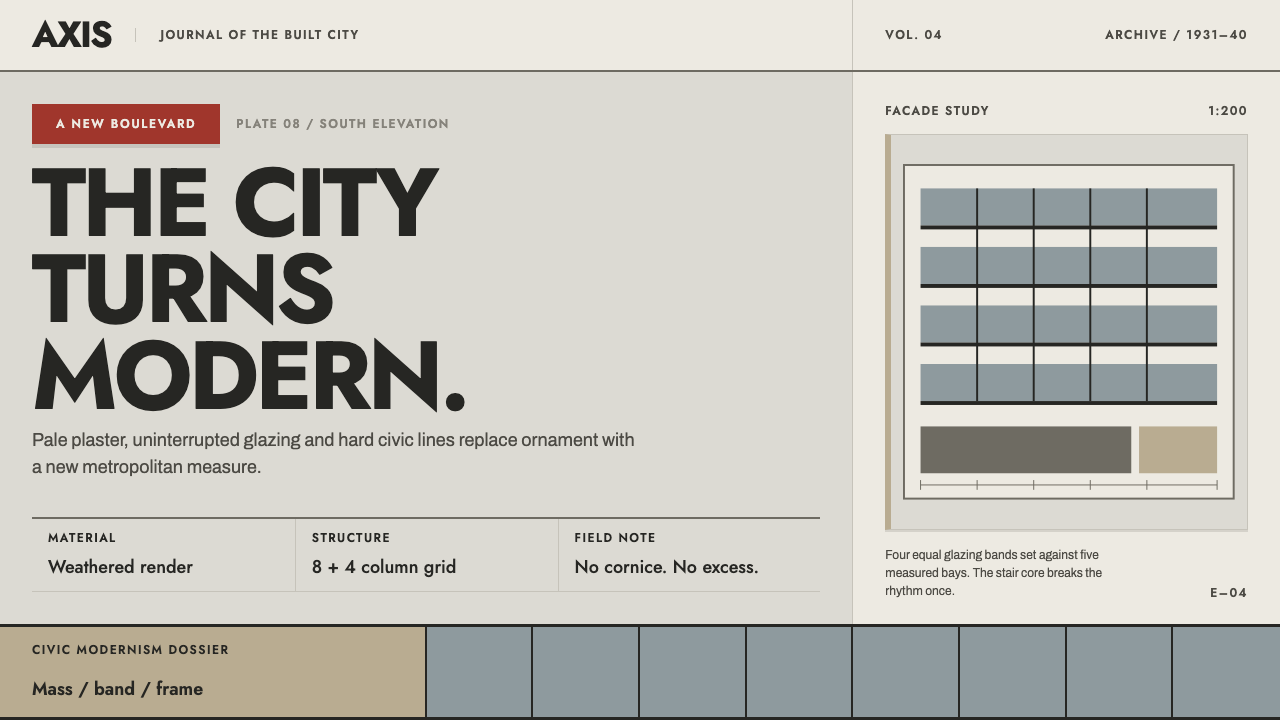 Bucharest Interwar ModernismModernism gathers civic weight. Sooted plaster, strict glazing bands and one…
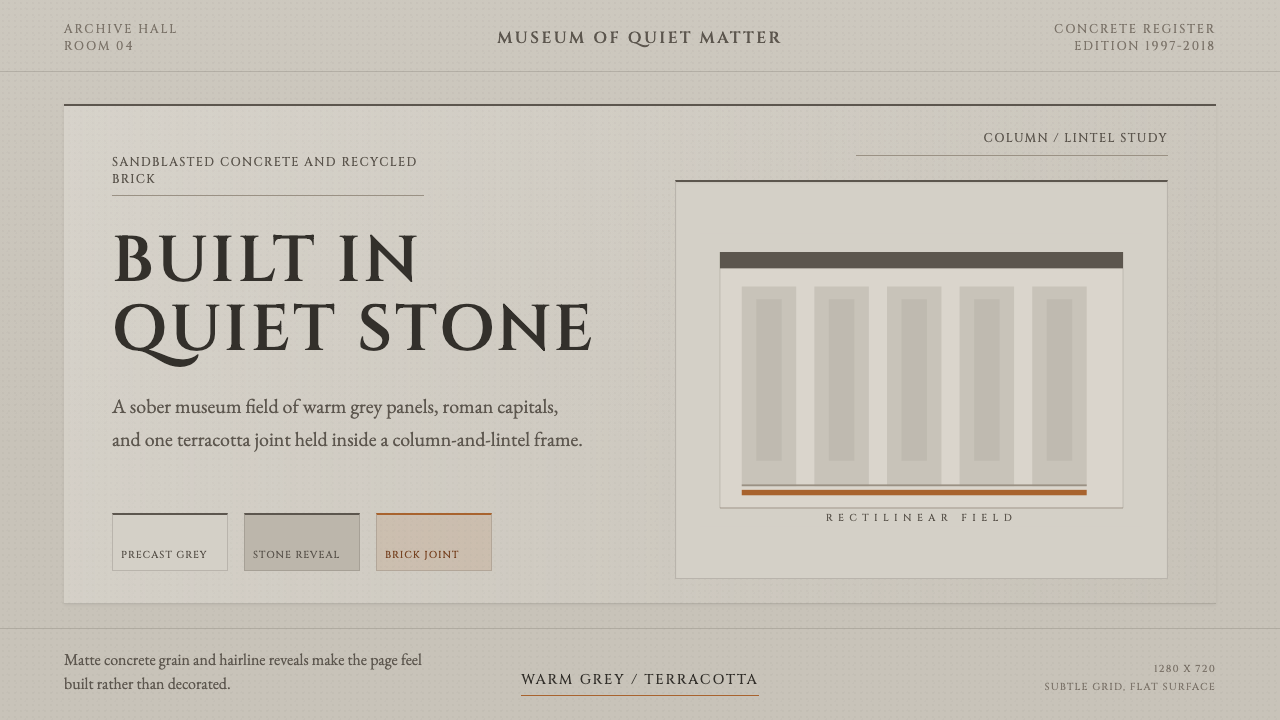 Chipperfield Museum GrayMuseum gravity, rendered quietly. Warm concrete grey, roman capitals, one ter…
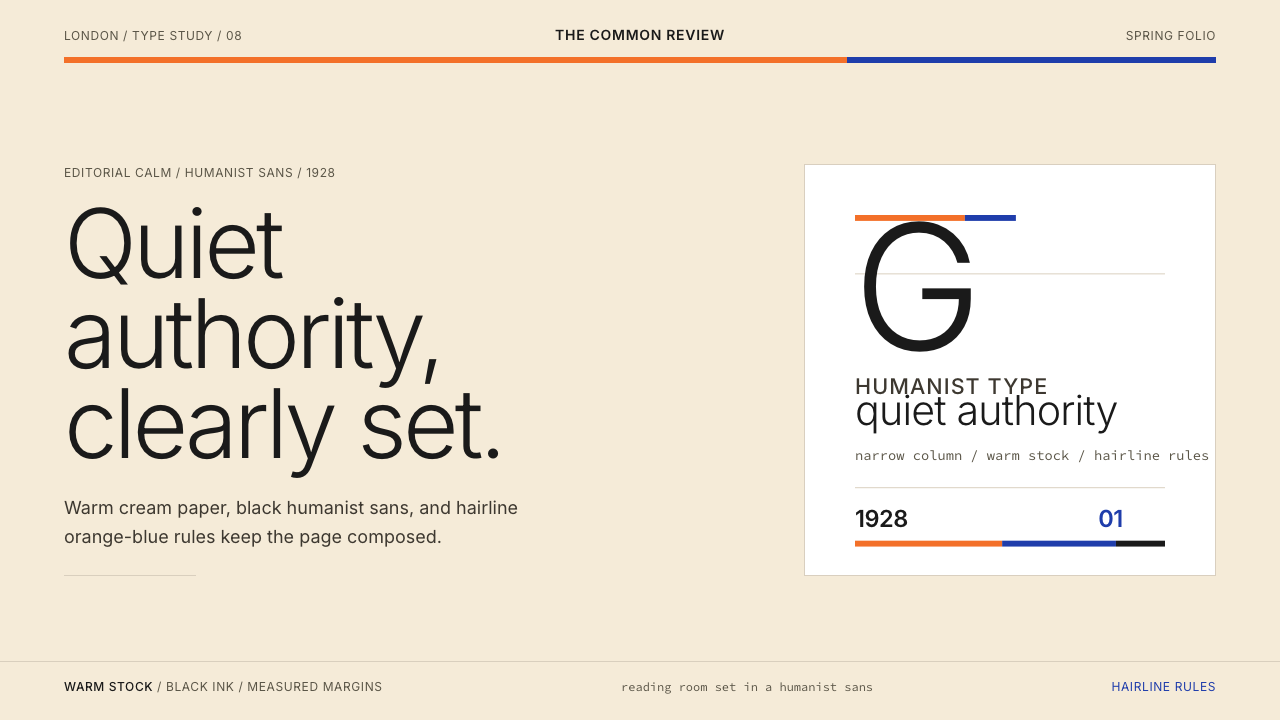 Gill Sans (BBC, 1928)Quiet authority, clearly set. Warm cream, black humanist sans, and hairline o…
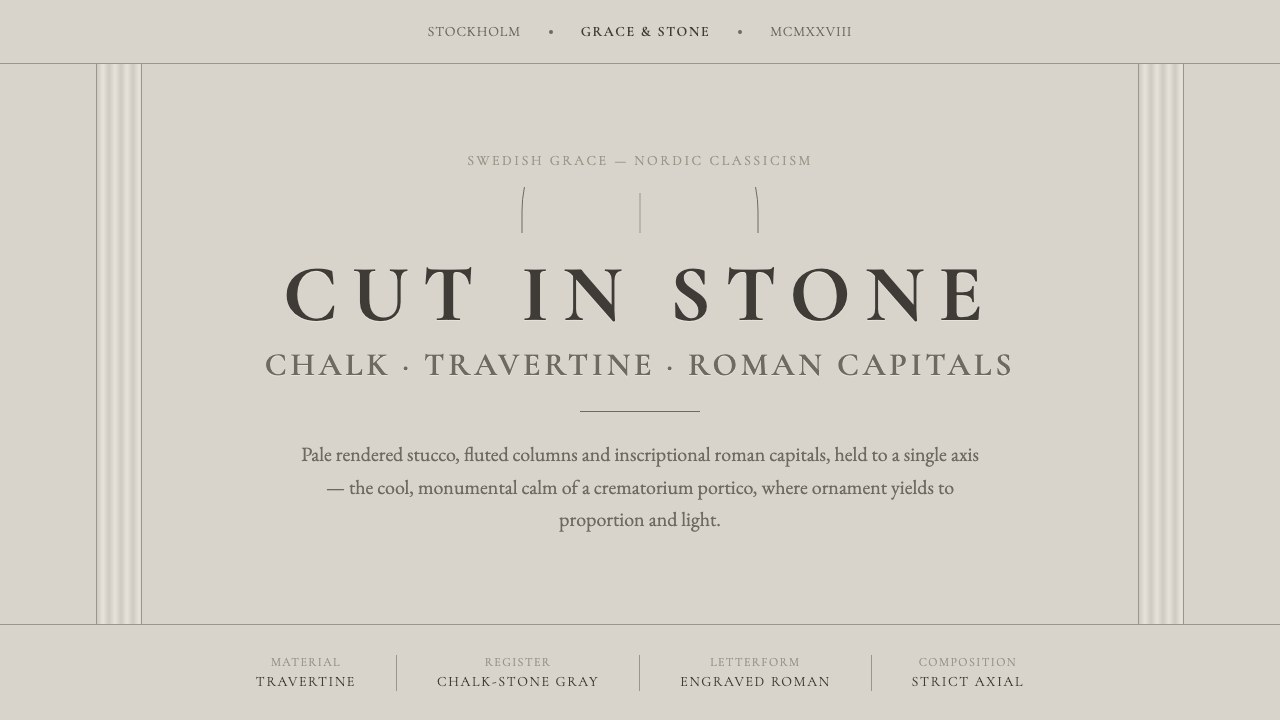 Nordic Classicism AsplundStone, not cream. Engraved Trajan capitals on cool chalk stucco, fluted colum…
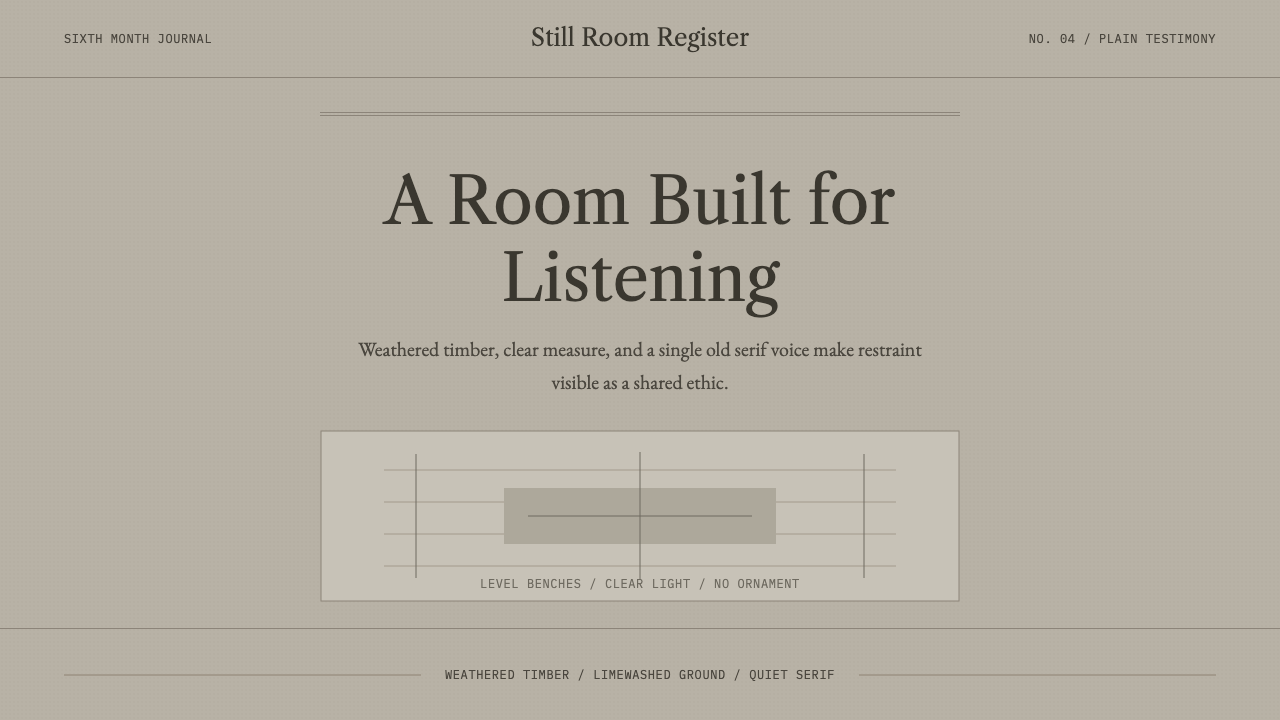 Quaker Plain StyleSilence made visible. Timber gray, Caslon serif, and bench-rule spacing leave…
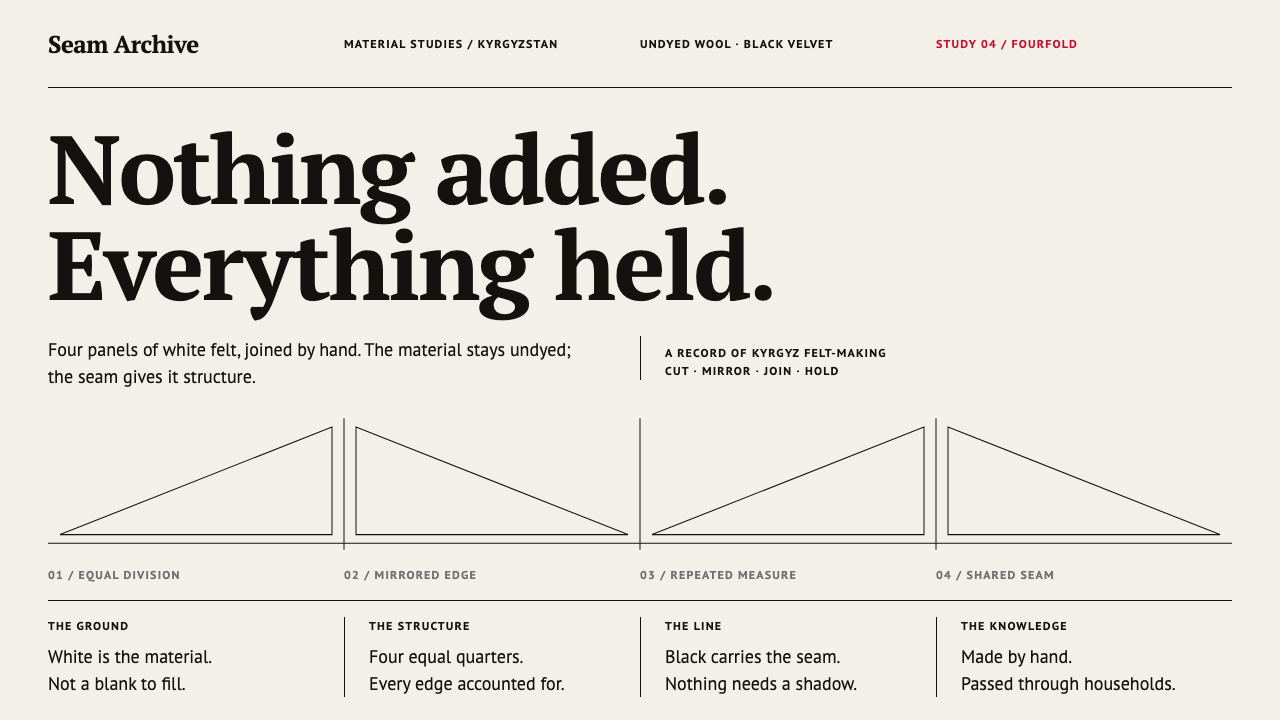 Ak-Kalpak Felt HatWhite does the work. Undyed felt tones, black hairline seams and four mirrore…