What is Telugu Tollywood Poster?
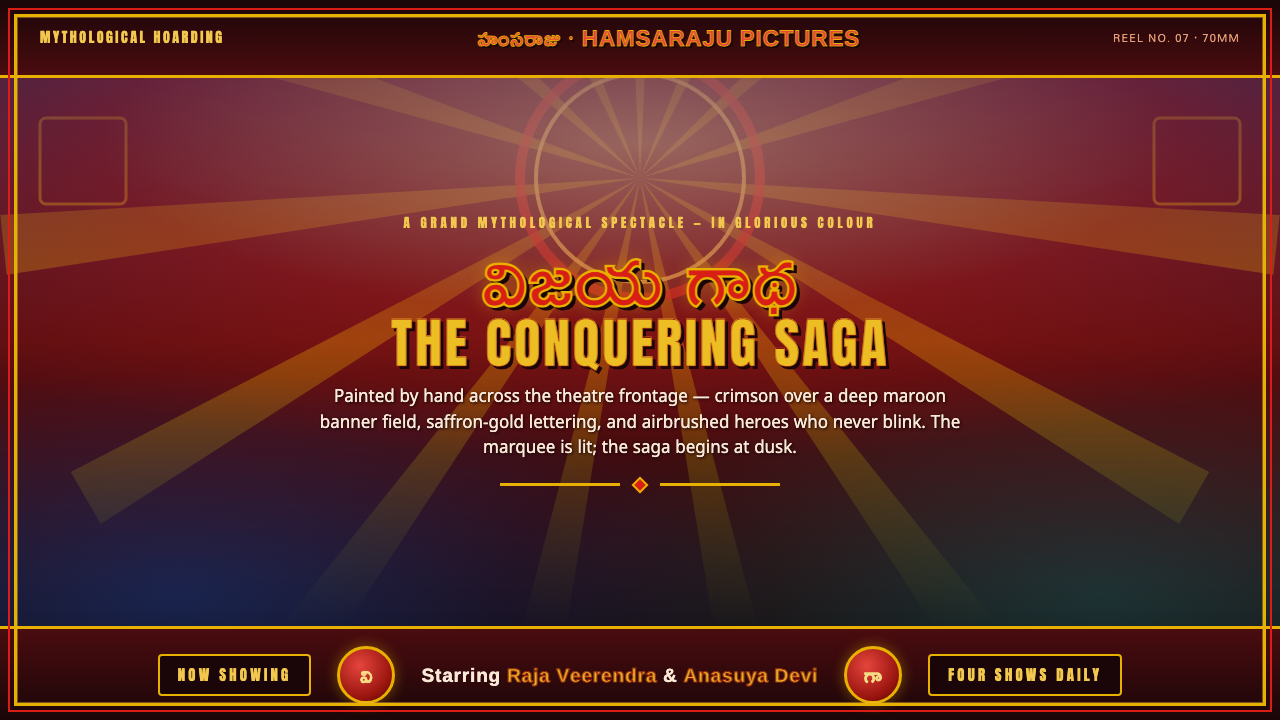
Telugu Tollywood poster art turns the cinema frontage into a mythological spectacle — crimson drama, maroon depth, gold-edged Telugu lettering, radiant halos, and hero faces painted to command the entire street.
Telugu Tollywood Poster in brief
Telugu Tollywood poster art is the hand-painted banner tradition that covered South Indian theatre frontages from 1950 to 1990. Its visual language is theatrical rather than restrained: a deep painted maroon ground carries saturated crimson action, saffron gold ornament, electric blue accents, and monumental Telugu display lettering. The image is designed to announce a film before anyone reads its details.
The physical tradition was made with brush and airbrush on vast cloth-and-board fields. That scale encouraged broad gestures, emphatic contours, glowing transitions, and faces enlarged until they became the emotional center of the composition. The result is not a quiet illustration but a public spectacle: color, lettering, portraiture, and radiating light all compete for attention while remaining bound to the same mythological drama.
This design system translates the hoarding into digital form without domesticating it. The page remains saturated and dark, crimson remains the principal action color, and gold and blue operate as theatrical accents. Telugu display type should feel painted, declarative, and proudly local. Maximalism is essential: the composition should feel crowded with narrative energy, yet every glow, border, and burst must reinforce the sense of a filmic event.
Where does Telugu Tollywood Poster come from?
The tradition belongs to Telugu cinema in South Asia, particularly the Andhra Pradesh and Hyderabad context identified with Tollywood. From 1950 to 1990, painted banners and hoardings transformed theatre frontages into expansive public images. Their purpose was not merely to decorate a building. They made the film visible at architectural scale, turning the entrance itself into part of the announcement.
The golden-age look is inseparable from its materials and working method. Anonymous banner-painting artists brushed and airbrushed pigment across cloth-and-board surfaces, working with a vocabulary that could survive distance and daylight: deep maroon fields, forceful crimson passages, saffron gold edges, electric blue accents, and enlarged faces. The hand-painted surface gives the style its particular mixture of control and exuberance. It feels constructed, but never sterile.
The visual system was codified from Pathala Bhairavi in 1951. That reference anchors the style in mythological-hoarding imagery: the banner is expected to carry drama, spectacle, heroic presence, and a sense of supernatural scale. The design does not begin with neutral information architecture and add decoration afterward. It begins with the feeling of a story already in motion, then organizes lettering, faces, ornament, and light around that charge.
Its key figures include N. T. Rama Rao, Akkineni Nageswara Rao, and the anonymous artists who painted the banners. NTR and ANR appear in the source tradition as heroic faces rendered through airbrush and placed at commanding scale. The anonymous painters are equally central because the style is defined by their collective craft: painted surfaces, theatrical color, gold-edged lettering, and sunburst energy working together as a recognizable Tollywood language.
What defines the Telugu Tollywood Poster look?
Maroon Ground
The ground is saturated, deep, and painted rather than neutral. Maroon creates the nocturnal theatrical depth against which crimson action, gold edging, blue accents, and illuminated faces can assert themselves. Cream and pure white are excluded because they would dissolve the hoarding atmosphere and make the work feel like a conventional editorial page.
Crimson Action
Crimson is the principal energy color. It should mark the places where the composition feels active, urgent, or emotionally heightened. Used over maroon, it creates an internal surge rather than a simple light-dark contrast. The effect is lurid and cinematic, with color behaving like performance rather than background decoration.
Gold-Outlined Telugu Display
Lettering is a visual actor. Bold Telugu display forms should be outlined in gold so that language becomes both message and ornament. The outline gives the characters marquee authority, while the heavy painted presence allows them to hold their ground beside enlarged faces and radiant effects. Typography should announce, not whisper.
Airbrushed Hero Faces
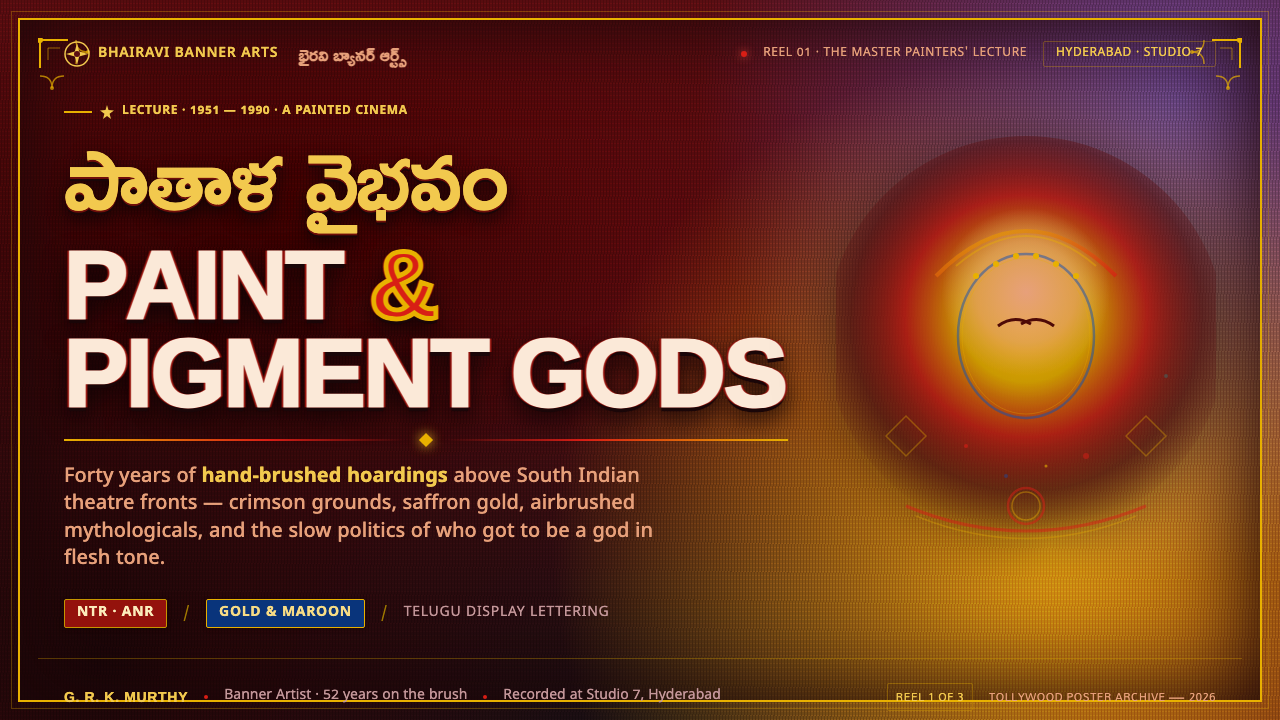
Faces are not small supporting portraits. The airbrushed hero image is a central field of emotion and recognition, especially through the presence of NTR and ANR in the source tradition. Features should read from a distance, with painted modeling that feels luminous and heightened rather than photographic. The face carries the promise of the film.
Sunburst Halos
Radiating halos turn a portrait or title into an event. Sunburst lines and luminous bands should expand outward from the chosen focal point, creating the sensation that the image is announcing itself. Gold and electric blue can articulate these rays, but the burst must remain tied to the hero, title, or dramatic center rather than becoming a detached pattern.
Mythological Maximalism
The composition should carry several kinds of intensity at once: saturated color, heroic portraiture, emphatic lettering, ornament, and light. Empty space is not the main expressive device. Instead, hierarchy comes from scale, contrast, placement, and the force of the focal image. Maximalism works when every layer adds to the sense of spectacle.
Painted Materiality
Even in digital work, surfaces should suggest pigment, brushwork, airbrush bloom, and the broad physical field of cloth and board. The style should not become a perfectly sterile interface with red and gold pasted on top. Slightly theatrical transitions, painted edges, and visible chromatic richness help preserve the memory of the original banner tradition.
Who shaped Telugu Tollywood Poster?
NTR is one of the heroic presences named in the source material. His airbrushed face belongs to the visual grammar of the Tollywood hoarding: enlarged, luminous, and positioned as a commanding emotional anchor. In a digital adaptation, his significance is not a reason to add biographical detail, but a reminder that the hero portrait should carry the force of the entire announcement.
ANR is another central heroic face in the banner tradition described here. His presence reinforces the system's preference for recognizable human drama over anonymous abstraction. The portrait should feel painted for public distance, with clear expression and theatrical illumination, so that the face remains legible beside gold-outlined Telugu display lettering and sunburst effects.
The anonymous banner-painting artists are the collective makers of the style. They worked with brush and airbrush across vast cloth-and-board fields, converting pigment into faces, lettering, ornament, and spectacle. Their anonymity is part of the source material's framing: Telugu Tollywood poster art is presented as a shared craft tradition, not as the signature of one named author.
How do you use Telugu Tollywood Poster today?
For presentation slides, use the style most strongly on the cover: a saturated maroon field, a dominant crimson or gold-edged title, and a theatrical focal image with radiating light. Content slides can preserve the same visual language through bold Telugu-inspired display treatment, painted separators, and dense but intentional composition. Data slides should turn charts into dramatic visual evidence, using crimson for active values, gold for emphasis, and electric blue for contrast while keeping the narrative center obvious.
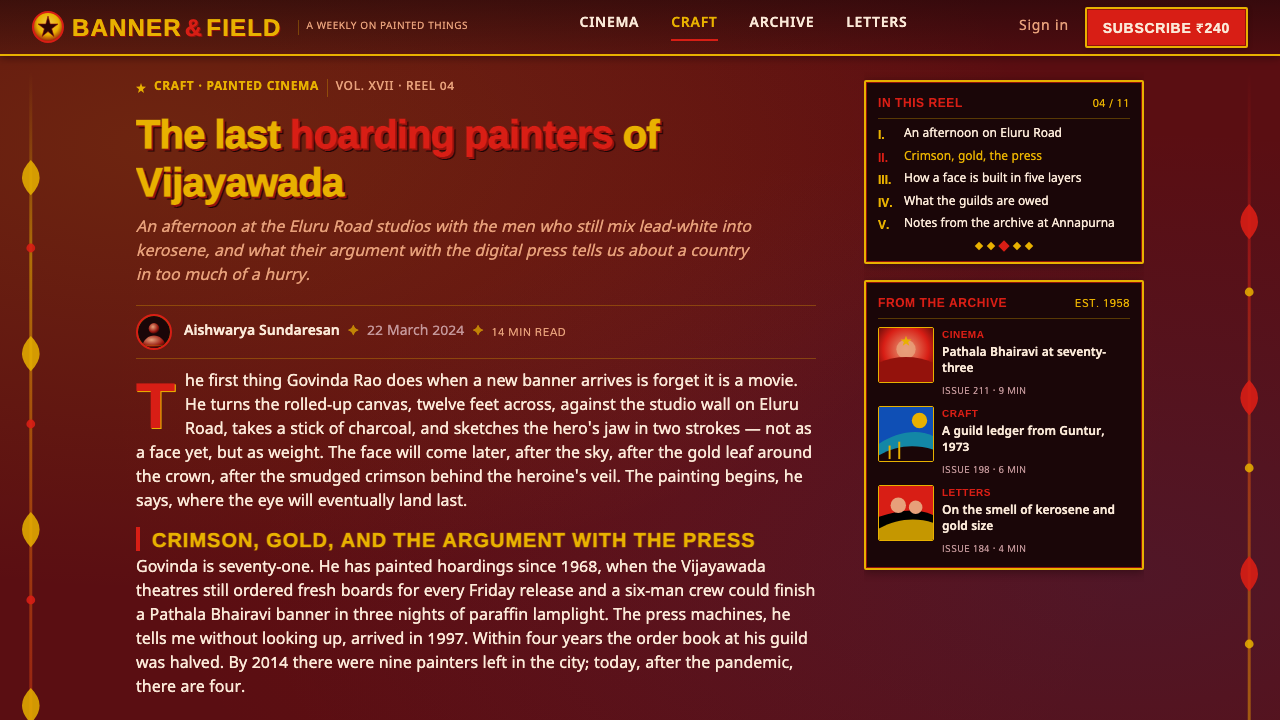
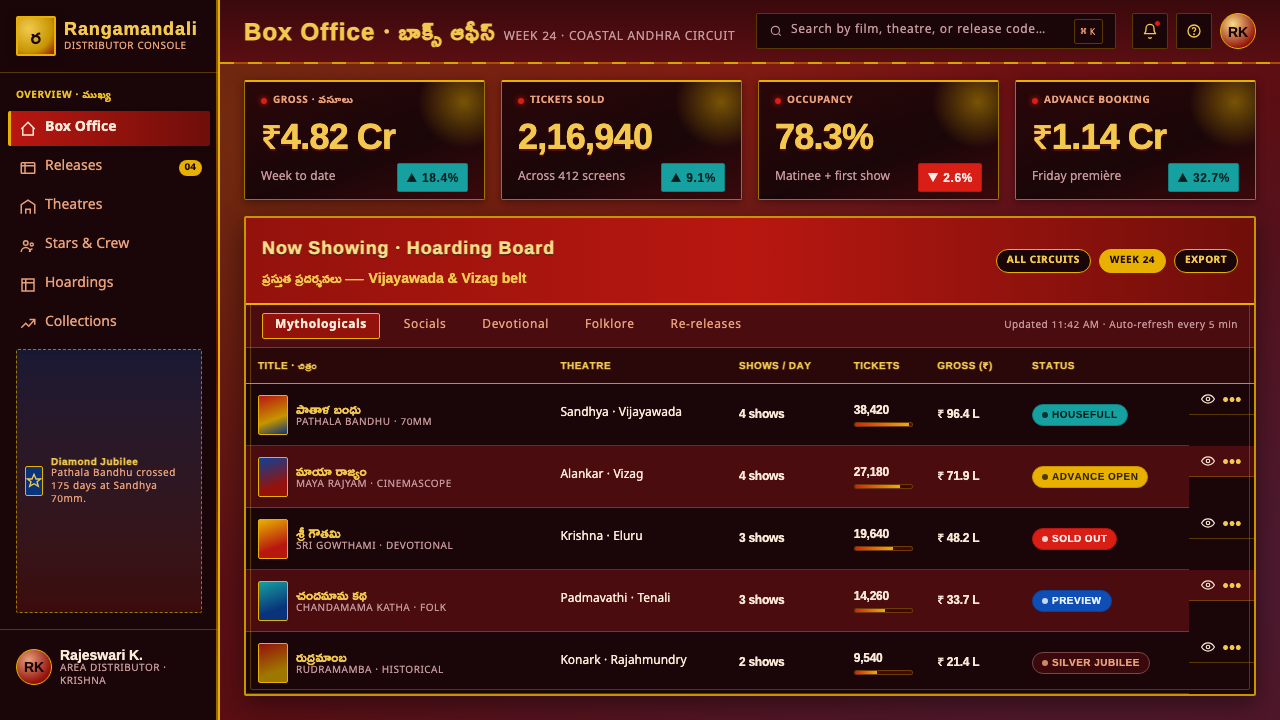
For web interfaces, this system suits dashboards, pricing pages, and campaign surfaces that need a strong sense of occasion. Keep the page dark and maroon rather than neutral, reserve crimson for actions and active states, and use gold to signal importance or premium emphasis. Cards can feel like painted panels, with luminous borders and theatrical depth instead of quiet utility. The interface should remain readable, but it should never lose the feeling that the user has entered a marquee.
For editorial work, use the style for film histories, cultural features, entertainment launches, and stories that benefit from public spectacle. A large hero portrait can introduce the article, while gold-edged display type marks sections and crimson passages create visual momentum. Body text should be given enough calm contrast to remain comfortable, but the surrounding structure can stay richly layered with painted fields, halos, and blue-gold accents.
For marketing, the system is strongest when the campaign has a clear protagonist, dramatic promise, or cinematic launch moment. A landing page can build from a single hero face or title, then radiate outward through sunburst lines, crimson calls to action, and gold ornament. The visual language should feel generous and declarative, as though the campaign were mounted above a theatre frontage rather than quietly placed inside a feed.
The common mistake is to reduce the style to dark red, gold, and decorative noise. Maroon must provide depth, crimson must carry action, gold must clarify the marquee hierarchy, and blue must create a controlled electric counterpoint. Another failure is replacing Telugu display character with generic decorative lettering while keeping the colors. The result should preserve the relationship between language, painted heroism, and theatrical scale; without that relationship, the palette becomes costume rather than system.
Telugu Tollywood Poster — FAQ
Is Telugu Tollywood poster style simply a dark red and gold palette?
No. Maroon and gold are important, but the identity comes from their relationship with crimson action, electric blue contrast, airbrushed hero faces, Telugu display lettering, and sunburst illumination. Remove the painted portraiture and theatrical scale, and the result becomes a generic luxury palette rather than a Tollywood hoarding.
Can this style be used with a light or white background?
The approved system is built around a deep painted maroon ground and explicitly rejects cream and pure white. A light background would remove the dark theatrical field that allows crimson, gold, blue, and illuminated faces to feel saturated. If the design needs clarity, create it through contrast, scale, and spacing within the maroon world rather than abandoning the ground.
How should hero portraits be treated in a digital adaptation?
Treat the face as a principal narrative element, not as a small decorative thumbnail. It should be large enough to read from a distance, with airbrushed luminosity, clear expression, and a strong relationship to the title or sunburst halo. The portrait should feel painted and heightened, not like an unrelated photograph placed over a themed background.
Does maximalism mean every element should be equally loud?
No. Maximalism means the composition carries abundant theatrical energy, not that hierarchy disappears. A hero face, title, or luminous center should lead; crimson, gold, blue, ornament, and secondary information should support that lead through contrast and placement. The work can be crowded while still having a clear dramatic order.
Why is the anonymous banner-painting tradition important to the style?
Because the visual identity is a collective craft rather than the signature of one named designer. The style depends on the shared handling of painted surfaces, airbrushed faces, gold-edged lettering, crimson drama, and radiant ornament across enormous cloth-and-board fields. A digital interpretation should honor that collective, material origin instead of presenting the look as a purely ornamental trend.
Related design styles
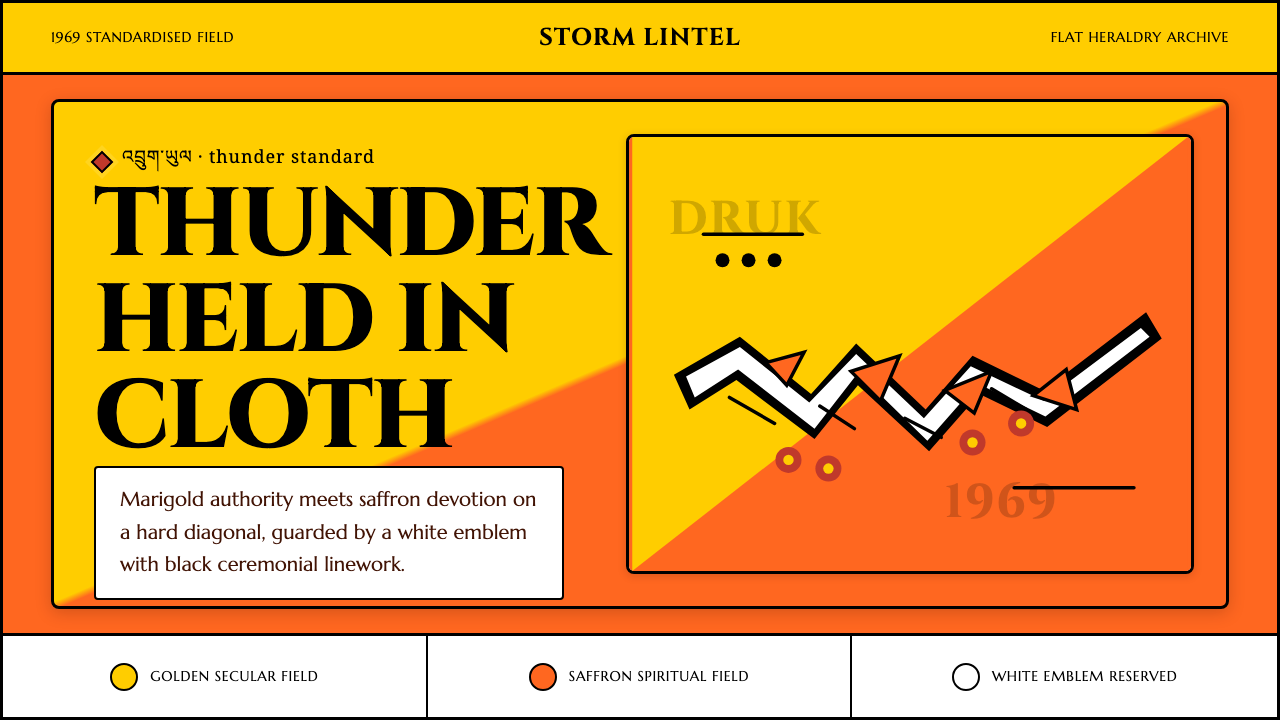 Bhutan Thunder Dragon FlagHeraldry hits like thunder. Marigold and saffron split hard around a white em…
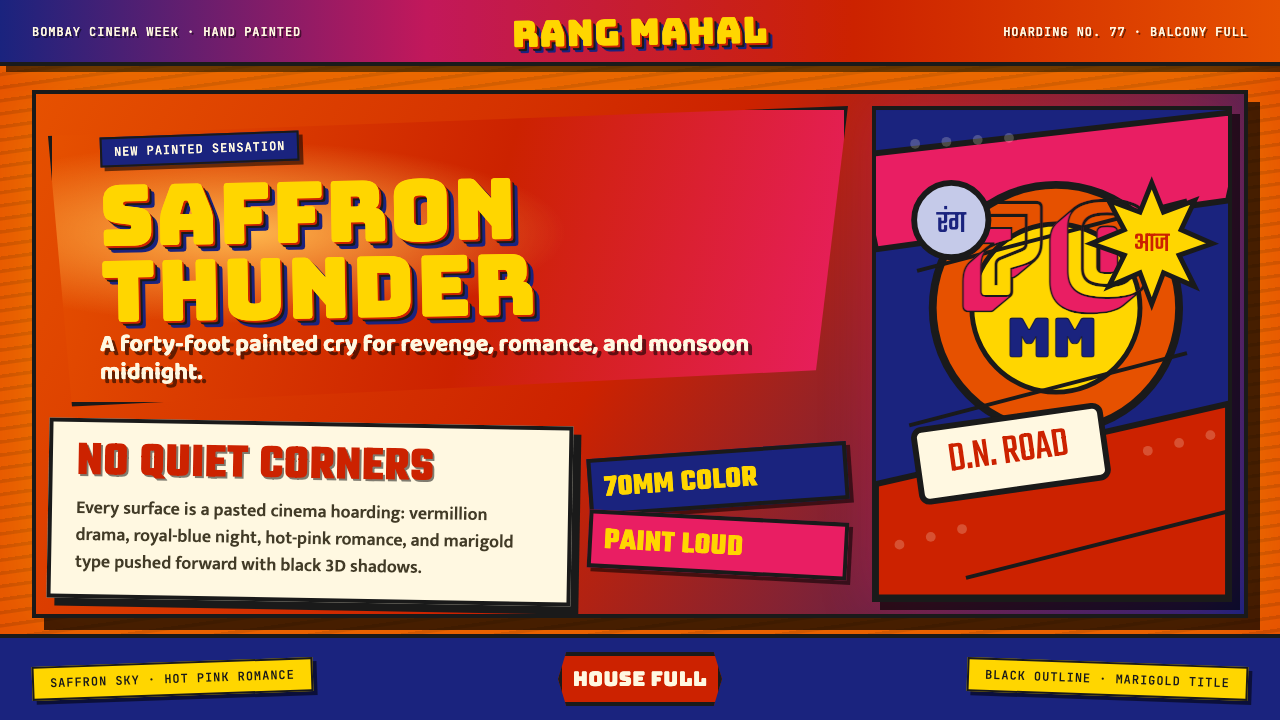 Bollywood Poster Art (1970s)Subtlety is unaffordable. Saffron fields, Bungee shadows, diagonal hoarding d…
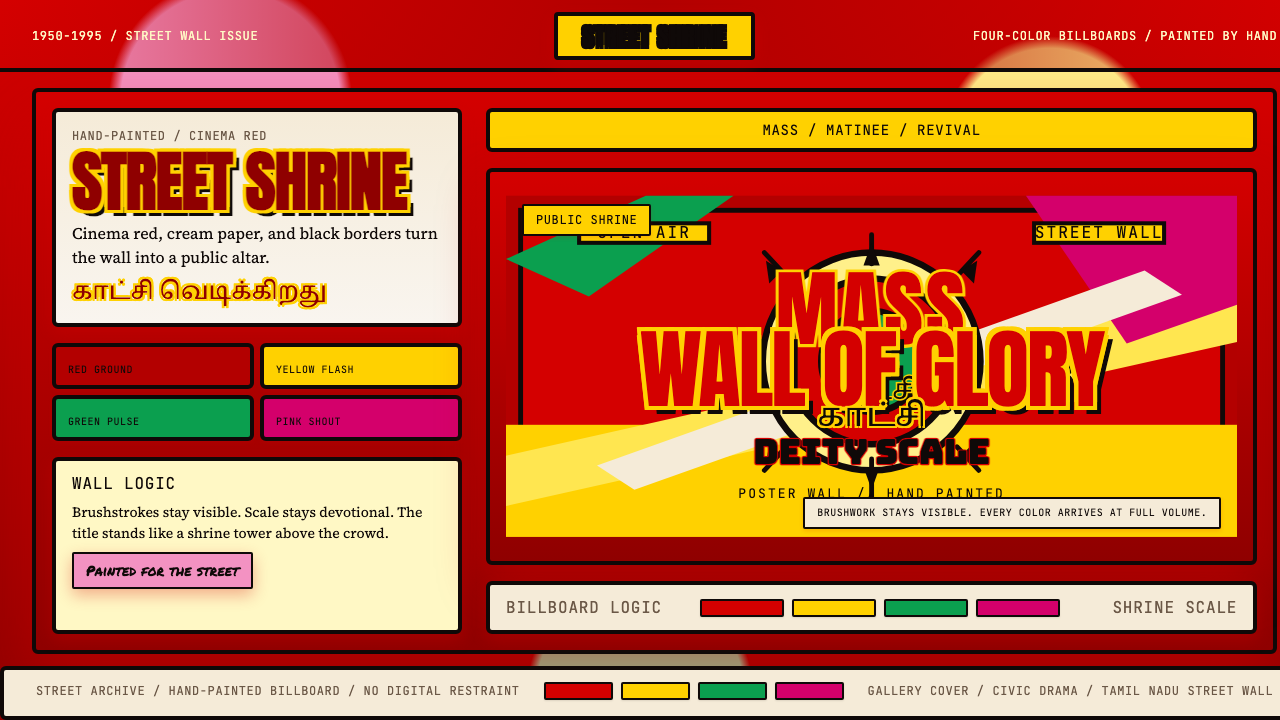 Tamil Cinema Poster (MGR era)The wall becomes a shrine. Red, yellow, green, and pink crash into cream pane…
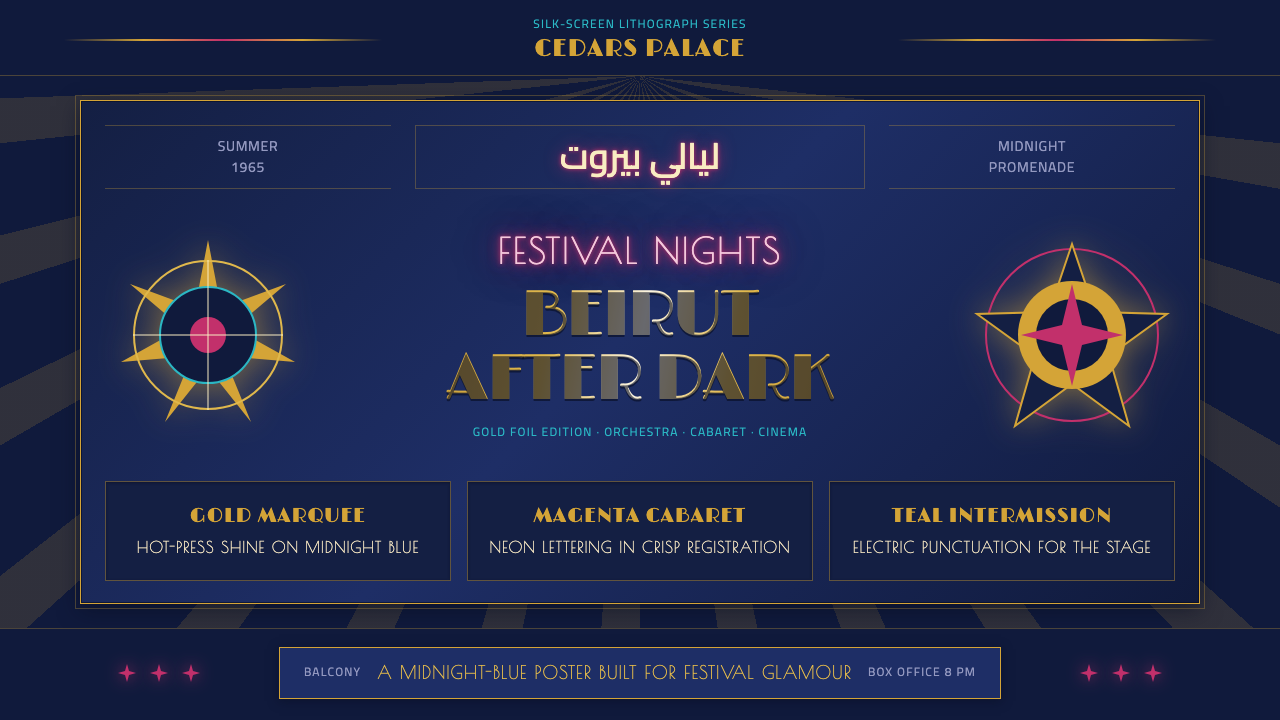 Beirut Golden-Age PosterFestival glamour after dark. Midnight blue carries foil-gold type and magenta…
 Damascus Cinema PosterGlows like hand-painted cinema. Plum ground, gold Ruqaa title, red spotlight…
 Egyptian Film Poster (Cairo)Melodrama at billboard scale. Near-black ground, ruq'ah titles, orange-red ag…