What is Damascus Cinema Poster?
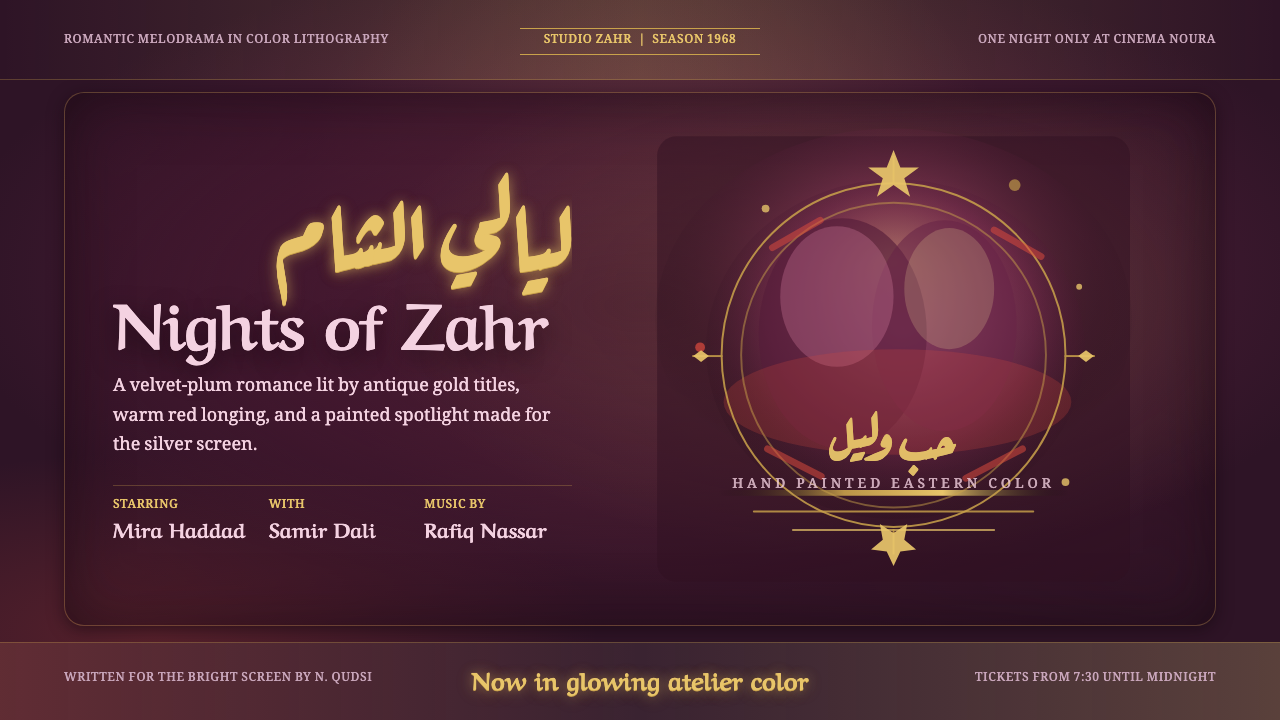
Damascus Cinema Poster turns romance into illumination — painted faces emerging from plum darkness beneath a gold ruq'ah title and the heat of a red spotlight.
Damascus Cinema Poster in brief
Damascus Cinema Poster is a dark, theatrical visual style distilled from the hand-painted lithography of golden-age Arab cinema, especially the Syrian-Egyptian co-productions associated with the 1960s. Its defining image is a romantic couple rendered with airbrushed softness against velvet-dark plum poster stock, crowned by a sweeping gold ruq'ah title and illuminated by a warm red glow.
The style is built around emotional light rather than geometric order. Backgrounds do not behave like neutral fields; they deepen toward the edges and brighten around faces, titles, or moments of intimacy. Antique gold introduces ceremony and cinematic prestige, while red supplies passion, danger, and the concentrated heat of a theater spotlight. The result should feel painted and luminous, never mechanically polished.
Its drama comes from the meeting of portraiture and calligraphy. Faces carry the story through gaze, proximity, and idealized radiance, while the title behaves as an image in its own right, curling above or through the composition. Flourishes, gradients, and softened transitions are not incidental decoration here. They reproduce the atmosphere of a handmade poster designed to promise romance before the audience entered the cinema.
Where does Damascus Cinema Poster come from?
The style belongs to the broad period from the 1950s through 1990, with the atmosphere of golden-age Arab cinema around 1968 as its clearest point of reference. Damascus was one center of this visual world, while Syrian-Egyptian co-productions connected its posters to the larger Egyptian film trade. The resulting imagery carries both a local theatrical identity and the expansive glamour of a regional cinema culture.
These posters were shaped by atelier practice. Armenian painters working in the Cairo film trade, Greek painters associated with Damascus studios, and masters of hand painting and airbrush translated film stars and romantic narratives into large, glowing images. Their work did not pursue photographic neutrality. Portraits were softened, intensified, and arranged to communicate attraction immediately, allowing emotion to remain legible even before the film's story was known.
Romantic airbrushed portraiture supplied the human center of the composition. Couples could be joined through overlapping silhouettes, exchanged glances, or a shared pool of warm light. The surrounding plum darkness made pale highlights and red illumination appear brighter, giving the poster the charged atmosphere of a screen in a dim theater. This contrast between darkness and glow became as important as likeness itself.
Calligraphic ruq'ah title design completed the system. Rather than placing a restrained caption beside the portrait, painters crowned the image with gold lettering that swept, curled, and flourished across the upper field. The title announced the film while also contributing rhythm, prestige, and cultural identity. Hand-painted portraiture, theatrical color, and calligraphic movement therefore operated as one persuasive object: a public invitation to enter the romance of Arab cinema.
What defines the Damascus Cinema Poster look?
Plum Darkness
The ground is a velvet-dark plum rather than a neutral black. It carries traces of warmth, allowing red light and gold lettering to feel embedded in the same cinematic atmosphere. The center may open into a softer glow while corners remain dense and shadowed, creating the sensation of an illuminated image appearing inside a dark theater.
Antique Gold
Gold belongs primarily to titles, flourishes, framing gestures, and small signals of prestige. It should resemble aged painted pigment, not a perfectly reflective digital metal. Slight tonal variation gives the lettering a touched surface and preserves the sense that an atelier painter built it by hand.
Ruq'ah Titles
The title is both language and spectacle. Ruq'ah strokes gather into a compact but lively crown, then release their energy through curls, terminals, and surrounding flourishes. The lettering should dominate without becoming detached from the portrait; its movement must echo the emotional sweep of the figures below.
Airbrushed Romance
Portraits favor softened modeling, radiant skin, darkened contours, and selective highlights around eyes, lips, and hair. The aim is not clinical realism but heightened presence. Couples appear idealized and emotionally available, as if caught at the most memorable instant of a melodrama.
Red Spotlight
Warm red is the emotional accent. It may bloom behind a face, gather between two figures, or cut across the poster like theatrical illumination. Used with restraint, it directs attention and intensifies intimacy; spread everywhere, it overwhelms the plum depth and turns romance into visual noise.
Painted Gradients
Transitions between shadow and light should feel sprayed, brushed, and gently irregular. Gradients are essential because they carry the spotlight effect, but they must avoid sterile smoothness. A convincing surface suggests overlapping passes of pigment, with light emerging slowly rather than switching on at a hard boundary.
Theatrical Hierarchy
A dominant title and one principal romantic image lead the composition; supporting copy remains secondary. Scale, glow, overlap, and gaze determine hierarchy more than rigid alignment. The eye should move as it would across a film advertisement: title first, stars second, emotional promise immediately afterward.
Who shaped Damascus Cinema Poster?
Armenian painters active in Cairo's film trade formed one of the atelier traditions behind this poster language. Their role was to translate performers and cinematic romance into persuasive public images through hand painting and airbrush. Within the Damascus Cinema Poster style, they represent the craft knowledge that joined recognizable portraiture to heightened glamour.
Greek painters working in Damascus studios contributed to the local hand-painted poster culture surrounding Syrian cinema and its Egyptian co-productions. Their significance lies less in an individual signature than in a shared atelier practice: dramatic portrait arrangement, velvet-dark grounds, and painted illumination designed to arrest attention outside the theater.
Atelier masters unified the style's separate demands: likeness, romantic atmosphere, calligraphic display, and reproducible poster impact. Their layered process made light appear to rise through pigment and allowed faces to remain soft against deep plum. They are the collective authors of the style's most important quality — the impression that cinema itself is glowing through a handmade surface.
How do you use Damascus Cinema Poster today?
For presentation covers, treat the slide as a film premiere poster. Place one romantic portrait or closely framed pair within a central pool of light, let plum darkness hold the outer field, and crown the composition with a gold, calligraphic title. Content slides should preserve the atmosphere while reducing spectacle: use a subdued plum field, restrained gold headings, and warm highlights only around the most important statement.
Data slides require a careful translation because the source style is emotional rather than analytical. Keep charts readable and comparatively simple, then borrow the cinematic language through gold labels, red emphasis, and softly illuminated focal areas. Do not airbrush every bar or category. One highlighted value can carry the spotlight while supporting information remains calm in the surrounding darkness.
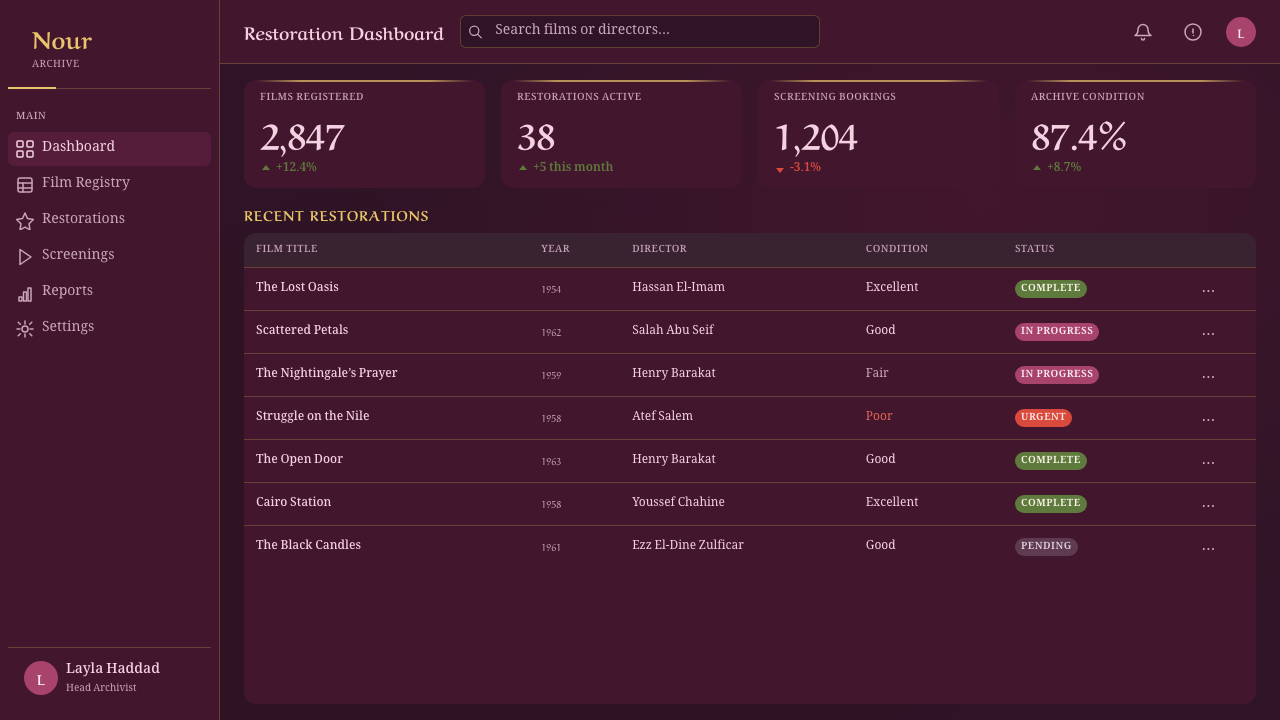
For web interfaces, the style suits entertainment dashboards, film archives, membership experiences, and premium pricing pages. Cards can feel like illuminated poster panels, with gold headings and red active states emerging from plum surfaces. Pricing tiers should be differentiated through prominence and glow rather than a crowd of competing colors; the preferred tier can receive the strongest cinematic illumination.
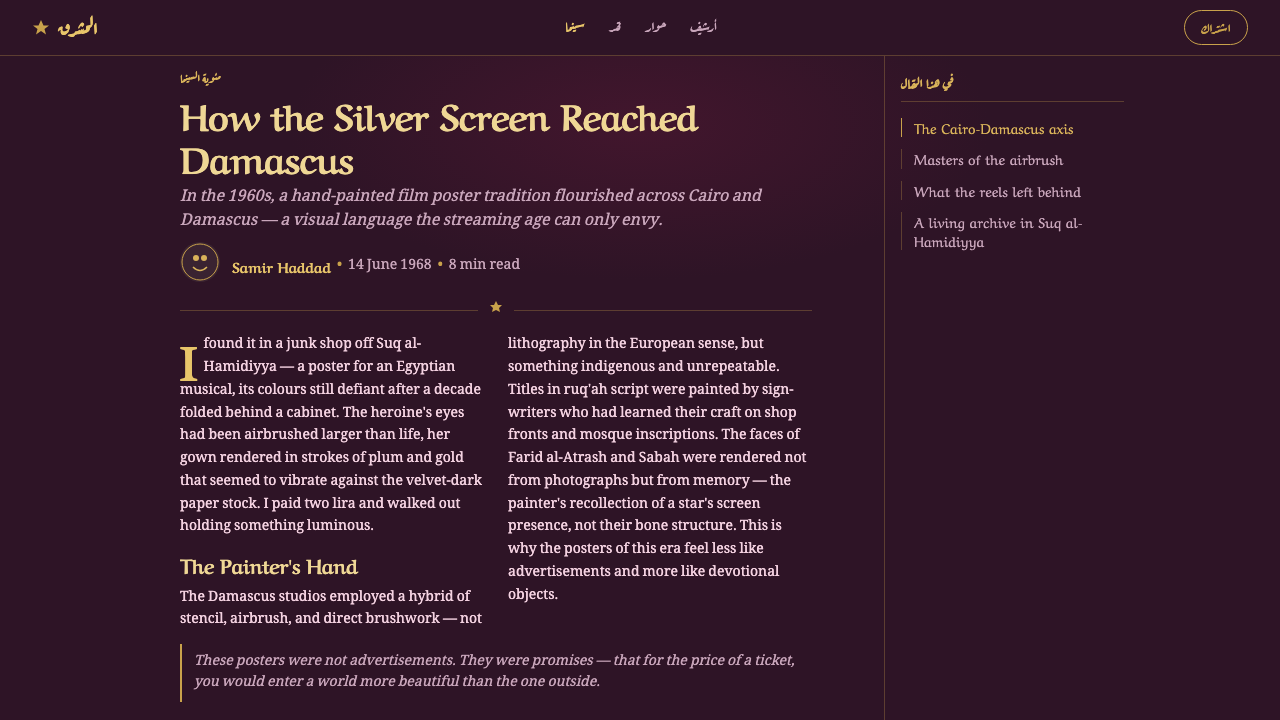
Editorial and marketing layouts benefit from the style's ability to turn a person into an event. Open an article with a large painted portrait, use calligraphic display lettering for the principal title, and let supporting text occupy quieter dark zones. Campaign pages can alternate intimate portrait sections with broad fields of plum and gold, allowing each red accent to announce a decisive emotional or commercial moment.
The common mistake is reducing the style to purple, gold, and red decoration. Without portrait drama, calligraphic movement, layered illumination, and a visibly handmade surface, those colors produce generic luxury rather than Arab cinema romance. Another failure is making every element glow equally. The style depends on darkness: light becomes meaningful only when most of the composition is allowed to remain deep, quiet, and expectant.
Damascus Cinema Poster — FAQ
Is Damascus Cinema Poster simply a vintage luxury style?
No. Gold and plum can suggest luxury, but the style's identity comes from golden-age Arab cinema poster art: romantic airbrushed portraiture, ruq'ah title design, theatrical red light, and the visible warmth of atelier painting. Remove those relationships and the result may look expensive, but it no longer evokes a hand-painted Syrian-Egyptian film poster.
Why is plum more appropriate than plain black?
Plum preserves darkness while carrying emotional warmth. Gold can settle into it rather than sitting sharply on top, and red illumination can spread through it with a romantic continuity. Plain black often creates a colder, more graphic contrast, while plum recalls velvet, theater interiors, and painted poster stock.
Must every composition include a romantic couple?
A couple is the clearest expression of the source material, but a single portrait can work if gaze, illumination, and calligraphic title still establish cinematic longing. What cannot disappear is the human emotional center. Without a face or an equally strong romantic subject, the style risks becoming ornamental rather than narrative.
How should modern interfaces use ruq'ah lettering?
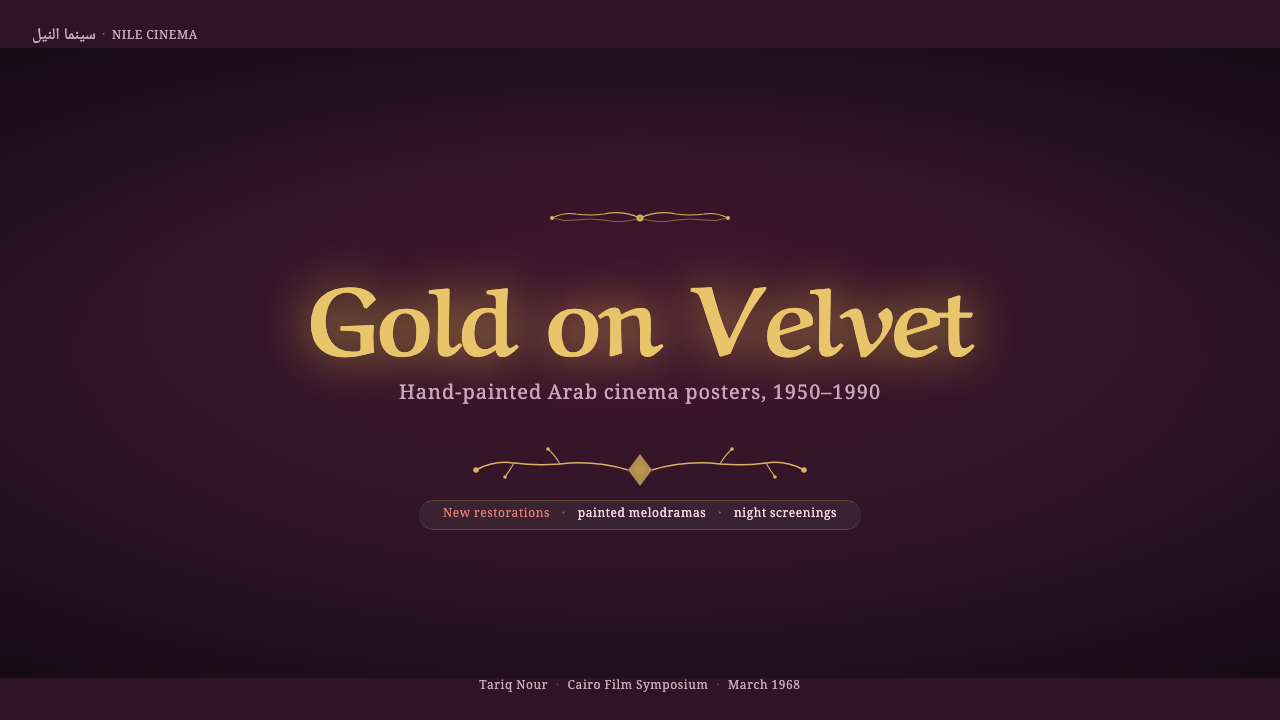
Use it as display language for a principal title, campaign name, or ceremonial heading, where its movement can be appreciated. Supporting navigation, data, and explanatory copy should remain quieter and more immediately readable. The contrast between expressive calligraphy and restrained information text preserves both cultural character and practical hierarchy.
Can the style work without gradients?
Not convincingly. Gradual illumination is fundamental to its airbrushed portraiture and spotlight atmosphere. A completely flat treatment removes the sense of faces emerging from darkness and pushes the composition toward graphic poster design of another kind. Gradients should feel painterly and selective, however, rather than uniformly applied across every surface.
Related design styles
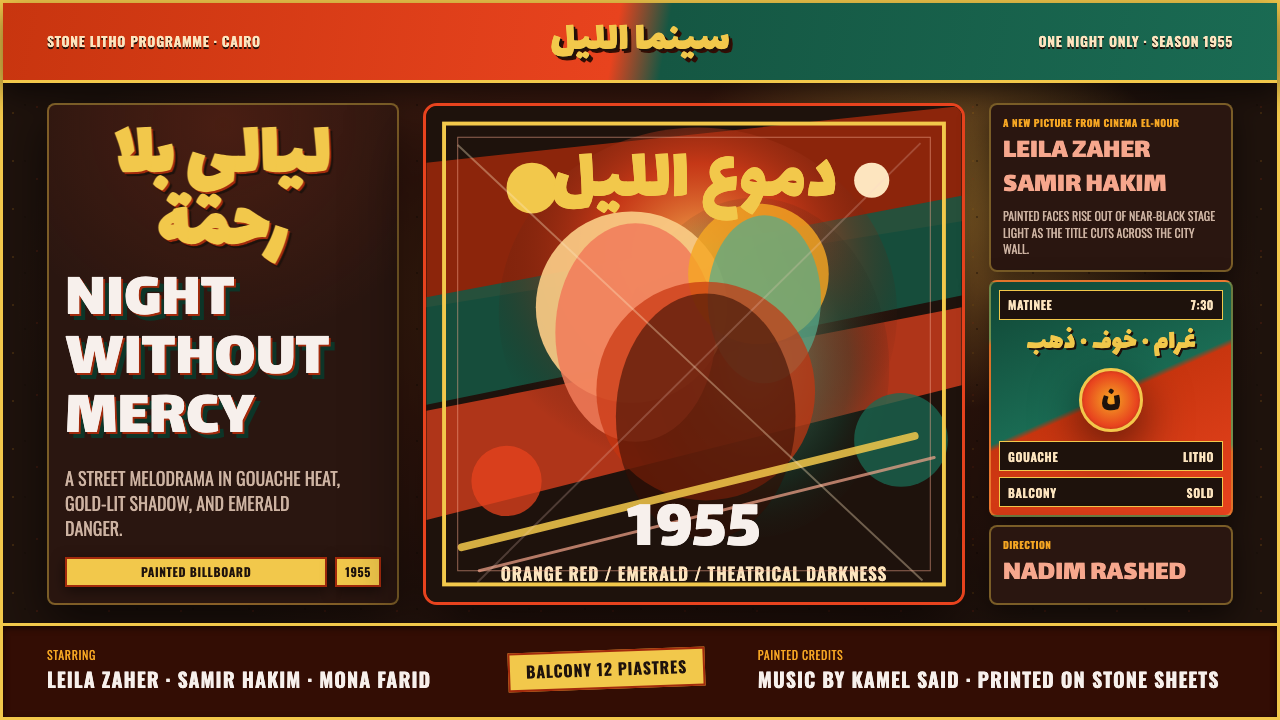 Egyptian Film Poster (Cairo)Melodrama at billboard scale. Near-black ground, ruq'ah titles, orange-red ag…
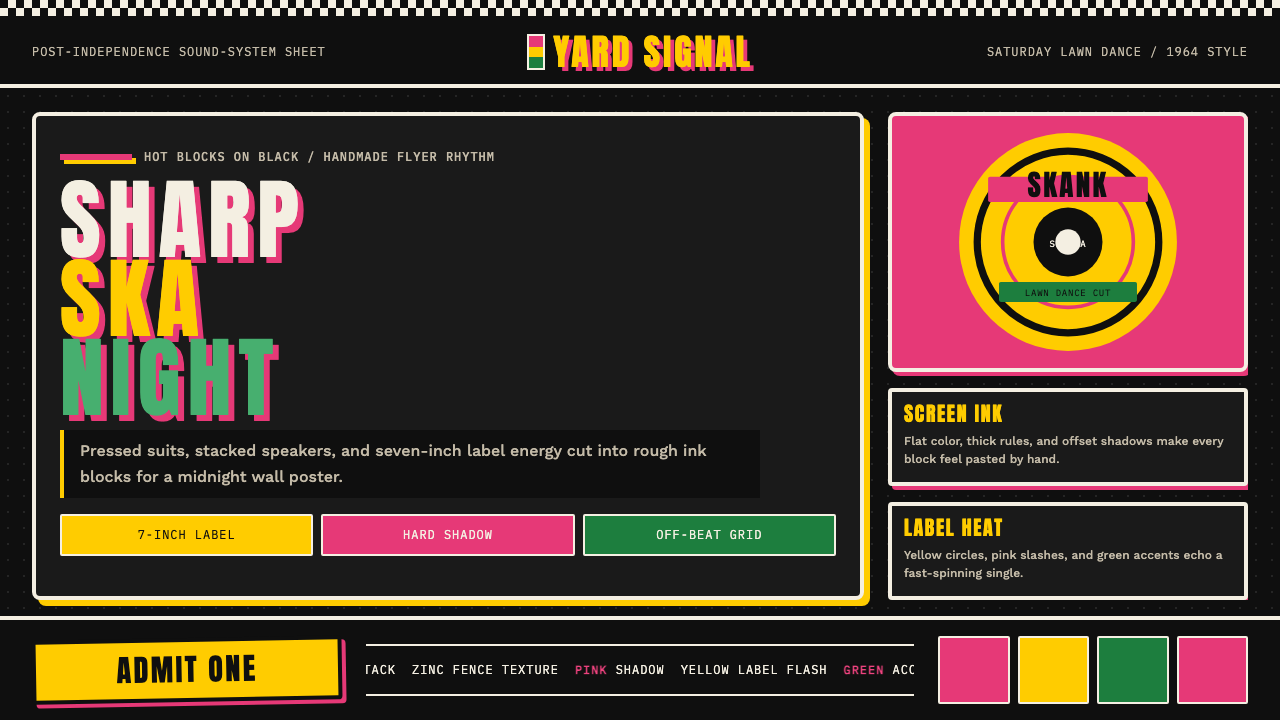 Rude Boy Jamaica Ska (1960)Street swagger hits hard. Hot pink and yellow blocks, checker trim, chunky ty…
 Telugu Tollywood PosterMythological marquee maximalism. Crimson over maroon, gold-outlined Telugu di…
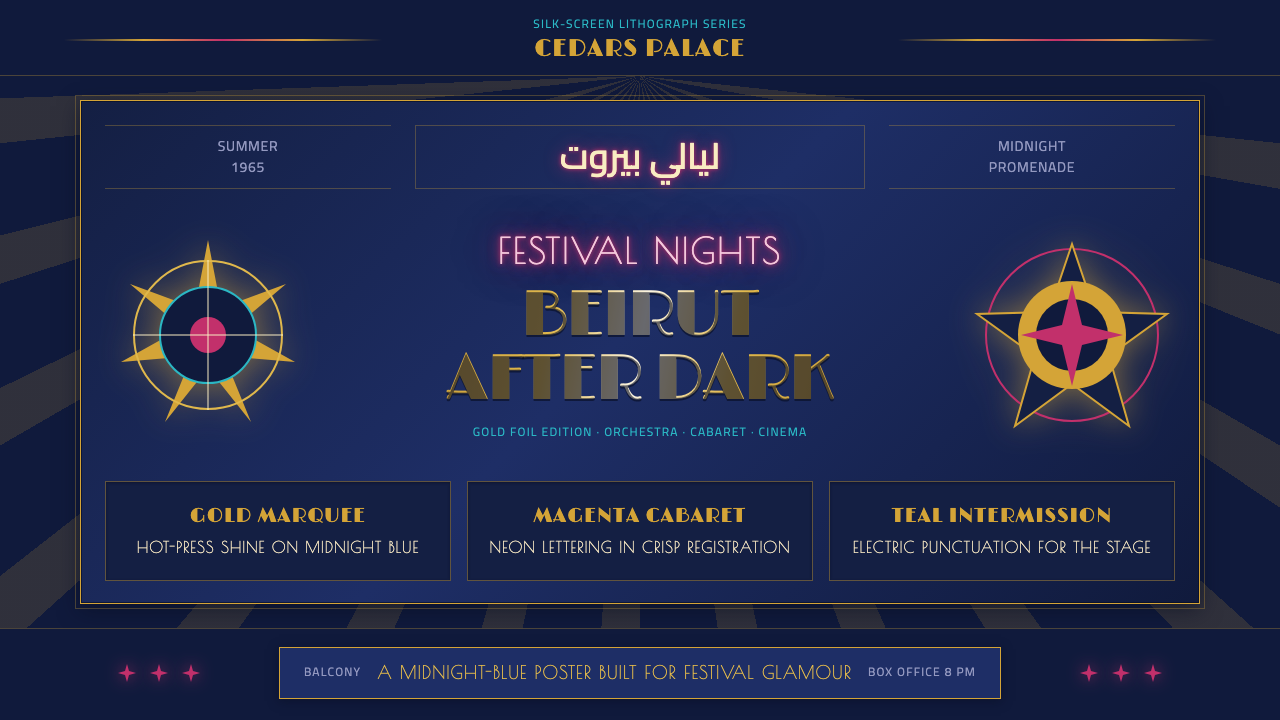 Beirut Golden-Age PosterFestival glamour after dark. Midnight blue carries foil-gold type and magenta…
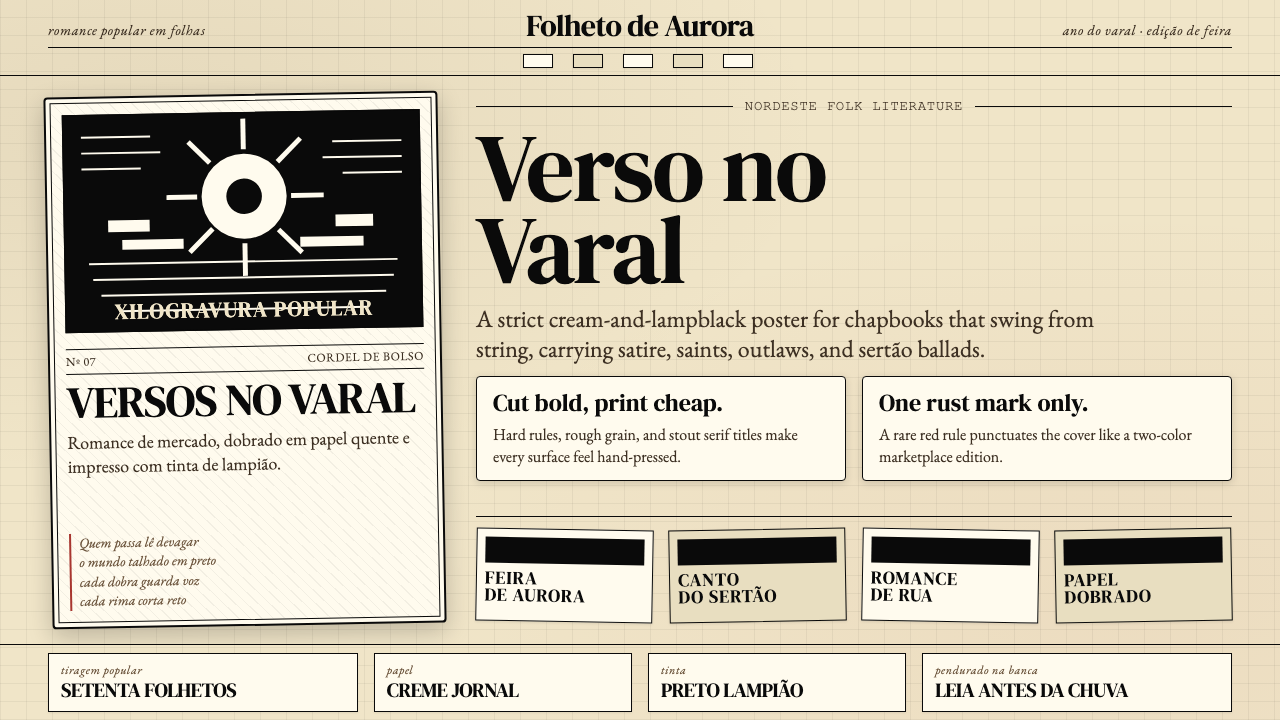 Brazilian Cordel (Northeast Folk Literature)Folk poetry, cut in lampblack. Cream newsprint, bordered chapbooks, one rust-…
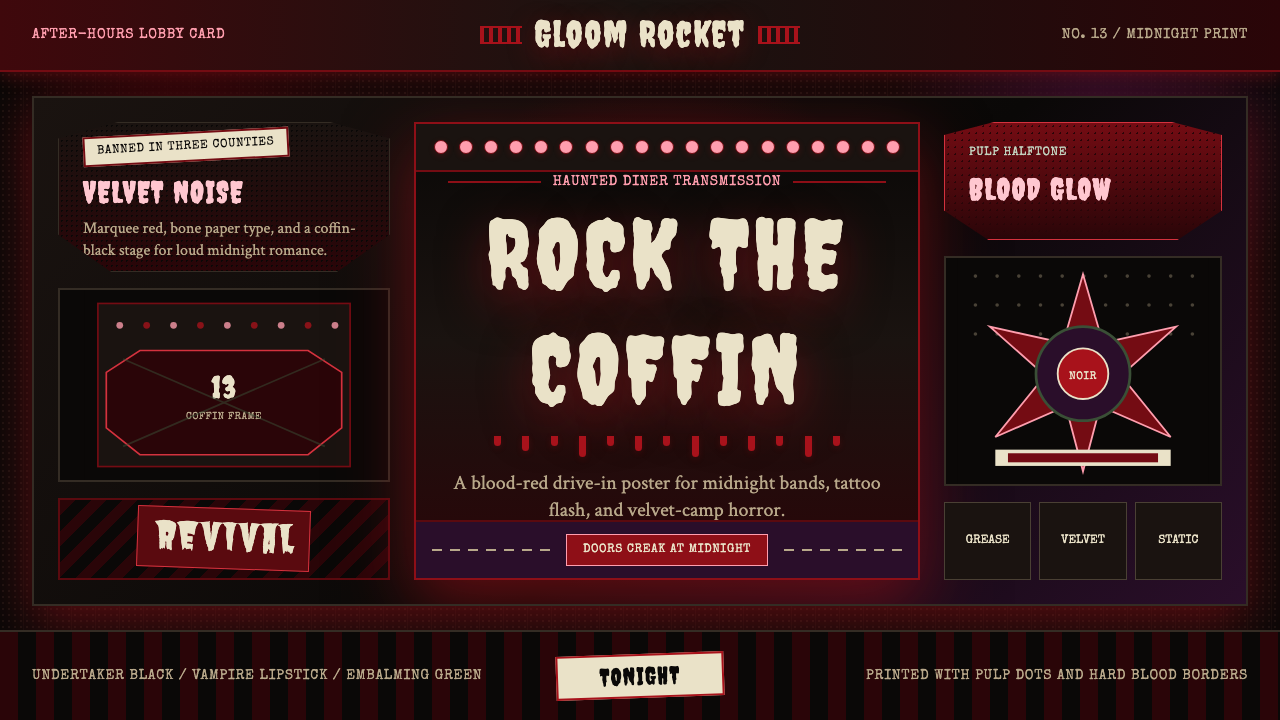 Gothabilly Horror RevivalHaunted swagger. Blood-red marquee type, coffin frames, and pulp halftone on…